Fluvial Geomorphology and
Channel Classification
Watershed Condition Framework Application Workshop
Polyana, Ukraine
July 23-27, 2018
Sheela Johnson
Natural Resource Specialist, USDA Forest Service
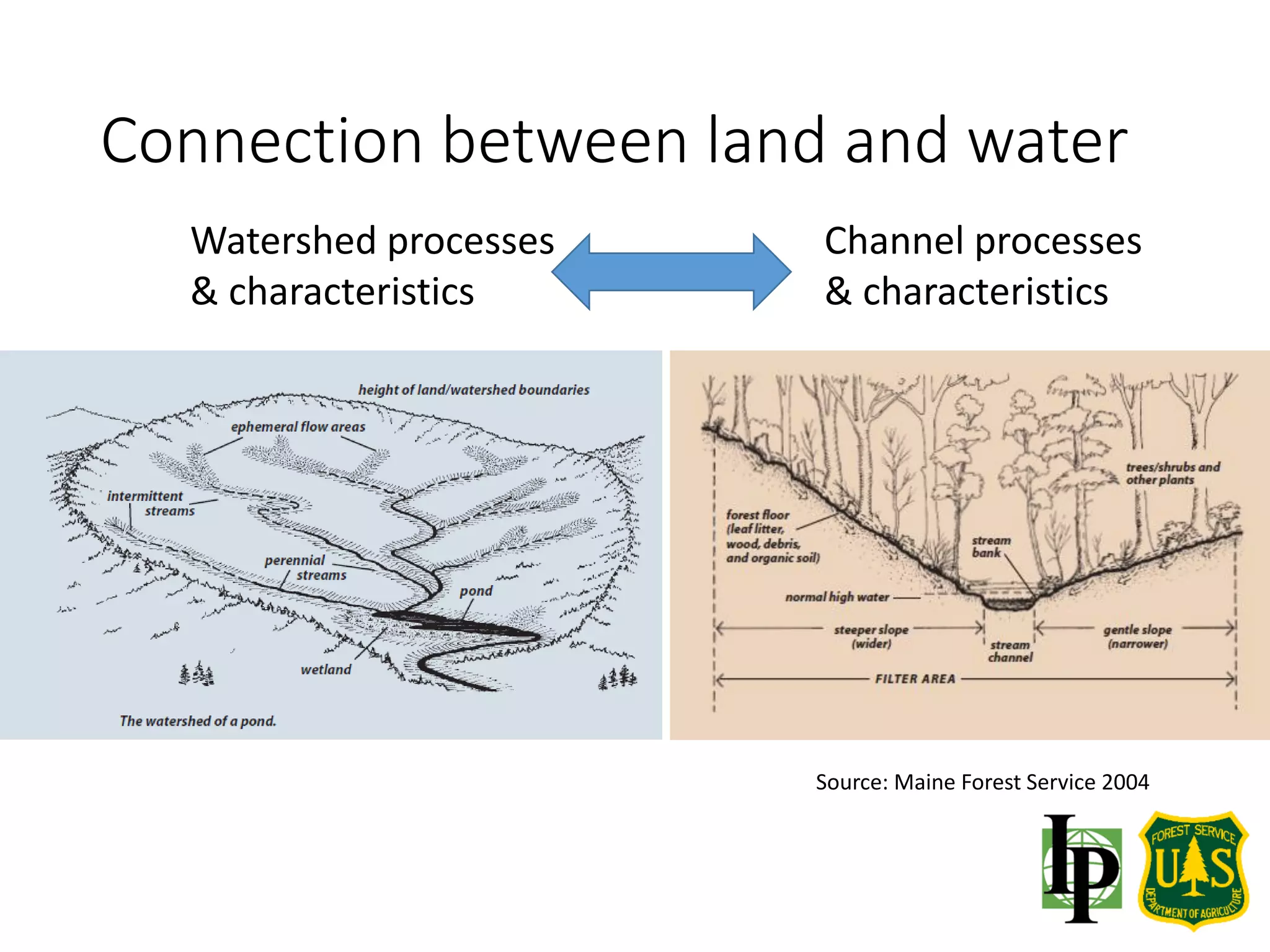
Connection between land and water
Source: Maine Forest Service 2004
Watershed processes
& characteristics
Channel processes
& characteristics
Fluvial Geomorphology
• Definition: study of how flowing water shapes the
land through erosion and depositional processes.
• River classification methods are tools to understand
natural processes and the effects of disturbance
• Rosgen classification (Rosgen 1994)
• Mongtomery and Buffington classification (1993)
• Channel evolution model (Schumm et al 1984)
• Stream order (Horton 1945; Strahler 1957)
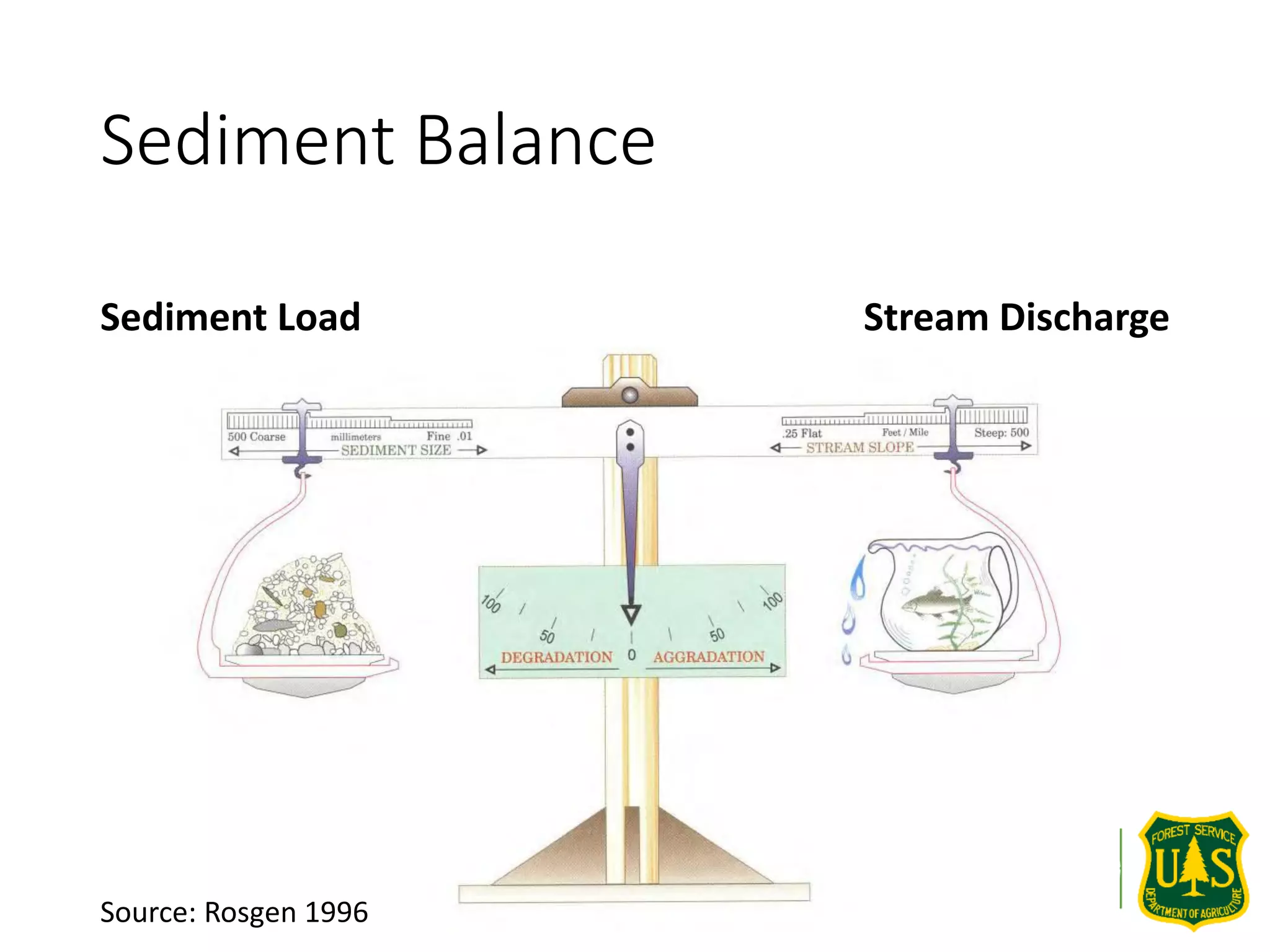
Sediment Balance
Sediment Load Stream Discharge
Source: Rosgen 1996
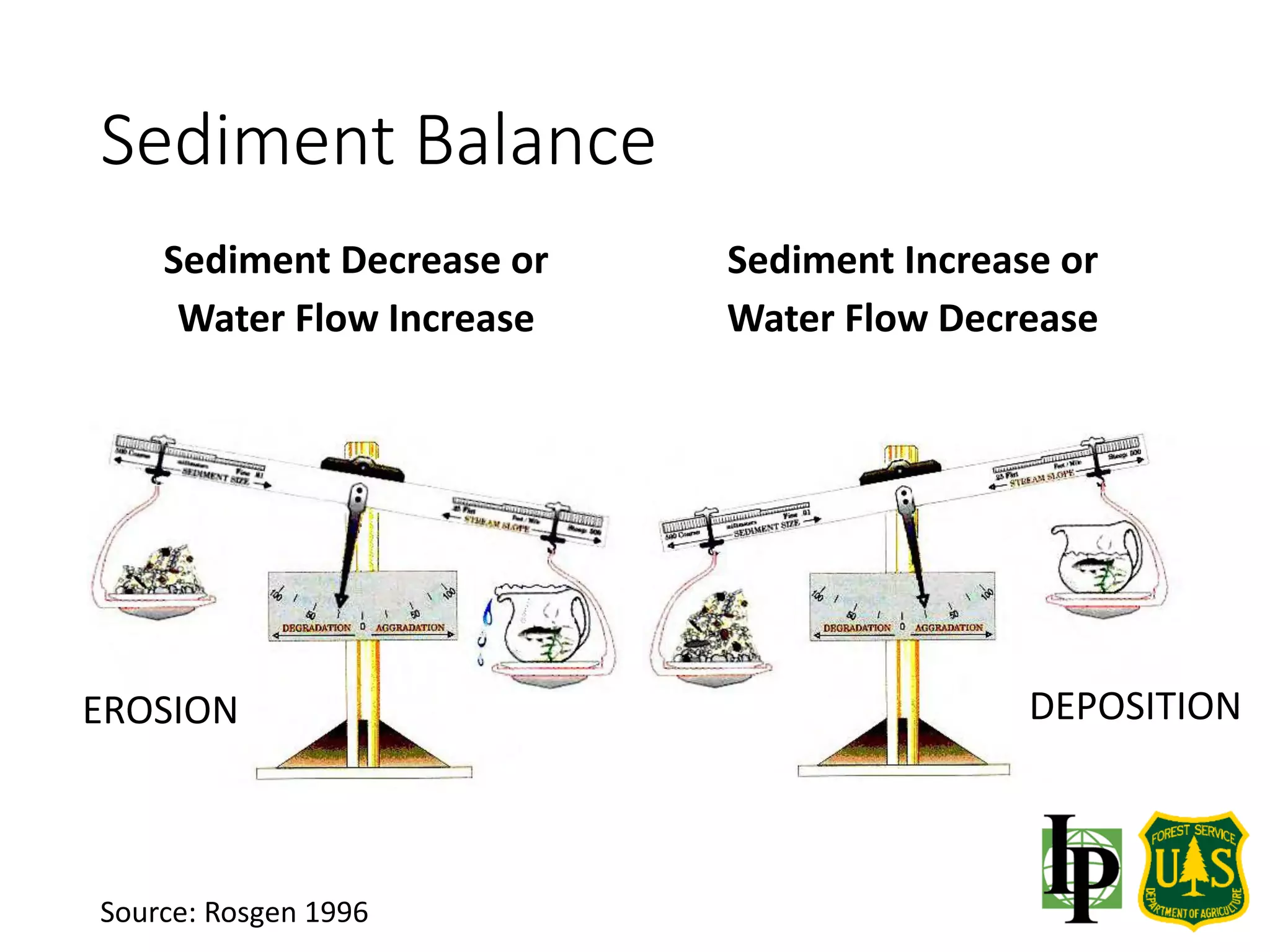
Sediment Balance
Sediment Decrease or
Water Flow Increase
Sediment Increase or
Water Flow Decrease
Source: Rosgen 1996
EROSION DEPOSITION
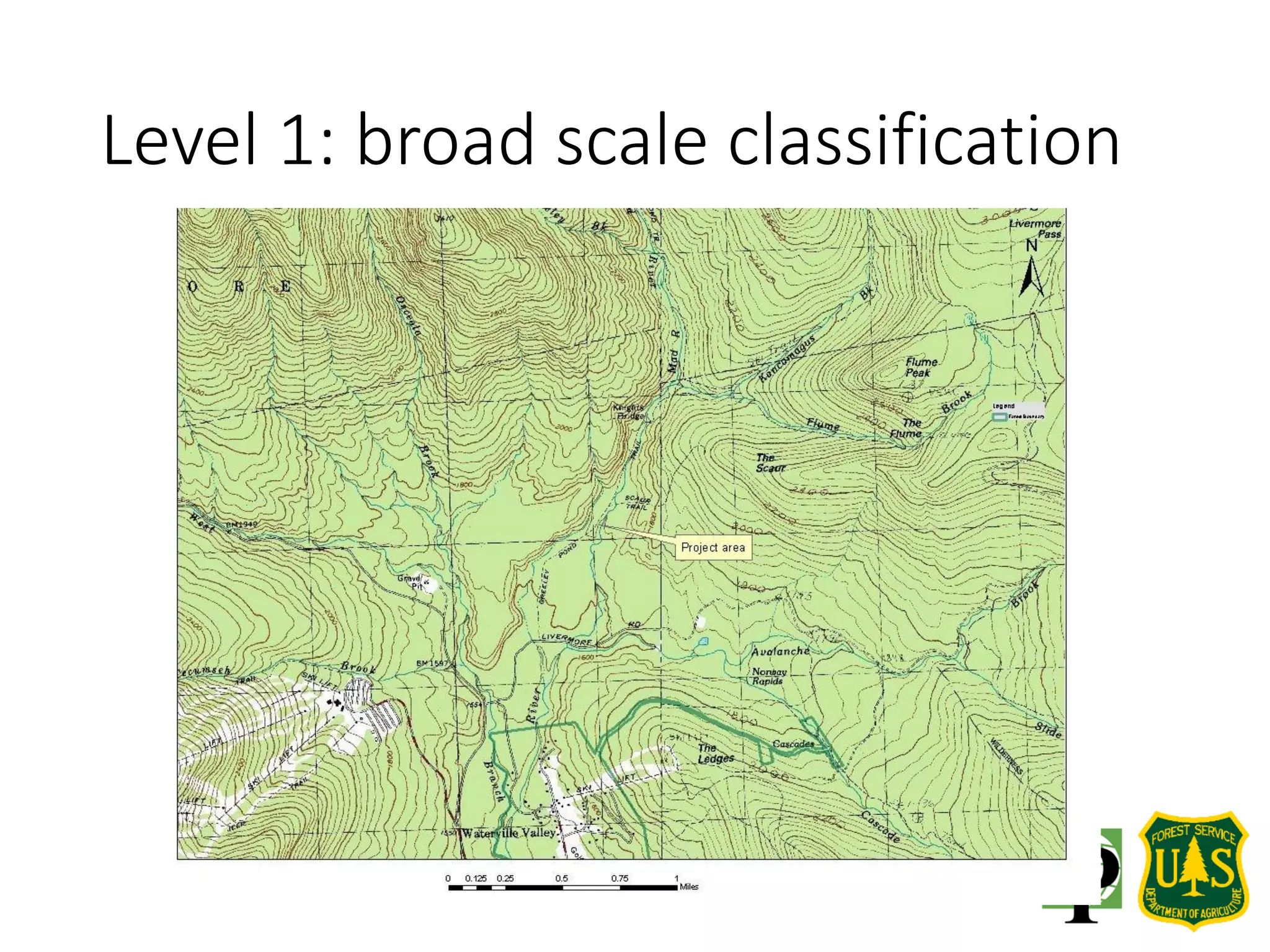
Level 1 Classification: Rapidly Identify Stream Type
Source: US EPA,
https://cfpub.epa.gov/watertrain/moduleFrame.cfm?parent_object_id=1189
Level 1: broad scale classification
Level 2 Classification: Field
Measurements
• Cross-Section
Measurements:
• Bankfull depth and width
• Floodprone width
• Bed material
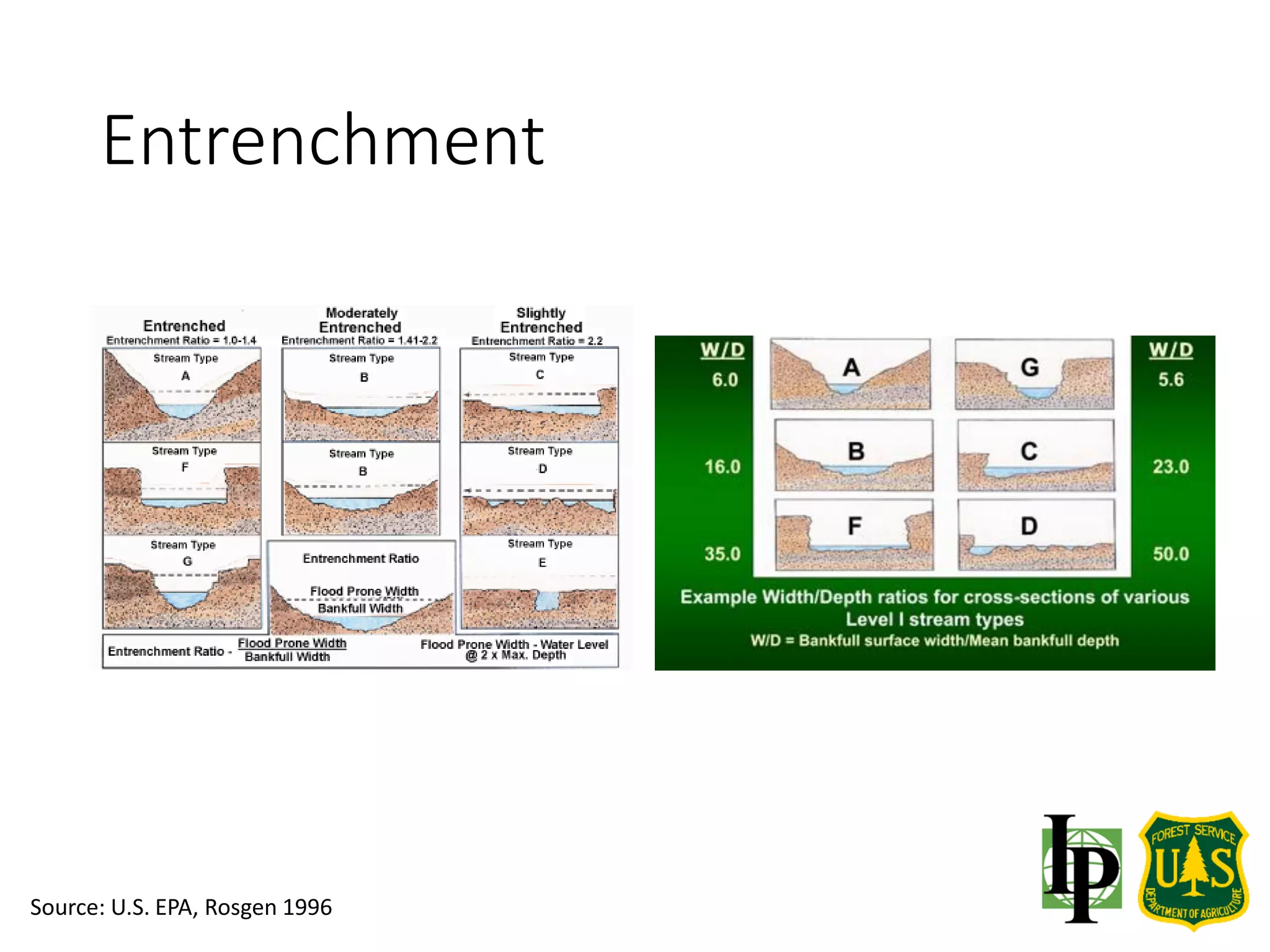
• Entrenchment ratio
• Width-Depth ratio
• Reach measurements:
• Slope
• Bed features
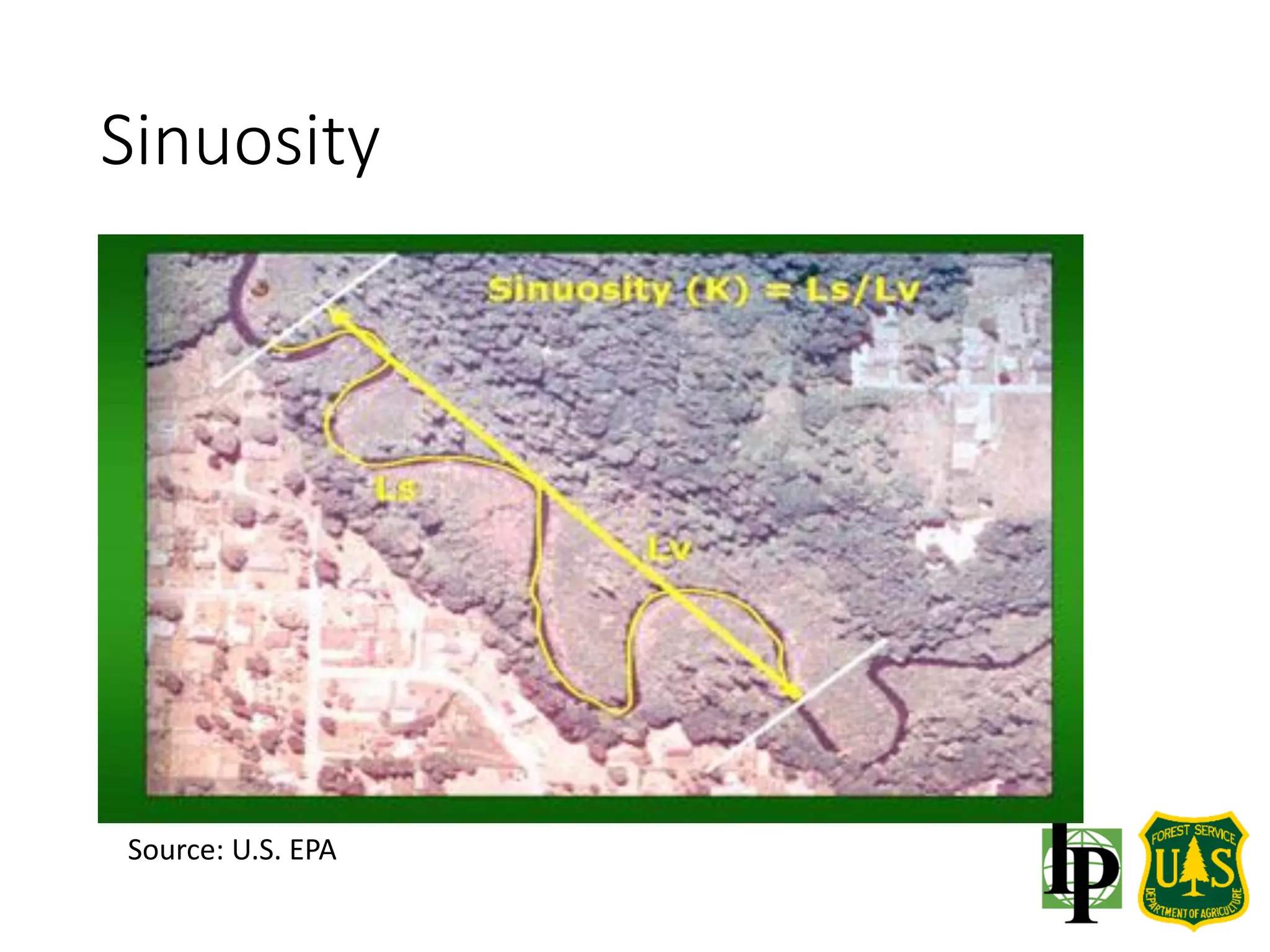
• Sinuosity
• Meander width ratio
Wildland Hydrology
www.fs.fed.us
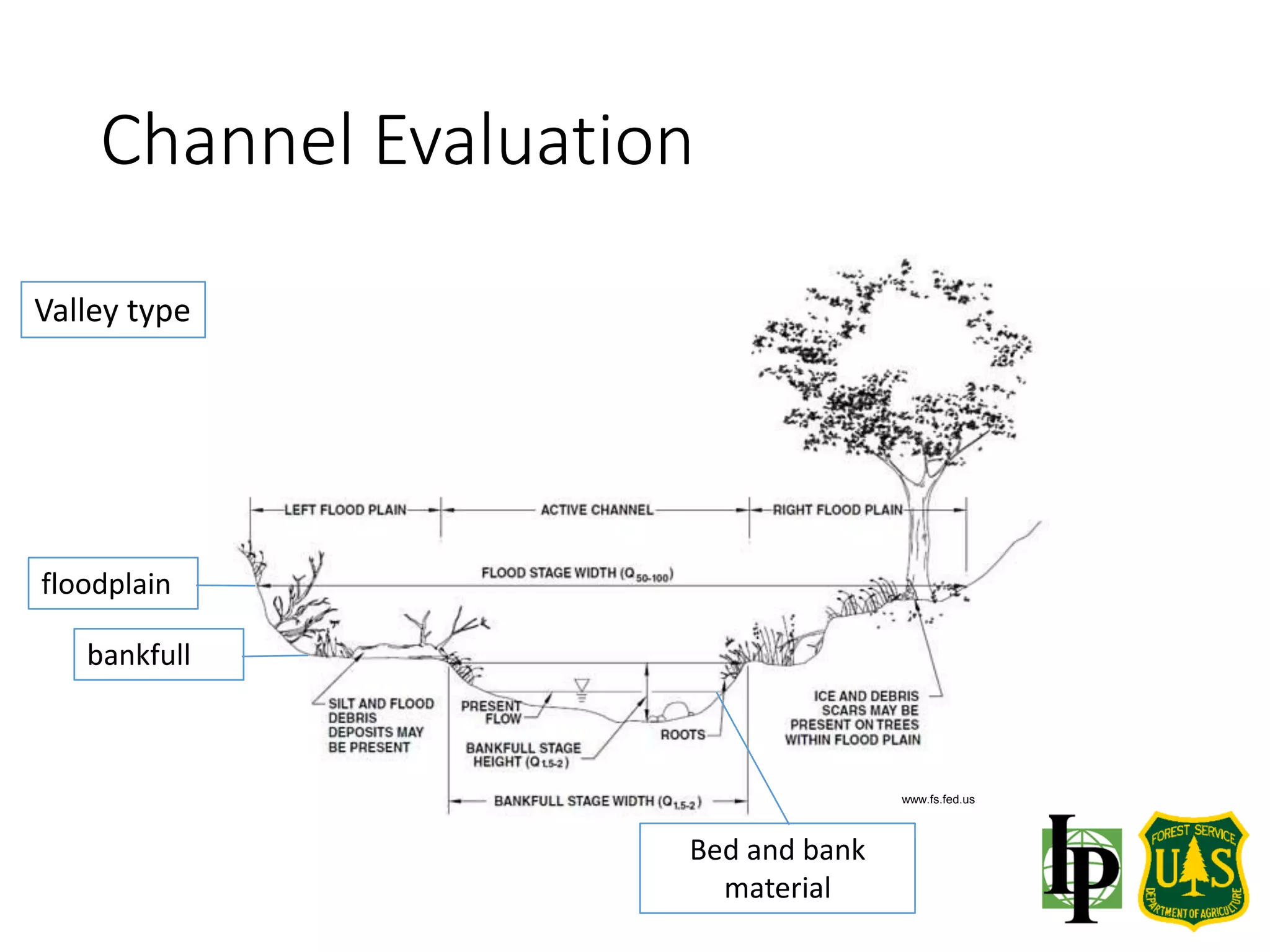
Channel Evaluation
floodplain
bankfull
Valley type
Bed and bank
material
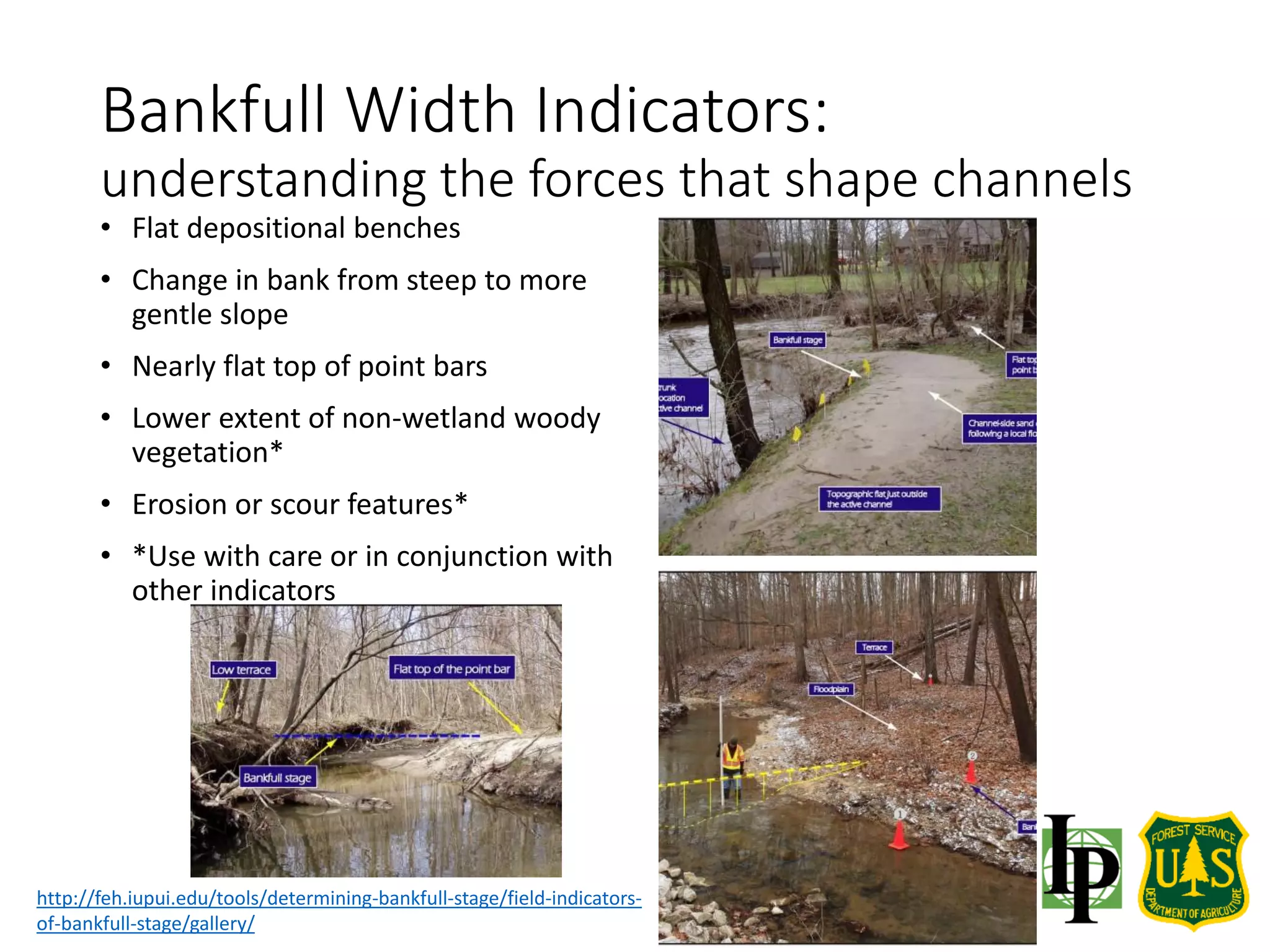
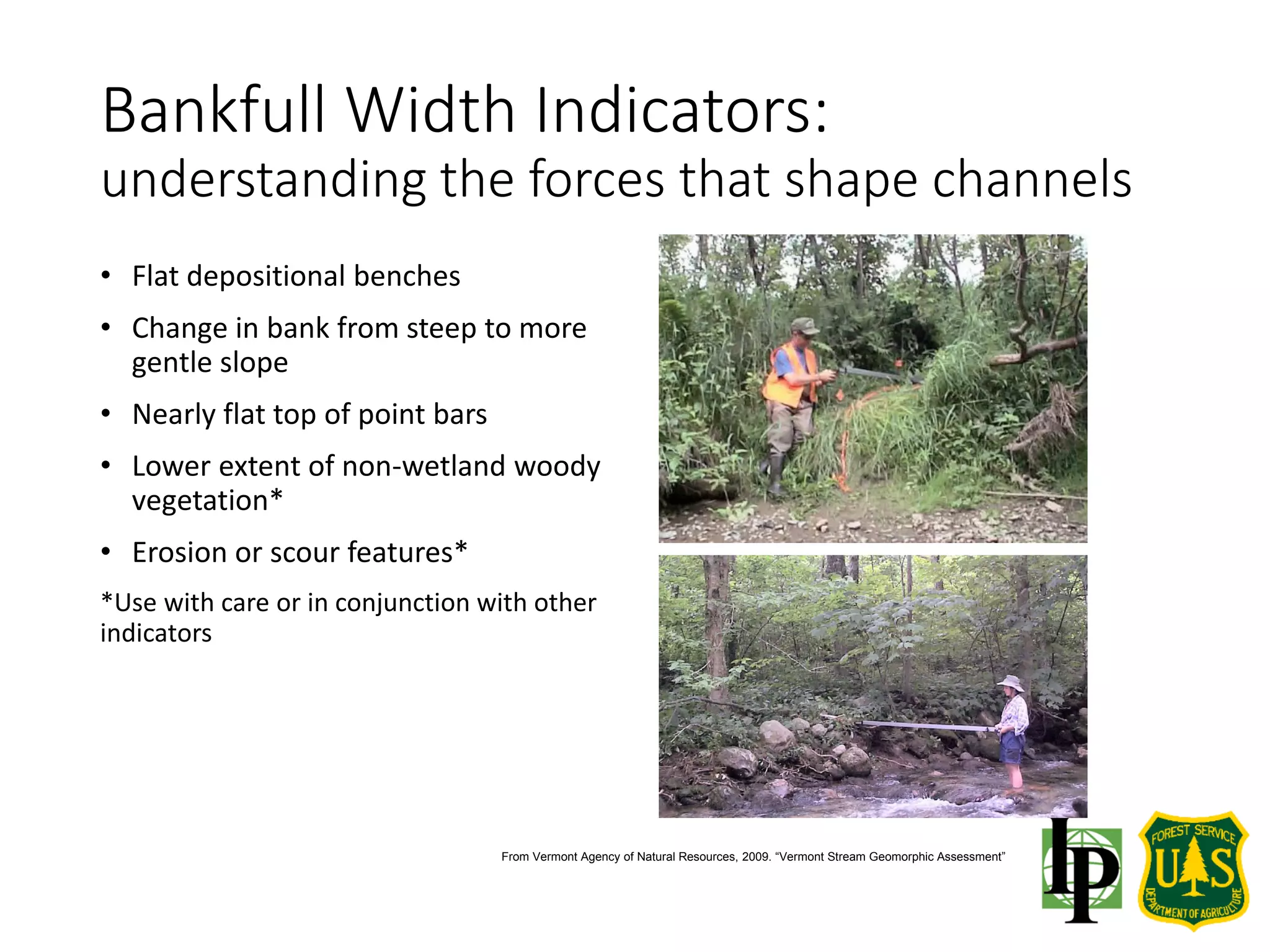
Bankfull Width Indicators:
understanding the forces that shape channels
• Flat depositional benches
• Change in bank from steep to more
gentle slope
• Nearly flat top of point bars
• Lower extent of non-wetland woody
vegetation*
• Erosion or scour features*
• *Use with care or in conjunction with
other indicators
http://feh.iupui.edu/tools/determining-bankfull-stage/field-indicators-
of-bankfull-stage/gallery/
Bankfull Width Indicators:
understanding the forces that shape channels
• Flat depositional benches
• Change in bank from steep to more
gentle slope
• Nearly flat top of point bars
• Lower extent of non-wetland woody
vegetation*
• Erosion or scour features*
*Use with care or in conjunction with other
indicators
From Vermont Agency of Natural Resources, 2009. “Vermont Stream Geomorphic Assessment”
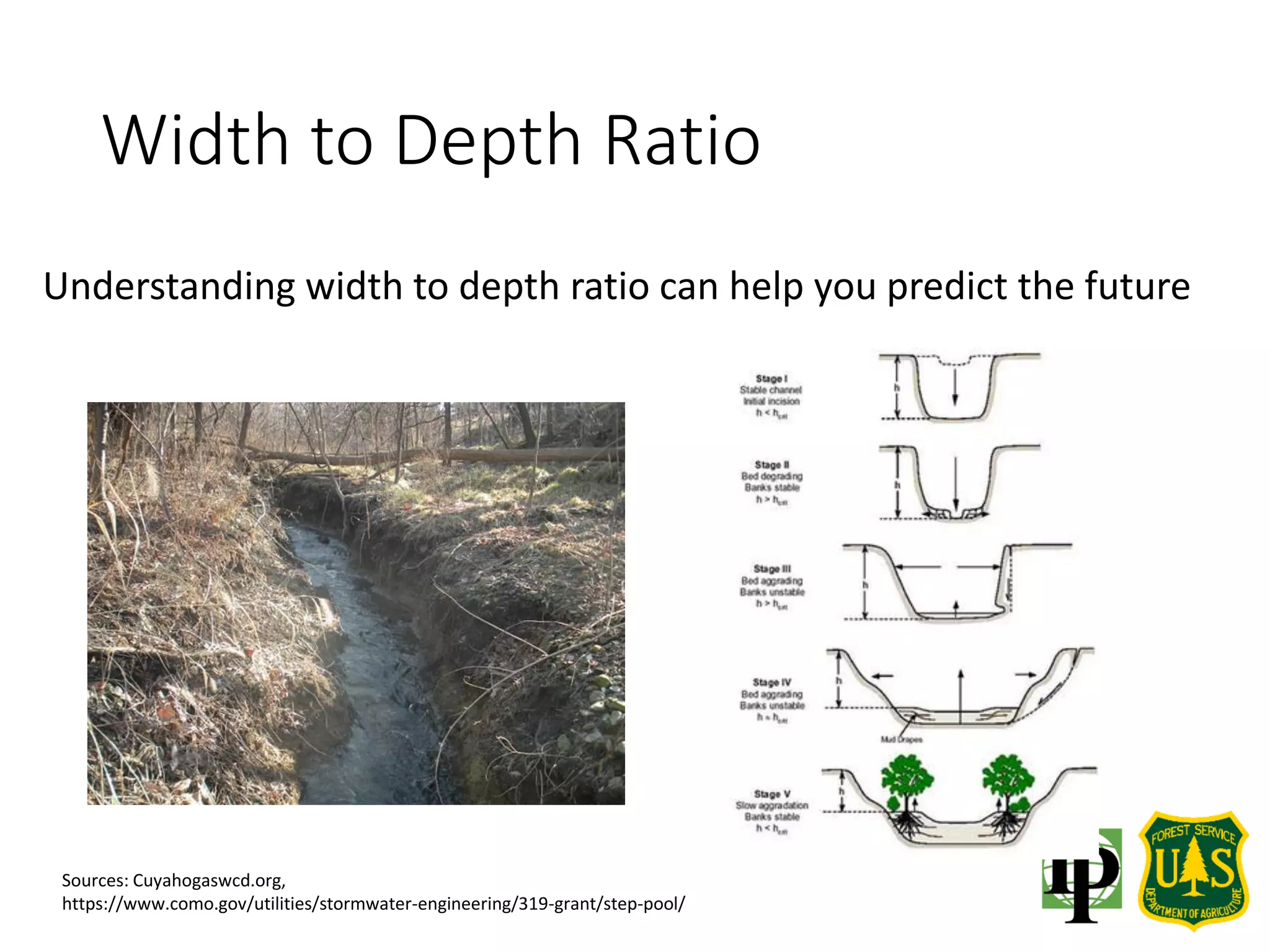
Width to Depth Ratio
Sources: Cuyahogaswcd.org,
https://www.como.gov/utilities/stormwater-engineering/319-grant/step-pool/
Understanding width to depth ratio can help you predict the future
Entrenchment
Source: U.S. EPA, Rosgen 1996
Sinuosity
Source: U.S. EPA
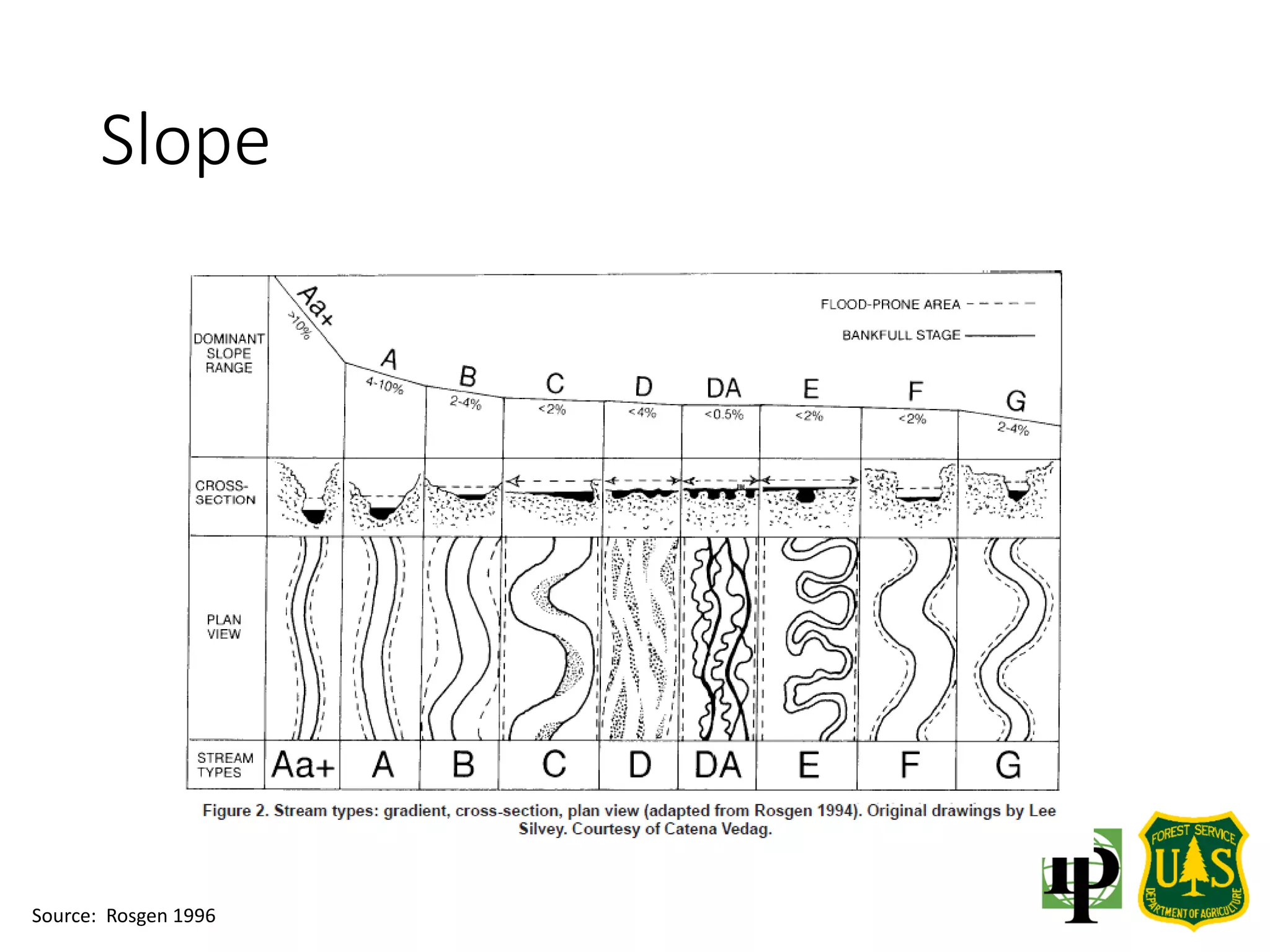
Slope
Source: Rosgen 1996
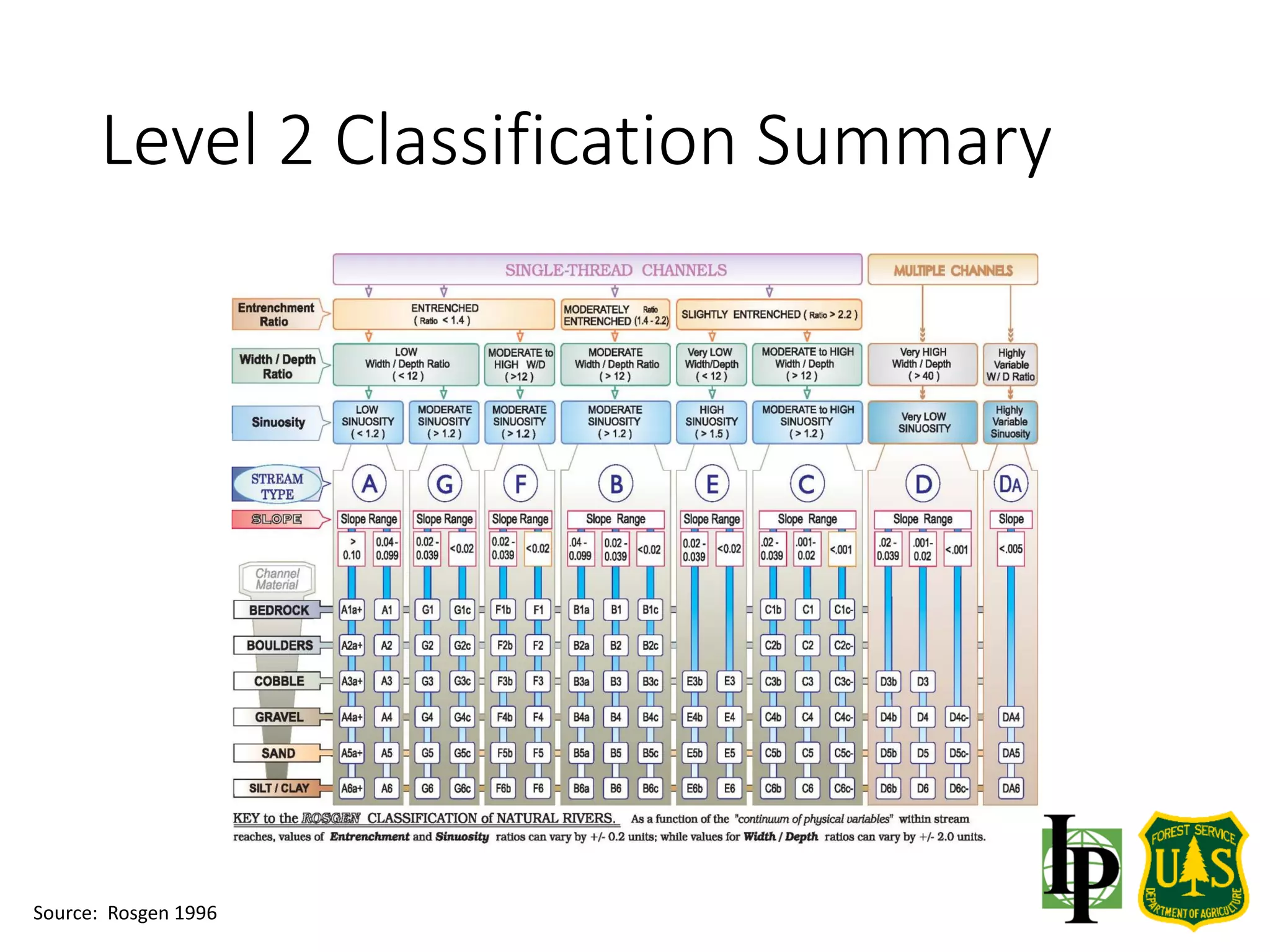
Level 2 Classification Summary
Source: Rosgen 1996
Level 2 Classification Summary
More details = more stream types
Entrenchment
Width – depth ratio
Sinuosity
Water slope
Source:
Rosgen 1996
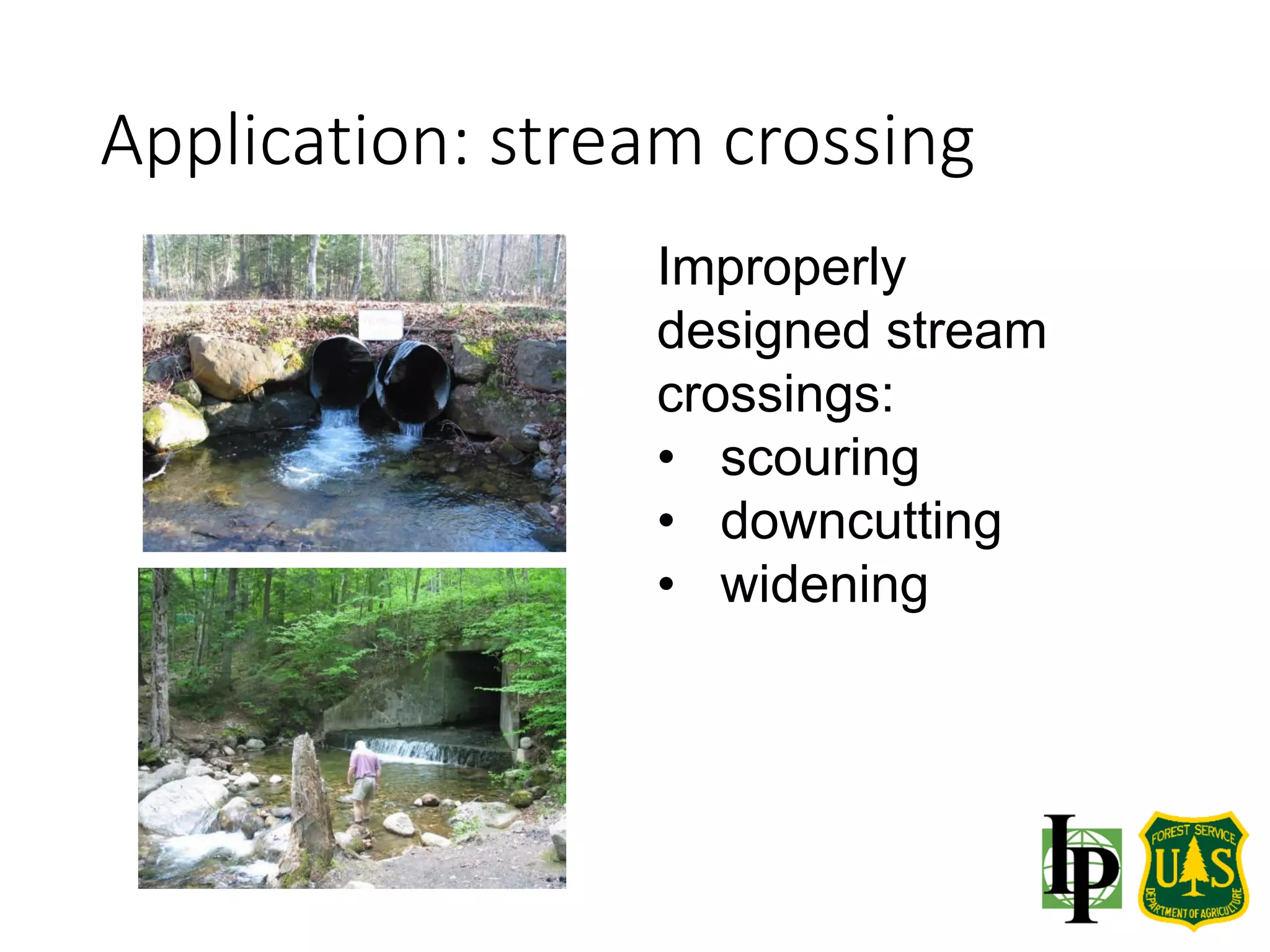
Improperly
designed stream
crossings:
• scouring
• downcutting
• widening
Application: stream crossing
APPROACH A-OUTSIDE
THE BUFFER
APPROACH A-
INSIDE THE
BUFFER
CROSSING
STRUCTURE
STREAM
CHANNEL
Application:
Forestry Best Management Practices
References and additional information
• Rosgen, D.L. and H.L. Silvey. 1996. Applied River
Morphology. Wildland Hydrology Books, Fort
Collins, CO
• US EPA Watershed Academy Web, Fundamentals of
Rosgen Stream Classification System
https://cfpub.epa.gov/watertrain/moduleFrame.cfm
?parent_object_id=1189

River classification smj_july25_english

  • 1.
    Fluvial Geomorphology and ChannelClassification Watershed Condition Framework Application Workshop Polyana, Ukraine July 23-27, 2018 Sheela Johnson Natural Resource Specialist, USDA Forest Service
  • 2.
    Connection between landand water Source: Maine Forest Service 2004 Watershed processes & characteristics Channel processes & characteristics
  • 3.
    Fluvial Geomorphology • Definition:study of how flowing water shapes the land through erosion and depositional processes. • River classification methods are tools to understand natural processes and the effects of disturbance • Rosgen classification (Rosgen 1994) • Mongtomery and Buffington classification (1993) • Channel evolution model (Schumm et al 1984) • Stream order (Horton 1945; Strahler 1957)
  • 4.
    Sediment Balance Sediment LoadStream Discharge Source: Rosgen 1996
  • 5.
    Sediment Balance Sediment Decreaseor Water Flow Increase Sediment Increase or Water Flow Decrease Source: Rosgen 1996 EROSION DEPOSITION
  • 6.
    Level 1 Classification:Rapidly Identify Stream Type Source: US EPA, https://cfpub.epa.gov/watertrain/moduleFrame.cfm?parent_object_id=1189
  • 7.
    Level 1: broadscale classification
  • 8.
    Level 2 Classification:Field Measurements • Cross-Section Measurements: • Bankfull depth and width • Floodprone width • Bed material • Entrenchment ratio • Width-Depth ratio • Reach measurements: • Slope • Bed features • Sinuosity • Meander width ratio Wildland Hydrology
  • 9.
  • 10.
    Bankfull Width Indicators: understandingthe forces that shape channels • Flat depositional benches • Change in bank from steep to more gentle slope • Nearly flat top of point bars • Lower extent of non-wetland woody vegetation* • Erosion or scour features* • *Use with care or in conjunction with other indicators http://feh.iupui.edu/tools/determining-bankfull-stage/field-indicators- of-bankfull-stage/gallery/
  • 11.
    Bankfull Width Indicators: understandingthe forces that shape channels • Flat depositional benches • Change in bank from steep to more gentle slope • Nearly flat top of point bars • Lower extent of non-wetland woody vegetation* • Erosion or scour features* *Use with care or in conjunction with other indicators From Vermont Agency of Natural Resources, 2009. “Vermont Stream Geomorphic Assessment”
  • 12.
    Width to DepthRatio Sources: Cuyahogaswcd.org, https://www.como.gov/utilities/stormwater-engineering/319-grant/step-pool/ Understanding width to depth ratio can help you predict the future
  • 13.
  • 14.
  • 15.
  • 16.
    Level 2 ClassificationSummary Source: Rosgen 1996
  • 17.
    Level 2 ClassificationSummary More details = more stream types Entrenchment Width – depth ratio Sinuosity Water slope Source: Rosgen 1996
  • 18.
    Improperly designed stream crossings: • scouring •downcutting • widening Application: stream crossing
  • 19.
    APPROACH A-OUTSIDE THE BUFFER APPROACHA- INSIDE THE BUFFER CROSSING STRUCTURE STREAM CHANNEL Application: Forestry Best Management Practices
  • 20.
    References and additionalinformation • Rosgen, D.L. and H.L. Silvey. 1996. Applied River Morphology. Wildland Hydrology Books, Fort Collins, CO • US EPA Watershed Academy Web, Fundamentals of Rosgen Stream Classification System https://cfpub.epa.gov/watertrain/moduleFrame.cfm ?parent_object_id=1189