


RICKETS
JENCYMARY ANTHONY PRAKASH
GROUP 3
RICKETS
 Disease of growing bones ,occurs in children only before the fusion
of epiphyses, and due to unmineralised matrix at the growth plates.
 Inadequate mineralization - Thick G.Plate
 Bones become soft.
Causes of Rickets
 VITAMIN D DISORDERS
 Nutritional Vitamin D deficiency
 Congenital Vitamin D deficiency
 Secondary Vitamin D deficiency
 Malabsorption
 Increased degradation
 Decreased Liver 25-hydroxylase
 Vitamin D dependent ricket Type 1
 Vitamin D dependent ricket Type 2
 Chronic Renal Failure
 PHOSPHORUS DEFICIENCY
 Inadequate intake
 Premature infants
 Aluminium containing antacids
 CALCIUM DEFICIENCY
 Low intake
 Diet
 Premature Infant
 Malabsorption
 Primary Disease
 Dietary inhibitors of calcium absorption
Causes of Rickets
 RENAL LOSSES
 X- linked hypophosphatemic ricket
 AD hypophosphatemic ricket
 Hereditary hypophosphatemic ricket with
hypercalcuria
 Overproduction of phosphatonin
 Tumors induced rickets
 Mccunealbright syndrome
 Epidermal nevus syndrome
 Neurofibromatosis
 Fanconi syndrome
 Dent Disease
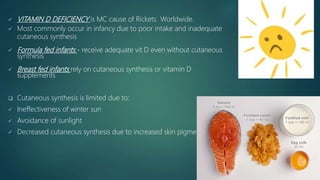
 VITAMIN D DEFICIENCY is MC cause of Rickets Worldwide.
 Most commonly occur in infancy due to poor intake and inadequate
cutaneous synthesis
 Formula fed infants - receive adequate vit D even without cutaneous
synthesis
 Breast fed infants rely on cutaneous synthesis or vitamin D
supplements
 Cutaneous synthesis is limited due to:
 Ineffectiveness of winter sun
 Avoidance of sunlight
 Decreased cutaneous synthesis due to increased skin pigmentation
Clinical Features of Rickets
 GENERAL
 Failure To Thrive
 Listlessness
 Protruding Abdomen, UMBILICAL HERNIA due to hypotonia
of abdominal wall muscles
 Muscle Weakness (specially proximal)
 Fractures
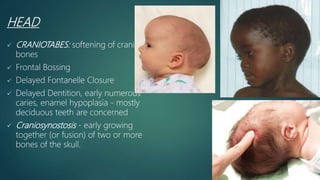
HEAD
 CRANIOTABES: softening of cranial
bones
 Frontal Bossing
 Delayed Fontanelle Closure
 Delayed Dentition, early numerous
caries, enamel hypoplasia - mostly
deciduous teeth are concerned
 Craniosynostosis - early growing
together (or fusion) of two or more
bones of the skull.
CHEST
 RACHITICROSARY widening of
costochondral junction
 Harrison Groove pulling of softened ribs
by the diaphragm during inspiration,
 Pectus carinatum
 Thoracic asymmetry
 Widening of thoracic bone
 Respiratory Infections
 Atelectasis impairment of air movement
BACK
 Scoliosis
 Kyphosis
 Lordosis
EXTREMITIES
 Enlargement of wrists and ankles (Growth
plate widening)
 Valgus or varus deformities
 WINDSWEPT DEFORMITY
(combination of varus deformity of 1 leg with
valgus deformity of other leg Anterior
bowing of tibia and femur)
 Coxa Vara
 Leg pain
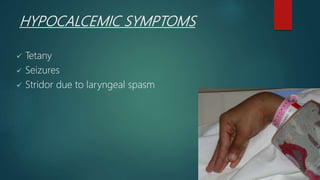
HYPOCALCEMIC SYMPTOMS
 Tetany
 Seizures
 Stridor due to laryngeal spasm
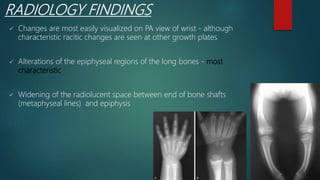
RADIOLOGY FINDINGS
 Changes are most easily visualized on PA view of wrist - although
characteristic racitic changes are seen at other growth plates
 Alterations of the epiphyseal regions of the long bones - most
characteristic
 Widening of the radiolucent space between end of bone shafts
(metaphyseal lines) and epiphysis
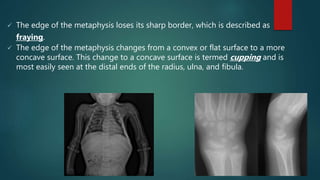
 The edge of the metaphysis loses its sharp border, which is described as
fraying.
 The edge of the metaphysis changes from a convex or flat surface to a more
concave surface. This change to a concave surface is termed cupping and is
most easily seen at the distal ends of the radius, ulna, and fibula.
LAB FINDINGS
 Serum calcium - N, ↓
 Phosphorus - ↓
 Alkaline phosphatase - ↑
 Parathyroid hormone(PTH) -↑
 25-hydroxyvitamin D - ↓
 1,25-dihydroxyvitamin D (1,25-D) - ↓, N, ↑
 Urine Ca – ↓
 Urine Pi - ↑
TREATMENT
 Children with should receive vitamin D and adequate nutritional intake of
calcium and phosphorus.
 With stoss therapy, 300,000-600,000 IU of vitamin D are administered
orally or intramuscularly as 2-4 doses over 1 day.
 The alternative is daily, high-dose vitamin D, with doses ranging from
2,000-5,000 IU/day over 4-6 wk.
 Either strategy should be followed by daily vitamin D intake of 400 IU/day if
<1 yr old or 600 IU/day if >1 yr old
MANGEMENT
 Infants  200 - 400 IU/D (Infants daily exposed to sunlight for 15-20
min.to prevent Rickets)
 Children  400 – 600 IU/D
 Breast feed infants must receive vit.D supplementations because breast
milk contains only 30-40 IU/L
CONGENITAL VITAMIN D DEFICIENCY
 Occur when there is severe maternal vitamin D
deficiency during pregnancy
 Risk factors
 Poor dietary intake of Vitamin D
 Lack of adequate sun exposure
 Clinical Features
 Symptomatic hypocalcemia
 IUGR
 Decreased bone ossification + classic rachitic
changes
 Treatment
 Vitamin D supplementation
 Adequate intake of calcium and
phosphorus
 Use of prenatal vitamin D
Rickets

Rickets

  • 1.
  • 2.
    RICKETS  Disease ofgrowing bones ,occurs in children only before the fusion of epiphyses, and due to unmineralised matrix at the growth plates.  Inadequate mineralization - Thick G.Plate  Bones become soft.
  • 3.
    Causes of Rickets VITAMIN D DISORDERS  Nutritional Vitamin D deficiency  Congenital Vitamin D deficiency  Secondary Vitamin D deficiency  Malabsorption  Increased degradation  Decreased Liver 25-hydroxylase  Vitamin D dependent ricket Type 1  Vitamin D dependent ricket Type 2  Chronic Renal Failure  PHOSPHORUS DEFICIENCY  Inadequate intake  Premature infants  Aluminium containing antacids  CALCIUM DEFICIENCY  Low intake  Diet  Premature Infant  Malabsorption  Primary Disease  Dietary inhibitors of calcium absorption
  • 4.
    Causes of Rickets RENAL LOSSES  X- linked hypophosphatemic ricket  AD hypophosphatemic ricket  Hereditary hypophosphatemic ricket with hypercalcuria  Overproduction of phosphatonin  Tumors induced rickets  Mccunealbright syndrome  Epidermal nevus syndrome  Neurofibromatosis  Fanconi syndrome  Dent Disease
  • 6.
     VITAMIN DDEFICIENCY is MC cause of Rickets Worldwide.  Most commonly occur in infancy due to poor intake and inadequate cutaneous synthesis  Formula fed infants - receive adequate vit D even without cutaneous synthesis  Breast fed infants rely on cutaneous synthesis or vitamin D supplements  Cutaneous synthesis is limited due to:  Ineffectiveness of winter sun  Avoidance of sunlight  Decreased cutaneous synthesis due to increased skin pigmentation
  • 7.
    Clinical Features ofRickets  GENERAL  Failure To Thrive  Listlessness  Protruding Abdomen, UMBILICAL HERNIA due to hypotonia of abdominal wall muscles  Muscle Weakness (specially proximal)  Fractures
  • 8.
    HEAD  CRANIOTABES: softeningof cranial bones  Frontal Bossing  Delayed Fontanelle Closure  Delayed Dentition, early numerous caries, enamel hypoplasia - mostly deciduous teeth are concerned  Craniosynostosis - early growing together (or fusion) of two or more bones of the skull.
  • 9.
    CHEST  RACHITICROSARY wideningof costochondral junction  Harrison Groove pulling of softened ribs by the diaphragm during inspiration,  Pectus carinatum  Thoracic asymmetry  Widening of thoracic bone  Respiratory Infections  Atelectasis impairment of air movement
  • 10.
  • 11.
    EXTREMITIES  Enlargement ofwrists and ankles (Growth plate widening)  Valgus or varus deformities
  • 12.
     WINDSWEPT DEFORMITY (combinationof varus deformity of 1 leg with valgus deformity of other leg Anterior bowing of tibia and femur)  Coxa Vara  Leg pain
  • 13.
    HYPOCALCEMIC SYMPTOMS  Tetany Seizures  Stridor due to laryngeal spasm
  • 14.
    RADIOLOGY FINDINGS  Changesare most easily visualized on PA view of wrist - although characteristic racitic changes are seen at other growth plates  Alterations of the epiphyseal regions of the long bones - most characteristic  Widening of the radiolucent space between end of bone shafts (metaphyseal lines) and epiphysis
  • 15.
     The edgeof the metaphysis loses its sharp border, which is described as fraying.  The edge of the metaphysis changes from a convex or flat surface to a more concave surface. This change to a concave surface is termed cupping and is most easily seen at the distal ends of the radius, ulna, and fibula.
  • 16.
    LAB FINDINGS  Serumcalcium - N, ↓  Phosphorus - ↓  Alkaline phosphatase - ↑  Parathyroid hormone(PTH) -↑  25-hydroxyvitamin D - ↓  1,25-dihydroxyvitamin D (1,25-D) - ↓, N, ↑  Urine Ca – ↓  Urine Pi - ↑
  • 17.
    TREATMENT  Children withshould receive vitamin D and adequate nutritional intake of calcium and phosphorus.  With stoss therapy, 300,000-600,000 IU of vitamin D are administered orally or intramuscularly as 2-4 doses over 1 day.  The alternative is daily, high-dose vitamin D, with doses ranging from 2,000-5,000 IU/day over 4-6 wk.  Either strategy should be followed by daily vitamin D intake of 400 IU/day if <1 yr old or 600 IU/day if >1 yr old
  • 18.
    MANGEMENT  Infants 200 - 400 IU/D (Infants daily exposed to sunlight for 15-20 min.to prevent Rickets)  Children  400 – 600 IU/D  Breast feed infants must receive vit.D supplementations because breast milk contains only 30-40 IU/L
  • 19.
    CONGENITAL VITAMIN DDEFICIENCY  Occur when there is severe maternal vitamin D deficiency during pregnancy  Risk factors  Poor dietary intake of Vitamin D  Lack of adequate sun exposure  Clinical Features  Symptomatic hypocalcemia  IUGR  Decreased bone ossification + classic rachitic changes  Treatment  Vitamin D supplementation  Adequate intake of calcium and phosphorus  Use of prenatal vitamin D