Type to enter a caption.
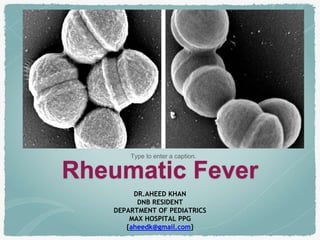
Rheumatic Fever
DR.AHEED KHAN
DNB RESIDENT
DEPARTMENT OF PEDIATRICS
MAX HOSPITAL PPG
{aheedk@gmail.com}
Type to enter a caption.
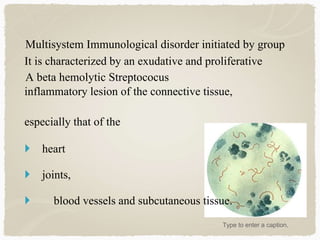
Multisystem Immunological disorder initiated by group
A beta hemolytic Streptococus
It is characterized by an exudative and proliferative
inflammatory lesion of the connective tissue,
especially that of the
 heart
 joints,
 blood vessels and subcutaneous tissue.
ETIOLOGY
• An untreated Group- A beta hemolytic streptococcal
infection is the commonest antecedent event that
precipitates an attack of Acute Rheumatic Fever.
 It is a delayed non-suppurative sequelae to URTI with
GABH streptococci.
licks the joints; bites
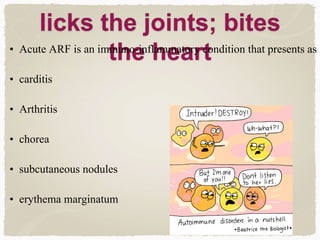
the heart• Acute ARF is an immuno-inflammatory condition that presents as
• carditis
• Arthritis
• chorea
• subcutaneous nodules
• erythema marginatum
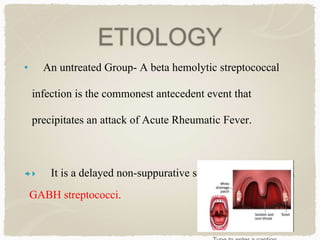
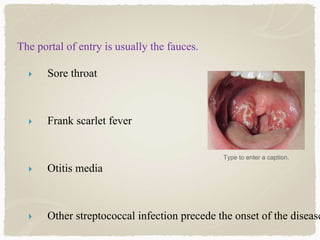
The portal of entry is usually the fauces.
 Sore throat
 Frank scarlet fever
 Otitis media
 Other streptococcal infection precede the onset of the disease
Type to enter a caption.
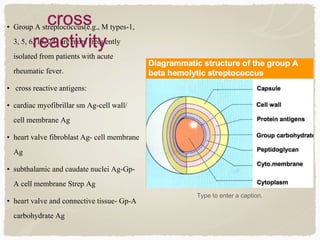
• Group A streptococcus(e.g., M types-1,
3, 5, 6, 18, 24) are more frequently
isolated from patients with acute
rheumatic fever.
• cross reactive antigens:
• cardiac myofibrillar sm Ag-cell wall/
cell membrane Ag
• heart valve fibroblast Ag- cell membrane
Ag
• subthalamic and caudate nuclei Ag-Gp-
A cell membrane Strep Ag
• heart valve and connective tissue- Gp-A
carbohydrate Ag
Type to enter a caption.
cross
reactivity
epidemiology
• The incidence of both initial attacks and recurrences of acute rheu
• India- 0.5-11 per 1000.
• no significant difference in males and females; c
• spring and winter season
Predisposing factors -
 low socioeconomic status  overcrowding
 poor nutrition
 poor hygiene
- genetic predisposition.
pathogenesis
The cytotoxicity theory -
 streptolysin 0 has a direct cytotoxic effect on
mammalian cells in tissue culture.
The Immunological theory
immunologic cross-reactivity between group A streptococcal co
PathologyInflammatory Lesions in
1. Heart
2. Brain
3. Joints
4. Skin
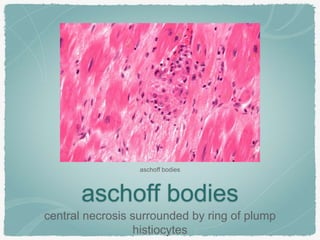
Aschoff bodies in the atrial myocardium-
 Swelling, fragmentation of collagen fibres
2 phases
I.EXUDATIVE PHASE
II.PROLIFERATIVE PHASE
aschoff bodies
central necrosis surrounded by ring of plump
histiocytes
aschoff bodies
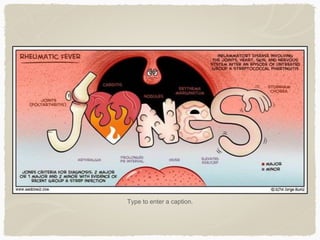
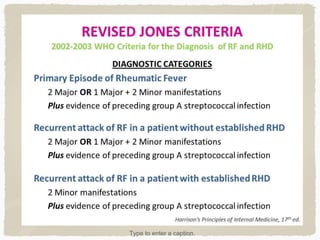
T. Duckett Jones Criteria
for both initial attack and recurrence
5 major and 4 minor+ Evidence of recent GAS
infection
first in 1944; various versions; latest in 2015- risk
groups and lab criteria
low risk-<2 per one lakh school age children;
high risk- >2
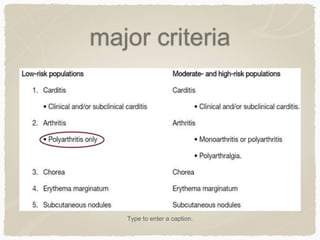
major criteria
Type to enter a caption.
newest
concept of subclinical carditis- silent carditis-
0-53%/isolated arthritis and/or pure chorea without
auscultatory findings of valvular dysfunction
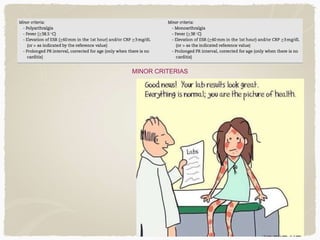
MINOR CRITERIAS
Type to enter a caption.
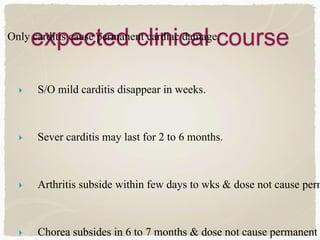
expected clinical courseOnly carditis cause permanent cardiac damage.
 S/O mild carditis disappear in weeks.
 Sever carditis may last for 2 to 6 months.
 Arthritis subside within few days to wks & dose not cause perm
 Chorea subsides in 6 to 7 months & dose not cause permanent
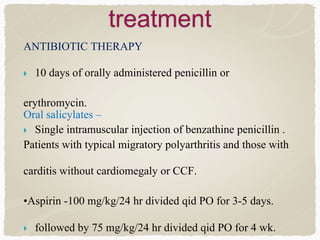
treatment
Oral salicylates –
Patients with typical migratory polyarthritis and those with
carditis without cardiomegaly or CCF.
•Aspirin -100 mg/kg/24 hr divided qid PO for 3-5 days.
 followed by 75 mg/kg/24 hr divided qid PO for 4 wk.
ANTIBIOTIC THERAPY
 10 days of orally administered penicillin or
erythromycin.
 Single intramuscular injection of benzathine penicillin .
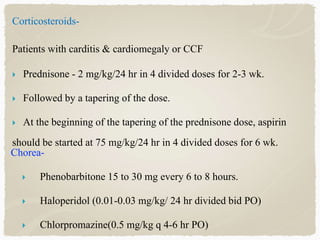
Corticosteroids-
Patients with carditis & cardiomegaly or CCF
 Prednisone - 2 mg/kg/24 hr in 4 divided doses for 2-3 wk.
 Followed by a tapering of the dose.
 At the beginning of the tapering of the prednisone dose, aspirin
should be started at 75 mg/kg/24 hr in 4 divided doses for 6 wk.
Chorea-
 Phenobarbitone 15 to 30 mg every 6 to 8 hours.
 Haloperidol (0.01-0.03 mg/kg/ 24 hr divided bid PO)
 Chlorpromazine(0.5 mg/kg q 4-6 hr PO)
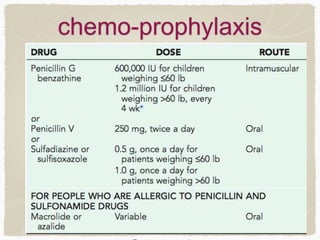
chemo-prophylaxis
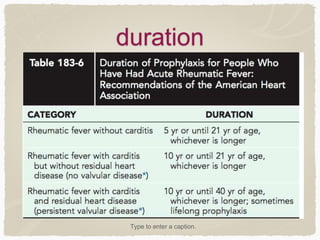
duration
Type to enter a caption.
thank you

Rheumatic fever dr.aheed

  • 1.
    Type to entera caption. Rheumatic Fever DR.AHEED KHAN DNB RESIDENT DEPARTMENT OF PEDIATRICS MAX HOSPITAL PPG {aheedk@gmail.com}
  • 2.
    Type to entera caption. Multisystem Immunological disorder initiated by group A beta hemolytic Streptococus It is characterized by an exudative and proliferative inflammatory lesion of the connective tissue, especially that of the  heart  joints,  blood vessels and subcutaneous tissue.
  • 3.
    ETIOLOGY • An untreatedGroup- A beta hemolytic streptococcal infection is the commonest antecedent event that precipitates an attack of Acute Rheumatic Fever.  It is a delayed non-suppurative sequelae to URTI with GABH streptococci.
  • 4.
    licks the joints;bites the heart• Acute ARF is an immuno-inflammatory condition that presents as • carditis • Arthritis • chorea • subcutaneous nodules • erythema marginatum
  • 5.
    The portal ofentry is usually the fauces.  Sore throat  Frank scarlet fever  Otitis media  Other streptococcal infection precede the onset of the disease Type to enter a caption.
  • 6.
    • Group Astreptococcus(e.g., M types-1, 3, 5, 6, 18, 24) are more frequently isolated from patients with acute rheumatic fever. • cross reactive antigens: • cardiac myofibrillar sm Ag-cell wall/ cell membrane Ag • heart valve fibroblast Ag- cell membrane Ag • subthalamic and caudate nuclei Ag-Gp- A cell membrane Strep Ag • heart valve and connective tissue- Gp-A carbohydrate Ag Type to enter a caption. cross reactivity
  • 7.
    epidemiology • The incidenceof both initial attacks and recurrences of acute rheu • India- 0.5-11 per 1000. • no significant difference in males and females; c • spring and winter season
  • 8.
    Predisposing factors - low socioeconomic status  overcrowding  poor nutrition  poor hygiene - genetic predisposition.
  • 9.
    pathogenesis The cytotoxicity theory-  streptolysin 0 has a direct cytotoxic effect on mammalian cells in tissue culture. The Immunological theory immunologic cross-reactivity between group A streptococcal co
  • 10.
    PathologyInflammatory Lesions in 1.Heart 2. Brain 3. Joints 4. Skin Aschoff bodies in the atrial myocardium-  Swelling, fragmentation of collagen fibres
  • 11.
  • 12.
    aschoff bodies central necrosissurrounded by ring of plump histiocytes aschoff bodies
  • 13.
    T. Duckett JonesCriteria for both initial attack and recurrence 5 major and 4 minor+ Evidence of recent GAS infection first in 1944; various versions; latest in 2015- risk groups and lab criteria low risk-<2 per one lakh school age children; high risk- >2
  • 14.
    major criteria Type toenter a caption.
  • 15.
    newest concept of subclinicalcarditis- silent carditis- 0-53%/isolated arthritis and/or pure chorea without auscultatory findings of valvular dysfunction
  • 16.
  • 17.
    Type to entera caption.
  • 18.
    Type to entera caption.
  • 19.
    expected clinical courseOnlycarditis cause permanent cardiac damage.  S/O mild carditis disappear in weeks.  Sever carditis may last for 2 to 6 months.  Arthritis subside within few days to wks & dose not cause perm  Chorea subsides in 6 to 7 months & dose not cause permanent
  • 20.
    treatment Oral salicylates – Patientswith typical migratory polyarthritis and those with carditis without cardiomegaly or CCF. •Aspirin -100 mg/kg/24 hr divided qid PO for 3-5 days.  followed by 75 mg/kg/24 hr divided qid PO for 4 wk. ANTIBIOTIC THERAPY  10 days of orally administered penicillin or erythromycin.  Single intramuscular injection of benzathine penicillin .
  • 21.
    Corticosteroids- Patients with carditis& cardiomegaly or CCF  Prednisone - 2 mg/kg/24 hr in 4 divided doses for 2-3 wk.  Followed by a tapering of the dose.  At the beginning of the tapering of the prednisone dose, aspirin should be started at 75 mg/kg/24 hr in 4 divided doses for 6 wk. Chorea-  Phenobarbitone 15 to 30 mg every 6 to 8 hours.  Haloperidol (0.01-0.03 mg/kg/ 24 hr divided bid PO)  Chlorpromazine(0.5 mg/kg q 4-6 hr PO)
  • 22.
  • 23.
  • 24.