
HEALING OF
  OPEN AND
APPROXIMATED
   WOUND

          PRESENTED BY
           Aheed Khan
          Roll number-8
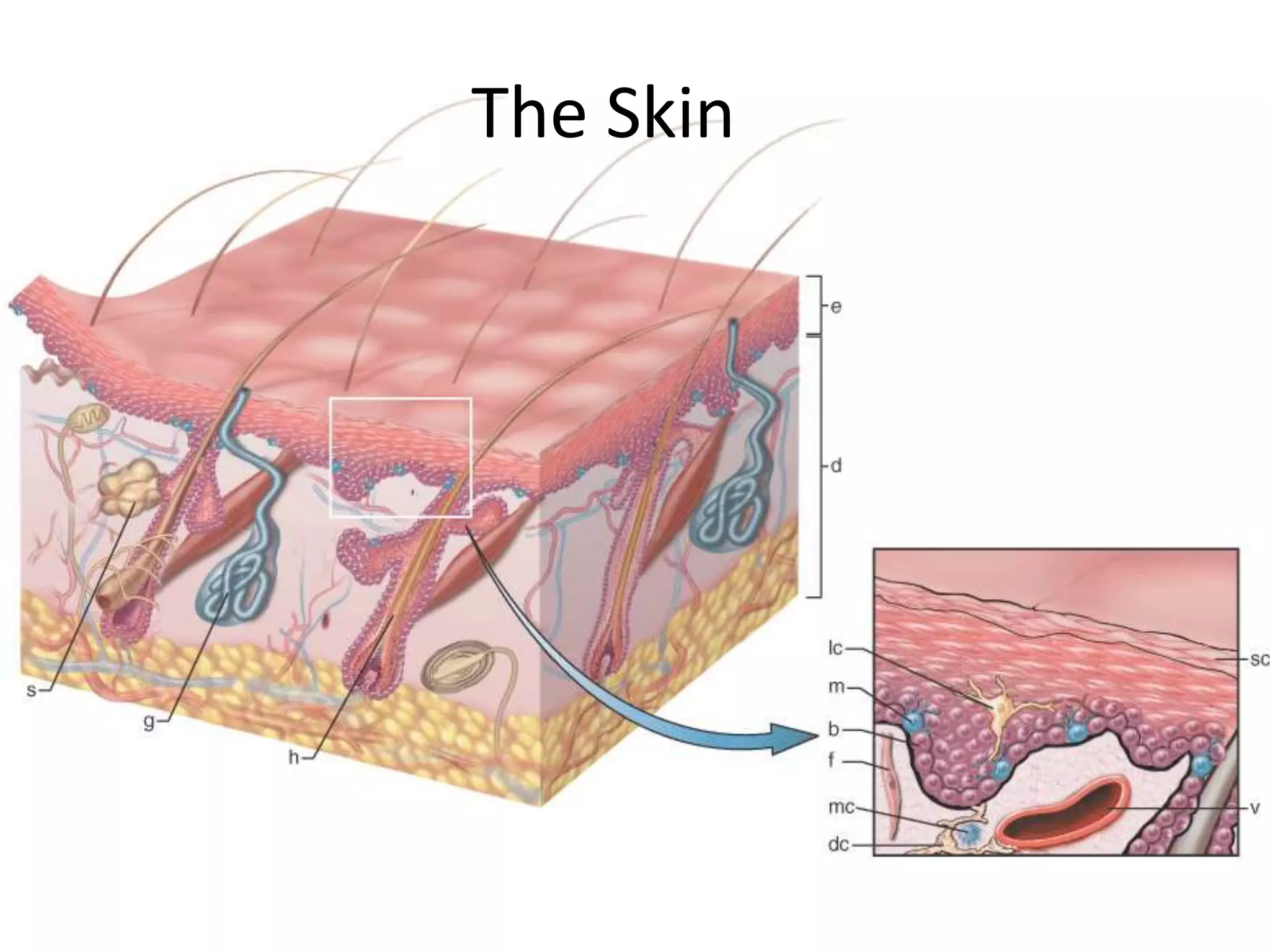
The Skin
Open wounds are:-
1.   Puncture wounds
2.   Abrasions
3.   Friction burns
4.   Lacerations
5.   Bites
Process of Healing
1. Hemostasis and inflammation
• recruitment of growth factors for
   regeneration and WBCs - fighting off
   potential infection
• The stem cells proliferate to replace the
   damaged tissue
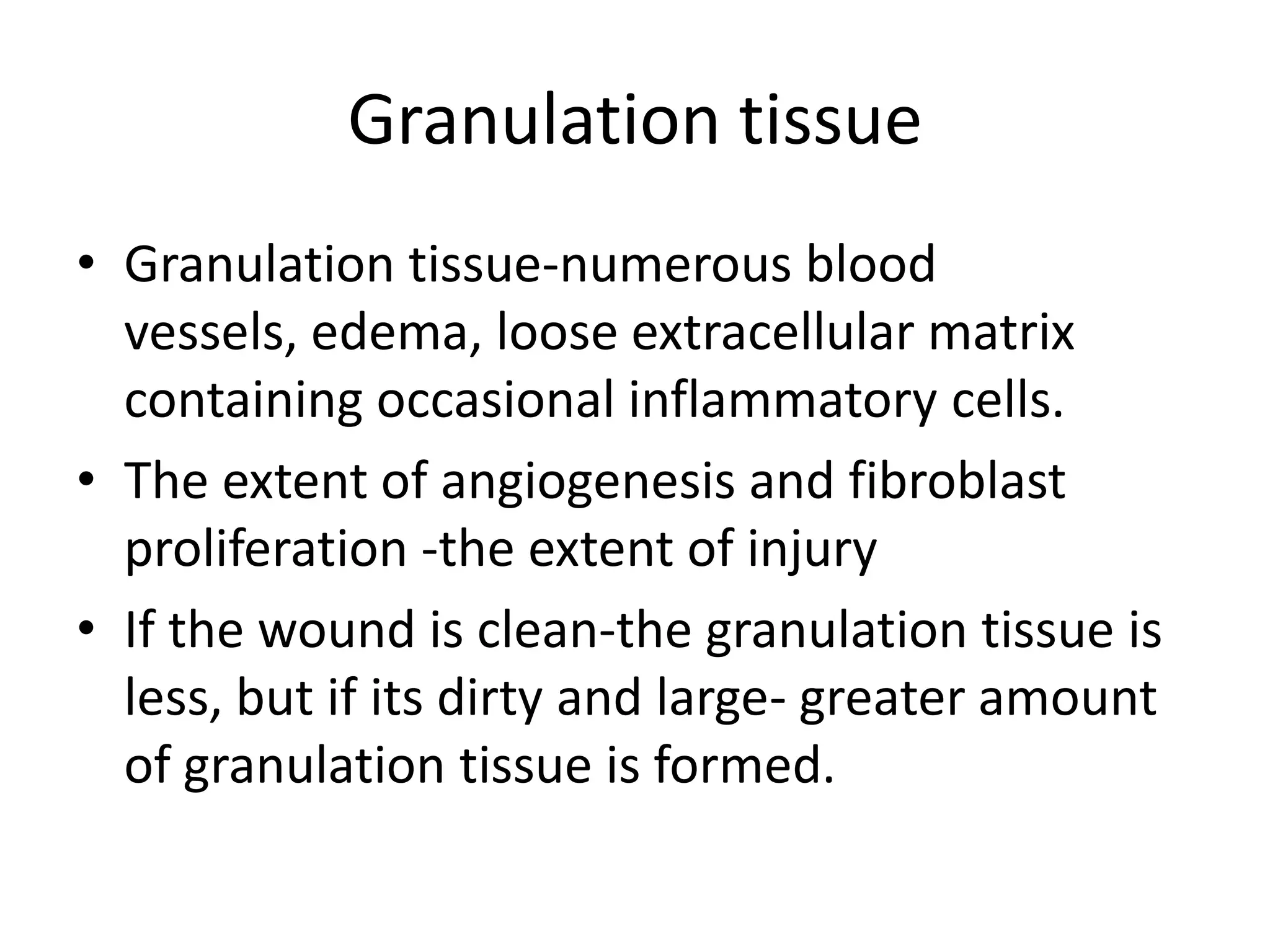
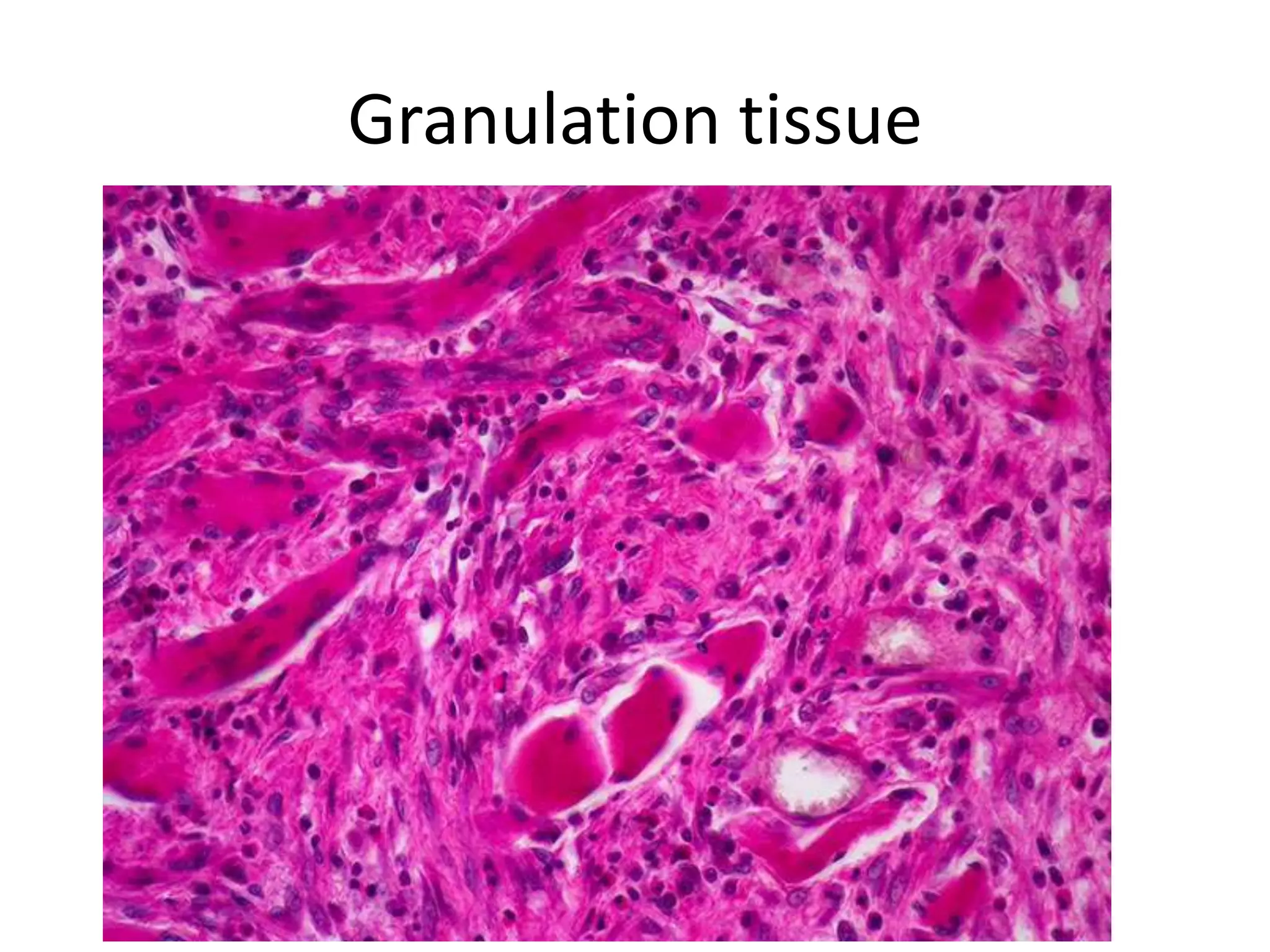
Granulation tissue
• Granulation tissue-numerous blood
  vessels, edema, loose extracellular matrix
  containing occasional inflammatory cells.
• The extent of angiogenesis and fibroblast
  proliferation -the extent of injury
• If the wound is clean-the granulation tissue is
  less, but if its dirty and large- greater amount
  of granulation tissue is formed.
Primary   Secondary
Granulation tissue
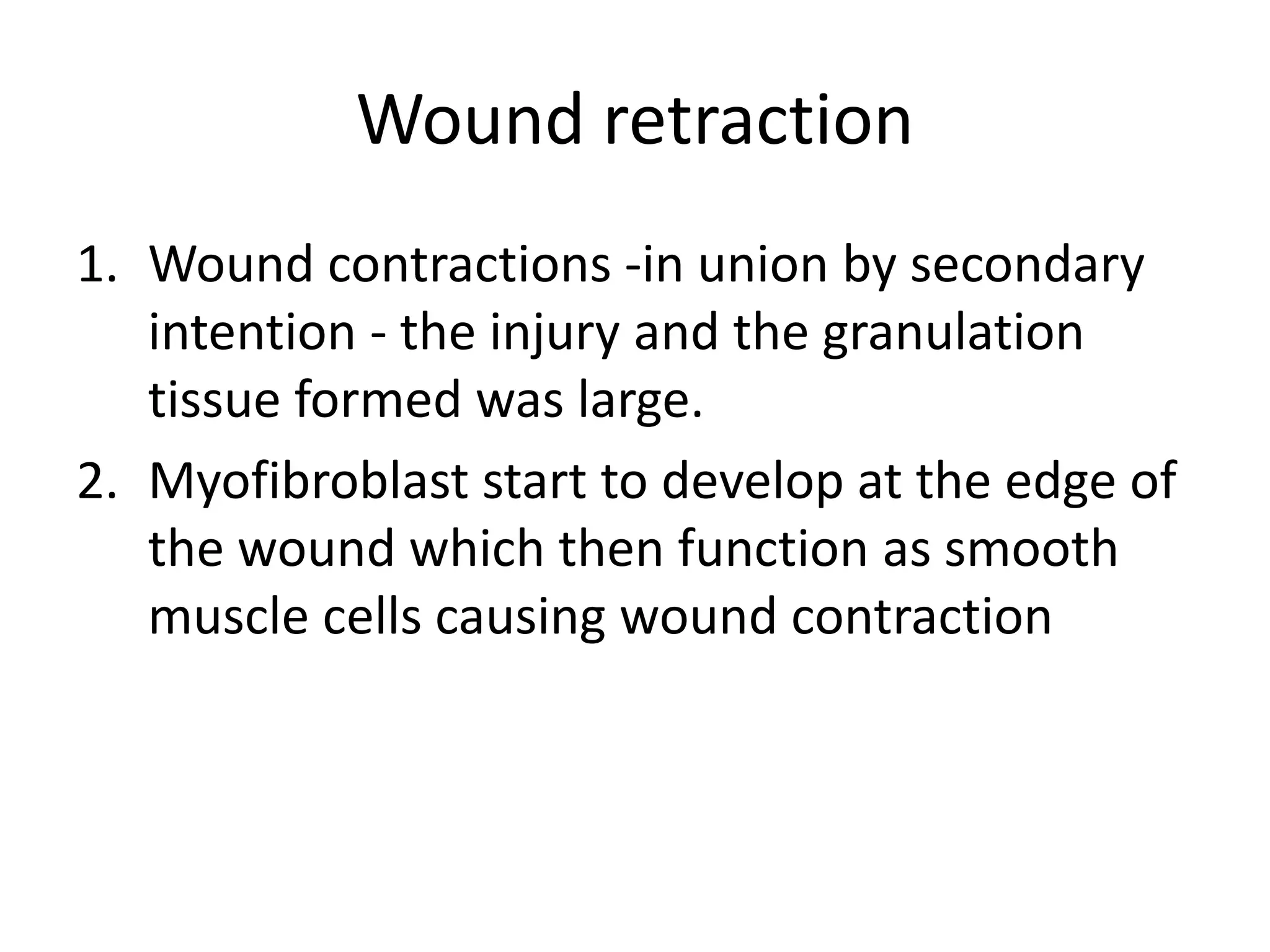
Wound retraction
1. Wound contractions -in union by secondary
   intention - the injury and the granulation
   tissue formed was large.
2. Myofibroblast start to develop at the edge of
   the wound which then function as smooth
   muscle cells causing wound contraction
Primary   Secondary
Tissue remodeling
• replacement of granulation tissue by normal
  extracellular matrix.
• help of various chemicals secreted by
  macrophages such as
  metalloproteinases, disintegrins and
  gelatinases.
• Subsequently the rate of degradation subsides
  and collagen accumulation starts to regain
  tensile strength.
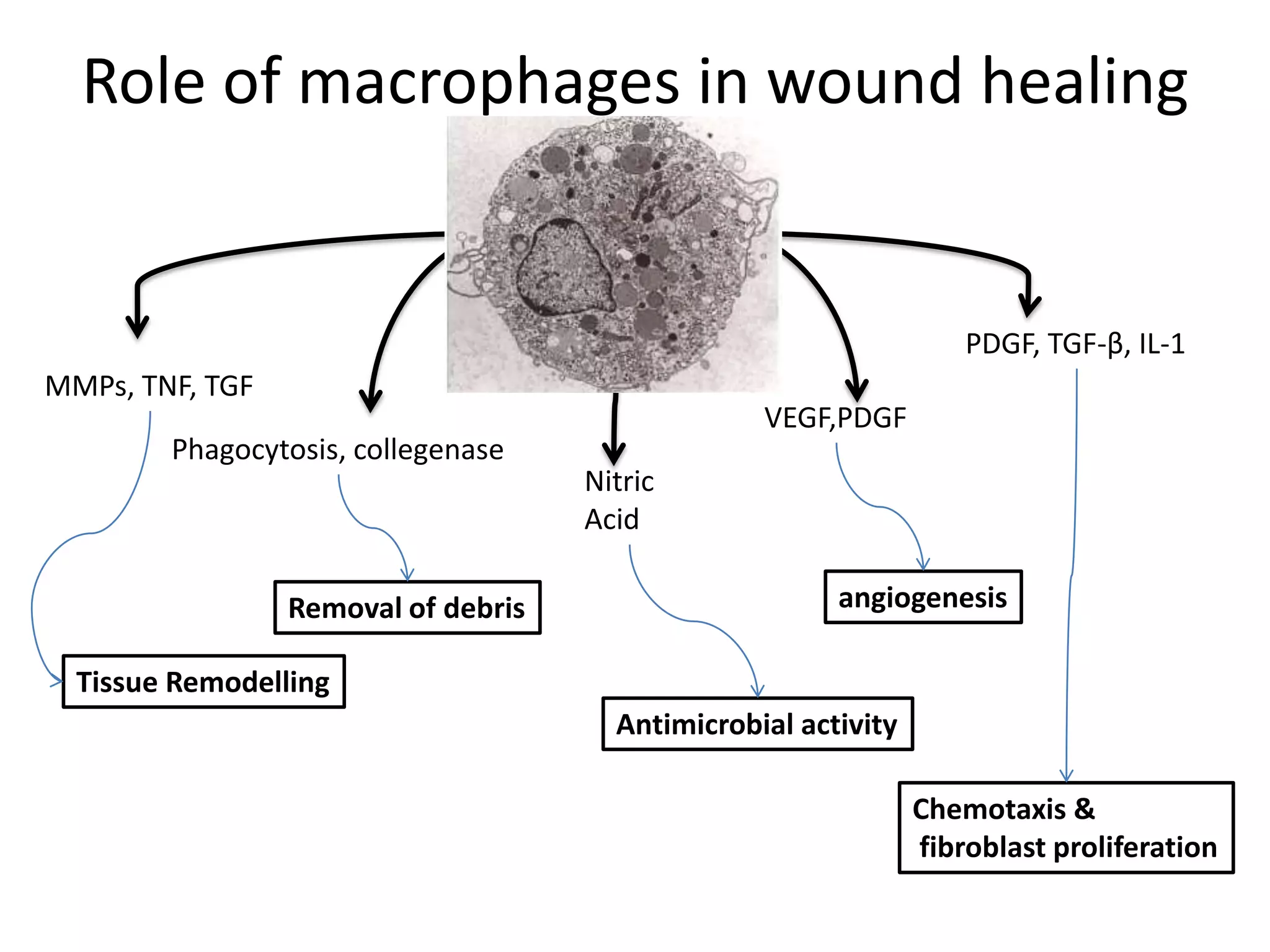
Role of macrophages in wound healing


                                                                    PDGF, TGF-β, IL-1
MMPs, TNF, TGF
                                                  VEGF,PDGF
        Phagocytosis, collegenase
                                     Nitric
                                     Acid

                 Removal of debris                      angiogenesis

  Tissue Remodelling
                                       Antimicrobial activity

                                                                Chemotaxis &
                                                                fibroblast proliferation
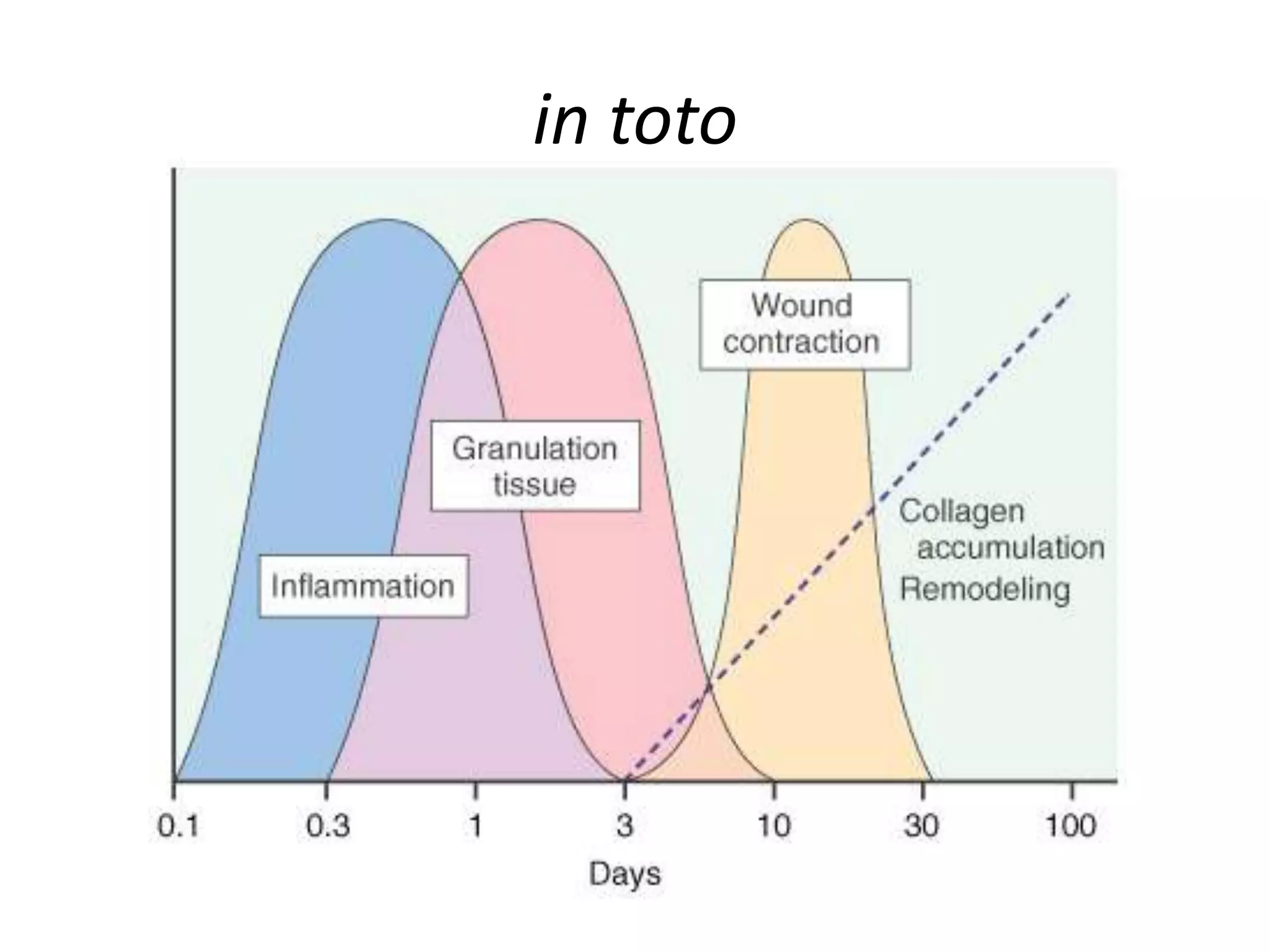
in toto
Treatment objectives

•   Stop bleeding
•   Cleaning of the wound
•   Surgical debridement
•   Radiological examination
Approximated wounds are:-
1. Surgical wounds
2. Neat cuts from
  sharp objects
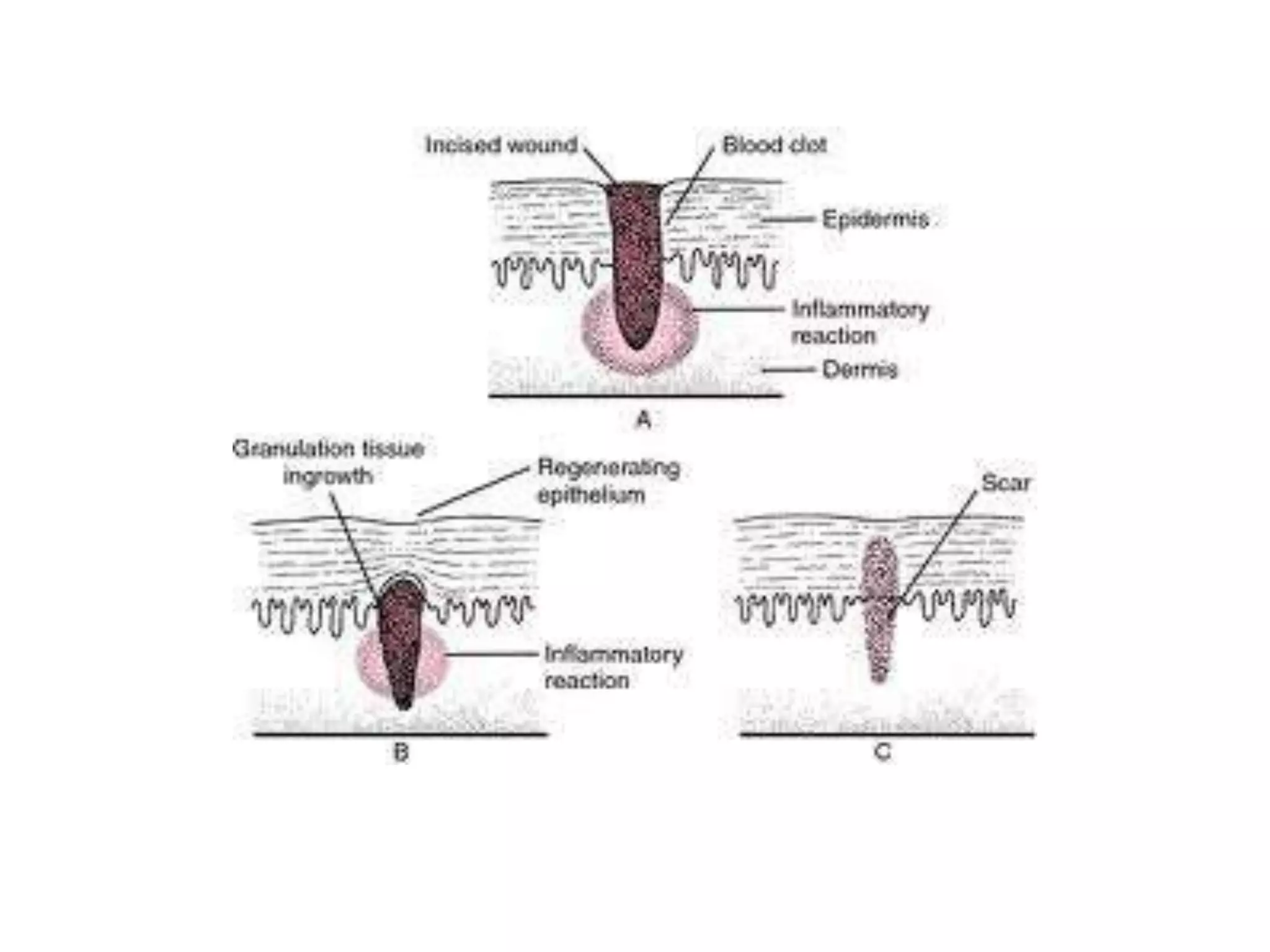
Healing of an approximated wound
• An approximated wound heals by primary
  intention
• Less granulation tissue
• Less inflammation
• Fast recovery with no or minimal infection
Scar formation
• Occurs when injury is deeper to superficial
  dermis
• Maturation phase--> disorganization of
  collagen
Scar maturation
• Remodelling takes place over 6-12 months
• Immature scars mature over an year
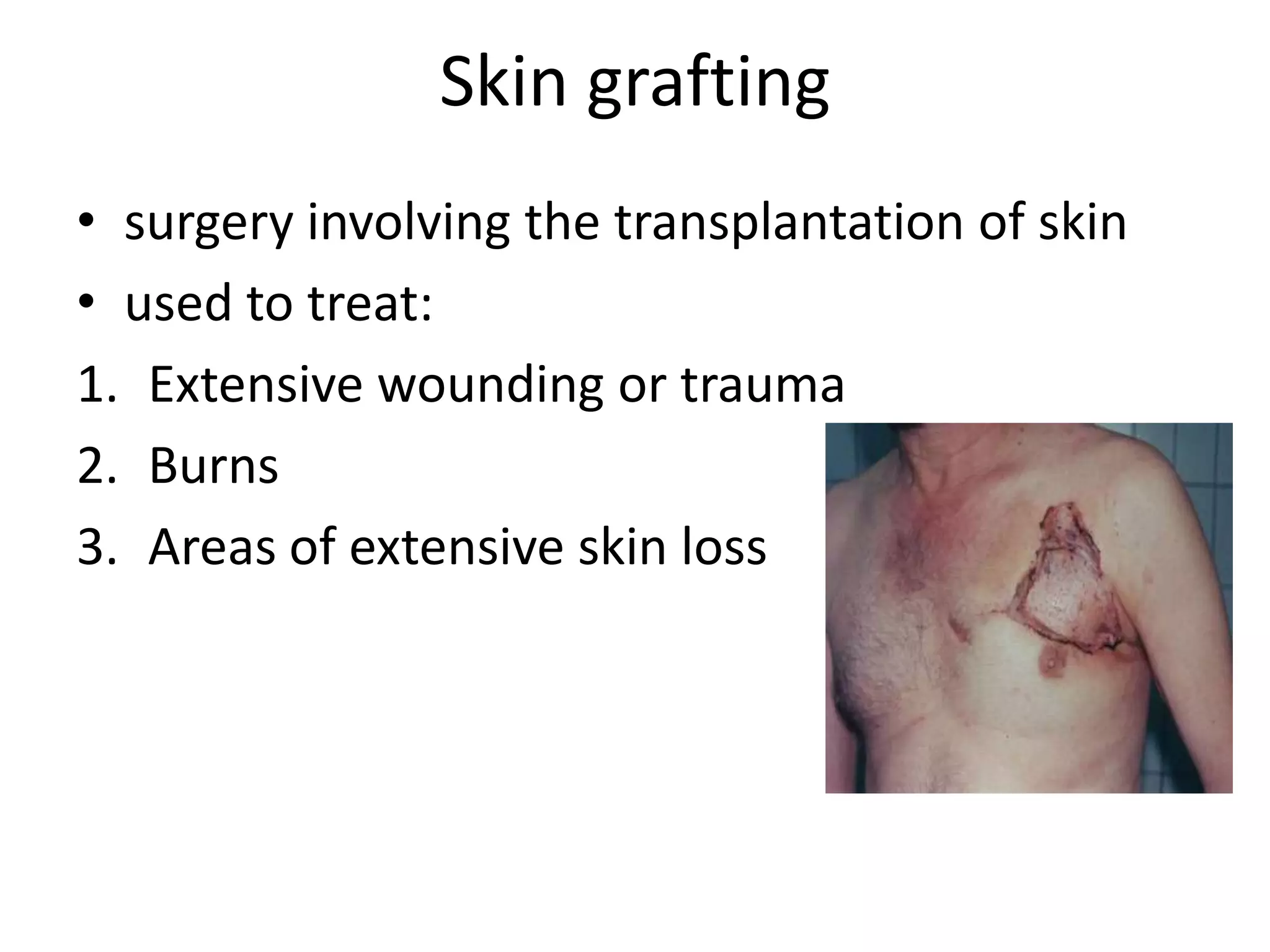
Skin grafting
• surgery involving the transplantation of skin
• used to treat:
1. Extensive wounding or trauma
2. Burns
3. Areas of extensive skin loss
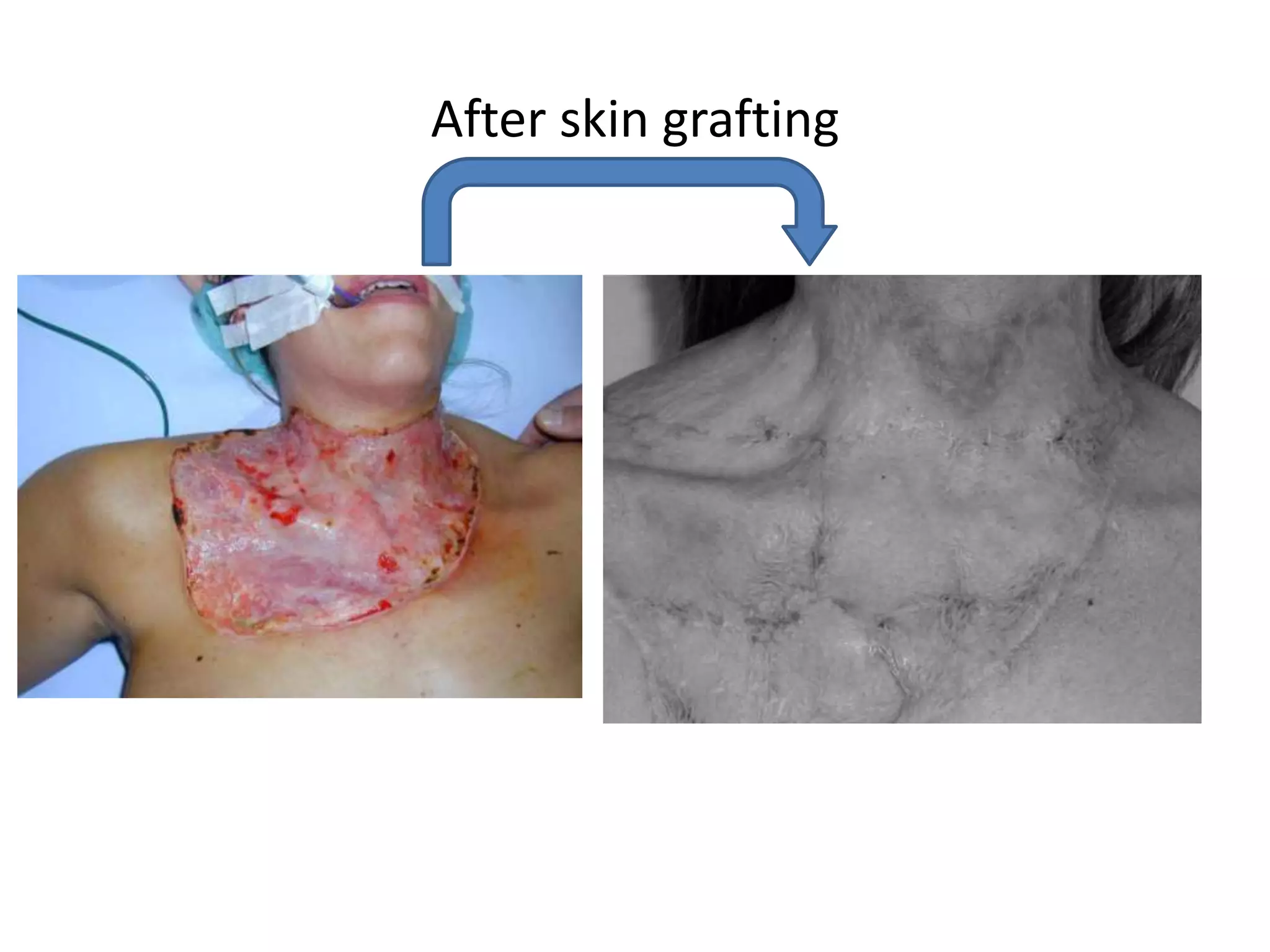
After skin grafting
Healing of an open wound

Healing of an open wound

  • 1.
    HEALING OF OPEN AND APPROXIMATED WOUND PRESENTED BY Aheed Khan Roll number-8
  • 2.
  • 3.
    Open wounds are:- 1. Puncture wounds 2. Abrasions 3. Friction burns 4. Lacerations 5. Bites
  • 4.
    Process of Healing 1.Hemostasis and inflammation • recruitment of growth factors for regeneration and WBCs - fighting off potential infection • The stem cells proliferate to replace the damaged tissue
  • 6.
    Granulation tissue • Granulationtissue-numerous blood vessels, edema, loose extracellular matrix containing occasional inflammatory cells. • The extent of angiogenesis and fibroblast proliferation -the extent of injury • If the wound is clean-the granulation tissue is less, but if its dirty and large- greater amount of granulation tissue is formed.
  • 7.
    Primary Secondary
  • 8.
  • 9.
    Wound retraction 1. Woundcontractions -in union by secondary intention - the injury and the granulation tissue formed was large. 2. Myofibroblast start to develop at the edge of the wound which then function as smooth muscle cells causing wound contraction
  • 10.
    Primary Secondary
  • 11.
    Tissue remodeling • replacementof granulation tissue by normal extracellular matrix. • help of various chemicals secreted by macrophages such as metalloproteinases, disintegrins and gelatinases. • Subsequently the rate of degradation subsides and collagen accumulation starts to regain tensile strength.
  • 12.
    Role of macrophagesin wound healing PDGF, TGF-β, IL-1 MMPs, TNF, TGF VEGF,PDGF Phagocytosis, collegenase Nitric Acid Removal of debris angiogenesis Tissue Remodelling Antimicrobial activity Chemotaxis & fibroblast proliferation
  • 13.
  • 14.
    Treatment objectives • Stop bleeding • Cleaning of the wound • Surgical debridement • Radiological examination
  • 15.
    Approximated wounds are:- 1.Surgical wounds 2. Neat cuts from sharp objects
  • 16.
    Healing of anapproximated wound • An approximated wound heals by primary intention • Less granulation tissue • Less inflammation • Fast recovery with no or minimal infection
  • 18.
    Scar formation • Occurswhen injury is deeper to superficial dermis • Maturation phase--> disorganization of collagen
  • 19.
    Scar maturation • Remodellingtakes place over 6-12 months • Immature scars mature over an year
  • 20.
    Skin grafting • surgeryinvolving the transplantation of skin • used to treat: 1. Extensive wounding or trauma 2. Burns 3. Areas of extensive skin loss
  • 21.

Editor's Notes

  • #21 Egpyodermagangrenosum
  • #22 Postoperative Pyoderma Gangrenosum Developing After Throidectomy Authors: Tamer Koldas, MD, Hulya Aydın, MD, Cengiz Dibekoglu, MD, Bekir Aybey, MD, Tarik Terzioglu, MD treatment and healing after 4 months