DFN: Using search engines: Which search engines to use and why                Page 1 of 2


   Using search engines
   by Robert Lebowitz, Digital Freedom Network

                (October 10, 2001) Essential to human rights
                research-indeed, any research-is the ability to find
                accurate information. Surely, the Internet has opened
                up avenues for research that were inconceivable a
                decade ago. The availability of foreign newspapers,
                government information, and all sorts of primary
   documents on the World Wide Web allow someone to find out
   about an issue or individual in great depth without ever leaving his
   or her seat.

   The only obstacle, then, lies in the ability of the user to successfully
   navigate through the Web in order to find the desired information.
   The tool on the Web used for this purpose is the search engine and
   the web directory. Like any tools, however, they can be used with
   widely varying degrees of success depending upon the knowledge
   of their user. This article will introduce the novice web searcher to
   the crux of an intelligent, successful search using these tools.

   (You may also want to see our article on using a search engine.)

   The Different Kinds of Search Engines

   The Web is a comprised of a mass of sites containing all sorts of
   information. A good number of these sites submit their web
   addresses (called "URLs," which stands for "Uniform Resource
   Locators") to search engines and directories so the public can find
   them, much the same way that businesses will submit their phone
   numbers to the Yellow Pages.

   It is a testament to the vastness of the Web, however, to note that
   only about a third of these sites are listed with search engines and
   directories. In other words, two-thirds of the information on the Web
   lies cut off in cyberspace, never able to be accessed by the public.

   There are many Web sites that offer to search for information.
   These include Yahoo!, Netscape, Google, etc. However, all Web
   sites which search for information fall into two major categories:
   directories and search engines.

   The basic difference between a directory and a search engine is
   that a directory contains information sorted by humans, while a
   search engine contains information sorted by the computer.

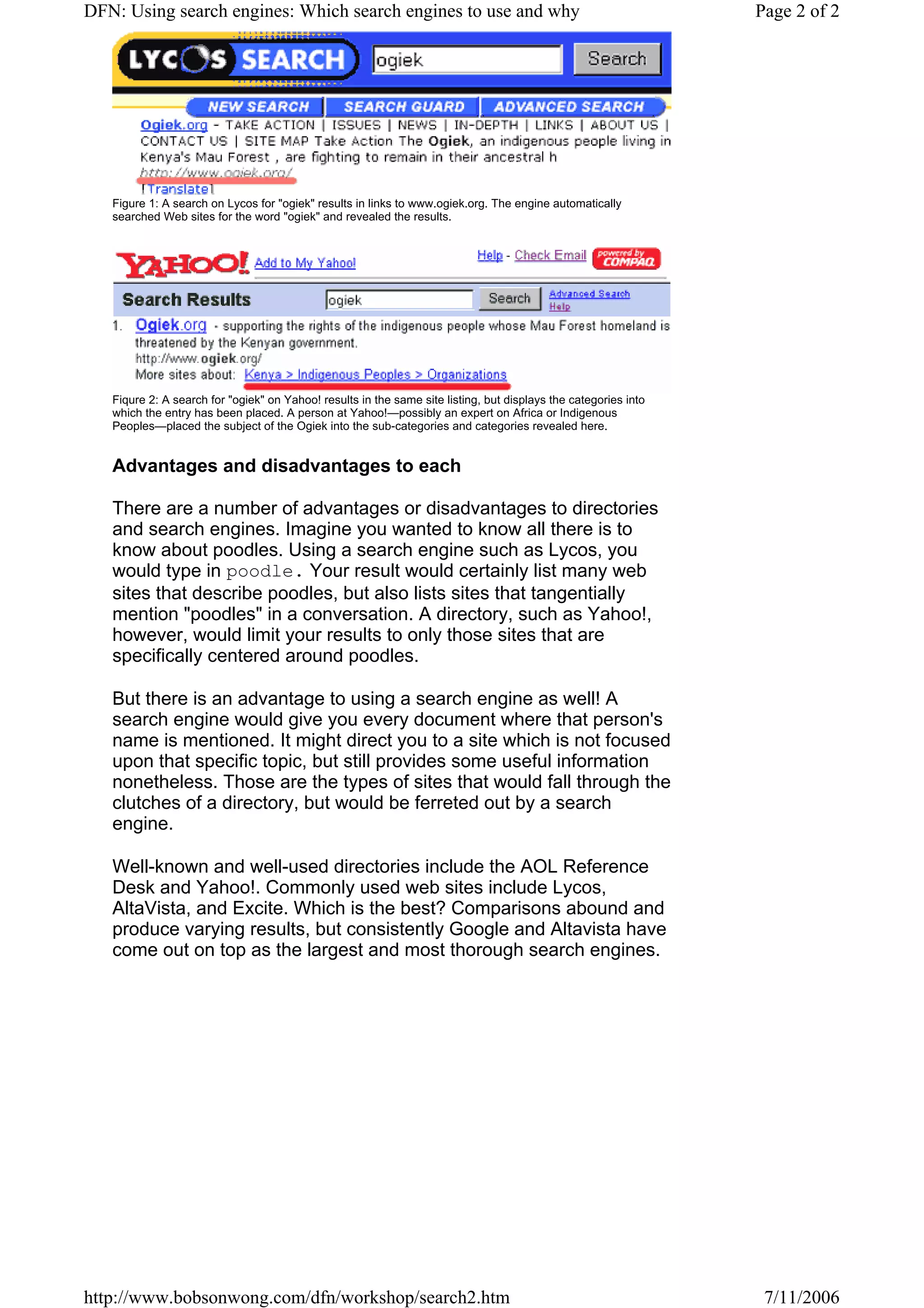
   An example of a directory is Yahoo!, where subjects are placed
   under categories by experts. A search for an item will result in a list
   of all the sites that are grouped in that category.

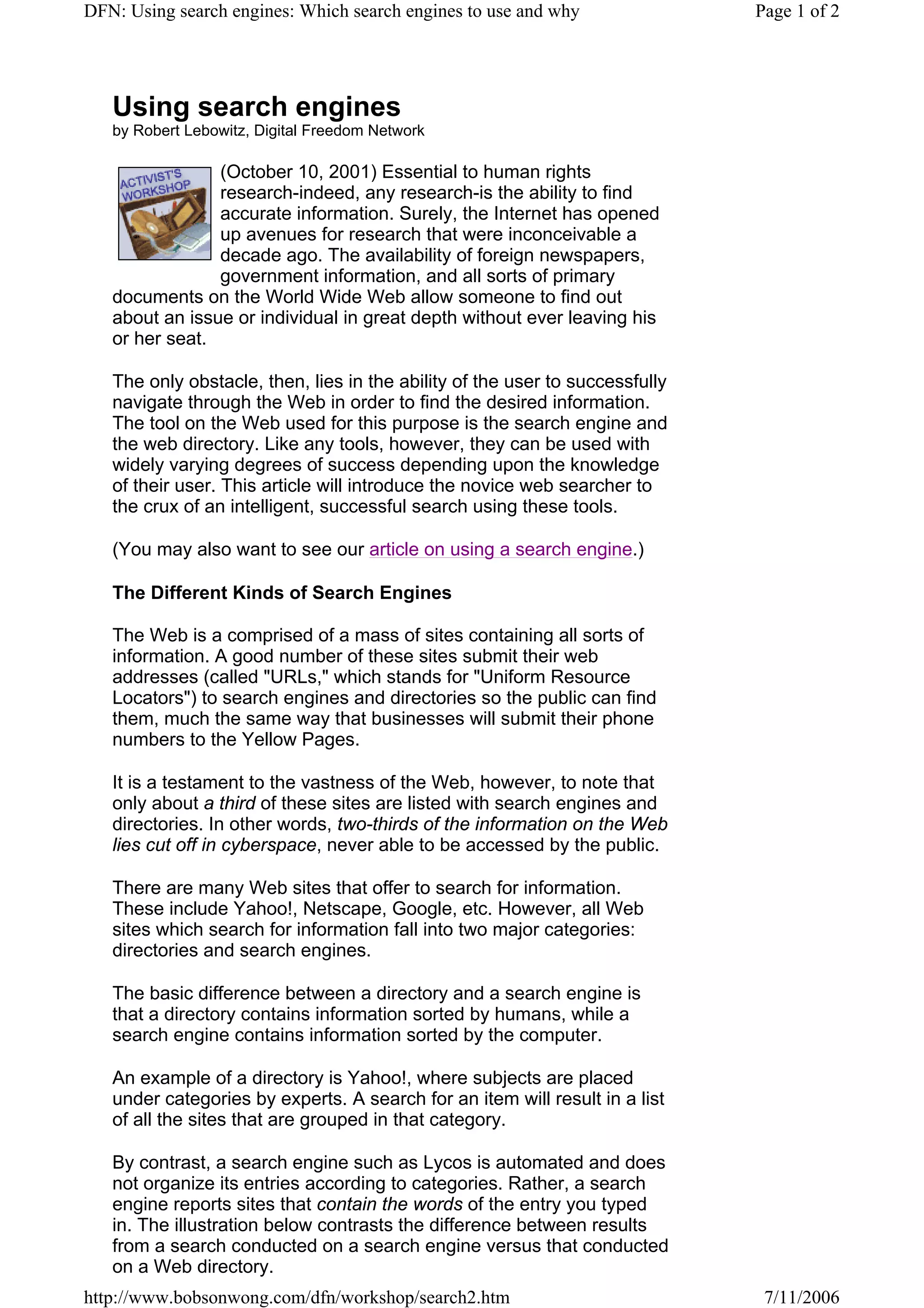
   By contrast, a search engine such as Lycos is automated and does
   not organize its entries according to categories. Rather, a search
   engine reports sites that contain the words of the entry you typed
   in. The illustration below contrasts the difference between results
   from a search conducted on a search engine versus that conducted
   on a Web directory.
http://www.bobsonwong.com/dfn/workshop/search2.htm                             7/11/2006
DFN: Using search engines: Which search engines to use and why                                                   Page 2 of 2


   Figure 1: A search on Lycos for "ogiek" results in links to www.ogiek.org. The engine automatically
   searched Web sites for the word "ogiek" and revealed the results.


   Fiqure 2: A search for "ogiek" on Yahoo! results in the same site listing, but displays the categories into
   which the entry has been placed. A person at Yahoo!—possibly an expert on Africa or Indigenous
   Peoples—placed the subject of the Ogiek into the sub-categories and categories revealed here.


   Advantages and disadvantages to each

   There are a number of advantages or disadvantages to directories
   and search engines. Imagine you wanted to know all there is to
   know about poodles. Using a search engine such as Lycos, you
   would type in poodle. Your result would certainly list many web
   sites that describe poodles, but also lists sites that tangentially
   mention "poodles" in a conversation. A directory, such as Yahoo!,
   however, would limit your results to only those sites that are
   specifically centered around poodles.

   But there is an advantage to using a search engine as well! A
   search engine would give you every document where that person's
   name is mentioned. It might direct you to a site which is not focused
   upon that specific topic, but still provides some useful information
   nonetheless. Those are the types of sites that would fall through the
   clutches of a directory, but would be ferreted out by a search
   engine.

   Well-known and well-used directories include the AOL Reference
   Desk and Yahoo!. Commonly used web sites include Lycos,
   AltaVista, and Excite. Which is the best? Comparisons abound and
   produce varying results, but consistently Google and Altavista have
   come out on top as the largest and most thorough search engines.


http://www.bobsonwong.com/dfn/workshop/search2.htm                                                                7/11/2006

Using Search Engines

  • 1.
    DFN: Using searchengines: Which search engines to use and why Page 1 of 2 Using search engines by Robert Lebowitz, Digital Freedom Network (October 10, 2001) Essential to human rights research-indeed, any research-is the ability to find accurate information. Surely, the Internet has opened up avenues for research that were inconceivable a decade ago. The availability of foreign newspapers, government information, and all sorts of primary documents on the World Wide Web allow someone to find out about an issue or individual in great depth without ever leaving his or her seat. The only obstacle, then, lies in the ability of the user to successfully navigate through the Web in order to find the desired information. The tool on the Web used for this purpose is the search engine and the web directory. Like any tools, however, they can be used with widely varying degrees of success depending upon the knowledge of their user. This article will introduce the novice web searcher to the crux of an intelligent, successful search using these tools. (You may also want to see our article on using a search engine.) The Different Kinds of Search Engines The Web is a comprised of a mass of sites containing all sorts of information. A good number of these sites submit their web addresses (called "URLs," which stands for "Uniform Resource Locators") to search engines and directories so the public can find them, much the same way that businesses will submit their phone numbers to the Yellow Pages. It is a testament to the vastness of the Web, however, to note that only about a third of these sites are listed with search engines and directories. In other words, two-thirds of the information on the Web lies cut off in cyberspace, never able to be accessed by the public. There are many Web sites that offer to search for information. These include Yahoo!, Netscape, Google, etc. However, all Web sites which search for information fall into two major categories: directories and search engines. The basic difference between a directory and a search engine is that a directory contains information sorted by humans, while a search engine contains information sorted by the computer. An example of a directory is Yahoo!, where subjects are placed under categories by experts. A search for an item will result in a list of all the sites that are grouped in that category. By contrast, a search engine such as Lycos is automated and does not organize its entries according to categories. Rather, a search engine reports sites that contain the words of the entry you typed in. The illustration below contrasts the difference between results from a search conducted on a search engine versus that conducted on a Web directory. http://www.bobsonwong.com/dfn/workshop/search2.htm 7/11/2006
  • 2.
    DFN: Using searchengines: Which search engines to use and why Page 2 of 2 Figure 1: A search on Lycos for "ogiek" results in links to www.ogiek.org. The engine automatically searched Web sites for the word "ogiek" and revealed the results. Fiqure 2: A search for "ogiek" on Yahoo! results in the same site listing, but displays the categories into which the entry has been placed. A person at Yahoo!—possibly an expert on Africa or Indigenous Peoples—placed the subject of the Ogiek into the sub-categories and categories revealed here. Advantages and disadvantages to each There are a number of advantages or disadvantages to directories and search engines. Imagine you wanted to know all there is to know about poodles. Using a search engine such as Lycos, you would type in poodle. Your result would certainly list many web sites that describe poodles, but also lists sites that tangentially mention "poodles" in a conversation. A directory, such as Yahoo!, however, would limit your results to only those sites that are specifically centered around poodles. But there is an advantage to using a search engine as well! A search engine would give you every document where that person's name is mentioned. It might direct you to a site which is not focused upon that specific topic, but still provides some useful information nonetheless. Those are the types of sites that would fall through the clutches of a directory, but would be ferreted out by a search engine. Well-known and well-used directories include the AOL Reference Desk and Yahoo!. Commonly used web sites include Lycos, AltaVista, and Excite. Which is the best? Comparisons abound and produce varying results, but consistently Google and Altavista have come out on top as the largest and most thorough search engines. http://www.bobsonwong.com/dfn/workshop/search2.htm 7/11/2006