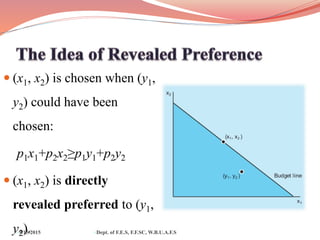
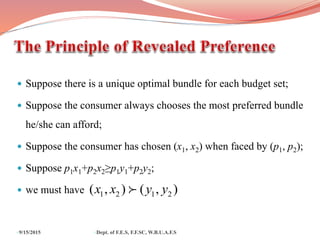
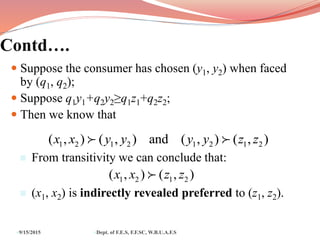
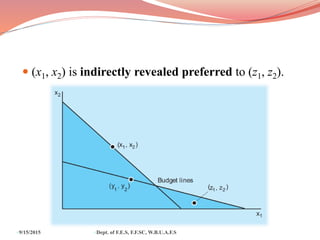
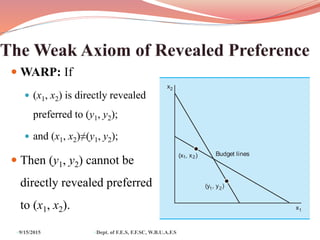
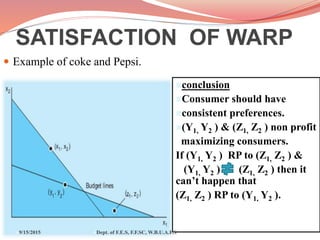
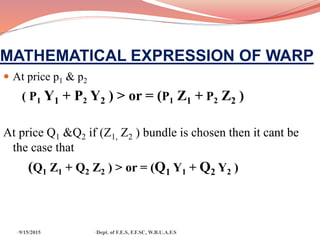
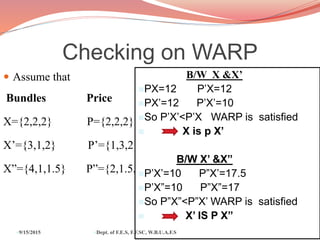
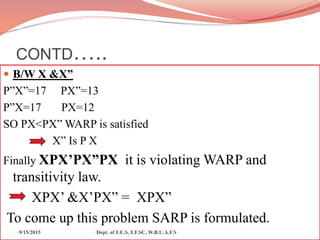
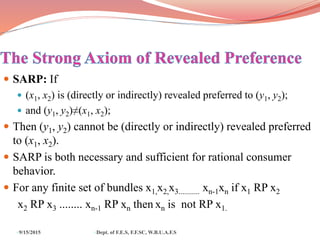
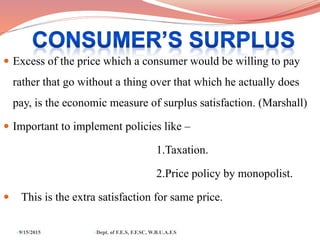
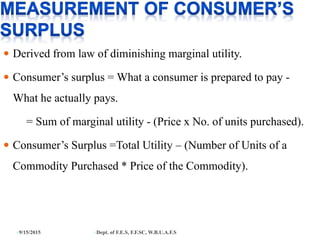
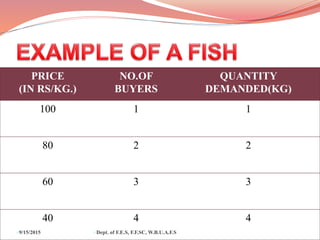
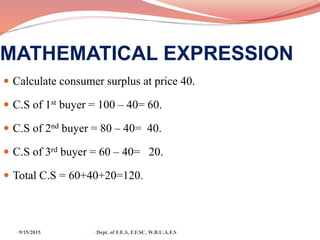
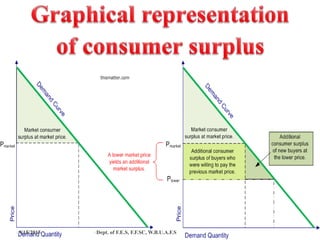
(1) Revealed preference theory, pioneered by Paul Samuelson, analyzes consumer choice and behavior based on actual choices made between bundles rather than assumed utility functions. (2) It establishes that a consumer's preferences are rational if they satisfy the weak axiom of revealed preference (WARP) and its strengthened version, the strong axiom of revealed preference (SARP). (3) Consumer surplus measures the difference between the maximum price consumers would be willing to pay for a good or service and the actual market price, representing the extra satisfaction consumers receive from purchasing the good.