HRM Seminar
New perspectives on Human Resource
Management – Moving Aruba forward


   Rethinking HRM in an era of
      rapid change and flux
                                    Edward Erasmus MA
                                        University of Aruba
                            Organization, Governance and Management
                                           June 1, 2012
What we will do in the next 30 minutes…

Have a conversation about key forces shaping
the role of Human Resources (HR)

•   Discuss some mega trends
•   How organizations adapt
•   Rethinking the role of HR
•   HRM challenges
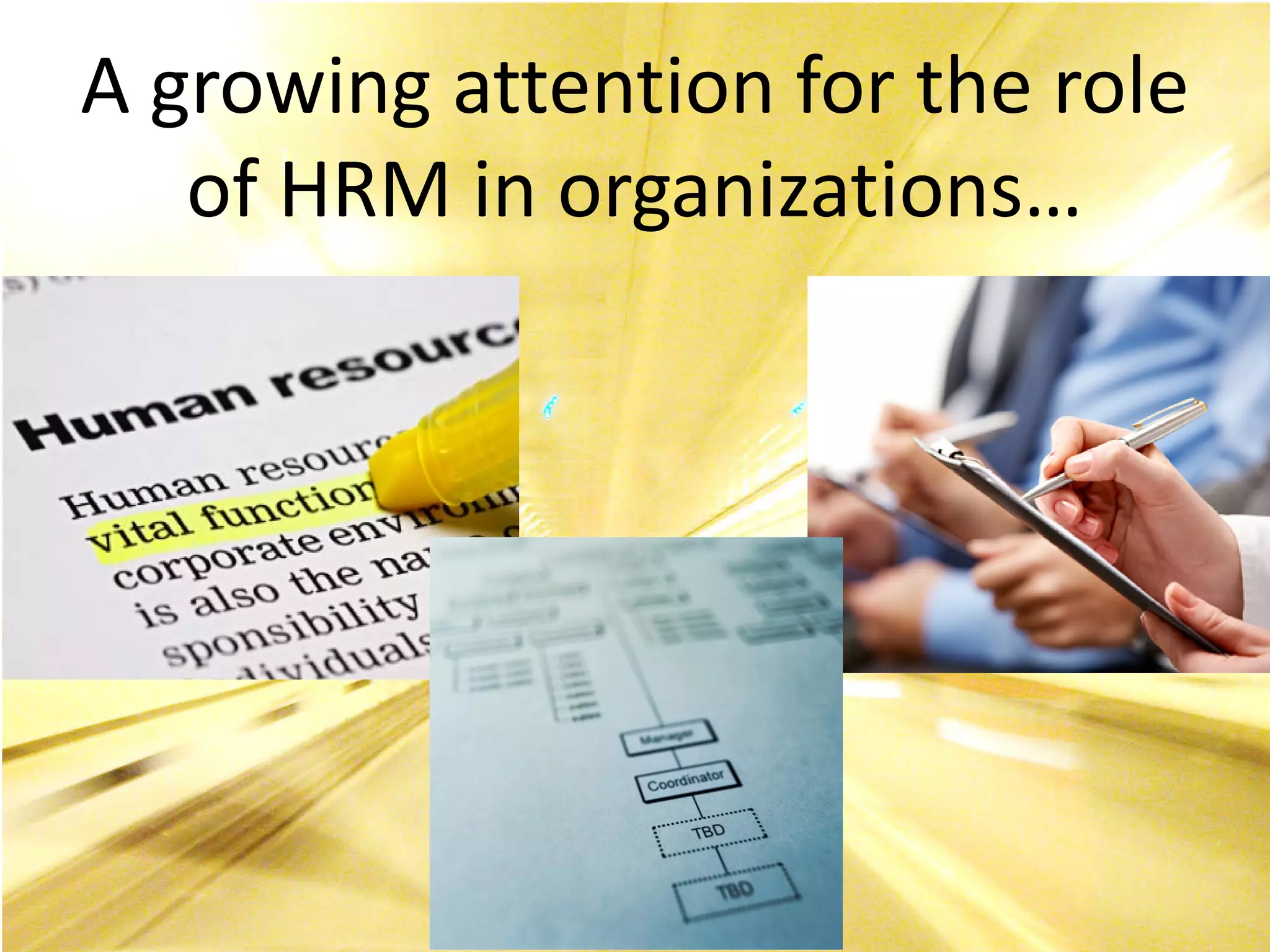
A growing attention for the role
   of HRM in organizations…
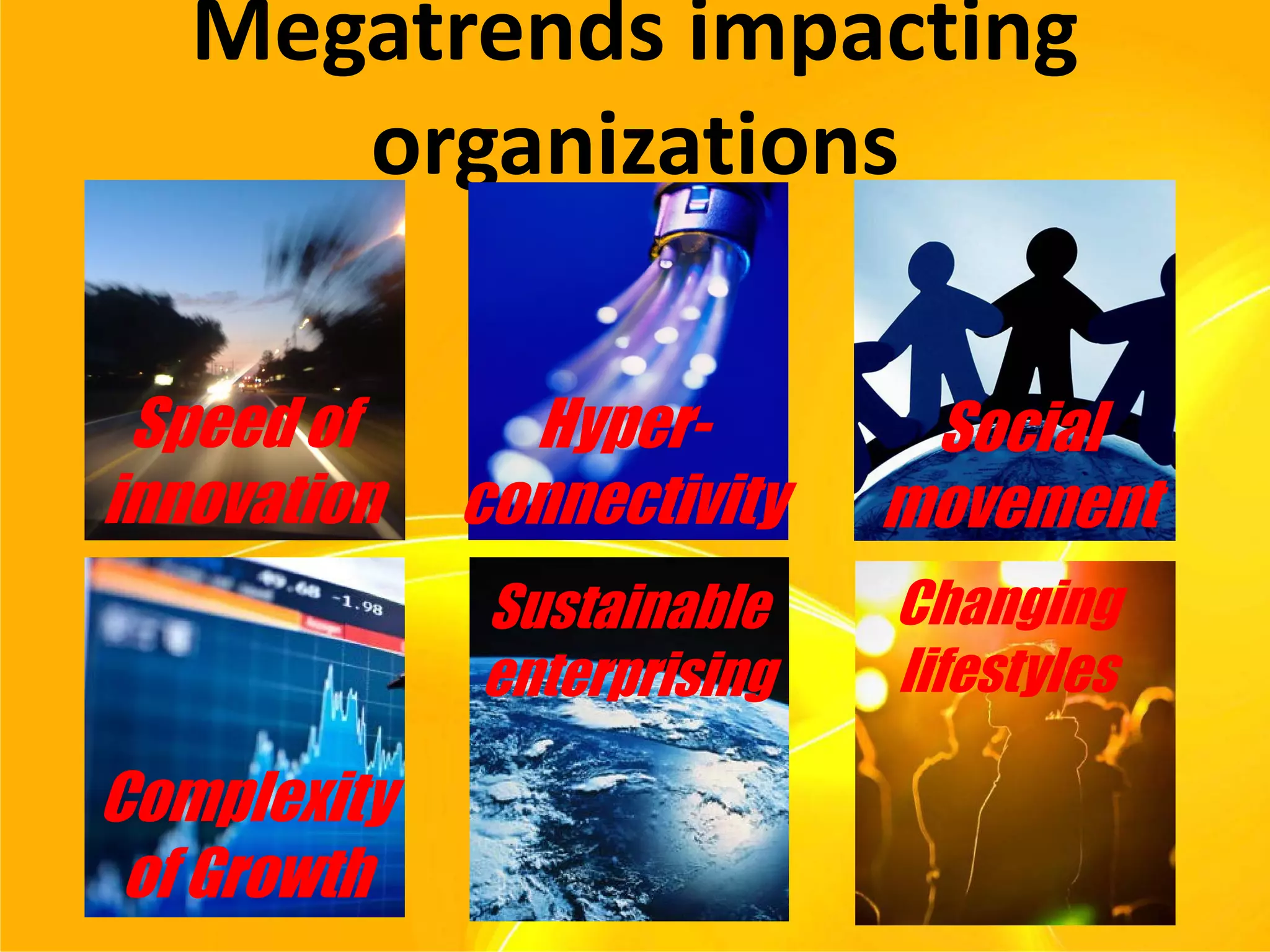
Megatrends impacting
      organizations

 Speed of      Hyper-        Social
innovation   connectivity   movement
             Sustainable    Changing
             enterprising   lifestyles

Complexity
 of Growth
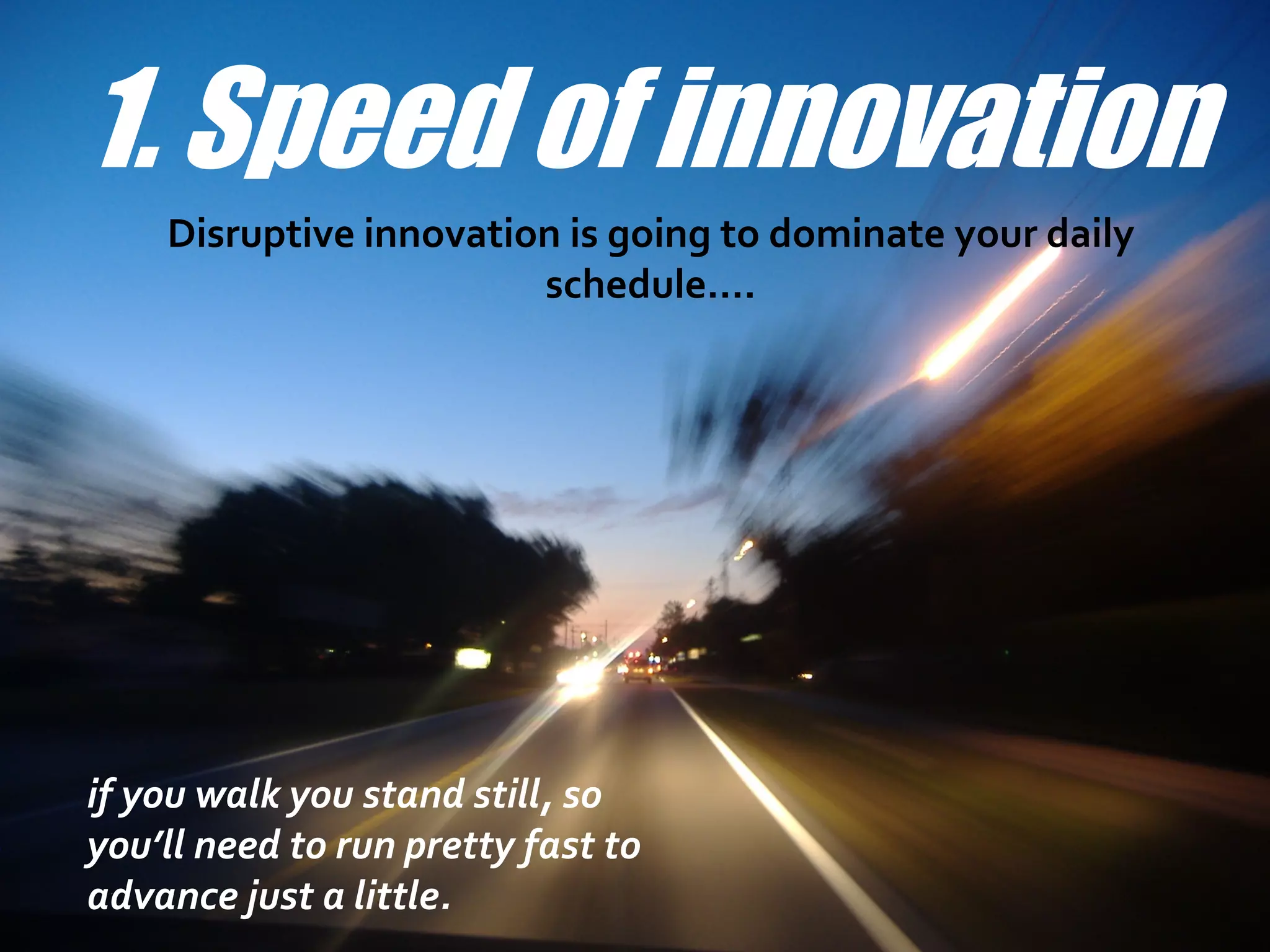
1. Speed of innovation
    Disruptive innovation is going to dominate your daily
                        schedule….


if you walk you stand still, so
you’ll need to run pretty fast to
advance just a little.
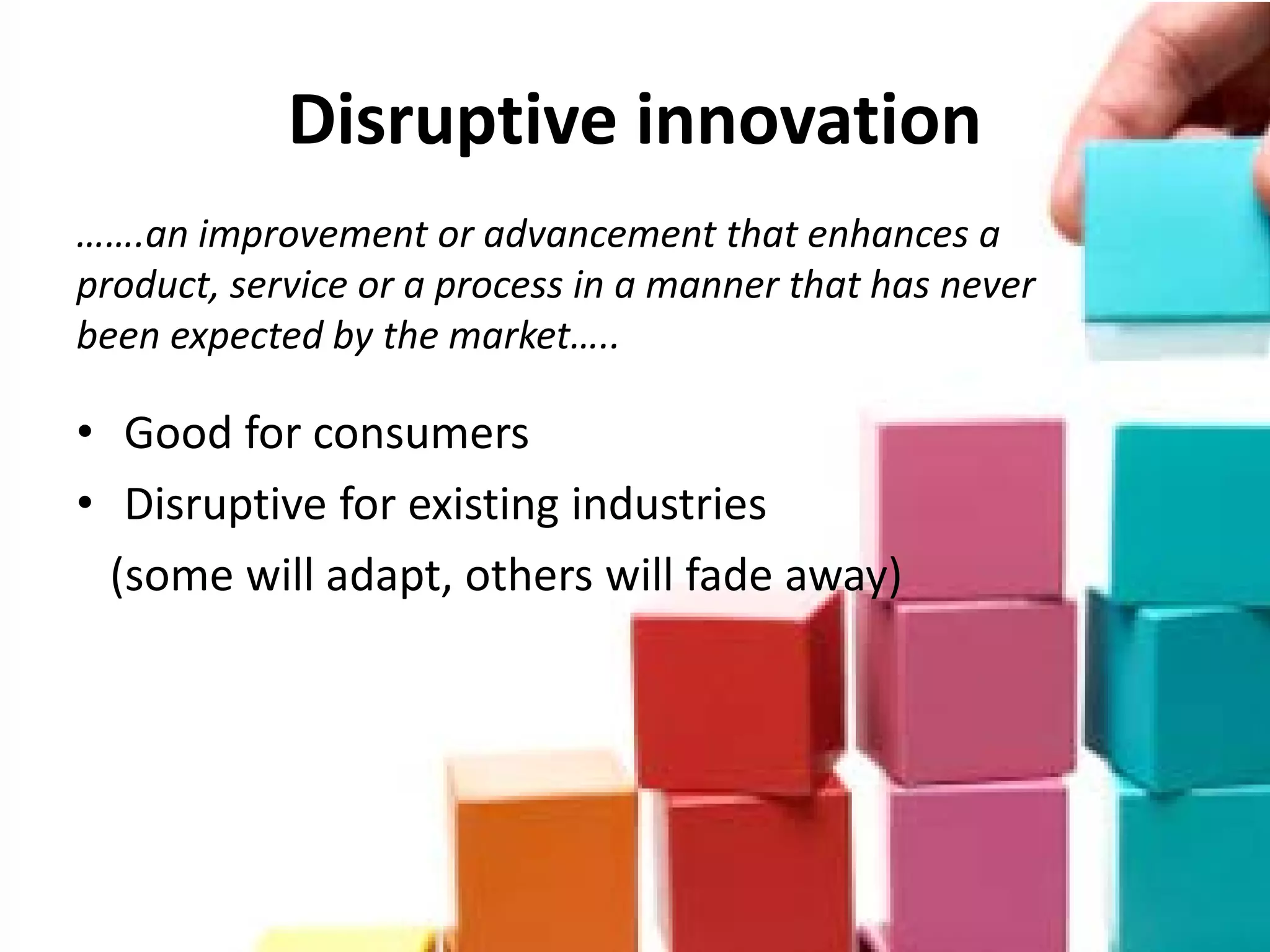
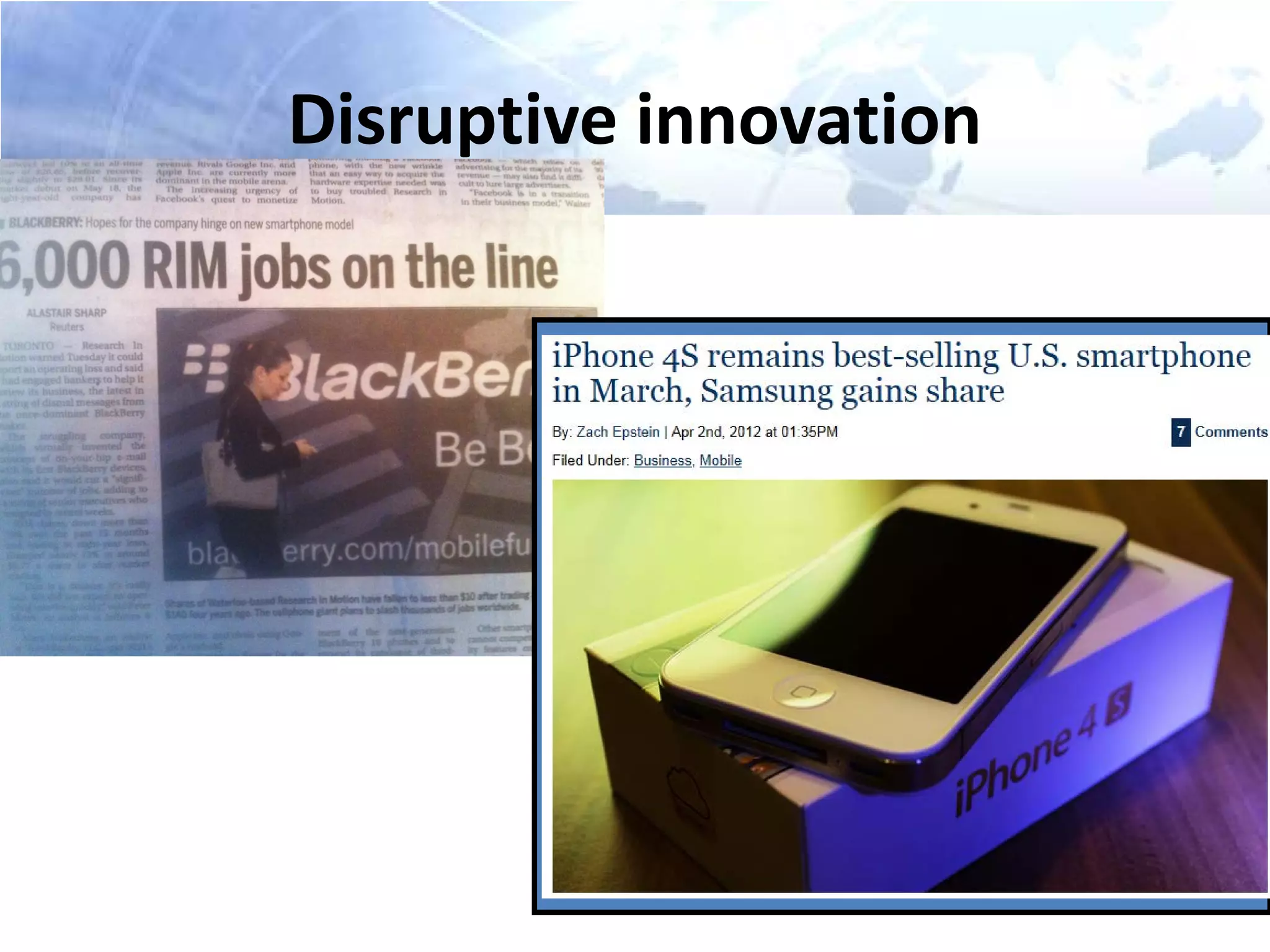
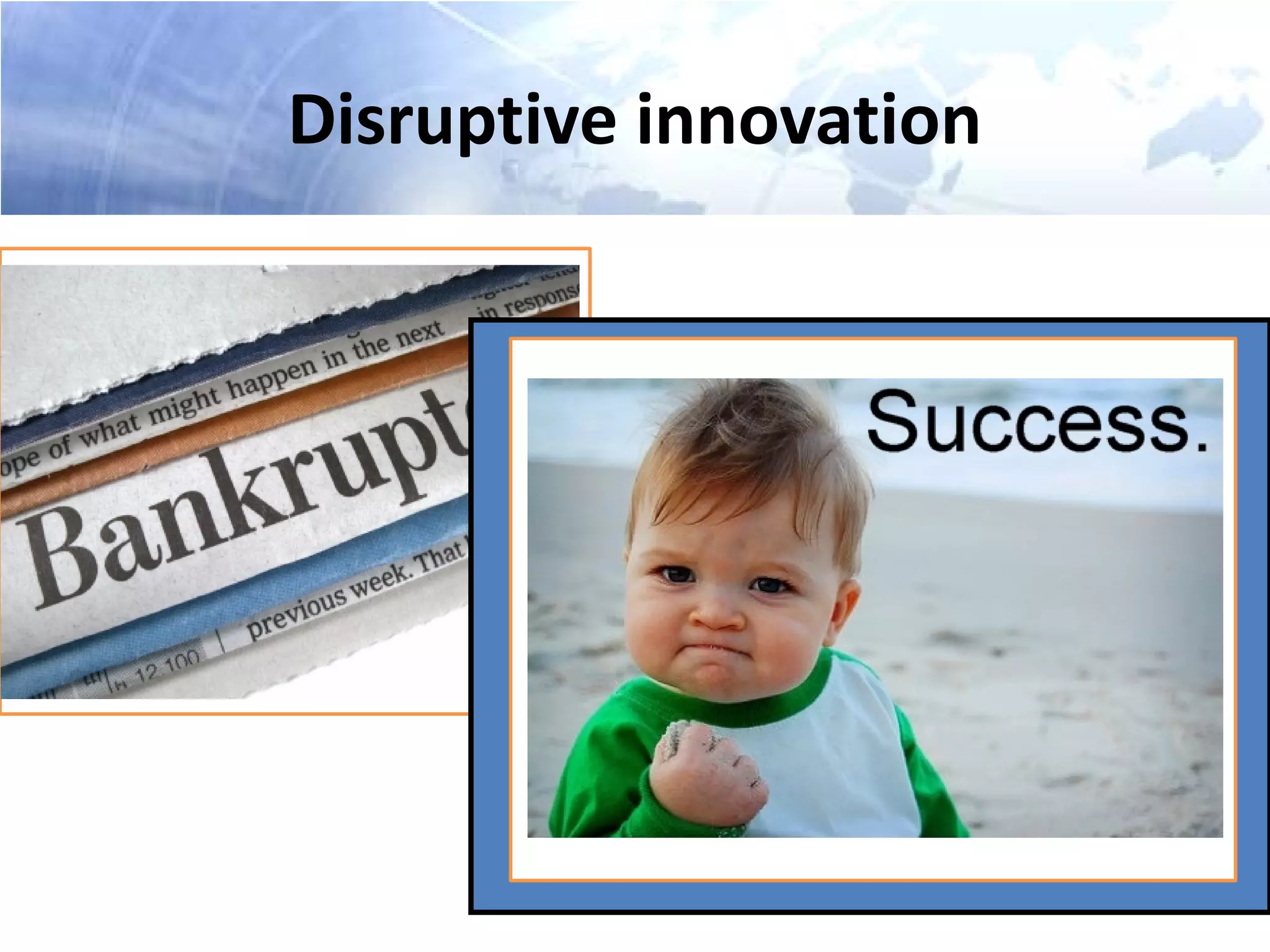
Disruptive innovation
…….an improvement or advancement that enhances a
product, service or a process in a manner that has never
been expected by the market…..

• Good for consumers
• Disruptive for existing industries
  (some will adapt, others will fade away)
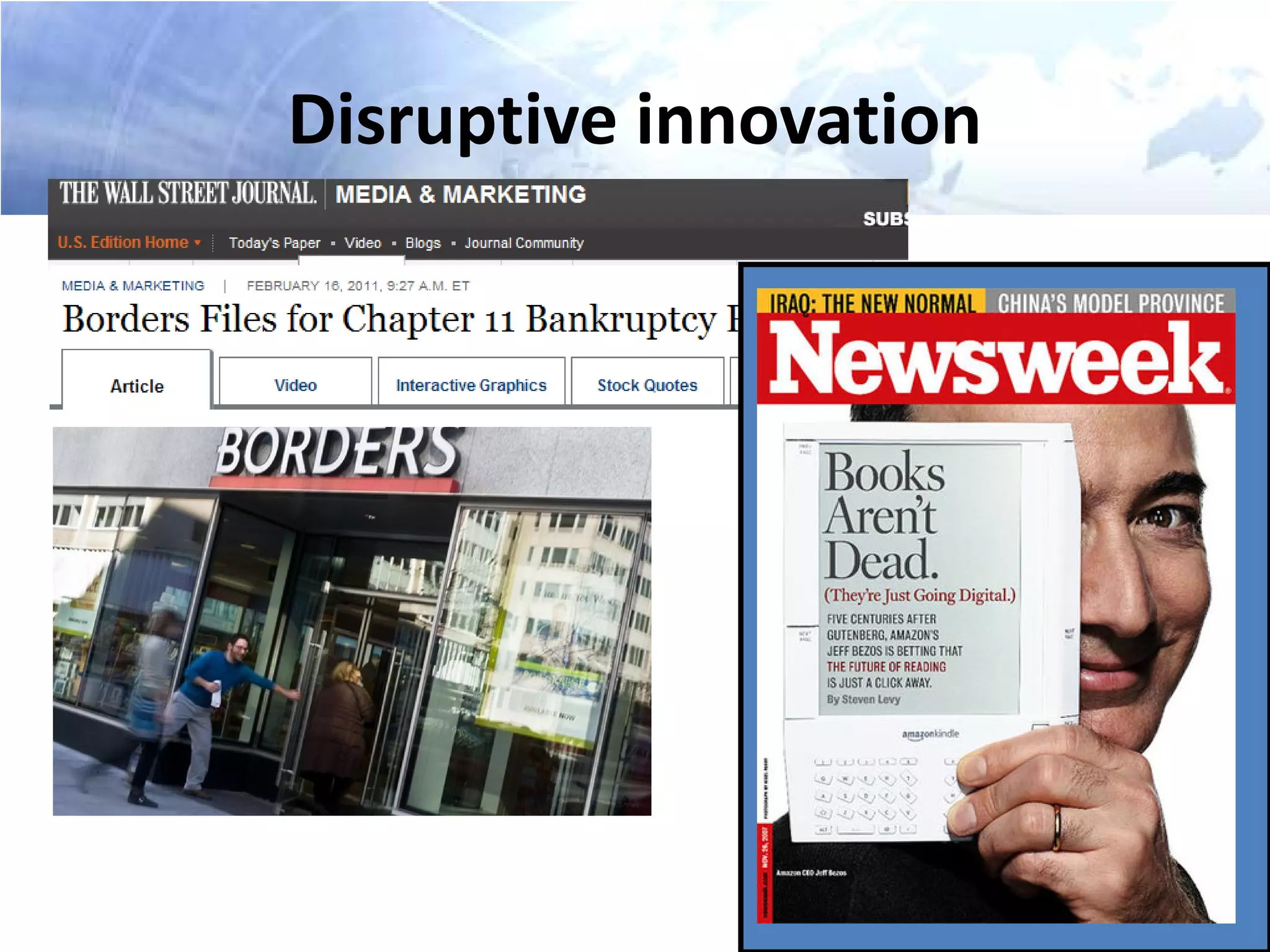
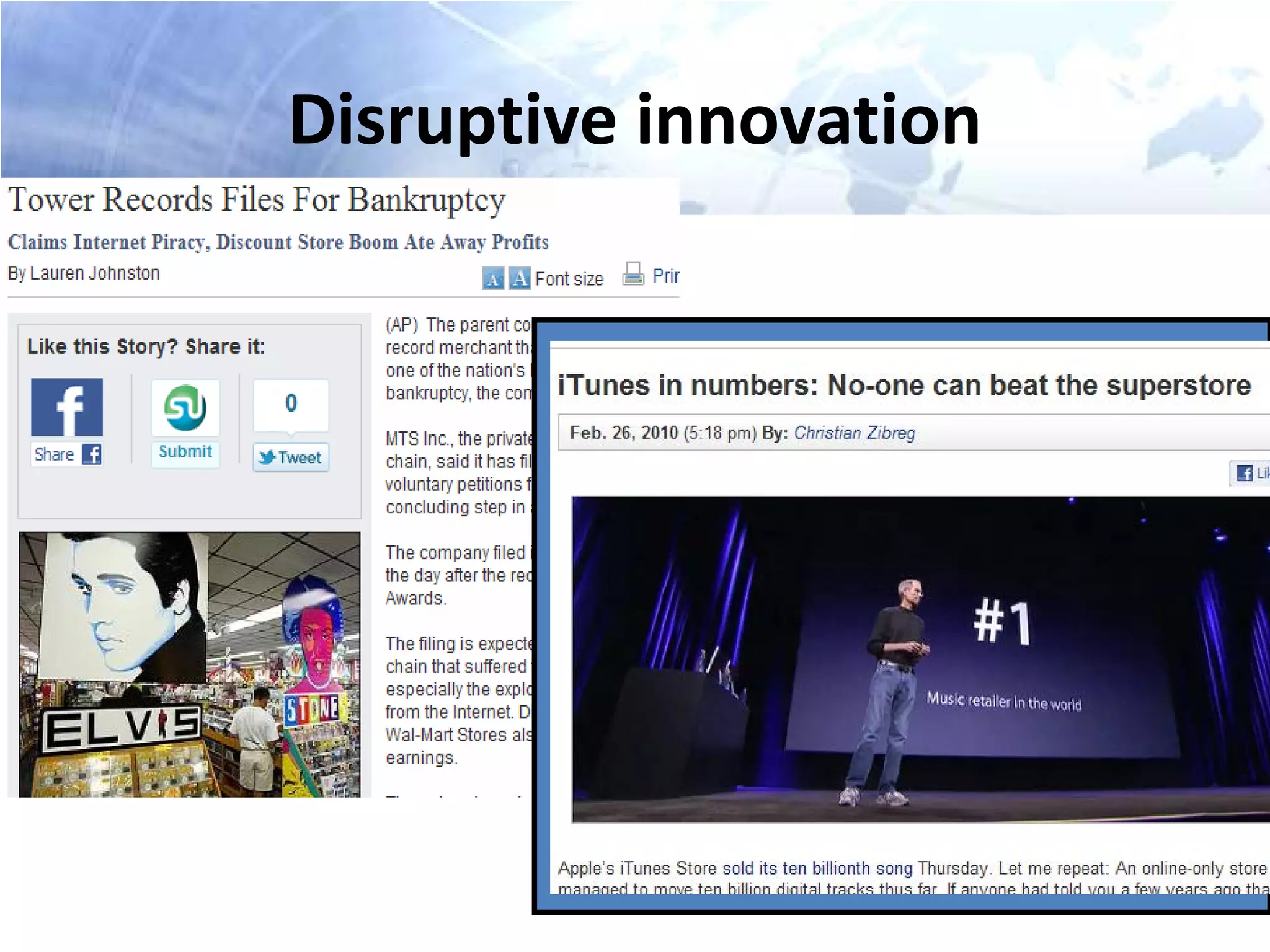
Disruptive innovation
Radical innovation…


The biggest fear by big companies in this
innovation era is not to be able to recognize
radical innovation and (timely) capitalize on it
when it appears….
Radical innovation…
           are we catching up?
XX: “Doing business via the internet is
    leading to the death of many businesses in
    Aruba and consequently unemployment of
    many people?”

EE:   “So what you do think businesses in Aruba
      should do?”

XX: “We should do something about that
    darn internet...”
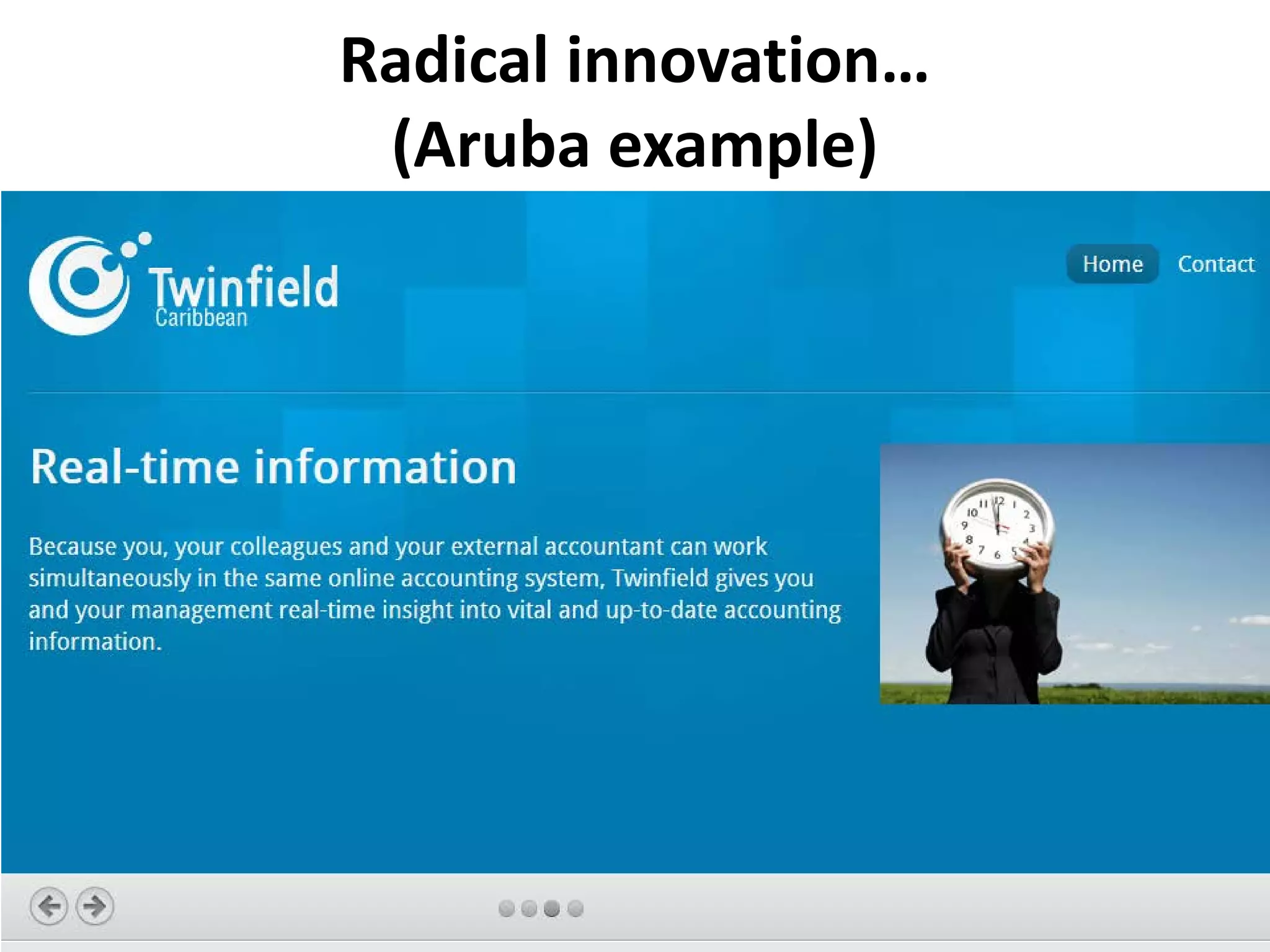
Radical innovation…
 (Aruba example)
2. Technology and
hyperconnectivity
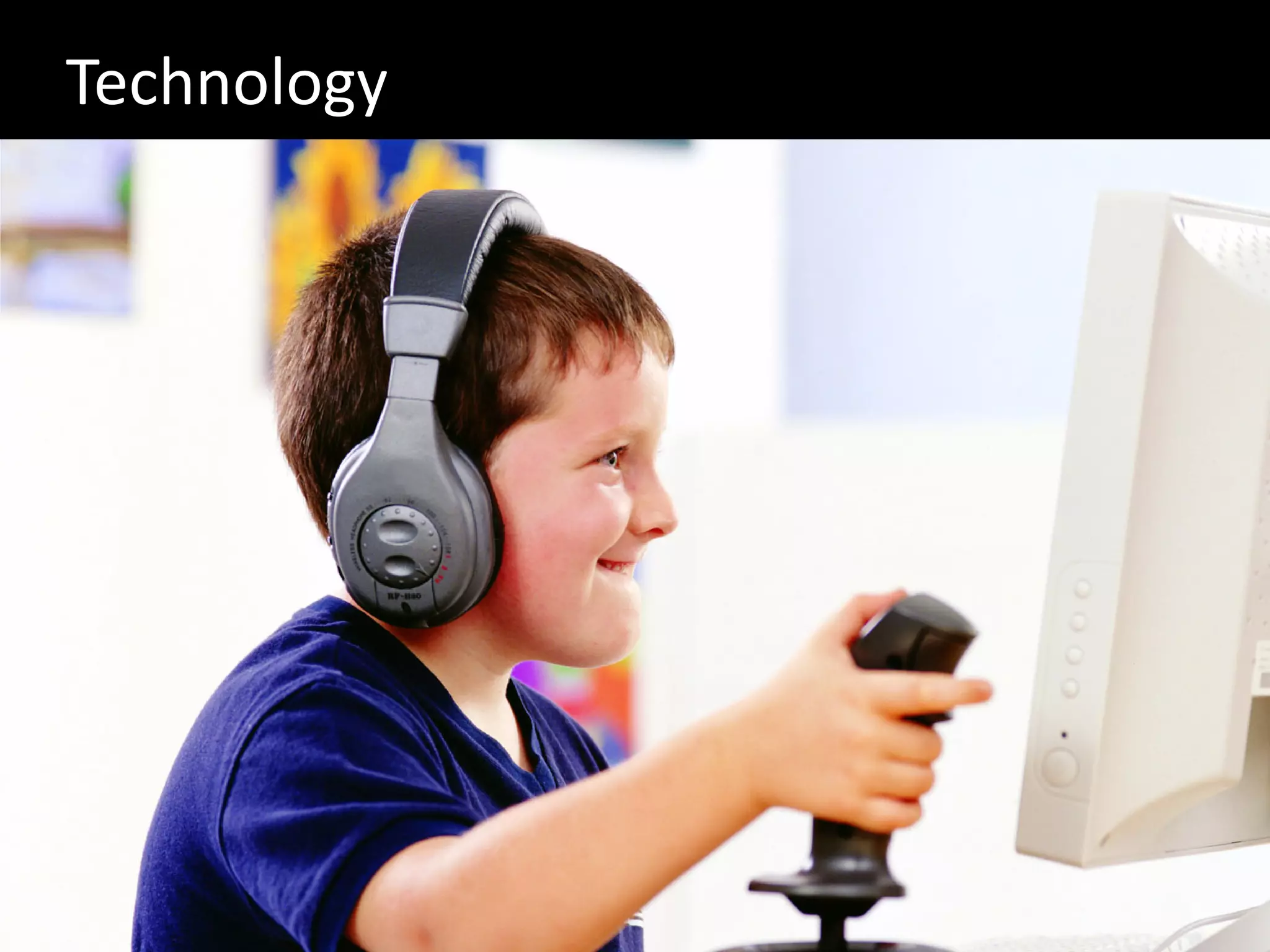
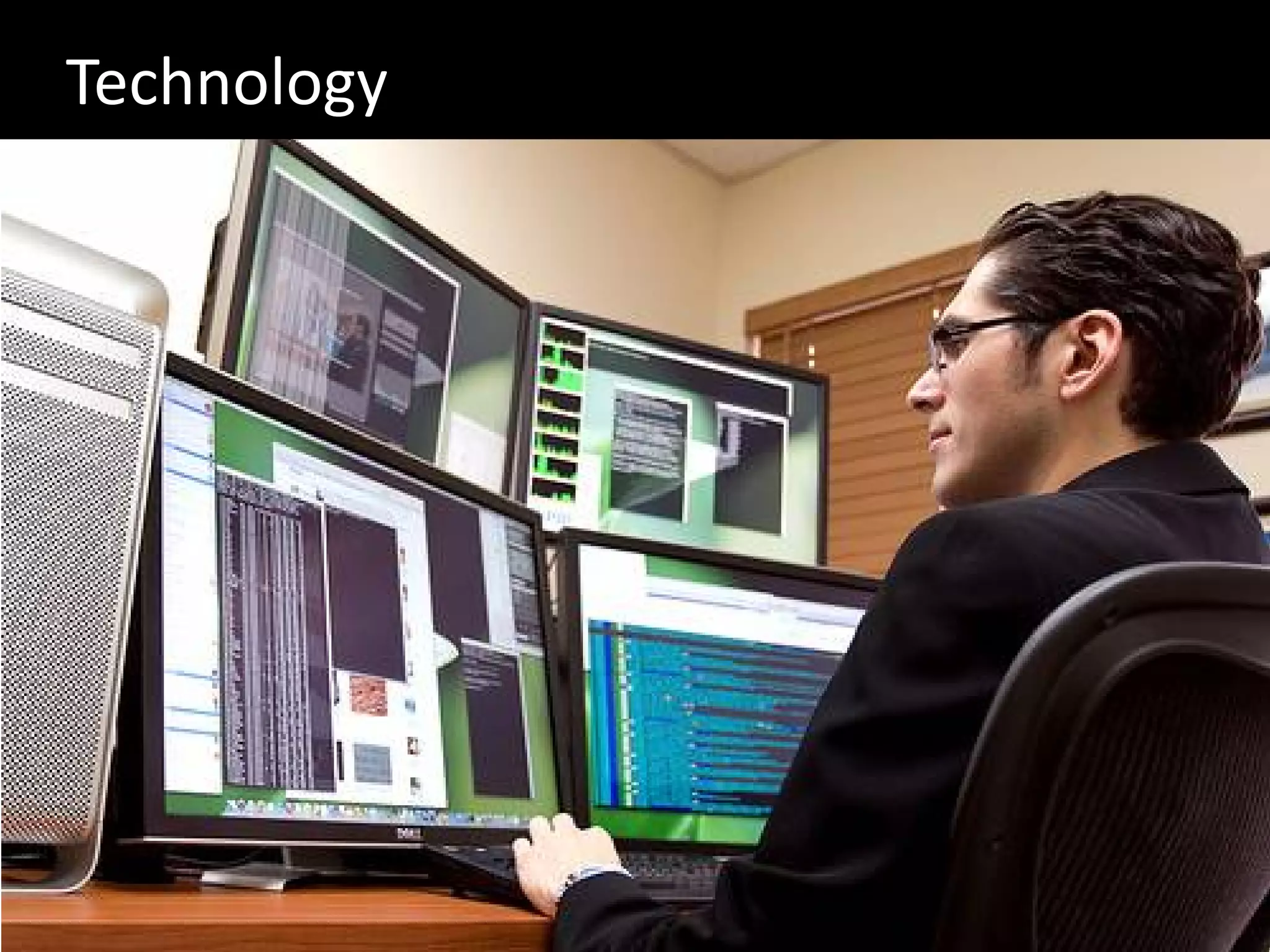
Technology
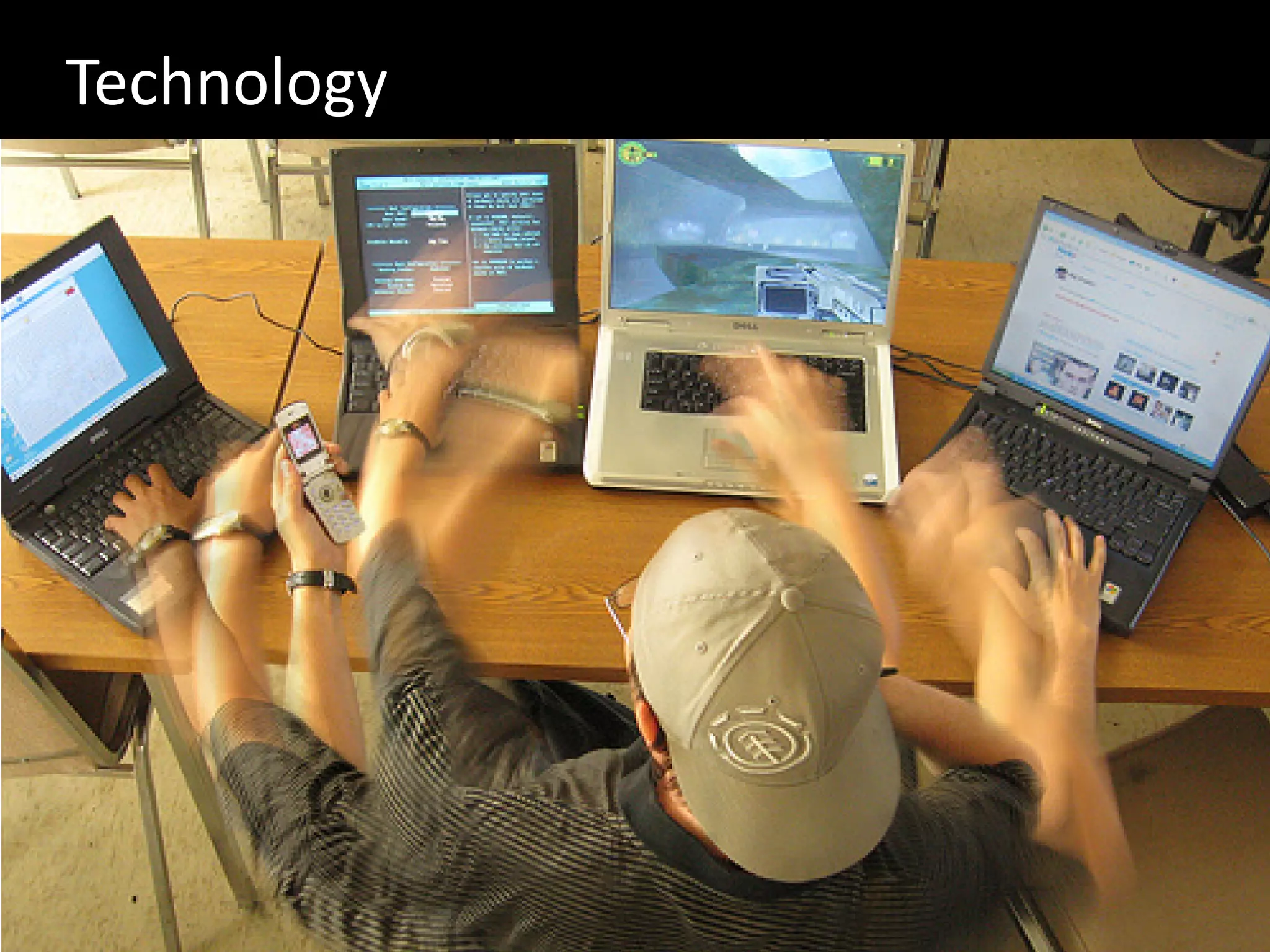
Technology
Technology
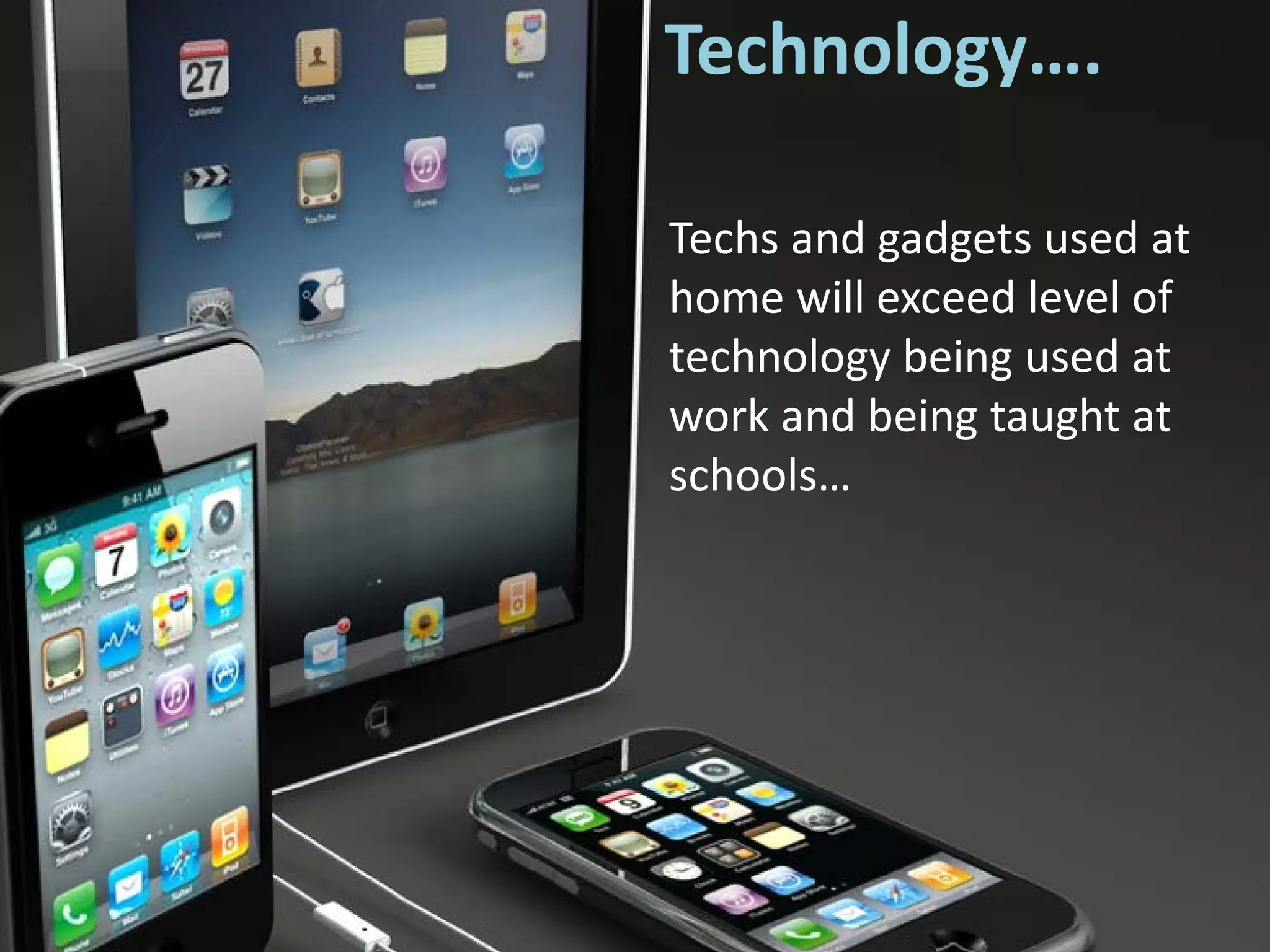
Technology….

Techs and gadgets used at
home will exceed level of
technology being used at
work and being taught at
schools…
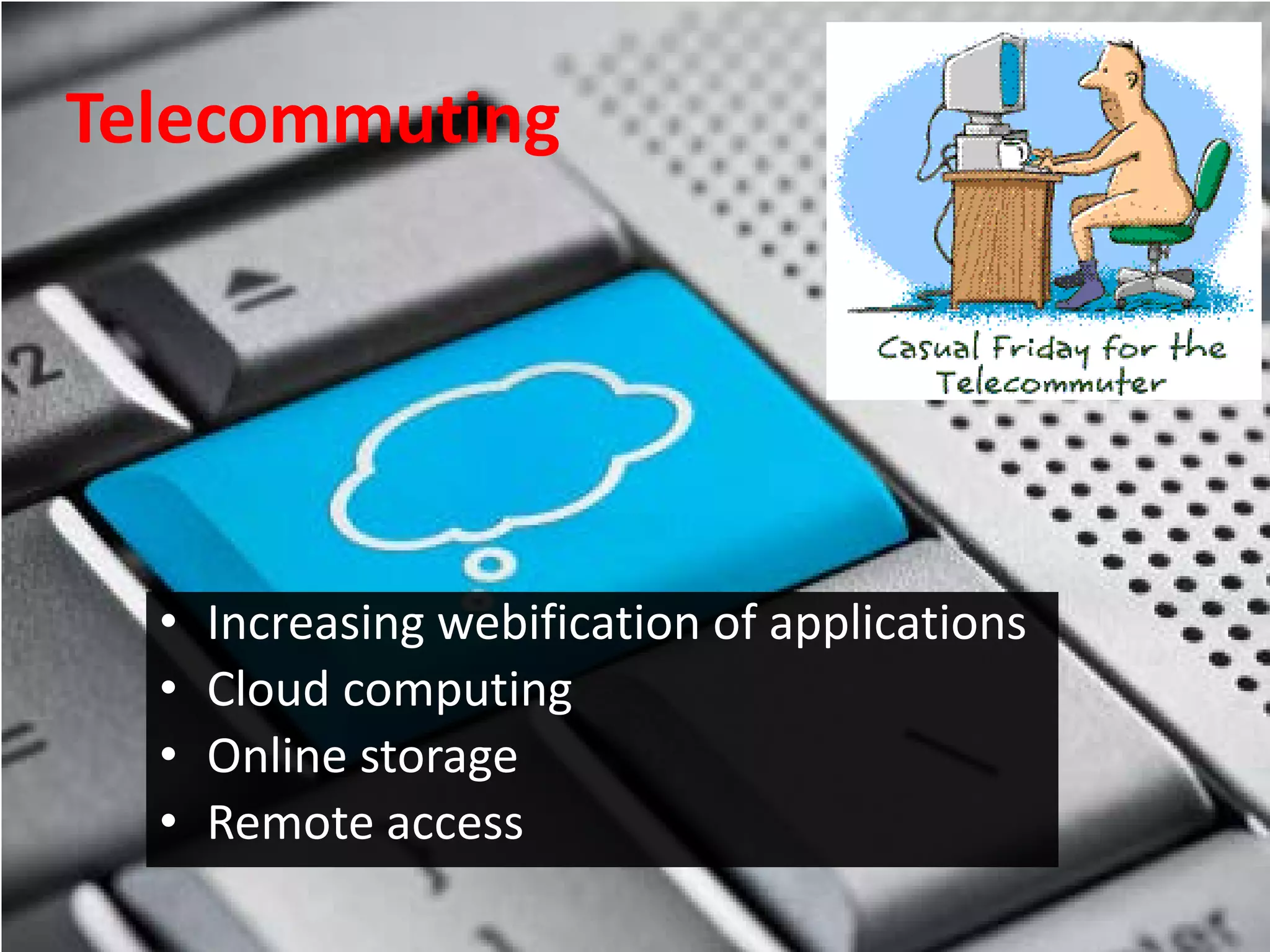
Telecommuting


  •   Increasing webification of applications
  •   Cloud computing
  •   Online storage
  •   Remote access
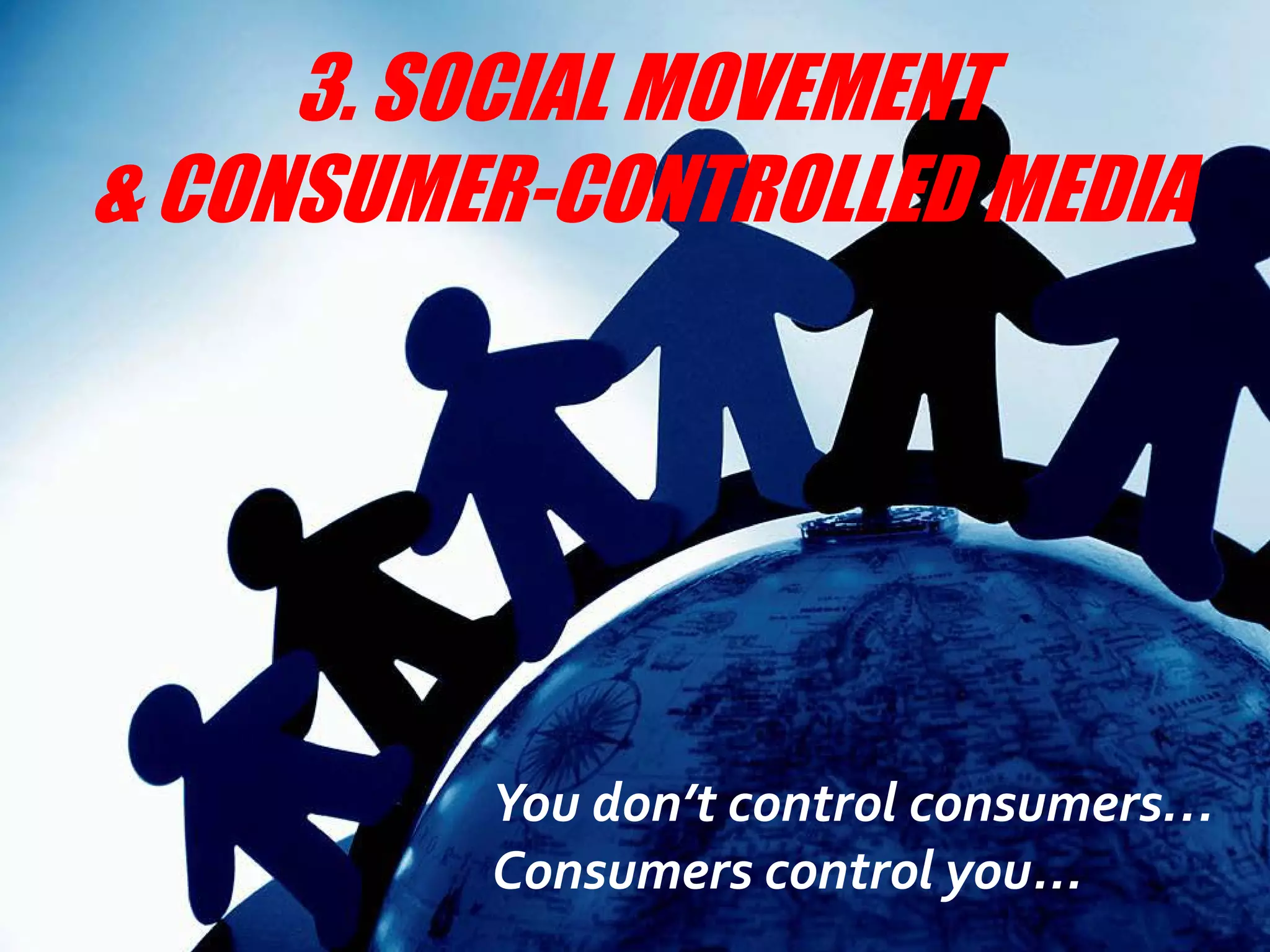
3. SOCIAL MOVEMENT
& CONSUMER-CONTROLLED MEDIA


         You don’t control consumers…
         Consumers control you...
Thanks to social networking:
• Society is moving towards a more social,
  collaborative, interactive and responsive web

• Higher interconnectivity

• Building communities


SN gives people a powerful voice…..
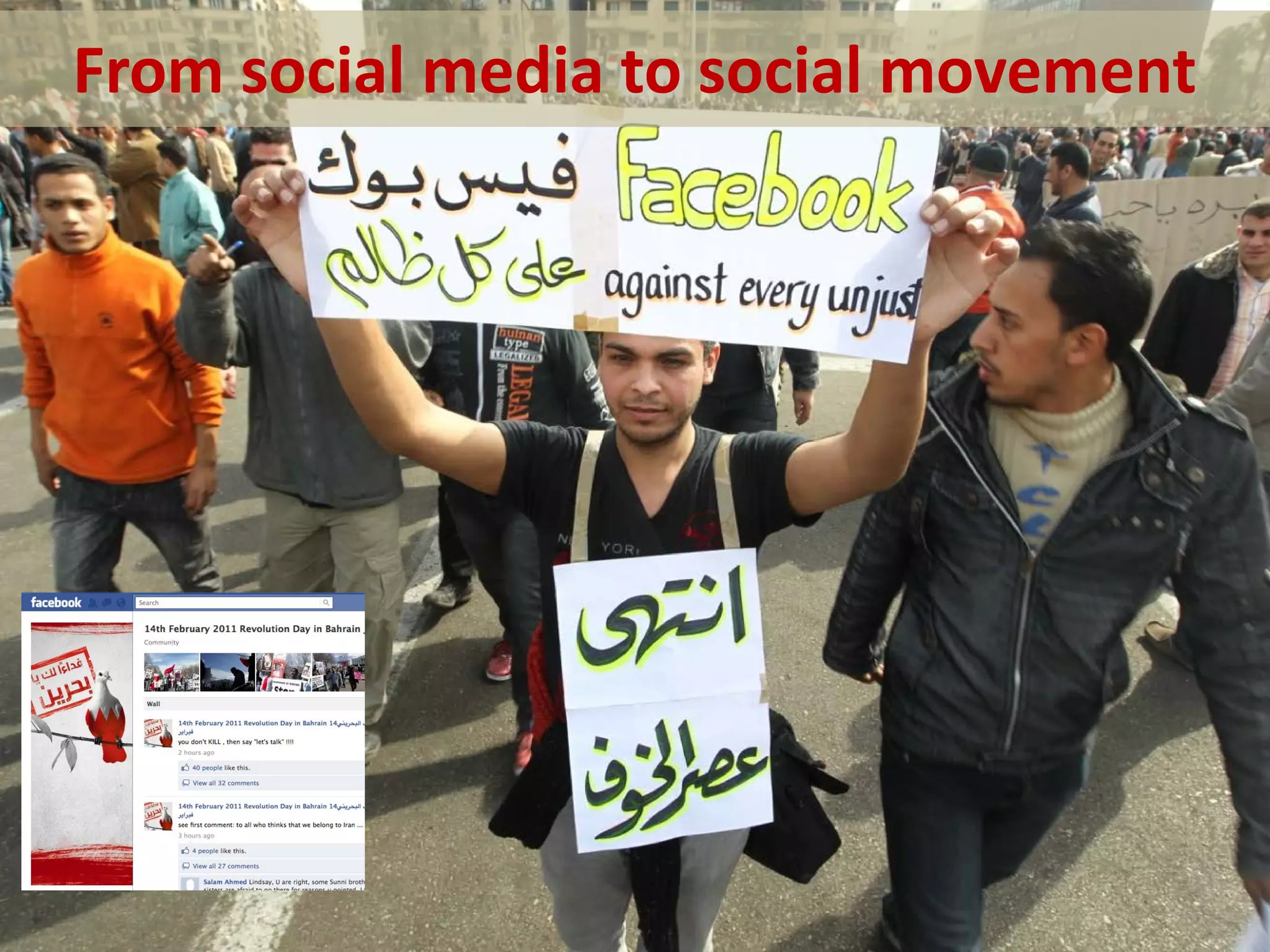
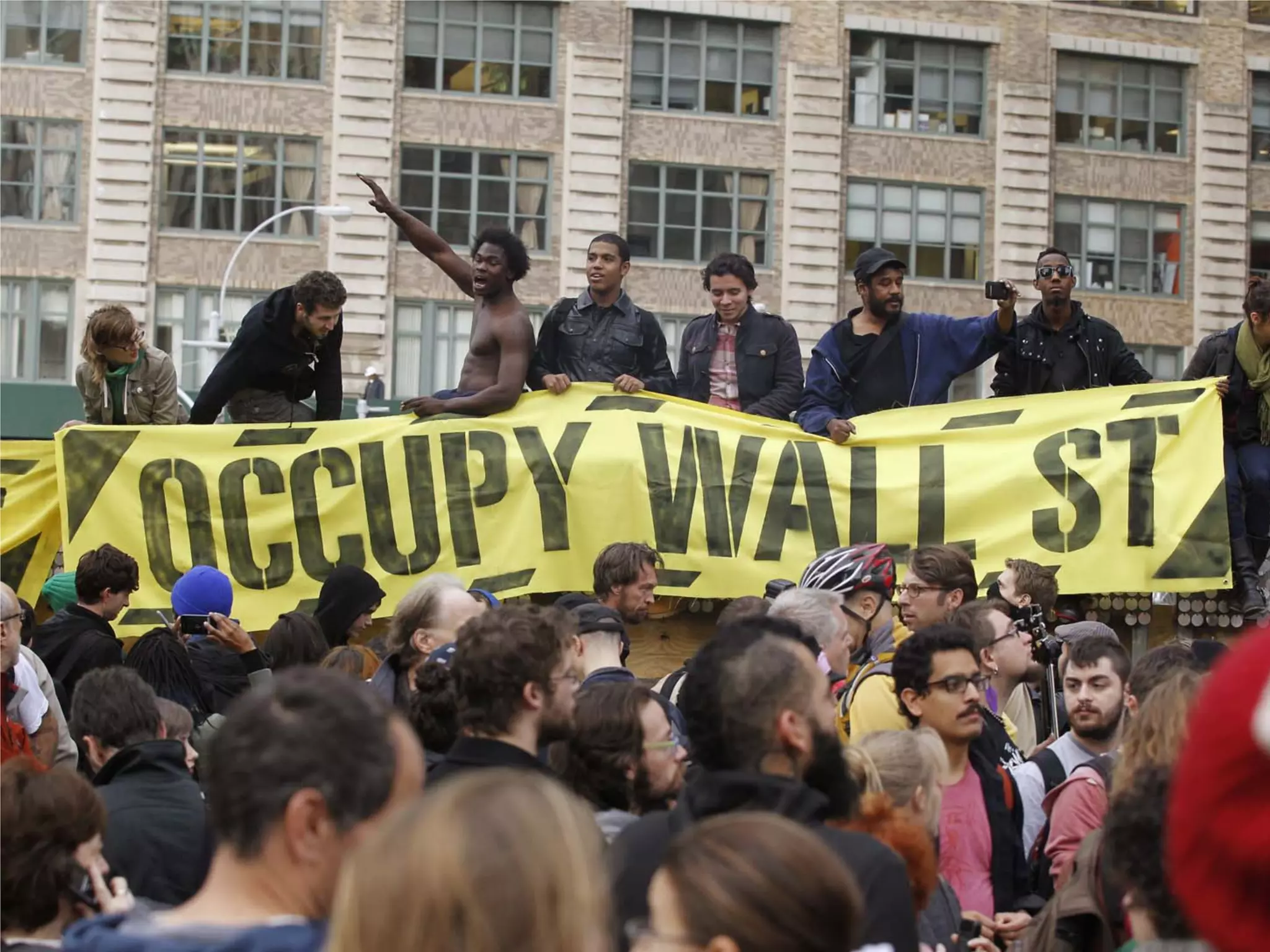
From social media to social movement
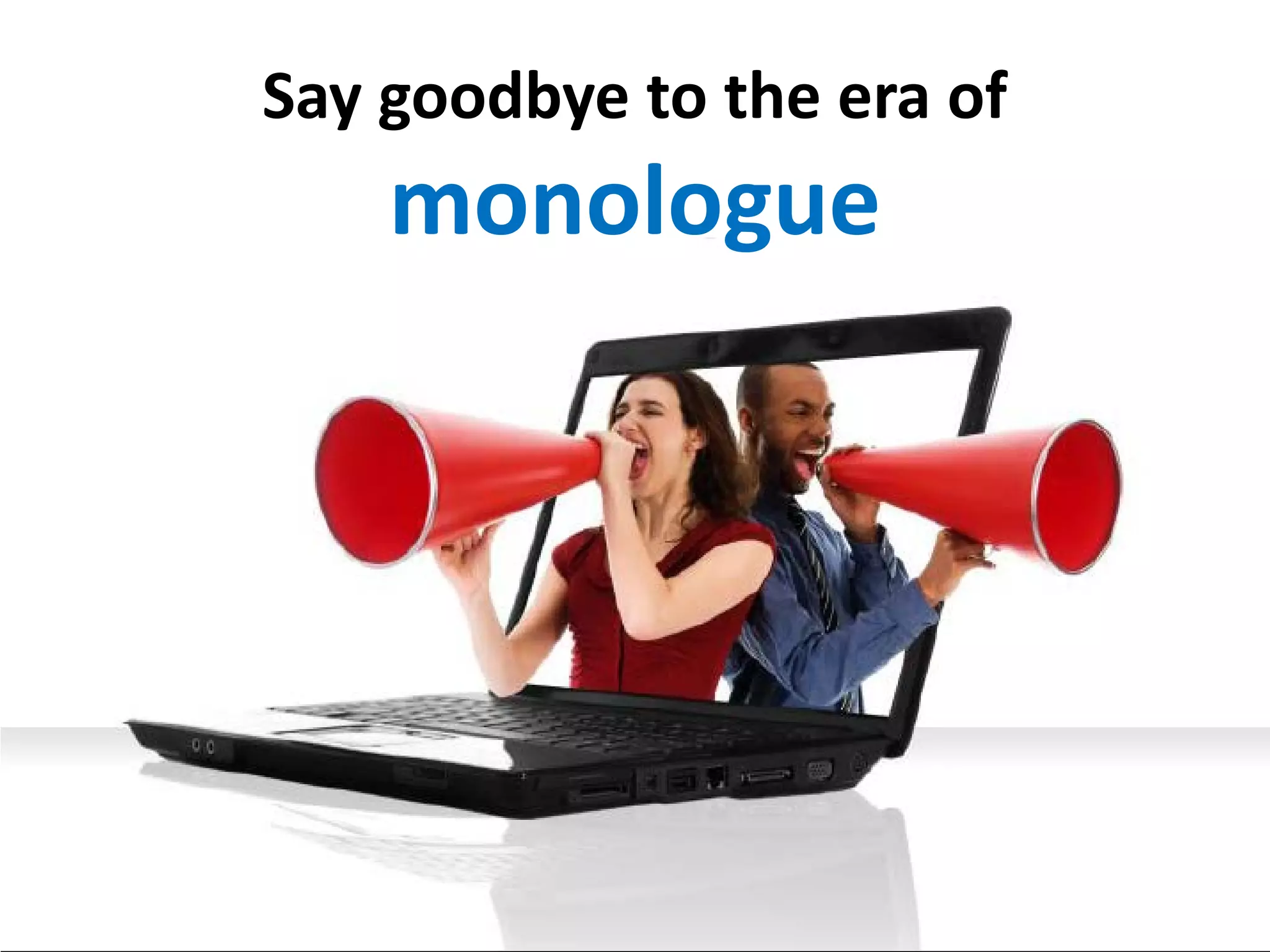
Say goodbye to the era of
    monologue
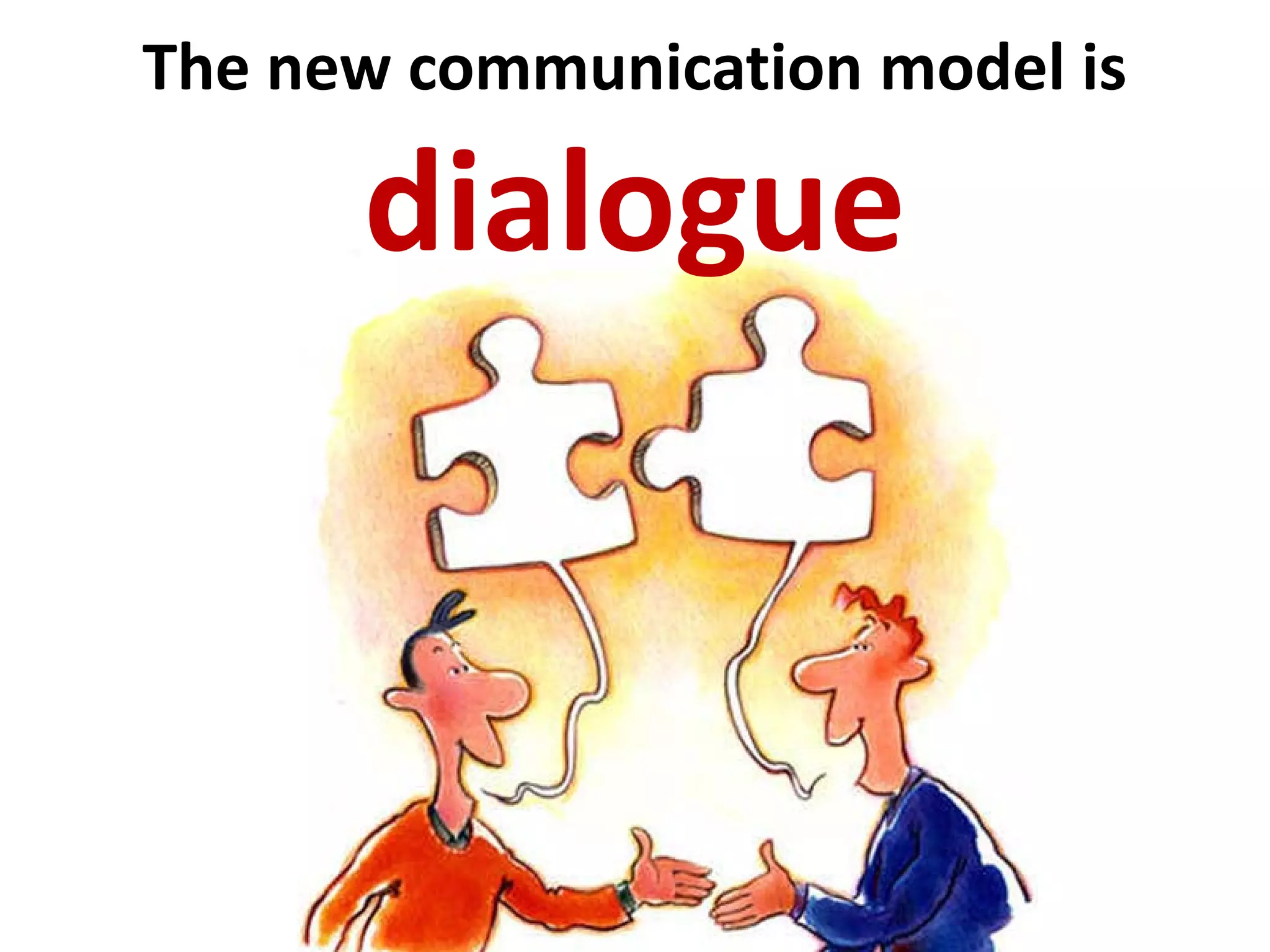
The new communication model is

      dialogue
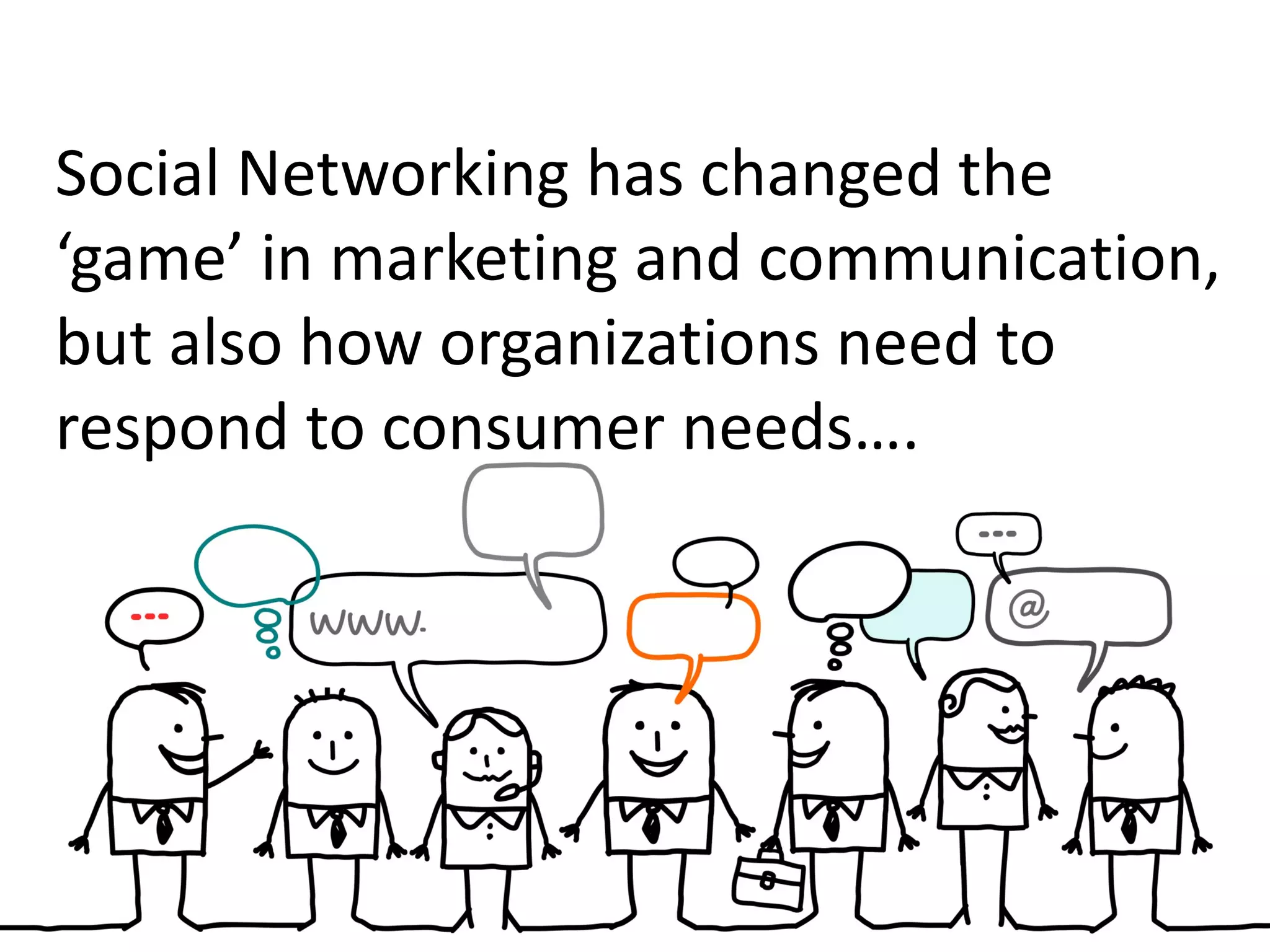
Social Networking has changed the
‘game’ in marketing and communication,
but also how organizations need to
respond to consumer needs….
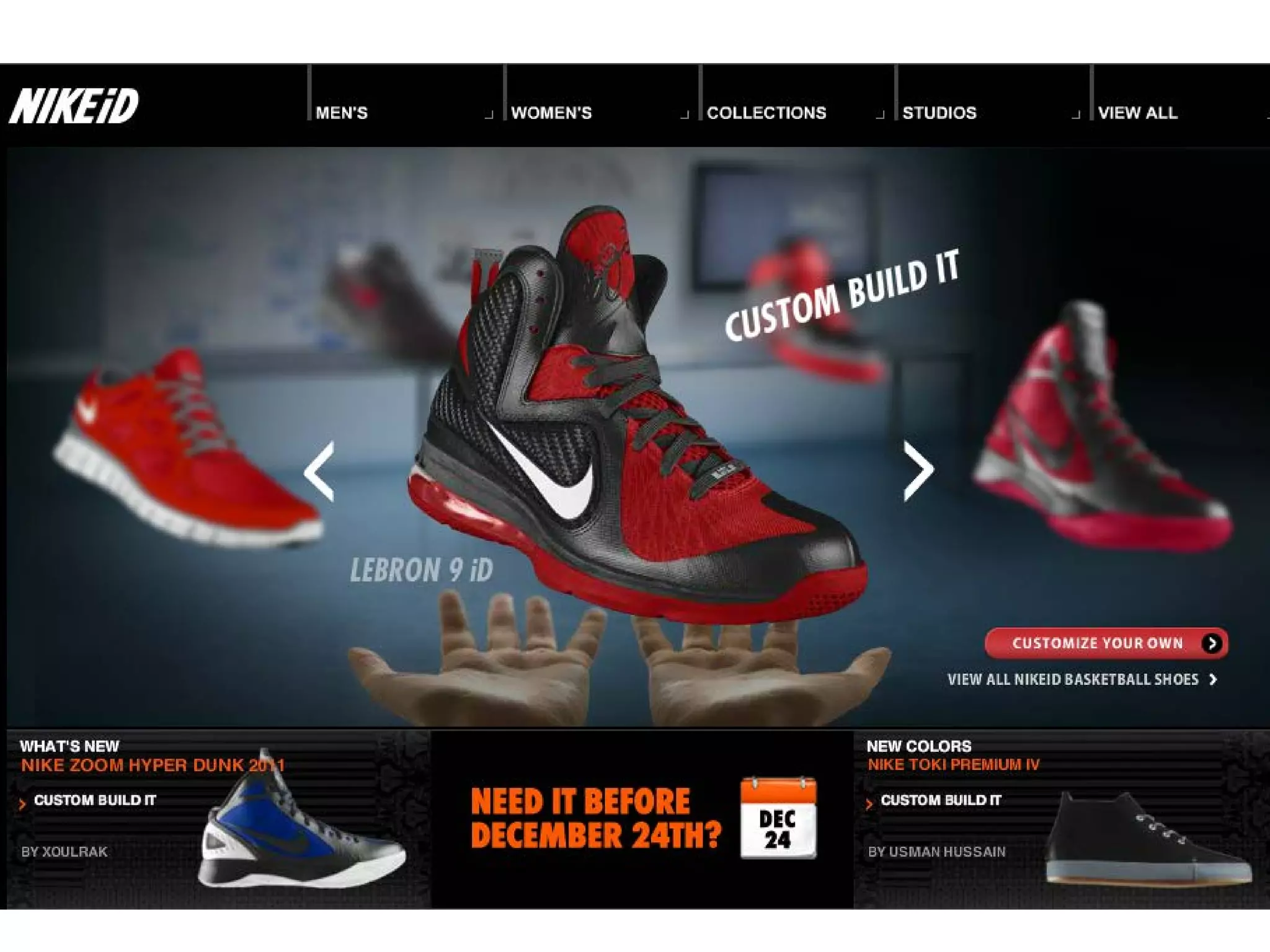
Mass customization….
 Co-creation…
  and co-branding….
      take on new forms
Co-creation….
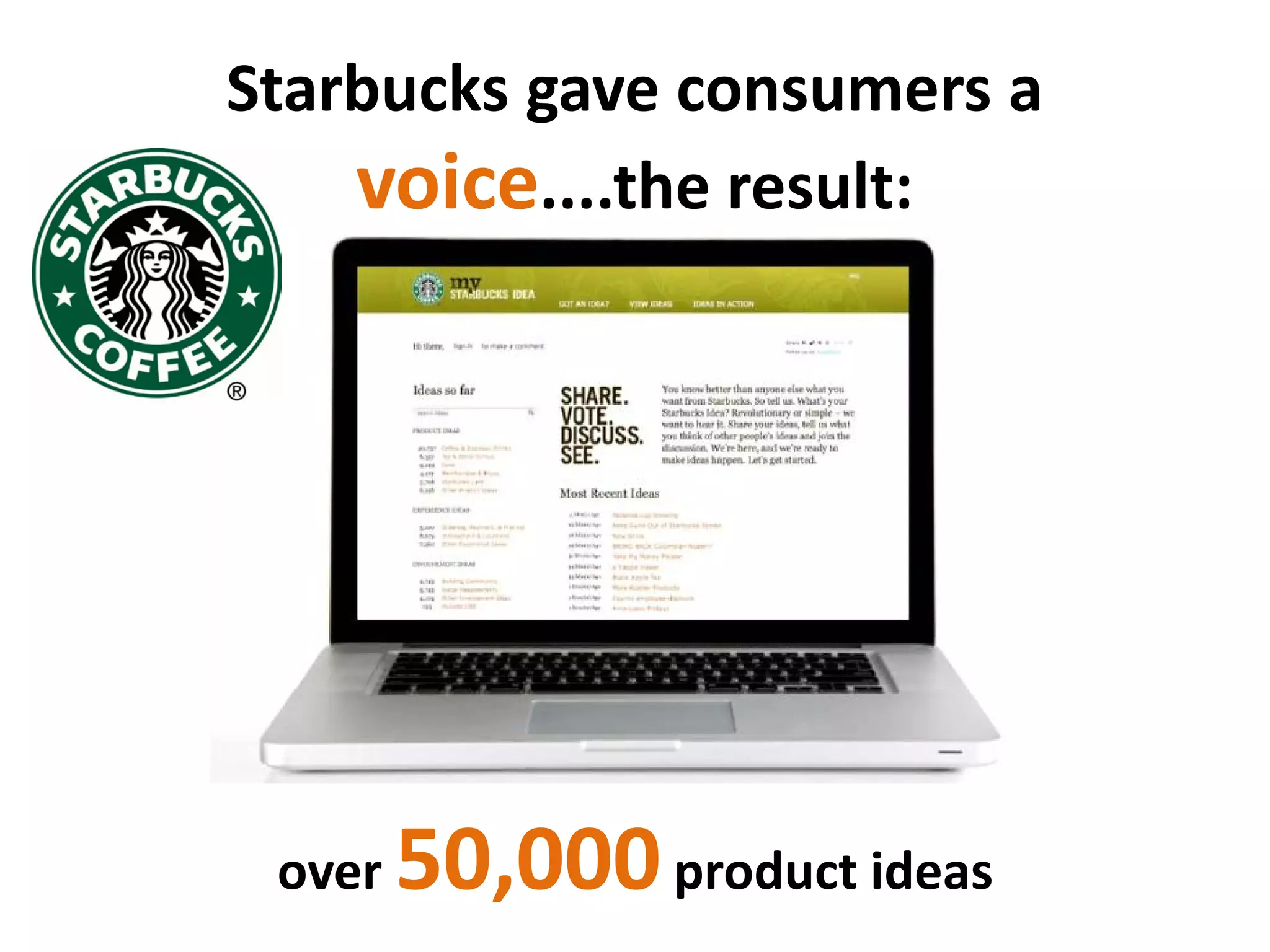
Starbucks gave consumers a
    voice....the result:


 over   50,000 product ideas
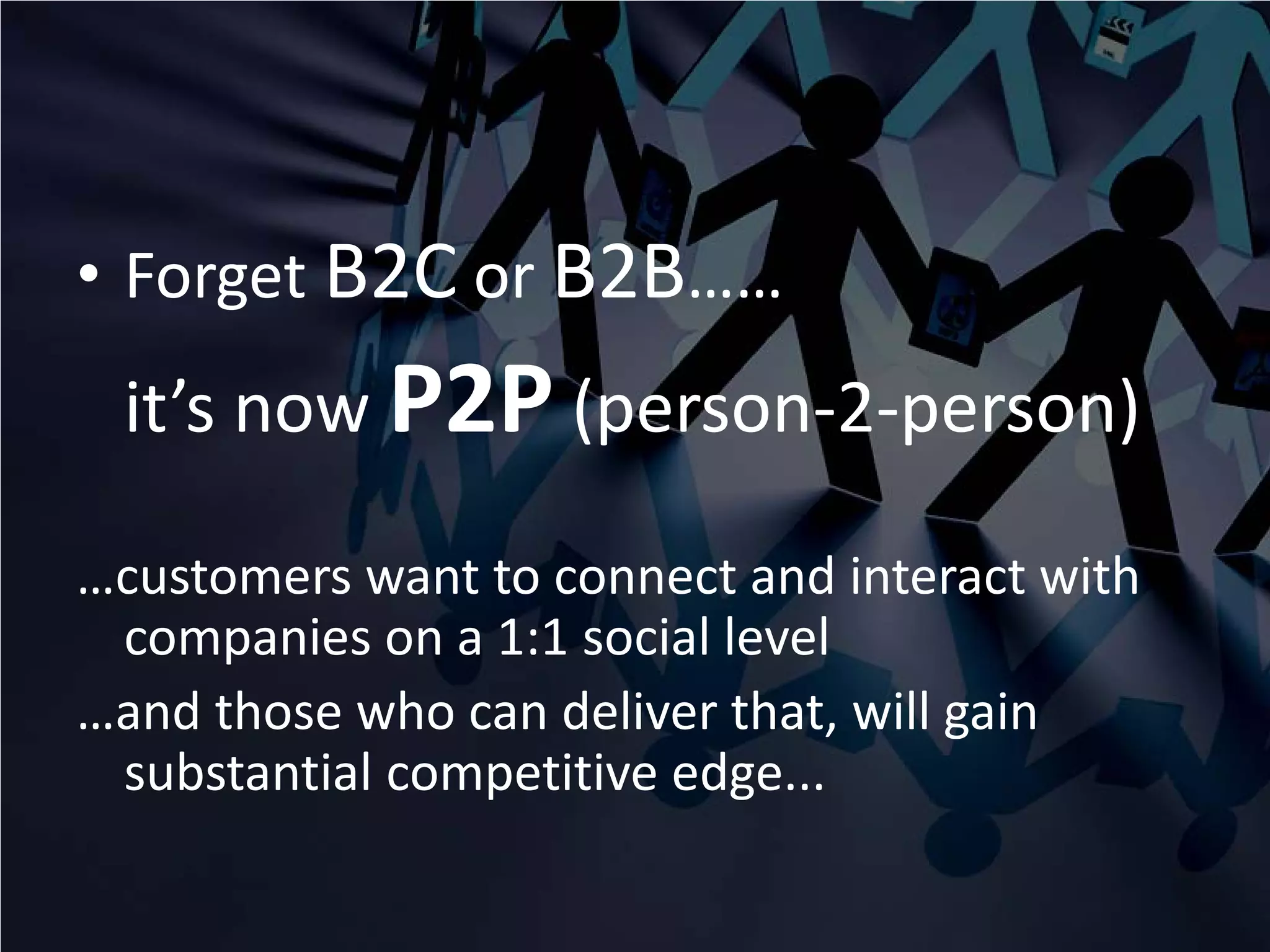
• Forget B2C or B2B……
 it’s now P2P (person-2-person)

…customers want to connect and interact with
 companies on a 1:1 social level
…and those who can deliver that, will gain
 substantial competitive edge...
The end of traditional marketing…
• Opportunities to engage with customers in a
  new ways….
• However, managing SM is posting new
  challenges for organizations
• Everyone is a marketer
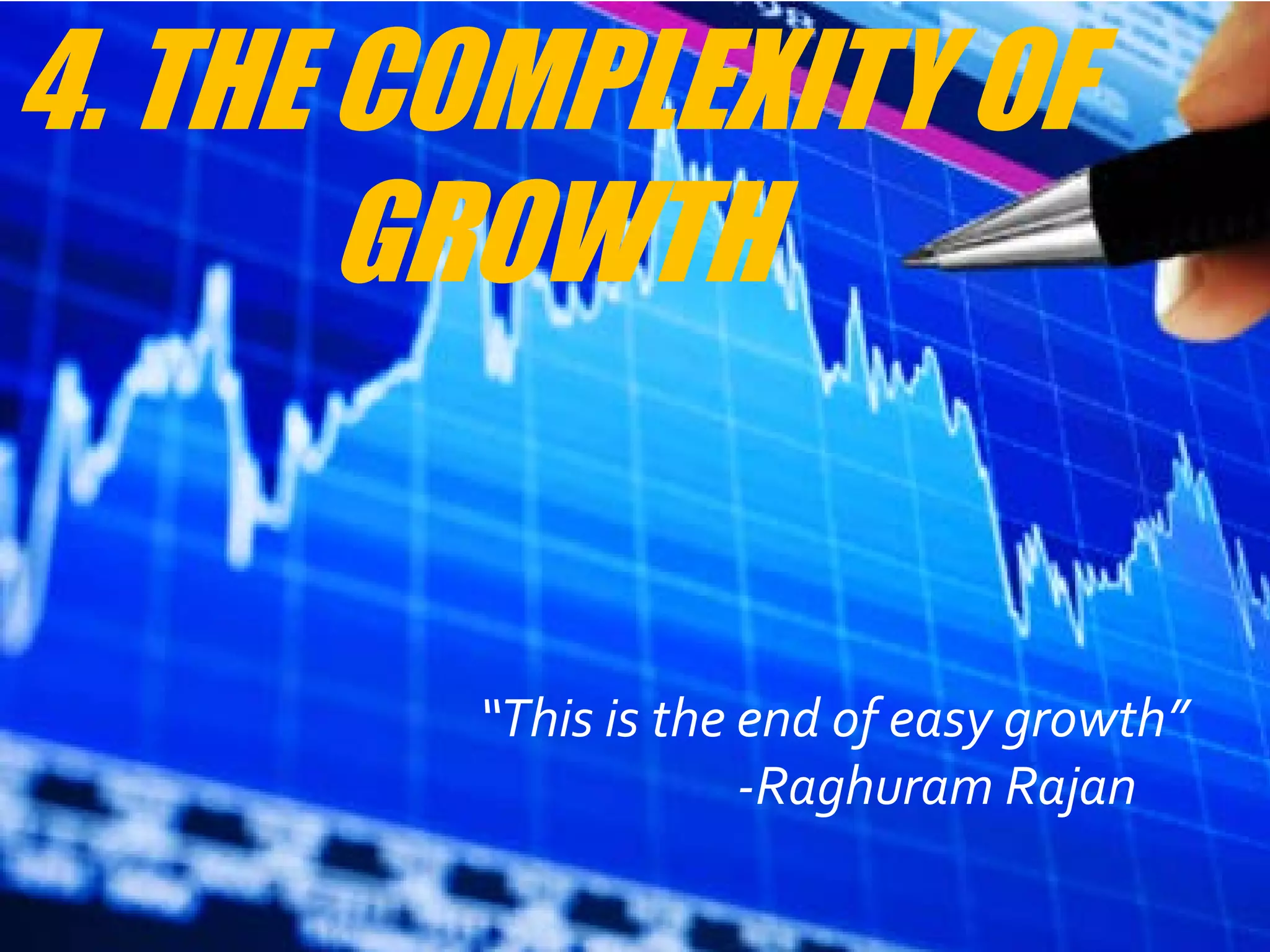
4. THE COMPLEXITY OF
       GROWTH


        “This is the end of easy growth”
                     -Raghuram Rajan
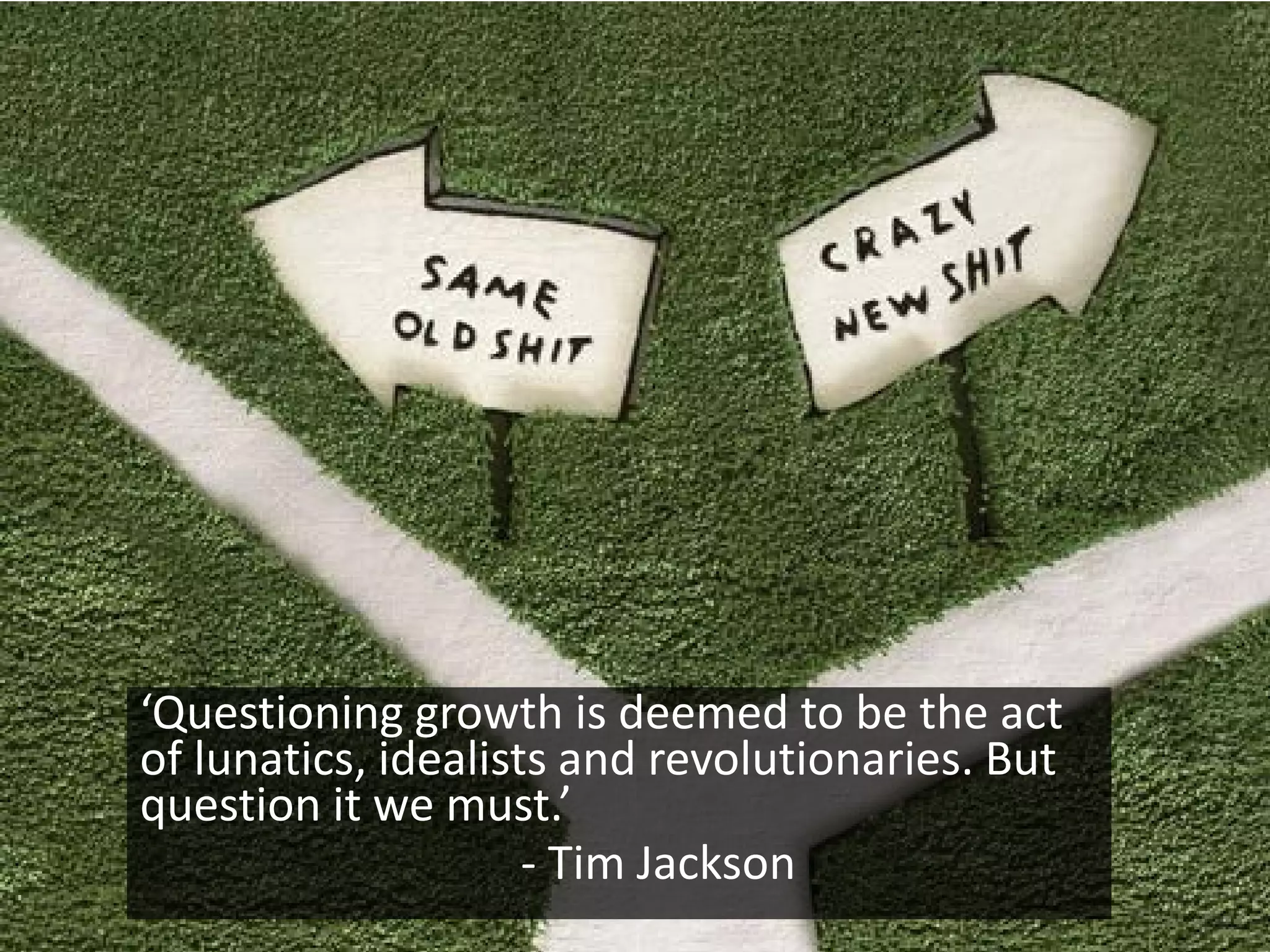
‘Questioning growth is deemed to be the act
of lunatics, idealists and revolutionaries. But
question it we must.’
                     - Tim Jackson
Revenue growth will not be easy…

• Increasing cost control

• Upturn in productivity
5. SUSTAINABLE ENTERPRISING
            “We are living on this planet as if we
            had another one to go to.”
                        - Terri Swearingen
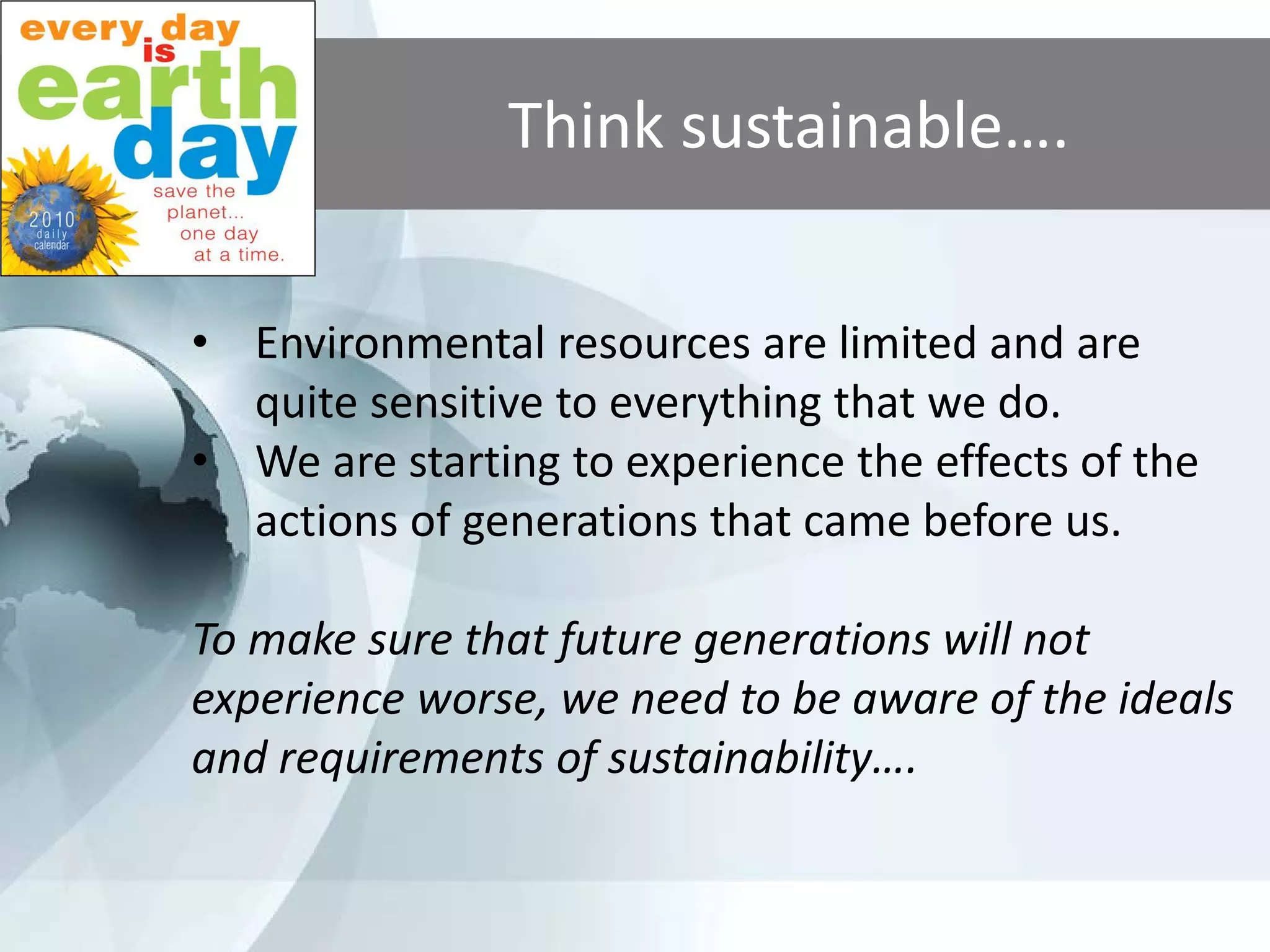
Think sustainable….

• Environmental resources are limited and are
  quite sensitive to everything that we do.
• We are starting to experience the effects of the
  actions of generations that came before us.

To make sure that future generations will not
experience worse, we need to be aware of the ideals
and requirements of sustainability….
Why adopting sustainability practices..?

• Without a sustainable society, there is no
  sustainable business….

• Not only sustaining the necessary environmental
  resources, but also the social resources, including
  employees, customers (the community), and
  corporate reputation
Sustainable enterprising


1. Incorporating principles of sustainability into each
   business decisions.
2. Supplying or consuming environmentally friendly
   products or services that replaces demand for non
   green products and/or services.
3. Greener than traditional competition.
4. Enduring commitment to environmental principles
   in the business operations.
6. CHANGING LIFESTYLES AND
      SOCIAL VALUES


‘Gen Y is an “experience” culture. They do
not want to be told what to like or what to
do. They want to experience the world for
themselves and pass their own judgment.’
                       - Bea Fields
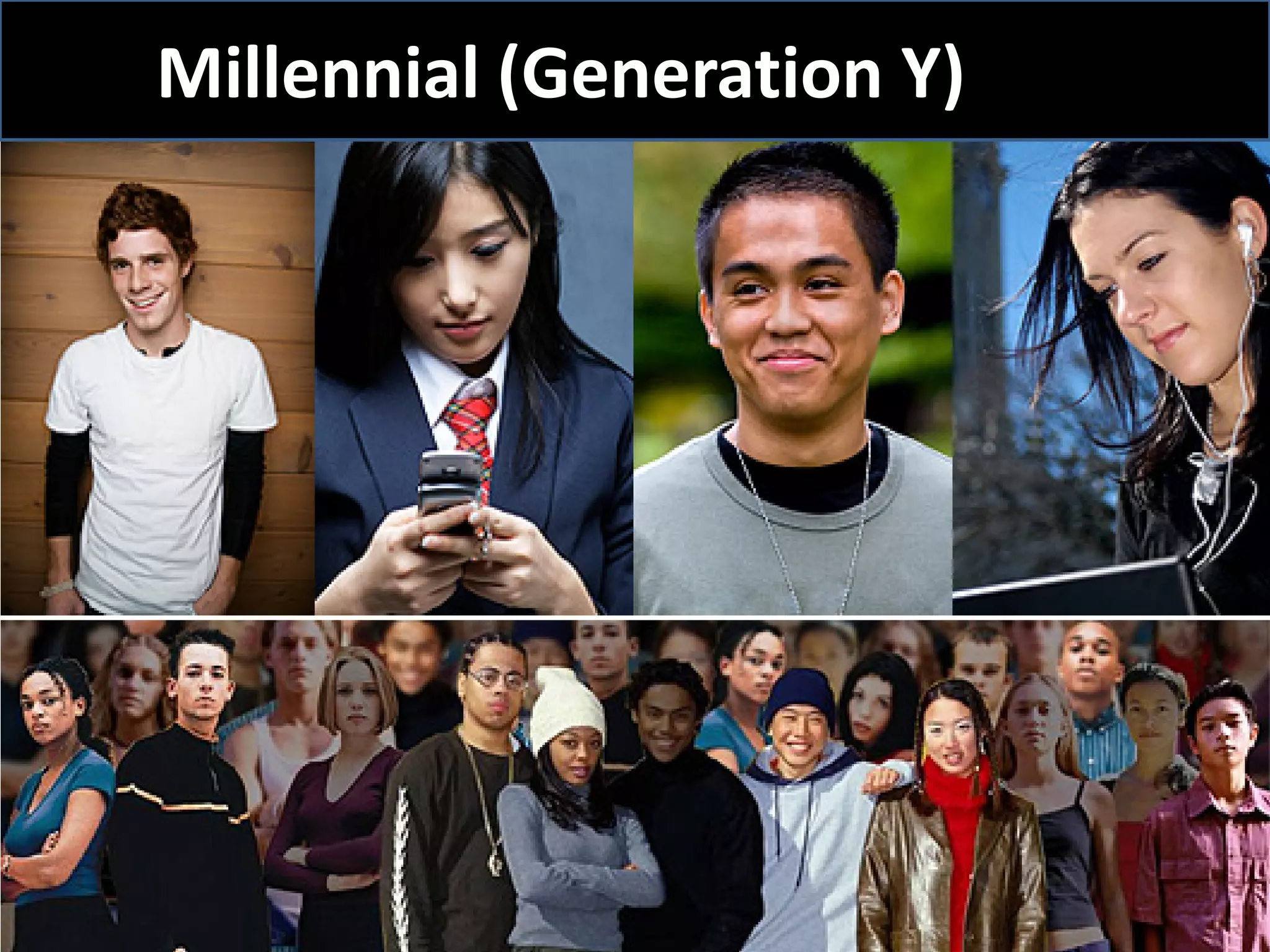
Millennial (Generation Y)
Generation Y
What they think of themselves:
“Brilliant, thought-provoking, eager, and exciting”


What older generations think of them:
“Over-entitled, egotistical, know it-alls”
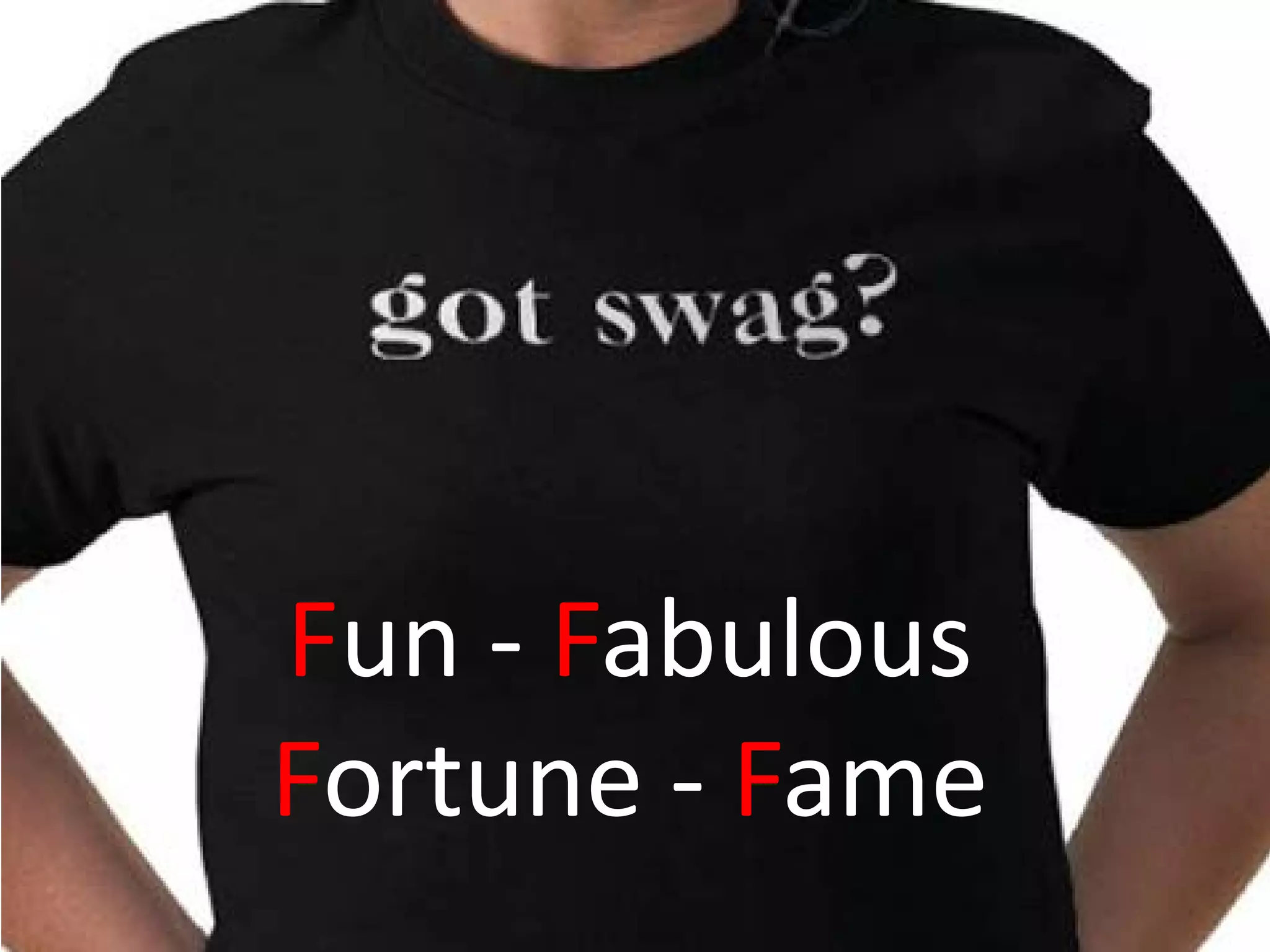
Fun - Fabulous
Fortune - Fame
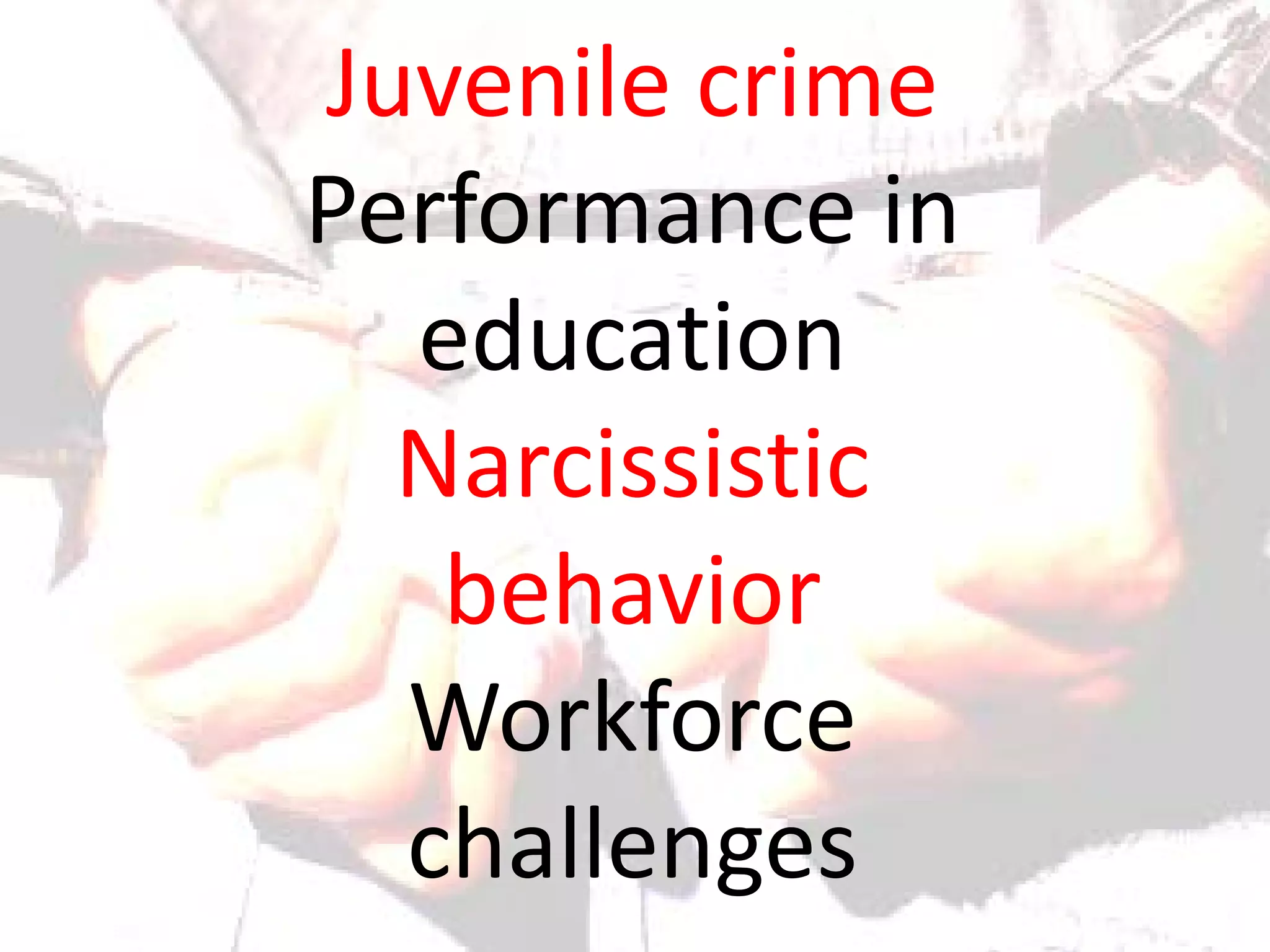
Juvenile crime
Performance in
  education
  Narcissistic
   behavior
  Workforce
  challenges
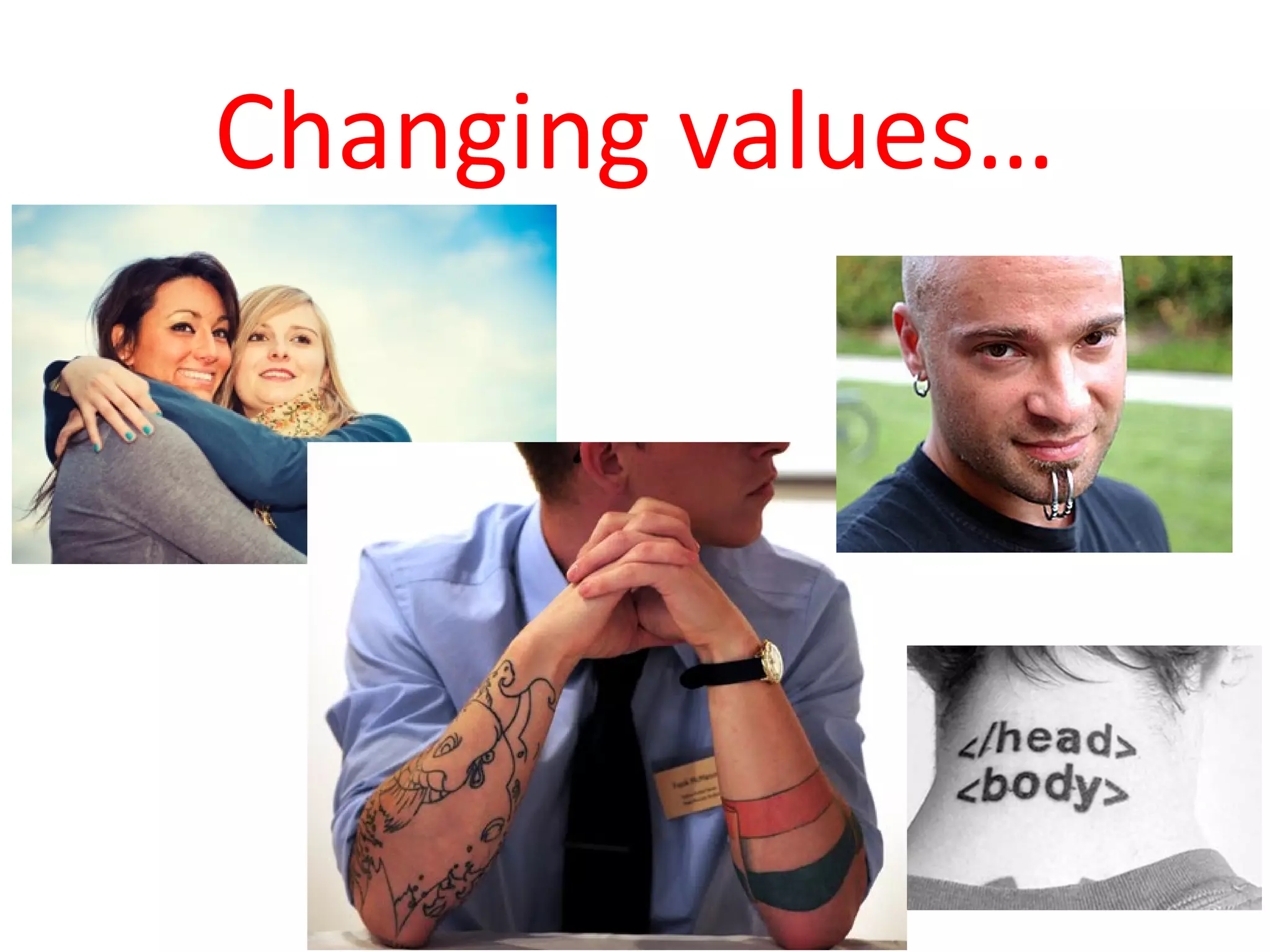
Changing values…
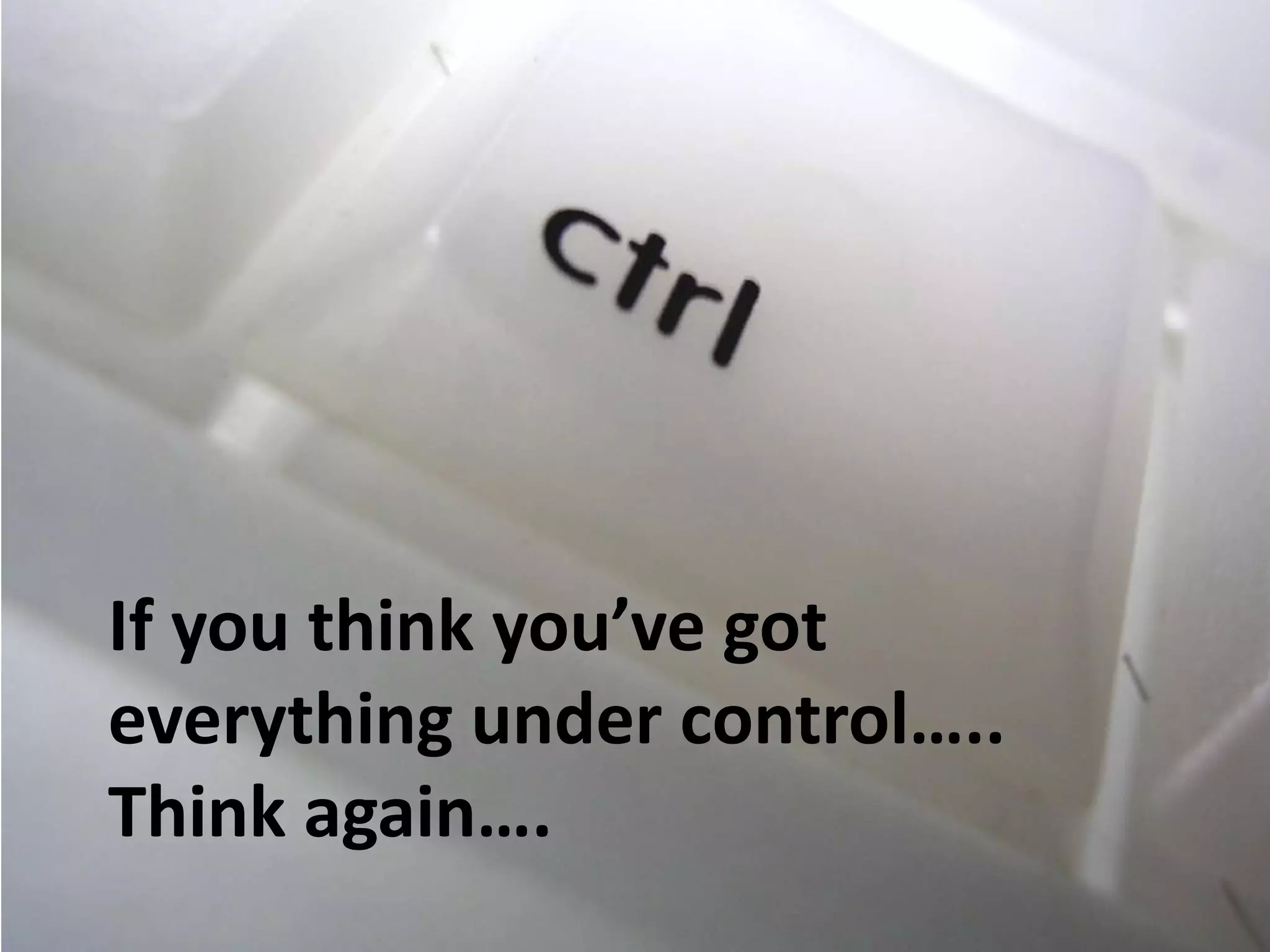
If you think you’ve got
everything under control…..
Think again….
The main question is…
How can organizations remain
competitive, be able to attract, organize,
nurture and retain that core of talented
people, in order to deliver value in a
sustainable manner to a diverse group of
demanding consumers?
How organizations are coping

• Create and embrace diversity in
  knowledge, people and resources.
• Focus on ‘creation’…not just ‘operation’.
• Think in terms of value, ‘Win-Win’ and
  long-term.
• Embrace new forms of capital.
Rethinking organizations…
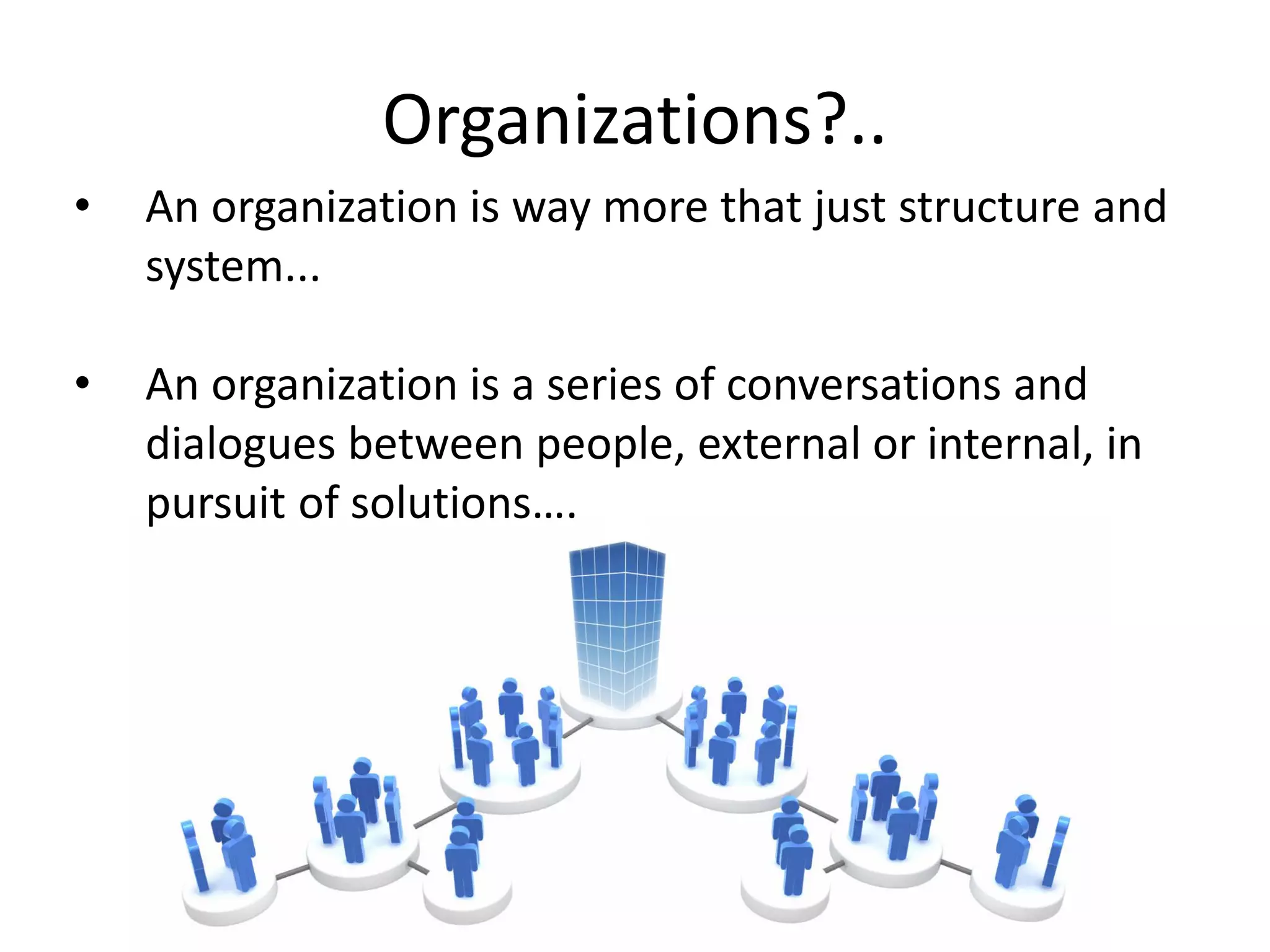
Organizations?..
•   An organization is way more that just structure and
    system...

•   An organization is a series of conversations and
    dialogues between people, external or internal, in
    pursuit of solutions….
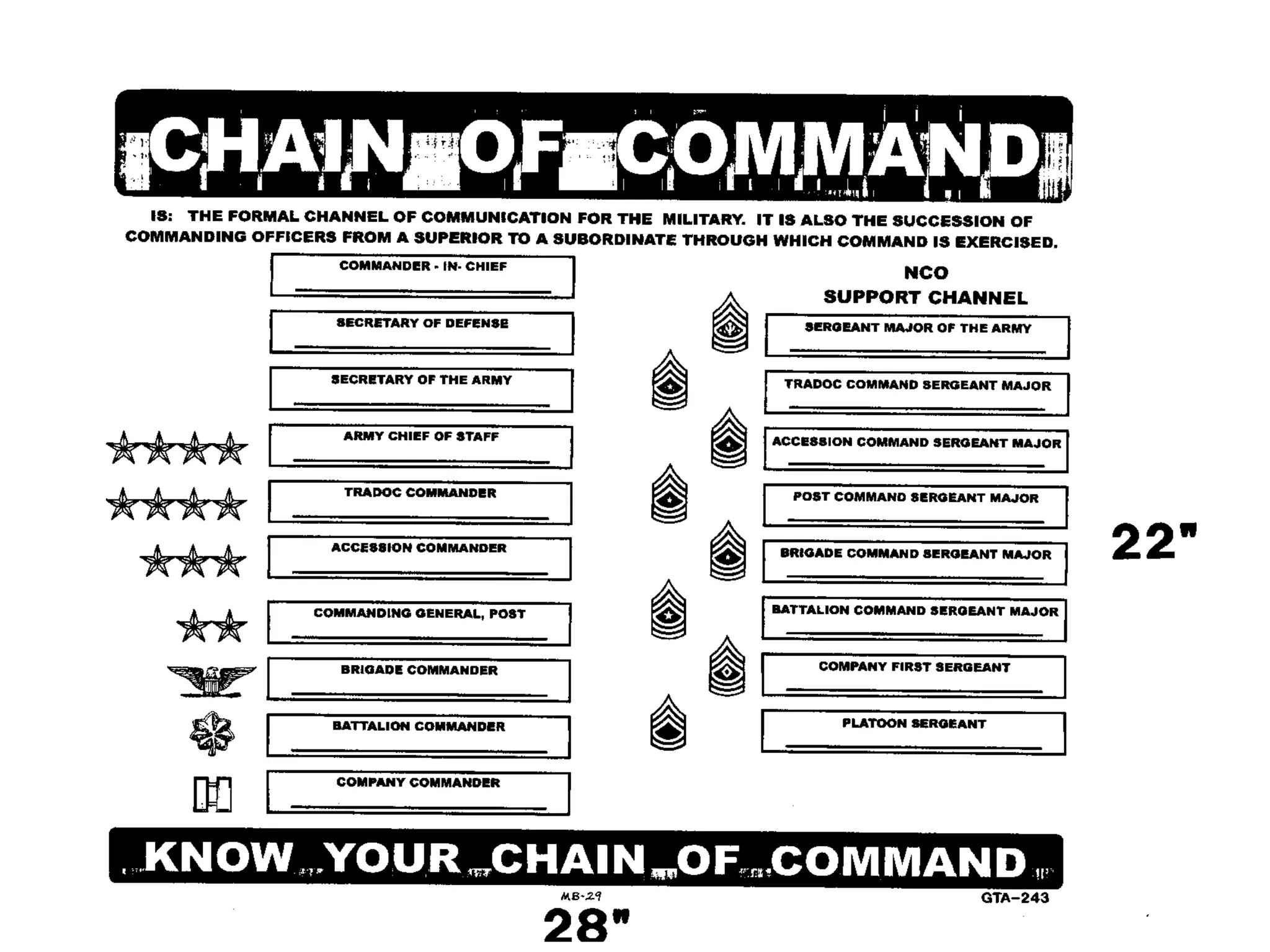
Sir, yes sir!
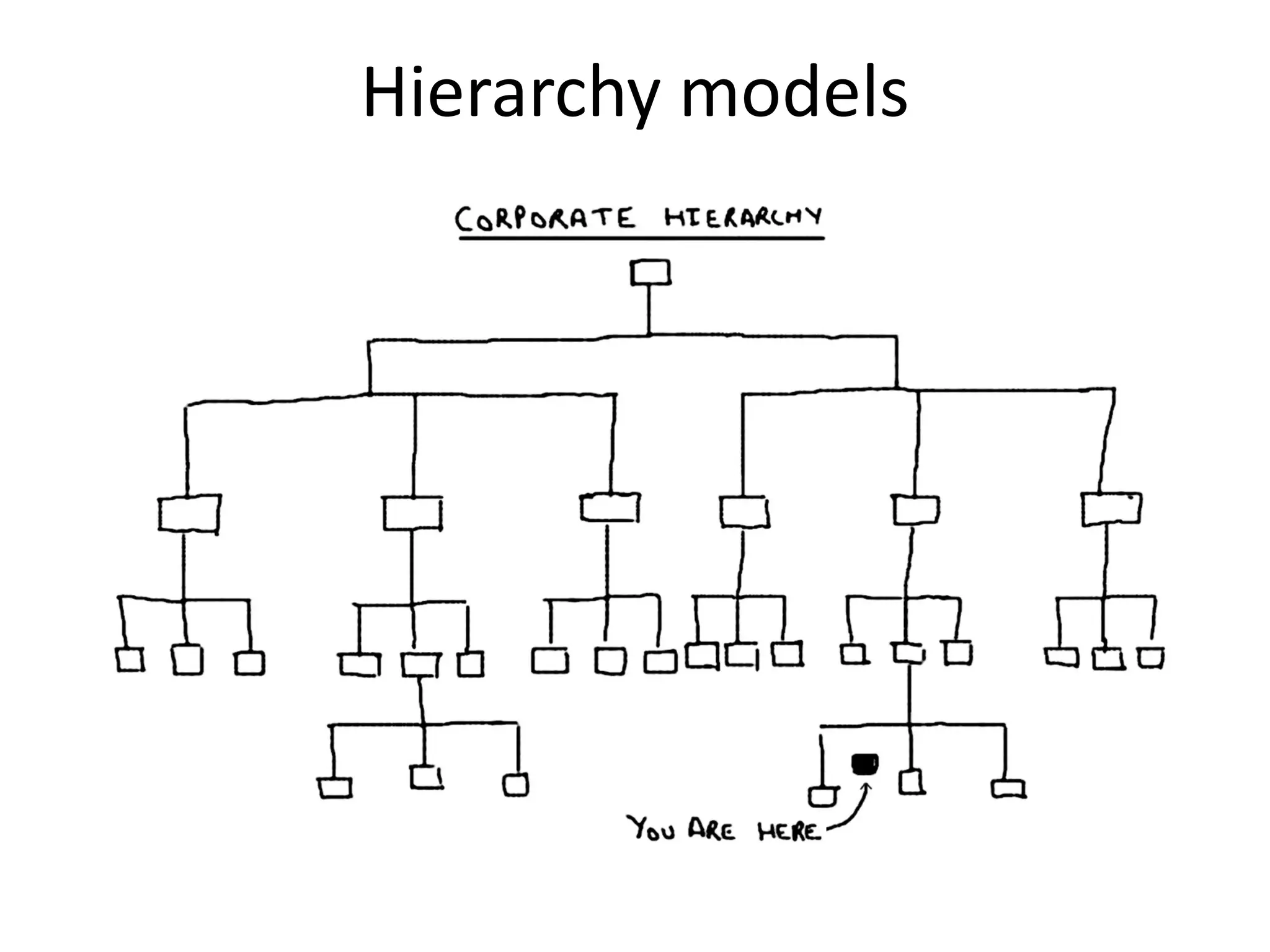
Hierarchy models
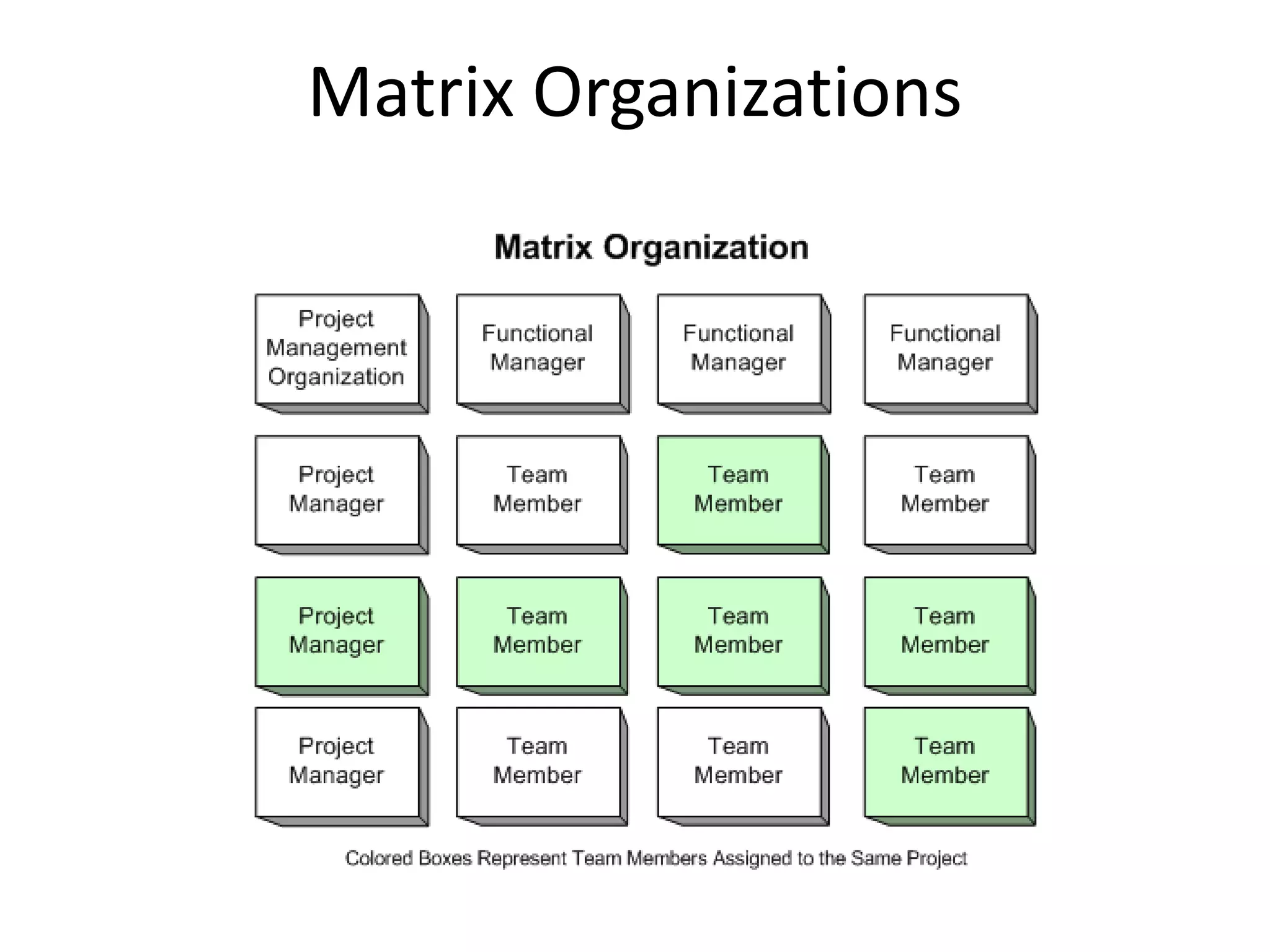
Matrix Organizations
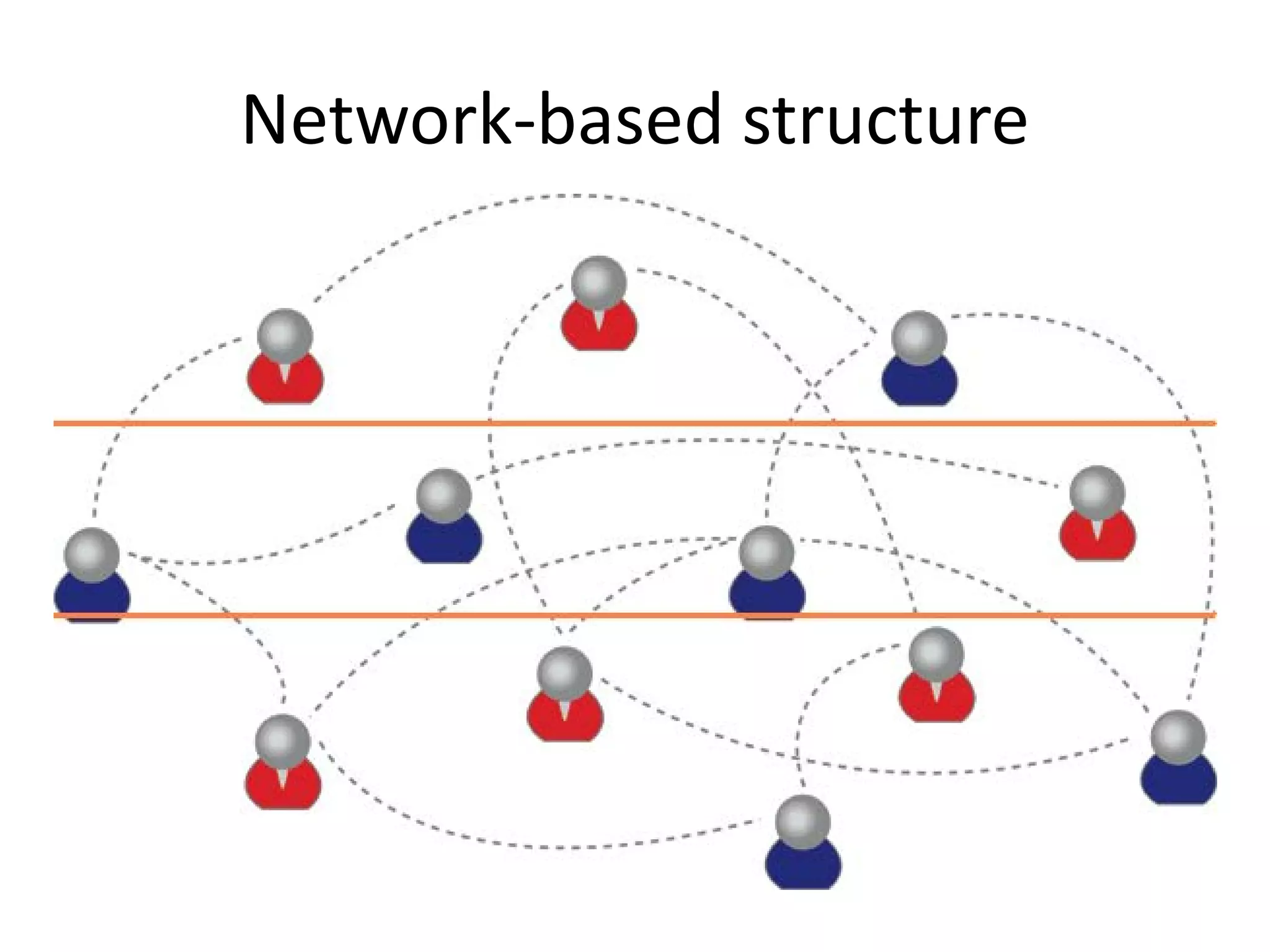
Network-based structure
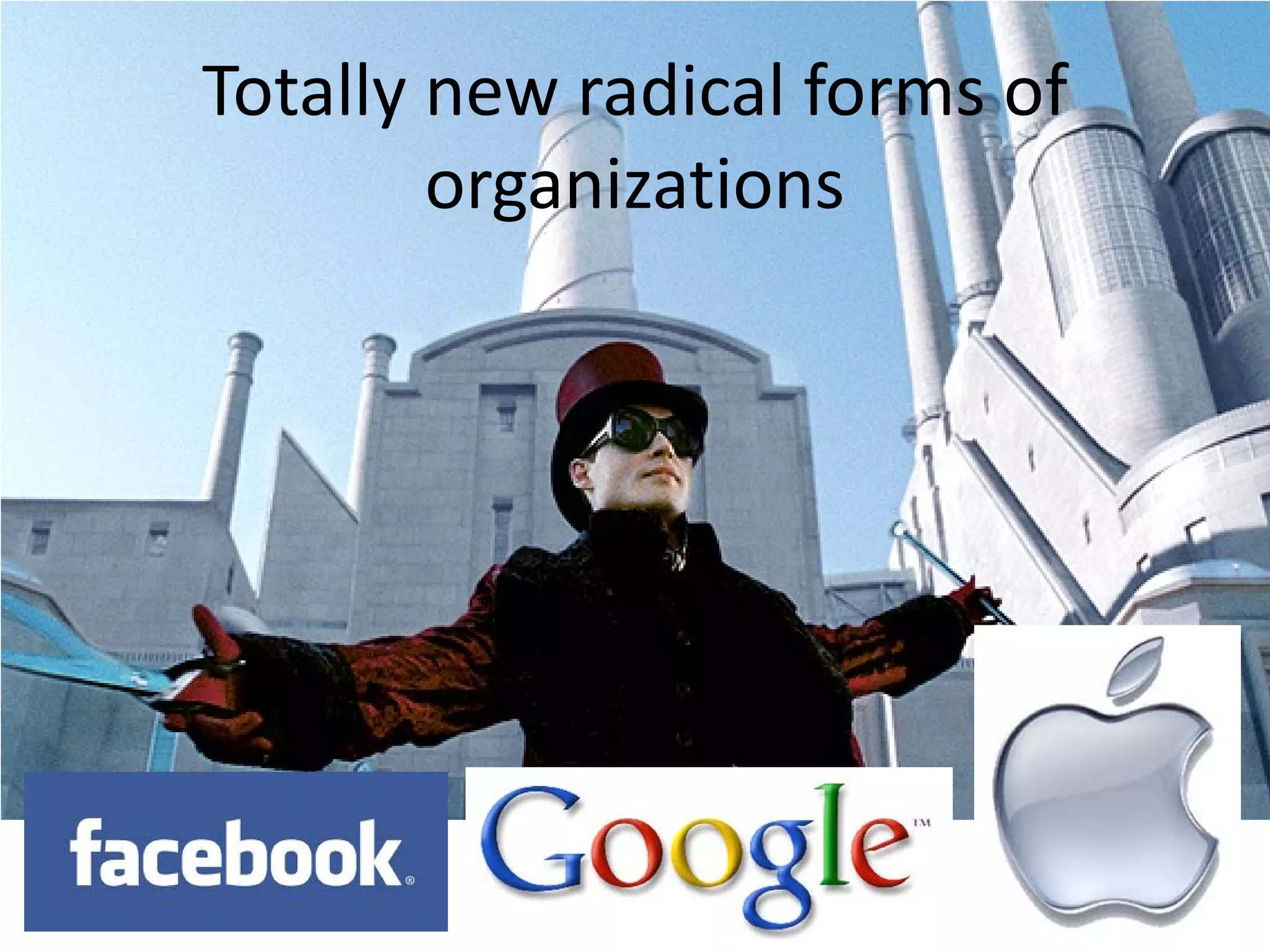
Totally new radical forms of
        organizations
Building organizations around values
 …and NOT the other way around


Creating value (Apple example)
• Unparalleled stream of breakthrough products
• Re-defined how people engage the world with
  digital devices
• Significant contribution to culture
• High quality
Rethinking Capital
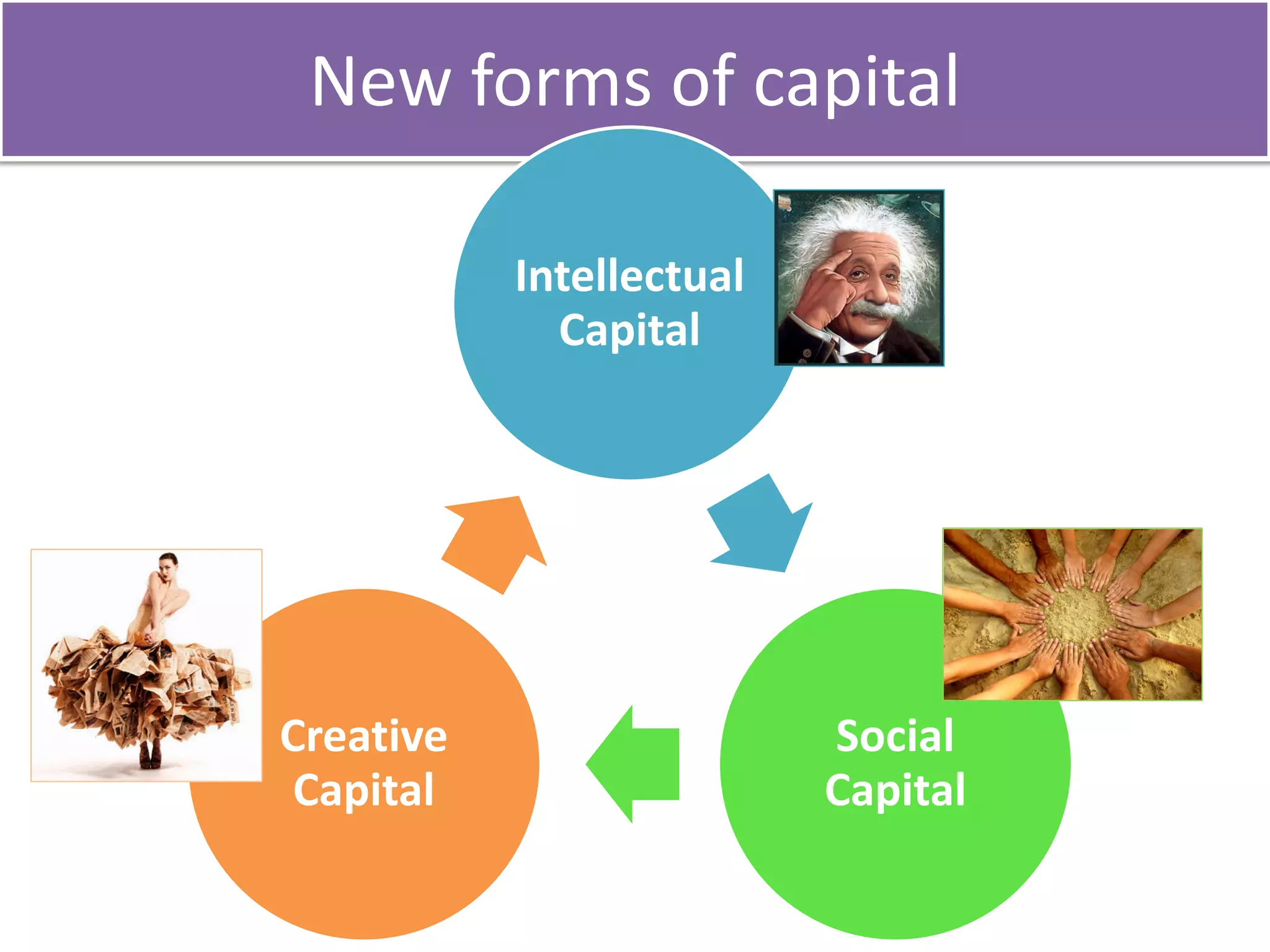
New forms of capital

           Intellectual
             Capital


Creative                  Social
 Capital                  Capital
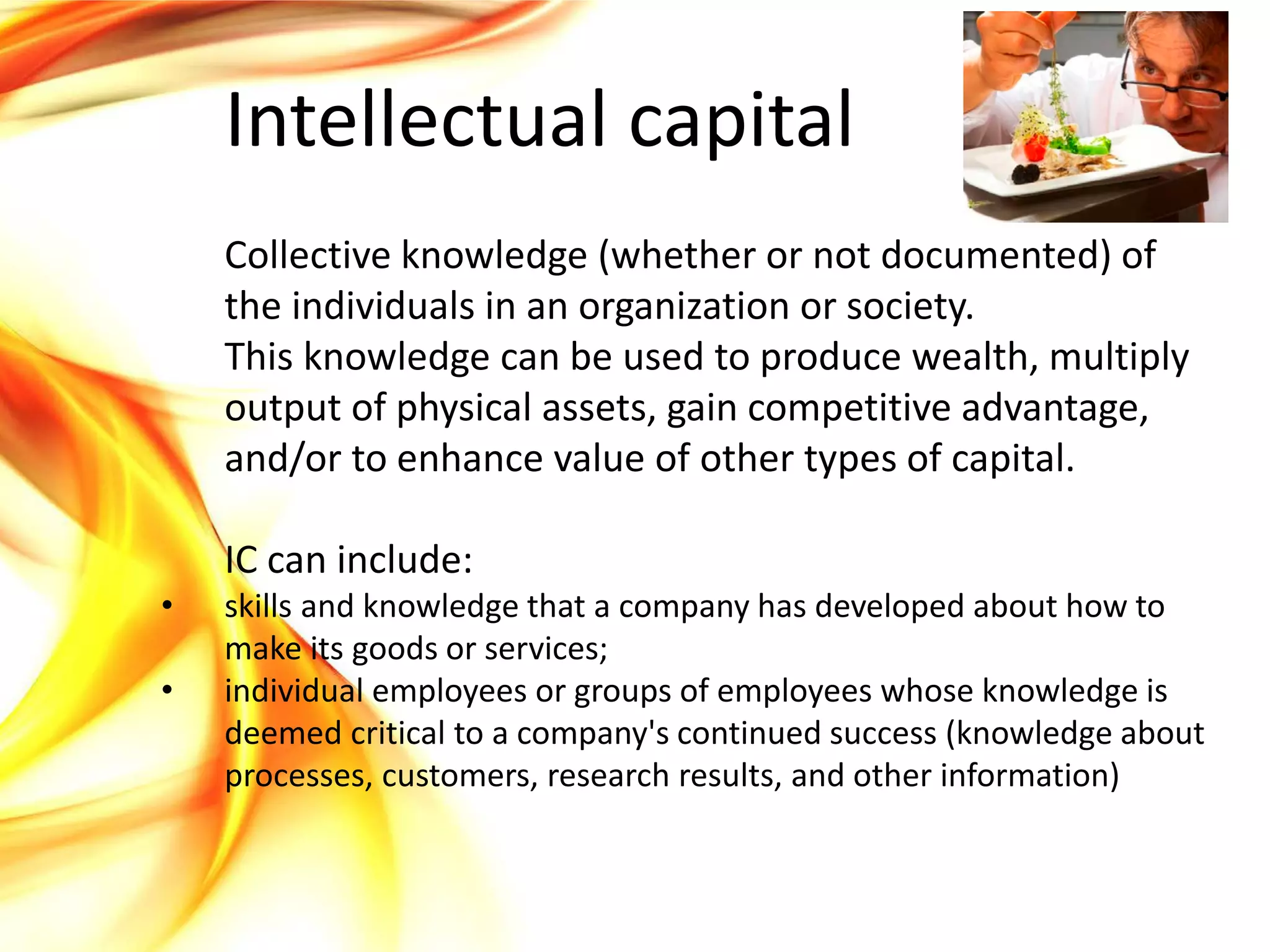
Intellectual capital
    Collective knowledge (whether or not documented) of
    the individuals in an organization or society.
    This knowledge can be used to produce wealth, multiply
    output of physical assets, gain competitive advantage,
    and/or to enhance value of other types of capital.

    IC can include:
•   skills and knowledge that a company has developed about how to
    make its goods or services;
•   individual employees or groups of employees whose knowledge is
    deemed critical to a company's continued success (knowledge about
    processes, customers, research results, and other information)
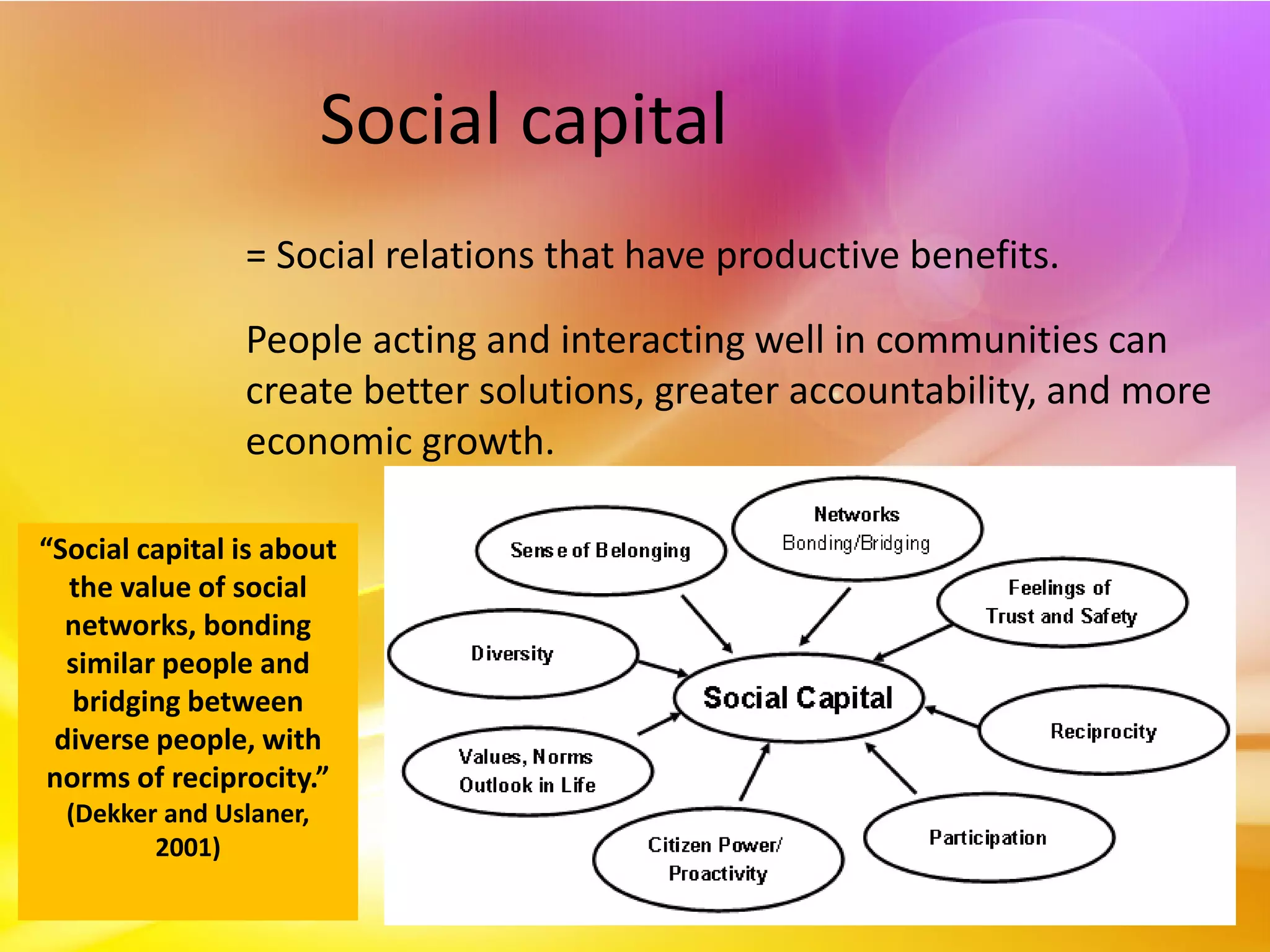
Social capital
                = Social relations that have productive benefits.

                People acting and interacting well in communities can
                create better solutions, greater accountability, and more
                economic growth.

“Social capital is about
  the value of social
  networks, bonding
  similar people and
   bridging between
 diverse people, with
 norms of reciprocity.”
  (Dekker and Uslaner,
         2001)
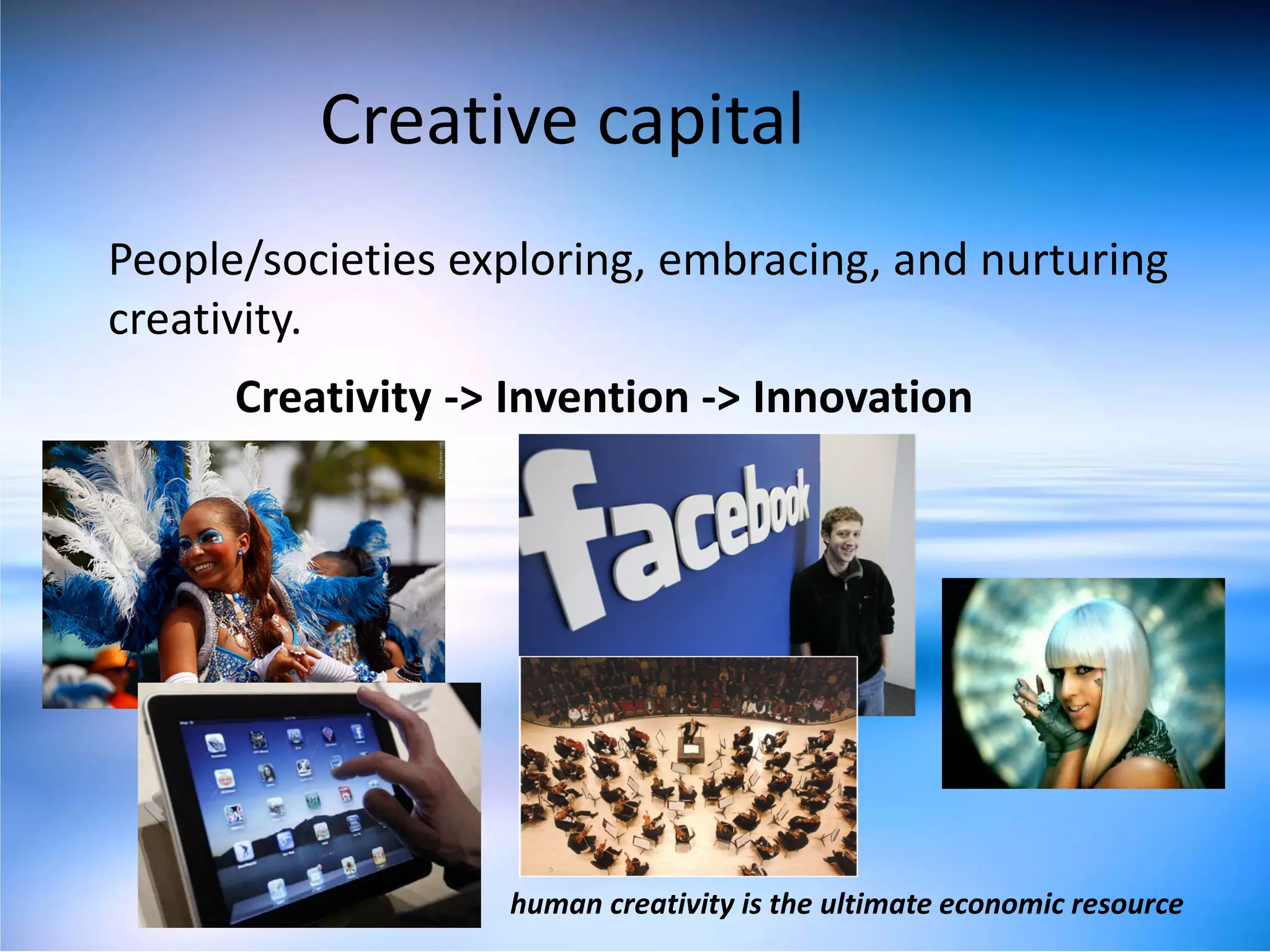
Creative capital
People/societies exploring, embracing, and nurturing
creativity.
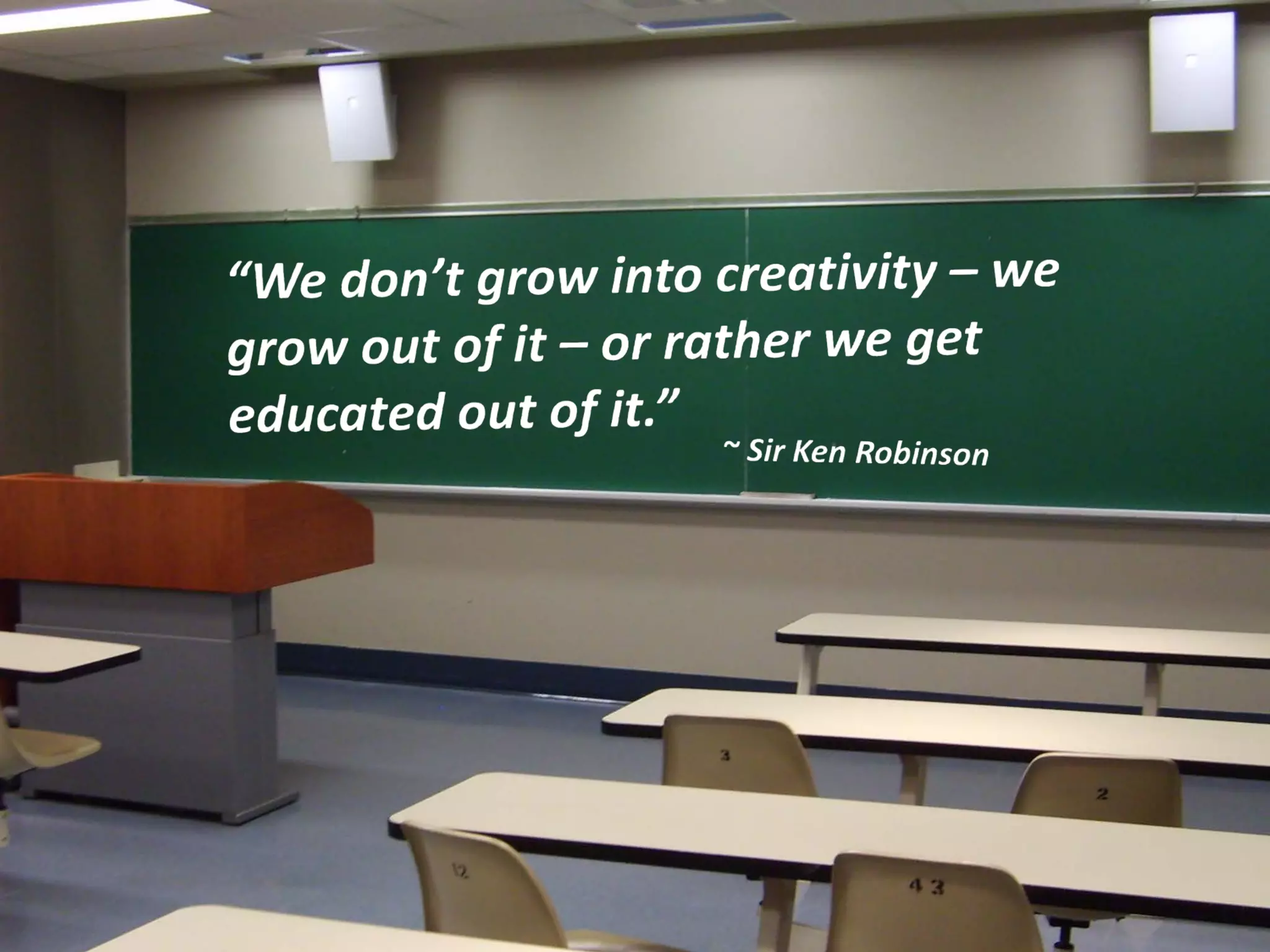
      Creativity -> Invention -> Innovation


                   human creativity is the ultimate economic resource
“…creativity will be the single most important
leadership quality for organizations forging a path
through the complexity of today’s marketplace,
workplace, and community.”
                  ~IBM Global CEO Study (2010)
Time to start educating our
leaders in a new paradigm…
Time to start educating our
future leaders in a new
paradigm…
Rethinking HRM
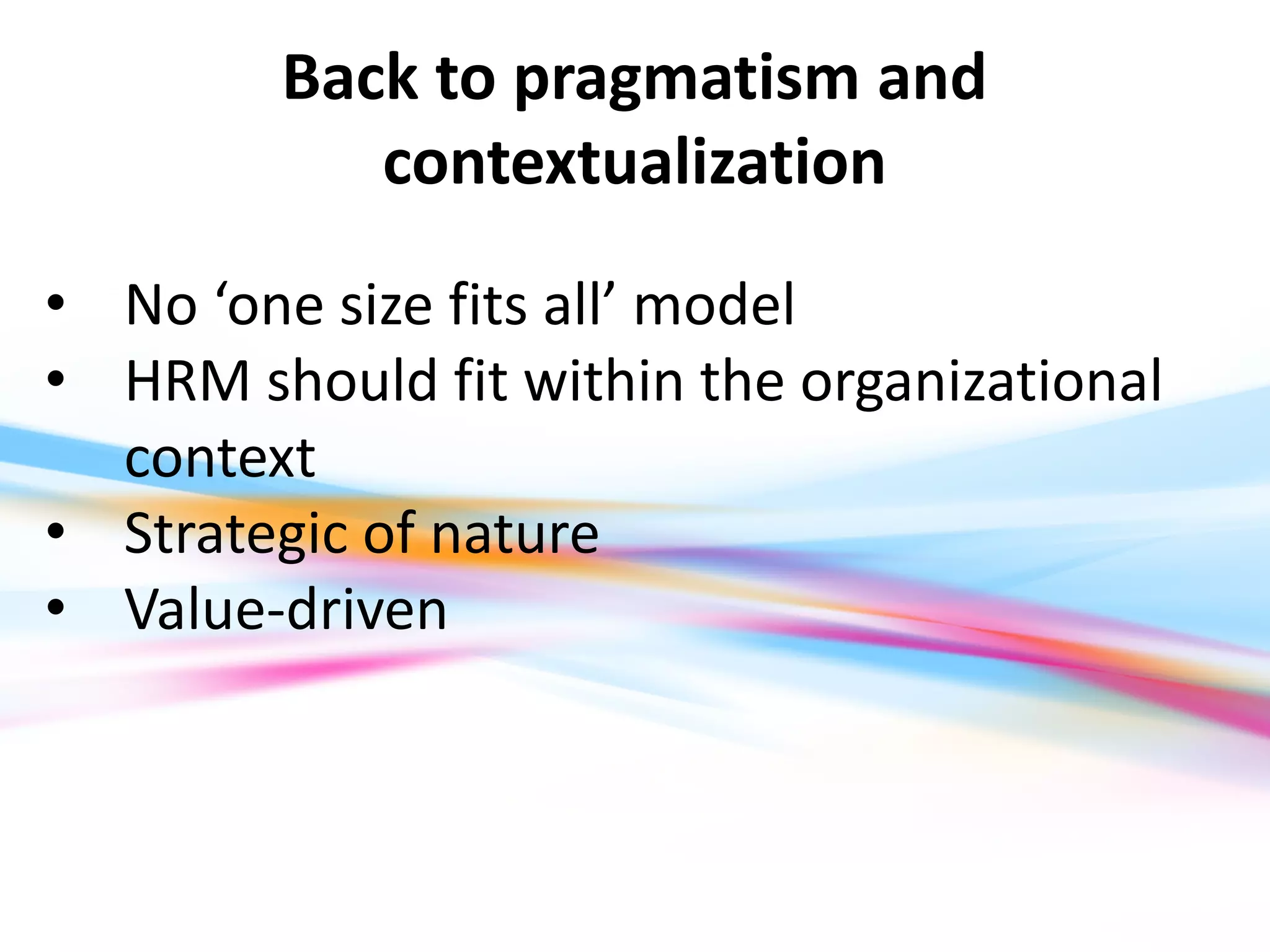
Back to pragmatism and
           contextualization
• No ‘one size fits all’ model
• HRM should fit within the organizational
  context
• Strategic of nature
• Value-driven
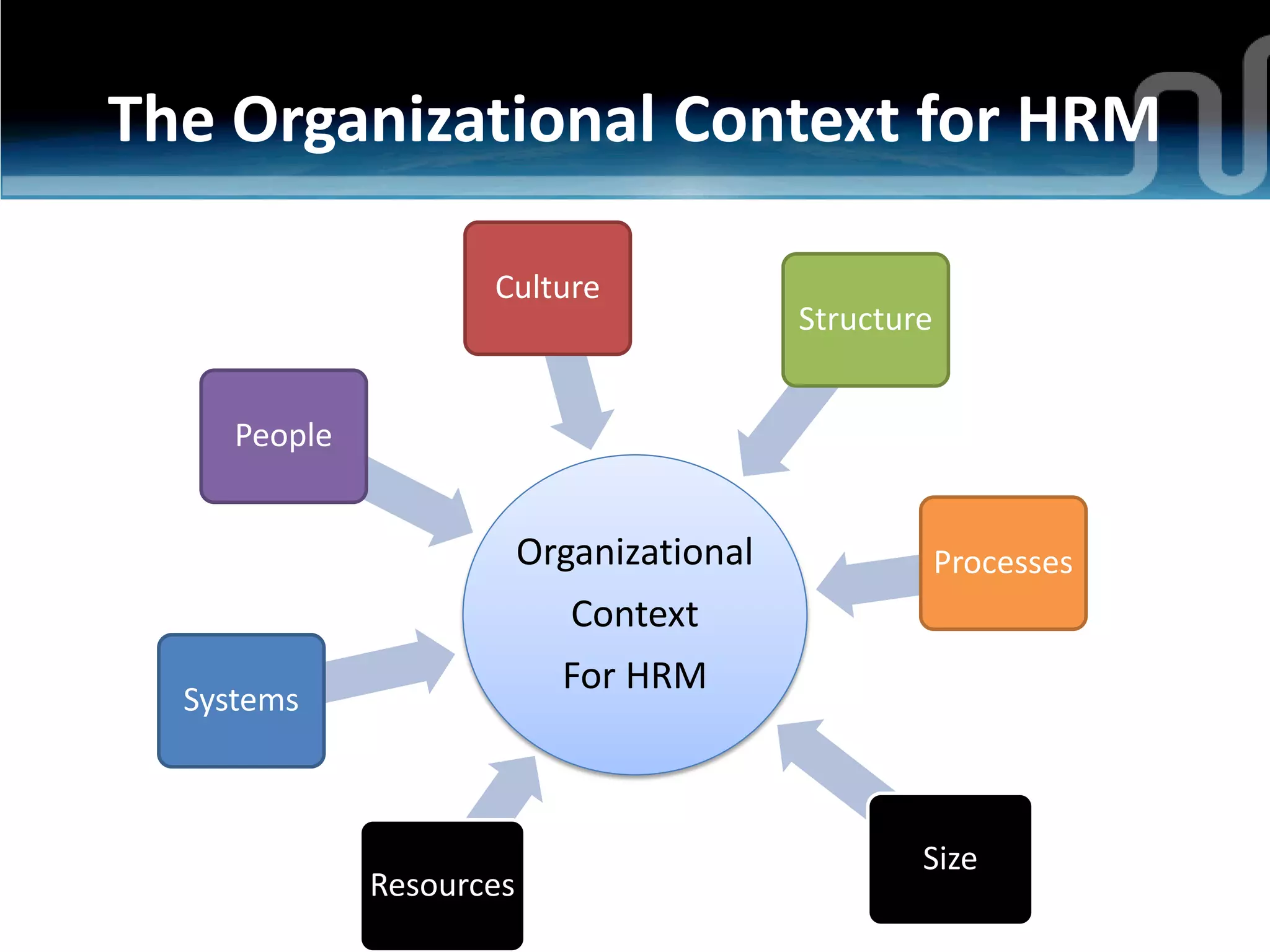
The Organizational Context for HRM

                     Culture
                                           Structure


     People


                          Organizational               Processes
                             Context
                            For HRM
  Systems


                                                   Size
              Resources
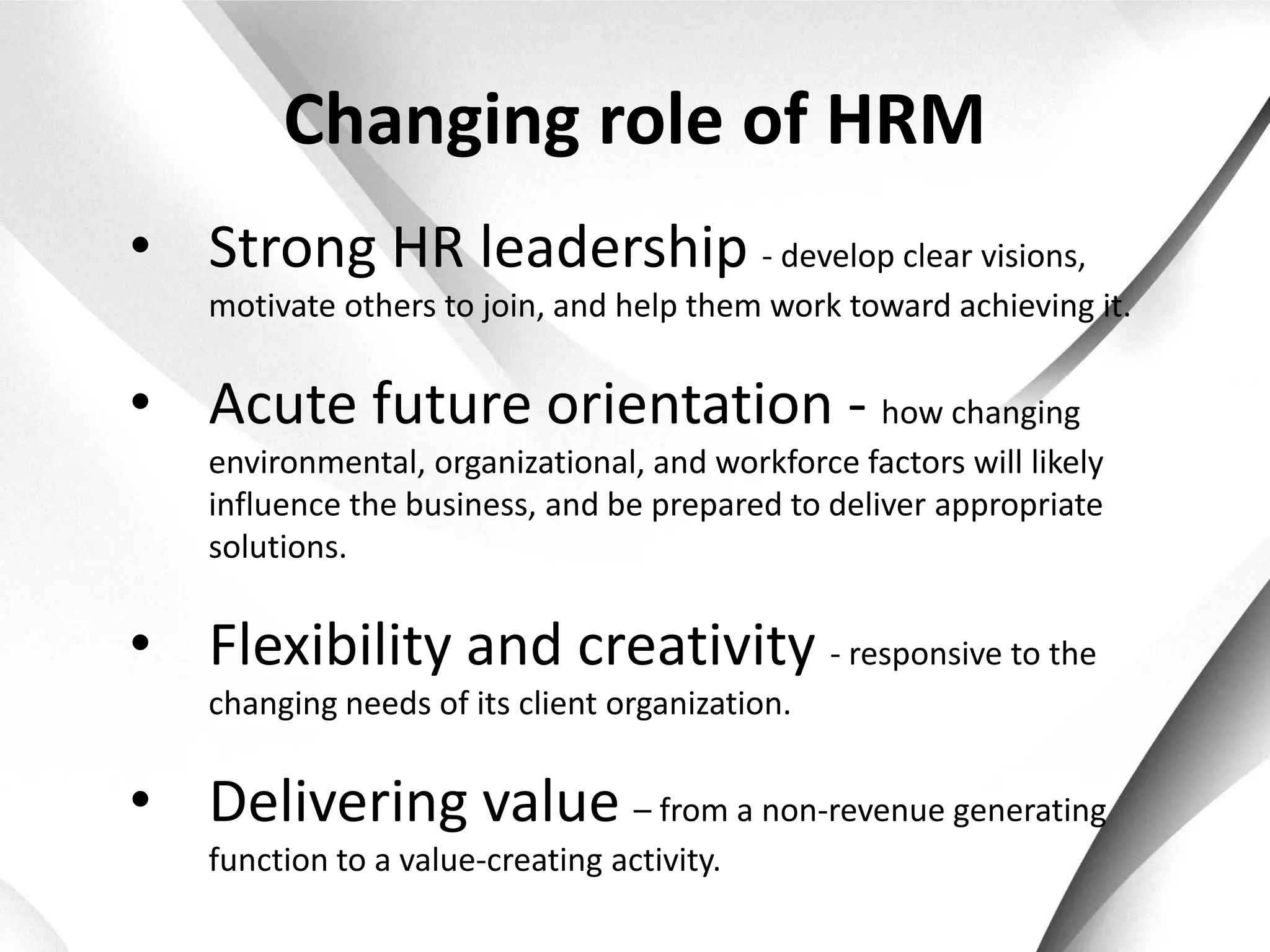
Changing role of HRM
• Strong HR leadership - develop clear visions,
    motivate others to join, and help them work toward achieving it.


• Acute future orientation - how changing
    environmental, organizational, and workforce factors will likely
    influence the business, and be prepared to deliver appropriate
    solutions.


• Flexibility and creativity - responsive to the
    changing needs of its client organization.


• Delivering value – from a non-revenue generating
    function to a value-creating activity.
Changing role of HRM

To build and strengthen the unique set of
organizational capabilities that give the
company its competitive advantage….that
help it to serve its customers in a
meaningfully differentiated way.
Some new HR challenges
Social media policy – managing and monitoring
what is being said about the company and how social
media is used

Millennials – how to motivate and meet the
expectations of the millennial generation?

Changing norms and values – re-evaluate
existing policies or not?
Some new HR challenges
Security and privacy issues –use of company
smart phones, tablets (iPads) and other gadgets

Team building vs. flexibility in the workplace
– cloud computing and remote access

Work-life blend –intertwined work and private lives,
24/7 on-call
Some new HR challenges
Managing the ageing workforce –managing
‘brain drain’, attracting new talent

Continuous learning – learning as an ongoing
activity, which is carried out daily and ad infinitum

??? - ……
HRM: a macro/micro approach

• Preparing the Aruban workforce for the
  challenges ahead requires a holistic
  approach.
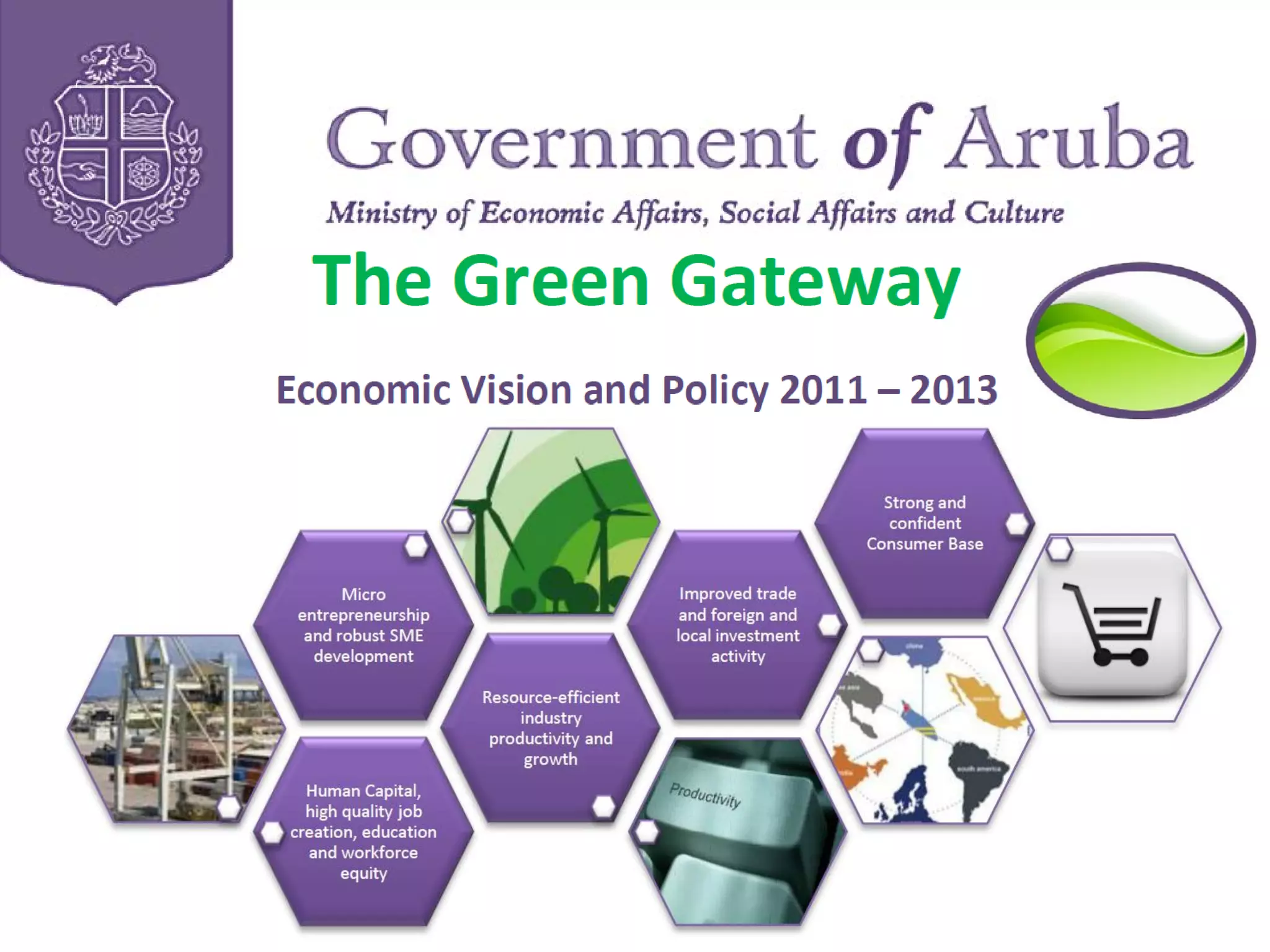
• NISP (Nos Aruba 2025), The Green
  Gateway, Chamber of Commerce, etc.
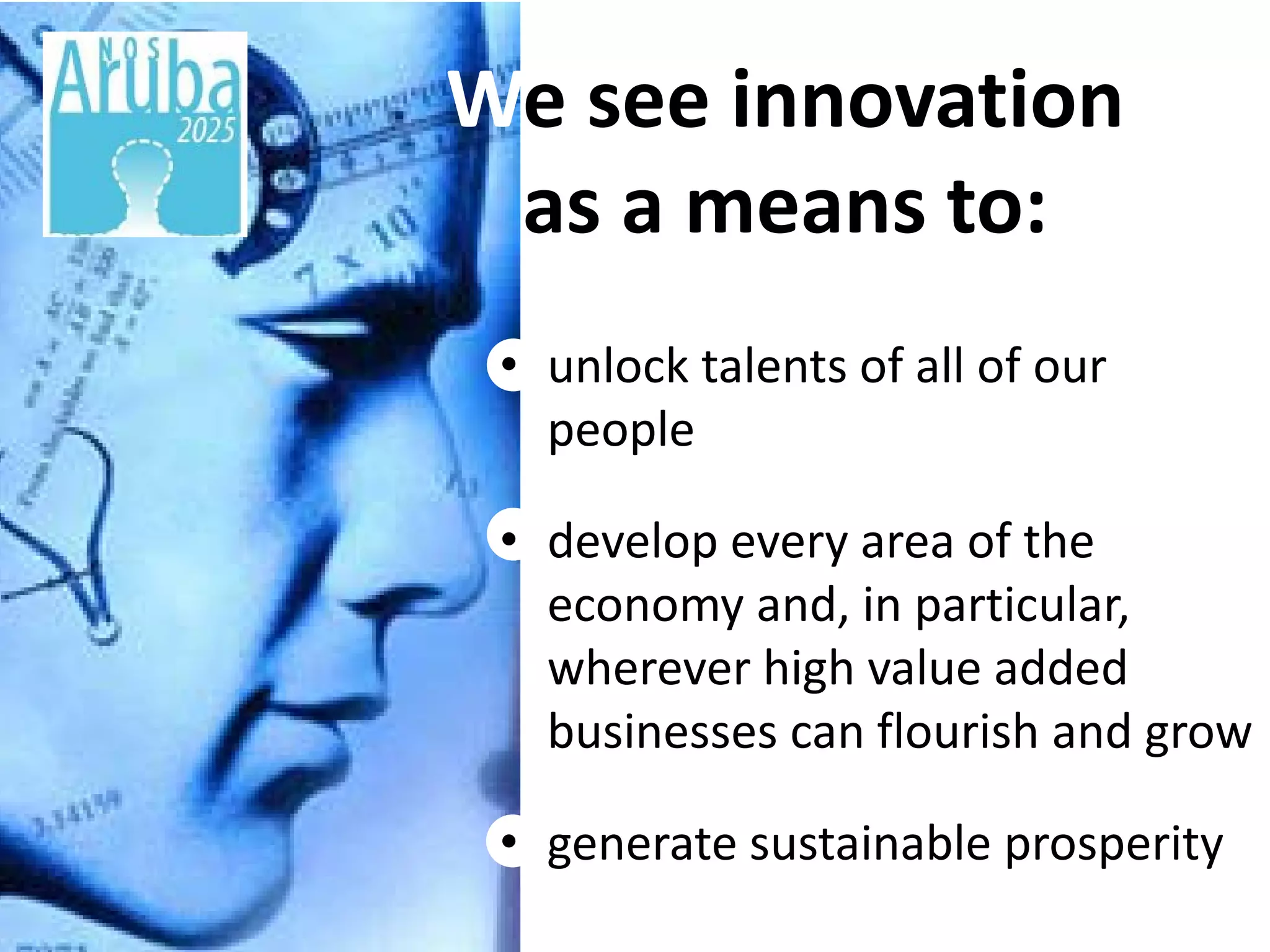
We see innovation
Title
     as a means to:
    • unlock talents of all of our
      people

    • develop every area of the
      economy and, in particular,
      wherever high value added
      businesses can flourish and grow

    • generate sustainable prosperity
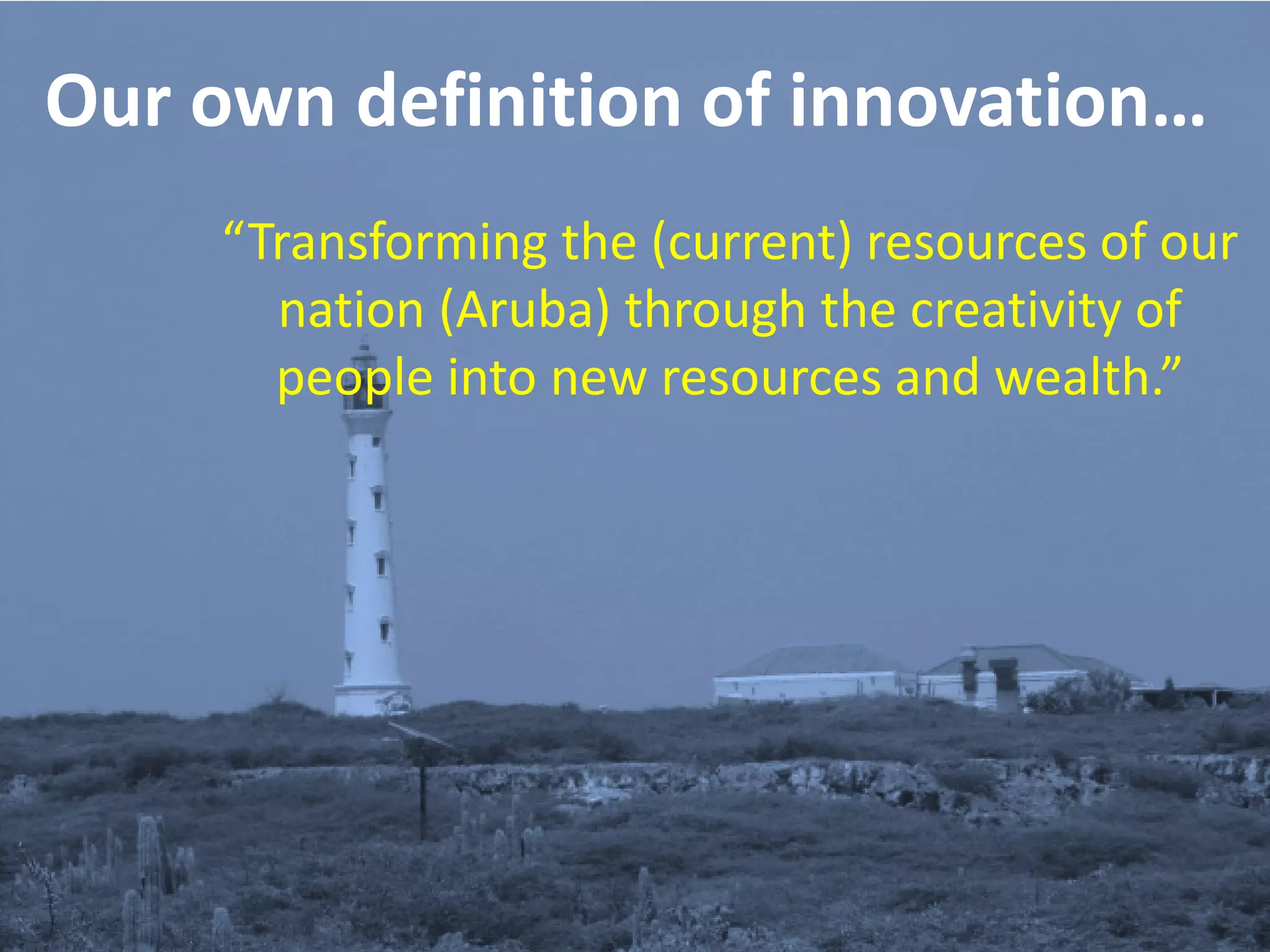
Our own definition of innovation…
     “Transforming the (current) resources of our
       nation (Aruba) through the creativity of
       people into new resources and wealth.”
So in essence….

•   The global landscape is changing quickly.
•   These trends have an impact on Aruba as
    well.
•   No ‘cook-book’ approach for organization
    and HRM design (pragmatic and contextual).
•   The role of HR today is one that is far more
    strategic than ever before.
•   New challenges are coming along.
•   Micro/macro approach.
Edward M. Erasmus, MA
e.erasmus@fzanv.com
erasmus.bpas@gmail.com
Facebook: http://www.facebook.com/edwardmerasmus
Twitter: http://www.twitter.com/em_erasmus
LinkedIn: http://www.linkedin.com/in/edwardmerasmus
Blog:     http://edwardmerasmus.wordpress.com

Rethinking HRM in an era of rapid change and flux

  • 1.
    HRM Seminar New perspectiveson Human Resource Management – Moving Aruba forward Rethinking HRM in an era of rapid change and flux Edward Erasmus MA University of Aruba Organization, Governance and Management June 1, 2012
  • 2.
    What we willdo in the next 30 minutes… Have a conversation about key forces shaping the role of Human Resources (HR) • Discuss some mega trends • How organizations adapt • Rethinking the role of HR • HRM challenges
  • 3.
    A growing attentionfor the role of HRM in organizations…
  • 4.
    Megatrends impacting organizations Speed of Hyper- Social innovation connectivity movement Sustainable Changing enterprising lifestyles Complexity of Growth
  • 5.
    1. Speed ofinnovation Disruptive innovation is going to dominate your daily schedule…. if you walk you stand still, so you’ll need to run pretty fast to advance just a little.
  • 6.
    Disruptive innovation …….an improvementor advancement that enhances a product, service or a process in a manner that has never been expected by the market….. • Good for consumers • Disruptive for existing industries (some will adapt, others will fade away)
  • 7.
  • 8.
  • 9.
  • 10.
  • 11.
    Radical innovation… The biggestfear by big companies in this innovation era is not to be able to recognize radical innovation and (timely) capitalize on it when it appears….
  • 12.
    Radical innovation… are we catching up? XX: “Doing business via the internet is leading to the death of many businesses in Aruba and consequently unemployment of many people?” EE: “So what you do think businesses in Aruba should do?” XX: “We should do something about that darn internet...”
  • 13.
  • 14.
  • 15.
  • 16.
  • 17.
  • 18.
    Technology…. Techs and gadgetsused at home will exceed level of technology being used at work and being taught at schools…
  • 19.
    Telecommuting • Increasing webification of applications • Cloud computing • Online storage • Remote access
  • 20.
    3. SOCIAL MOVEMENT &CONSUMER-CONTROLLED MEDIA You don’t control consumers… Consumers control you...
  • 22.
    Thanks to socialnetworking: • Society is moving towards a more social, collaborative, interactive and responsive web • Higher interconnectivity • Building communities SN gives people a powerful voice…..
  • 23.
    From social mediato social movement
  • 26.
    Say goodbye tothe era of monologue
  • 27.
    The new communicationmodel is dialogue
  • 28.
    Social Networking haschanged the ‘game’ in marketing and communication, but also how organizations need to respond to consumer needs….
  • 29.
    Mass customization…. Co-creation… and co-branding…. take on new forms
  • 31.
  • 32.
    Starbucks gave consumersa voice....the result: over 50,000 product ideas
  • 34.
    • Forget B2Cor B2B…… it’s now P2P (person-2-person) …customers want to connect and interact with companies on a 1:1 social level …and those who can deliver that, will gain substantial competitive edge...
  • 35.
    The end oftraditional marketing… • Opportunities to engage with customers in a new ways…. • However, managing SM is posting new challenges for organizations • Everyone is a marketer
  • 36.
    4. THE COMPLEXITYOF GROWTH “This is the end of easy growth” -Raghuram Rajan
  • 43.
    ‘Questioning growth isdeemed to be the act of lunatics, idealists and revolutionaries. But question it we must.’ - Tim Jackson
  • 46.
    Revenue growth willnot be easy… • Increasing cost control • Upturn in productivity
  • 47.
    5. SUSTAINABLE ENTERPRISING “We are living on this planet as if we had another one to go to.” - Terri Swearingen
  • 53.
    Think sustainable…. • Environmentalresources are limited and are quite sensitive to everything that we do. • We are starting to experience the effects of the actions of generations that came before us. To make sure that future generations will not experience worse, we need to be aware of the ideals and requirements of sustainability….
  • 54.
    Why adopting sustainabilitypractices..? • Without a sustainable society, there is no sustainable business…. • Not only sustaining the necessary environmental resources, but also the social resources, including employees, customers (the community), and corporate reputation
  • 55.
    Sustainable enterprising 1. Incorporatingprinciples of sustainability into each business decisions. 2. Supplying or consuming environmentally friendly products or services that replaces demand for non green products and/or services. 3. Greener than traditional competition. 4. Enduring commitment to environmental principles in the business operations.
  • 59.
    6. CHANGING LIFESTYLESAND SOCIAL VALUES ‘Gen Y is an “experience” culture. They do not want to be told what to like or what to do. They want to experience the world for themselves and pass their own judgment.’ - Bea Fields
  • 60.
  • 61.
    Generation Y What theythink of themselves: “Brilliant, thought-provoking, eager, and exciting” What older generations think of them: “Over-entitled, egotistical, know it-alls”
  • 65.
  • 66.
    Juvenile crime Performance in education Narcissistic behavior Workforce challenges
  • 67.
  • 68.
    If you thinkyou’ve got everything under control….. Think again….
  • 69.
    The main questionis… How can organizations remain competitive, be able to attract, organize, nurture and retain that core of talented people, in order to deliver value in a sustainable manner to a diverse group of demanding consumers?
  • 70.
    How organizations arecoping • Create and embrace diversity in knowledge, people and resources. • Focus on ‘creation’…not just ‘operation’. • Think in terms of value, ‘Win-Win’ and long-term. • Embrace new forms of capital.
  • 71.
  • 72.
    Organizations?.. • An organization is way more that just structure and system... • An organization is a series of conversations and dialogues between people, external or internal, in pursuit of solutions….
  • 73.
  • 74.
  • 75.
  • 76.
  • 77.
    Totally new radicalforms of organizations
  • 78.
    Building organizations aroundvalues …and NOT the other way around Creating value (Apple example) • Unparalleled stream of breakthrough products • Re-defined how people engage the world with digital devices • Significant contribution to culture • High quality
  • 79.
  • 80.
    New forms ofcapital Intellectual Capital Creative Social Capital Capital
  • 81.
    Intellectual capital Collective knowledge (whether or not documented) of the individuals in an organization or society. This knowledge can be used to produce wealth, multiply output of physical assets, gain competitive advantage, and/or to enhance value of other types of capital. IC can include: • skills and knowledge that a company has developed about how to make its goods or services; • individual employees or groups of employees whose knowledge is deemed critical to a company's continued success (knowledge about processes, customers, research results, and other information)
  • 82.
    Social capital = Social relations that have productive benefits. People acting and interacting well in communities can create better solutions, greater accountability, and more economic growth. “Social capital is about the value of social networks, bonding similar people and bridging between diverse people, with norms of reciprocity.” (Dekker and Uslaner, 2001)
  • 83.
    Creative capital People/societies exploring,embracing, and nurturing creativity. Creativity -> Invention -> Innovation human creativity is the ultimate economic resource
  • 84.
    “…creativity will bethe single most important leadership quality for organizations forging a path through the complexity of today’s marketplace, workplace, and community.” ~IBM Global CEO Study (2010)
  • 85.
    Time to starteducating our leaders in a new paradigm…
  • 86.
    Time to starteducating our future leaders in a new paradigm…
  • 87.
  • 88.
    Back to pragmatismand contextualization • No ‘one size fits all’ model • HRM should fit within the organizational context • Strategic of nature • Value-driven
  • 89.
    The Organizational Contextfor HRM Culture Structure People Organizational Processes Context For HRM Systems Size Resources
  • 90.
    Changing role ofHRM • Strong HR leadership - develop clear visions, motivate others to join, and help them work toward achieving it. • Acute future orientation - how changing environmental, organizational, and workforce factors will likely influence the business, and be prepared to deliver appropriate solutions. • Flexibility and creativity - responsive to the changing needs of its client organization. • Delivering value – from a non-revenue generating function to a value-creating activity.
  • 91.
    Changing role ofHRM To build and strengthen the unique set of organizational capabilities that give the company its competitive advantage….that help it to serve its customers in a meaningfully differentiated way.
  • 92.
    Some new HRchallenges Social media policy – managing and monitoring what is being said about the company and how social media is used Millennials – how to motivate and meet the expectations of the millennial generation? Changing norms and values – re-evaluate existing policies or not?
  • 93.
    Some new HRchallenges Security and privacy issues –use of company smart phones, tablets (iPads) and other gadgets Team building vs. flexibility in the workplace – cloud computing and remote access Work-life blend –intertwined work and private lives, 24/7 on-call
  • 94.
    Some new HRchallenges Managing the ageing workforce –managing ‘brain drain’, attracting new talent Continuous learning – learning as an ongoing activity, which is carried out daily and ad infinitum ??? - ……
  • 95.
    HRM: a macro/microapproach • Preparing the Aruban workforce for the challenges ahead requires a holistic approach. • NISP (Nos Aruba 2025), The Green Gateway, Chamber of Commerce, etc.
  • 96.
    We see innovation Title as a means to: • unlock talents of all of our people • develop every area of the economy and, in particular, wherever high value added businesses can flourish and grow • generate sustainable prosperity
  • 97.
    Our own definitionof innovation… “Transforming the (current) resources of our nation (Aruba) through the creativity of people into new resources and wealth.”
  • 99.
    So in essence…. • The global landscape is changing quickly. • These trends have an impact on Aruba as well. • No ‘cook-book’ approach for organization and HRM design (pragmatic and contextual). • The role of HR today is one that is far more strategic than ever before. • New challenges are coming along. • Micro/macro approach.
  • 101.
    Edward M. Erasmus,MA e.erasmus@fzanv.com erasmus.bpas@gmail.com Facebook: http://www.facebook.com/edwardmerasmus Twitter: http://www.twitter.com/em_erasmus LinkedIn: http://www.linkedin.com/in/edwardmerasmus Blog: http://edwardmerasmus.wordpress.com