Digital Citizenship

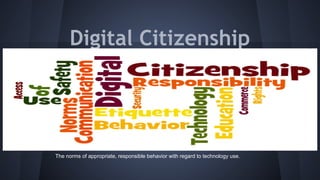
The norms of appropriate, responsible behavior with regard to technology use.
Digital Access
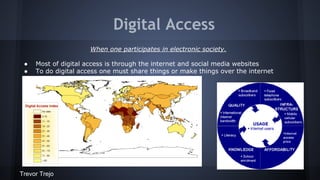
When one participates in electronic society.
●
●

Most of digital access is through the internet and social media websites
To do digital access one must share things or make things over the internet

Trevor Trejo
Digital Commerce
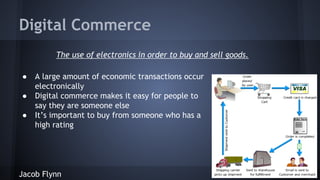
The use of electronics in order to buy and sell goods.
●
●
●

A large amount of economic transactions occur
electronically
Digital commerce makes it easy for people to
say they are someone else
It’s important to buy from someone who has a
high rating

Jacob Flynn
Digital Communication
The electronic transmission that is encoded digitally.
We all use/see digital communication in our lives today.
Ways of digital communication:
●
●
●

Social Medias are a main use of digital communication
Any type of communication on the internet IS digital communication
Digital communication is also used in graphic design, entertainment,
movies, and artistic productions.
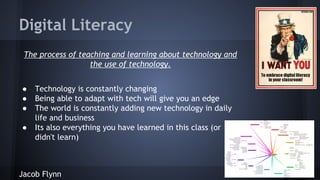
Digital Literacy
The process of teaching and learning about technology and
the use of technology.
●
●
●
●

Technology is constantly changing
Being able to adapt with tech will give you an edge
The world is constantly adding new technology in daily
life and business
Its also everything you have learned in this class (or
didn't learn)

Jacob Flynn
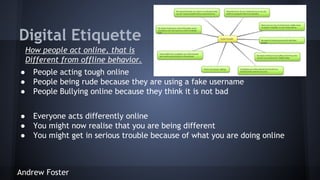
Digital Etiquette
How people act online, that is
Different from offline behavior.
●
●
●

People acting tough online
People being rude because they are using a fake username
People Bullying online because they think it is not bad

●
●
●

Everyone acts differently online
You might now realise that you are being different
You might get in serious trouble because of what you are doing online

Andrew Foster
Digital Law
Digital Law is your electronic responsibility for actions and deeds.
●
●
●

It deals with ethics of technology within a society
People need to understand that stealing or causing damage to peoples work, identity, or
property online is a crime
There are laws that people need to understand when online, this applies to anyone that
does something online
○ Downloading illegal music
○ getting others information through hacking
○ plagiarism
○ creating destructive worms, viruses or Trojan horses
○ sending spam
○ and stealing anyones identity

Ethan Lobdell
Digital Rights and Responsibilities
Explains legalities of digital use.
●
●

rights of citizens on the internet includes of privacy, free speech, etc.
are on the internet.
As everyone knows with rights comes responsibility
○ The responsibility of digital citizens is the controlling of what the
rights include and the norms along with appropriate uses of the
internet are
○ The rights of internet use matter just as much as basic rights of
humanity because we live in a digital age

Brayden Duex
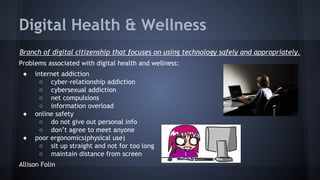
Digital Health & Wellness
Branch of digital citizenship that focuses on using technology safely and appropriately.
Problems associated with digital health and wellness:
●

●

●

internet addiction
○ cyber-relationship addiction
○ cybersexual addiction
○ net compulsions
○ information overload
online safety
○ do not give out personal info
○ don’t agree to meet anyone
poor ergonomics(physical use)
○ sit up straight and not for too long
○ maintain distance from screen

Allison Folin
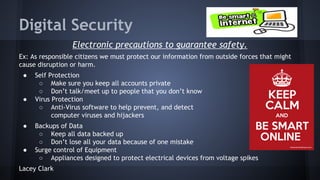
Digital Security
Electronic precautions to guarantee safety.
Ex: As responsible citizens we must protect our information from outside forces that might
cause disruption or harm.
●

●

●

●

Self Protection
○ Make sure you keep all accounts private
○ Don’t talk/meet up to people that you don’t know
Virus Protection
○ Anti-Virus software to help prevent, and detect
computer viruses and hijackers
Backups of Data
○ Keep all data backed up
○ Don’t lose all your data because of one mistake
Surge control of Equipment
○ Appliances designed to protect electrical devices from voltage spikes

Lacey Clark
Statistics
● 93% of teens go online
● 27% of teens play games with people they don’t know
online
● On average a teen receives and sends 1,500 texts per
month
● 97% of teens play a video game
● 500 million people use Facebook
● 646 million Twitter users
● 30% of a persons day is spent on an electronic device
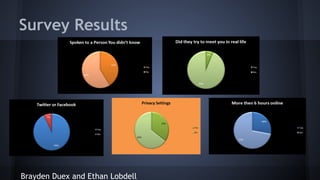
Survey Results

Brayden Duex and Ethan Lobdell
What this means...
Twitter or Facebook● who has one, who does not...self
explanatory

Brayden Duex
Sources for Research
●

"Digital Citizenship." digitalcitizenship. N.p., n.d. Web. 3 Mar. 2014. <http://digitalcitizenship.net/Home_Page.html>.

●

"Digital Citizenship." :: Cable in the Classroom. N.p., n.d. Web. 3 Mar. 2014. <http://www.ciconline.org/DigitalCitizenship>.

●

"Digital Citizenship - Main Page." Digital Citizenship - Main Page. N.p., n.d. Web. 2 Mar. 2014. <http://www.nisd.net/digitalcitizen/>.

●

"Digital citizen." Wikipedia. Wikimedia Foundation, 23 Feb. 2014. Web. 3 Mar. 2014. <http://en.wikipedia.org/wiki/Digital_citizen>.

●

"What does digital citizenship mean to you?." What Does Digital Citizenship Mean to You?. N.p., n.d. Web. 3 Mar. 2014. <http://www.microsoft.
com/security/resources/digital-citizenship.aspx>.

●

Jacob Flynn

Digital citizenship

  • 1.
    Digital Citizenship The normsof appropriate, responsible behavior with regard to technology use.
  • 2.
    Digital Access When oneparticipates in electronic society. ● ● Most of digital access is through the internet and social media websites To do digital access one must share things or make things over the internet Trevor Trejo
  • 3.
    Digital Commerce The useof electronics in order to buy and sell goods. ● ● ● A large amount of economic transactions occur electronically Digital commerce makes it easy for people to say they are someone else It’s important to buy from someone who has a high rating Jacob Flynn
  • 4.
    Digital Communication The electronictransmission that is encoded digitally. We all use/see digital communication in our lives today. Ways of digital communication: ● ● ● Social Medias are a main use of digital communication Any type of communication on the internet IS digital communication Digital communication is also used in graphic design, entertainment, movies, and artistic productions.
  • 5.
    Digital Literacy The processof teaching and learning about technology and the use of technology. ● ● ● ● Technology is constantly changing Being able to adapt with tech will give you an edge The world is constantly adding new technology in daily life and business Its also everything you have learned in this class (or didn't learn) Jacob Flynn
  • 6.
    Digital Etiquette How peopleact online, that is Different from offline behavior. ● ● ● People acting tough online People being rude because they are using a fake username People Bullying online because they think it is not bad ● ● ● Everyone acts differently online You might now realise that you are being different You might get in serious trouble because of what you are doing online Andrew Foster
  • 7.
    Digital Law Digital Lawis your electronic responsibility for actions and deeds. ● ● ● It deals with ethics of technology within a society People need to understand that stealing or causing damage to peoples work, identity, or property online is a crime There are laws that people need to understand when online, this applies to anyone that does something online ○ Downloading illegal music ○ getting others information through hacking ○ plagiarism ○ creating destructive worms, viruses or Trojan horses ○ sending spam ○ and stealing anyones identity Ethan Lobdell
  • 8.
    Digital Rights andResponsibilities Explains legalities of digital use. ● ● rights of citizens on the internet includes of privacy, free speech, etc. are on the internet. As everyone knows with rights comes responsibility ○ The responsibility of digital citizens is the controlling of what the rights include and the norms along with appropriate uses of the internet are ○ The rights of internet use matter just as much as basic rights of humanity because we live in a digital age Brayden Duex
  • 9.
    Digital Health &Wellness Branch of digital citizenship that focuses on using technology safely and appropriately. Problems associated with digital health and wellness: ● ● ● internet addiction ○ cyber-relationship addiction ○ cybersexual addiction ○ net compulsions ○ information overload online safety ○ do not give out personal info ○ don’t agree to meet anyone poor ergonomics(physical use) ○ sit up straight and not for too long ○ maintain distance from screen Allison Folin
  • 10.
    Digital Security Electronic precautionsto guarantee safety. Ex: As responsible citizens we must protect our information from outside forces that might cause disruption or harm. ● ● ● ● Self Protection ○ Make sure you keep all accounts private ○ Don’t talk/meet up to people that you don’t know Virus Protection ○ Anti-Virus software to help prevent, and detect computer viruses and hijackers Backups of Data ○ Keep all data backed up ○ Don’t lose all your data because of one mistake Surge control of Equipment ○ Appliances designed to protect electrical devices from voltage spikes Lacey Clark
  • 11.
    Statistics ● 93% ofteens go online ● 27% of teens play games with people they don’t know online ● On average a teen receives and sends 1,500 texts per month ● 97% of teens play a video game ● 500 million people use Facebook ● 646 million Twitter users ● 30% of a persons day is spent on an electronic device
  • 12.
    Survey Results Brayden Duexand Ethan Lobdell
  • 13.
    What this means... Twitteror Facebook● who has one, who does not...self explanatory Brayden Duex
  • 14.
    Sources for Research ● "DigitalCitizenship." digitalcitizenship. N.p., n.d. Web. 3 Mar. 2014. <http://digitalcitizenship.net/Home_Page.html>. ● "Digital Citizenship." :: Cable in the Classroom. N.p., n.d. Web. 3 Mar. 2014. <http://www.ciconline.org/DigitalCitizenship>. ● "Digital Citizenship - Main Page." Digital Citizenship - Main Page. N.p., n.d. Web. 2 Mar. 2014. <http://www.nisd.net/digitalcitizen/>. ● "Digital citizen." Wikipedia. Wikimedia Foundation, 23 Feb. 2014. Web. 3 Mar. 2014. <http://en.wikipedia.org/wiki/Digital_citizen>. ● "What does digital citizenship mean to you?." What Does Digital Citizenship Mean to You?. N.p., n.d. Web. 3 Mar. 2014. <http://www.microsoft. com/security/resources/digital-citizenship.aspx>. ● Jacob Flynn