Reactions to Classical Liberalism


                Hey ‘dis ‘iberalism ‘stuff’
                don’t work fer no me!
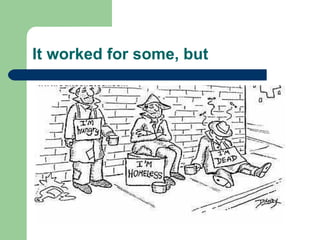
It worked for some, but
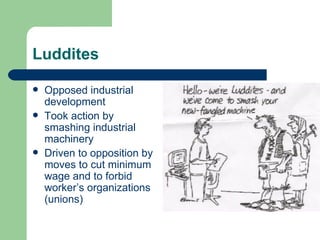
Luddites

   Opposed industrial
    development
   Took action by
    smashing industrial
    machinery
   Driven to opposition by
    moves to cut minimum
    wage and to forbid
    worker’s organizations
    (unions)
The Chartists

   A group centred around the working-class calling for
    political and social reform
           Universal suffrage for all men over 21 (deemed essential)
           Equal-sized electoral districts
           Voting by secret ballot
           An end to the need for property qualifications for Parliament
           Pay for Members of Parliament
           Annual elections
   Initially violently opposed, many of their policies later
    became mainstream
Socialism

   Resources should be controlled by the
    public, not by private businesses and
    investors.
   Co-operation is favoured over competition.
   In 19th-century society, great wealth existed,
    but fair and equal distribution of this wealth
    did not.
   Thus, socialists rejected the lack of equality
    and humanitarianism under classical
    liberalism.
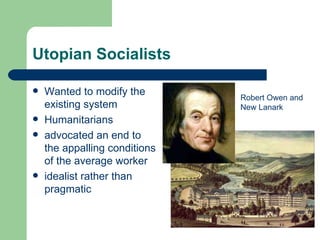
Utopian Socialists

   Wanted to modify the       Robert Owen and
    existing system            New Lanark
   Humanitarians
   advocated an end to
    the appalling conditions
    of the average worker
   idealist rather than
    pragmatic
All socialists believed (more or less)

   Private ownership of the means of
    production permits exploitation
   The state should direct the economy to
    achieve economic equality for all citizens
   Society should be classless
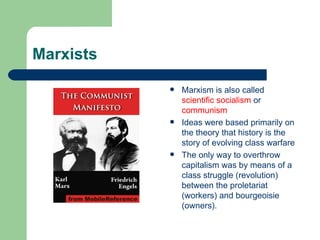
Marxists

              Marxism is also called
               scientific socialism or
               communism
              Ideas were based primarily on
               the theory that history is the
               story of evolving class warfare
              The only way to overthrow
               capitalism was by means of a
               class struggle (revolution)
               between the proletariat
               (workers) and bourgeoisie
               (owners).
Socialists? Marxists?

   Socialism and Marxism ,while sharing common
    views, differed greatly in the ways that their goal
    of transforming liberal capitalist society should
    be achieved…one was peacefully (socialist) the
    other was violently (Marxist/Communist)
   As a result, Marxist thought was not as widely
    accepted in classical liberal society
   Socialism, which favoured reform, was more
    popular

Reaction to classical liberalism 1

  • 1.
    Reactions to ClassicalLiberalism Hey ‘dis ‘iberalism ‘stuff’ don’t work fer no me!
  • 2.
    It worked forsome, but
  • 3.
    Luddites  Opposed industrial development  Took action by smashing industrial machinery  Driven to opposition by moves to cut minimum wage and to forbid worker’s organizations (unions)
  • 4.
    The Chartists  A group centred around the working-class calling for political and social reform  Universal suffrage for all men over 21 (deemed essential)  Equal-sized electoral districts  Voting by secret ballot  An end to the need for property qualifications for Parliament  Pay for Members of Parliament  Annual elections  Initially violently opposed, many of their policies later became mainstream
  • 5.
    Socialism  Resources should be controlled by the public, not by private businesses and investors.  Co-operation is favoured over competition.  In 19th-century society, great wealth existed, but fair and equal distribution of this wealth did not.  Thus, socialists rejected the lack of equality and humanitarianism under classical liberalism.
  • 6.
    Utopian Socialists  Wanted to modify the Robert Owen and existing system New Lanark  Humanitarians  advocated an end to the appalling conditions of the average worker  idealist rather than pragmatic
  • 7.
    All socialists believed(more or less)  Private ownership of the means of production permits exploitation  The state should direct the economy to achieve economic equality for all citizens  Society should be classless
  • 8.
    Marxists  Marxism is also called scientific socialism or communism  Ideas were based primarily on the theory that history is the story of evolving class warfare  The only way to overthrow capitalism was by means of a class struggle (revolution) between the proletariat (workers) and bourgeoisie (owners).
  • 9.
    Socialists? Marxists?  Socialism and Marxism ,while sharing common views, differed greatly in the ways that their goal of transforming liberal capitalist society should be achieved…one was peacefully (socialist) the other was violently (Marxist/Communist)  As a result, Marxist thought was not as widely accepted in classical liberal society  Socialism, which favoured reform, was more popular