Responding to a Text
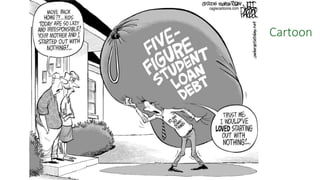
Cartoon
First Step?
What is the first step in
responding to a text?
Understand and Examine the Text
• What is the main idea?
• How does the author support this idea?
• What kind of evidence is offered?
• Which ideas in the text are facts (ideas that objective,
cannot be disputed) and opinions (ideas that can be
argued)?
Filter through Gut Reactions
• Responding in an academic manner is deeper than a gut
reaction.
• Don’t focus on your initial impulse when formulating a
thoughtful response.
• Instead, think carefully through that reaction:
• What makes you feel this way?
• Is it the idea or the presentation that causes this reaction?
• What can you use to support your own view?
• Is your evidence credible or simply an opinion?
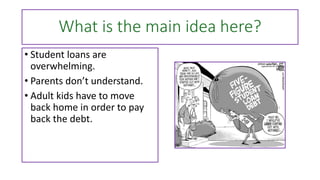
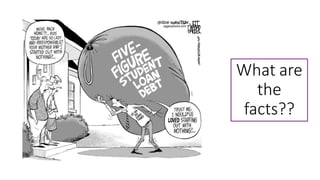
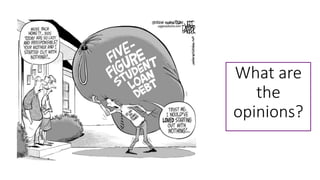
What is the main idea here?
• Student loans are
overwhelming.
• Parents don’t understand.
• Adult kids have to move
back home in order to pay
back the debt.
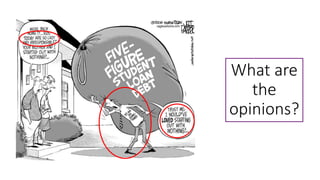
What are
the
facts??
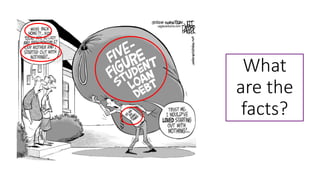
What
are the
facts?
What are
the
opinions?
What are
the
opinions?
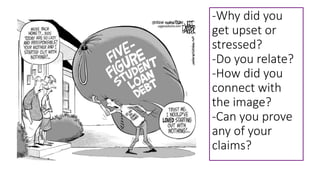
-Why did you
get upset or
stressed?
-Do you relate?
-How did you
connect with
the image?
-Can you prove
any of your
claims?
How to respond
There are several ways to write a response:
You might make a personal connection with the text.
You might challenge the ideas presented.
You might explain how you were changed.
You might extend the ideas to another topic.
Connections
• What connections can you draw between the text and
your own life or your previous learning?
• In other words, can you relate to the text or the
writer’s experience? How? Why?
Challenges
• What ideas, positions, or assumptions would you like
to challenge in the text?
• In other words, what might you disagree with or need
more information about?
Changes
• What changes in attitudes, thinking, or action are
suggested by the text, either for you or for others?
• In other words, does this text change any of your
assumptions or beliefs? How has the text changed
your thinking about the topic?
Extensions
• What new ideas did you get that extended or
broadened your thinking in new directions?
• Can you apply the ideas to a different topic? Can you
see how they might apply in a new setting?
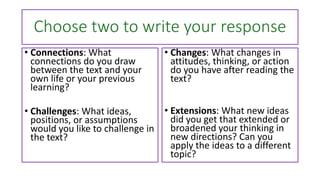
Choose two to write your response
• Connections: What
connections do you draw
between the text and your
own life or your previous
learning?
• Challenges: What ideas,
positions, or assumptions
would you like to challenge in
the text?
• Changes: What changes in
attitudes, thinking, or action
do you have after reading the
text?
• Extensions: What new ideas
did you get that extended or
broadened your thinking in
new directions? Can you
apply the ideas to a different
topic?
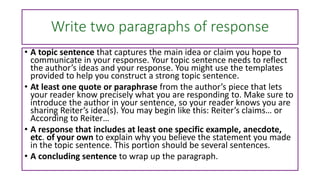
Write two paragraphs of response
• A topic sentence that captures the main idea or claim you hope to
communicate in your response. Your topic sentence needs to reflect
the author’s ideas and your response. You might use the templates
provided to help you construct a strong topic sentence.
• At least one quote or paraphrase from the author’s piece that lets
your reader know precisely what you are responding to. Make sure to
introduce the author in your sentence, so your reader knows you are
sharing Reiter’s idea(s). You may begin like this: Reiter’s claims… or
According to Reiter…
• A response that includes at least one specific example, anecdote,
etc. of your own to explain why you believe the statement you made
in the topic sentence. This portion should be several sentences.
• A concluding sentence to wrap up the paragraph.

Responding to a Text

  • 1.
  • 2.
  • 3.
    First Step? What isthe first step in responding to a text?
  • 4.
    Understand and Examinethe Text • What is the main idea? • How does the author support this idea? • What kind of evidence is offered? • Which ideas in the text are facts (ideas that objective, cannot be disputed) and opinions (ideas that can be argued)?
  • 5.
    Filter through GutReactions • Responding in an academic manner is deeper than a gut reaction. • Don’t focus on your initial impulse when formulating a thoughtful response. • Instead, think carefully through that reaction: • What makes you feel this way? • Is it the idea or the presentation that causes this reaction? • What can you use to support your own view? • Is your evidence credible or simply an opinion?
  • 6.
    What is themain idea here? • Student loans are overwhelming. • Parents don’t understand. • Adult kids have to move back home in order to pay back the debt.
  • 7.
  • 8.
  • 9.
  • 10.
  • 11.
    -Why did you getupset or stressed? -Do you relate? -How did you connect with the image? -Can you prove any of your claims?
  • 12.
    How to respond Thereare several ways to write a response: You might make a personal connection with the text. You might challenge the ideas presented. You might explain how you were changed. You might extend the ideas to another topic.
  • 13.
    Connections • What connectionscan you draw between the text and your own life or your previous learning? • In other words, can you relate to the text or the writer’s experience? How? Why?
  • 14.
    Challenges • What ideas,positions, or assumptions would you like to challenge in the text? • In other words, what might you disagree with or need more information about?
  • 15.
    Changes • What changesin attitudes, thinking, or action are suggested by the text, either for you or for others? • In other words, does this text change any of your assumptions or beliefs? How has the text changed your thinking about the topic?
  • 16.
    Extensions • What newideas did you get that extended or broadened your thinking in new directions? • Can you apply the ideas to a different topic? Can you see how they might apply in a new setting?
  • 17.
    Choose two towrite your response • Connections: What connections do you draw between the text and your own life or your previous learning? • Challenges: What ideas, positions, or assumptions would you like to challenge in the text? • Changes: What changes in attitudes, thinking, or action do you have after reading the text? • Extensions: What new ideas did you get that extended or broadened your thinking in new directions? Can you apply the ideas to a different topic?
  • 18.
    Write two paragraphsof response • A topic sentence that captures the main idea or claim you hope to communicate in your response. Your topic sentence needs to reflect the author’s ideas and your response. You might use the templates provided to help you construct a strong topic sentence. • At least one quote or paraphrase from the author’s piece that lets your reader know precisely what you are responding to. Make sure to introduce the author in your sentence, so your reader knows you are sharing Reiter’s idea(s). You may begin like this: Reiter’s claims… or According to Reiter… • A response that includes at least one specific example, anecdote, etc. of your own to explain why you believe the statement you made in the topic sentence. This portion should be several sentences. • A concluding sentence to wrap up the paragraph.