RESPIRATORY SYSTEM
Dr. Sami Ur Rehman
Final Year
Quaid-e-Azam Medical College, Bahawalpur
Ward Assignment
ASSIGNMENT TOPICS:
1.SYMPTOMATOLOGY OF RESPIRATORY SYSTEM
2.D/D OF HEMOPTYSIS
3.PRODUCTIVE COUGH WITH EXPECTORATION
#1:
SYMPTOMATOLOGY OF RESPIRATORY
SYSTEM:-
 Cough
 Dysphonia (hoarseness)
 Wheeze
 Stridor
 Stertor
 Sputum
 Haemoptysis
 Dyspnoea
 Chest pain
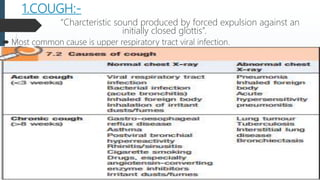
1.COUGH:-
 “Charcteristic sound produced by forced expulsion against an
initially closed glottis”.
 Most common cause is upper respiratory tract viral infection.

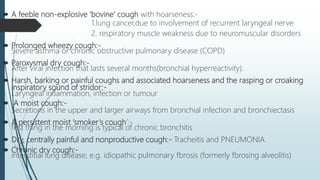
 A feeble non-explosive ‘bovine’ cough with hoarseness:-
1.lung cancer,due to involvement of recurrent laryngeal nerve
2. respiratory muscle weakness due to neuromuscular disorders
 Prolonged wheezy cough:-
Severe asthma or chronic obstructive pulmonary disease (COPD)
 Paroxysmal dry cough:-
After viral infection that lasts several months(bronchial hyperreactivity).
 Harsh, barking or painful coughs and associated hoarseness and the rasping or croaking
inspiratory sound of stridor:-
Laryngeal inflammation, infection or tumour
 A moist cough:-
Secretions in the upper and larger airways from bronchial infection and bronchiectasis
 A persistent moist ‘smoker’s cough’:-
first thing in the morning is typical of chronic bronchitis
 Dry, centrally painful and nonproductive cough:- Tracheitis and PNEUMONIA
 Chronic dry cough:-
interstitial lung disease, e.g. idiopathic pulmonary fbrosis (formerly fbrosing alveolitis)
2.Wheeze:
“high-pitched whistling sound produced by air passing through
narrowed small airways”.
Wheeze on exercise: asthma and COPD.
Night wakening with wheeze: asthma or paroxysmal nocturnal
dyspnea.
Wheeze after wakening in the morning: COPD.
Occurs with expiration, but patients may call rattling sounds from
secretions in the upper airways or larynx or the inspiratory sound of
stridor wheeze.
3.STRIDOR
 “high-pitched, often harsh noise produced by airflow turbulence through a partial
obstruction of the upper airway”
 occurs most commonly on inspiration but also on expiration or biphasically.
 Inspiratory stridor indicates narrowing at the vocal cords;
 Biphasic stridor suggests tracheal obstruction,
 Stridor on expiration suggests tracheobronchial obstruction
 Common causes include:
1.infection/inflammation, e.g. acute epiglottitis in children and young adults
2.tumours of the trachea and main bronchi
3. extrinsic compression by lymph nodes in older adults.
 Stridor always needs investigation
4.STERTOR
Stertor, or muffled ‘hot potato’ speech, occurs with
naso “or” oropharyngeal blockage, e.g. quinsy
5.SPUTUM:-
 “Sputum is mucus produced from the respiratory tract”.
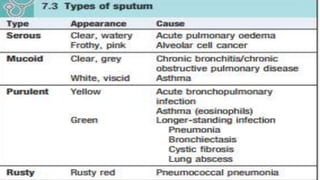
 COLOR OF SPUTUM:
• Clear or ‘mucoid’ sputum is produced in chronic bronchitis and COPD with no active
infection.
• Yellow sputum occurs in acute lower respiratory tract infection (live neutrophils) and in
asthma (eosinophils).
• Green purulent sputum (dead neutrophils) indicates chronic infection, e.g.in COPD or
bronchiectasis.
• Purulent sputum is green because lysed neutrophils release the green-pigmented
enzyme, verdoperoxidase. The frst sputum produced in the morning by a patient with
COPD may be green because of nocturnal stagnation of neutrophils.
• Rusty red sputum can occur in early pneumococcal pneumonia, as pneumonic
inflammation causes lysis of red cells
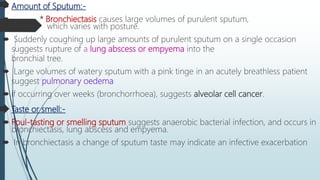
 Amount of Sputum:-
 * Bronchiectasis causes large volumes of purulent sputum,
which varies with posture.
 Suddenly coughing up large amounts of purulent sputum on a single occasion
suggests rupture of a lung abscess or empyema into the
bronchial tree.
 Large volumes of watery sputum with a pink tinge in an acutely breathless patient
suggest pulmonary oedema
 if occurring over weeks (bronchorrhoea), suggests alveolar cell cancer.
 Taste or smell:-
 Foul-tasting or smelling sputum suggests anaerobic bacterial infection, and occurs in
bronchiectasis, lung abscess and empyema.
 In bronchiectasis a change of sputum taste may indicate an infective exacerbation
Solid material
In asthma and allergic bronchopulmonary aspergillosis,
thick secretions can be coughed up as ‘worm-like’ structures
that are casts of the bronchi.
Other solid matter sometimes coughed up includes:-
1.Necrotic tumor
2.Inhaled foreign bodies, e.g. food, teeth and tablets.
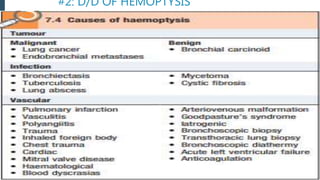
6.Hemoptysis:-
 “Haemoptysis is coughing up blood from the respiratory
tract and always requires investigation”

#2: D/D OF HEMOPTYSIS
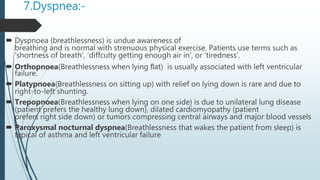
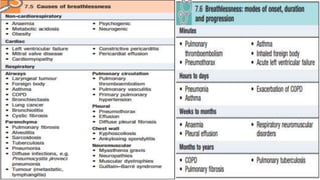
7.Dyspnea:-
 Dyspnoea (breathlessness) is undue awareness of
breathing and is normal with strenuous physical exercise. Patients use terms such as
‘shortness of breath’, ‘diffculty getting enough air in’, or ‘tiredness’.
 Orthopnoea(Breathlessness when lying flat) is usually associated with left ventricular
failure.
 Platypnoea(Breathlessness on sitting up) with relief on lying down is rare and due to
right-to-left shunting.
 Trepopnoea(Breathlessness when lying on one side) is due to unilateral lung disease
(patient prefers the healthy lung down), dilated cardiomyopathy (patient
prefers right side down) or tumors compressing central airways and major blood vessels
 Paroxysmal nocturnal dyspnea(Breathlessness that wakes the patient from sleep) is
typical of asthma and left ventricular failure
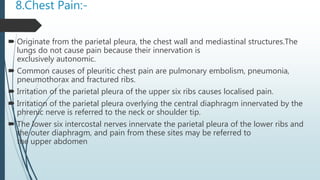
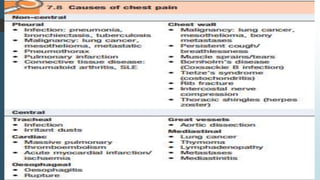
8.Chest Pain:-
 Originate from the parietal pleura, the chest wall and mediastinal structures.The
lungs do not cause pain because their innervation is
exclusively autonomic.
 Common causes of pleuritic chest pain are pulmonary embolism, pneumonia,
pneumothorax and fractured ribs.
 Irritation of the parietal pleura of the upper six ribs causes localised pain.
 Irritation of the parietal pleura overlying the central diaphragm innervated by the
phrenic nerve is referred to the neck or shoulder tip.
 The lower six intercostal nerves innervate the parietal pleura of the lower ribs and
the outer diaphragm, and pain from these sites may be referred to
the upper abdomen
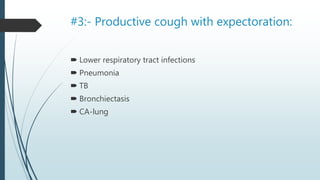
#3:- Productive cough with expectoration:
 Lower respiratory tract infections
 Pneumonia
 TB
 Bronchiectasis
 CA-lung

Respiratory system Diseases

  • 1.
    RESPIRATORY SYSTEM Dr. SamiUr Rehman Final Year Quaid-e-Azam Medical College, Bahawalpur Ward Assignment ASSIGNMENT TOPICS: 1.SYMPTOMATOLOGY OF RESPIRATORY SYSTEM 2.D/D OF HEMOPTYSIS 3.PRODUCTIVE COUGH WITH EXPECTORATION
  • 2.
    #1: SYMPTOMATOLOGY OF RESPIRATORY SYSTEM:- Cough  Dysphonia (hoarseness)  Wheeze  Stridor  Stertor  Sputum  Haemoptysis  Dyspnoea  Chest pain
  • 3.
    1.COUGH:-  “Charcteristic soundproduced by forced expulsion against an initially closed glottis”.  Most common cause is upper respiratory tract viral infection. 
  • 4.
     A feeblenon-explosive ‘bovine’ cough with hoarseness:- 1.lung cancer,due to involvement of recurrent laryngeal nerve 2. respiratory muscle weakness due to neuromuscular disorders  Prolonged wheezy cough:- Severe asthma or chronic obstructive pulmonary disease (COPD)  Paroxysmal dry cough:- After viral infection that lasts several months(bronchial hyperreactivity).  Harsh, barking or painful coughs and associated hoarseness and the rasping or croaking inspiratory sound of stridor:- Laryngeal inflammation, infection or tumour  A moist cough:- Secretions in the upper and larger airways from bronchial infection and bronchiectasis  A persistent moist ‘smoker’s cough’:- first thing in the morning is typical of chronic bronchitis  Dry, centrally painful and nonproductive cough:- Tracheitis and PNEUMONIA  Chronic dry cough:- interstitial lung disease, e.g. idiopathic pulmonary fbrosis (formerly fbrosing alveolitis)
  • 5.
    2.Wheeze: “high-pitched whistling soundproduced by air passing through narrowed small airways”. Wheeze on exercise: asthma and COPD. Night wakening with wheeze: asthma or paroxysmal nocturnal dyspnea. Wheeze after wakening in the morning: COPD. Occurs with expiration, but patients may call rattling sounds from secretions in the upper airways or larynx or the inspiratory sound of stridor wheeze.
  • 6.
    3.STRIDOR  “high-pitched, oftenharsh noise produced by airflow turbulence through a partial obstruction of the upper airway”  occurs most commonly on inspiration but also on expiration or biphasically.  Inspiratory stridor indicates narrowing at the vocal cords;  Biphasic stridor suggests tracheal obstruction,  Stridor on expiration suggests tracheobronchial obstruction  Common causes include: 1.infection/inflammation, e.g. acute epiglottitis in children and young adults 2.tumours of the trachea and main bronchi 3. extrinsic compression by lymph nodes in older adults.  Stridor always needs investigation
  • 7.
    4.STERTOR Stertor, or muffled‘hot potato’ speech, occurs with naso “or” oropharyngeal blockage, e.g. quinsy
  • 8.
    5.SPUTUM:-  “Sputum ismucus produced from the respiratory tract”.  COLOR OF SPUTUM: • Clear or ‘mucoid’ sputum is produced in chronic bronchitis and COPD with no active infection. • Yellow sputum occurs in acute lower respiratory tract infection (live neutrophils) and in asthma (eosinophils). • Green purulent sputum (dead neutrophils) indicates chronic infection, e.g.in COPD or bronchiectasis. • Purulent sputum is green because lysed neutrophils release the green-pigmented enzyme, verdoperoxidase. The frst sputum produced in the morning by a patient with COPD may be green because of nocturnal stagnation of neutrophils. • Rusty red sputum can occur in early pneumococcal pneumonia, as pneumonic inflammation causes lysis of red cells
  • 10.
     Amount ofSputum:-  * Bronchiectasis causes large volumes of purulent sputum, which varies with posture.  Suddenly coughing up large amounts of purulent sputum on a single occasion suggests rupture of a lung abscess or empyema into the bronchial tree.  Large volumes of watery sputum with a pink tinge in an acutely breathless patient suggest pulmonary oedema  if occurring over weeks (bronchorrhoea), suggests alveolar cell cancer.  Taste or smell:-  Foul-tasting or smelling sputum suggests anaerobic bacterial infection, and occurs in bronchiectasis, lung abscess and empyema.  In bronchiectasis a change of sputum taste may indicate an infective exacerbation
  • 11.
    Solid material In asthmaand allergic bronchopulmonary aspergillosis, thick secretions can be coughed up as ‘worm-like’ structures that are casts of the bronchi. Other solid matter sometimes coughed up includes:- 1.Necrotic tumor 2.Inhaled foreign bodies, e.g. food, teeth and tablets.
  • 12.
    6.Hemoptysis:-  “Haemoptysis iscoughing up blood from the respiratory tract and always requires investigation” 
  • 13.
    #2: D/D OFHEMOPTYSIS
  • 14.
    7.Dyspnea:-  Dyspnoea (breathlessness)is undue awareness of breathing and is normal with strenuous physical exercise. Patients use terms such as ‘shortness of breath’, ‘diffculty getting enough air in’, or ‘tiredness’.  Orthopnoea(Breathlessness when lying flat) is usually associated with left ventricular failure.  Platypnoea(Breathlessness on sitting up) with relief on lying down is rare and due to right-to-left shunting.  Trepopnoea(Breathlessness when lying on one side) is due to unilateral lung disease (patient prefers the healthy lung down), dilated cardiomyopathy (patient prefers right side down) or tumors compressing central airways and major blood vessels  Paroxysmal nocturnal dyspnea(Breathlessness that wakes the patient from sleep) is typical of asthma and left ventricular failure
  • 16.
    8.Chest Pain:-  Originatefrom the parietal pleura, the chest wall and mediastinal structures.The lungs do not cause pain because their innervation is exclusively autonomic.  Common causes of pleuritic chest pain are pulmonary embolism, pneumonia, pneumothorax and fractured ribs.  Irritation of the parietal pleura of the upper six ribs causes localised pain.  Irritation of the parietal pleura overlying the central diaphragm innervated by the phrenic nerve is referred to the neck or shoulder tip.  The lower six intercostal nerves innervate the parietal pleura of the lower ribs and the outer diaphragm, and pain from these sites may be referred to the upper abdomen
  • 18.
    #3:- Productive coughwith expectoration:  Lower respiratory tract infections  Pneumonia  TB  Bronchiectasis  CA-lung