PowerPoint® Lecture Slide Presentation by Robert J. Sullivan, Marist College 
RESPIRATORY SYSTEM 
EXCHANGE OF GASES 
Copyright © 2003 Pearson Education, Inc. publishing as Benjamin Cummings.
What is Human Respiration? 
 The human respiratory system allows one to 
obtain oxygen, eliminate carbon dioxide. 
 Breathing consists of two phases, inspiration 
and expiration 
 Inspiration- the process of taking in air 
 Expiration- the process of blowing out air
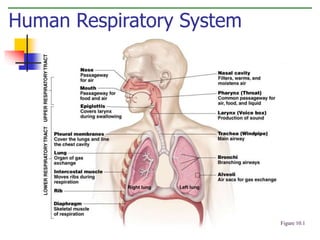
Human Respiratory System 
Figure 10.1
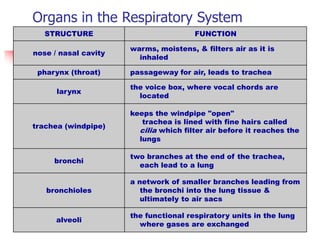
Organs in the Respiratory System 
STRUCTURE FUNCTION 
nose / nasal cavity 
warms, moistens, & filters air as it is 
inhaled 
pharynx (throat) passageway for air, leads to trachea 
larynx 
the voice box, where vocal chords are 
located 
trachea (windpipe) 
keeps the windpipe "open" 
trachea is lined with fine hairs called 
cilia which filter air before it reaches the 
lungs 
bronchi 
two branches at the end of the trachea, 
each lead to a lung 
bronchioles 
a network of smaller branches leading from 
the bronchi into the lung tissue & 
ultimately to air sacs 
alveoli 
the functional respiratory units in the lung 
where gases are exchanged
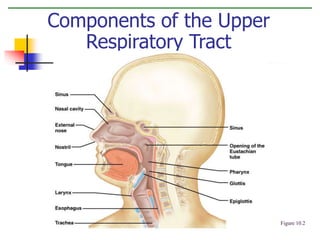
Components of the Upper 
Respiratory Tract 
Figure 10.2
Upper Respiratory Tract Functions 
 Passageway for respiration 
 Receptors for smell 
 Filters incoming air to filter larger foreign 
material 
 Moistens and warms incoming air 
 Resonating chambers for voice
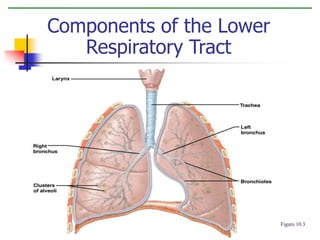
Components of the Lower 
Respiratory Tract 
Figure 10.3
Lower Respiratory Tract 
 Functions: 
 Larynx: maintains an open airway, routes food 
and air appropriately, assists in sound production 
 Trachea: transports air to and from lungs 
 Bronchi: branch into lungs 
 Lungs: transport air to alveoli for gas exchange
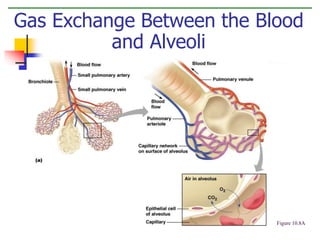
Gas Exchange Between the Blood 
and Alveoli 
Figure 10.8A
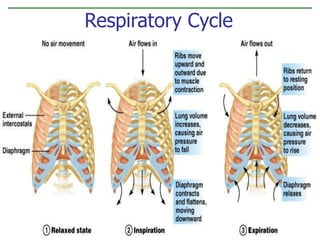
Respiratory Cycle 
Figure 10.9
http://teachhealthk-12.uthscsa.edu/studentresources/AnatomyofBreathing3.swf
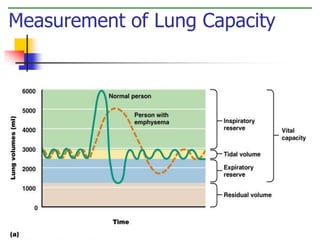
Measurement of Lung Capacity 
Figure 10.10A
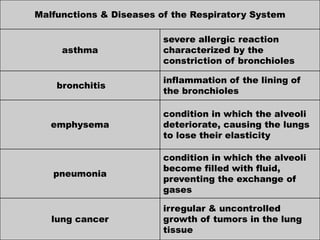
Malfunctions & Diseases of the Respiratory System 
asthma 
severe allergic reaction 
characterized by the 
constriction of bronchioles 
bronchitis 
inflammation of the lining of 
the bronchioles 
emphysema 
condition in which the alveoli 
deteriorate, causing the lungs 
to lose their elasticity 
pneumonia 
condition in which the alveoli 
become filled with fluid, 
preventing the exchange of 
gases 
lung cancer 
irregular & uncontrolled 
growth of tumors in the lung 
tissue
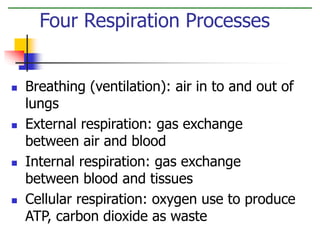
Four Respiration Processes 
 Breathing (ventilation): air in to and out of 
lungs 
 External respiration: gas exchange 
between air and blood 
 Internal respiration: gas exchange 
between blood and tissues 
 Cellular respiration: oxygen use to produce 
ATP, carbon dioxide as waste

Respiratory system

  • 1.
    PowerPoint® Lecture SlidePresentation by Robert J. Sullivan, Marist College RESPIRATORY SYSTEM EXCHANGE OF GASES Copyright © 2003 Pearson Education, Inc. publishing as Benjamin Cummings.
  • 2.
    What is HumanRespiration?  The human respiratory system allows one to obtain oxygen, eliminate carbon dioxide.  Breathing consists of two phases, inspiration and expiration  Inspiration- the process of taking in air  Expiration- the process of blowing out air
  • 3.
  • 4.
    Organs in theRespiratory System STRUCTURE FUNCTION nose / nasal cavity warms, moistens, & filters air as it is inhaled pharynx (throat) passageway for air, leads to trachea larynx the voice box, where vocal chords are located trachea (windpipe) keeps the windpipe "open" trachea is lined with fine hairs called cilia which filter air before it reaches the lungs bronchi two branches at the end of the trachea, each lead to a lung bronchioles a network of smaller branches leading from the bronchi into the lung tissue & ultimately to air sacs alveoli the functional respiratory units in the lung where gases are exchanged
  • 5.
    Components of theUpper Respiratory Tract Figure 10.2
  • 6.
    Upper Respiratory TractFunctions  Passageway for respiration  Receptors for smell  Filters incoming air to filter larger foreign material  Moistens and warms incoming air  Resonating chambers for voice
  • 7.
    Components of theLower Respiratory Tract Figure 10.3
  • 8.
    Lower Respiratory Tract  Functions:  Larynx: maintains an open airway, routes food and air appropriately, assists in sound production  Trachea: transports air to and from lungs  Bronchi: branch into lungs  Lungs: transport air to alveoli for gas exchange
  • 9.
    Gas Exchange Betweenthe Blood and Alveoli Figure 10.8A
  • 10.
  • 11.
  • 12.
    Measurement of LungCapacity Figure 10.10A
  • 13.
    Malfunctions & Diseasesof the Respiratory System asthma severe allergic reaction characterized by the constriction of bronchioles bronchitis inflammation of the lining of the bronchioles emphysema condition in which the alveoli deteriorate, causing the lungs to lose their elasticity pneumonia condition in which the alveoli become filled with fluid, preventing the exchange of gases lung cancer irregular & uncontrolled growth of tumors in the lung tissue
  • 14.
    Four Respiration Processes  Breathing (ventilation): air in to and out of lungs  External respiration: gas exchange between air and blood  Internal respiration: gas exchange between blood and tissues  Cellular respiration: oxygen use to produce ATP, carbon dioxide as waste