CONTENT
resources
classification of resources
natural resources
Human made resources
human resources
Conserving resources
sustainable development
Resources
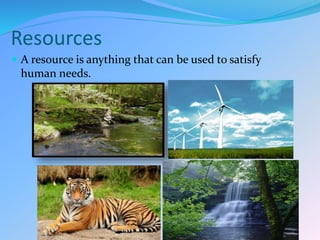
 A resource is anything that can be used to satisfy
human needs.
Classification of Resources
Resources are broadly classified into:
1.natural resource 2. human made resource
3.human resources
 NATURAL RESOURCES:
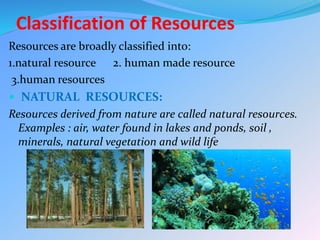
Resources derived from nature are called natural resources.
Examples : air, water found in lakes and ponds, soil ,
minerals, natural vegetation and wild life
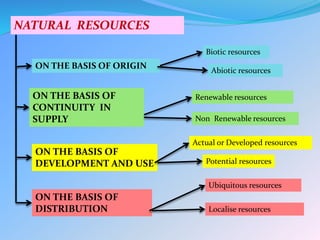
NATURAL RESOURCES
ON THE BASIS OF ORIGIN
ON THE BASIS OF
CONTINUITY IN
SUPPLY
ON THE BASIS OF
DEVELOPMENT AND USE
ON THE BASIS OF
DISTRIBUTION
Biotic resources
Abiotic resources
Renewable resources
Potential resources
Localise resources
Actual or Developed resources
Ubiquitous resources
Non Renewable resources
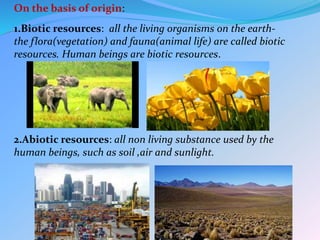
On the basis of origin:
1.Biotic resources: all the living organisms on the earth-
the flora(vegetation) and fauna(animal life) are called biotic
resources. Human beings are biotic resources.
2.Abiotic resources: all non living substance used by the
human beings, such as soil ,air and sunlight.
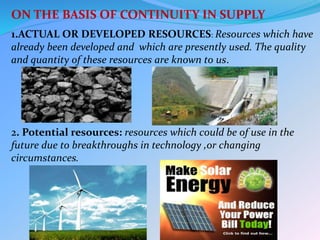
ON THE BASIS OF CONTINUITY IN SUPPLY
1.ACTUAL OR DEVELOPED RESOURCES: Resources which have
already been developed and which are presently used. The quality
and quantity of these resources are known to us.
2. Potential resources: resources which could be of use in the
future due to breakthroughs in technology ,or changing
circumstances.
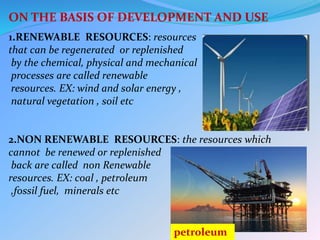
ON THE BASIS OF DEVELOPMENT AND USE
1.RENEWABLE RESOURCES: resources
that can be regenerated or replenished
by the chemical, physical and mechanical
processes are called renewable
resources. EX: wind and solar energy ,
natural vegetation , soil etc
2.NON RENEWABLE RESOURCES: the resources which
cannot be renewed or replenished
back are called non Renewable
resources. EX: coal , petroleum
,fossil fuel, minerals etc
petroleum
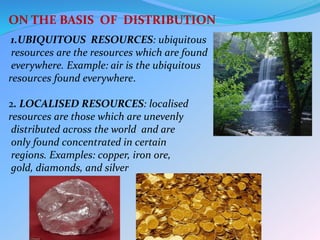
ON THE BASIS OF DISTRIBUTION
1.UBIQUITOUS RESOURCES: ubiquitous
resources are the resources which are found
everywhere. Example: air is the ubiquitous
resources found everywhere.
2. LOCALISED RESOURCES: localised
resources are those which are unevenly
distributed across the world and are
only found concentrated in certain
regions. Examples: copper, iron ore,
gold, diamonds, and silver
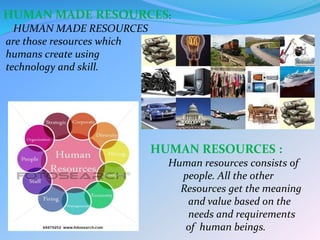
HUMAN MADE RESOURCES:
HUMAN MADE RESOURCES
are those resources which
humans create using
technology and skill.
HUMAN RESOURCES :
Human resources consists of
people. All the other
Resources get the meaning
and value based on the
needs and requirements
of human beings.
CONSERVING RESOURCES
Every human need is met primarily from nature. For food , for shelter, for
clothing, for industrial needs the humans depends on nature.
It is necessary to use resources carefully and with prudence ass
they form our life support system. Indiscriminate and unscientific use of
resources use will lead to depletion of resources and the later
generation will suffer from acute shortage of resources.
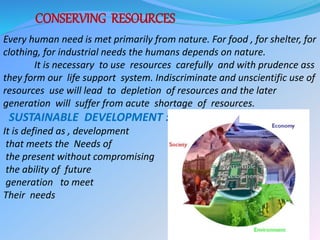
SUSTAINABLE DEVELOPMENT :
It is defined as , development
that meets the Needs of
the present without compromising
the ability of future
generation to meet
Their needs
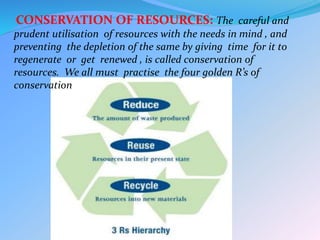
CONSERVATION OF RESOURCES: The careful and
prudent utilisation of resources with the needs in mind , and
preventing the depletion of the same by giving time for it to
regenerate or get renewed , is called conservation of
resources. We all must practise the four golden R’s of
conservation
Methods of conserving resources:
 by making shopping bags using paper.
 by shutting taps when not in use ; and by using a bucket to
bathe instead of using shower.
 by planting saplings on our birthdays and other important
occasions
by switching off light and fan when not in use at both home and
school.
CONCLUTION:
Humans could not survive without the support of natural
resources. We have no right to pollute , exploit or harm the
environment. It is our responsibility to protect biological
diversity and conserve resources for future generation by
practising sustainable development.
Resources

Resources

  • 2.
    CONTENT resources classification of resources naturalresources Human made resources human resources Conserving resources sustainable development
  • 3.
    Resources  A resourceis anything that can be used to satisfy human needs.
  • 4.
    Classification of Resources Resourcesare broadly classified into: 1.natural resource 2. human made resource 3.human resources  NATURAL RESOURCES: Resources derived from nature are called natural resources. Examples : air, water found in lakes and ponds, soil , minerals, natural vegetation and wild life
  • 5.
    NATURAL RESOURCES ON THEBASIS OF ORIGIN ON THE BASIS OF CONTINUITY IN SUPPLY ON THE BASIS OF DEVELOPMENT AND USE ON THE BASIS OF DISTRIBUTION Biotic resources Abiotic resources Renewable resources Potential resources Localise resources Actual or Developed resources Ubiquitous resources Non Renewable resources
  • 6.
    On the basisof origin: 1.Biotic resources: all the living organisms on the earth- the flora(vegetation) and fauna(animal life) are called biotic resources. Human beings are biotic resources. 2.Abiotic resources: all non living substance used by the human beings, such as soil ,air and sunlight.
  • 7.
    ON THE BASISOF CONTINUITY IN SUPPLY 1.ACTUAL OR DEVELOPED RESOURCES: Resources which have already been developed and which are presently used. The quality and quantity of these resources are known to us. 2. Potential resources: resources which could be of use in the future due to breakthroughs in technology ,or changing circumstances.
  • 8.
    ON THE BASISOF DEVELOPMENT AND USE 1.RENEWABLE RESOURCES: resources that can be regenerated or replenished by the chemical, physical and mechanical processes are called renewable resources. EX: wind and solar energy , natural vegetation , soil etc 2.NON RENEWABLE RESOURCES: the resources which cannot be renewed or replenished back are called non Renewable resources. EX: coal , petroleum ,fossil fuel, minerals etc petroleum
  • 9.
    ON THE BASISOF DISTRIBUTION 1.UBIQUITOUS RESOURCES: ubiquitous resources are the resources which are found everywhere. Example: air is the ubiquitous resources found everywhere. 2. LOCALISED RESOURCES: localised resources are those which are unevenly distributed across the world and are only found concentrated in certain regions. Examples: copper, iron ore, gold, diamonds, and silver
  • 10.
    HUMAN MADE RESOURCES: HUMANMADE RESOURCES are those resources which humans create using technology and skill. HUMAN RESOURCES : Human resources consists of people. All the other Resources get the meaning and value based on the needs and requirements of human beings.
  • 11.
    CONSERVING RESOURCES Every humanneed is met primarily from nature. For food , for shelter, for clothing, for industrial needs the humans depends on nature. It is necessary to use resources carefully and with prudence ass they form our life support system. Indiscriminate and unscientific use of resources use will lead to depletion of resources and the later generation will suffer from acute shortage of resources. SUSTAINABLE DEVELOPMENT : It is defined as , development that meets the Needs of the present without compromising the ability of future generation to meet Their needs
  • 12.
    CONSERVATION OF RESOURCES:The careful and prudent utilisation of resources with the needs in mind , and preventing the depletion of the same by giving time for it to regenerate or get renewed , is called conservation of resources. We all must practise the four golden R’s of conservation
  • 13.
    Methods of conservingresources:  by making shopping bags using paper.  by shutting taps when not in use ; and by using a bucket to bathe instead of using shower.  by planting saplings on our birthdays and other important occasions by switching off light and fan when not in use at both home and school. CONCLUTION: Humans could not survive without the support of natural resources. We have no right to pollute , exploit or harm the environment. It is our responsibility to protect biological diversity and conserve resources for future generation by practising sustainable development.