1
Requirements Validation – I
Lectures # 16
2
Today’s Topics
• Requirements validation
• Validation techniques
3
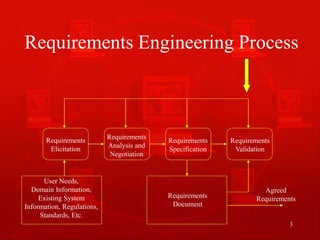
Requirements Engineering Process
Requirements
Elicitation
Requirements
Analysis and
Negotiation
Requirements
Specification
Requirements
Validation
User Needs,
Domain Information,
Existing System
Information, Regulations,
Standards, Etc.
Requirements
Document
Agreed
Requirements
4
Validation Objectives
• Certifies that the requirements document is
an acceptable description of the system to
be implemented
• Checks a requirements document for
– Completeness and consistency
– Conformance to standards
– Requirements conflicts
– Technical errors
– Ambiguous requirements
5
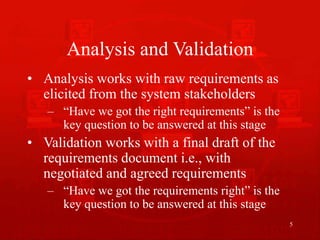
Analysis and Validation
• Analysis works with raw requirements as
elicited from the system stakeholders
– “Have we got the right requirements” is the
key question to be answered at this stage
• Validation works with a final draft of the
requirements document i.e., with
negotiated and agreed requirements
– “Have we got the requirements right” is the
key question to be answered at this stage
6
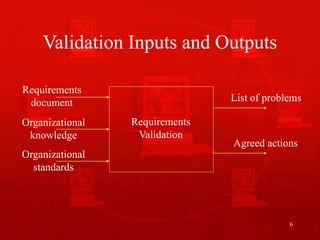
Validation Inputs and Outputs
Requirements
Validation
Requirements
document
Organizational
knowledge
Organizational
standards
List of problems
Agreed actions
7
Requirements Document
• Should be a complete version of the
document, not an unfinished draft.
Formatted and organized according to
organizational standards
8
Organizational Knowledge
• Knowledge, often implicit, of the
organization which may be used to
judge the realism of the requirements
9
Organizational Standards
• Local standards e.g. for the
organization of the requirements
document
10
List of Problems
• List of discovered problems in the
requirements document
11
Agreed Actions
• List of agreed actions in response to
requirements problems. Some
problems may have several corrective
actions; some problems may have no
associated actions
12
Requirements Reviews
• A group of people read and analyze the
requirements, look for problems, meet
and discuss the problems and agree on
actions to address these problems
13
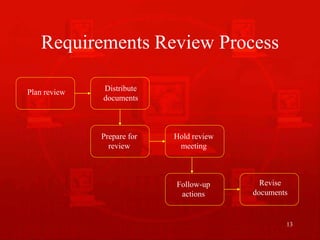
Requirements Review Process
Plan review Distribute
documents
Prepare for
review
Hold review
meeting
Follow-up
actions
Revise
documents
14
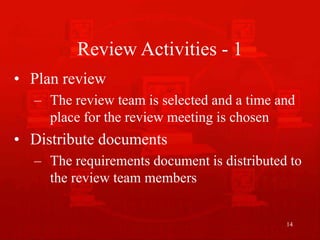
Review Activities - 1
• Plan review
– The review team is selected and a time and
place for the review meeting is chosen
• Distribute documents
– The requirements document is distributed to
the review team members
15
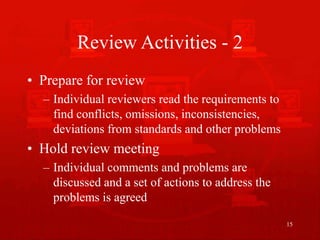
Review Activities - 2
• Prepare for review
– Individual reviewers read the requirements to
find conflicts, omissions, inconsistencies,
deviations from standards and other problems
• Hold review meeting
– Individual comments and problems are
discussed and a set of actions to address the
problems is agreed
16
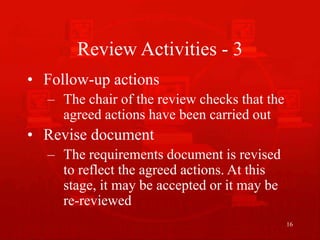
Review Activities - 3
• Follow-up actions
– The chair of the review checks that the
agreed actions have been carried out
• Revise document
– The requirements document is revised
to reflect the agreed actions. At this
stage, it may be accepted or it may be
re-reviewed
17
Problem Actions
• Requirements clarification
• Missing information
• Requirements conflict
• Unrealistic requirement
18
Requirements Clarification
• The requirement may be badly expressed or
may have accidentally omitted information
which has been collected during
requirements elicitation
19
Missing Information
• Some information is missing from the
requirements document. It is the
responsibility of the requirements
engineers who are revising the
document to discover this information
from system stakeholders
20
Requirements Conflict
• There is a significant conflict between
requirements. The stakeholders involved
must negotiate to resolve the conflict
21
Unrealistic Requirement
• The requirement does not appear to be
implement-able with the technology
available or given other constraints on
the system. Stakeholders must be
consulted to decide how to make the
requirement more realistic
22
Pre-review Checking - 1
• Reviews are expensive because they
involve a number of people spending time
reading and checking the requirements
document
23
Pre-review Checking - 2
• This expense can be reduced by using pre-
review checking where one person checks
the document and looks for straightforward
problems such as missing requirements,
lack of conformance to standards,
typographical errors, etc.
• Document may be returned for correction or
the list of problems distributed to other
reviewers
24
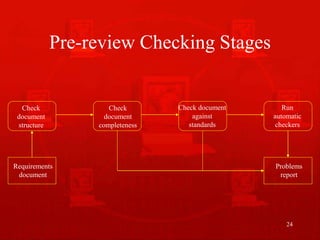
Pre-review Checking Stages
Check
document
structure
Check
document
completeness
Check document
against
standards
Run
automatic
checkers
Requirements
document
Problems
report
25
Review Team Membership
• Reviews should involve a number of
stakeholders drawn from different
backgrounds
– People from different backgrounds bring
different skills and knowledge to the review
– Stakeholders feel involved in the RE process
and develop an understanding of the needs of
other stakeholders
• Review team should always involve at least
a domain expert and an end-user
26
Summary - 1
• Requirements validation should focus on
checking the final draft of the requirements
document for conflicts, omissions and
deviations from standards
• Inputs to the validation process are the
requirements document, organizational
standards and implicit organizational
knowledge. The outputs are a list of
requirements problems and agreed actions
to address these problems
27
Summary - 2
• Reviews involve a group of people making
a detailed analysis of the requirements
• Review costs can be reduced by checking
the requirements before the review for
deviations from organizational standards.
These may result from more serious
requirements problems
28
References
• ‘Requirements Engineering: Processes
and Techniques’ by G. Kotonya and I.
Sommerville, John Wiley & Sons,
1998

Required

  • 1.
  • 2.
    2 Today’s Topics • Requirementsvalidation • Validation techniques
  • 3.
    3 Requirements Engineering Process Requirements Elicitation Requirements Analysisand Negotiation Requirements Specification Requirements Validation User Needs, Domain Information, Existing System Information, Regulations, Standards, Etc. Requirements Document Agreed Requirements
  • 4.
    4 Validation Objectives • Certifiesthat the requirements document is an acceptable description of the system to be implemented • Checks a requirements document for – Completeness and consistency – Conformance to standards – Requirements conflicts – Technical errors – Ambiguous requirements
  • 5.
    5 Analysis and Validation •Analysis works with raw requirements as elicited from the system stakeholders – “Have we got the right requirements” is the key question to be answered at this stage • Validation works with a final draft of the requirements document i.e., with negotiated and agreed requirements – “Have we got the requirements right” is the key question to be answered at this stage
  • 6.
    6 Validation Inputs andOutputs Requirements Validation Requirements document Organizational knowledge Organizational standards List of problems Agreed actions
  • 7.
    7 Requirements Document • Shouldbe a complete version of the document, not an unfinished draft. Formatted and organized according to organizational standards
  • 8.
    8 Organizational Knowledge • Knowledge,often implicit, of the organization which may be used to judge the realism of the requirements
  • 9.
    9 Organizational Standards • Localstandards e.g. for the organization of the requirements document
  • 10.
    10 List of Problems •List of discovered problems in the requirements document
  • 11.
    11 Agreed Actions • Listof agreed actions in response to requirements problems. Some problems may have several corrective actions; some problems may have no associated actions
  • 12.
    12 Requirements Reviews • Agroup of people read and analyze the requirements, look for problems, meet and discuss the problems and agree on actions to address these problems
  • 13.
    13 Requirements Review Process Planreview Distribute documents Prepare for review Hold review meeting Follow-up actions Revise documents
  • 14.
    14 Review Activities -1 • Plan review – The review team is selected and a time and place for the review meeting is chosen • Distribute documents – The requirements document is distributed to the review team members
  • 15.
    15 Review Activities -2 • Prepare for review – Individual reviewers read the requirements to find conflicts, omissions, inconsistencies, deviations from standards and other problems • Hold review meeting – Individual comments and problems are discussed and a set of actions to address the problems is agreed
  • 16.
    16 Review Activities -3 • Follow-up actions – The chair of the review checks that the agreed actions have been carried out • Revise document – The requirements document is revised to reflect the agreed actions. At this stage, it may be accepted or it may be re-reviewed
  • 17.
    17 Problem Actions • Requirementsclarification • Missing information • Requirements conflict • Unrealistic requirement
  • 18.
    18 Requirements Clarification • Therequirement may be badly expressed or may have accidentally omitted information which has been collected during requirements elicitation
  • 19.
    19 Missing Information • Someinformation is missing from the requirements document. It is the responsibility of the requirements engineers who are revising the document to discover this information from system stakeholders
  • 20.
    20 Requirements Conflict • Thereis a significant conflict between requirements. The stakeholders involved must negotiate to resolve the conflict
  • 21.
    21 Unrealistic Requirement • Therequirement does not appear to be implement-able with the technology available or given other constraints on the system. Stakeholders must be consulted to decide how to make the requirement more realistic
  • 22.
    22 Pre-review Checking -1 • Reviews are expensive because they involve a number of people spending time reading and checking the requirements document
  • 23.
    23 Pre-review Checking -2 • This expense can be reduced by using pre- review checking where one person checks the document and looks for straightforward problems such as missing requirements, lack of conformance to standards, typographical errors, etc. • Document may be returned for correction or the list of problems distributed to other reviewers
  • 24.
    24 Pre-review Checking Stages Check document structure Check document completeness Checkdocument against standards Run automatic checkers Requirements document Problems report
  • 25.
    25 Review Team Membership •Reviews should involve a number of stakeholders drawn from different backgrounds – People from different backgrounds bring different skills and knowledge to the review – Stakeholders feel involved in the RE process and develop an understanding of the needs of other stakeholders • Review team should always involve at least a domain expert and an end-user
  • 26.
    26 Summary - 1 •Requirements validation should focus on checking the final draft of the requirements document for conflicts, omissions and deviations from standards • Inputs to the validation process are the requirements document, organizational standards and implicit organizational knowledge. The outputs are a list of requirements problems and agreed actions to address these problems
  • 27.
    27 Summary - 2 •Reviews involve a group of people making a detailed analysis of the requirements • Review costs can be reduced by checking the requirements before the review for deviations from organizational standards. These may result from more serious requirements problems
  • 28.
    28 References • ‘Requirements Engineering:Processes and Techniques’ by G. Kotonya and I. Sommerville, John Wiley & Sons, 1998