ORGANIS
  MS
Name
Class
          :- mohit saini
          :- X


REPRODU
Subject    :- Science
1)
   Reproduction is the
 Reproduction :-
process by which living
organisms
produce new individuals of
the same species.
   Reproduction is
necessary for the survival
and increase
in the population of a
species. If organisms do
importance of
   DNA copying during
    variation :-
reproduction is important
for maintaining the body
designs of different
organisms to survive in the
existing environment. But
the environment is
constantly changing due to
4) Types of
  reproduction
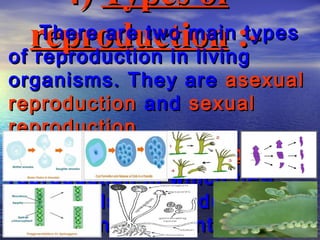
   There are two main :-
of reproduction in living
                         types

organisms. They are asexual
reproduction and sexual
reproduction.
  Asexual reproduction :- is
reproduction in which new
individuals are produced
from a single parent.
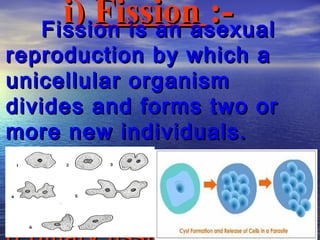
i) Fission :-
   Fission is an asexual
reproduction by which a
unicellular organism
divides and forms two or
more new individuals.
Fission is of two types.
They are binary fission and
multiple fission.
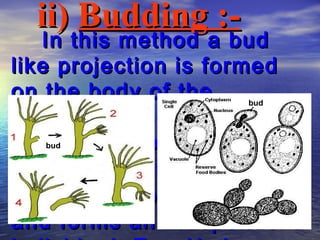
ii) Budding :-
   In this method a bud
like projection is formed
on the body of the  bud

organism. The bud then
develops into a new
   bud


individual. It then
separates from the parent
and forms an independent
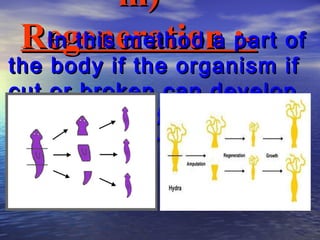
iii)
 Regeneration :- of
  In this method a part
the body if the organism if
cut or broken can develop
into a new individual. Eg :-
Hydra, Planaria, Star fish
etc.
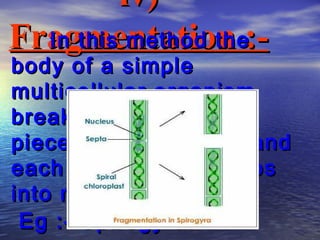
iv)
Fragmentation :-
  In this method the
body of a simple
multicellular organism
breaks up into smaller
pieces on maturation and
each fragment develops
into new individuals.
 Eg :- Spirogyra.
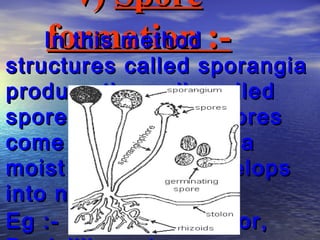
v) Spore
   In this method :-
   formation
structures called sporangia
produce tiny cells called
spores. When the spores
come in contact with a
moist surface, it develops
into new individuals.
Eg :- Rhizopus , Mucor,
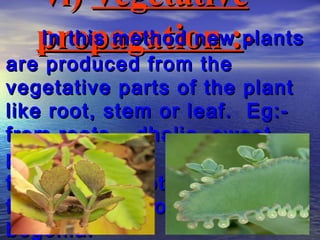
vi) Vegetative
   propagation :plants
   In this method new -
are produced from the
vegetative parts of the plant
like root, stem or leaf. Eg:-
from roots – dhalia, sweet
potato,
from stem – potato, ginger,
from leaf – bryophyllum,
begonia.
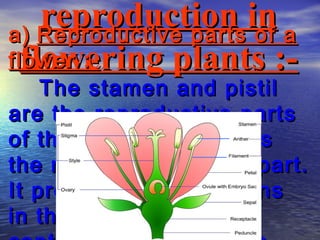
reproduction in a
a) Reproductive parts of
 flowering plants :-
flower :-
    The stamen and pistil
are the reproductive parts
of the flower. Stamen is
the male reproductive part.
It produces pollen grains
                   
in the anther    
                which
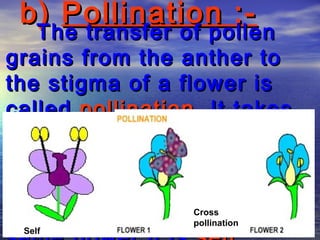
b) Pollination :-
   The transfer of pollen
grains from the anther to
the stigma of a flower is
called pollination. It takes
place by wind, water or
insects. If the pollen grains
are transferred from the
anther to the stigma of the
                  Cross
                  pollination
 Self
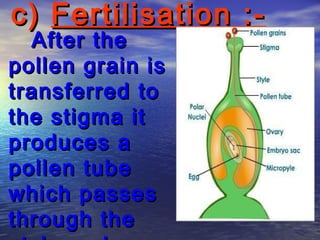
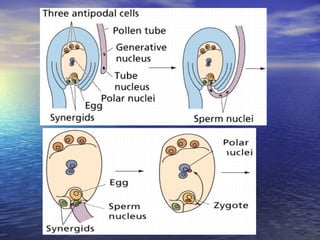
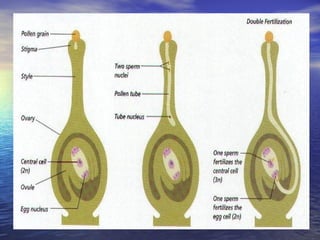
c) Fertilisation :-
  After the
pollen grain is
transferred to
the stigma it
produces a
pollen tube
which passes
through the
in reproductive
a) Male
         human
      beings :-
system :-
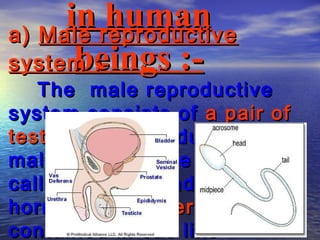
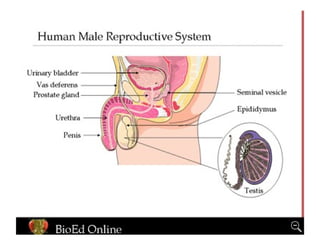
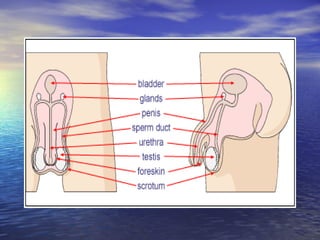
   The male reproductive
system consists of a pair of
testes which produces the
male reproductive cells
called sperms and the
hormone testosteron. It is
contained in sac like
reproductive
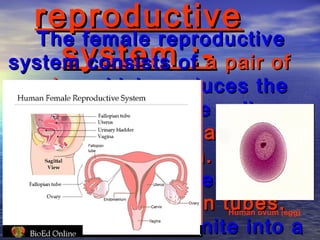
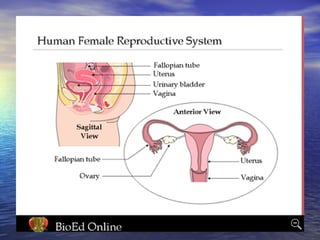
  The female reproductive
     system :-
system consists of a pair of
ovaries which produces the
female reproductive cells
called ova or eggs and the
hormone oestrogen. Above
the ovaries are tubes called
oviducts or fallopian tubes.(egg)
                       Human ovum

The two oviducts unite into a
in human
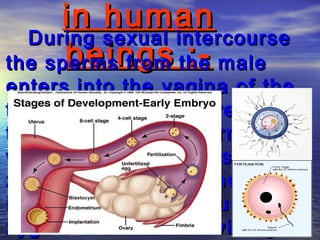
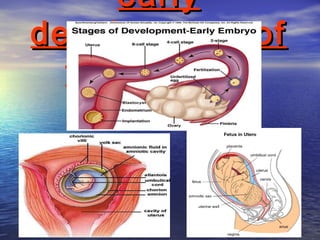
  During sexual intercourse
      beings :-
the sperms from the male
enters into the vagina of the
female. The sperms reaches
the oviduct. One sperm fuses
with an egg and forms a
zygote. The zygote then gets
implanted in the uterus. The
zygote then starts dividing to
early
development of
  the embryo
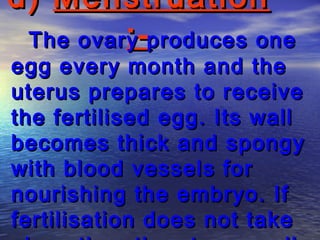
d) Menstruation
         :-
 The ovary produces one
egg every month and the
uterus prepares to receive
the fertilised egg. Its wall
becomes thick and spongy
with blood vessels for
nourishing the embryo. If
fertilisation does not take
7) Reproductive
     health :-
a) Sexually transmitted
diseases :- are diseases
transmitted through sexual
contact. They may be
bacterial
infections like gonorrhoea
and syphillis etc. or viral
infections like warts and
HIV-AIDS.
2322112
2322112
2322112
2322112
2322112
2322112
2322112

2322112

  • 1.
    ORGANIS MS Name Class :- mohit saini :- X REPRODU Subject :- Science
  • 2.
    1) Reproduction is the Reproduction :- process by which living organisms produce new individuals of the same species. Reproduction is necessary for the survival and increase in the population of a species. If organisms do
  • 3.
    importance of DNA copying during variation :- reproduction is important for maintaining the body designs of different organisms to survive in the existing environment. But the environment is constantly changing due to
  • 4.
    4) Types of reproduction There are two main :- of reproduction in living types organisms. They are asexual reproduction and sexual reproduction. Asexual reproduction :- is reproduction in which new individuals are produced from a single parent.
  • 5.
    i) Fission :- Fission is an asexual reproduction by which a unicellular organism divides and forms two or more new individuals. Fission is of two types. They are binary fission and multiple fission.
  • 6.
    ii) Budding :- In this method a bud like projection is formed on the body of the bud organism. The bud then develops into a new bud individual. It then separates from the parent and forms an independent
  • 7.
    iii) Regeneration :-of In this method a part the body if the organism if cut or broken can develop into a new individual. Eg :- Hydra, Planaria, Star fish etc.
  • 8.
    iv) Fragmentation :- In this method the body of a simple multicellular organism breaks up into smaller pieces on maturation and each fragment develops into new individuals. Eg :- Spirogyra.
  • 9.
    v) Spore In this method :- formation structures called sporangia produce tiny cells called spores. When the spores come in contact with a moist surface, it develops into new individuals. Eg :- Rhizopus , Mucor,
  • 10.
    vi) Vegetative propagation :plants In this method new - are produced from the vegetative parts of the plant like root, stem or leaf. Eg:- from roots – dhalia, sweet potato, from stem – potato, ginger, from leaf – bryophyllum, begonia.
  • 11.
    reproduction in a a)Reproductive parts of flowering plants :- flower :- The stamen and pistil are the reproductive parts of the flower. Stamen is the male reproductive part. It produces pollen grains        in the anther     which
  • 12.
    b) Pollination :- The transfer of pollen grains from the anther to the stigma of a flower is called pollination. It takes place by wind, water or insects. If the pollen grains are transferred from the anther to the stigma of the Cross pollination Self
  • 13.
    c) Fertilisation :- After the pollen grain is transferred to the stigma it produces a pollen tube which passes through the
  • 14.
    in reproductive a) Male human beings :- system :- The male reproductive system consists of a pair of testes which produces the male reproductive cells called sperms and the hormone testosteron. It is contained in sac like
  • 15.
    reproductive Thefemale reproductive system :- system consists of a pair of ovaries which produces the female reproductive cells called ova or eggs and the hormone oestrogen. Above the ovaries are tubes called oviducts or fallopian tubes.(egg) Human ovum The two oviducts unite into a
  • 16.
    in human During sexual intercourse beings :- the sperms from the male enters into the vagina of the female. The sperms reaches the oviduct. One sperm fuses with an egg and forms a zygote. The zygote then gets implanted in the uterus. The zygote then starts dividing to
  • 17.
  • 18.
    d) Menstruation :- The ovary produces one egg every month and the uterus prepares to receive the fertilised egg. Its wall becomes thick and spongy with blood vessels for nourishing the embryo. If fertilisation does not take
  • 19.
    7) Reproductive health :- a) Sexually transmitted diseases :- are diseases transmitted through sexual contact. They may be bacterial infections like gonorrhoea and syphillis etc. or viral infections like warts and HIV-AIDS.