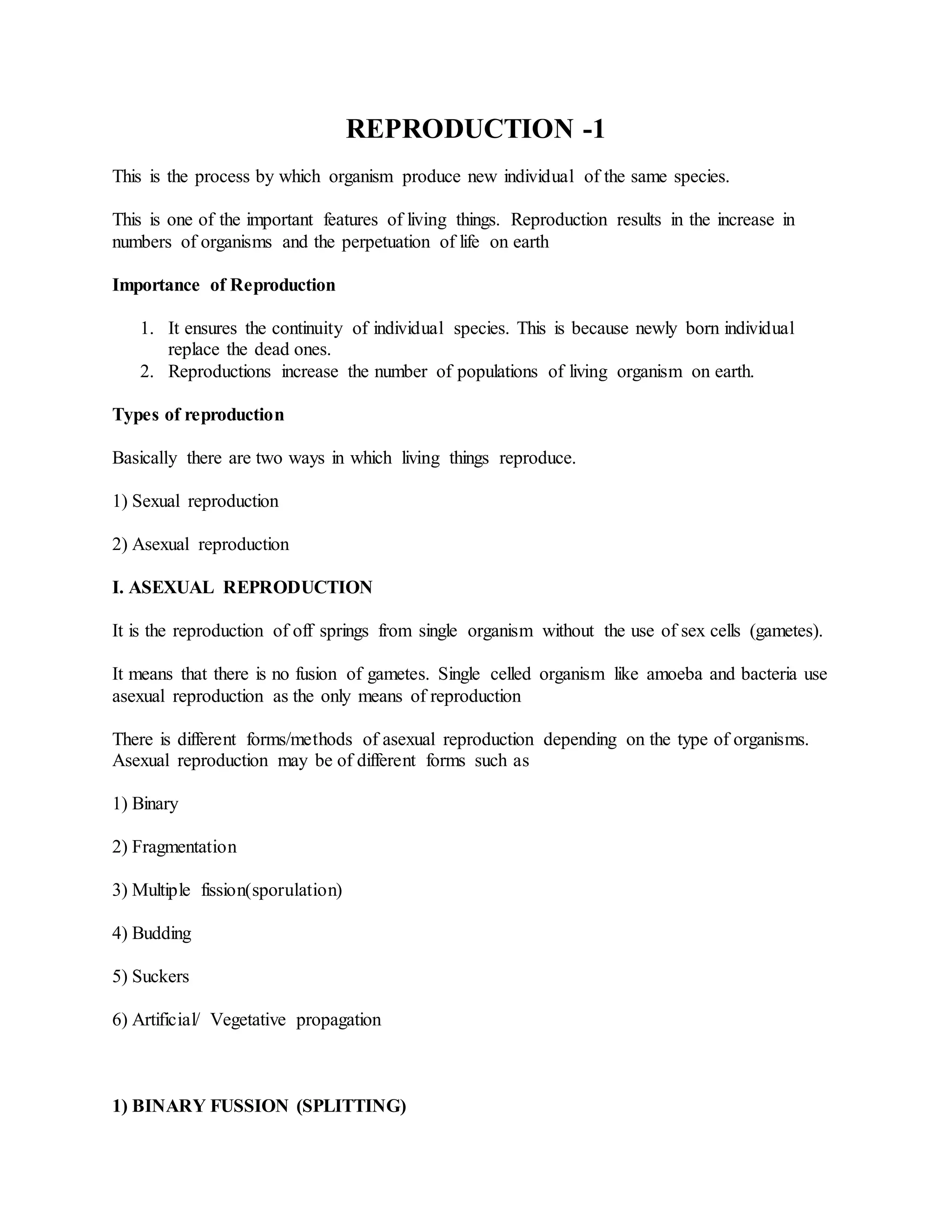
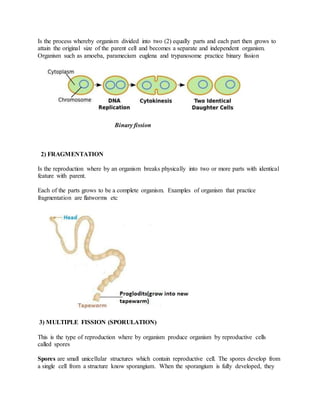
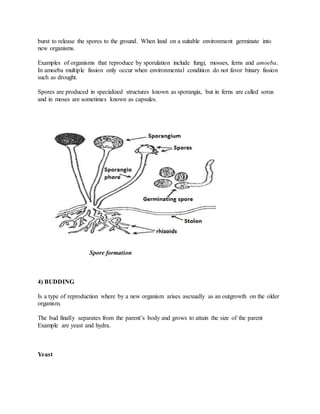
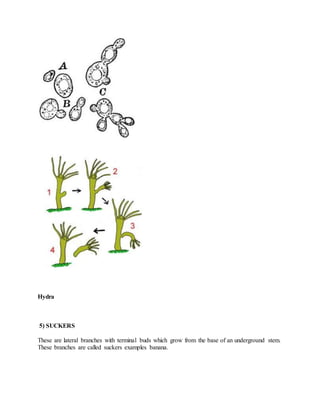
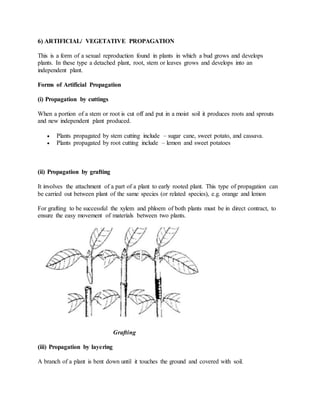
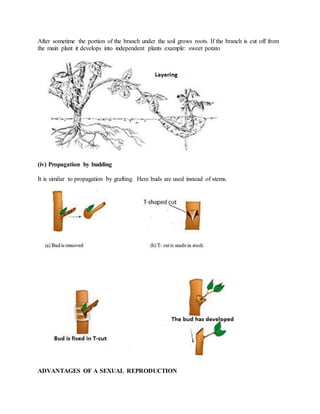
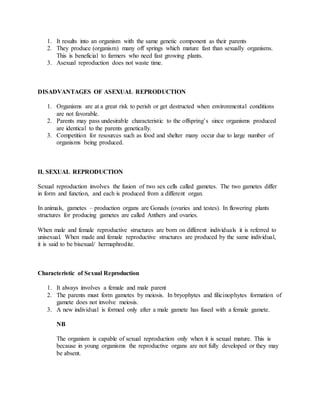
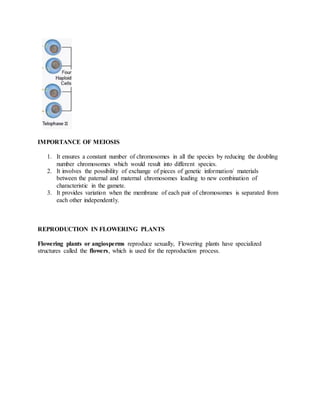
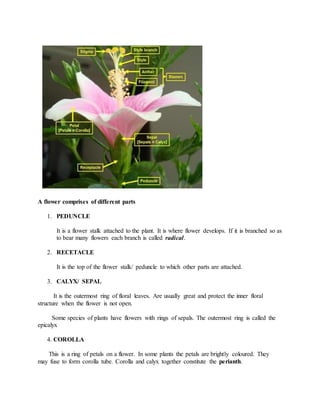
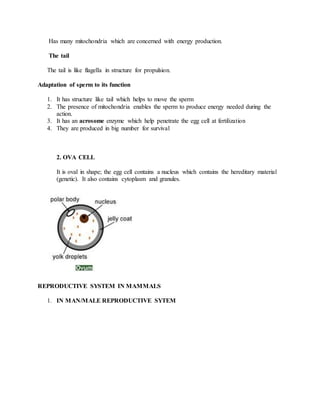
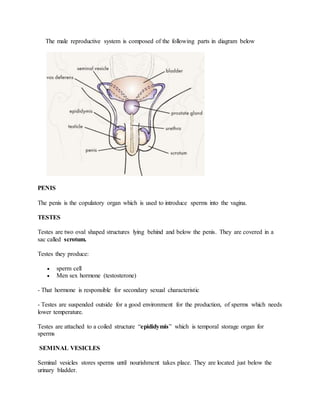
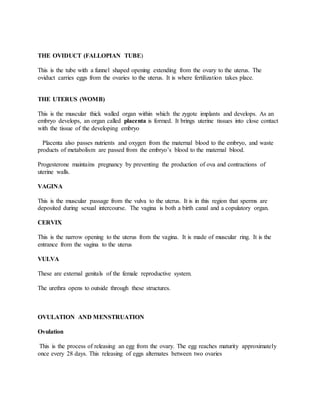
Reproduction allows organisms to produce new individuals of the same species and perpetuate life on Earth. There are two main types of reproduction: asexual, which produces offspring from a single organism without fusion of gametes, and sexual, which involves the fusion of male and female gametes. Asexual reproduction has the advantages of producing offspring quickly and with identical genetics to the parent, but it provides no genetic variation and risks of environmental changes wiping out the entire population. Sexual reproduction introduces genetic variation but takes more time and energy. Flowering plants reproduce sexually, with specialized flower structures housing male stamens that produce pollen and female carpels containing eggs. Pollination involves the transfer of pollen between flower anthers and st