REPRODUCTIO
     N
Reproduction Vocabulary

Asexual Reproduction
Clone
Sexual Reproduction
Genes
Eukaryote
Mitosis
Prokaryote
Binary Fission
Budding
Regeneration
Reproduction Comparisons

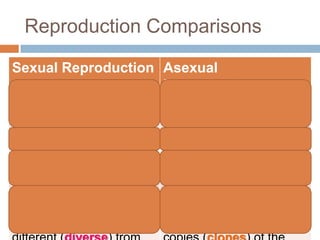
Sexual Reproduction Asexual
                    Reproduction
Fertilization occurs        No fertilization occurs
(combining a male and
female sex cell)
Needs two parents           Only needs one parent
Occurs in almost all        Occurs in simple animals
animals and in many         and many plants
plants
Offspring are genetically   Offspring are identical
WHY DO WE NEED
SEXUAL REPRODUCTION?
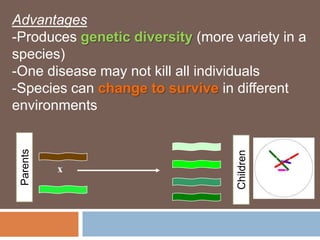
Advantages
-Produces genetic diversity (more variety in a
species)
-One disease may not kill all individuals
-Species can change to survive in different
environments
 Parents


                                   Children
           x
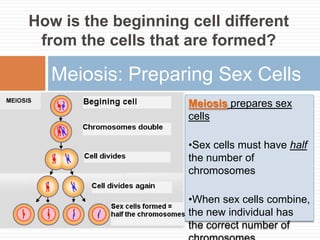
How is the beginning cell different
 from the cells that are formed?

   Meiosis: Preparing Sex Cells
                     Meiosis prepares sex
                     cells

                     •Sex cells must have half
                     the number of
                     chromosomes

                     •When sex cells combine,
                     the new individual has
                     the correct number of
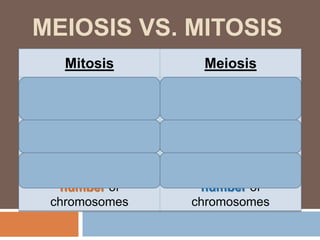
MEIOSIS VS. MITOSIS
     Mitosis                  Meiosis
Occurs in eukaryotic   Occurs only in sex cells
  cells (Asexual            (for Sexual
   reproduction)           Reproduction)

 Produces 2 cells         Produces 4 cells

Cells have normal        Cells have half the
    number of                number of
 chromosomes               chromosomes
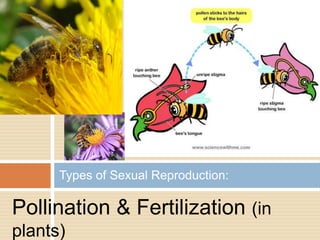
Types of Sexual Reproduction:

Pollination & Fertilization (in
plants)
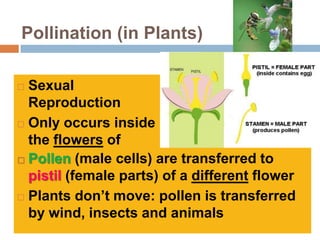
Pollination (in Plants)

 Sexual
  Reproduction
 Only occurs inside

  the flowers of
 plants (male cells) are transferred to
  Pollen
  pistil (female parts) of a different flower
 Plants don’t move: pollen is transferred

  by wind, insects and animals
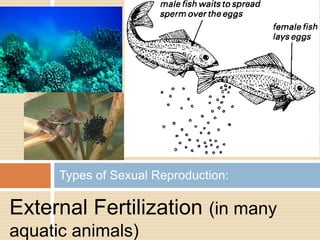
Types of Sexual Reproduction:

External Fertilization (in many
aquatic animals)
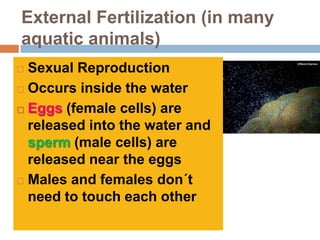
External Fertilization (in many
aquatic animals)
 Sexual Reproduction
 Occurs inside the water

 Eggs (female cells) are

  released into the water and
  sperm (male cells) are
  released near the eggs
 Males and females don´t

  need to touch each other
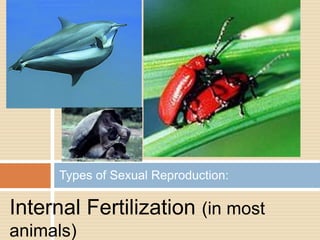
Types of Sexual Reproduction:

Internal Fertilization (in most
animals)
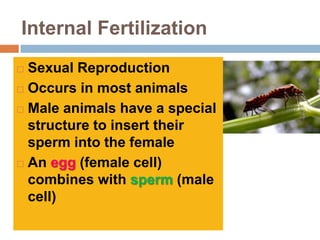
Internal Fertilization
 Sexual Reproduction
 Occurs in most animals

 Male animals have a special

  structure to insert their
  sperm into the female
 An egg (female cell)
  combines with sperm (male
  cell)
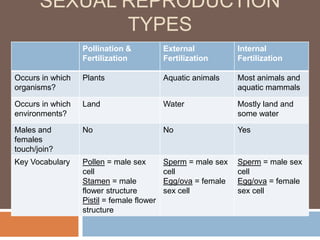
SEXUAL REPRODUCTION
              TYPES
                  Pollination &            External           Internal
                  Fertilization            Fertilization      Fertilization

Occurs in which   Plants                   Aquatic animals    Most animals and
organisms?                                                    aquatic mammals

Occurs in which   Land                     Water              Mostly land and
environments?                                                 some water

Males and         No                       No                 Yes
females
touch/join?
Key Vocabulary    Pollen = male sex        Sperm = male sex   Sperm = male sex
                  cell                     cell               cell
                  Stamen = male            Egg/ova = female   Egg/ova = female
                  flower structure         sex cell           sex cell
                  Pistil = female flower
                  structure
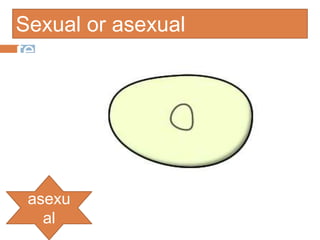
Sexual or asexual
reproduction?


 asexu
   al
WHAT ARE SOME
ADVANTAGES OF ASEXUAL
   REPRODUCTION?
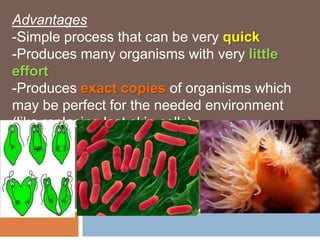
Advantages
-Simple process that can be very quick
-Produces many organisms with very little
effort
-Produces exact copies of organisms which
may be perfect for the needed environment
(like replacing lost skin cells)
Types of Asexual Reproduction:

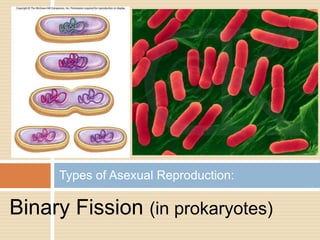
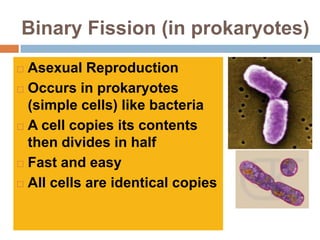
Binary Fission (in prokaryotes)
 Asexual Reproduction
 Occurs in prokaryotes
  (simple cells) like bacteria
 A cell copies its contents

  then divides in half
 Fast and easy

 All cells are identical copies
Types of Asexual Reproduction:

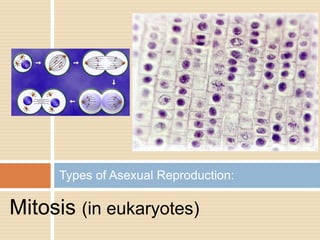
Mitosis (in eukaryotes)
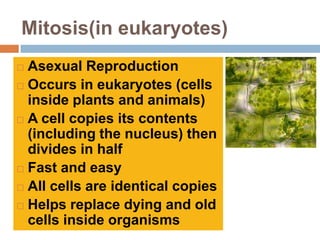
Mitosis(in eukaryotes)
 Asexual Reproduction
 Occurs in eukaryotes (cells
  inside plants and animals)
 A cell copies its contents
  (including the nucleus) then
  divides in half
 Fast and easy

 All cells are identical copies

 Helps replace dying and old
  cells inside organisms
Types of Asexual Reproduction:

" Roots or Stems (in
plants)
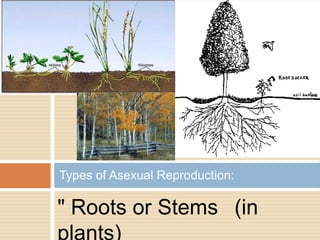
Roots or Stems (in plants)
 Asexual Reproduction
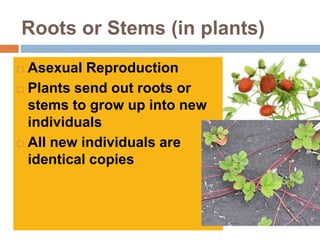
 Plants send out roots or
  stems to grow up into new
  individuals
 All new individuals are
  identical copies
Types of Asexual Reproduction:

Budding (in simple
animals)
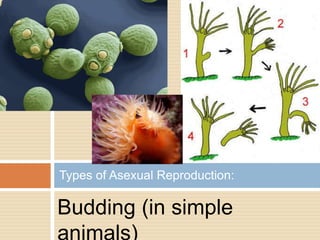
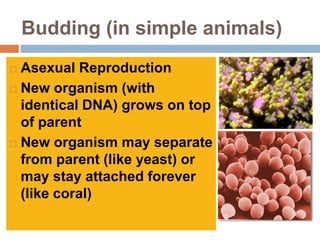
Budding (in simple animals)
 Asexual Reproduction
 New organism (with
  identical DNA) grows on top
  of parent
 New organism may separate
  from parent (like yeast) or
  may stay attached forever
  (like coral)
Types of Asexual Reproduction:

Fragmentation (in simple
animals)
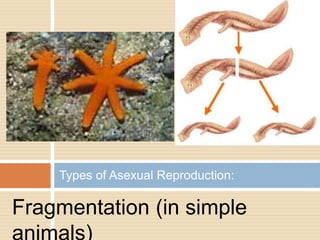
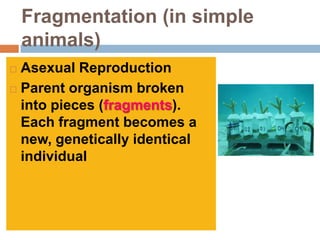
Fragmentation (in simple
    animals)
 Asexual Reproduction
 Parent organism broken
  into pieces (fragments).
  Each fragment becomes a
  new, genetically identical
  individual
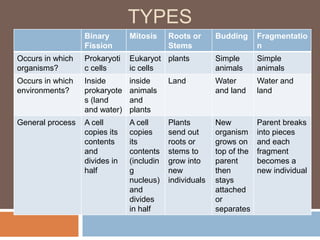
TYPES
                  Binary       Mitosis     Roots or      Budding      Fragmentatio
                  Fission                  Stems                      n
Occurs in which   Prokaryoti   Eukaryot plants           Simple       Simple
organisms?        c cells      ic cells                  animals      animals
Occurs in which   Inside       inside      Land          Water        Water and
environments?     prokaryote   animals                   and land     land
                  s (land      and
                  and water)   plants
General process   A cell       A cell      Plants        New          Parent breaks
                  copies its   copies      send out      organism     into pieces
                  contents     its         roots or      grows on     and each
                  and          contents    stems to      top of the   fragment
                  divides in   (includin   grow into     parent       becomes a
                  half         g           new           then         new individual
                               nucleus)    individuals   stays
                               and                       attached
                               divides                   or
                               in half                   separates

Reproduction

  • 1.
  • 2.
    Reproduction Vocabulary Asexual Reproduction Clone SexualReproduction Genes Eukaryote Mitosis Prokaryote Binary Fission Budding Regeneration
  • 3.
    Reproduction Comparisons Sexual ReproductionAsexual Reproduction Fertilization occurs No fertilization occurs (combining a male and female sex cell) Needs two parents Only needs one parent Occurs in almost all Occurs in simple animals animals and in many and many plants plants Offspring are genetically Offspring are identical
  • 4.
    WHY DO WENEED SEXUAL REPRODUCTION?
  • 5.
    Advantages -Produces genetic diversity(more variety in a species) -One disease may not kill all individuals -Species can change to survive in different environments Parents Children x
  • 6.
    How is thebeginning cell different from the cells that are formed? Meiosis: Preparing Sex Cells Meiosis prepares sex cells •Sex cells must have half the number of chromosomes •When sex cells combine, the new individual has the correct number of
  • 7.
    MEIOSIS VS. MITOSIS Mitosis Meiosis Occurs in eukaryotic Occurs only in sex cells cells (Asexual (for Sexual reproduction) Reproduction) Produces 2 cells Produces 4 cells Cells have normal Cells have half the number of number of chromosomes chromosomes
  • 8.
    Types of SexualReproduction: Pollination & Fertilization (in plants)
  • 9.
    Pollination (in Plants) Sexual Reproduction  Only occurs inside the flowers of  plants (male cells) are transferred to Pollen pistil (female parts) of a different flower  Plants don’t move: pollen is transferred by wind, insects and animals
  • 10.
    Types of SexualReproduction: External Fertilization (in many aquatic animals)
  • 11.
    External Fertilization (inmany aquatic animals)  Sexual Reproduction  Occurs inside the water  Eggs (female cells) are released into the water and sperm (male cells) are released near the eggs  Males and females don´t need to touch each other
  • 12.
    Types of SexualReproduction: Internal Fertilization (in most animals)
  • 13.
    Internal Fertilization  SexualReproduction  Occurs in most animals  Male animals have a special structure to insert their sperm into the female  An egg (female cell) combines with sperm (male cell)
  • 14.
    SEXUAL REPRODUCTION TYPES Pollination & External Internal Fertilization Fertilization Fertilization Occurs in which Plants Aquatic animals Most animals and organisms? aquatic mammals Occurs in which Land Water Mostly land and environments? some water Males and No No Yes females touch/join? Key Vocabulary Pollen = male sex Sperm = male sex Sperm = male sex cell cell cell Stamen = male Egg/ova = female Egg/ova = female flower structure sex cell sex cell Pistil = female flower structure
  • 15.
  • 16.
    WHAT ARE SOME ADVANTAGESOF ASEXUAL REPRODUCTION?
  • 17.
    Advantages -Simple process thatcan be very quick -Produces many organisms with very little effort -Produces exact copies of organisms which may be perfect for the needed environment (like replacing lost skin cells)
  • 18.
    Types of AsexualReproduction: Binary Fission (in prokaryotes)
  • 19.
    Binary Fission (inprokaryotes)  Asexual Reproduction  Occurs in prokaryotes (simple cells) like bacteria  A cell copies its contents then divides in half  Fast and easy  All cells are identical copies
  • 20.
    Types of AsexualReproduction: Mitosis (in eukaryotes)
  • 21.
    Mitosis(in eukaryotes)  AsexualReproduction  Occurs in eukaryotes (cells inside plants and animals)  A cell copies its contents (including the nucleus) then divides in half  Fast and easy  All cells are identical copies  Helps replace dying and old cells inside organisms
  • 22.
    Types of AsexualReproduction: " Roots or Stems (in plants)
  • 23.
    Roots or Stems(in plants)  Asexual Reproduction  Plants send out roots or stems to grow up into new individuals  All new individuals are identical copies
  • 24.
    Types of AsexualReproduction: Budding (in simple animals)
  • 25.
    Budding (in simpleanimals)  Asexual Reproduction  New organism (with identical DNA) grows on top of parent  New organism may separate from parent (like yeast) or may stay attached forever (like coral)
  • 26.
    Types of AsexualReproduction: Fragmentation (in simple animals)
  • 27.
    Fragmentation (in simple animals)  Asexual Reproduction  Parent organism broken into pieces (fragments). Each fragment becomes a new, genetically identical individual
  • 28.
    TYPES Binary Mitosis Roots or Budding Fragmentatio Fission Stems n Occurs in which Prokaryoti Eukaryot plants Simple Simple organisms? c cells ic cells animals animals Occurs in which Inside inside Land Water Water and environments? prokaryote animals and land land s (land and and water) plants General process A cell A cell Plants New Parent breaks copies its copies send out organism into pieces contents its roots or grows on and each and contents stems to top of the fragment divides in (includin grow into parent becomes a half g new then new individual nucleus) individuals stays and attached divides or in half separates