Replication of DNA viruses
Dr Vikramaditya Upmanyu
Division of Biological Standardization
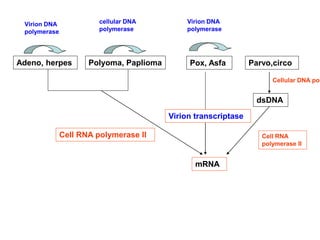
Parvo,circo
Cellular DNA pol
dsDNA
Adeno, herpes Pox, Asfa
mRNA
Cell RNA
polymerase II
Cell RNA polymerase II
Virion transcriptase
Virion DNA
polymerase
Virion DNA
polymerase
Polyoma, Paplioma
cellular DNA
polymerase
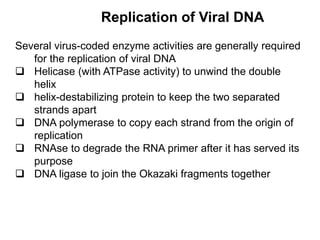
Several virus-coded enzyme activities are generally required
for the replication of viral DNA
 Helicase (with ATPase activity) to unwind the double
helix
 helix-destabilizing protein to keep the two separated
strands apart
 DNA polymerase to copy each strand from the origin of
replication
 RNAse to degrade the RNA primer after it has served its
purpose
 DNA ligase to join the Okazaki fragments together
Replication of Viral DNA
Paplioma and polyomavirus
Genomic
dsDNA
Replicated dsDNA
in the nucleus
1
Early gene
products;
oncoproteins
Cell cycle
induction;
S Phage entry
Transcription of
early gene
products;
translation
Virus assembly
Progeny virus
Late gene product;
Structural gene
Transcription of
late gene
products;
translation
Genomic replication by cellular
DNA poly
Entry and transport of DNA to
nucleus
6
5
4
3
2
Transformation
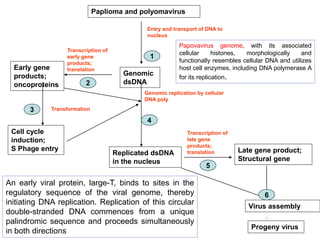
Papovavirus genome, with its associated
cellular histones, morphologically and
functionally resembles cellular DNA and utilizes
host cell enzymes, including DNA polymerase A
for its replication.
An early viral protein, large-T, binds to sites in the
regulatory sequence of the viral genome, thereby
initiating DNA replication. Replication of this circular
double-stranded DNA commences from a unique
palindromic sequence and proceeds simultaneously
in both directions
Adenovirus
Genomic dsDNA
Replicated dsDNA
in the nucleus
1
Early gene
products;
oncoproteins
Cell cycle
induction;
S Phage
entry;
Apoptosis
inhibition
Transcription of
early gene
products by
DdRpII; translation
Virus
assembly
Progeny virus
Late gene product;
Structural gene
Transcription of
late gene
products
byDdRpII;
translation
Genomic replication by cellular
DNA poly
Entry and transport of DNA to
nucleus
7
6
5
4
2
Transformation
VA RNAs;
IFN antagonist
Transcription of
VA gene
products by
DdRp III;
translation
3
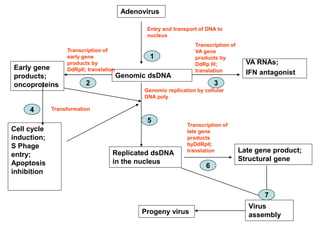
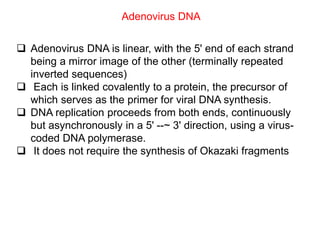
 Adenovirus DNA is linear, with the 5' end of each strand
being a mirror image of the other (terminally repeated
inverted sequences)
 Each is linked covalently to a protein, the precursor of
which serves as the primer for viral DNA synthesis.
 DNA replication proceeds from both ends, continuously
but asynchronously in a 5' --~ 3' direction, using a virus-
coded DNA polymerase.
 It does not require the synthesis of Okazaki fragments
Adenovirus DNA
Herpes viruses
Genomic dsDNA
Replicated dsDNA
1
α gene products; β
gene TFs
Virus assembly
Genomic replication by Viral
DNA poly
Nucleus transport & circularization of DNA
4
β gene products; γ
gene TFs
γ gene products; Most
structural protein, α TIF
3
5
6
2
γ gene expression
β gene expression
α gene expression
Progeny virus
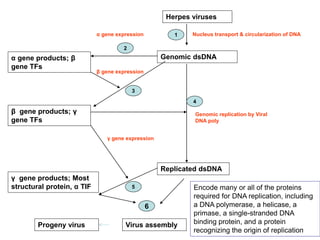
Encode many or all of the proteins
required for DNA replication, including
a DNA polymerase, a helicase, a
primase, a single-stranded DNA
binding protein, and a protein
recognizing the origin of replication
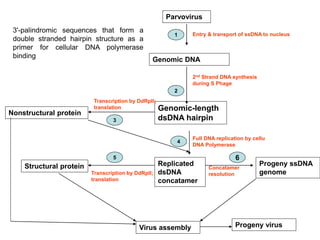
Parvovirus
Genomic DNA
Replicated
dsDNA
concatamer
1
Nonstructural protein
Virus assembly
Entry & transport of ssDNA to nucleus
2
Structural protein
6
3
Concatamer
resolution
Transcription by DdRpII;
translation
Progeny virus
Genomic-length
dsDNA hairpin
4
5
Progeny ssDNA
genome
Transcription by DdRpII;
translation
2nd Strand DNA synthesis
during S Phage
Full DNA replication by cellu
DNA Polymerase
3'-palindromic sequences that form a
double stranded hairpin structure as a
primer for cellular DNA polymerase
binding
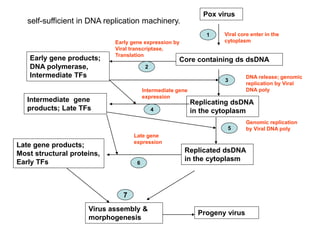
Pox virus
Core containing ds dsDNA
Replicating dsDNA
in the cytoplasm
1
Early gene products;
DNA polymerase,
Intermediate TFs
Virus assembly &
morphogenesis
DNA release; genomic
replication by Viral
DNA poly
Viral core enter in the
cytoplasm
3
Intermediate gene
products; Late TFs
Late gene products;
Most structural proteins,
Early TFs
4
5
7
2
Late gene
expression
Early gene expression by
Viral transcriptase,
Translation
Progeny virus
Replicated dsDNA
in the cytoplasm
6
Intermediate gene
expression
Genomic replication
by Viral DNA poly
self-sufficient in DNA replication machinery.
THANK YOU

Replication of DNA viruses .ppt

  • 1.
    Replication of DNAviruses Dr Vikramaditya Upmanyu Division of Biological Standardization
  • 2.
    Parvo,circo Cellular DNA pol dsDNA Adeno,herpes Pox, Asfa mRNA Cell RNA polymerase II Cell RNA polymerase II Virion transcriptase Virion DNA polymerase Virion DNA polymerase Polyoma, Paplioma cellular DNA polymerase
  • 3.
    Several virus-coded enzymeactivities are generally required for the replication of viral DNA  Helicase (with ATPase activity) to unwind the double helix  helix-destabilizing protein to keep the two separated strands apart  DNA polymerase to copy each strand from the origin of replication  RNAse to degrade the RNA primer after it has served its purpose  DNA ligase to join the Okazaki fragments together Replication of Viral DNA
  • 4.
    Paplioma and polyomavirus Genomic dsDNA ReplicateddsDNA in the nucleus 1 Early gene products; oncoproteins Cell cycle induction; S Phage entry Transcription of early gene products; translation Virus assembly Progeny virus Late gene product; Structural gene Transcription of late gene products; translation Genomic replication by cellular DNA poly Entry and transport of DNA to nucleus 6 5 4 3 2 Transformation Papovavirus genome, with its associated cellular histones, morphologically and functionally resembles cellular DNA and utilizes host cell enzymes, including DNA polymerase A for its replication. An early viral protein, large-T, binds to sites in the regulatory sequence of the viral genome, thereby initiating DNA replication. Replication of this circular double-stranded DNA commences from a unique palindromic sequence and proceeds simultaneously in both directions
  • 5.
    Adenovirus Genomic dsDNA Replicated dsDNA inthe nucleus 1 Early gene products; oncoproteins Cell cycle induction; S Phage entry; Apoptosis inhibition Transcription of early gene products by DdRpII; translation Virus assembly Progeny virus Late gene product; Structural gene Transcription of late gene products byDdRpII; translation Genomic replication by cellular DNA poly Entry and transport of DNA to nucleus 7 6 5 4 2 Transformation VA RNAs; IFN antagonist Transcription of VA gene products by DdRp III; translation 3
  • 6.
     Adenovirus DNAis linear, with the 5' end of each strand being a mirror image of the other (terminally repeated inverted sequences)  Each is linked covalently to a protein, the precursor of which serves as the primer for viral DNA synthesis.  DNA replication proceeds from both ends, continuously but asynchronously in a 5' --~ 3' direction, using a virus- coded DNA polymerase.  It does not require the synthesis of Okazaki fragments Adenovirus DNA
  • 7.
    Herpes viruses Genomic dsDNA ReplicateddsDNA 1 α gene products; β gene TFs Virus assembly Genomic replication by Viral DNA poly Nucleus transport & circularization of DNA 4 β gene products; γ gene TFs γ gene products; Most structural protein, α TIF 3 5 6 2 γ gene expression β gene expression α gene expression Progeny virus Encode many or all of the proteins required for DNA replication, including a DNA polymerase, a helicase, a primase, a single-stranded DNA binding protein, and a protein recognizing the origin of replication
  • 8.
    Parvovirus Genomic DNA Replicated dsDNA concatamer 1 Nonstructural protein Virusassembly Entry & transport of ssDNA to nucleus 2 Structural protein 6 3 Concatamer resolution Transcription by DdRpII; translation Progeny virus Genomic-length dsDNA hairpin 4 5 Progeny ssDNA genome Transcription by DdRpII; translation 2nd Strand DNA synthesis during S Phage Full DNA replication by cellu DNA Polymerase 3'-palindromic sequences that form a double stranded hairpin structure as a primer for cellular DNA polymerase binding
  • 9.
    Pox virus Core containingds dsDNA Replicating dsDNA in the cytoplasm 1 Early gene products; DNA polymerase, Intermediate TFs Virus assembly & morphogenesis DNA release; genomic replication by Viral DNA poly Viral core enter in the cytoplasm 3 Intermediate gene products; Late TFs Late gene products; Most structural proteins, Early TFs 4 5 7 2 Late gene expression Early gene expression by Viral transcriptase, Translation Progeny virus Replicated dsDNA in the cytoplasm 6 Intermediate gene expression Genomic replication by Viral DNA poly self-sufficient in DNA replication machinery.
  • 10.