The Kidney and HIV
The Kidney and HIV
The Kidney and HIV
The Kidney and HIV
The Kidney and HIV
The Kidney and HIV
The Kidney and HIV
The Kidney and HIV
The Kidney and HIV
The Kidney and HIV
The Kidney and HIV
The Kidney and HIV
The Kidney and HIV
The Kidney and HIV
The Kidney and HIV
The Kidney and HIV
The Kidney and HIV
The Kidney and HIV
The Kidney and HIV
The Kidney and HIV
The Kidney and HIV
The Kidney and HIV
The Kidney and HIV
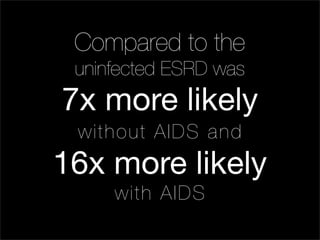
The Kidney and HIV
The Kidney and HIV
The Kidney and HIV
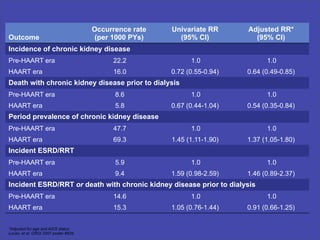
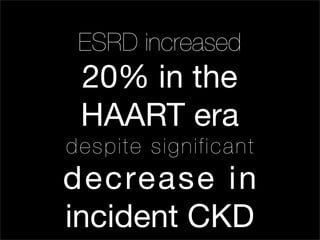
The Kidney and HIV
The Kidney and HIV
The Kidney and HIV
The Kidney and HIV
The Kidney and HIV
The Kidney and HIV
The Kidney and HIV
The Kidney and HIV
The Kidney and HIV
The Kidney and HIV
The Kidney and HIV
The Kidney and HIV
The Kidney and HIV
The Kidney and HIV
The Kidney and HIV
The Kidney and HIV
The Kidney and HIV
The Kidney and HIV
The Kidney and HIV
The Kidney and HIV
The Kidney and HIV
The Kidney and HIV
The Kidney and HIV
The Kidney and HIV
The Kidney and HIV
The Kidney and HIV
The Kidney and HIV
The Kidney and HIV
The Kidney and HIV
The Kidney and HIV
The Kidney and HIV
The Kidney and HIV
The Kidney and HIV
The Kidney and HIV
The Kidney and HIV
The Kidney and HIV
The Kidney and HIV
The Kidney and HIV
The Kidney and HIV
The Kidney and HIV
The Kidney and HIV
The Kidney and HIV
The Kidney and HIV
The Kidney and HIV

Editor's Notes
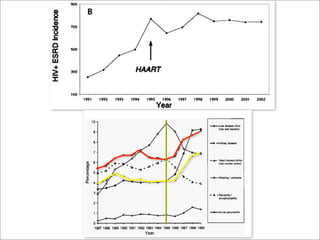
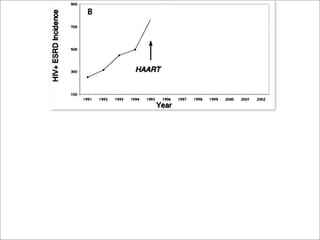
  • #13  Methods: AA participants in 2 Baltimore-based cohort studies were included in this analysis: the
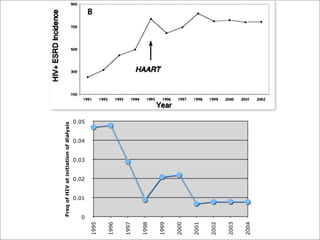
  • #14  Johns Hopkins HIV Cohort, a clinic-based cohort of HIV(+) participants, and the ALIVE study, a
  • #15  community-based cohort of HIV(-) and HIV(+) injection drug users. ESRD/RRT was determined by
  • #16  matching participant identifiers with the US Renal Data System. Standardized incidence ratios (SIR)
  • #17  and poison regression were used to compare to age-matched AA in the general population and to
  • #18  assess for temporal trends, respectively. We compared ESRD/RRT trends with those of chronic
  • #19  kidney disease (CKD) incidence and prevalence. CKD was defined as GFR<60ml/min/1.73m2 for > 3
  • #20  months.
  • #21  Results: RRT was initiated in 24 HIV(-) subjects during 13,415 person-years (PY) of follow-up, 51
  • #22  HIV(+) participants without AIDS during 10,780 PY, and 125 participants with AIDS during 9,833 PY,
  • #23  corresponding to SIRs of 2.3 (95% CI 1.5-3.4), 6.9 (95% CI 5.1-9.0), and 16.1 (95% CI 13.4-19.2),
  • #24  respectively. In HIV(+) African American participants RRT incidences were 5.8 and 9.7 per 1,000 PY
  • #25  in the pre-HAART and HAART eras, respectively (adjusted incidence rate ratio 1.2, 95% 0.8-1.9). In
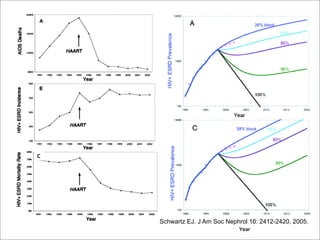
  • #26  supplementary analyses, we found that, while CKD incidence declined significantly in the HAART era
  • #27  compared to the pre-HAART era, CKD period prevalence increased.
  • #28  Conclusions: The ESRD/RRT rate is high in HIV(+) AAs and has not decreased appreciably in this
  • #29  cohort with the widespread use of HAART. While CKD incidence has declined significantly in the
  • #30  HAART era, CKD prevalence has increased as patients live longer.
  • #31  In this population the incidence of CKD is decreasing. TDF use is increasing.
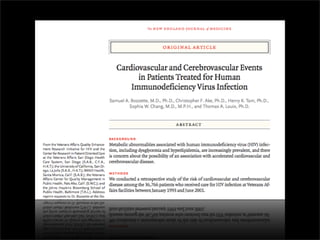
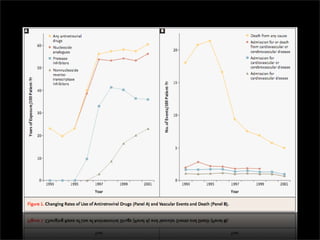
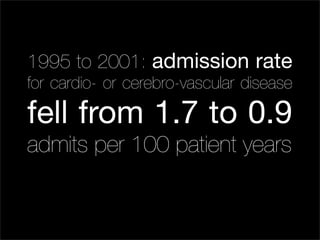
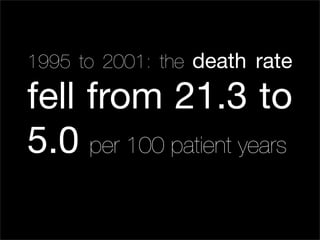
  • #35  VA study which raised the question does haart reduce mortality despite increasing metabolic abnormalities
  • #37  retrospective study
  • #39  36,766 who received care at VA from 93-2001
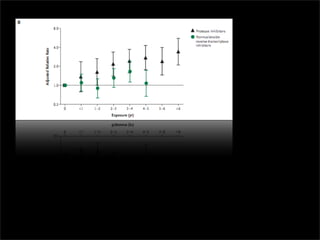
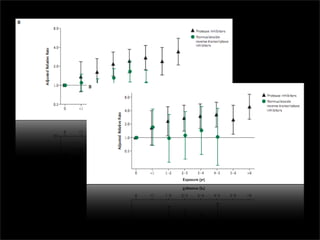
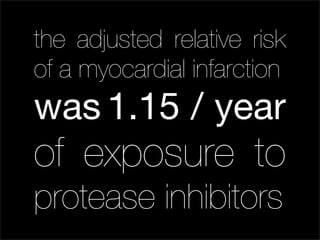
  • #45  DAD study prospective observational of 23,000 11 cohorts europe and NA
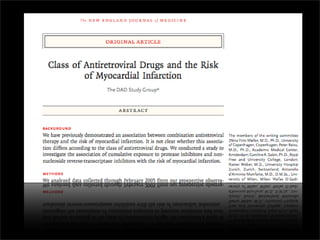
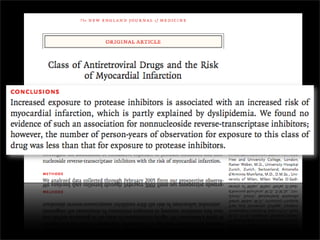
  • #46  looked at association of AMI and exposure to nonNucs and PIs
  • #47  better vetted events than VA study
  • #67  Average GFR > 100
  • #68  CD4 250
  • #69  No patients on ART
  • #70  No outcome data