INTRODUCTION
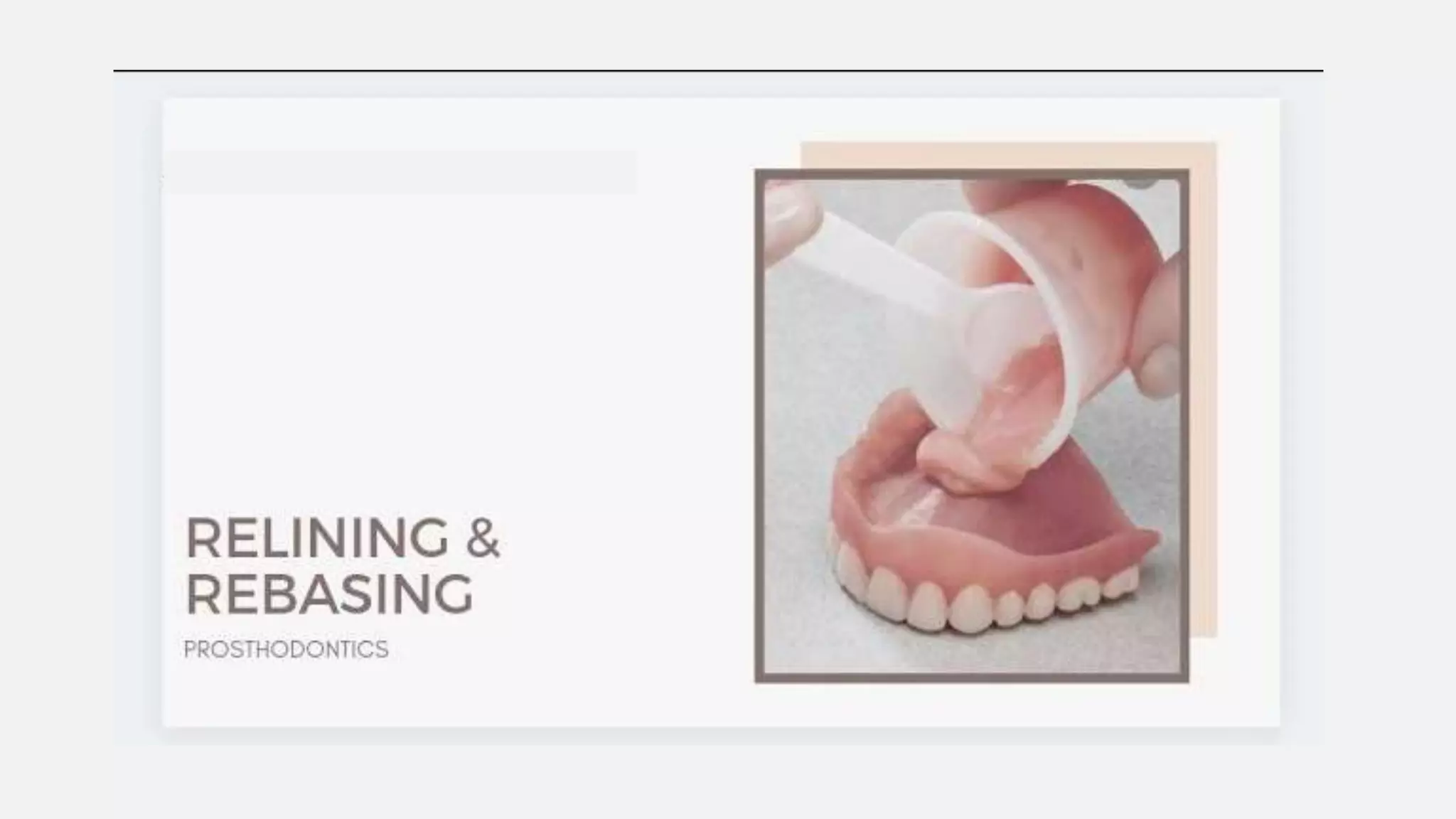
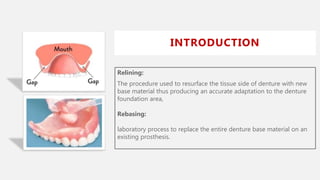
Relining:
The procedure used to resurface the tissue side of denture with new
base material thus producing an accurate adaptation to the denture
foundation area,
Rebasing:
laboratory process to replace the entire denture base material on an
existing prosthesis.
OBJECTIVES
The main objectives of relining or rebasing are:
1. Reestablish the correct relation of the denture to basal tissue.
2. Restore lost occlusal and maxillomandibular relationship
3. Restore stability and retention
indication
 loss of retention and stability
 loss of orientation of occlusal plane.
 loss of vertical occlusal dimensions.
 facial tissue support is lost.
 immediate denture at 3-6 months after their
original construction.
 when patient cannot afford new denture.
 Rebasing is usually done when tissue
surface damage is more , or discolored
denture base
CONTRAINDICATIONS
 Excessive resorption of alveolar ridges
 When abuse soft tissue are present
 Temporomandibular joint problems
dentures have poor esthetics.
 Unsatisfactory jaw relationships.
 If major speech problem due to denture
serve osseous undercuts.
 abused soft tissues are present. The
relining is delayed until the tissues recover
METHODS
 direct relining(Chairside reline) performed directly inside the patient’s mouth
 indirect relining (Lab reline) by the dental technician on a model
direct relining advantages:
• process takes very little time (usually one office visit) but the material is not as
durable or lasting less time consuming
• The dentist never leave patients without their dentures.
• less expensive.
Indirect relining advantages:
• process takes longer (usually next day) but the material used is very durable and
long-lasting
• has higher costs
• but is also more accurate and better finished than the former type.
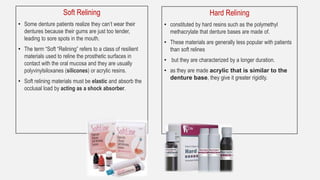
Soft Relining
• Some denture patients realize they can’t wear their
dentures because their gums are just too tender,
leading to sore spots in the mouth.
• The term “Soft “Relining” refers to a class of resilient
materials used to reline the prosthetic surfaces in
contact with the oral mucosa and they are usually
polyvinylsiloxanes (silicones) or acrylic resins.
• Soft relining materials must be elastic and absorb the
occlusal load by acting as a shock absorber.
Hard Relining
• constituted by hard resins such as the polymethyl
methacrylate that denture bases are made of.
• These materials are generally less popular with patients
than soft relines
• but they are characterized by a longer duration.
• as they are made acrylic that is similar to the
denture base, they give it greater rigidity.
The clinical procedures of relining and rebasing includes both tissue and
denture preparations
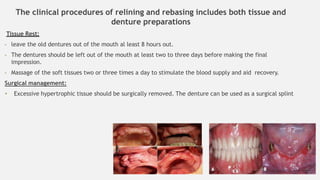
Tissue Rest:
- leave the old dentures out of the mouth al least 8 hours out.
- The dentures should be left out of the mouth at least two to three days before making the final
impression.
- Massage of the soft tissues two or three times a day to stimulate the blood supply and aid recovery.
Surgical management:
• Excessive hypertrophic tissue should be surgically removed. The denture can be used as a surgical splint
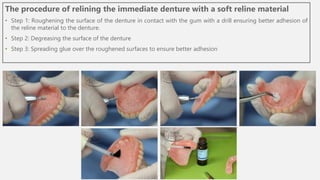
The procedure of relining the immediate denture with a soft reline material
• Step 1: Roughening the surface of the denture in contact with the gum with a drill ensuring better adhesion of
the reline material to the denture.
• Step 2: Degreasing the surface of the denture
• Step 3: Spreading glue over the roughened surfaces to ensure better adhesion
• Step 4: the admeasurement, mixture and filling of the reline material into the denture
• Step 5: The denture filled with reline material is placed inside the mouth and the patient is requested to
bring the denture into occlusal position until the reline material bonds (approx. 5 minutes)
step 6: With the reline material having bonded the dentures are removed from the
mouth. The denture is now fully in line with the altered anatomic relations,
comfortable to wear and stable. The material having spilt over the edges of the
denture can easily be trimmed away with a pair of scissors.
Thank you for listening

relining and rebasing

  • 2.
    INTRODUCTION Relining: The procedure usedto resurface the tissue side of denture with new base material thus producing an accurate adaptation to the denture foundation area, Rebasing: laboratory process to replace the entire denture base material on an existing prosthesis.
  • 3.
    OBJECTIVES The main objectivesof relining or rebasing are: 1. Reestablish the correct relation of the denture to basal tissue. 2. Restore lost occlusal and maxillomandibular relationship 3. Restore stability and retention
  • 4.
    indication  loss ofretention and stability  loss of orientation of occlusal plane.  loss of vertical occlusal dimensions.  facial tissue support is lost.  immediate denture at 3-6 months after their original construction.  when patient cannot afford new denture.  Rebasing is usually done when tissue surface damage is more , or discolored denture base CONTRAINDICATIONS  Excessive resorption of alveolar ridges  When abuse soft tissue are present  Temporomandibular joint problems dentures have poor esthetics.  Unsatisfactory jaw relationships.  If major speech problem due to denture serve osseous undercuts.  abused soft tissues are present. The relining is delayed until the tissues recover
  • 5.
    METHODS  direct relining(Chairsidereline) performed directly inside the patient’s mouth  indirect relining (Lab reline) by the dental technician on a model direct relining advantages: • process takes very little time (usually one office visit) but the material is not as durable or lasting less time consuming • The dentist never leave patients without their dentures. • less expensive. Indirect relining advantages: • process takes longer (usually next day) but the material used is very durable and long-lasting • has higher costs • but is also more accurate and better finished than the former type.
  • 6.
    Soft Relining • Somedenture patients realize they can’t wear their dentures because their gums are just too tender, leading to sore spots in the mouth. • The term “Soft “Relining” refers to a class of resilient materials used to reline the prosthetic surfaces in contact with the oral mucosa and they are usually polyvinylsiloxanes (silicones) or acrylic resins. • Soft relining materials must be elastic and absorb the occlusal load by acting as a shock absorber. Hard Relining • constituted by hard resins such as the polymethyl methacrylate that denture bases are made of. • These materials are generally less popular with patients than soft relines • but they are characterized by a longer duration. • as they are made acrylic that is similar to the denture base, they give it greater rigidity.
  • 7.
    The clinical proceduresof relining and rebasing includes both tissue and denture preparations Tissue Rest: - leave the old dentures out of the mouth al least 8 hours out. - The dentures should be left out of the mouth at least two to three days before making the final impression. - Massage of the soft tissues two or three times a day to stimulate the blood supply and aid recovery. Surgical management: • Excessive hypertrophic tissue should be surgically removed. The denture can be used as a surgical splint
  • 8.
    The procedure ofrelining the immediate denture with a soft reline material • Step 1: Roughening the surface of the denture in contact with the gum with a drill ensuring better adhesion of the reline material to the denture. • Step 2: Degreasing the surface of the denture • Step 3: Spreading glue over the roughened surfaces to ensure better adhesion
  • 9.
    • Step 4:the admeasurement, mixture and filling of the reline material into the denture • Step 5: The denture filled with reline material is placed inside the mouth and the patient is requested to bring the denture into occlusal position until the reline material bonds (approx. 5 minutes) step 6: With the reline material having bonded the dentures are removed from the mouth. The denture is now fully in line with the altered anatomic relations, comfortable to wear and stable. The material having spilt over the edges of the denture can easily be trimmed away with a pair of scissors.
  • 10.
    Thank you forlistening