RELATIONSHIPS
Connections or bonds with other people, places and
objects• Complex – why
• How do relationships change from childhood to mature age
• First relations – family – diverse structures
• Friendships – is it easy to do friends?
• What happens if you are shy?
• Do you have to make an effort to make friends?
Why?
• When to ask parents/guardians for advice? When to
ask friends?
• What can be influenced by friends?
Based on Good Health 5 by Ruskin & Proctor. Wiley et al.
publishers
FRIENDSHIPS
• Influence many many things…
• A group provides references for activities such as:
What happens when a close
friendship is close?
• Dating
• Social events
• Dress / appearance
• Alcohol & drug use
• Sport & hobbies
ROMANCE
BOYS GIRLS
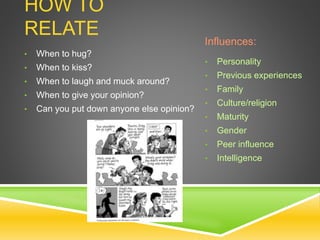
HOW TO
RELATE
• Personality
• Previous experiences
• Family
• Culture/religion
• Maturity
• Gender
• Peer influence
• Intelligence
• When to hug?
• When to kiss?
• When to laugh and muck around?
• When to give your opinion?
• Can you put down anyone else opinion?
Influences:
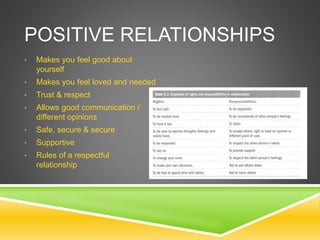
POSITIVE RELATIONSHIPS
• Makes you feel good about
yourself
• Makes you feel loved and needed
• Trust & respect
• Allows good communication /
different opinions
• Safe, secure & secure
• Supportive
• Rules of a respectful
relationship
POWER IN RELATIONSHIPS
• Ability to do something or make something happen in a
relationship
What happens when POWER is not
even?ABUSE
• Signs to recognise abusive relationships
(when you feel):
• Vulnerable
• Scared
• Angry
• Disappointe
d
• Hurt
• Any other?
• Sweaty hands
• Feeling
frozen/unable to
move
• Thumping heart
• Butterflies
BULLYING
When the abuse causes great harm to others - unfortunately, seems
common
Recognisable types of
bullying:
• Sexual harassment
• Cyber
• Physical
• Emotional
• HomophobicEFFECTS: FEAR, ISOLATION, LOW SELF-
ESTEEM,
AVOID SCHOOL, ANXIETY, DEPRESSION
Why do people bully?
• To fit in / impress others
• Compensate for not having
friends
• Entertain others or themselves
• Get revenge
• Gain / feel more powerful
NO MORE BULLYING
Always three agents involved:
• Be assertive
• The one in the wrong is the bully
• Be with friends
• Try to leave valuables at home
• Use humour
• Ask an adult / friends for help / keep asking for
it
PERSON BEING BULLIED
BYSTANDER • Refuse to watch
• Tell the bully is not okay what they are doing
• Report incidents
• Distract the bully
• Offer your friendship
BULLY • IT’S NOT OK TO BULLY
• There are other ways to deal with issues look for help
PROTECT YOURSELF
• Trust your instinct: if it feels dangerous it is!
• Talk to someone and take control of the
situation
• Reduce the risk by staying away or step back
• Speak up, there is always help at hand
Establish a good support network:
• Someone who listens
• Someone you can see if you need to
• Someone who can help
• Someone who has time for me
SOLVING
CONFLICTS:
Identify the issue
Establish rules
Offer solutions
Make and agreement
Modify agreements if you need to
WORK IN YOUR GROUPS
NOW:
• Sit in groups and work on the draft of the poster
defining title, areas and where the images/what the
images are going to be
• Give the drafts to your teacher
• Prepare for next class to finish the 2 posters as per
document in echo
• Check the book: Quest for Good Health by Ruskin &
Proctor, available at the library. Wiley et al.
publishers.

Relationships

  • 1.
    RELATIONSHIPS Connections or bondswith other people, places and objects• Complex – why • How do relationships change from childhood to mature age • First relations – family – diverse structures • Friendships – is it easy to do friends? • What happens if you are shy? • Do you have to make an effort to make friends? Why? • When to ask parents/guardians for advice? When to ask friends? • What can be influenced by friends? Based on Good Health 5 by Ruskin & Proctor. Wiley et al. publishers
  • 2.
    FRIENDSHIPS • Influence manymany things… • A group provides references for activities such as: What happens when a close friendship is close? • Dating • Social events • Dress / appearance • Alcohol & drug use • Sport & hobbies ROMANCE BOYS GIRLS
  • 3.
    HOW TO RELATE • Personality •Previous experiences • Family • Culture/religion • Maturity • Gender • Peer influence • Intelligence • When to hug? • When to kiss? • When to laugh and muck around? • When to give your opinion? • Can you put down anyone else opinion? Influences:
  • 4.
    POSITIVE RELATIONSHIPS • Makesyou feel good about yourself • Makes you feel loved and needed • Trust & respect • Allows good communication / different opinions • Safe, secure & secure • Supportive • Rules of a respectful relationship
  • 5.
    POWER IN RELATIONSHIPS •Ability to do something or make something happen in a relationship What happens when POWER is not even?ABUSE • Signs to recognise abusive relationships (when you feel): • Vulnerable • Scared • Angry • Disappointe d • Hurt • Any other? • Sweaty hands • Feeling frozen/unable to move • Thumping heart • Butterflies
  • 6.
    BULLYING When the abusecauses great harm to others - unfortunately, seems common Recognisable types of bullying: • Sexual harassment • Cyber • Physical • Emotional • HomophobicEFFECTS: FEAR, ISOLATION, LOW SELF- ESTEEM, AVOID SCHOOL, ANXIETY, DEPRESSION Why do people bully? • To fit in / impress others • Compensate for not having friends • Entertain others or themselves • Get revenge • Gain / feel more powerful
  • 7.
    NO MORE BULLYING Alwaysthree agents involved: • Be assertive • The one in the wrong is the bully • Be with friends • Try to leave valuables at home • Use humour • Ask an adult / friends for help / keep asking for it PERSON BEING BULLIED BYSTANDER • Refuse to watch • Tell the bully is not okay what they are doing • Report incidents • Distract the bully • Offer your friendship BULLY • IT’S NOT OK TO BULLY • There are other ways to deal with issues look for help
  • 8.
    PROTECT YOURSELF • Trustyour instinct: if it feels dangerous it is! • Talk to someone and take control of the situation • Reduce the risk by staying away or step back • Speak up, there is always help at hand Establish a good support network: • Someone who listens • Someone you can see if you need to • Someone who can help • Someone who has time for me SOLVING CONFLICTS: Identify the issue Establish rules Offer solutions Make and agreement Modify agreements if you need to
  • 9.
    WORK IN YOURGROUPS NOW: • Sit in groups and work on the draft of the poster defining title, areas and where the images/what the images are going to be • Give the drafts to your teacher • Prepare for next class to finish the 2 posters as per document in echo • Check the book: Quest for Good Health by Ruskin & Proctor, available at the library. Wiley et al. publishers.