Re-Inventing Library Instruction
With the
ACRL Framework
Diane Fulkerson
University of South Florida Sarasota-Manatee
COMO Athens, GA
October 6, 2016
Standards vs.Framework
ACRL Standards for Information Literacy
Five Standards
22 Performance Indicators
90 Learning Outcomes
ACRL Framework for Information Literacy
Six Frames
45 Knowledge Practices
39 Dispositions
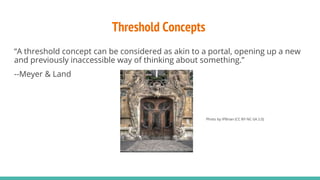
Threshold Concepts
“A threshold concept can be considered as akin to a portal, opening up a new
and previously inaccessible way of thinking about something.”
--Meyer & Land
Photo by IPBrian (CC BY-NC-SA 2.0)
Threshold Concept Characteristics
Transformative--causes a shift in perspective
Irreversible--once learned cannot be unlearned
Integrative--unifies facts/lessons/concepts
Bounded--defines the boundaries of a particular discipline
Troublesome--counter-intuitive
What’s the Difference
Standards
Focused on discrete skills
Checklist of skills for library instruction
Framework
Focus on knowledge based/transformative learning
Adapt to institutional needs
Collaborate with faculty
Use one Frame or combine Frames
ACRL Standards Rescinded
ACRL Standards rescinded June 2016
Where do we go from here?
Do we have to use the Framework?
New opportunities
New Opportunities
Less is more
Flexibility
Decrease emphasis on skills
Knowledge based learning/discovery
Improved one-shot classes
Collaboration with faculty
Explore your options
One-Shots
Photo by Kwansiripat (CC BY-NC 2.0)
Creating One-Shots
Use course assignments/syllabus
Determine appropriate frame or frames
Identify desired outcomes
Use Knowledge Practices/Dispositions
Develop materials--including worksheets
Create assessment methods
Formative, summative or a combination
Instructional Design
Understanding by Design (UbD) (Wiggins and McTighe, 2000)
Also known as Backward Design
Start with desired results (learning outcomes)
Select one or more frames
Learning outcomes align with Frame and assignment
Instructional Design
Develop assessment
Worksheets
One-minute paper
Class discussion
Create instructional materials/learning objectives
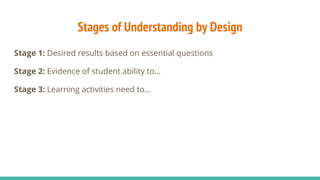
Stages of Understanding by Design
Stage 1: Desired results based on essential questions
Stage 2: Evidence of student ability to…
Stage 3: Learning activities need to...
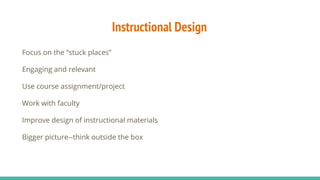
Instructional Design
Focus on the “stuck places”
Engaging and relevant
Use course assignment/project
Work with faculty
Improve design of instructional materials
Bigger picture--think outside the box
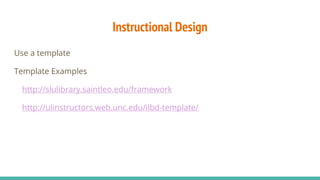
Instructional Design
Use a template
Template Examples
http://slulibrary.saintleo.edu/framework
http://ulinstructors.web.unc.edu/ilbd-template/
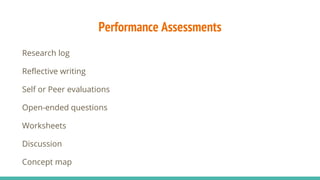
Performance Assessments
Research log
Reflective writing
Self or Peer evaluations
Open-ended questions
Worksheets
Discussion
Concept map
Assessment
Two questions to ask when developing assessment
How will you know students achieved the outcome?
How will students demonstrate they achieved it?
Examples
Using the Frames
In
One-Shot Classes
Psychology Research Methods Class
Student assignment:
Research paper with literature review
Frames selected:
Research as Inquiry
Scholarship as Conversation
In class activity
Find one or two articles about their topic
Use literature review matrix to synthesize main ideas
Hospitality Management
Student assignment:
Develop a HR recruitment plan for a local resort
Frame selected:
Searching as Strategic Exploration
In class activity answer two questions
What do they know about the resort’s current recruitment practices?
Where will you find the information and what types of information will you need?
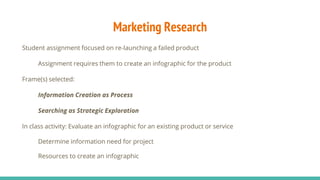
Marketing Research
Student assignment focused on re-launching a failed product
Assignment requires them to create an infographic for the product
Frame(s) selected:
Information Creation as Process
Searching as Strategic Exploration
In class activity: Evaluate an infographic for an existing product or service
Determine information need for project
Resources to create an infographic
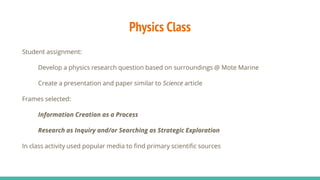
Physics Class
Student assignment:
Develop a physics research question based on surroundings @ Mote Marine
Create a presentation and paper similar to Science article
Frames selected:
Information Creation as a Process
Research as Inquiry and/or Searching as Strategic Exploration
In class activity used popular media to find primary scientific sources
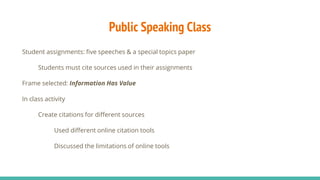
Public Speaking Class
Student assignments: five speeches & a special topics paper
Students must cite sources used in their assignments
Frame selected: Information Has Value
In class activity
Create citations for different sources
Used different online citation tools
Discussed the limitations of online tools
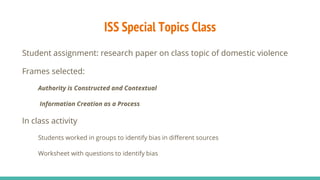
ISS Special Topics Class
Student assignment: research paper on class topic of domestic violence
Frames selected:
Authority is Constructed and Contextual
Information Creation as a Process
In class activity
Students worked in groups to identify bias in different sources
Worksheet with questions to identify bias
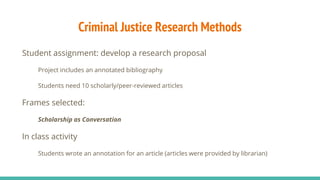
Criminal Justice Research Methods
Student assignment: develop a research proposal
Project includes an annotated bibliography
Students need 10 scholarly/peer-reviewed articles
Frames selected:
Scholarship as Conversation
In class activity
Students wrote an annotation for an article (articles were provided by librarian)
Thank You!
Questions, Comments, or Concerns
Contact Information
Diane Fulkerson
dfulkerson@sar.usf.edu

Re-Inventing Library Instruction With the ACRL Framework

  • 1.
    Re-Inventing Library Instruction Withthe ACRL Framework Diane Fulkerson University of South Florida Sarasota-Manatee COMO Athens, GA October 6, 2016
  • 2.
    Standards vs.Framework ACRL Standardsfor Information Literacy Five Standards 22 Performance Indicators 90 Learning Outcomes ACRL Framework for Information Literacy Six Frames 45 Knowledge Practices 39 Dispositions
  • 3.
    Threshold Concepts “A thresholdconcept can be considered as akin to a portal, opening up a new and previously inaccessible way of thinking about something.” --Meyer & Land Photo by IPBrian (CC BY-NC-SA 2.0)
  • 4.
    Threshold Concept Characteristics Transformative--causesa shift in perspective Irreversible--once learned cannot be unlearned Integrative--unifies facts/lessons/concepts Bounded--defines the boundaries of a particular discipline Troublesome--counter-intuitive
  • 5.
    What’s the Difference Standards Focusedon discrete skills Checklist of skills for library instruction Framework Focus on knowledge based/transformative learning Adapt to institutional needs Collaborate with faculty Use one Frame or combine Frames
  • 6.
    ACRL Standards Rescinded ACRLStandards rescinded June 2016 Where do we go from here? Do we have to use the Framework? New opportunities
  • 7.
    New Opportunities Less ismore Flexibility Decrease emphasis on skills Knowledge based learning/discovery Improved one-shot classes Collaboration with faculty Explore your options
  • 8.
  • 9.
    Creating One-Shots Use courseassignments/syllabus Determine appropriate frame or frames Identify desired outcomes Use Knowledge Practices/Dispositions Develop materials--including worksheets Create assessment methods Formative, summative or a combination
  • 10.
    Instructional Design Understanding byDesign (UbD) (Wiggins and McTighe, 2000) Also known as Backward Design Start with desired results (learning outcomes) Select one or more frames Learning outcomes align with Frame and assignment
  • 11.
    Instructional Design Develop assessment Worksheets One-minutepaper Class discussion Create instructional materials/learning objectives
  • 12.
    Stages of Understandingby Design Stage 1: Desired results based on essential questions Stage 2: Evidence of student ability to… Stage 3: Learning activities need to...
  • 13.
    Instructional Design Focus onthe “stuck places” Engaging and relevant Use course assignment/project Work with faculty Improve design of instructional materials Bigger picture--think outside the box
  • 14.
    Instructional Design Use atemplate Template Examples http://slulibrary.saintleo.edu/framework http://ulinstructors.web.unc.edu/ilbd-template/
  • 15.
    Performance Assessments Research log Reflectivewriting Self or Peer evaluations Open-ended questions Worksheets Discussion Concept map
  • 16.
    Assessment Two questions toask when developing assessment How will you know students achieved the outcome? How will students demonstrate they achieved it?
  • 17.
  • 18.
    Psychology Research MethodsClass Student assignment: Research paper with literature review Frames selected: Research as Inquiry Scholarship as Conversation In class activity Find one or two articles about their topic Use literature review matrix to synthesize main ideas
  • 19.
    Hospitality Management Student assignment: Developa HR recruitment plan for a local resort Frame selected: Searching as Strategic Exploration In class activity answer two questions What do they know about the resort’s current recruitment practices? Where will you find the information and what types of information will you need?
  • 20.
    Marketing Research Student assignmentfocused on re-launching a failed product Assignment requires them to create an infographic for the product Frame(s) selected: Information Creation as Process Searching as Strategic Exploration In class activity: Evaluate an infographic for an existing product or service Determine information need for project Resources to create an infographic
  • 21.
    Physics Class Student assignment: Developa physics research question based on surroundings @ Mote Marine Create a presentation and paper similar to Science article Frames selected: Information Creation as a Process Research as Inquiry and/or Searching as Strategic Exploration In class activity used popular media to find primary scientific sources
  • 22.
    Public Speaking Class Studentassignments: five speeches & a special topics paper Students must cite sources used in their assignments Frame selected: Information Has Value In class activity Create citations for different sources Used different online citation tools Discussed the limitations of online tools
  • 23.
    ISS Special TopicsClass Student assignment: research paper on class topic of domestic violence Frames selected: Authority is Constructed and Contextual Information Creation as a Process In class activity Students worked in groups to identify bias in different sources Worksheet with questions to identify bias
  • 24.
    Criminal Justice ResearchMethods Student assignment: develop a research proposal Project includes an annotated bibliography Students need 10 scholarly/peer-reviewed articles Frames selected: Scholarship as Conversation In class activity Students wrote an annotation for an article (articles were provided by librarian)
  • 25.
    Thank You! Questions, Comments,or Concerns Contact Information Diane Fulkerson dfulkerson@sar.usf.edu