Strategies for Reducing Length of Stay Dr Imran Waheed 19 th  August 2010
Introduction Patients - Recovery is impeded, future resilience lower Fiscal - reducing LoS by 1 week for just 100 patients a year would result in £150,000 saving – if you do that for 1000 patients you save £1.5 million
Future Strategies “ Problems cannot be solved by the same level of thinking that created them ”   Albert Einstein
Ten Strategies for  Reducing Length of Stay
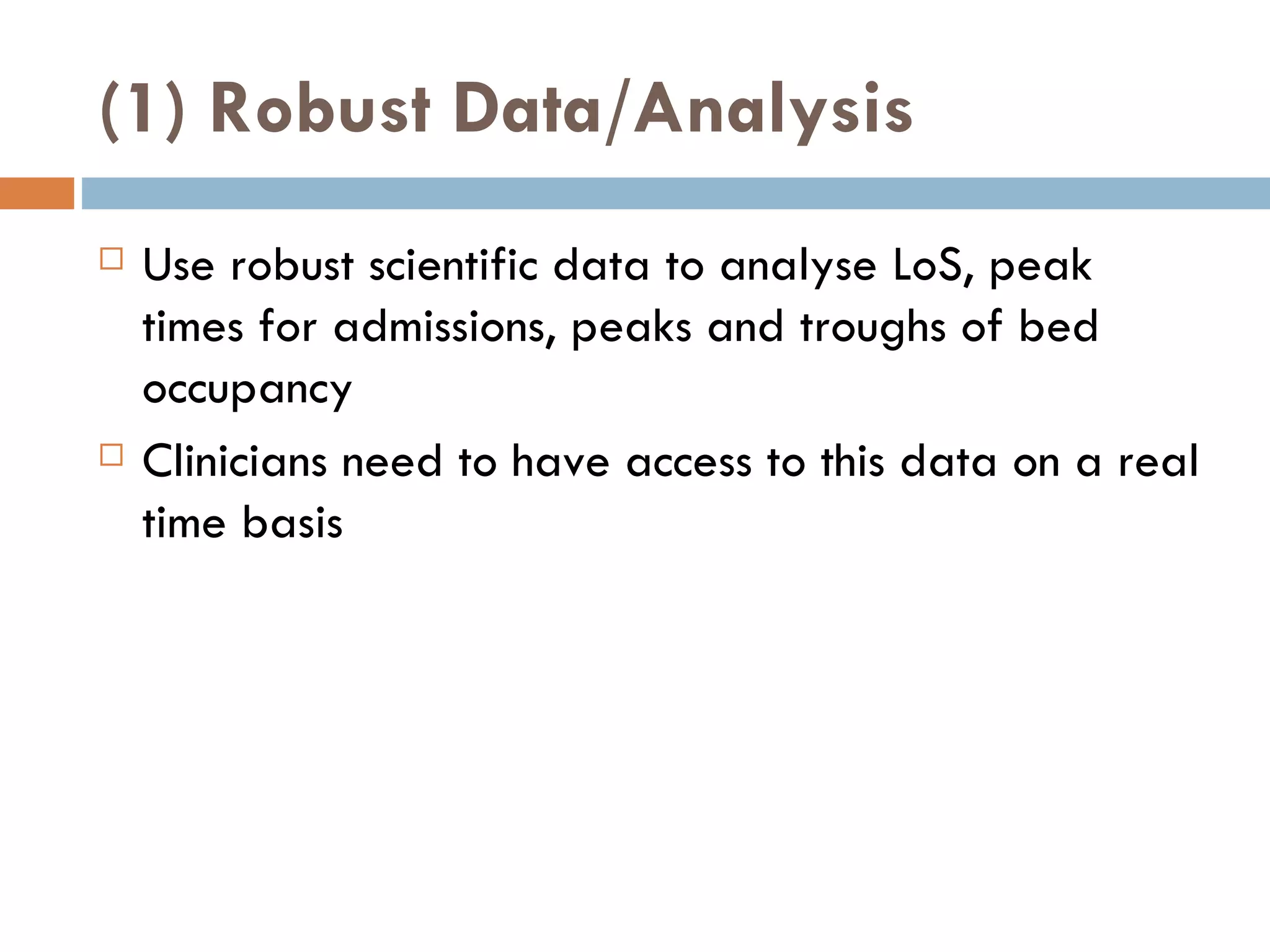
(1) Robust Data/Analysis Use robust scientific data to analyse LoS, peak times for admissions, peaks and troughs of bed occupancy Clinicians need to have access to this data on a real time basis
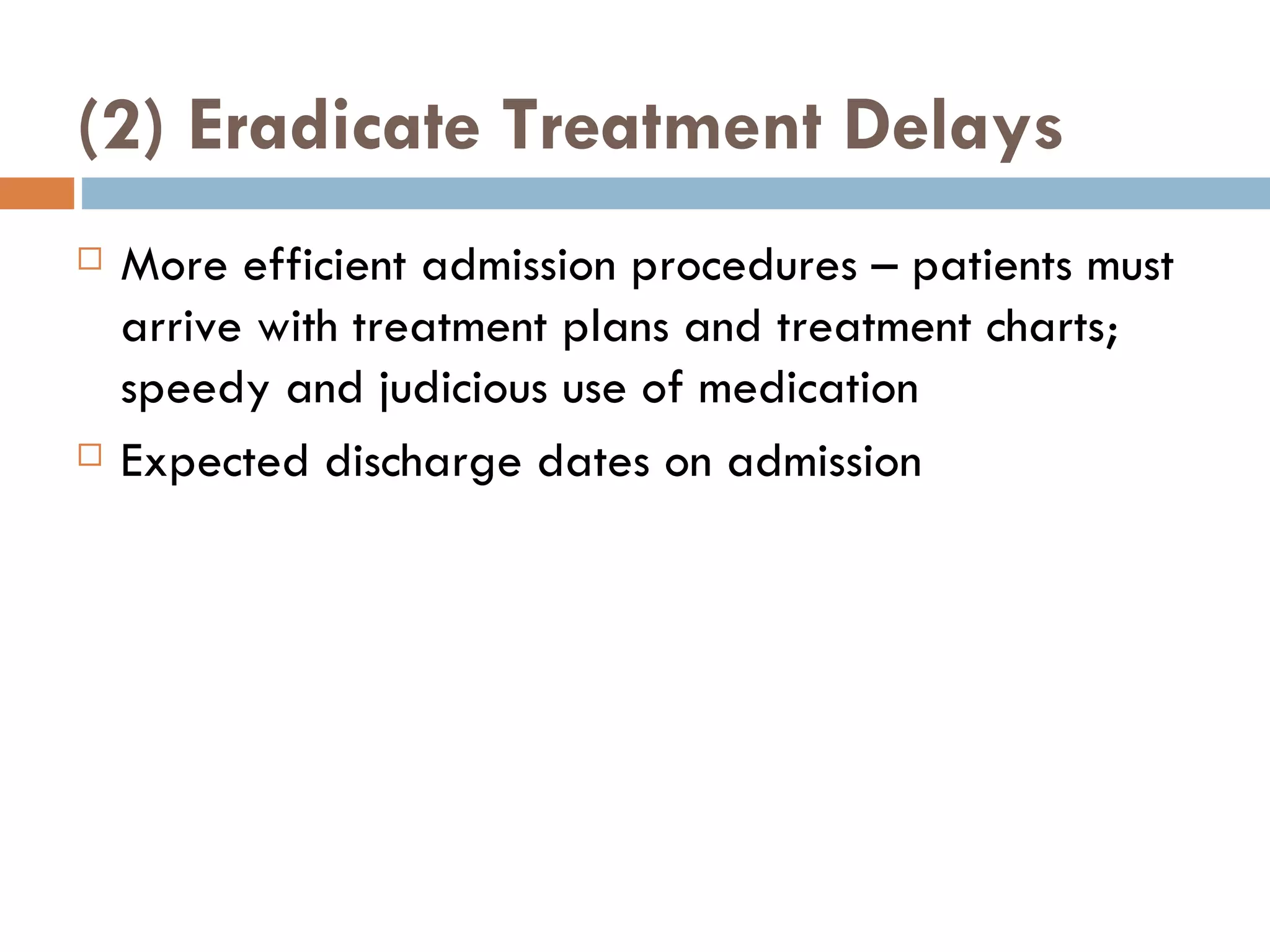
(2) Eradicate Treatment Delays More efficient admission procedures – patients must arrive with treatment plans and treatment charts; speedy and judicious use of medication Expected discharge dates on admission
(3) Ward Reviews Daily ward reviews – counter intuitive that we admit 7 days a week and discharge once a week.  Need to deal with the resistance to change that exists on some inpatient wards
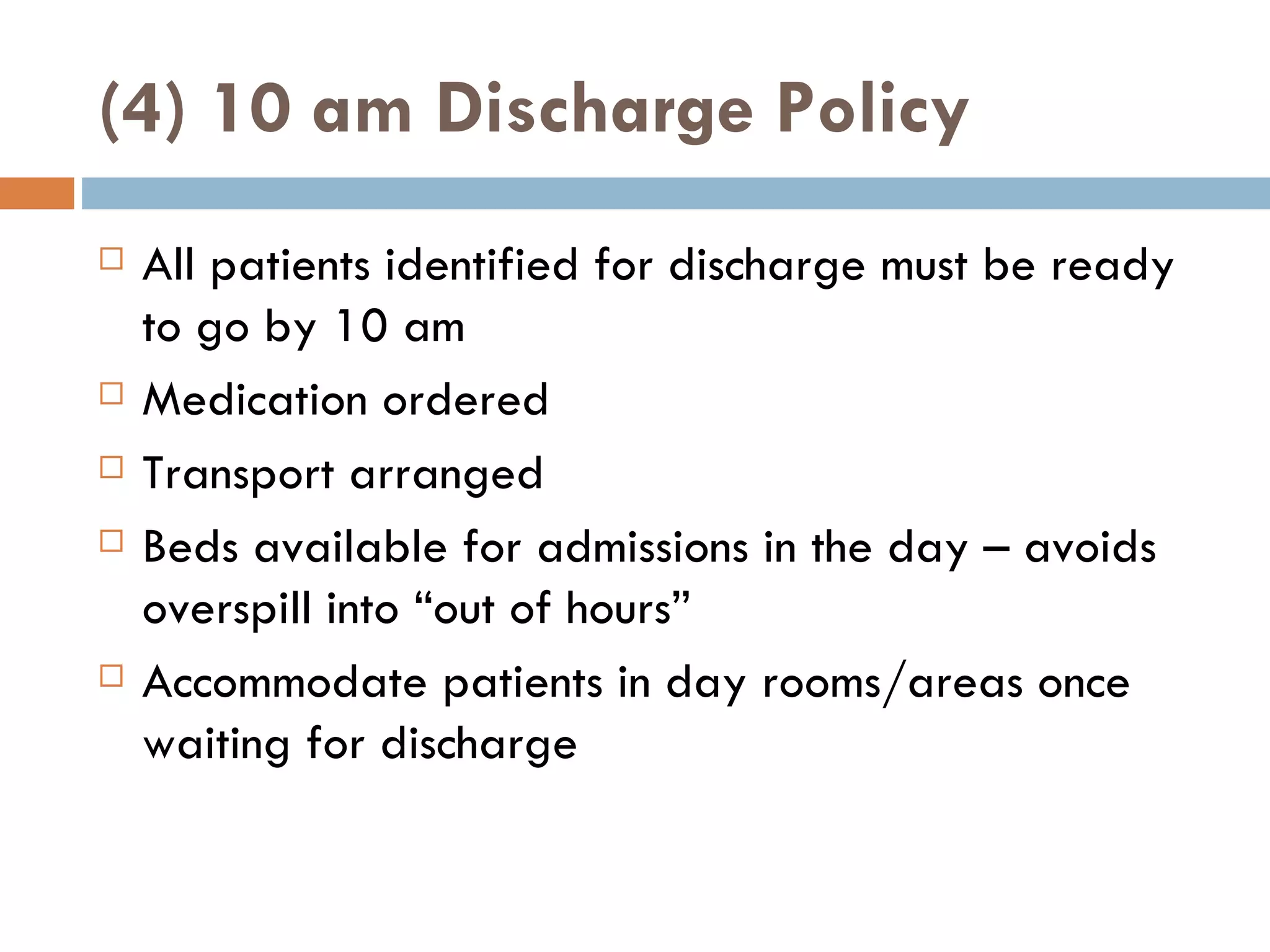
(4) 10 am Discharge Policy All patients identified for discharge must be ready to go by 10 am Medication ordered Transport arranged Beds available for admissions in the day – avoids overspill into  “ out of hours ” Accommodate patients in day rooms/areas once waiting for discharge
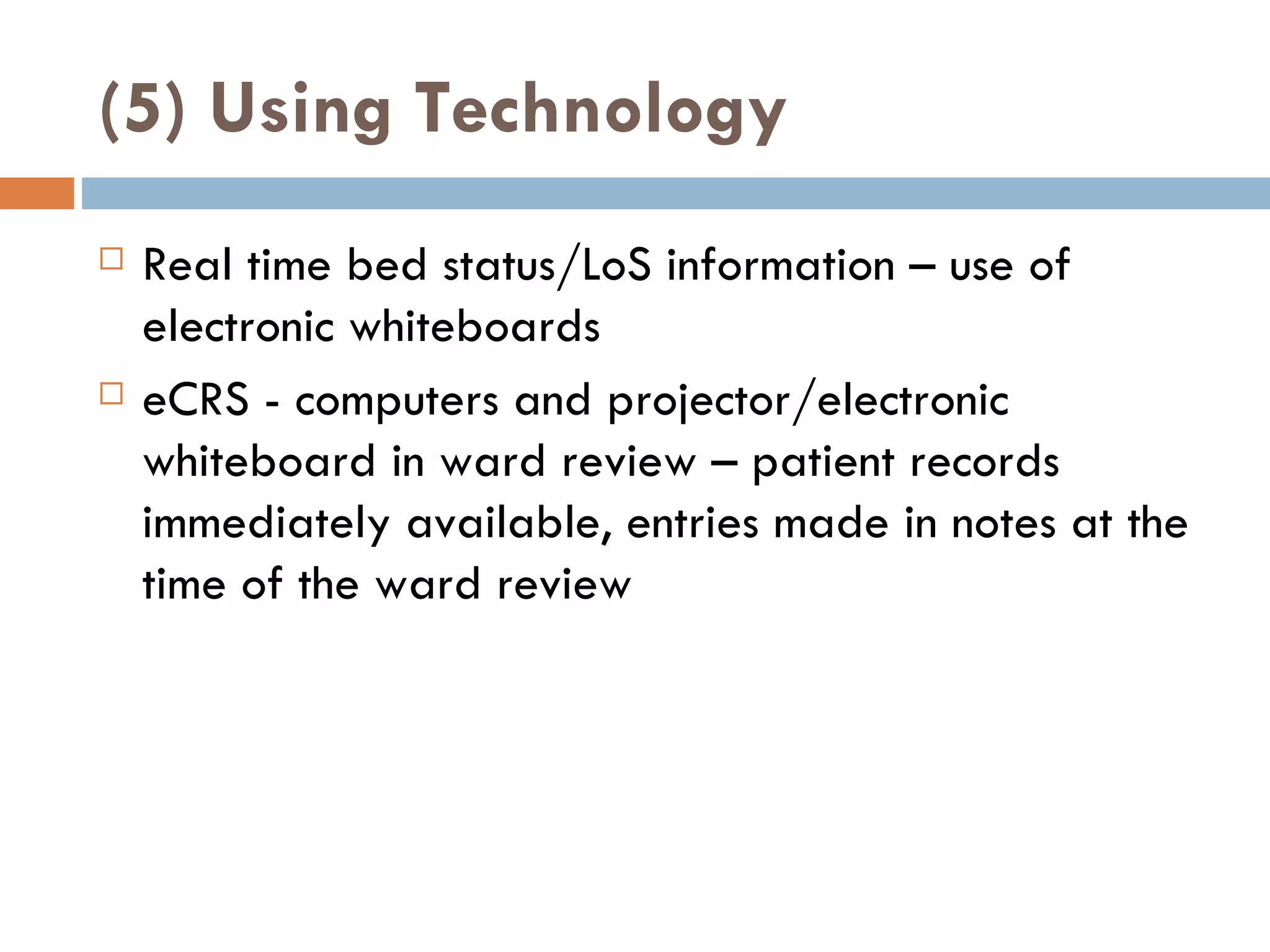
(5) Using Technology Real time bed status/LoS information – use of electronic whiteboards eCRS - computers and projector/electronic whiteboard in ward review – patient records immediately available, entries made in notes at the time of the ward review
(6) Out of Hours We admit 7 days a week and discharge 5 days a week Senior medics are present for about 220 days out of 365 days in a year Evening ward reviews at hubs Saturday ward reviews by consultants to identify possible discharges Aim for all patients to be seen within 24 hours by a senior medic
(7) Interface We need to work on the  “ pulling ”  mechanism CMHTs need to pass people back to primary care AOT passing patients back to CMHT Regular (lunch) meetings between inpatient, CRHT, CMHT and AOT.
(8) Widen the net The focus should not only be on  “ delayed discharges ”  but we should seek to reduce the LoS for all patients Majority of inpatients are not  “ delayed discharges ”  – modest improvements will have a significant impact
(9) Bed Management Need more medical input in bed management There is an argument for decentralisation of bed management and giving clinicians greater responsibility for beds.
(10) Triage ward Consider setting up a short stay triage ward that directs patients to inpatient ward, home treatment or CMHT In Lewisham (SLAM) this led to 42% of admissions to the triage ward being discharged in 7 days
Strategies for Reducing Length of Stay Thank you...Any Questions?

Reducing Length of Stay

  • 1.
    Strategies for ReducingLength of Stay Dr Imran Waheed 19 th August 2010
  • 2.
    Introduction Patients -Recovery is impeded, future resilience lower Fiscal - reducing LoS by 1 week for just 100 patients a year would result in £150,000 saving – if you do that for 1000 patients you save £1.5 million
  • 3.
    Future Strategies “Problems cannot be solved by the same level of thinking that created them ” Albert Einstein
  • 4.
    Ten Strategies for Reducing Length of Stay
  • 5.
    (1) Robust Data/AnalysisUse robust scientific data to analyse LoS, peak times for admissions, peaks and troughs of bed occupancy Clinicians need to have access to this data on a real time basis
  • 6.
    (2) Eradicate TreatmentDelays More efficient admission procedures – patients must arrive with treatment plans and treatment charts; speedy and judicious use of medication Expected discharge dates on admission
  • 7.
    (3) Ward ReviewsDaily ward reviews – counter intuitive that we admit 7 days a week and discharge once a week. Need to deal with the resistance to change that exists on some inpatient wards
  • 8.
    (4) 10 amDischarge Policy All patients identified for discharge must be ready to go by 10 am Medication ordered Transport arranged Beds available for admissions in the day – avoids overspill into “ out of hours ” Accommodate patients in day rooms/areas once waiting for discharge
  • 9.
    (5) Using TechnologyReal time bed status/LoS information – use of electronic whiteboards eCRS - computers and projector/electronic whiteboard in ward review – patient records immediately available, entries made in notes at the time of the ward review
  • 10.
    (6) Out ofHours We admit 7 days a week and discharge 5 days a week Senior medics are present for about 220 days out of 365 days in a year Evening ward reviews at hubs Saturday ward reviews by consultants to identify possible discharges Aim for all patients to be seen within 24 hours by a senior medic
  • 11.
    (7) Interface Weneed to work on the “ pulling ” mechanism CMHTs need to pass people back to primary care AOT passing patients back to CMHT Regular (lunch) meetings between inpatient, CRHT, CMHT and AOT.
  • 12.
    (8) Widen thenet The focus should not only be on “ delayed discharges ” but we should seek to reduce the LoS for all patients Majority of inpatients are not “ delayed discharges ” – modest improvements will have a significant impact
  • 13.
    (9) Bed ManagementNeed more medical input in bed management There is an argument for decentralisation of bed management and giving clinicians greater responsibility for beds.
  • 14.
    (10) Triage wardConsider setting up a short stay triage ward that directs patients to inpatient ward, home treatment or CMHT In Lewisham (SLAM) this led to 42% of admissions to the triage ward being discharged in 7 days
  • 15.
    Strategies for ReducingLength of Stay Thank you...Any Questions?