Nursing Orientation
By: Robert Derrett
General (NO Specialty)
• 8-week orientation using preceptors and multiple adult teaching/learning
methods, such as group discussions, case studies, and self-learning
computer modules.
• 9 new graduates participated in the program over 9 month period.
• Sample of 21 registered nurses completed preceptor program; head nurses
and preceptors participated and new graduates were evaluated prior to and
after participation in the program. 1
– Data analysis showed strong support for preceptor program from all categories of
nurses.
– Result: Retention rate for participating new graduates increased 47% after
program implementation.
General Cont…
• Nurse(s) are entered into 3 programs.
• First program is general orientation (hospital policies and procedures,
review of clinical skills common to all acute care units, and familiar clinical
problems).
• Second program is a unit based orientation consisting of classes that
provide specialized knowledge and clinical time with a preceptor.
• Time spent directly in unit based orientation varies from 6 weeks to as much
as 6 months depending on the adjustment/transition of new graduate.
Simultaneously baccalaureate nurse is entered into a nurse residency
program. 2
– Result: Current turnover rate is 13% with this program as of July 2005
General Cont….
12 Week Orientation Schedule. 3
General Cont…
• Gnosis program (accredited provider of continuing nursing education): 11-
week program of classes, planned clinical experiences, and feedback
sessions. All nurses participate in care of their preceptor’s patients. Upon
completion of GNOSIS nurses begin their unit-specific orientation, which
varies from 8-35 weeks.
– Result: Nurses for North Carolina’s High Point Regional Health System retention
rate is 88%, up from 44%. 4
ICU Orientation
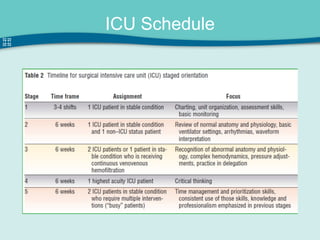
• 16-week orientation plan. Intermediate level and stable ICU-level patients
with a higher planned acuity to be done 9 to 12 months after hire (Schedule
on following slide).5
– Result: 40% reduction in orientation time for new graduate nurse and high 1 year
retention rates (95%)
• Orientation ranged from 8-12 weeks depending on the nurse’s number of
years in nursing and level of experience. 6
• All new nurses required to attend classes offered every 2 months or test out
via written examination.
ICU Schedule
PCU
• 10 week orientation. NG divided into 2 teams of 3 nurses. Each team paired
with 1 preceptor. NG worked two 8-hour shifts (provided by hospital nursing
education department) and two 12-hour (worked on unit in teams) shifts
second week of orientation.
• Each team responsible for the care of 3 patients. Each NG was assigned to
1 patient and was responsible for their care with assistance from preceptor.
• As weeks progressed, NG patient load increased hire.7
Final Remarks
Citations
1. Butler, K. M., & Hardin-Pierce, M. (2015, Spring). Leadership Strategies to
Enhance the Transition from Nursing Student Role to Professional Nurse.
Nursing Leadership Forum, 9(3), 113-114.
2. Return on investment: Benefits and challenges of a baccalaureate nurse
residency program. Nursing Economic$, 21(5), 13-18, 39.)
3. Beeman, K. L., Jernigan, A. C., & Hensley, P. D. (1999). Employing new
grads: A plan for success. Nursing Economics, 17(2), 91.
4. Craven, C. (2002). GNOSIS program pays off. Nursing management,
33(8), 15-16
5. Chesnutt, B. (2012, April). Meeting the Needs of Graduate Nurses in
Critical Care Orientation. CriticalCareNurse, 32(2), E51-E52.
6. Morris LL, Pfeifer PB, Catalano R, et al. Designing a comprehensive
model for critical care orientation. Crit Care Nurse 2007; 27: 37–60.
7. CriticalCareNurse, 29(2), E26-27.

Nursing Orientation

  • 1.
  • 2.
    General (NO Specialty) •8-week orientation using preceptors and multiple adult teaching/learning methods, such as group discussions, case studies, and self-learning computer modules. • 9 new graduates participated in the program over 9 month period. • Sample of 21 registered nurses completed preceptor program; head nurses and preceptors participated and new graduates were evaluated prior to and after participation in the program. 1 – Data analysis showed strong support for preceptor program from all categories of nurses. – Result: Retention rate for participating new graduates increased 47% after program implementation.
  • 4.
    General Cont… • Nurse(s)are entered into 3 programs. • First program is general orientation (hospital policies and procedures, review of clinical skills common to all acute care units, and familiar clinical problems). • Second program is a unit based orientation consisting of classes that provide specialized knowledge and clinical time with a preceptor. • Time spent directly in unit based orientation varies from 6 weeks to as much as 6 months depending on the adjustment/transition of new graduate. Simultaneously baccalaureate nurse is entered into a nurse residency program. 2 – Result: Current turnover rate is 13% with this program as of July 2005
  • 5.
    General Cont…. 12 WeekOrientation Schedule. 3
  • 6.
    General Cont… • Gnosisprogram (accredited provider of continuing nursing education): 11- week program of classes, planned clinical experiences, and feedback sessions. All nurses participate in care of their preceptor’s patients. Upon completion of GNOSIS nurses begin their unit-specific orientation, which varies from 8-35 weeks. – Result: Nurses for North Carolina’s High Point Regional Health System retention rate is 88%, up from 44%. 4
  • 7.
    ICU Orientation • 16-weekorientation plan. Intermediate level and stable ICU-level patients with a higher planned acuity to be done 9 to 12 months after hire (Schedule on following slide).5 – Result: 40% reduction in orientation time for new graduate nurse and high 1 year retention rates (95%) • Orientation ranged from 8-12 weeks depending on the nurse’s number of years in nursing and level of experience. 6 • All new nurses required to attend classes offered every 2 months or test out via written examination.
  • 8.
  • 10.
    PCU • 10 weekorientation. NG divided into 2 teams of 3 nurses. Each team paired with 1 preceptor. NG worked two 8-hour shifts (provided by hospital nursing education department) and two 12-hour (worked on unit in teams) shifts second week of orientation. • Each team responsible for the care of 3 patients. Each NG was assigned to 1 patient and was responsible for their care with assistance from preceptor. • As weeks progressed, NG patient load increased hire.7
  • 11.
  • 12.
    Citations 1. Butler, K.M., & Hardin-Pierce, M. (2015, Spring). Leadership Strategies to Enhance the Transition from Nursing Student Role to Professional Nurse. Nursing Leadership Forum, 9(3), 113-114. 2. Return on investment: Benefits and challenges of a baccalaureate nurse residency program. Nursing Economic$, 21(5), 13-18, 39.) 3. Beeman, K. L., Jernigan, A. C., & Hensley, P. D. (1999). Employing new grads: A plan for success. Nursing Economics, 17(2), 91. 4. Craven, C. (2002). GNOSIS program pays off. Nursing management, 33(8), 15-16 5. Chesnutt, B. (2012, April). Meeting the Needs of Graduate Nurses in Critical Care Orientation. CriticalCareNurse, 32(2), E51-E52. 6. Morris LL, Pfeifer PB, Catalano R, et al. Designing a comprehensive model for critical care orientation. Crit Care Nurse 2007; 27: 37–60. 7. CriticalCareNurse, 29(2), E26-27.