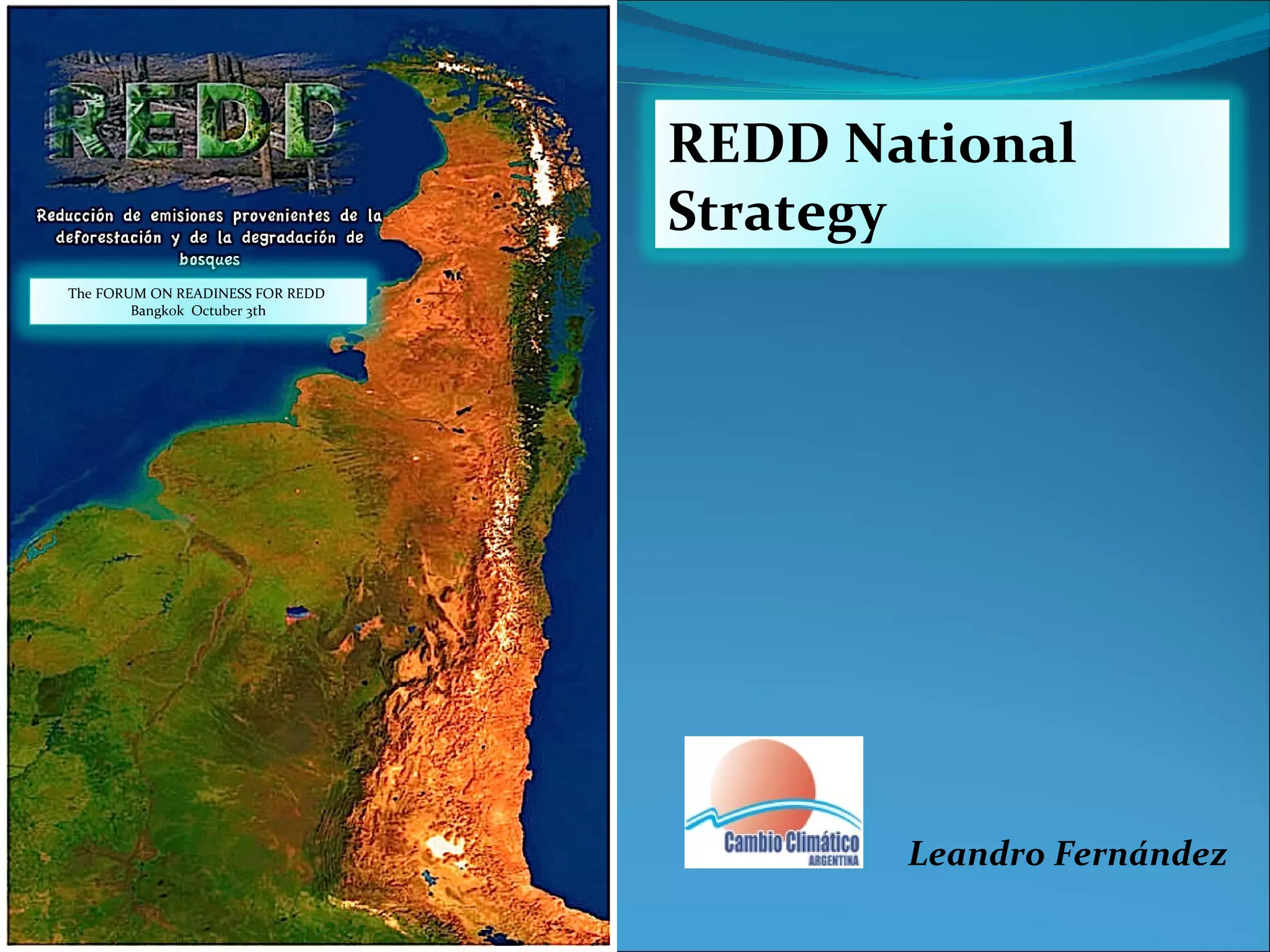
Leandro Fernández REDD National Strategy  The FORUM ON READINESS FOR REDD  Bangkok  Octuber  3th
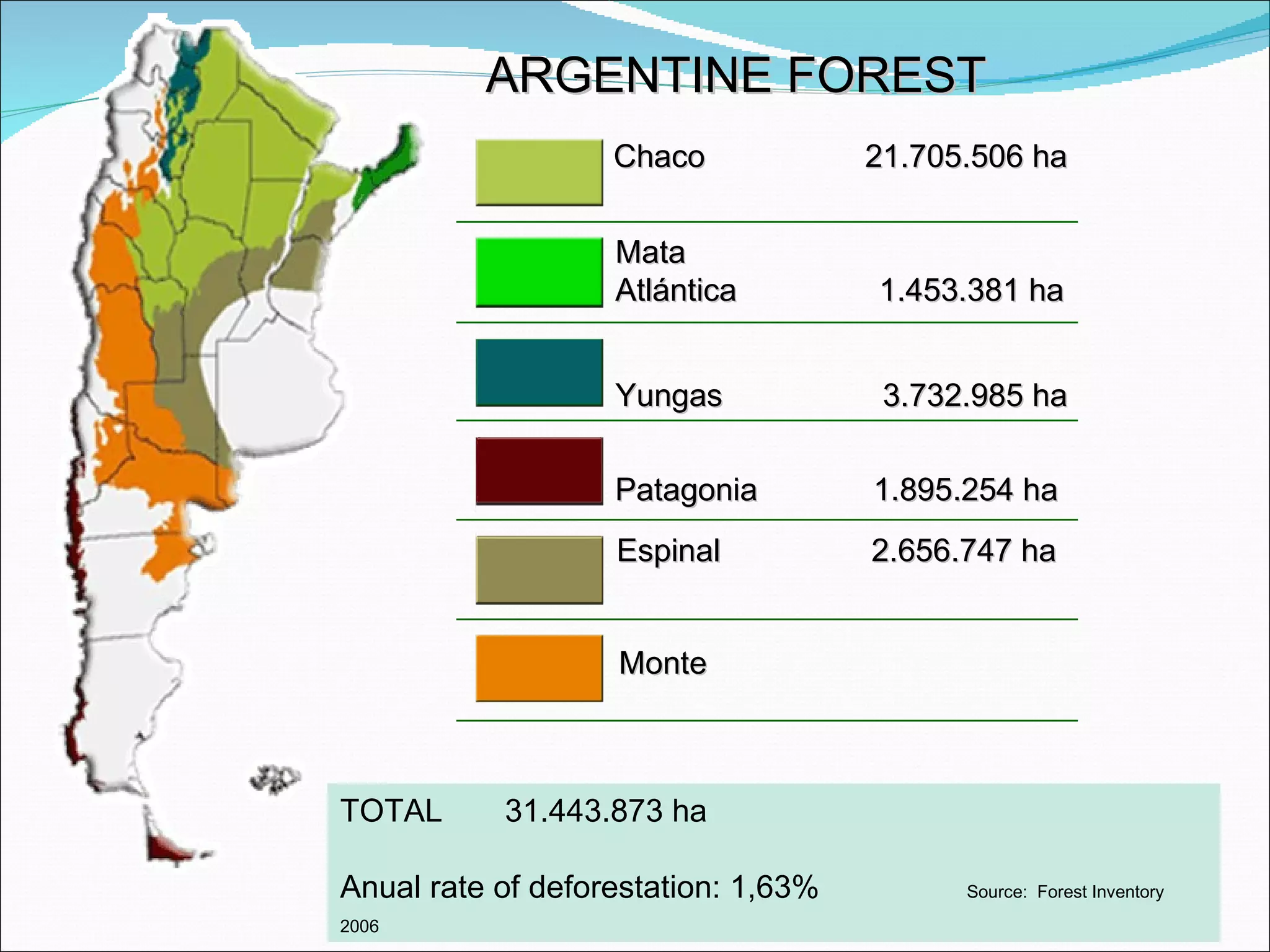
ARGENTINE FOREST  TOTAL  31.443.873 ha Anual rate of deforestation: 1,63%  Source:  Forest Inventory 2006 Chaco  21.705.506 ha Mata  Atlántica  1.453.381 ha Yungas  3.732.985 ha Patagonia  1.895.254 ha Espinal  2.656.747 ha Monte
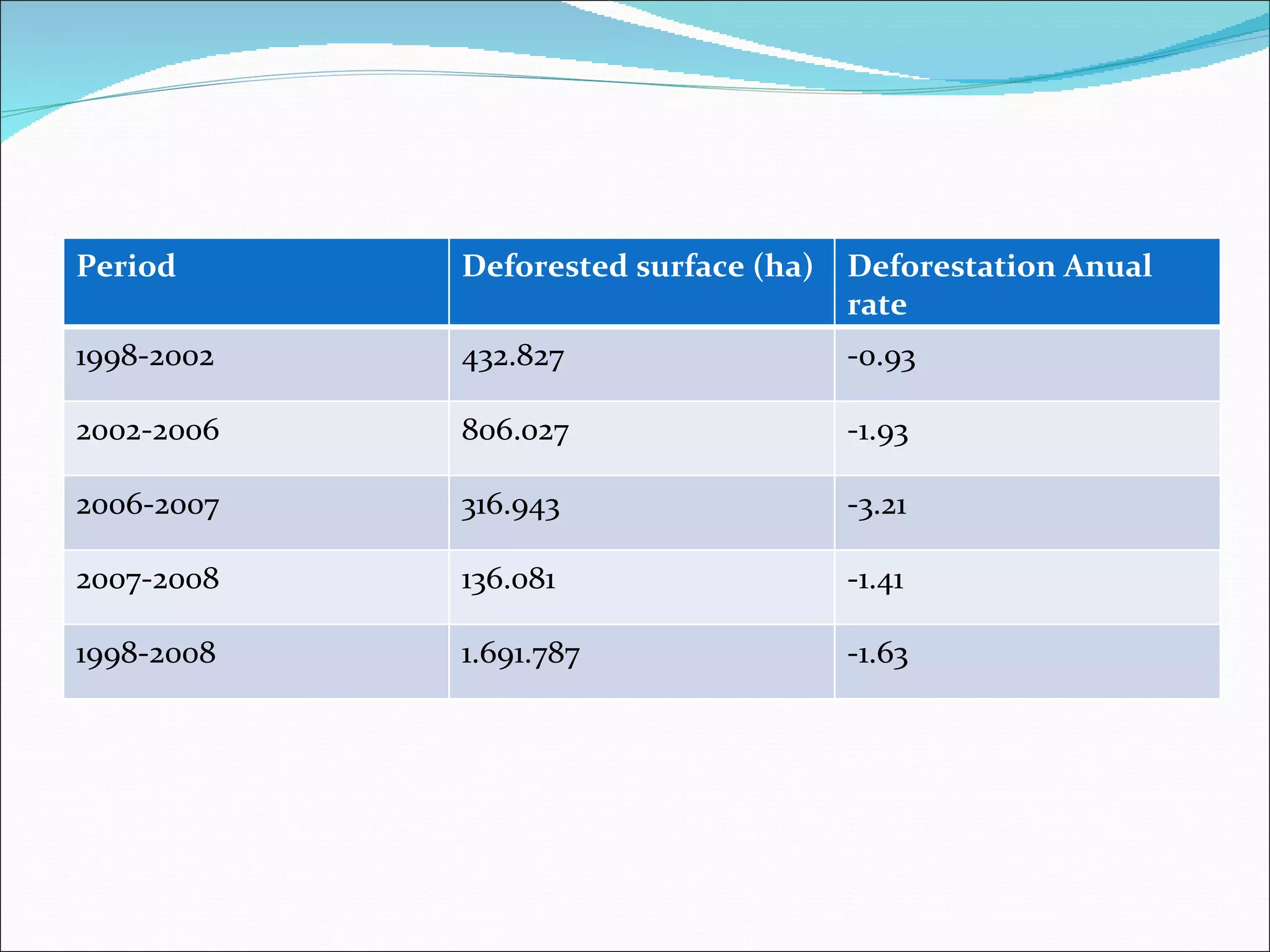
Period Deforested surface (ha)  Deforestation Anual rate  1998-2002 432.827 -0.93 2002-2006 806.027 -1.93 2006-2007 316.943 -3.21 2007-2008 136.081 -1.41 1998-2008 1.691.787 -1.63
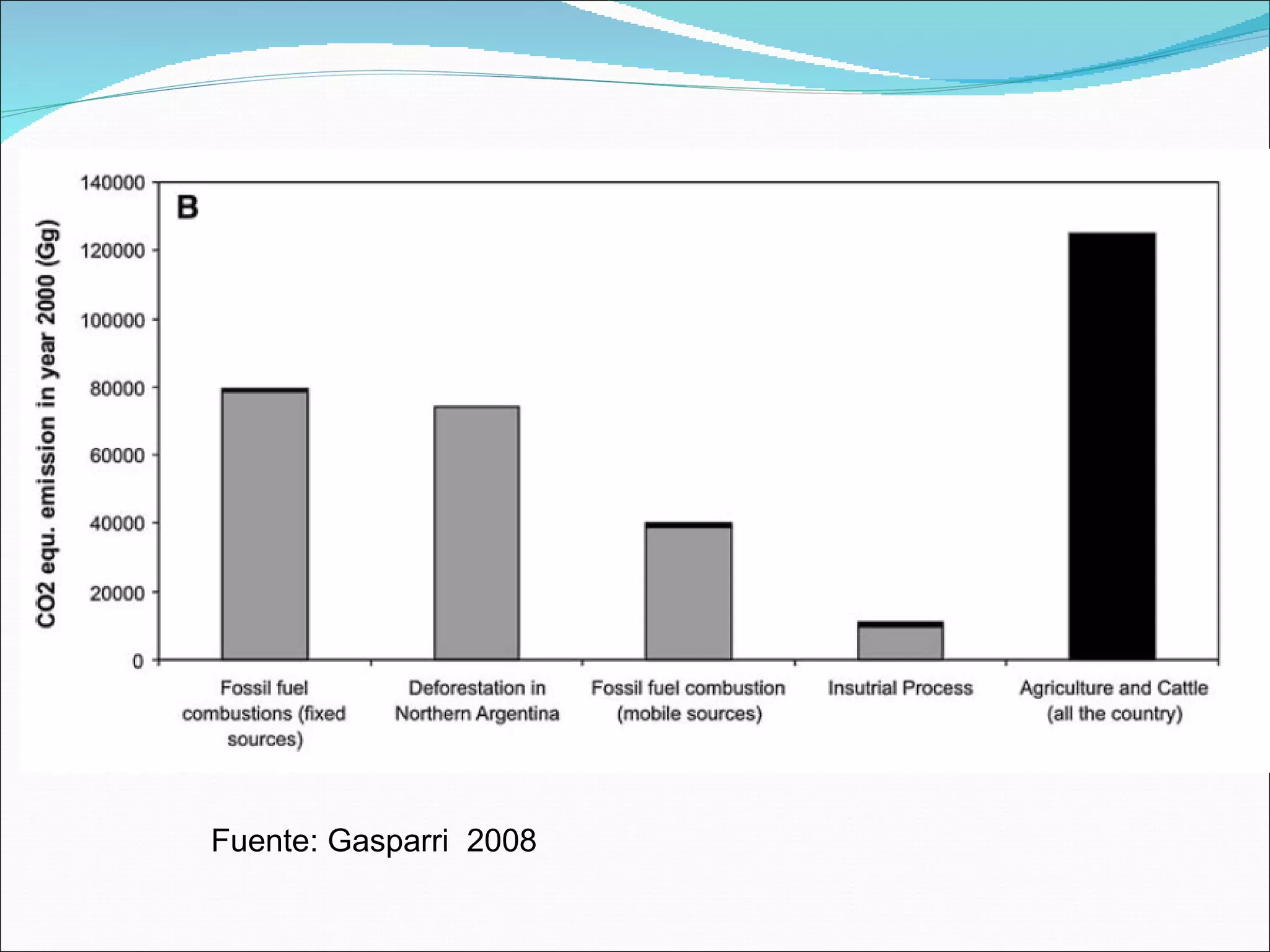
Fuente: Gasparri  2008
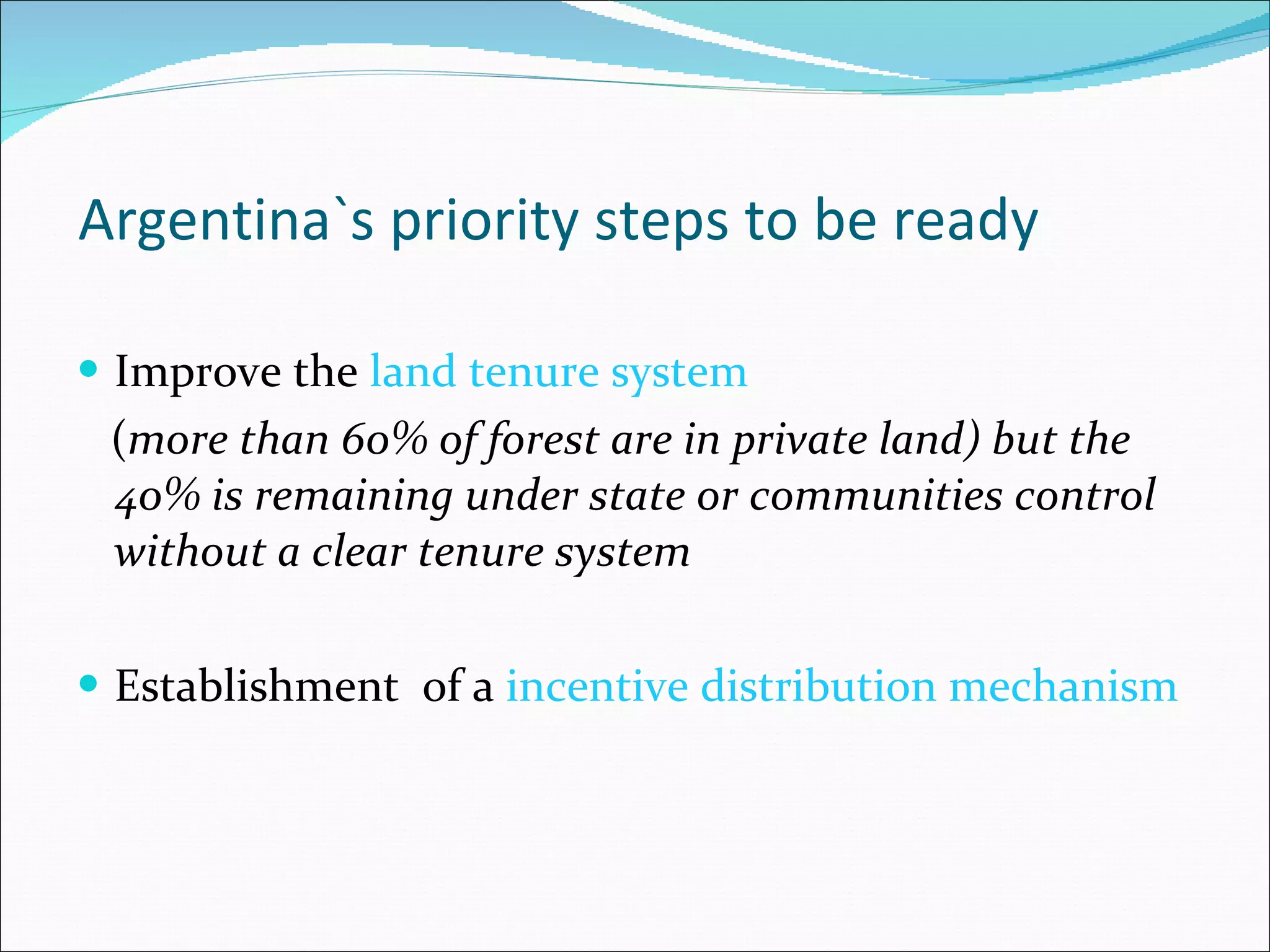
Argentina`s priority steps to be ready Improve the  land tenure system  ( more than 60% of forest are in private land) but the 40% is remaining under state or communities control without a clear tenure system  Establishment  of a  incentive distribution mechanism
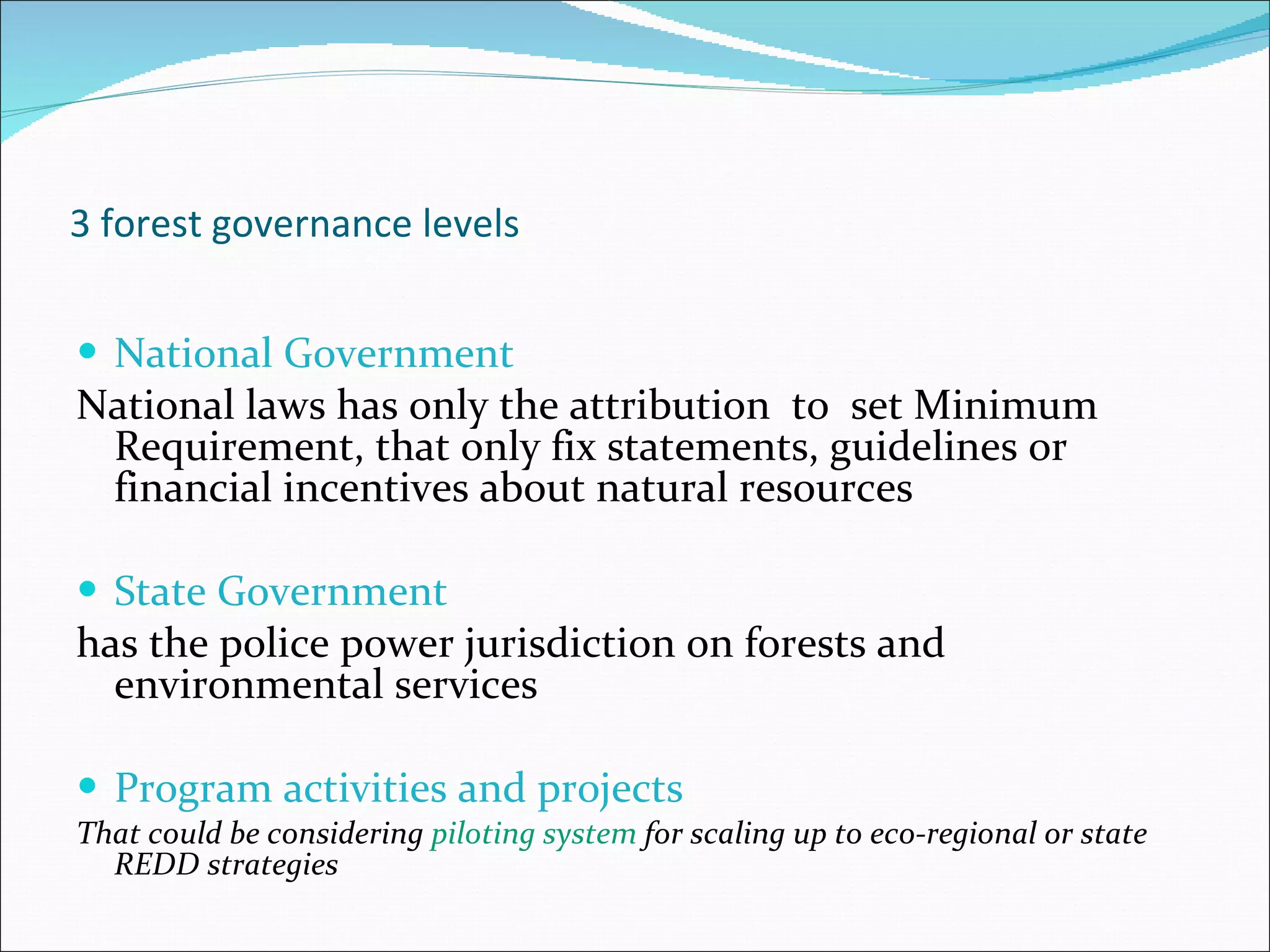
3 forest governance levels  National Government National laws has only the attribution  to  set Minimum Requirement, that only fix statements, guidelines or financial incentives about natural resources State Government  has the police power jurisdiction on forests and environmental services Program activities and projects  That could be considering  piloting system  for scaling up to eco-regional or state REDD strategies
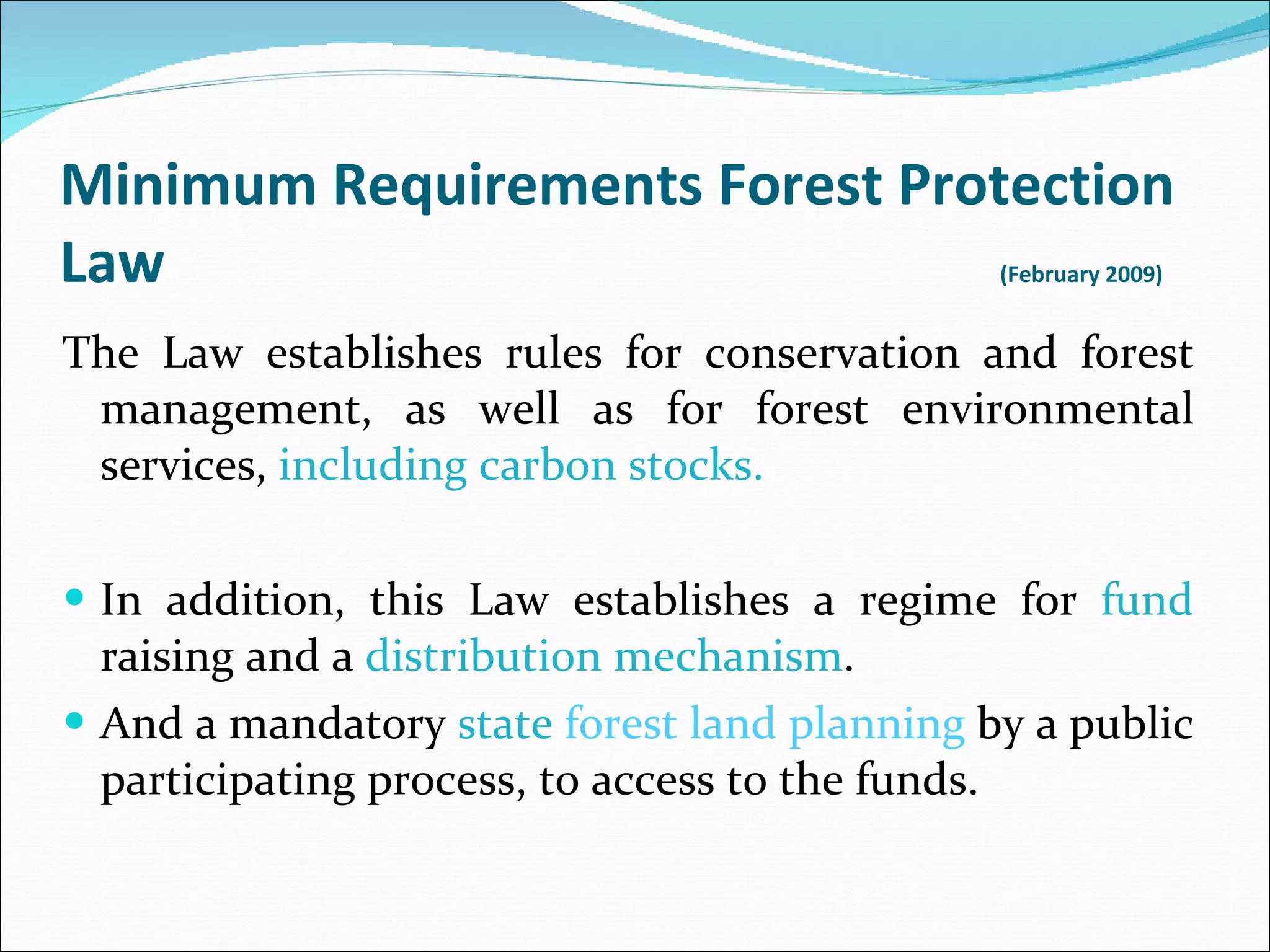
Minimum Requirements Forest Protection Law  ( February  2009)  The Law establishes rules for conservation and forest management, as well as for forest environmental services,  including carbon stocks. In addition, this Law establishes a regime for  fund  raising and a  distribution mechanism . And a mandatory  state  forest land planning  by a public participating process, to access to the funds.
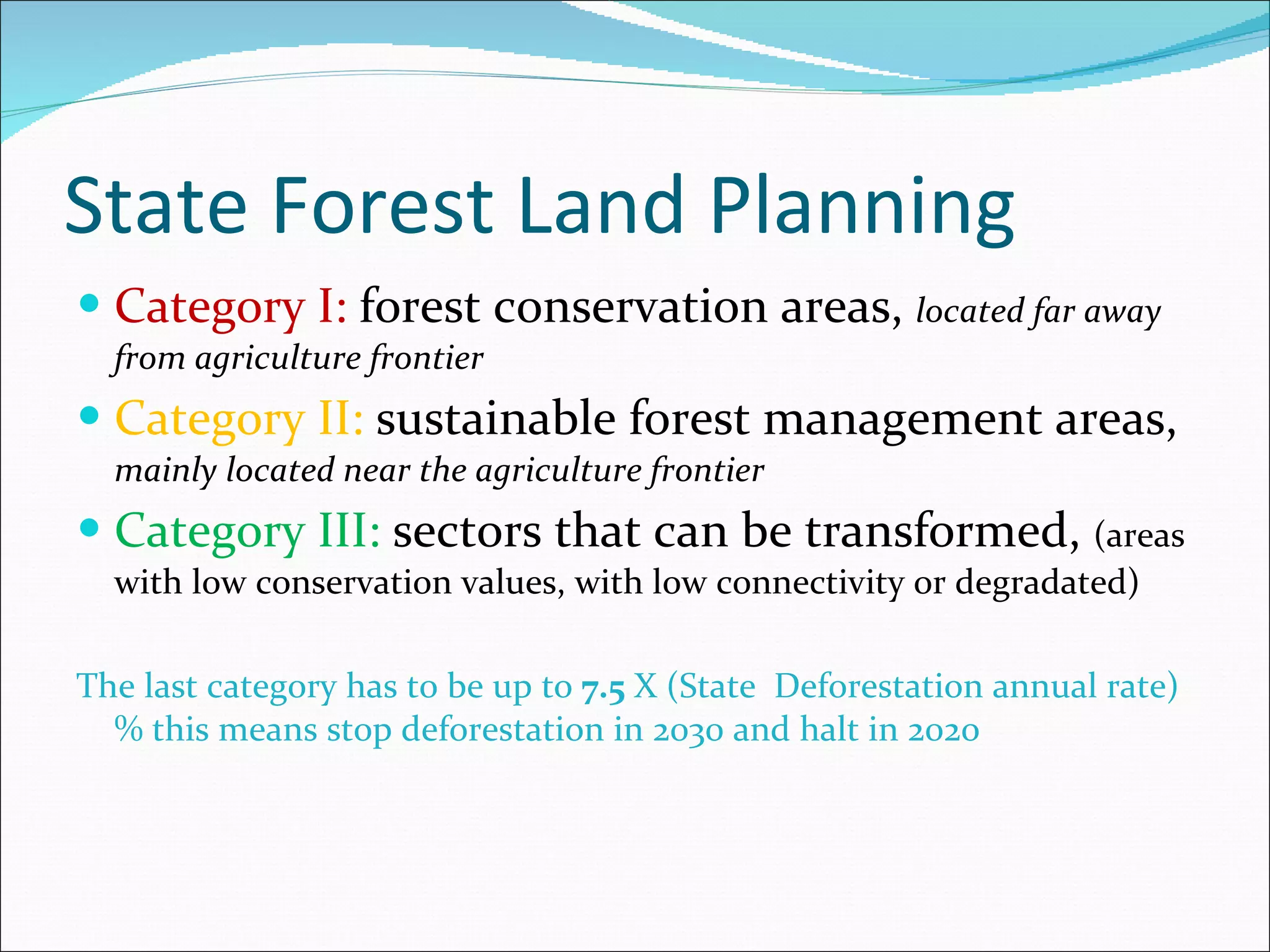
State Forest Land Planning Category I:  forest conservation areas,  located far away from agriculture frontier Category II:  sustainable forest management areas,   mainly located near the agriculture frontier Category III:  sectors that can be transformed,  (areas with low conservation values, with low connectivity or degradated)  The last category has to be up to  7.5  X (State  Deforestation annual rate)% this means stop deforestation in 2030 and halt in 202o
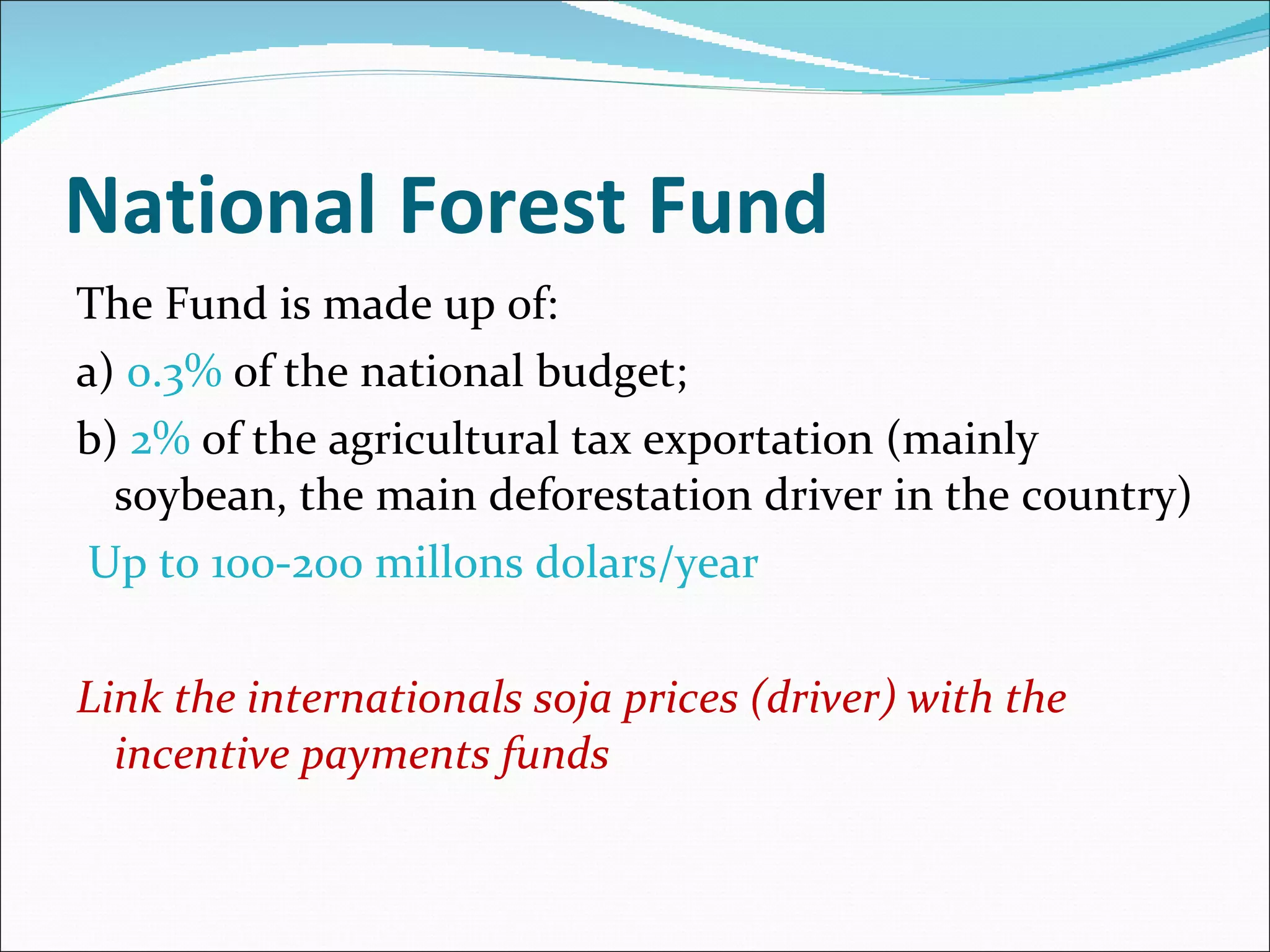
National Forest Fund The Fund is made up of: a)  0.3%  of the  national budget; b)  2%  of the agricultural tax exportation (mainly soybean, the main deforestation driver in the country) Up to 100-200 millons dolars/year Link the internationals soja prices (driver) with the incentive payments funds
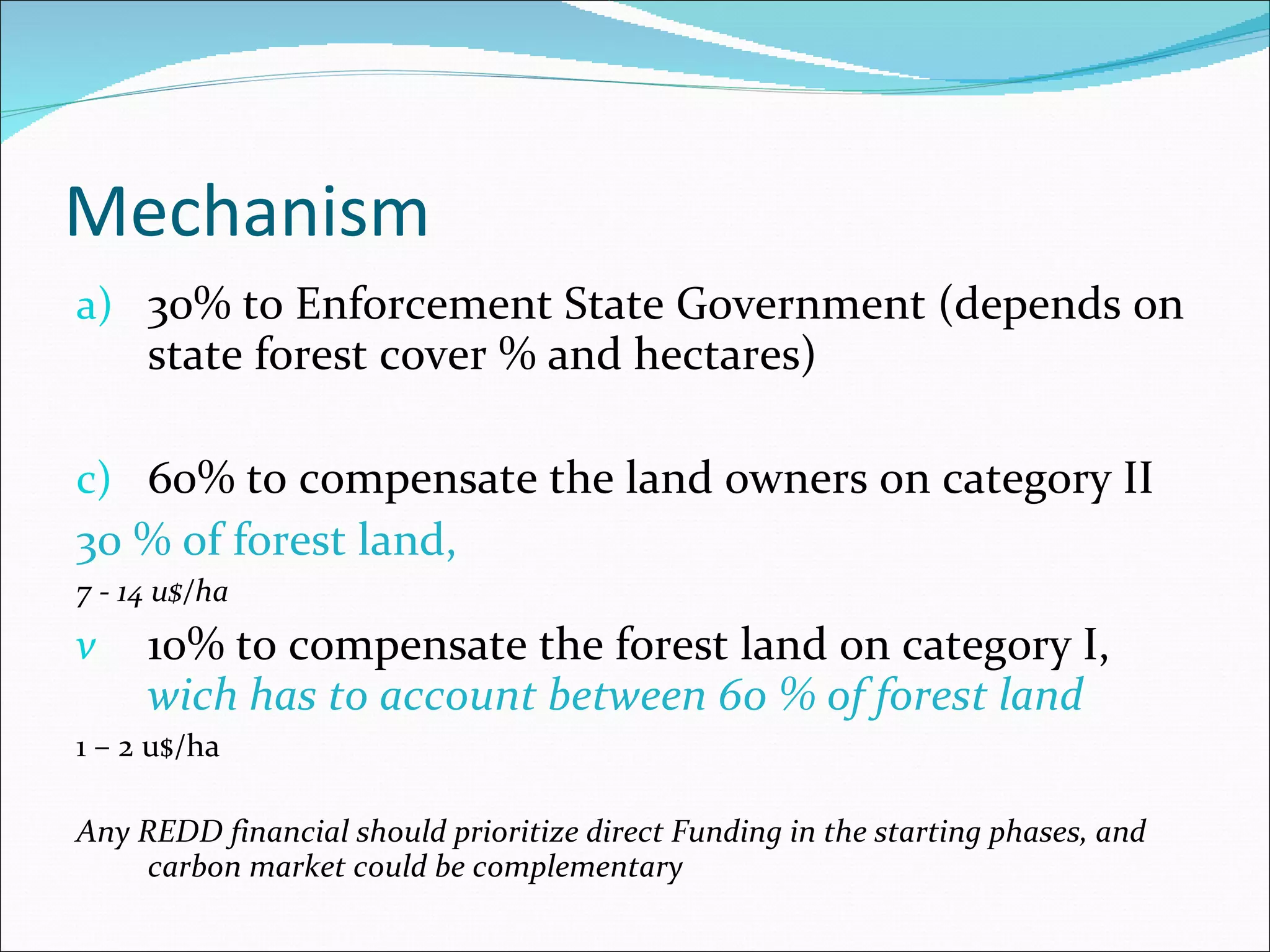
Mechanism  30% to Enforcement State Government (depends on state forest cover % and hectares)  60% to compensate the land owners  on category II  30 % of forest land,  7 - 14 u$/ha 10% to  compensate the forest land on category I,  wich has to account between 60 % of forest land 1 – 2 u$/ha Any REDD financial should prioritize direct Funding in the starting phases, and carbon market could be complementary

Redd leandro fernandez bangkok workshop 1

  • 1.
    Leandro Fernández REDDNational Strategy The FORUM ON READINESS FOR REDD Bangkok Octuber 3th
  • 2.
    ARGENTINE FOREST TOTAL 31.443.873 ha Anual rate of deforestation: 1,63% Source: Forest Inventory 2006 Chaco 21.705.506 ha Mata Atlántica 1.453.381 ha Yungas 3.732.985 ha Patagonia 1.895.254 ha Espinal 2.656.747 ha Monte
  • 3.
    Period Deforested surface(ha) Deforestation Anual rate 1998-2002 432.827 -0.93 2002-2006 806.027 -1.93 2006-2007 316.943 -3.21 2007-2008 136.081 -1.41 1998-2008 1.691.787 -1.63
  • 4.
  • 5.
    Argentina`s priority stepsto be ready Improve the land tenure system ( more than 60% of forest are in private land) but the 40% is remaining under state or communities control without a clear tenure system Establishment of a incentive distribution mechanism
  • 6.
    3 forest governancelevels National Government National laws has only the attribution to set Minimum Requirement, that only fix statements, guidelines or financial incentives about natural resources State Government has the police power jurisdiction on forests and environmental services Program activities and projects That could be considering piloting system for scaling up to eco-regional or state REDD strategies
  • 7.
    Minimum Requirements ForestProtection Law ( February 2009) The Law establishes rules for conservation and forest management, as well as for forest environmental services, including carbon stocks. In addition, this Law establishes a regime for fund raising and a distribution mechanism . And a mandatory state forest land planning by a public participating process, to access to the funds.
  • 8.
    State Forest LandPlanning Category I: forest conservation areas, located far away from agriculture frontier Category II: sustainable forest management areas, mainly located near the agriculture frontier Category III: sectors that can be transformed, (areas with low conservation values, with low connectivity or degradated) The last category has to be up to 7.5 X (State Deforestation annual rate)% this means stop deforestation in 2030 and halt in 202o
  • 9.
    National Forest FundThe Fund is made up of: a) 0.3% of the national budget; b) 2% of the agricultural tax exportation (mainly soybean, the main deforestation driver in the country) Up to 100-200 millons dolars/year Link the internationals soja prices (driver) with the incentive payments funds
  • 10.
    Mechanism 30%to Enforcement State Government (depends on state forest cover % and hectares) 60% to compensate the land owners on category II 30 % of forest land, 7 - 14 u$/ha 10% to compensate the forest land on category I, wich has to account between 60 % of forest land 1 – 2 u$/ha Any REDD financial should prioritize direct Funding in the starting phases, and carbon market could be complementary