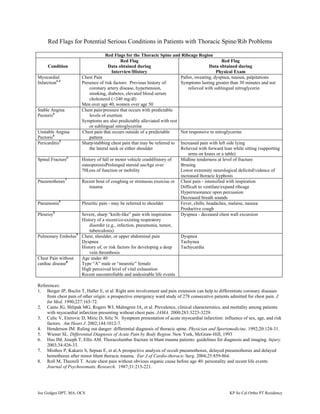
Red Flags for Potential Serious Conditions in Patients with Thoracic Spine/Rib Problems

                                   Red Flags for the Thoracic Spine and Ribcage Region
                                            Red Flag                                            Red Flag
     Condition                       Data obtained during                                Data obtained during
                                       Interview/History                                     Physical Exam
Myocardial            Chest Pain                                         Pallor, sweating, dyspnea, nausea, palpitations
Infarction1-3         Presence of risk factors: Previous history of:     Symptoms lasting greater than 30 minutes and not
                          coronary artery disease, hypertension,             relieved with sublingual nitroglycerin
                          smoking, diabetes, elevated blood serum
                          cholesterol (>240 mg/dl)
                      Men over age 40, women over age 50
Stable Angina         Chest pain/pressure that occurs with predictable
Pectoris4                 levels of exertion
                      Symptoms are also predictably alleviated with rest
                          or sublingual nitroglycerine
Unstable Angina       Chest pain that occurs outside of a predictable    Not responsive to nitroglycerine
Pectoris4                 pattern
Pericarditis5         Sharp/stabbing chest pain that may be referred to Increased pain with left side lying
                          the lateral neck or either shoulder            Relieved with forward lean while sitting (supporting
                                                                             arms on knees or a table)
Spinal Fracture6      History of fall or motor vehicle crashHistory of   Midline tenderness at level of fracture
                      osteoporosisProlonged steroid useAge over          Brusing
                      70Loss of function or mobility                     Lower extremity neurological deficitsEvidence of
                                                                         increased thoracic kyphosis
Pneumothorax7         Recent bout of coughing or strenuous exercise or Chest pain - intensified with inspiration
                          trauma                                         Difficult to ventilate/expand ribcage
                                                                         Hyperresonance upon percussion
                                                                         Decreased breath sounds
Pneumonia5            Pleuritic pain - may be referred to shoulder       Fever, chills, headaches, malaise, nausea
                                                                         Productive cough
Pleurisy5             Severe, sharp “knife-like” pain with inspiration   Dyspnea - deceased chest wall excursion
                      History of a recent/co-existing respiratory
                          disorder (e.g., infection, pneumonia, tumor,
                          tuberculosis)
Pulmonary Embolus5    Chest, shoulder, or upper abdominal pain           Dyspnea
                      Dyspnea                                            Tachynea
                      History of, or risk factors for developing a deep  Tachycardia
                          vein thrombosis
Chest Pain without    Age under 40
cardiac disease8      Type “A” male or “neurotic” female
                      High perceived level of vital exhaustion
                      Recent uncontrollable and undesirable life events

References:
1. Berger JP, Buclin T, Haller E, et al. Right arm involvement and pain extension can help to differentiate coronary diseases
    from chest pain of other origin: a prospective emergency ward study of 278 consecutive patients admitted for chest pain. J
    Int Med. 1990;227:165-72.
2. Canto JG, Shlipak MG, Rogers WJ, Malmgren JA, et al. Prevalence, clinical characteristics, and mortality among patients
    with myocardial infarction presenting without chest pain. JAMA. 2000;283:3223-3229.
3. Culic V, Eterovic D, Miric D, Silic N. Symptom presentation of acute myocardial infarction: influence of sex, age, and risk
    factors. Am Heart J. 2002;144:1012-7.
4. Henderson JM. Ruling out danger: differential diagnosis of thoracic spine. Physician and Sportsmedicine. 1992;20:124-31.
5. Wiener SL. Differential Diagnosis of Acute Pain by Body Region. New York, McGraw-Hill, 1993
6. Hsu JM, Joseph T, Ellis AM. Thoracolumbar fracture in blunt trauma patients: guidelines for diagnosis and imaging. Injury.
    2003;34:426-33.
7. Misthos P, Kakaris S, Sepsas E, et al.A prospective analysis of occult pneumothorax, delayed pneumothorax and delayed
    hemothorax after minor blunt thoracic trauma. Eur J of Cardio-thoracic Surg. 2004;25:859-864.
8. Roll M, Theorell T. Acute chest pain without obvious organic cause before age 40: personality and recent life events.
    Journal of Psychosomatic Research. 1987;31:215-221.


Joe Godges DPT, MA, OCS                                                                            KP So Cal Ortho PT Residency

Red Flag Chest Pain

  • 1.
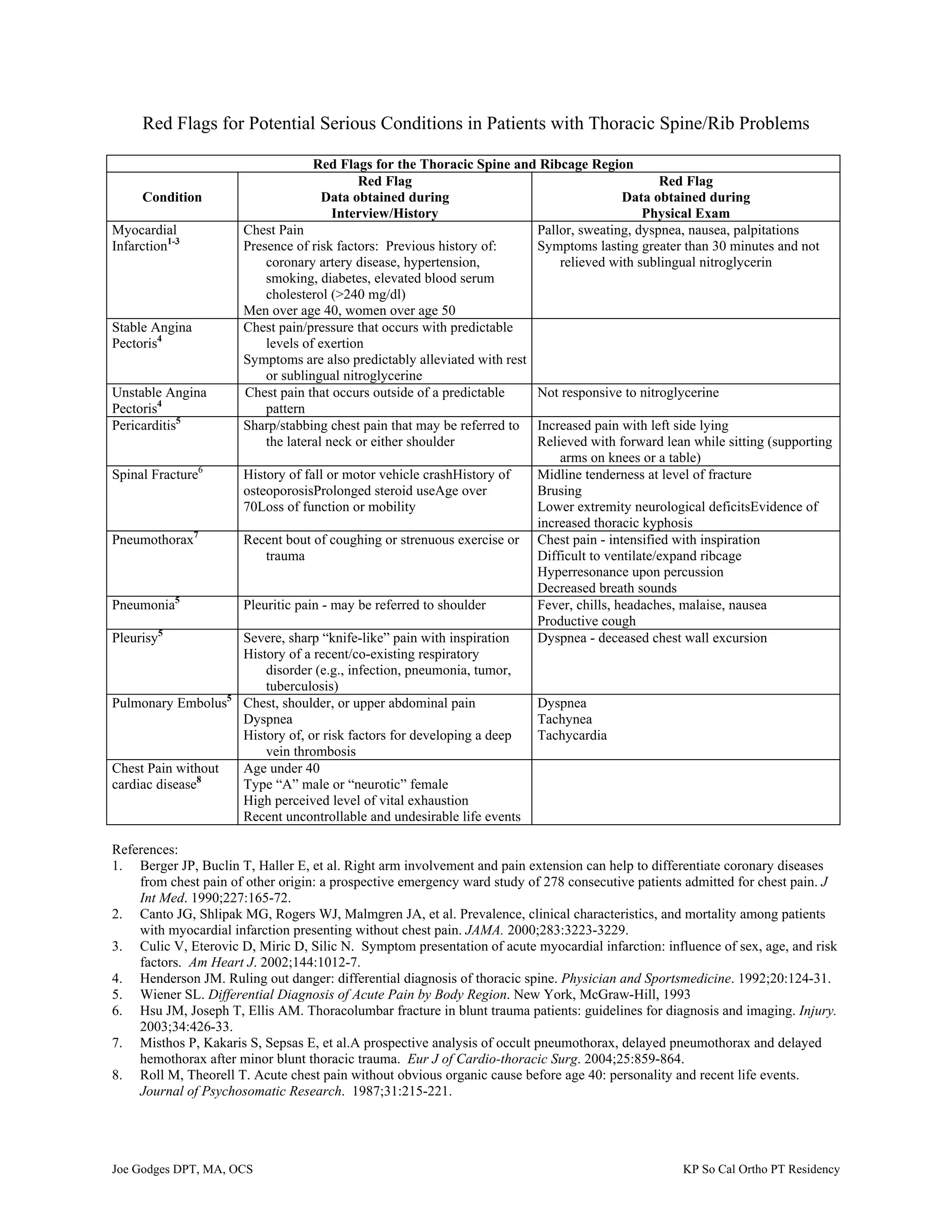
    Red Flags forPotential Serious Conditions in Patients with Thoracic Spine/Rib Problems Red Flags for the Thoracic Spine and Ribcage Region Red Flag Red Flag Condition Data obtained during Data obtained during Interview/History Physical Exam Myocardial Chest Pain Pallor, sweating, dyspnea, nausea, palpitations Infarction1-3 Presence of risk factors: Previous history of: Symptoms lasting greater than 30 minutes and not coronary artery disease, hypertension, relieved with sublingual nitroglycerin smoking, diabetes, elevated blood serum cholesterol (>240 mg/dl) Men over age 40, women over age 50 Stable Angina Chest pain/pressure that occurs with predictable Pectoris4 levels of exertion Symptoms are also predictably alleviated with rest or sublingual nitroglycerine Unstable Angina Chest pain that occurs outside of a predictable Not responsive to nitroglycerine Pectoris4 pattern Pericarditis5 Sharp/stabbing chest pain that may be referred to Increased pain with left side lying the lateral neck or either shoulder Relieved with forward lean while sitting (supporting arms on knees or a table) Spinal Fracture6 History of fall or motor vehicle crashHistory of Midline tenderness at level of fracture osteoporosisProlonged steroid useAge over Brusing 70Loss of function or mobility Lower extremity neurological deficitsEvidence of increased thoracic kyphosis Pneumothorax7 Recent bout of coughing or strenuous exercise or Chest pain - intensified with inspiration trauma Difficult to ventilate/expand ribcage Hyperresonance upon percussion Decreased breath sounds Pneumonia5 Pleuritic pain - may be referred to shoulder Fever, chills, headaches, malaise, nausea Productive cough Pleurisy5 Severe, sharp “knife-like” pain with inspiration Dyspnea - deceased chest wall excursion History of a recent/co-existing respiratory disorder (e.g., infection, pneumonia, tumor, tuberculosis) Pulmonary Embolus5 Chest, shoulder, or upper abdominal pain Dyspnea Dyspnea Tachynea History of, or risk factors for developing a deep Tachycardia vein thrombosis Chest Pain without Age under 40 cardiac disease8 Type “A” male or “neurotic” female High perceived level of vital exhaustion Recent uncontrollable and undesirable life events References: 1. Berger JP, Buclin T, Haller E, et al. Right arm involvement and pain extension can help to differentiate coronary diseases from chest pain of other origin: a prospective emergency ward study of 278 consecutive patients admitted for chest pain. J Int Med. 1990;227:165-72. 2. Canto JG, Shlipak MG, Rogers WJ, Malmgren JA, et al. Prevalence, clinical characteristics, and mortality among patients with myocardial infarction presenting without chest pain. JAMA. 2000;283:3223-3229. 3. Culic V, Eterovic D, Miric D, Silic N. Symptom presentation of acute myocardial infarction: influence of sex, age, and risk factors. Am Heart J. 2002;144:1012-7. 4. Henderson JM. Ruling out danger: differential diagnosis of thoracic spine. Physician and Sportsmedicine. 1992;20:124-31. 5. Wiener SL. Differential Diagnosis of Acute Pain by Body Region. New York, McGraw-Hill, 1993 6. Hsu JM, Joseph T, Ellis AM. Thoracolumbar fracture in blunt trauma patients: guidelines for diagnosis and imaging. Injury. 2003;34:426-33. 7. Misthos P, Kakaris S, Sepsas E, et al.A prospective analysis of occult pneumothorax, delayed pneumothorax and delayed hemothorax after minor blunt thoracic trauma. Eur J of Cardio-thoracic Surg. 2004;25:859-864. 8. Roll M, Theorell T. Acute chest pain without obvious organic cause before age 40: personality and recent life events. Journal of Psychosomatic Research. 1987;31:215-221. Joe Godges DPT, MA, OCS KP So Cal Ortho PT Residency