
1 
Conversion Rate Optimisation and 
Analytics 
Andrew Furlong 
RedEye
Source: Econsultancy/RedEye CRO Report 2013 2 
Agenda 
• Why is Conversion Rate Optimisation so important 
• What makes up the CRO toolkit 
• Process and Analysis 
• Maturity model
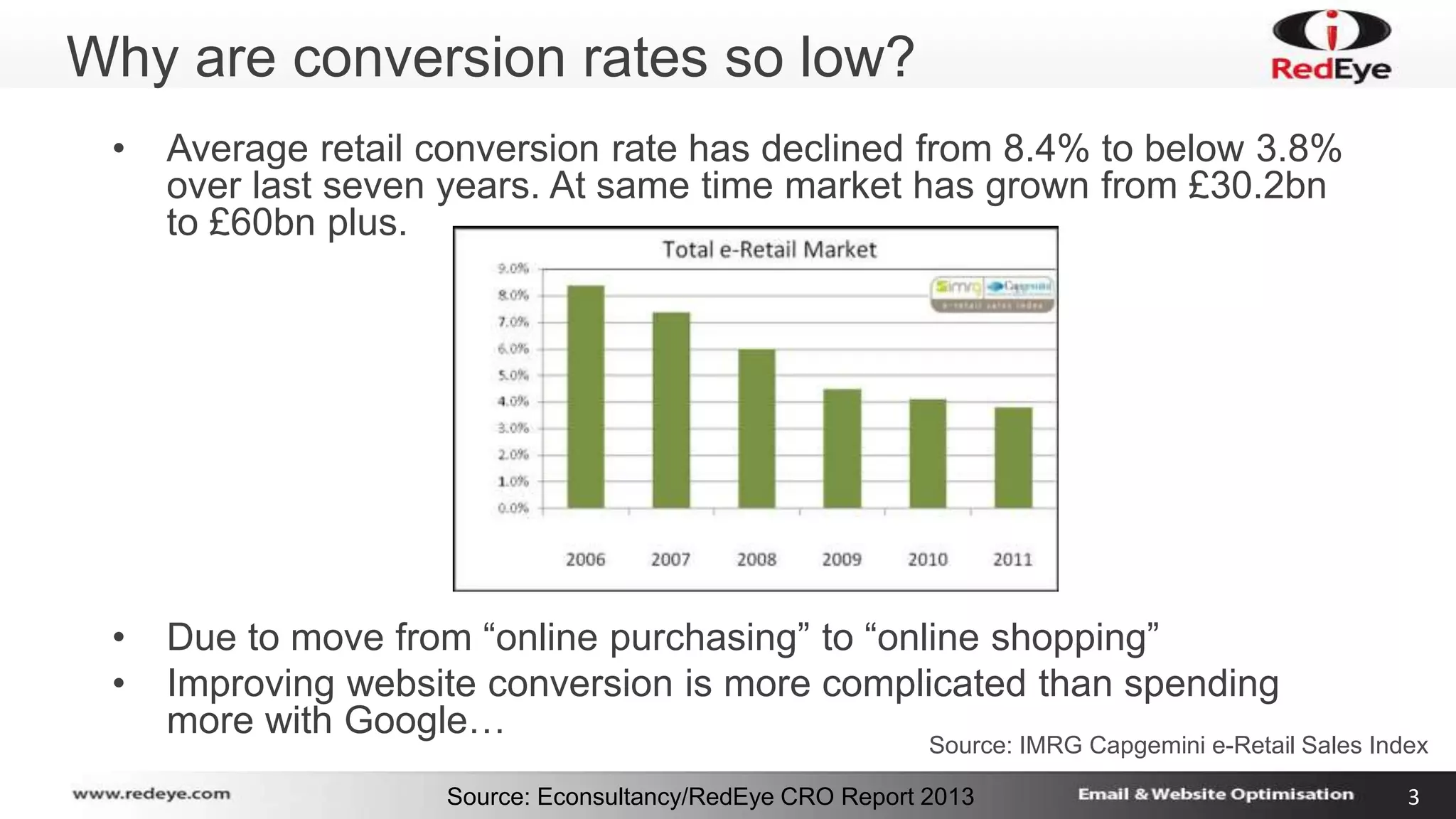
Why are conversion rates so low? 
• Average retail conversion rate has declined from 8.4% to below 3.8% 
over last seven years. At same time market has grown from £30.2bn 
to £60bn plus. 
• Due to move from “online purchasing” to “online shopping” 
• Improving website conversion is more complicated than spending 
more with Google… 
Source: IMRG Capgemini e-Retail Sales Index 
Source: Econsultancy/RedEye CRO Report 2013 3
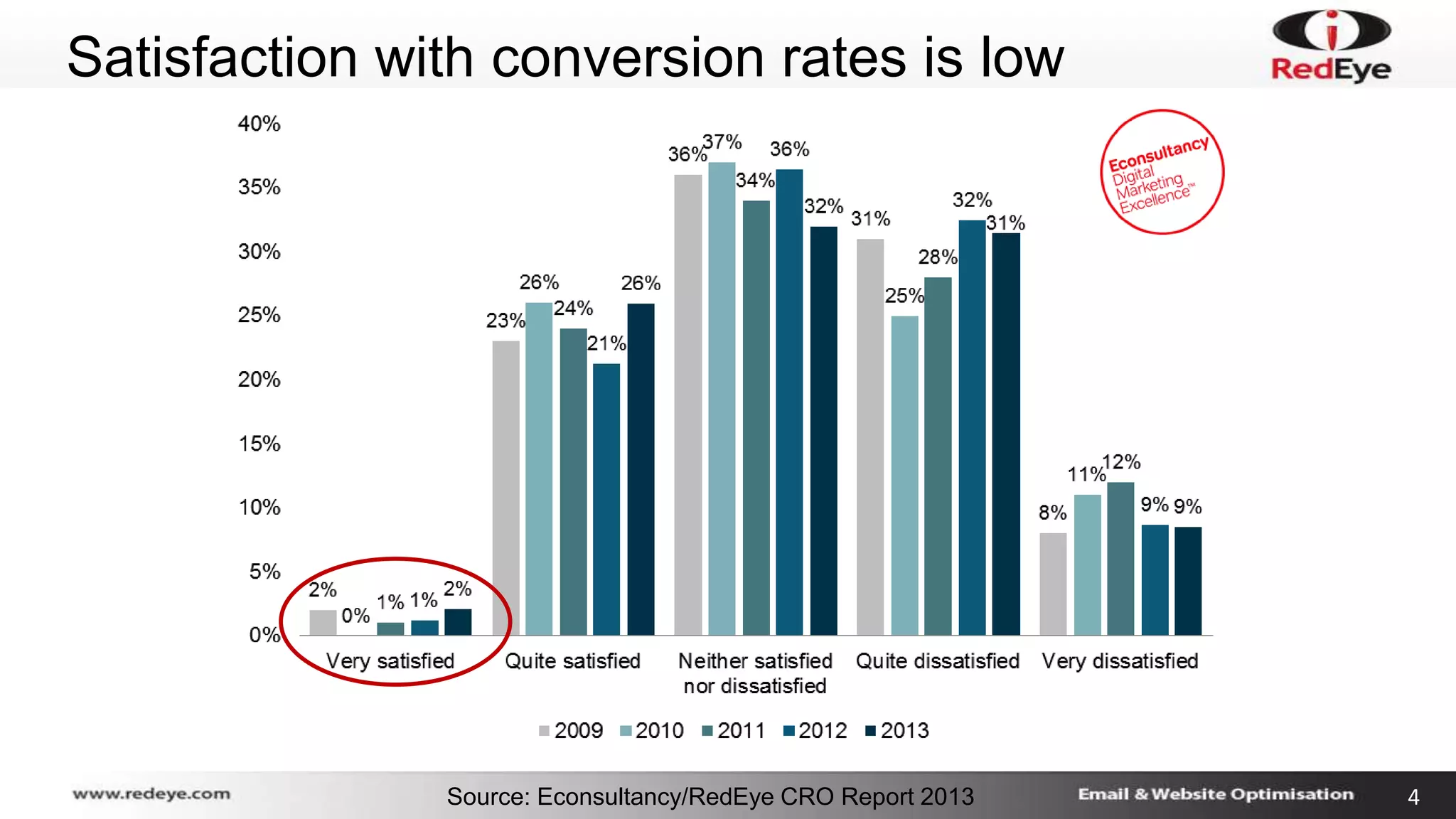
Satisfaction with conversion rates is low 
Source: Econsultancy/RedEye CRO Report 2013 4
5 
Conversion rate optimisation spend is low 
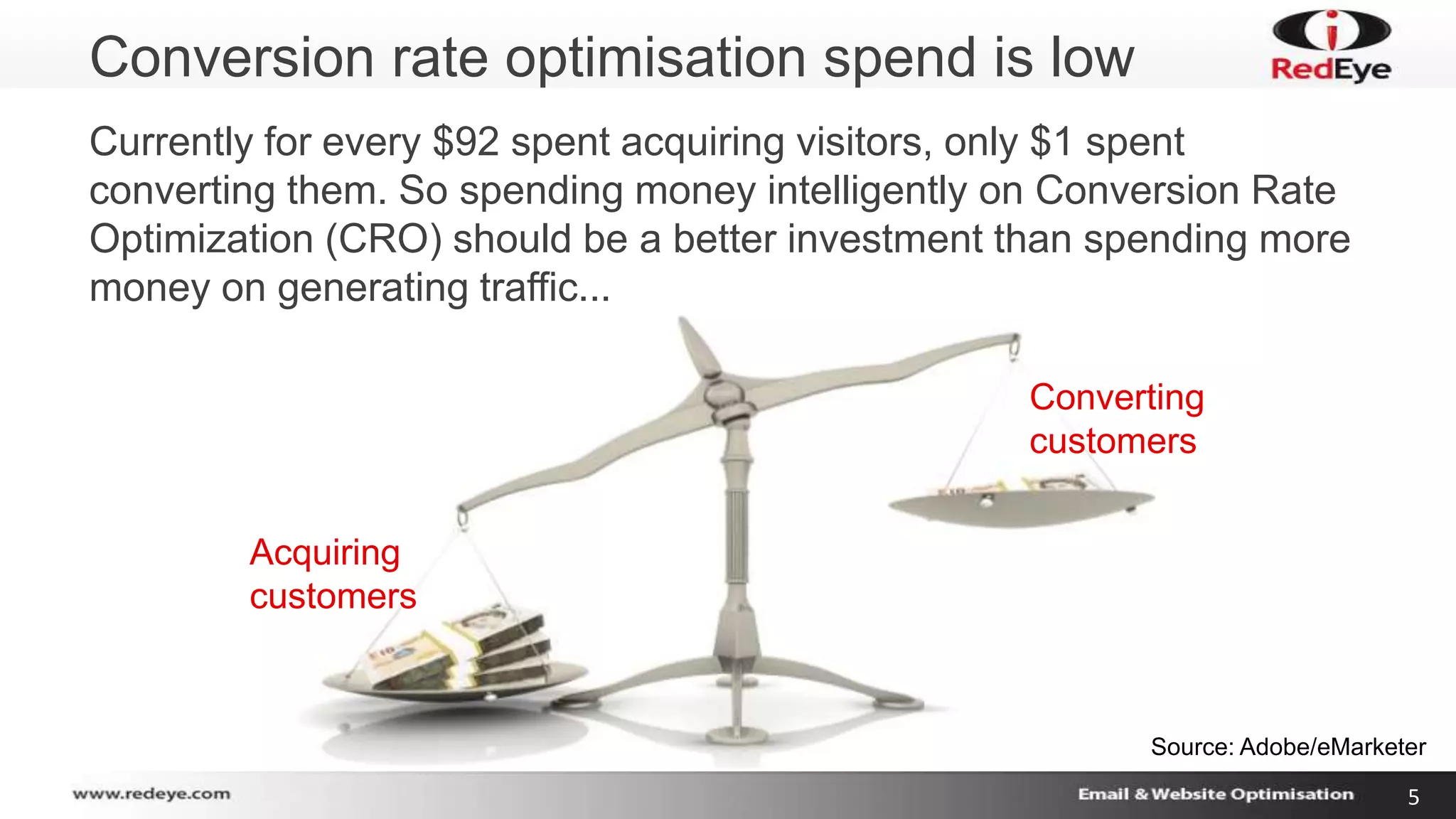
Currently for every $92 spent acquiring visitors, only $1 spent 
converting them. So spending money intelligently on Conversion Rate 
Optimization (CRO) should be a better investment than spending more 
money on generating traffic... 
Acquiring 
customers 
Converting 
customers 
Source: Adobe/eMarketer
Source: Econsultancy/RedEye CRO Report 2013 6 
Agenda 
• Why is Conversion Rate Optimisation so important 
• What makes up the CRO toolkit 
• Process and Analysis 
• Maturity model
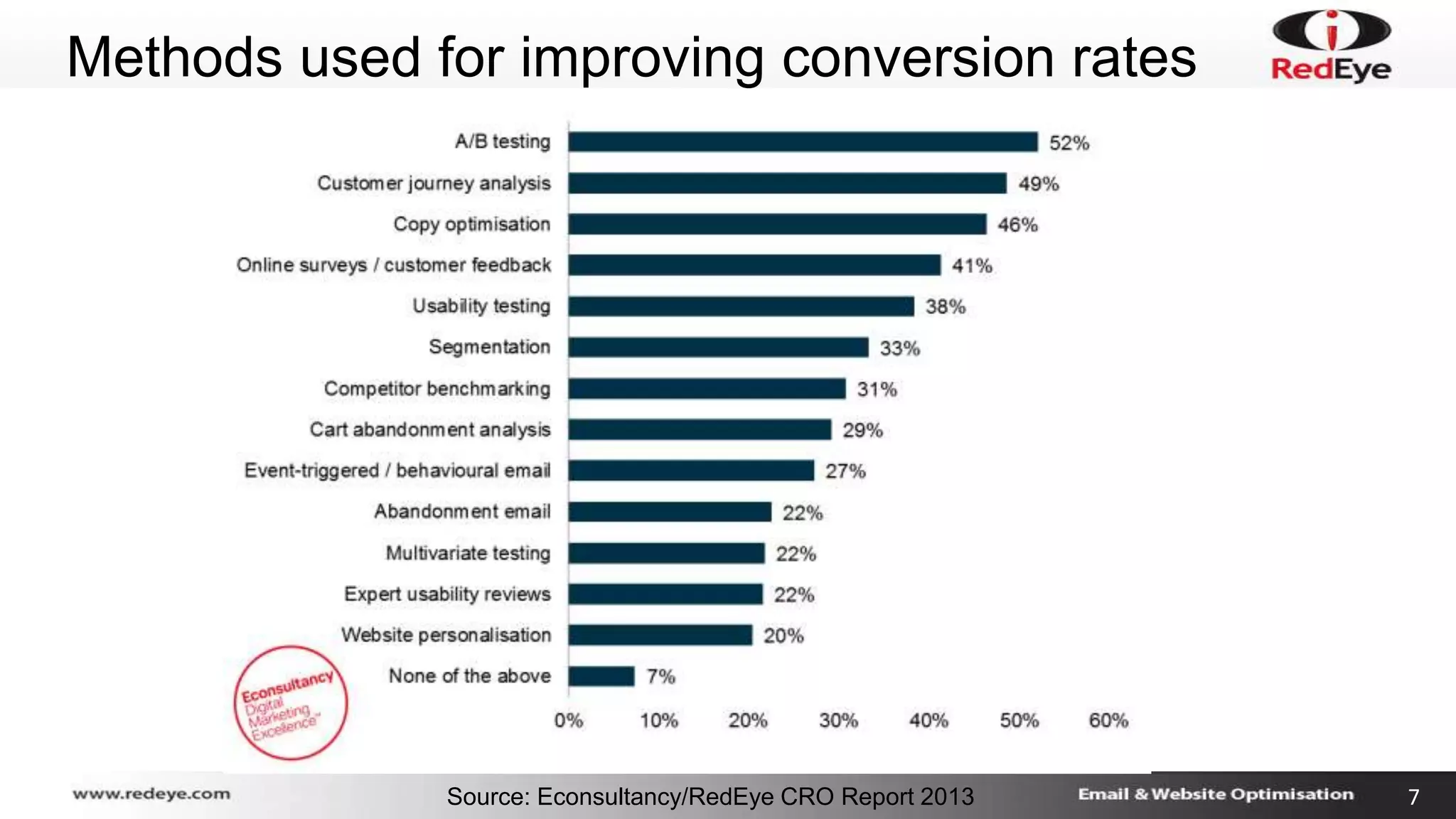
Methods used for improving conversion rates 
Source: Econsultancy/RedEye CRO Report 2013 7
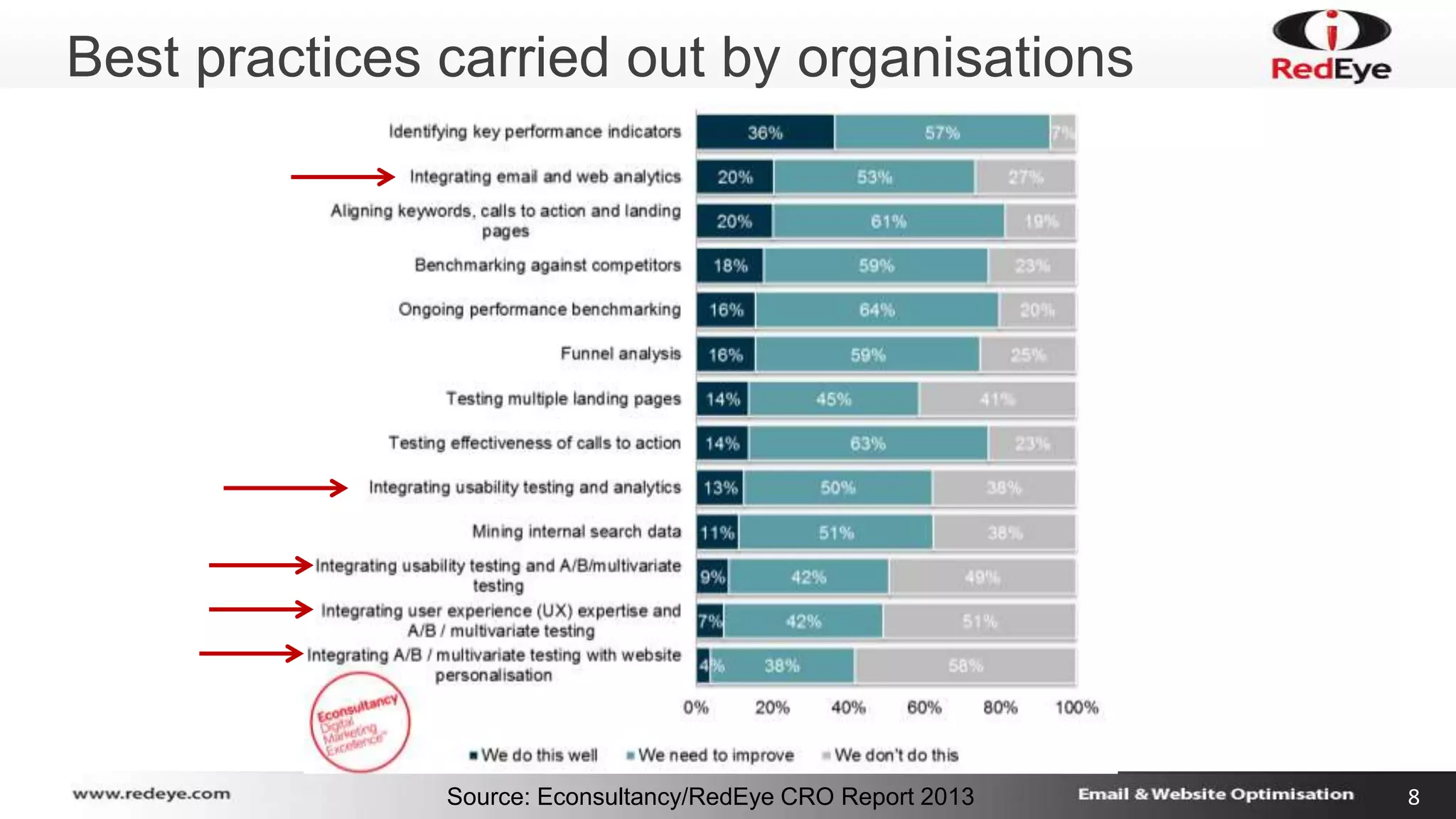
Best practices carried out by organisations 
Source: Econsultancy/RedEye CRO Report 2013 8
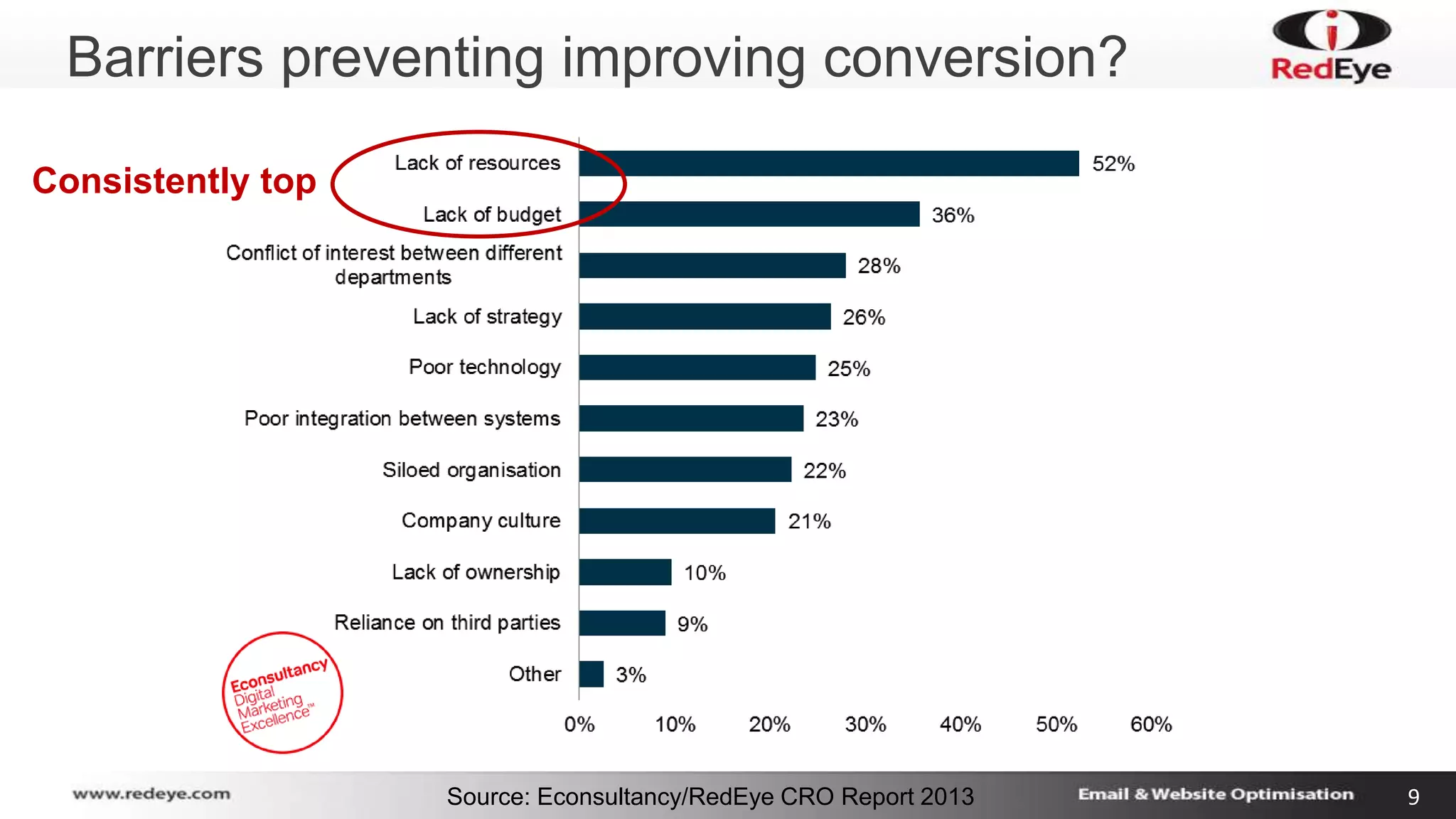
Barriers preventing improving conversion? 
Source: Econsultancy/RedEye CRO Report 2013 9 
Consistently top
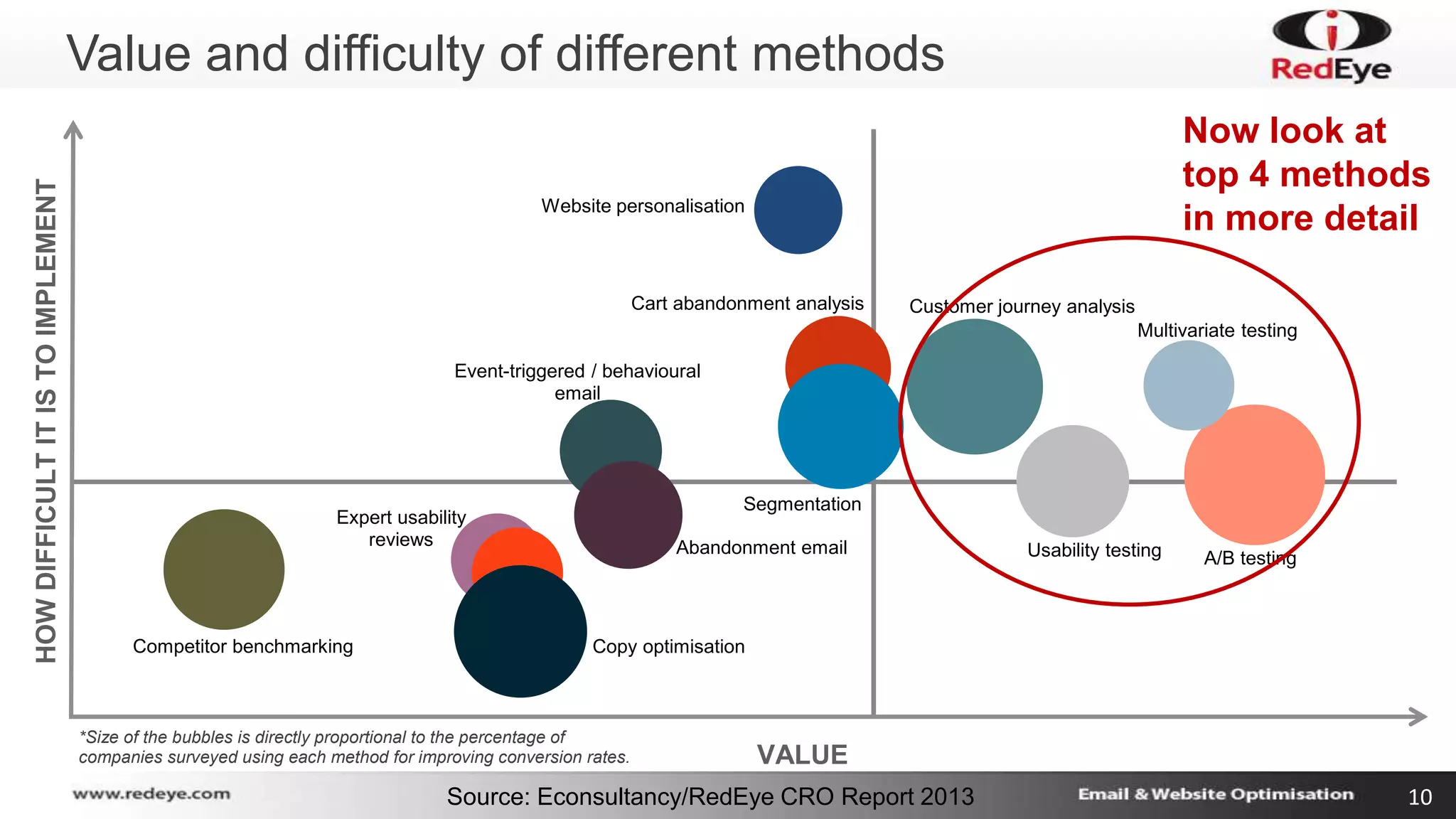
Value and difficulty of different methods 
Website personalisation 
Event-triggered / behavioural 
email 
Expert usability 
*Size of the bubbles is directly proportional to the percentage of 
companies surveyed using each method for improving conversion rates. 
A/B testing 
Cart abandonment analysis 
Source: Econsultancy/RedEye CRO Report 2013 10 
reviews 
Multivariate testing 
Segmentation 
Usability testing 
Competitor benchmarking 
Abandonment email 
Copy optimisation 
Customer journey analysis 
HOW DIFFICULT IT IS TO IMPLEMENT 
VALUE 
Now look at 
top 4 methods 
in more detail
Customer Journey Analysis 
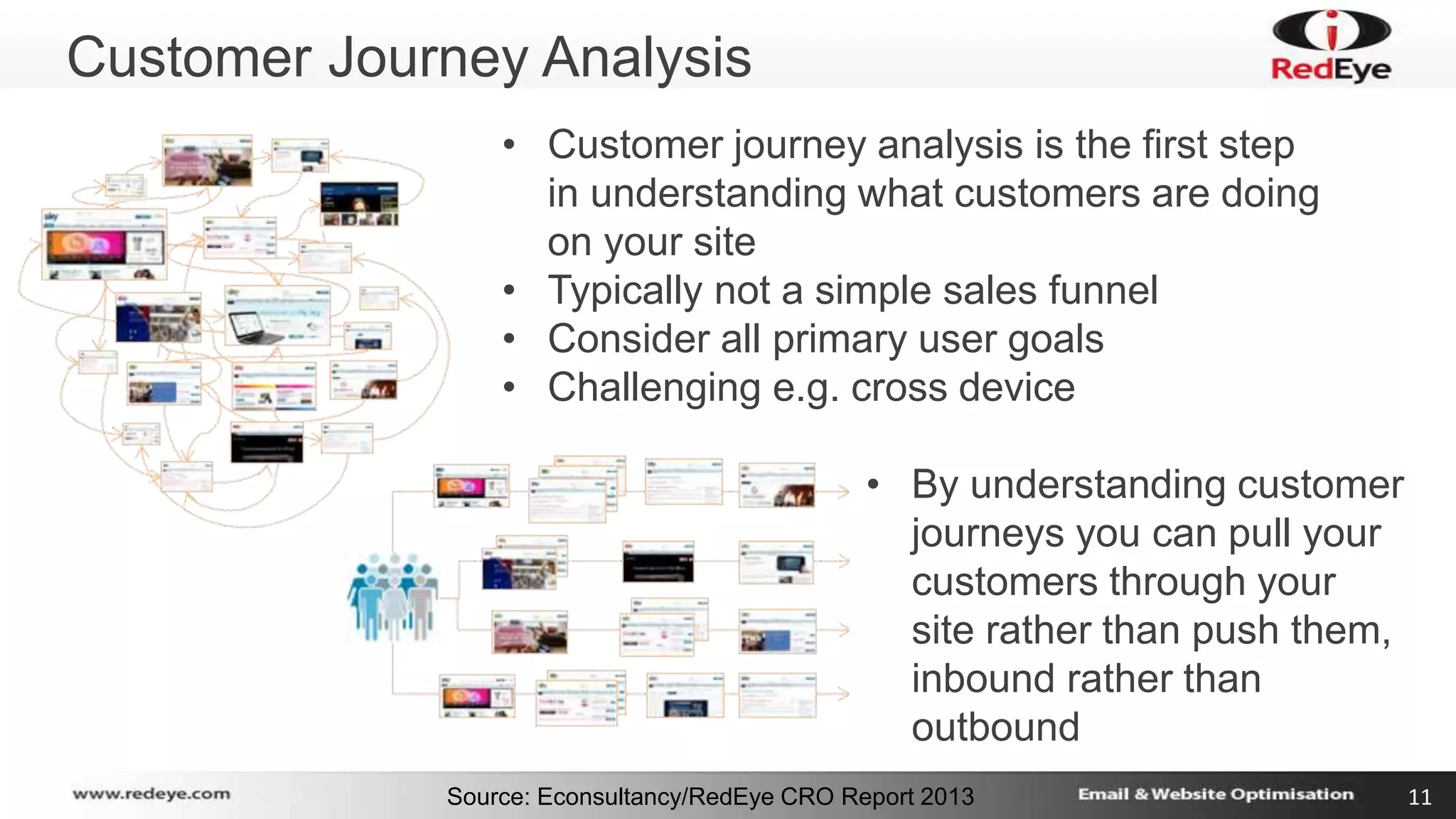
• Customer journey analysis is the first step 
in understanding what customers are doing 
on your site 
• Typically not a simple sales funnel 
• Consider all primary user goals 
• Challenging e.g. cross device 
• By understanding customer 
journeys you can pull your 
customers through your 
site rather than push them, 
inbound rather than 
outbound 
Source: Econsultancy/RedEye CRO Report 2013 11
Source: Econsultancy/RedEye CRO Report 2013 12 
Usability testing 
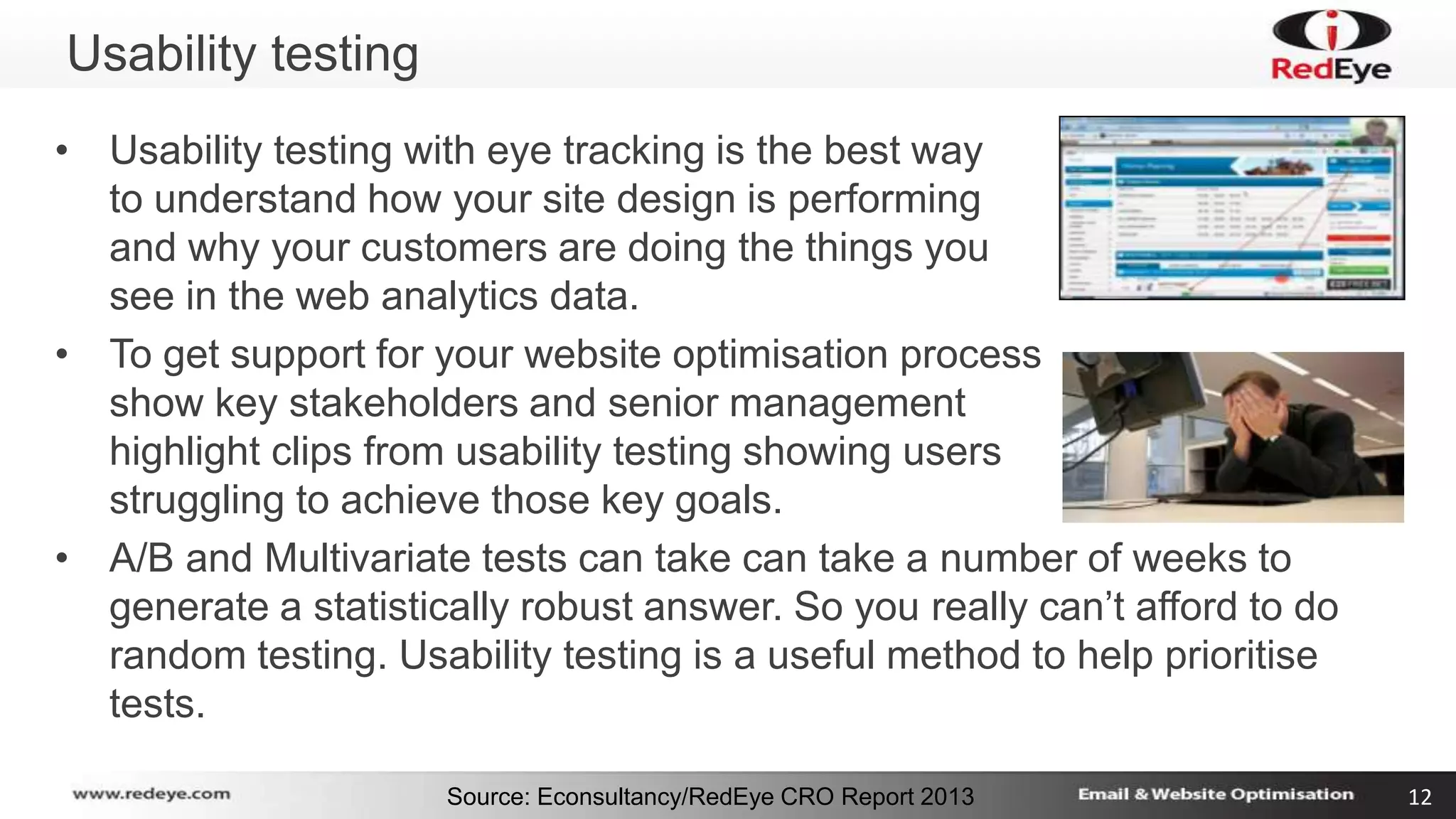
• Usability testing with eye tracking is the best way 
to understand how your site design is performing 
and why your customers are doing the things you 
see in the web analytics data. 
• To get support for your website optimisation process 
show key stakeholders and senior management 
highlight clips from usability testing showing users 
struggling to achieve those key goals. 
• A/B and Multivariate tests can take can take a number of weeks to 
generate a statistically robust answer. So you really can’t afford to do 
random testing. Usability testing is a useful method to help prioritise 
tests.
Source: Econsultancy/RedEye CRO Report 2013 13 
Testing 
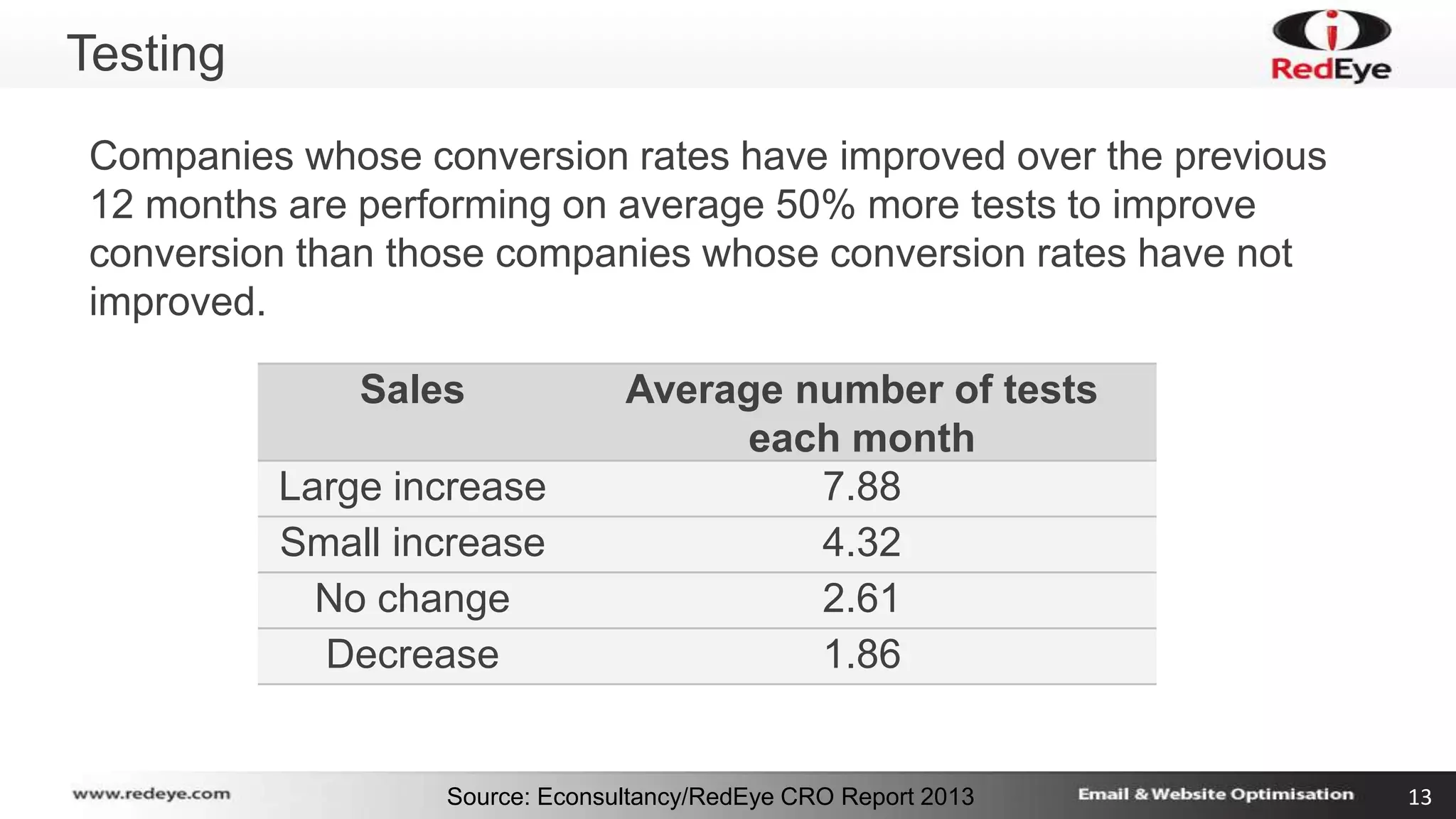
Companies whose conversion rates have improved over the previous 
12 months are performing on average 50% more tests to improve 
conversion than those companies whose conversion rates have not 
improved. 
Sales Average number of tests 
each month 
Large increase 7.88 
Small increase 4.32 
No change 2.61 
Decrease 1.86
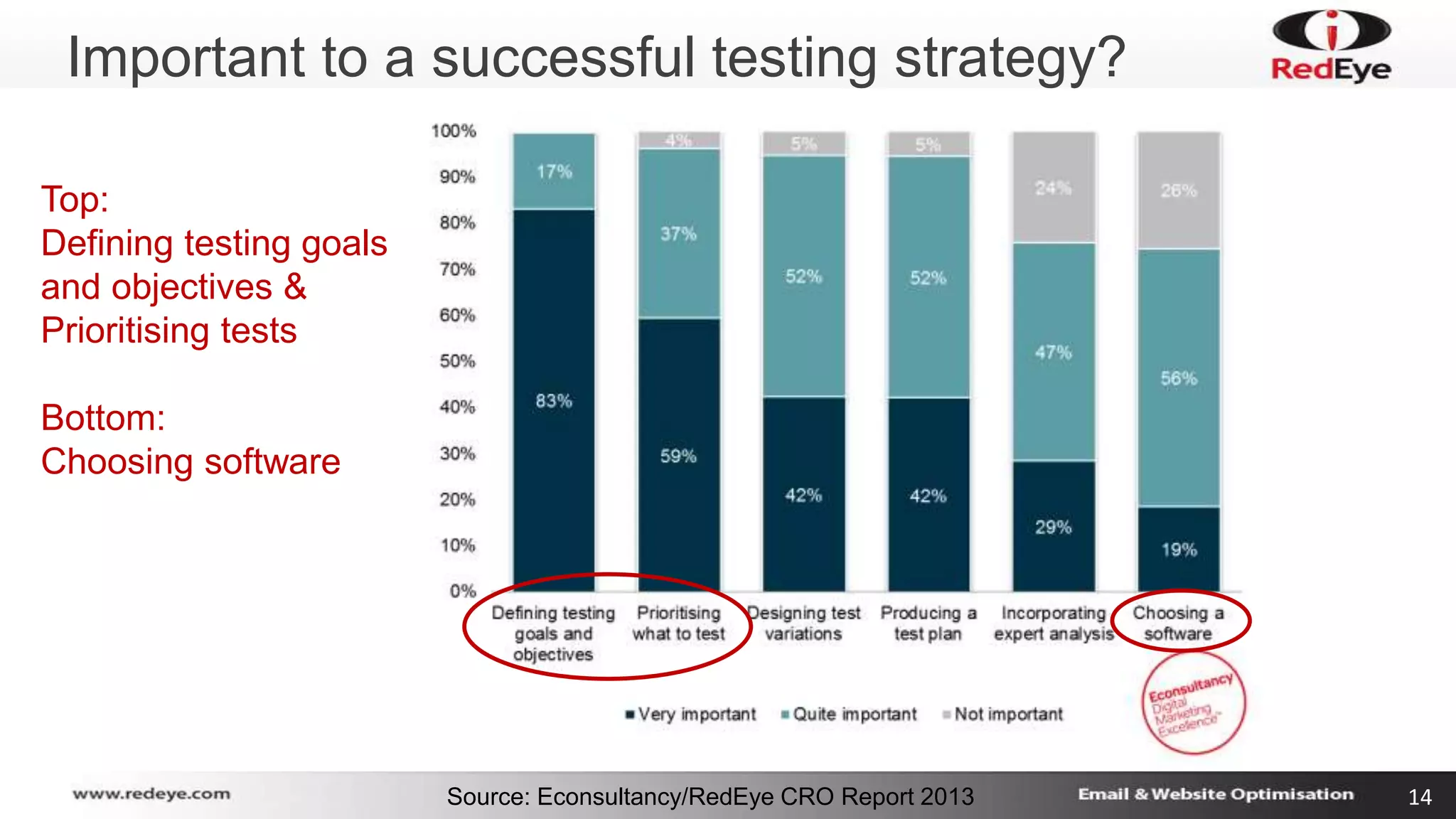
Important to a successful testing strategy? 
Source: Econsultancy/RedEye CRO Report 2013 14 
Top: 
Defining testing goals 
and objectives & 
Prioritising tests 
Bottom: 
Choosing software
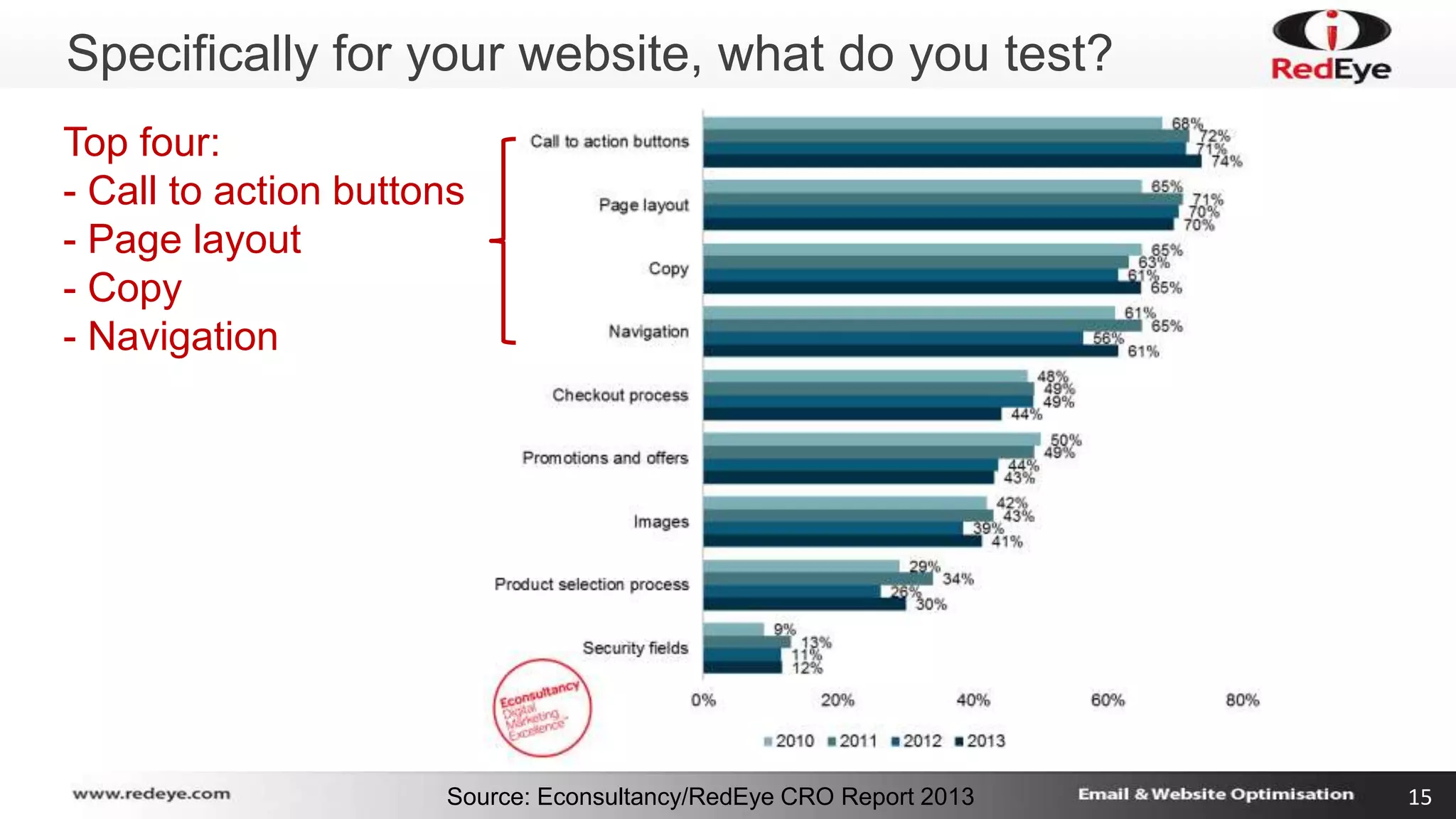
Specifically for your website, what do you test? 
Top four: 
- Call to action buttons 
- Page layout 
- Copy 
- Navigation 
Source: Econsultancy/RedEye CRO Report 2013 15
Source: Econsultancy/RedEye CRO Report 2013 16 
Agenda 
• Why is Conversion Rate Optimisation so important 
• What makes up the CRO toolkit 
• Process and Analysis 
• Maturity model
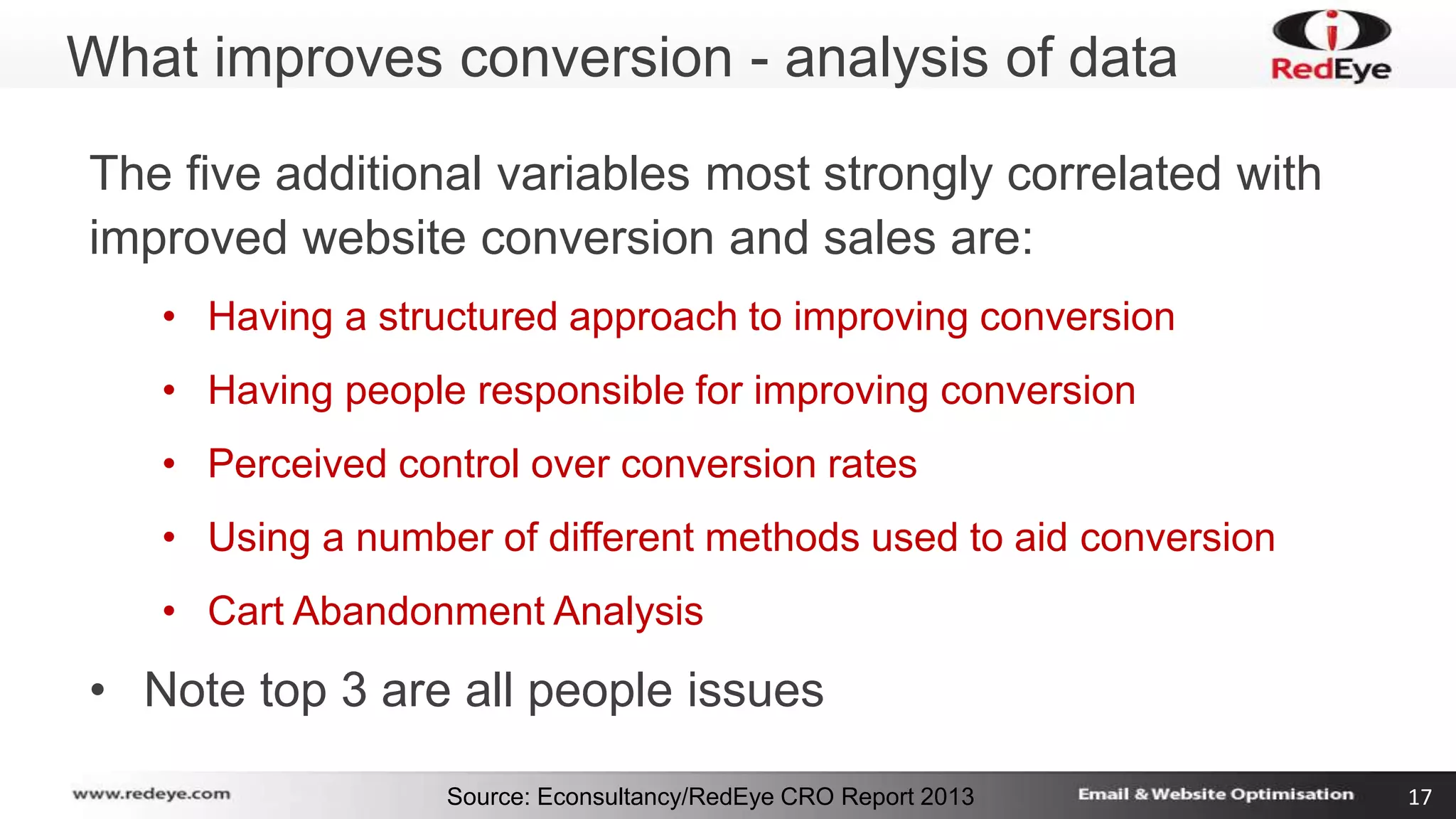
What improves conversion - analysis of data 
The five additional variables most strongly correlated with 
improved website conversion and sales are: 
• Having a structured approach to improving conversion 
• Having people responsible for improving conversion 
• Perceived control over conversion rates 
• Using a number of different methods used to aid conversion 
• Cart Abandonment Analysis 
• Note top 3 are all people issues 
Source: Econsultancy/RedEye CRO Report 2013 17
18 
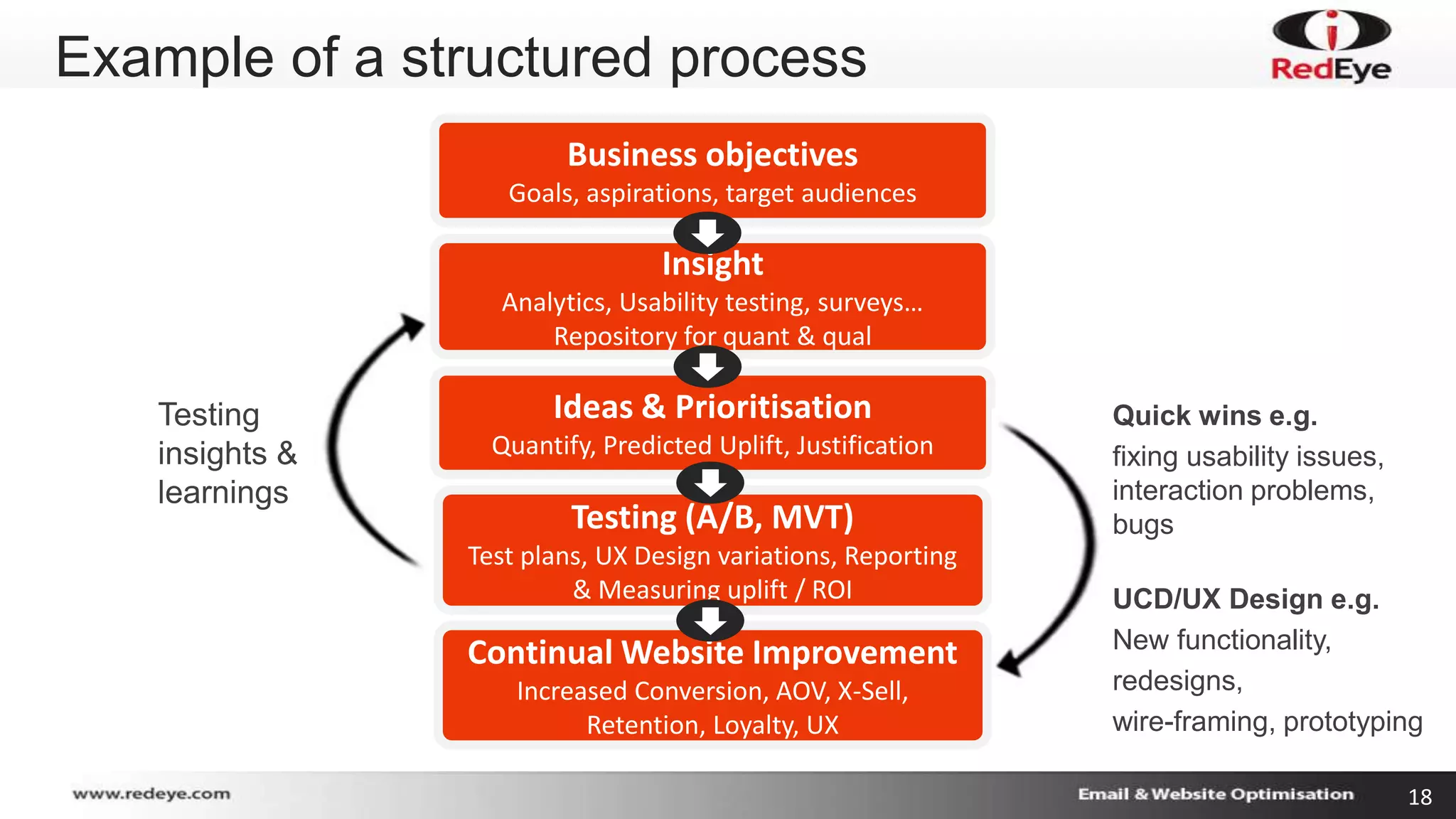
Business objectives 
Goals, aspirations, target audiences 
Insight 
Analytics, Usability testing, surveys… 
Repository for quant & qual 
Ideas & Prioritisation 
Quantify, Predicted Uplift, Justification 
Testing (A/B, MVT) 
Test plans, UX Design variations, Reporting 
& Measuring uplift / ROI 
Continual Website Improvement 
Increased Conversion, AOV, X-Sell, 
Retention, Loyalty, UX 
Testing 
insights & 
learnings 
Quick wins e.g. 
fixing usability issues, 
interaction problems, 
bugs 
UCD/UX Design e.g. 
New functionality, 
redesigns, 
wire-framing, prototyping 
Example of a structured process
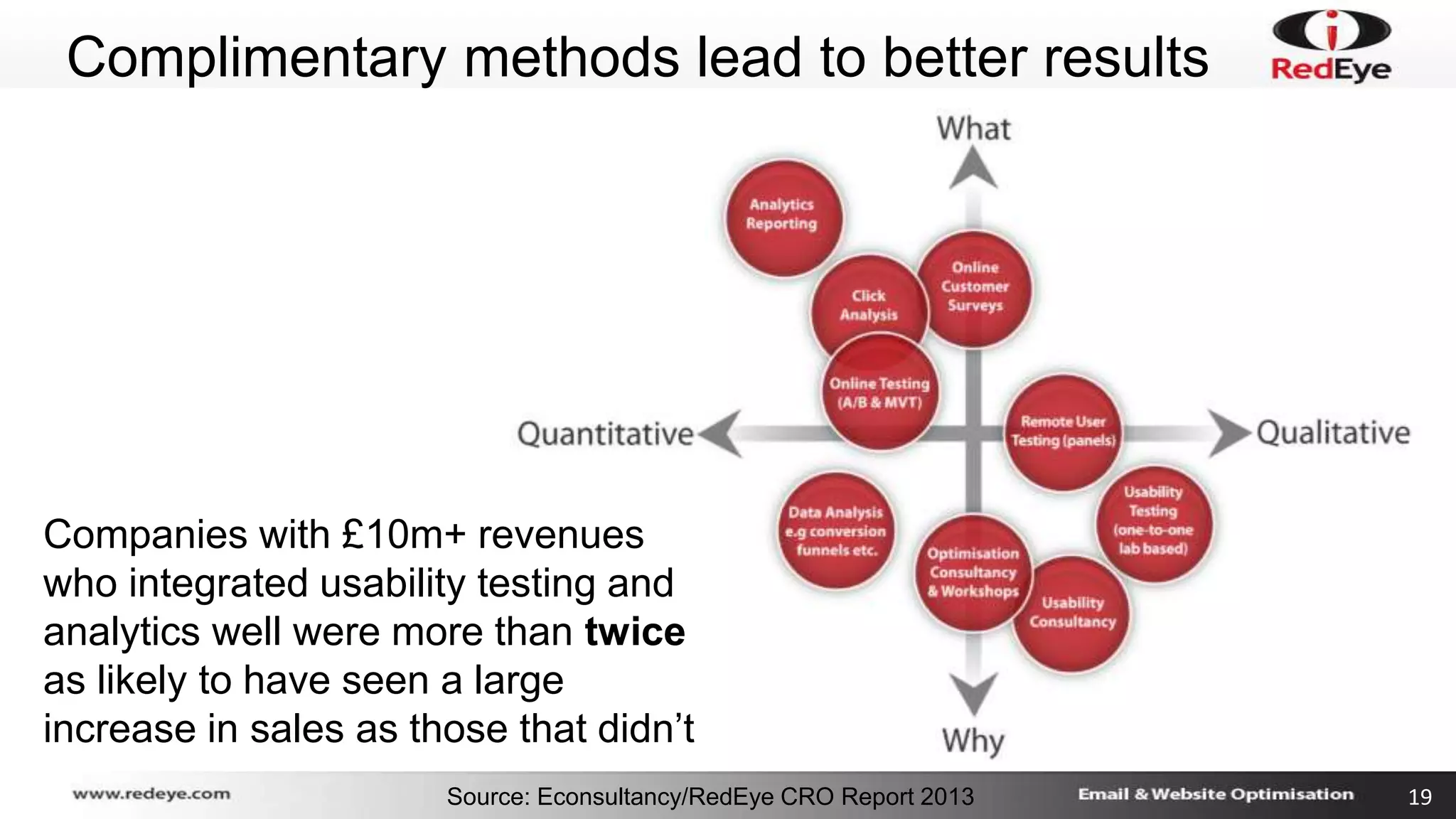
Complimentary methods lead to better results 
Companies with £10m+ revenues 
who integrated usability testing and 
analytics well were more than twice 
as likely to have seen a large 
increase in sales as those that didn’t 
Source: Econsultancy/RedEye CRO Report 2013 19
Source: Econsultancy/RedEye CRO Report 2013 20 
Agenda 
• Why is Conversion Rate Optimisation so important 
• What makes up the CRO toolkit 
• Process and Analysis 
• Maturity model
21 
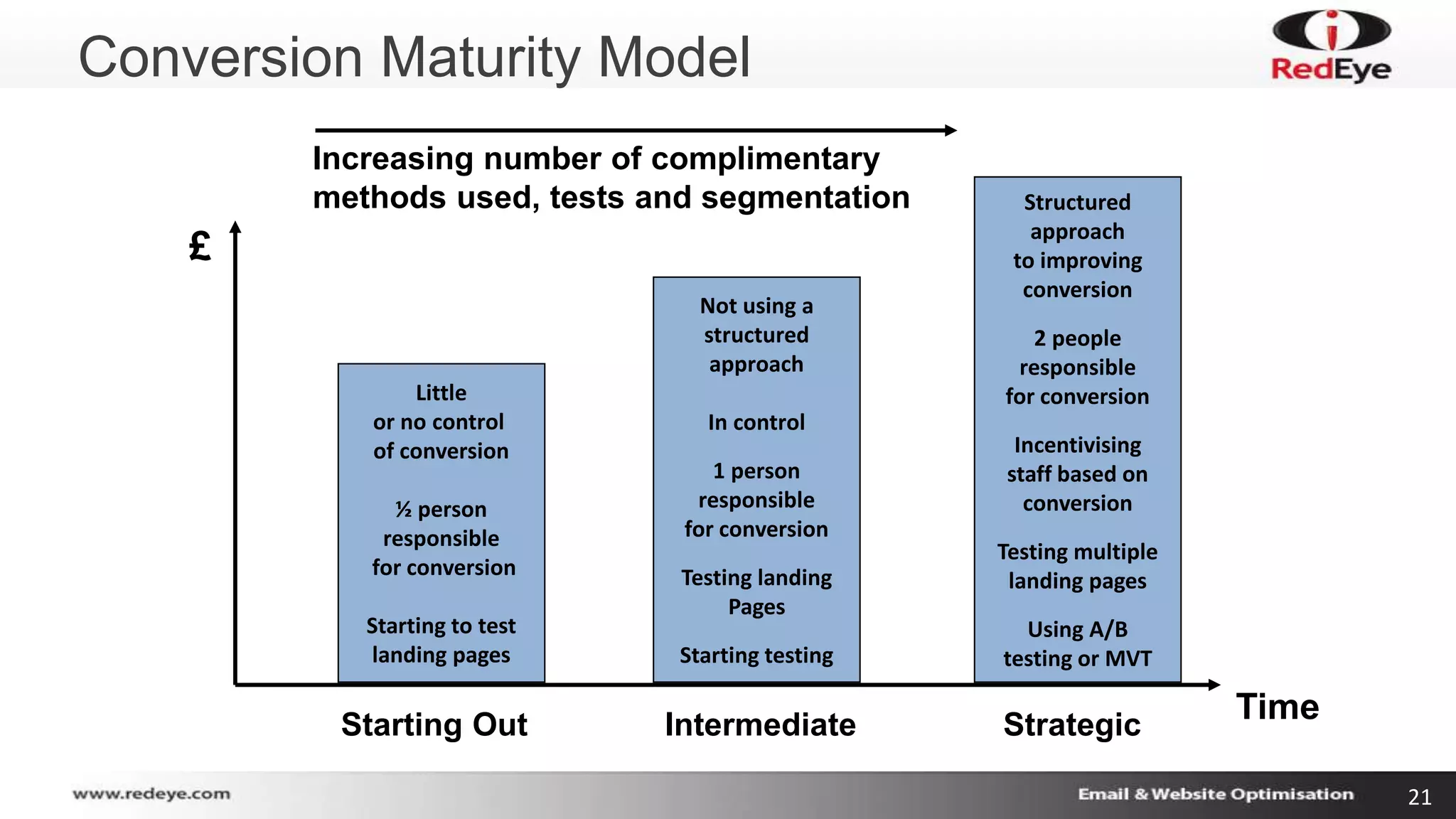
Conversion Maturity Model 
Increasing number of complimentary 
methods used, tests and segmentation 
Little 
or no control 
of conversion 
½ person 
responsible 
for conversion 
Starting to test 
landing pages 
Not using a 
structured 
approach 
In control 
1 person 
responsible 
for conversion 
Testing landing 
Pages 
Starting testing 
Structured 
approach 
to improving 
conversion 
2 people 
responsible 
for conversion 
Incentivising 
staff based on 
conversion 
Testing multiple 
landing pages 
Using A/B 
testing or MVT 
£ 
Time 
Starting Out Intermediate Strategic
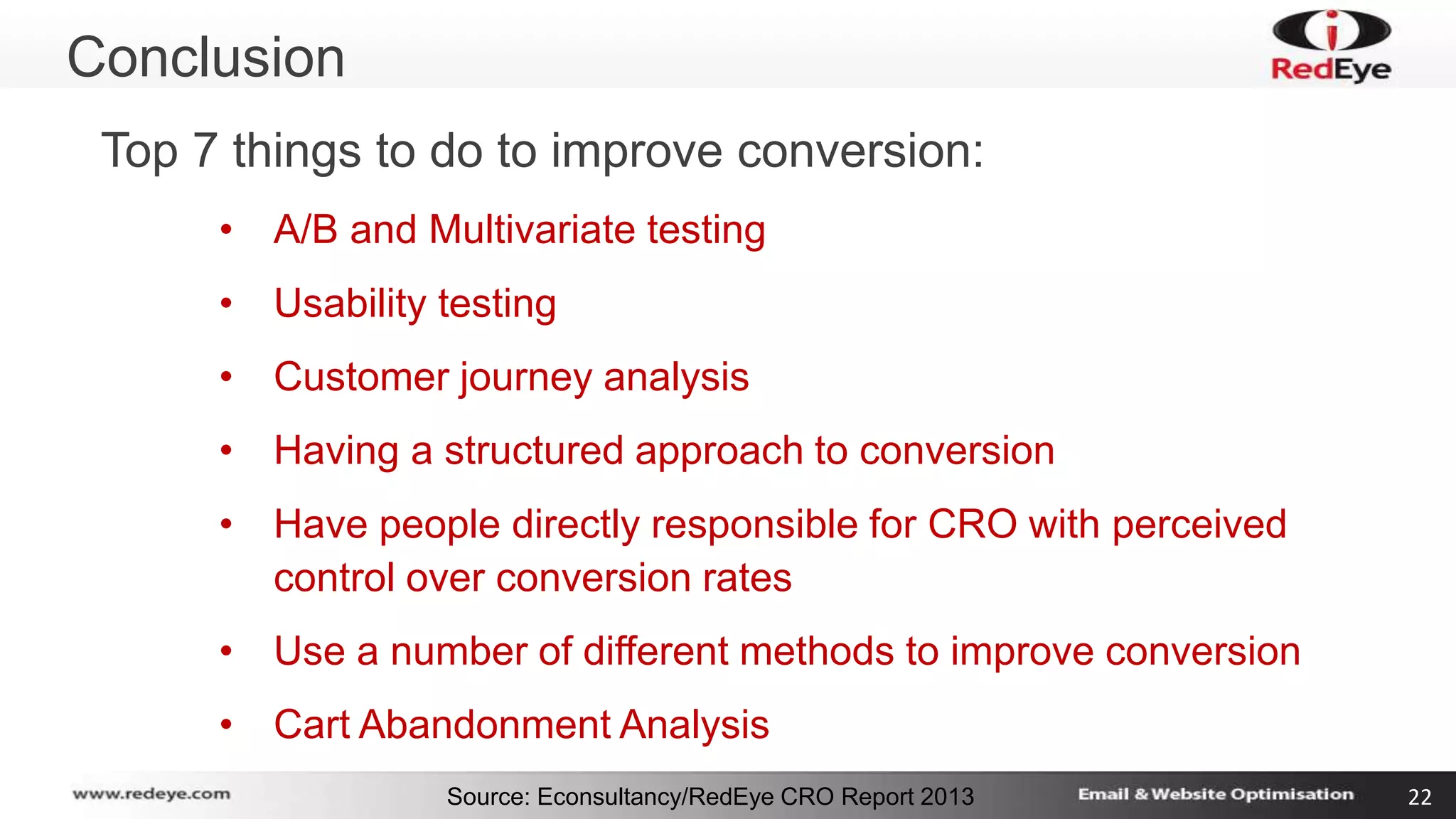
Conclusion 
Top 7 things to do to improve conversion: 
• A/B and Multivariate testing 
• Usability testing 
• Customer journey analysis 
• Having a structured approach to conversion 
• Have people directly responsible for CRO with perceived 
control over conversion rates 
• Use a number of different methods to improve conversion 
• Cart Abandonment Analysis 
Source: Econsultancy/RedEye CRO Report 2013 22
Thank You 
Source: Econsultancy/RedEye CRO Report 2013 Data Driven Digital Marketing 23

Red eye 2014

  • 1.
    1 Conversion RateOptimisation and Analytics Andrew Furlong RedEye
  • 2.
    Source: Econsultancy/RedEye CROReport 2013 2 Agenda • Why is Conversion Rate Optimisation so important • What makes up the CRO toolkit • Process and Analysis • Maturity model
  • 3.
    Why are conversionrates so low? • Average retail conversion rate has declined from 8.4% to below 3.8% over last seven years. At same time market has grown from £30.2bn to £60bn plus. • Due to move from “online purchasing” to “online shopping” • Improving website conversion is more complicated than spending more with Google… Source: IMRG Capgemini e-Retail Sales Index Source: Econsultancy/RedEye CRO Report 2013 3
  • 4.
    Satisfaction with conversionrates is low Source: Econsultancy/RedEye CRO Report 2013 4
  • 5.
    5 Conversion rateoptimisation spend is low Currently for every $92 spent acquiring visitors, only $1 spent converting them. So spending money intelligently on Conversion Rate Optimization (CRO) should be a better investment than spending more money on generating traffic... Acquiring customers Converting customers Source: Adobe/eMarketer
  • 6.
    Source: Econsultancy/RedEye CROReport 2013 6 Agenda • Why is Conversion Rate Optimisation so important • What makes up the CRO toolkit • Process and Analysis • Maturity model
  • 7.
    Methods used forimproving conversion rates Source: Econsultancy/RedEye CRO Report 2013 7
  • 8.
    Best practices carriedout by organisations Source: Econsultancy/RedEye CRO Report 2013 8
  • 9.
    Barriers preventing improvingconversion? Source: Econsultancy/RedEye CRO Report 2013 9 Consistently top
  • 10.
    Value and difficultyof different methods Website personalisation Event-triggered / behavioural email Expert usability *Size of the bubbles is directly proportional to the percentage of companies surveyed using each method for improving conversion rates. A/B testing Cart abandonment analysis Source: Econsultancy/RedEye CRO Report 2013 10 reviews Multivariate testing Segmentation Usability testing Competitor benchmarking Abandonment email Copy optimisation Customer journey analysis HOW DIFFICULT IT IS TO IMPLEMENT VALUE Now look at top 4 methods in more detail
  • 11.
    Customer Journey Analysis • Customer journey analysis is the first step in understanding what customers are doing on your site • Typically not a simple sales funnel • Consider all primary user goals • Challenging e.g. cross device • By understanding customer journeys you can pull your customers through your site rather than push them, inbound rather than outbound Source: Econsultancy/RedEye CRO Report 2013 11
  • 12.
    Source: Econsultancy/RedEye CROReport 2013 12 Usability testing • Usability testing with eye tracking is the best way to understand how your site design is performing and why your customers are doing the things you see in the web analytics data. • To get support for your website optimisation process show key stakeholders and senior management highlight clips from usability testing showing users struggling to achieve those key goals. • A/B and Multivariate tests can take can take a number of weeks to generate a statistically robust answer. So you really can’t afford to do random testing. Usability testing is a useful method to help prioritise tests.
  • 13.
    Source: Econsultancy/RedEye CROReport 2013 13 Testing Companies whose conversion rates have improved over the previous 12 months are performing on average 50% more tests to improve conversion than those companies whose conversion rates have not improved. Sales Average number of tests each month Large increase 7.88 Small increase 4.32 No change 2.61 Decrease 1.86
  • 14.
    Important to asuccessful testing strategy? Source: Econsultancy/RedEye CRO Report 2013 14 Top: Defining testing goals and objectives & Prioritising tests Bottom: Choosing software
  • 15.
    Specifically for yourwebsite, what do you test? Top four: - Call to action buttons - Page layout - Copy - Navigation Source: Econsultancy/RedEye CRO Report 2013 15
  • 16.
    Source: Econsultancy/RedEye CROReport 2013 16 Agenda • Why is Conversion Rate Optimisation so important • What makes up the CRO toolkit • Process and Analysis • Maturity model
  • 17.
    What improves conversion- analysis of data The five additional variables most strongly correlated with improved website conversion and sales are: • Having a structured approach to improving conversion • Having people responsible for improving conversion • Perceived control over conversion rates • Using a number of different methods used to aid conversion • Cart Abandonment Analysis • Note top 3 are all people issues Source: Econsultancy/RedEye CRO Report 2013 17
  • 18.
    18 Business objectives Goals, aspirations, target audiences Insight Analytics, Usability testing, surveys… Repository for quant & qual Ideas & Prioritisation Quantify, Predicted Uplift, Justification Testing (A/B, MVT) Test plans, UX Design variations, Reporting & Measuring uplift / ROI Continual Website Improvement Increased Conversion, AOV, X-Sell, Retention, Loyalty, UX Testing insights & learnings Quick wins e.g. fixing usability issues, interaction problems, bugs UCD/UX Design e.g. New functionality, redesigns, wire-framing, prototyping Example of a structured process
  • 19.
    Complimentary methods leadto better results Companies with £10m+ revenues who integrated usability testing and analytics well were more than twice as likely to have seen a large increase in sales as those that didn’t Source: Econsultancy/RedEye CRO Report 2013 19
  • 20.
    Source: Econsultancy/RedEye CROReport 2013 20 Agenda • Why is Conversion Rate Optimisation so important • What makes up the CRO toolkit • Process and Analysis • Maturity model
  • 21.
    21 Conversion MaturityModel Increasing number of complimentary methods used, tests and segmentation Little or no control of conversion ½ person responsible for conversion Starting to test landing pages Not using a structured approach In control 1 person responsible for conversion Testing landing Pages Starting testing Structured approach to improving conversion 2 people responsible for conversion Incentivising staff based on conversion Testing multiple landing pages Using A/B testing or MVT £ Time Starting Out Intermediate Strategic
  • 22.
    Conclusion Top 7things to do to improve conversion: • A/B and Multivariate testing • Usability testing • Customer journey analysis • Having a structured approach to conversion • Have people directly responsible for CRO with perceived control over conversion rates • Use a number of different methods to improve conversion • Cart Abandonment Analysis Source: Econsultancy/RedEye CRO Report 2013 22
  • 23.
    Thank You Source:Econsultancy/RedEye CRO Report 2013 Data Driven Digital Marketing 23