CONTENTS
 HISTORY
 COMPETITORS
 INGREDIENTS
 CHALLENGES
 MARKETING COMMUNICATION
 PRODUCT DEVELOPMENT
 MAKETING MIX, PRODUCT
 Kotler’s 14th edition of Marketing Management
solutions
 SUMMARY
 DISCLAIMER
HISTORY
 Dietrich Mateschitz founded Red Bull in Austria.
 Dietrich Mateschitz introduced the energy drink into Hungary, its
first market, in 1992.
 Dietrich Mateschitz experienced a pre-existing energy drink Krating
Daeng in Thailand, and he took over Krating Daeng.
 Today Red Bull sells 4 billion cans of energy drink each year in over
160 countries.
 Red Bull offers 4 different products
 Red Bull
 Red Bull Sugar free
 Red Bull Cola
 Red Bull Shots
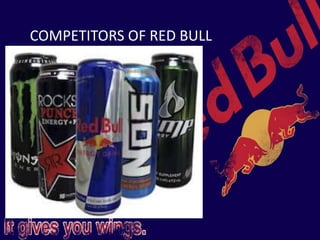
COMPETITORS OF RED BULL
INGREDIENTS
• Amino acid taurine
• B-complex Vitamins
• Caffeine
• Carbohydrates
BENEFITS
• Energies your body
• Increases endurance
• Improves reaction time and alertness
• Reduces tiredness and fatigue
• Aids in detoxifying waste in your body
EFFECTIVE MARKETING COMMUNICATION
• Sponsorship of events
 It focus specially on sponsoring extreme sports events like
Red Bull Stratos, Red Bull Flugtag, X-games, etc.
• The main purpose of this Marketing Communication is that Red Bull
need the global attention towards its products in the market.
PRODUCT DEVELOPMENT
• Higher risk
• A new product is introduced into the market
• Market remains same
• Used when the current business environment is a full
competitive market
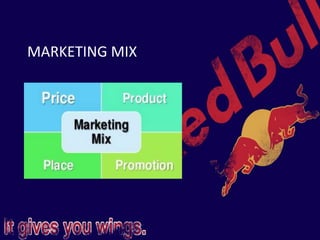
MARKETING MIX
PRODUCT
Product Variation
 In the presence of other sports and energy
drinks there is massive competition and it will
be difficult for Red Bull to have gain market
segments. Therefore Red Bull will introduce
different flavors in drink.
Product Innovation
 Red Bull will use innovation such as new and
attractive packing.
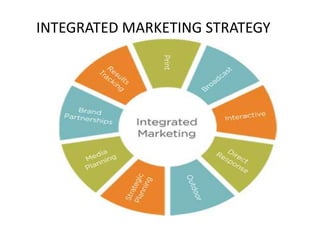
INTEGRATED MARKETING STRATEGY
Kotler’s 14th edition of Marketing Management solutions
Q1.What are Red Bull’s greatest strength and risks as more companies(like
Coca-Cola, Pepsi, and Monster) enter the energy drink category and gain
market share?
• Attributed to the company’s ability to highlight its strengths and minimizes its
weakness. Understanding these strengths and weaknesses are important for Red
Bull to maintain its current position as the market leader.
• Strengths include its marketing strategy and its alliances with distributors.
• Alignment with distributors.
• Marketing strategy, “Anti Branding”& “Anti Marketing”
• Providing free samples in efforts to generate additional buzz about their
products.
Q2.Should Red Bull do more traditional advertising? Why or why
not?
• Using “buzz-marketing” or word of mouth advertising, in
addition to their sponsored events, has helped Red Bull
become almost a cult favorite among consumers.
• Red bull’s sponsored events are extreme and expensive,
but they also bring brand awareness, target their generation Y.
• Recommended that they maintain their current non-
traditional marketing strategies.
• Its target market and its marketing strategies are all
consistent with this brand image.
Q3. Discuss the effectiveness of Red Bull’s sponsorships, for
example, Bull Stratosphere. Is this a good use of Red Bull’s
marketing budget? Where should the company draw the line?
•Red Bull’s sponsorships span a wide variety of extreme sports,
athletes, and artists. The company is involved in everything from
motor sports to dancing to extreme sailing. Attracted hundreds of
thousands of current and potential consumers.
•Red Bull has introduced its current marketing around and about the
product, but it is never directly correlated to the drink itself.
•Marketing strategies have proved effective to date, it’s crucial that
Red Bull continually re-evaluate them to ensure that they remain
effective.
•Red Bull should continuously monitor marketing trends and
the effectiveness of its chosen strategies so it can quickly
change when necessary.
•Red Bull needs to draw the line when their current
marketing techniques become ineffective. necessary.
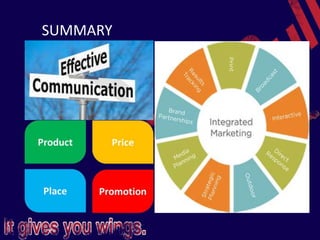
SUMMARY
DISCLAIMER
Created by
Nandyala Venkat Reddy,
NIT Jamshedpur as a part
of Marketing management
internship under
Prof. Sameer Mathur
IIM Lucknow

Red bull by venkat

  • 3.
    CONTENTS  HISTORY  COMPETITORS INGREDIENTS  CHALLENGES  MARKETING COMMUNICATION  PRODUCT DEVELOPMENT  MAKETING MIX, PRODUCT  Kotler’s 14th edition of Marketing Management solutions  SUMMARY  DISCLAIMER
  • 4.
    HISTORY  Dietrich Mateschitzfounded Red Bull in Austria.  Dietrich Mateschitz introduced the energy drink into Hungary, its first market, in 1992.  Dietrich Mateschitz experienced a pre-existing energy drink Krating Daeng in Thailand, and he took over Krating Daeng.  Today Red Bull sells 4 billion cans of energy drink each year in over 160 countries.  Red Bull offers 4 different products  Red Bull  Red Bull Sugar free  Red Bull Cola  Red Bull Shots
  • 5.
  • 6.
    INGREDIENTS • Amino acidtaurine • B-complex Vitamins • Caffeine • Carbohydrates BENEFITS • Energies your body • Increases endurance • Improves reaction time and alertness • Reduces tiredness and fatigue • Aids in detoxifying waste in your body
  • 8.
    EFFECTIVE MARKETING COMMUNICATION •Sponsorship of events  It focus specially on sponsoring extreme sports events like Red Bull Stratos, Red Bull Flugtag, X-games, etc. • The main purpose of this Marketing Communication is that Red Bull need the global attention towards its products in the market.
  • 10.
    PRODUCT DEVELOPMENT • Higherrisk • A new product is introduced into the market • Market remains same • Used when the current business environment is a full competitive market
  • 11.
  • 12.
    PRODUCT Product Variation  Inthe presence of other sports and energy drinks there is massive competition and it will be difficult for Red Bull to have gain market segments. Therefore Red Bull will introduce different flavors in drink. Product Innovation  Red Bull will use innovation such as new and attractive packing.
  • 13.
  • 15.
    Kotler’s 14th editionof Marketing Management solutions Q1.What are Red Bull’s greatest strength and risks as more companies(like Coca-Cola, Pepsi, and Monster) enter the energy drink category and gain market share? • Attributed to the company’s ability to highlight its strengths and minimizes its weakness. Understanding these strengths and weaknesses are important for Red Bull to maintain its current position as the market leader. • Strengths include its marketing strategy and its alliances with distributors. • Alignment with distributors. • Marketing strategy, “Anti Branding”& “Anti Marketing” • Providing free samples in efforts to generate additional buzz about their products.
  • 16.
    Q2.Should Red Bulldo more traditional advertising? Why or why not? • Using “buzz-marketing” or word of mouth advertising, in addition to their sponsored events, has helped Red Bull become almost a cult favorite among consumers. • Red bull’s sponsored events are extreme and expensive, but they also bring brand awareness, target their generation Y. • Recommended that they maintain their current non- traditional marketing strategies. • Its target market and its marketing strategies are all consistent with this brand image.
  • 17.
    Q3. Discuss theeffectiveness of Red Bull’s sponsorships, for example, Bull Stratosphere. Is this a good use of Red Bull’s marketing budget? Where should the company draw the line? •Red Bull’s sponsorships span a wide variety of extreme sports, athletes, and artists. The company is involved in everything from motor sports to dancing to extreme sailing. Attracted hundreds of thousands of current and potential consumers. •Red Bull has introduced its current marketing around and about the product, but it is never directly correlated to the drink itself. •Marketing strategies have proved effective to date, it’s crucial that Red Bull continually re-evaluate them to ensure that they remain effective.
  • 18.
    •Red Bull shouldcontinuously monitor marketing trends and the effectiveness of its chosen strategies so it can quickly change when necessary. •Red Bull needs to draw the line when their current marketing techniques become ineffective. necessary.
  • 19.
  • 20.
    DISCLAIMER Created by Nandyala VenkatReddy, NIT Jamshedpur as a part of Marketing management internship under Prof. Sameer Mathur IIM Lucknow