Introduction
 Red Bull GmbH
 Austrian entrepreneur Dietrich Mateschitz is the owner of this company.
 It is the multinational company spread world wide.
 Origin country of this product is Austria
 Ingredients found in this product are carbonated water, sucrose, glucose,
sodium citrate, taurine, glucuronolactone, caffeine, inositol, niacin, D-
pantothenol, pyridoxine HCL, vitamin B12, artificial flavours, colours
 Variant types are Original, Sugerfree, Cola, Total Zero, Red Edition, Blue
Edition, Silver Edition, F1 Edition
 Various products of red bull are Red Bull Cola, Red Bull Energy Shot, Red Bull
Sugar-Free, Red Bull Total Zero, Red Bull Racing , Red Bull Racing Team
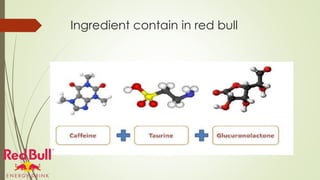
Ingredient contain in red bull
Exclusive summary
 Mateschitz and Yoovidhya each invested $500,000 to become a partner.
 The company was reported to hold almost 70 percent of the worldwide market
for energy drinks in 2005.pply.
 Red Bull energy drink, acquired Minardi, an Italy-based Formula One (F1)3 team
 Red Bull GmbH was known for its sponsorship of extreme, alternative sports like
white water kayaking, hand gliding, wind surfing and snowboarding – sports
that involved elements of adventure and risk
 Ingredients contain in red bull are Caffeine, taurine, B-group vitamins and alpine
spring water
 They are young and know the young target market exactly
Discription of Business
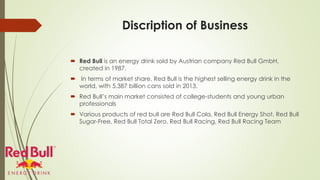
 Red Bull is an energy drink sold by Austrian company Red Bull GmbH,
created in 1987.
 In terms of market share, Red Bull is the highest selling energy drink in the
world, with 5.387 billion cans sold in 2013.
 Red Bull’s main market consisted of college-students and young urban
professionals
 Various products of red bull are Red Bull Cola, Red Bull Energy Shot, Red Bull
Sugar-Free, Red Bull Total Zero, Red Bull Racing, Red Bull Racing Team
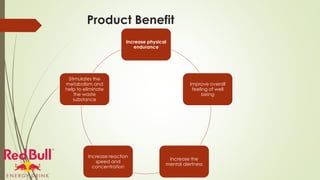
Product Benefit
Increase physical
endurance
Improve overall
feeling of well
being
Increase the
mental alertness
Increase reaction
speed and
concentration
Stimulates the
metabolism and
help to eliminate
the waste
substance
Operational segment
 Inspired by functional drinks from the Far East, Dietrich Mateschitz founded
Red Bull in the mid 1980's
 He created the formula of Red Bull Energy Drink and developed the unique
marketing concept of Red Bull
 In 1987, on April 1, Red Bull Energy Drink was sold for the very first time in its
home market Austria
 Today Red Bull is available in more than 166 countries and around 40 billion
cans of Red Bull have been consumed so far.
 As of the end of 2013, Red Bull employed 9,694 people in 166 countries
 Targeting young people, mainly the Young-generation, Red Bull has utilized
eccentric marketing tools that has extremely effective on the target market
Financial segments
 Red Bull was founded by each partner investing $500,000 of savings and taking
a stake in the new company with 49% of share gave the remaining 2% to
Yoovidhya's son Chalerm.
 The Red Bull markets in India (+55%), Japan (+32%), Turkey (+18%), Scandinavia
(+16%), Russia (+13%) and Brazil (+12%), efficient cost management and
ongoing brand investment.
 By 1998, the size of the industry doubled and still growing with a fast pace
following highlighted area in the graph is an approximate stage of the life cycle
at the moment.
 They produce over 1 billion cans each year.
 Red Bull earned around EUR 4.2 billion in worldwide sales and was available in
165 countries globally
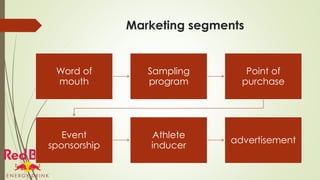
Marketing segments
Word of
mouth
Sampling
program
Point of
purchase
Event
sponsorship
Athlete
inducer
advertisement
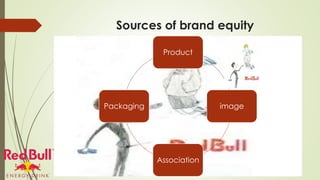
Sources of brand equity
Product
image
Association
Packaging
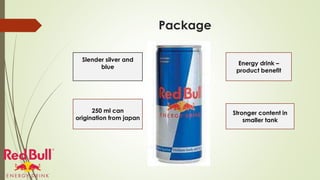
Package
Slender silver and
blue
250 ml can
origination from japan
Stronger content in
smaller tank
Energy drink –
product benefit
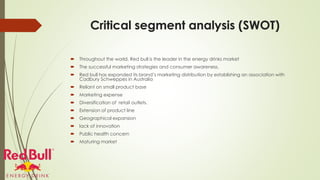
Critical segment analysis (SWOT)
 Throughout the world, Red bull is the leader in the energy drinks market
 The successful marketing strategies and consumer awareness.
 Red bull has expanded its brand’s marketing distribution by establishing an association with
Cadbury Schweppes in Australia
 Reliant on small product base
 Marketing expense
 Diversification of retail outlets.
 Extension of product line
 Geographical expansion
 lack of innovation
 Public health concern
 Maturing market
Critical segment analysis (SWOT)

Presentation on red bull

  • 2.
    Introduction  Red BullGmbH  Austrian entrepreneur Dietrich Mateschitz is the owner of this company.  It is the multinational company spread world wide.  Origin country of this product is Austria  Ingredients found in this product are carbonated water, sucrose, glucose, sodium citrate, taurine, glucuronolactone, caffeine, inositol, niacin, D- pantothenol, pyridoxine HCL, vitamin B12, artificial flavours, colours  Variant types are Original, Sugerfree, Cola, Total Zero, Red Edition, Blue Edition, Silver Edition, F1 Edition  Various products of red bull are Red Bull Cola, Red Bull Energy Shot, Red Bull Sugar-Free, Red Bull Total Zero, Red Bull Racing , Red Bull Racing Team
  • 3.
  • 4.
    Exclusive summary  Mateschitzand Yoovidhya each invested $500,000 to become a partner.  The company was reported to hold almost 70 percent of the worldwide market for energy drinks in 2005.pply.  Red Bull energy drink, acquired Minardi, an Italy-based Formula One (F1)3 team  Red Bull GmbH was known for its sponsorship of extreme, alternative sports like white water kayaking, hand gliding, wind surfing and snowboarding – sports that involved elements of adventure and risk  Ingredients contain in red bull are Caffeine, taurine, B-group vitamins and alpine spring water  They are young and know the young target market exactly
  • 5.
    Discription of Business Red Bull is an energy drink sold by Austrian company Red Bull GmbH, created in 1987.  In terms of market share, Red Bull is the highest selling energy drink in the world, with 5.387 billion cans sold in 2013.  Red Bull’s main market consisted of college-students and young urban professionals  Various products of red bull are Red Bull Cola, Red Bull Energy Shot, Red Bull Sugar-Free, Red Bull Total Zero, Red Bull Racing, Red Bull Racing Team
  • 6.
    Product Benefit Increase physical endurance Improveoverall feeling of well being Increase the mental alertness Increase reaction speed and concentration Stimulates the metabolism and help to eliminate the waste substance
  • 7.
    Operational segment  Inspiredby functional drinks from the Far East, Dietrich Mateschitz founded Red Bull in the mid 1980's  He created the formula of Red Bull Energy Drink and developed the unique marketing concept of Red Bull  In 1987, on April 1, Red Bull Energy Drink was sold for the very first time in its home market Austria  Today Red Bull is available in more than 166 countries and around 40 billion cans of Red Bull have been consumed so far.  As of the end of 2013, Red Bull employed 9,694 people in 166 countries  Targeting young people, mainly the Young-generation, Red Bull has utilized eccentric marketing tools that has extremely effective on the target market
  • 8.
    Financial segments  RedBull was founded by each partner investing $500,000 of savings and taking a stake in the new company with 49% of share gave the remaining 2% to Yoovidhya's son Chalerm.  The Red Bull markets in India (+55%), Japan (+32%), Turkey (+18%), Scandinavia (+16%), Russia (+13%) and Brazil (+12%), efficient cost management and ongoing brand investment.  By 1998, the size of the industry doubled and still growing with a fast pace following highlighted area in the graph is an approximate stage of the life cycle at the moment.  They produce over 1 billion cans each year.  Red Bull earned around EUR 4.2 billion in worldwide sales and was available in 165 countries globally
  • 9.
    Marketing segments Word of mouth Sampling program Pointof purchase Event sponsorship Athlete inducer advertisement
  • 10.
    Sources of brandequity Product image Association Packaging
  • 11.
    Package Slender silver and blue 250ml can origination from japan Stronger content in smaller tank Energy drink – product benefit
  • 12.
    Critical segment analysis(SWOT)  Throughout the world, Red bull is the leader in the energy drinks market  The successful marketing strategies and consumer awareness.  Red bull has expanded its brand’s marketing distribution by establishing an association with Cadbury Schweppes in Australia  Reliant on small product base  Marketing expense  Diversification of retail outlets.  Extension of product line  Geographical expansion  lack of innovation  Public health concern  Maturing market Critical segment analysis (SWOT)