INTRODUCTION
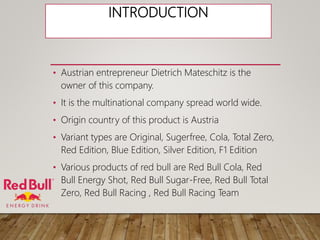
• Austrian entrepreneur Dietrich Mateschitz is the
owner of this company.
• It is the multinational company spread world wide.
• Origin country of this product is Austria
• Variant types are Original, Sugerfree, Cola, Total Zero,
Red Edition, Blue Edition, Silver Edition, F1 Edition
• Various products of red bull are Red Bull Cola, Red
Bull Energy Shot, Red Bull Sugar-Free, Red Bull Total
Zero, Red Bull Racing , Red Bull Racing Team
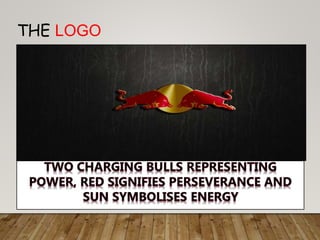
THE LOGO
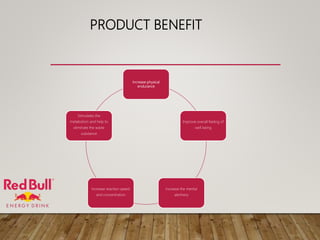
PRODUCT BENEFIT
Increase physical
endurance
Improve overall feeling of
well being
Increase the mental
alertness
Increase reaction speed
and concentration
Stimulates the
metabolism and help to
eliminate the waste
substance
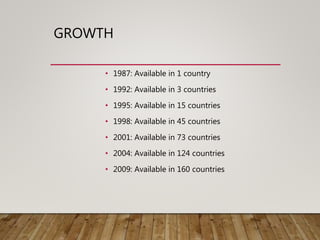
GROWTH
• 1987: Available in 1 country
• 1992: Available in 3 countries
• 1995: Available in 15 countries
• 1998: Available in 45 countries
• 2001: Available in 73 countries
• 2004: Available in 124 countries
• 2009: Available in 160 countries
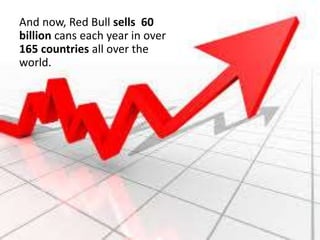
And now, Red Bull sells 60
billion cans each year in over
165 countries all over the
world.
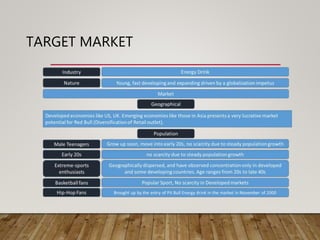
TARGET MARKET
COMPETITION
• Redbull’s real competitors are the market
leaders of cola companies such as : Pepsi &
Coca Cola, who have created their brand
leadership since several years in the
International market.
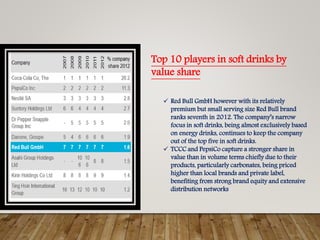
Top 10 players in soft drinks by
value share
 Red Bull GmbH however with its relatively
premium but small serving size Red Bull brand
ranks seventh in 2012. The company’s narrow
focus in soft drinks, being almost exclusively based
on energy drinks, continues to keep the company
out of the top five in soft drinks.
 TCCC and PepsiCo capture a stronger share in
value than in volume terms chiefly due to their
products, particularly carbonates, being priced
higher than local brands and private label,
benefiting from strong brand equity and extensive
distribution networks
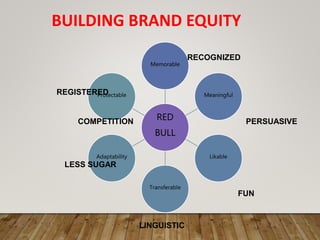
BUILDING BRAND EQUITY
RED
BULL
Memorable
Meaningful
Likable
Transferable
Adaptability
Protectable
RECOGNIZED
PERSUASIVE
FUN
LESS SUGAR
REGISTERED
LINGUISTIC
COMPETITION
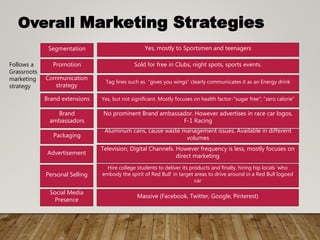
Segmentation Yes, mostly to Sportsmen and teenagers
Promotion
Communication
strategy
Brand extensions
Brand
ambassadors
Sold for free in Clubs, night spots, sports events.
Tag lines such as “gives you wings” clearly communicates it as an Energy drink
Yes, but not significant. Mostly focuses on health factor-”sugar free”; “zero calorie”
No prominent Brand ambassador. However advertises in race car logos,
F-1 Racing
Packaging
Aluminum cans, cause waste management issues. Available in different
volumes
Advertisement
Television, Digital Channels. However frequency is less, mostly focuses on
direct marketing
Personal Selling
Hire college students to deliver its products and finally, hiring hip locals ‘who
embody the spirit of Red Bull’ in target areas to drive around in a Red Bull logoed
car
Social Media
Presence
Massive (Facebook, Twitter, Google, Pinterest)
Overall Marketing Strategies
Follows a
Grassroots
marketing
strategy
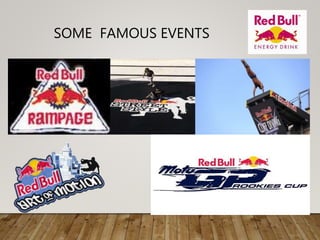
SOME FAMOUS EVENTS
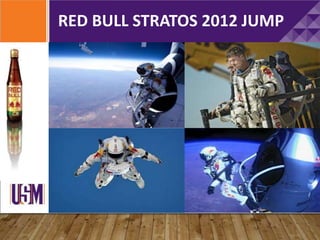
RED BULL STRATOS 2012 JUMP
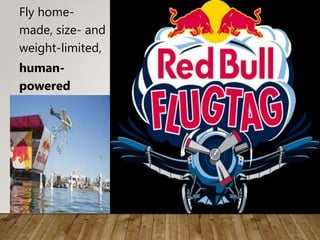
Fly home-
made, size- and
weight-limited,
human-
powered
machines.
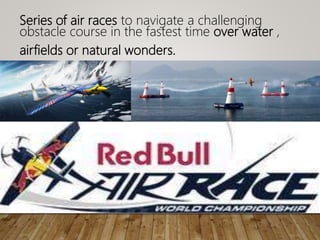
Series of air races to navigate a challenging
obstacle course in the fastest time over water ,
airfields or natural wonders.
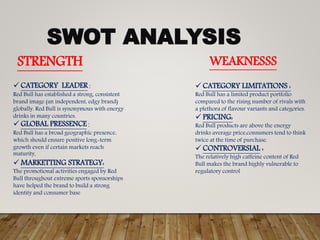
STRENGTH WEAKNESSS
 CATEGORY LEADER :
Red Bull has established a strong, consistent
brand image (an independent, edgy brand)
globally. Red Bull is synonymous with energy
drinks in many countries.
 GLOBAL PRESSENCE :
Red Bull has a broad geographic presence,
which should ensure positive long-term
growth even if certain markets reach
maturity.
 MARKETTING STRATEGY:
The promotional activities engaged by Red
Bull throughout extreme sports sponsorships
have helped the brand to build a strong
identity and consumer base
 CATEGORY LIMITATIONS :
Red Bull has a limited product portfolio
compared to the rising number of rivals with
a plethora of flavour variants and categories.
 PRICING:
Red Bull products are above the energy
drinks average price,consumers tend to think
twice at the time of purchase.
 CONTROVERSIAL :
The relatively high caffeine content of Red
Bull makes the brand highly vulnerable to
regulatory control
SWOT ANALYSIS
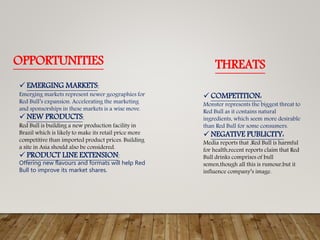
OPPORTUNITIES THREATS
 EMERGING MARKETS:
Emerging markets represent newer geographies for
Red Bull’s expansion. Accelerating the marketing
and sponsorships in these markets is a wise move.
 NEW PRODUCTS:
Red Bull is building a new production facility in
Brazil which is likely to make its retail price more
competitive than imported product prices. Building
a site in Asia should also be considered.
 PRODUCT LINE EXTENSION:
Offering new flavours and formats will help Red
Bull to improve its market shares.
 COMPETITION:
Monster represents the biggest threat to
Red Bull as it contains natural
ingredients, which seem more desirable
than Red Bull for some consumers.
 NEGATIVE PUBLICITY:
Media reports that ,Red Bull is harmful
for health,recent reports claim that Red
Bull drinks comprises of bull
semen,though all this is rumour,but it
influence company’s image.
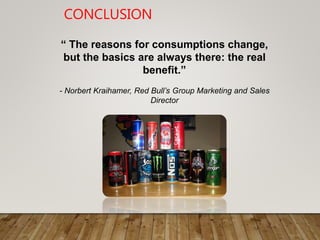
“ The reasons for consumptions change,
but the basics are always there: the real
benefit.”
- Norbert Kraihamer, Red Bull’s Group Marketing and Sales
Director
CONCLUSION
DISCLAIMER
Created by AKASH DEEP, IIT Kanpur during a marketing
internship by Prof. Sameer Mathur, IIM Lucknow (see
www.IIMInternship.com)

Redbull ppt

  • 2.
    INTRODUCTION • Austrian entrepreneurDietrich Mateschitz is the owner of this company. • It is the multinational company spread world wide. • Origin country of this product is Austria • Variant types are Original, Sugerfree, Cola, Total Zero, Red Edition, Blue Edition, Silver Edition, F1 Edition • Various products of red bull are Red Bull Cola, Red Bull Energy Shot, Red Bull Sugar-Free, Red Bull Total Zero, Red Bull Racing , Red Bull Racing Team
  • 3.
  • 4.
    PRODUCT BENEFIT Increase physical endurance Improveoverall feeling of well being Increase the mental alertness Increase reaction speed and concentration Stimulates the metabolism and help to eliminate the waste substance
  • 5.
    GROWTH • 1987: Availablein 1 country • 1992: Available in 3 countries • 1995: Available in 15 countries • 1998: Available in 45 countries • 2001: Available in 73 countries • 2004: Available in 124 countries • 2009: Available in 160 countries
  • 6.
    And now, RedBull sells 60 billion cans each year in over 165 countries all over the world.
  • 7.
  • 8.
    COMPETITION • Redbull’s realcompetitors are the market leaders of cola companies such as : Pepsi & Coca Cola, who have created their brand leadership since several years in the International market.
  • 9.
    Top 10 playersin soft drinks by value share  Red Bull GmbH however with its relatively premium but small serving size Red Bull brand ranks seventh in 2012. The company’s narrow focus in soft drinks, being almost exclusively based on energy drinks, continues to keep the company out of the top five in soft drinks.  TCCC and PepsiCo capture a stronger share in value than in volume terms chiefly due to their products, particularly carbonates, being priced higher than local brands and private label, benefiting from strong brand equity and extensive distribution networks
  • 10.
  • 13.
    Segmentation Yes, mostlyto Sportsmen and teenagers Promotion Communication strategy Brand extensions Brand ambassadors Sold for free in Clubs, night spots, sports events. Tag lines such as “gives you wings” clearly communicates it as an Energy drink Yes, but not significant. Mostly focuses on health factor-”sugar free”; “zero calorie” No prominent Brand ambassador. However advertises in race car logos, F-1 Racing Packaging Aluminum cans, cause waste management issues. Available in different volumes Advertisement Television, Digital Channels. However frequency is less, mostly focuses on direct marketing Personal Selling Hire college students to deliver its products and finally, hiring hip locals ‘who embody the spirit of Red Bull’ in target areas to drive around in a Red Bull logoed car Social Media Presence Massive (Facebook, Twitter, Google, Pinterest) Overall Marketing Strategies Follows a Grassroots marketing strategy
  • 14.
  • 15.
  • 16.
    Fly home- made, size-and weight-limited, human- powered machines.
  • 17.
    Series of airraces to navigate a challenging obstacle course in the fastest time over water , airfields or natural wonders.
  • 18.
    STRENGTH WEAKNESSS  CATEGORYLEADER : Red Bull has established a strong, consistent brand image (an independent, edgy brand) globally. Red Bull is synonymous with energy drinks in many countries.  GLOBAL PRESSENCE : Red Bull has a broad geographic presence, which should ensure positive long-term growth even if certain markets reach maturity.  MARKETTING STRATEGY: The promotional activities engaged by Red Bull throughout extreme sports sponsorships have helped the brand to build a strong identity and consumer base  CATEGORY LIMITATIONS : Red Bull has a limited product portfolio compared to the rising number of rivals with a plethora of flavour variants and categories.  PRICING: Red Bull products are above the energy drinks average price,consumers tend to think twice at the time of purchase.  CONTROVERSIAL : The relatively high caffeine content of Red Bull makes the brand highly vulnerable to regulatory control SWOT ANALYSIS
  • 19.
    OPPORTUNITIES THREATS  EMERGINGMARKETS: Emerging markets represent newer geographies for Red Bull’s expansion. Accelerating the marketing and sponsorships in these markets is a wise move.  NEW PRODUCTS: Red Bull is building a new production facility in Brazil which is likely to make its retail price more competitive than imported product prices. Building a site in Asia should also be considered.  PRODUCT LINE EXTENSION: Offering new flavours and formats will help Red Bull to improve its market shares.  COMPETITION: Monster represents the biggest threat to Red Bull as it contains natural ingredients, which seem more desirable than Red Bull for some consumers.  NEGATIVE PUBLICITY: Media reports that ,Red Bull is harmful for health,recent reports claim that Red Bull drinks comprises of bull semen,though all this is rumour,but it influence company’s image.
  • 20.
    “ The reasonsfor consumptions change, but the basics are always there: the real benefit.” - Norbert Kraihamer, Red Bull’s Group Marketing and Sales Director CONCLUSION
  • 21.
    DISCLAIMER Created by AKASHDEEP, IIT Kanpur during a marketing internship by Prof. Sameer Mathur, IIM Lucknow (see www.IIMInternship.com)