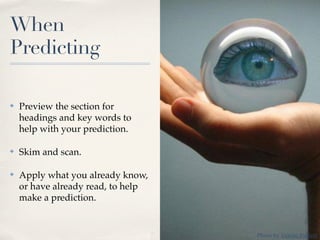
When
Predicting

✤   Preview the section for
    headings and key words to
    help with your prediction.

✤   Skim and scan.

✤   Apply what you already know,
    or have already read, to help
    make a prediction.


                                    Photo by Valerie Everett
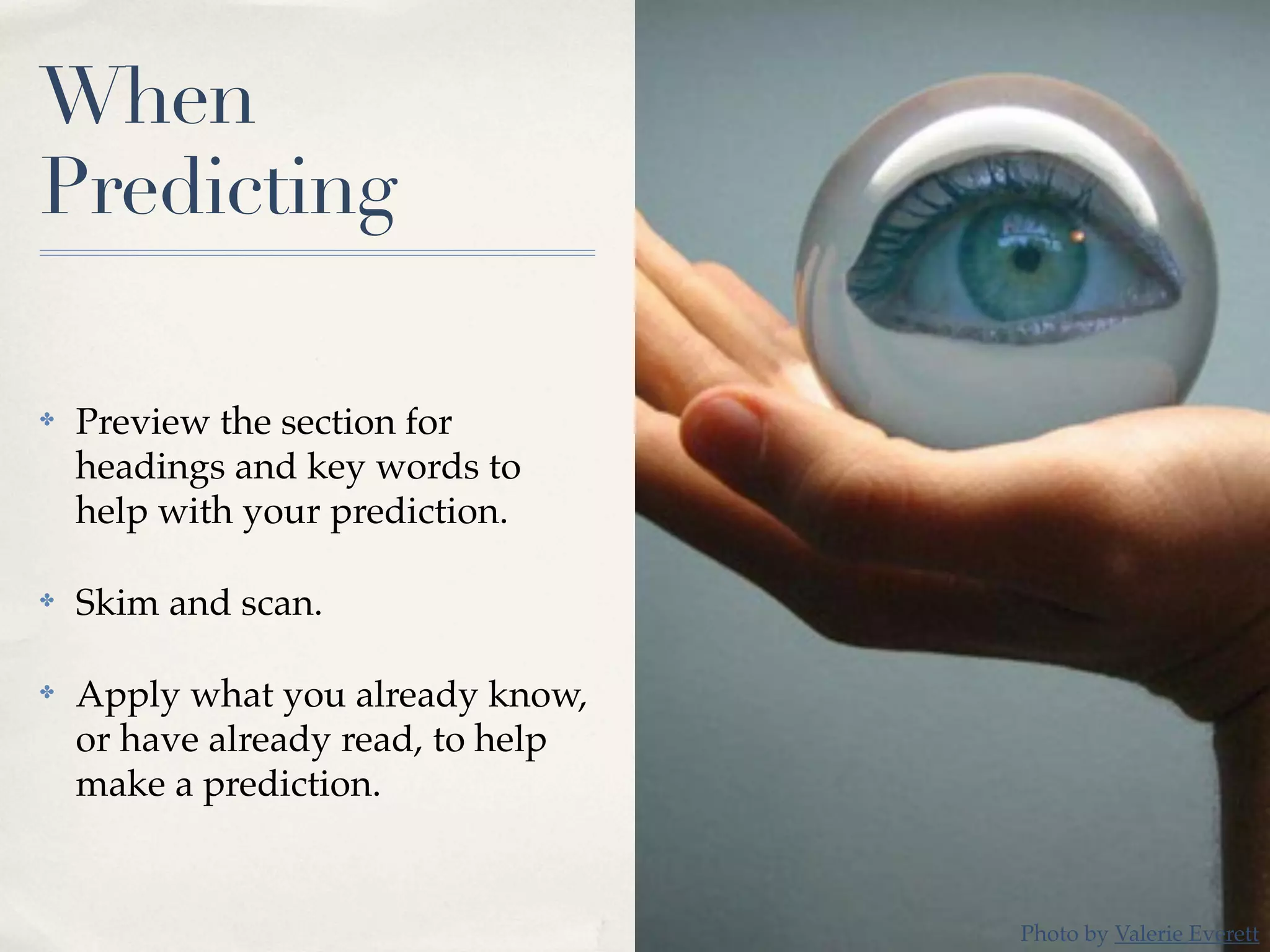
When
Clarifying

✤   Point out confusing ideas,
    words and sentences.

✤   Identify words that are
    difficult to pronounce.

✤   Explain how you were able to
    clarify or solve the problem, or
    as a group, figure it out using a
    dictionary, cell phone,
    computer.
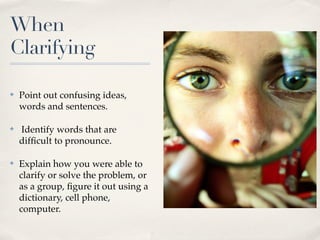
When
Questioning
✤   Develop questions that can be
    answered with information in the
    reading.

✤   Ask questions that involve making
    connections to other things you
    have studied in the course.

✤   Ask questions that are based on the
    main idea of the reading.

✤   Ask questions that will help you
    complete your critical thinking
    template.

                                          Photo by Karen Eliot
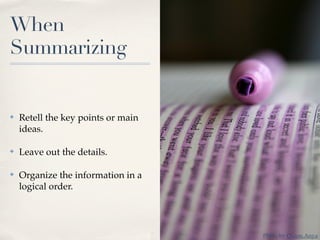
When
Summarizing


✤   Retell the key points or main
    ideas.

✤   Leave out the details.

✤   Organize the information in a
    logical order.


                                    Photo by Quinn.Anya
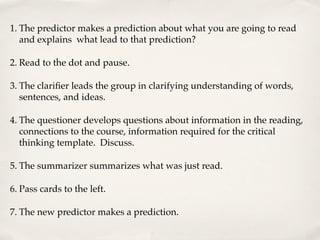
1. The predictor makes a prediction about what you are going to read
   and explains what lead to that prediction?

2. Read to the dot and pause.

3. The clarifier leads the group in clarifying understanding of words,
   sentences, and ideas.

4. The questioner develops questions about information in the reading,
   connections to the course, information required for the critical
   thinking template. Discuss.

5. The summarizer summarizes what was just read.

6. Pass cards to the left.

7. The new predictor makes a prediction.

Reciprocal Teaching Instructions

  • 1.
    When Predicting ✤ Preview the section for headings and key words to help with your prediction. ✤ Skim and scan. ✤ Apply what you already know, or have already read, to help make a prediction. Photo by Valerie Everett
  • 2.
    When Clarifying ✤ Point out confusing ideas, words and sentences. ✤ Identify words that are difficult to pronounce. ✤ Explain how you were able to clarify or solve the problem, or as a group, figure it out using a dictionary, cell phone, computer.
  • 3.
    When Questioning ✤ Develop questions that can be answered with information in the reading. ✤ Ask questions that involve making connections to other things you have studied in the course. ✤ Ask questions that are based on the main idea of the reading. ✤ Ask questions that will help you complete your critical thinking template. Photo by Karen Eliot
  • 4.
    When Summarizing ✤ Retell the key points or main ideas. ✤ Leave out the details. ✤ Organize the information in a logical order. Photo by Quinn.Anya
  • 5.
    1. The predictormakes a prediction about what you are going to read and explains what lead to that prediction? 2. Read to the dot and pause. 3. The clarifier leads the group in clarifying understanding of words, sentences, and ideas. 4. The questioner develops questions about information in the reading, connections to the course, information required for the critical thinking template. Discuss. 5. The summarizer summarizes what was just read. 6. Pass cards to the left. 7. The new predictor makes a prediction.

Editor's Notes