Downloaded 36 times
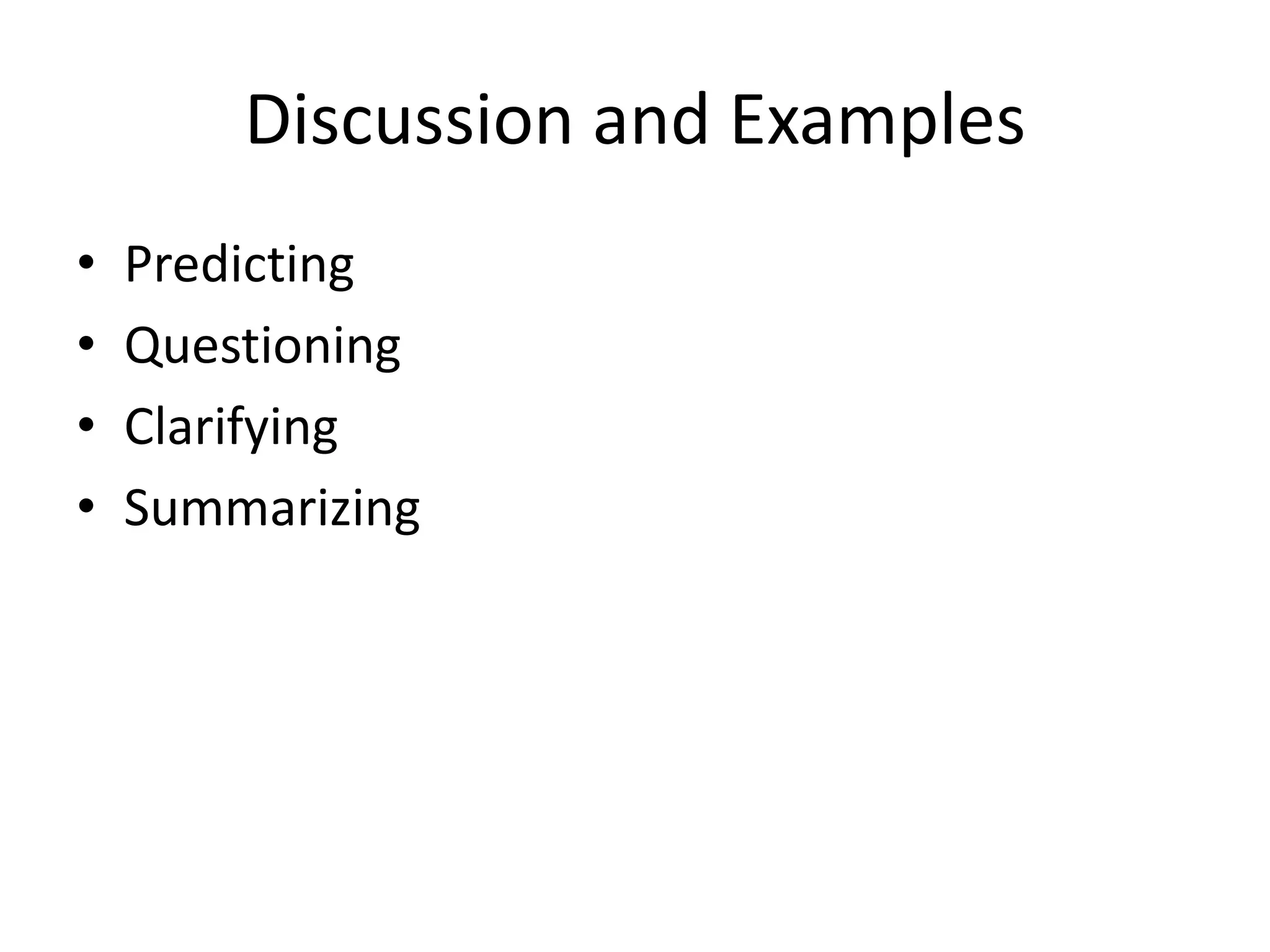
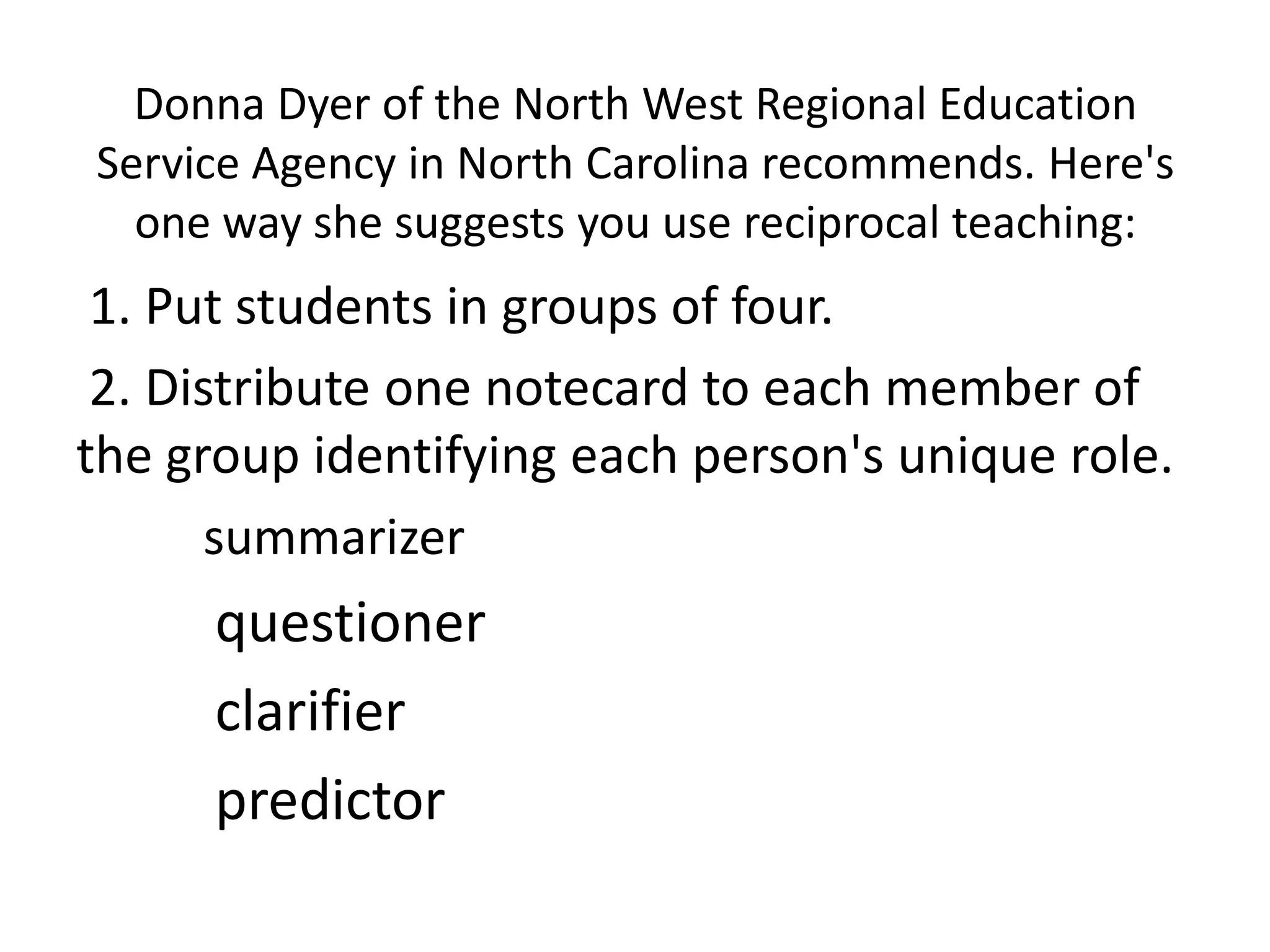
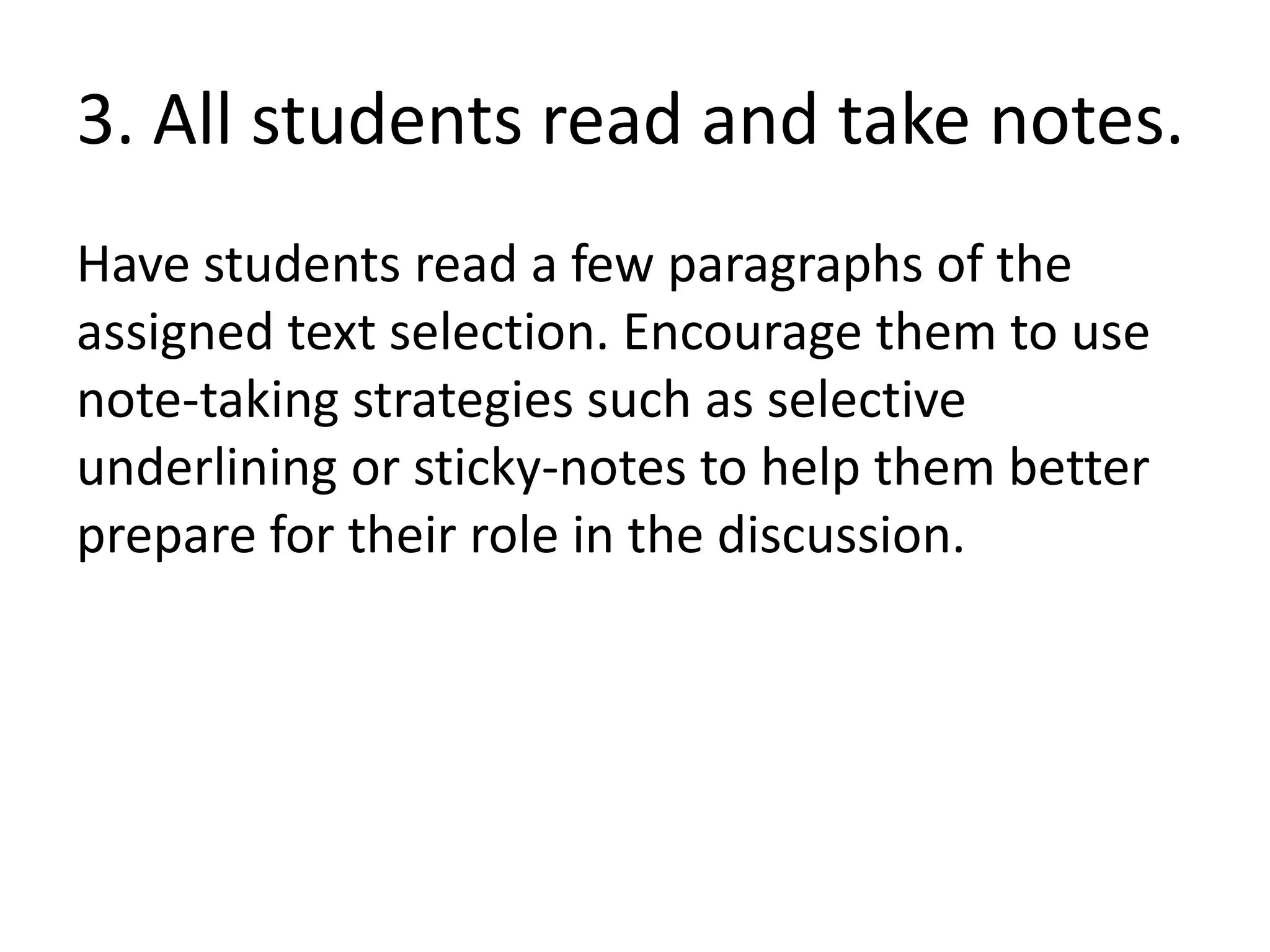
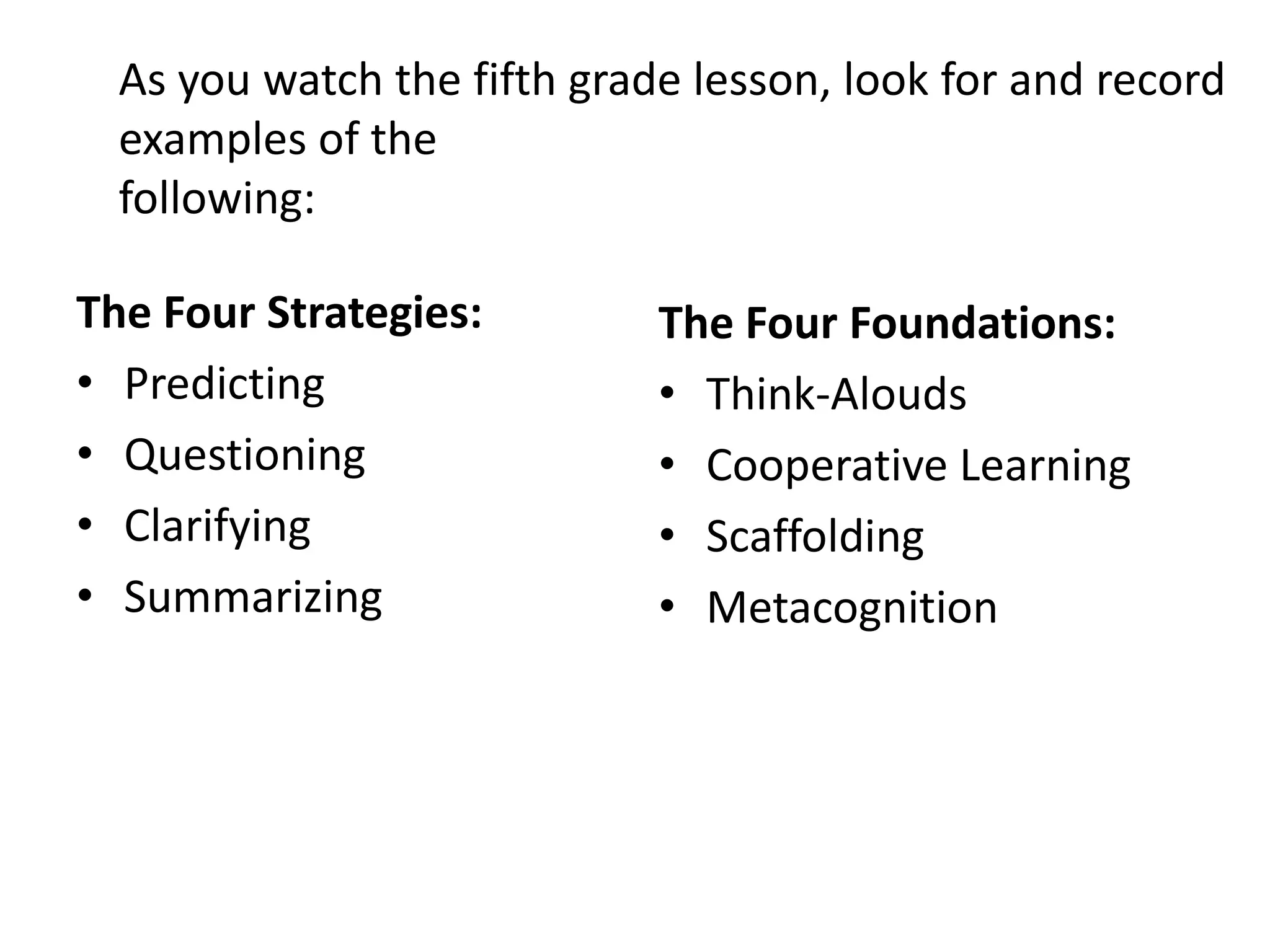
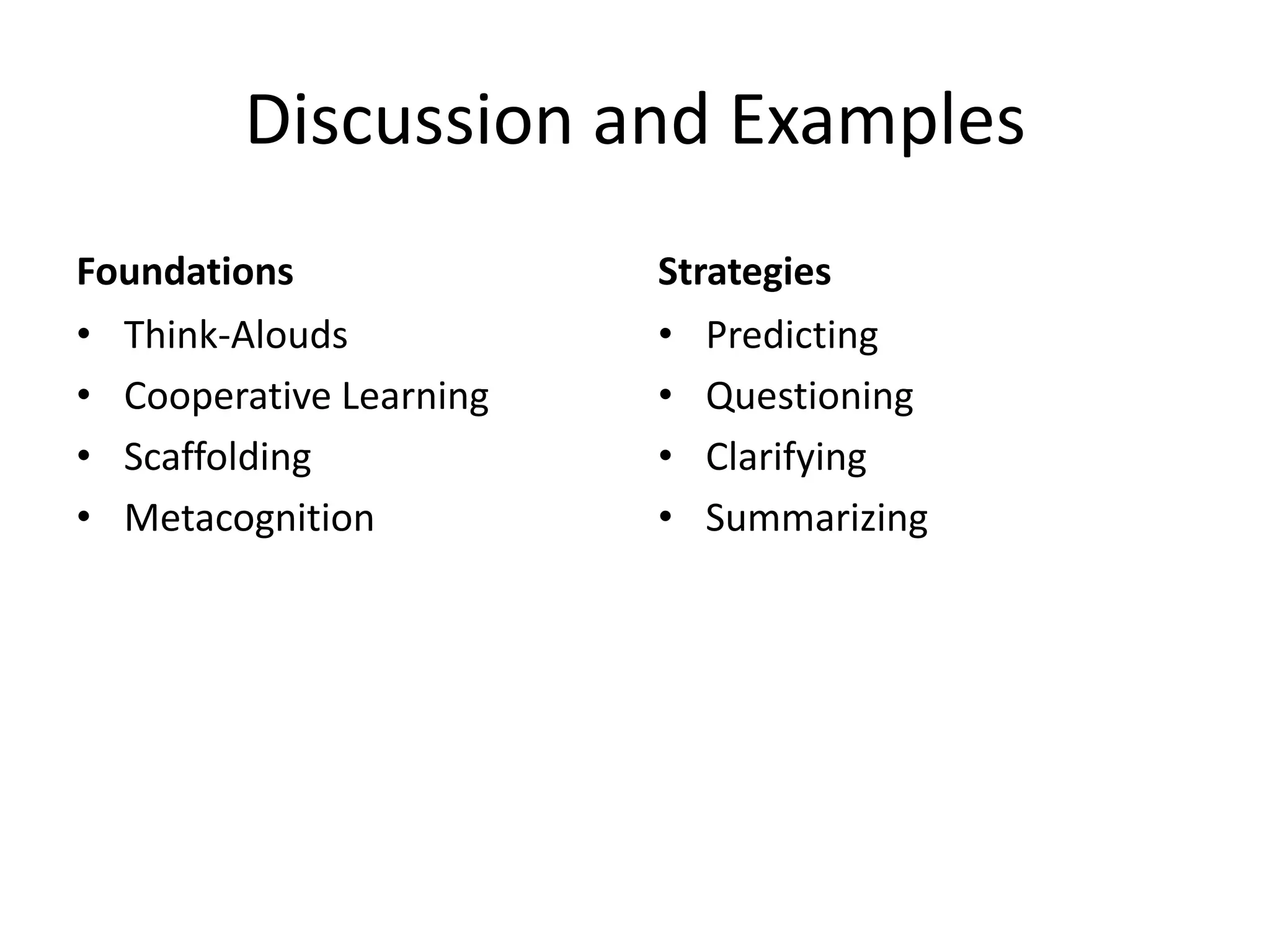

Reciprocal teaching is a comprehension strategy that involves four key strategies: summarizing, questioning, clarifying, and predicting. It is based on four foundations: think-alouds, cooperative learning, scaffolding, and metacognition. The process involves modeling the strategies, putting students into groups where they take turns filling different roles (summarizer, questioner, clarifier, predictor), and gradually reducing support as students' skills develop. The goal is to teach students to have a dialogue about what they read to foster deeper understanding.


![Reciprocal teaching look fors correct[1]](https://cdn.slidesharecdn.com/ss_thumbnails/reciprocalteachinglook-forscorrect1-150306223916-conversion-gate01-thumbnail.jpg?width=640&height=640&fit=bounds)


