Ofsted says… 
The most effective marking often 
challenges the pupil to go back to the 
work and rewrite a section to improve it 
in a specific way or to correct errors. 
The pupil is given time to do this and 
the teacher can check that they have 
done so successfully.
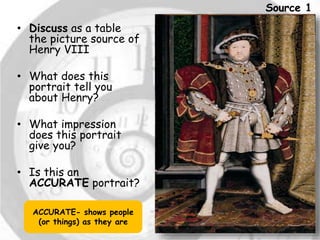
• Discuss as a table 
the picture source of 
Henry VIII 
• What does this 
portrait tell you 
about Henry? 
• What impression 
does this portrait 
give you? 
• Is this an 
ACCURATE portrait? 
ACCURATE- shows people 
(or things) as they are 
Source 1
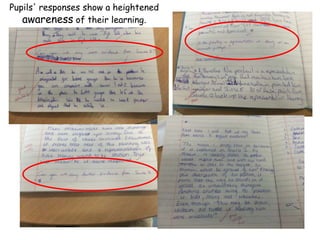
Pupils' responses show a heightened 
awareness of their learning.
Focused marking 
• Spend one PPA marking one set of books. 
• Have a bank of questions that you can use. 
• Refer it to the lesson objective or enquiry 
question. 
• Pupils take more responsibility for their own 
learning. 
• Actively involves pupils who respond in the 
following lesson.
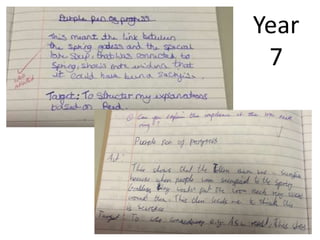
Purple Pen of Progress 
Read my comments and respond to 
my questions. Correct any spelling 
mistakes or capital letters. 
Share your ideas as a table.
Year 
7
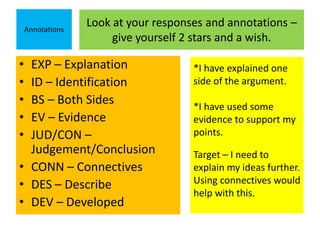
Look at your responses and annotations – 
give yourself 2 stars and a wish. 
Annotations 
• EXP – Explanation 
• ID – Identification 
• BS – Both Sides 
• EV – Evidence 
• JUD/CON – 
Judgement/Conclusion 
• CONN – Connectives 
• DES – Describe 
• DEV – Developed 
*I have explained one 
side of the argument. 
*I have used some 
evidence to support my 
points. 
Target – I need to 
explain my ideas further. 
Using connectives would 
help with this.
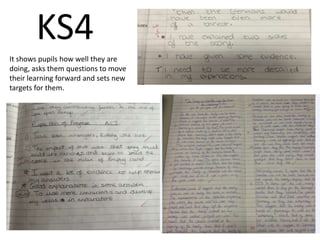
KS4 
It shows pupils how well they are 
doing, asks them questions to move 
their learning forward and sets new 
targets for them.
Focused marking 
• This type of feedback shift towards the 
increasingly proactive participation of the 
pupil, and the increasingly supportive rather 
than directive role of the teacher. 
• Given pupils time to read the feedback and act 
on it.
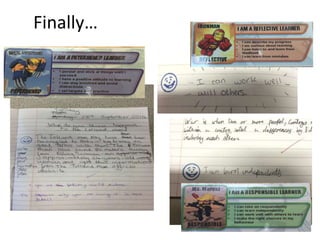
Finally…

Maximising Marking

  • 1.
    Ofsted says… Themost effective marking often challenges the pupil to go back to the work and rewrite a section to improve it in a specific way or to correct errors. The pupil is given time to do this and the teacher can check that they have done so successfully.
  • 2.
    • Discuss asa table the picture source of Henry VIII • What does this portrait tell you about Henry? • What impression does this portrait give you? • Is this an ACCURATE portrait? ACCURATE- shows people (or things) as they are Source 1
  • 3.
    Pupils' responses showa heightened awareness of their learning.
  • 4.
    Focused marking •Spend one PPA marking one set of books. • Have a bank of questions that you can use. • Refer it to the lesson objective or enquiry question. • Pupils take more responsibility for their own learning. • Actively involves pupils who respond in the following lesson.
  • 5.
    Purple Pen ofProgress Read my comments and respond to my questions. Correct any spelling mistakes or capital letters. Share your ideas as a table.
  • 6.
  • 7.
    Look at yourresponses and annotations – give yourself 2 stars and a wish. Annotations • EXP – Explanation • ID – Identification • BS – Both Sides • EV – Evidence • JUD/CON – Judgement/Conclusion • CONN – Connectives • DES – Describe • DEV – Developed *I have explained one side of the argument. *I have used some evidence to support my points. Target – I need to explain my ideas further. Using connectives would help with this.
  • 8.
    KS4 It showspupils how well they are doing, asks them questions to move their learning forward and sets new targets for them.
  • 9.
    Focused marking •This type of feedback shift towards the increasingly proactive participation of the pupil, and the increasingly supportive rather than directive role of the teacher. • Given pupils time to read the feedback and act on it.
  • 10.