RECENT TRENDS
IN
INVENTORY CONTROL
INVENTORY CONTROL
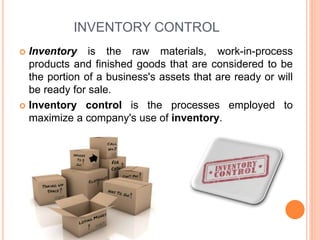
 Inventory is the raw materials, work-in-process
products and finished goods that are considered to be
the portion of a business's assets that are ready or will
be ready for sale.
 Inventory control is the processes employed to
maximize a company's use of inventory.
RECENT TRENDS.
 JIT System
 MRP I
 MRP II
 ERP
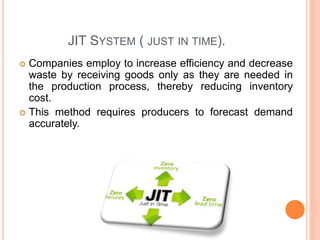
JIT SYSTEM ( JUST IN TIME).
 Companies employ to increase efficiency and decrease
waste by receiving goods only as they are needed in
the production process, thereby reducing inventory
cost.
 This method requires producers to forecast demand
accurately.
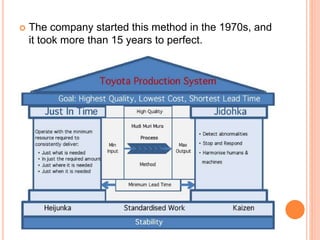
 The company started this method in the 1970s, and
it took more than 15 years to perfect.
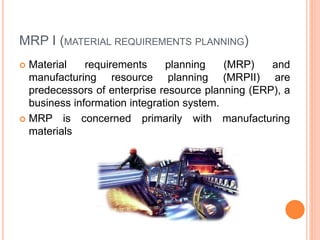
MRP I (MATERIAL REQUIREMENTS PLANNING)
 Material requirements planning (MRP) and
manufacturing resource planning (MRPII) are
predecessors of enterprise resource planning (ERP), a
business information integration system.
 MRP is concerned primarily with manufacturing
materials
ADVANTAGES & DISADVANTAGES
DISADVANTAGES
 MRP only give accurate o/p if accurate i/p is provided to
it.
 MRP is costly, time consuming & difficult to implement.
ADVANTAGES
 Helps to minimize inventory level.
 Track material requirement.
 Identifies shortage in inventory items.
 On time delivery.
MRP II (MANUFACTURING RESOURCE PLANNING)
 MRPII stands for manufacturing resource planning and
builds on MRP by adding shop floor production
planning and tracking tools.
 MRPII is concerned with the coordination of the entire
manufacturing production, including materials, finance,
and human relations.
ADVANTAGES & DISADVANTAGES
 ADVANTAGES
 Better control of inventories.
 Better quality and also control quality.
 Improve design control.
 Accurate inventory control.
 Reduced working capital for inventories.
 DISADVANATGES
 Staff must be fully trained for achieving benefit from
MRP II.
 Once implemented MRPII it will require accurate
information.
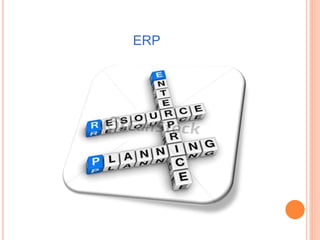
ERP
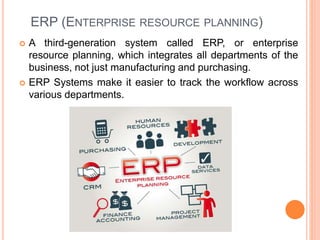
ERP (ENTERPRISE RESOURCE PLANNING)
 A third-generation system called ERP, or enterprise
resource planning, which integrates all departments of the
business, not just manufacturing and purchasing.
 ERP Systems make it easier to track the workflow across
various departments.
ADVANTAGES & DISADVANTAGES
Advantages:
 Optimization of business processes.
 Accurate and timely access to reliable information.
 Elimination of unnecessary operations and data.
 Reduction of time and costs of litigation
 Disadvantages:
 The installation of the ERP system is costly.
 ERP consultants are very expensive take
approximately 60% of the budget.
 The systems can be difficult to use.
Recent Trends in Inventory Control

Recent Trends in Inventory Control

  • 1.
  • 2.
    INVENTORY CONTROL  Inventoryis the raw materials, work-in-process products and finished goods that are considered to be the portion of a business's assets that are ready or will be ready for sale.  Inventory control is the processes employed to maximize a company's use of inventory.
  • 3.
    RECENT TRENDS.  JITSystem  MRP I  MRP II  ERP
  • 5.
    JIT SYSTEM (JUST IN TIME).  Companies employ to increase efficiency and decrease waste by receiving goods only as they are needed in the production process, thereby reducing inventory cost.  This method requires producers to forecast demand accurately.
  • 6.
     The companystarted this method in the 1970s, and it took more than 15 years to perfect.
  • 9.
    MRP I (MATERIALREQUIREMENTS PLANNING)  Material requirements planning (MRP) and manufacturing resource planning (MRPII) are predecessors of enterprise resource planning (ERP), a business information integration system.  MRP is concerned primarily with manufacturing materials
  • 10.
    ADVANTAGES & DISADVANTAGES DISADVANTAGES MRP only give accurate o/p if accurate i/p is provided to it.  MRP is costly, time consuming & difficult to implement. ADVANTAGES  Helps to minimize inventory level.  Track material requirement.  Identifies shortage in inventory items.  On time delivery.
  • 12.
    MRP II (MANUFACTURINGRESOURCE PLANNING)  MRPII stands for manufacturing resource planning and builds on MRP by adding shop floor production planning and tracking tools.  MRPII is concerned with the coordination of the entire manufacturing production, including materials, finance, and human relations.
  • 13.
    ADVANTAGES & DISADVANTAGES ADVANTAGES  Better control of inventories.  Better quality and also control quality.  Improve design control.  Accurate inventory control.  Reduced working capital for inventories.  DISADVANATGES  Staff must be fully trained for achieving benefit from MRP II.  Once implemented MRPII it will require accurate information.
  • 14.
  • 15.
    ERP (ENTERPRISE RESOURCEPLANNING)  A third-generation system called ERP, or enterprise resource planning, which integrates all departments of the business, not just manufacturing and purchasing.  ERP Systems make it easier to track the workflow across various departments.
  • 16.
    ADVANTAGES & DISADVANTAGES Advantages: Optimization of business processes.  Accurate and timely access to reliable information.  Elimination of unnecessary operations and data.  Reduction of time and costs of litigation  Disadvantages:  The installation of the ERP system is costly.  ERP consultants are very expensive take approximately 60% of the budget.  The systems can be difficult to use.