Read for Real
High Impact Teaching
 Using Informational
        Text


    Barbara A. Marinak, PhD
   Mount St. Mary’s University
  barbara.marinak@gmail.com
Pedagogical Shift
•IDEA 2004 and the CCSS are
 suggesting a major shift in
 how we approach reading
 instruction for all students.
Closer Look at CCSS

•Expectations of CCSS
•Impact on core reading
 instruction
•Impact on intervention
Purpose
• State-led effort coordinated by the National
  Governors Association Center for Best
  Practices (NGA Center) and the Council of
  Chief State School Officers (CCSSO).
• Developed in collaboration with teachers,
  school administrators, and experts, to provide
  a clear and consistent framework to prepare
  our children for college and the workforce.
Purpose
• Are aligned with college and work
  expectations
• Are clear, understandable and consistent

• Include rigorous content and application of
  knowledge through high-order skills

• Are evidence-based
English Language Arts
• Establish a “staircase” of increasing
  complexity in what students must
  be able to read and comprehend in
  order to be prepared for the
  demands of college and career.
English Language Arts
• Reading: Literature and Informational Text

• Writing

• Speaking and Listening

• Language

• Media and Technology

• Range, Quality and Complexity

• Literacy in History/Social Studies, Science, and
  Technical Subjects
English Language Arts
• By reading a diverse array of classic and
  contemporary literature as well as challenging
  informational texts in a range of subjects,
  students are expected to build knowledge,
  gain insights, explore possibilities, and
  broaden their perspective.
Informational Text
• Refer to details and examples in a text when
  explaining what the text says explicitly and when
  drawing inferences from the text.


• Describe the overall structure (e.g., chronology,
  comparison, cause/effect, problem/solution) of
  events, ideas, concepts, or information in a text or
  part of a text.
Informational Text

• Compare and contrast a firsthand and secondhand
  account of the same event or topic; describe the
  differences in focus and the information provided.
• Interpret information presented visually, orally, or
  quantitatively (e.g., in charts, graphs, diagrams, time
  lines, animations, or interactive elements on Web
  pages) and explain how the information contributes
  to an understanding of the text in which it appears.
Informational Text
• Analyze how two or more texts address similar
  themes or topics in order to build knowledge
  or to compare the approaches the authors
  take.
Informational Text
• Determine the main idea of a text and explain
  how it is supported by key details; summarize
  the text.
Impact on Core and
          Intervention
• Read deeply and widely from a truly
  balanced collection
• Read regularly within in and between
  text
• Regular written responding within and
  between text
Fiction Heavy…Why?
•Perception of difficulty
•Perception of interests
•Perception of turf
Result?
Informational Text Imperative
 • Significantly increase the amount of
   informational text students access
 • Increase the diversity of informational
   text
 • Select mentor texts that allow multiple
   core standards to be taught
 • Teach informational text using high
   impact methods
High Impact Methods
•Explicit
•Evidence-based
•Portable
•Promote transference
So now what?
Critical Considerations
• Read within and between text

• Vocabulary

• Compare and Contrast

• Summarization
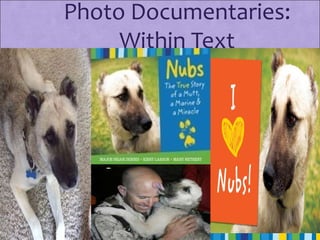
Photo Documentaries:
     Within Text
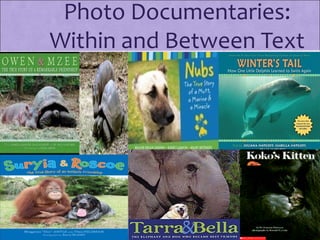
Photo Documentaries:
Within and Between Text
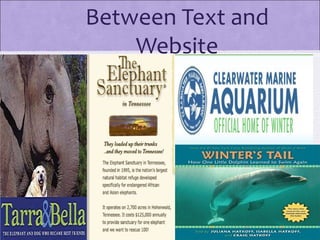
Between Text and
    Website
Pay Attention to Words!


• Frontload vocabulary

• Assess vocabulary knowledge
Text Impression


     Antarctic
Text Impression


     Antarctic

     African
Text Impression


     Antarctic

     African

       one
Text Impression

     Antarctic

     African

       one
     rookery
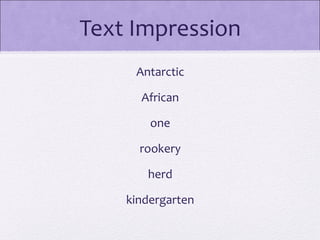
Text Impression

     Antarctic

     African

       one

     rookery

       herd
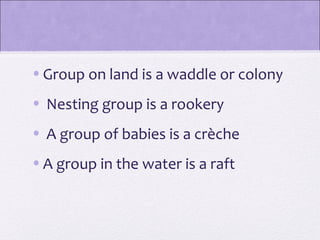
• Group on land is a waddle or colony
• Nesting group is a rookery
• A group of babies is a crèche
• A group in the water is a raft
Text Impression
     Antarctic

      African

        one

      rookery

       herd

    kindergarten
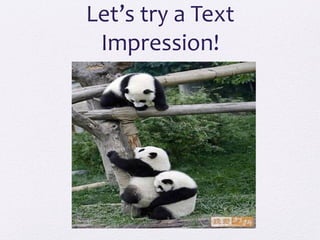
Let’s try a Text
 Impression!
Teach Features of Text!
• Structural Grammars
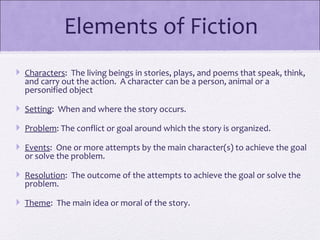
Elements of Fiction
 Characters: The living beings in stories, plays, and poems that speak, think,
  and carry out the action. A character can be a person, animal or a
  personified object

 Setting: When and where the story occurs.

 Problem: The conflict or goal around which the story is organized.

 Events: One or more attempts by the main character(s) to achieve the goal
  or solve the problem.

 Resolution: The outcome of the attempts to achieve the goal or solve the
  problem.

 Theme: The main idea or moral of the story.

 
Research Findings

• Studies also indicate that children become aware of
  and are comfortable with narrative story structure
  (characters, setting, problem, events, solution) at an
  early age. In other words, due to narrative reading
  practice and instruction in story grammar, fiction text
  becomes “predictable” (Williams, 2005).
• It is just as important that informational reading 
  practice be increased and that students become aware
  of and comfortable with the “predictable” elements
  and text structures that occur across informational text
  (Marinak & Gambrell, 2007).
Informational Grammar
Just as there is a narrative story grammar,
there is also an “informational grammar”
(Marinak & Gambrell, 2007).
Five Text Elements of
Informational Grammar
    •  Author’s Purpose

    •   Major Ideas

    •   Supporting Details

    •   Aids

    •   Important Vocabulary
               (Marinak, Moore, & Henk, 1998)
Teach the Text Structures
• Hall, Sabey, and McClellan (2005) and

  Williams (2005) found that text structure

  instruction promotes informational text

  comprehension.

• Text structure awareness has also been

  linked to accurate recall and retelling

  (Richgels, McGee, Lomax & Sheard,1987).
Big Five Text Structures
• Enumeration

• Time Order

• Compare & Contrast*

• Problem/Solution

• Cause & Effect
(Hall, Sabey & McClellan, 2005; Neufeld, 2005; Richgels,
  McGee, Lomax & Sheard,1987; Williams, 2005)
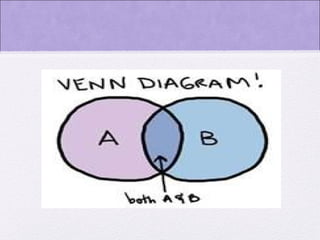
Compare and Contrast


• Text Map
Knowledge of Content
        Graphic Organizers
• A small cadre of graphic organizers and/or text
  maps should be used carefully
• Should be discipline-specific

• Should always be purposeful…discussion, writing,
  etc.
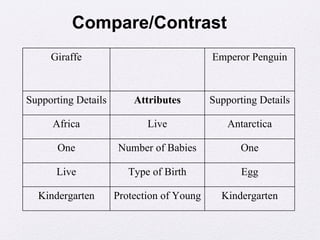
Compare/Contrast
     Giraffe                               Emperor Penguin


Supporting Details       Attributes        Supporting Details

     Africa                 Live               Antarctica

       One           Number of Babies             One

      Live              Type of Birth             Egg

  Kindergarten       Protection of Young     Kindergarten
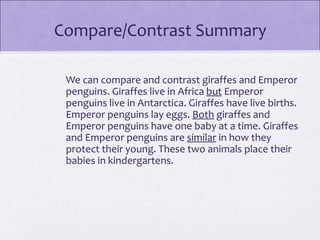
Compare/Contrast Summary

 We can compare and contrast giraffes and Emperor
 penguins. Giraffes live in Africa but Emperor
 penguins live in Antarctica. Giraffes have live births.
 Emperor penguins lay eggs. Both giraffes and
 Emperor penguins have one baby at a time. Giraffes
 and Emperor penguins are similar in how they
 protect their young. These two animals place their
 babies in kindergartens.
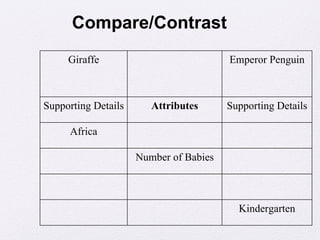
Compare/Contrast
     Giraffe                            Emperor Penguin


Supporting Details      Attributes      Supporting Details

     Africa

                     Number of Babies


                                          Kindergarten
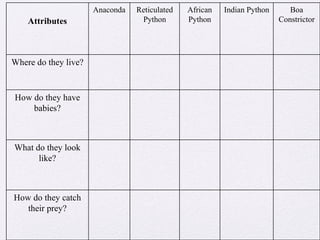
Anaconda   Reticulated   African   Indian Python      Boa
    Attributes                    Python       Python                    Constrictor


Where do they live?


How do they have
    babies?


What do they look
      like?


How do they catch
   their prey?
Summarization
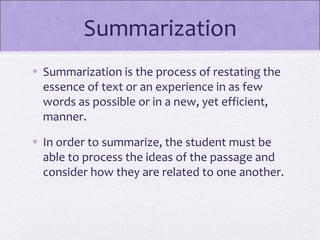
• Summarization is the process of restating the
  essence of text or an experience in as few
  words as possible or in a new, yet efficient,
  manner.
• In order to summarize, the student must be
  able to process the ideas of the passage and
  consider how they are related to one another.
Summarization


• Authors structure text in a variety of ways
  based on content and topic.
• Many studies indicate that teaching students
  to identify text structure and clarifying
  important information leads to more effective
  summarization.
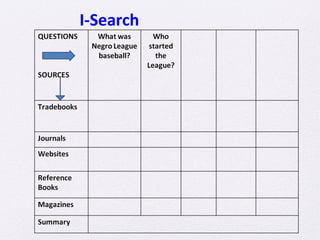
I-Search
Response Heuristic
  The Response Heuristic asks students to react
  to the following three-part format:

2. Text perceptions

3. Reactions to the text

4. Associations with the text
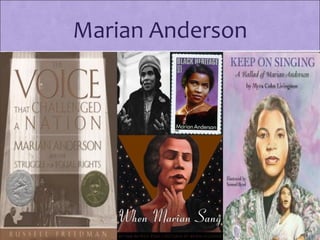
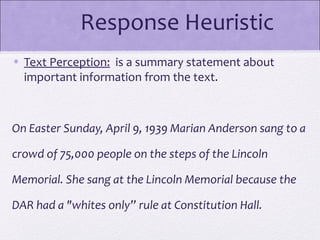
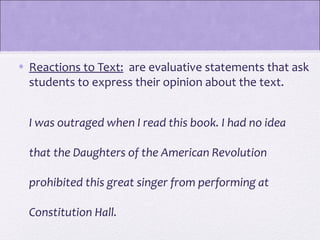
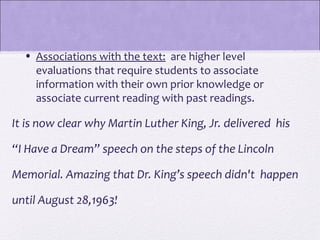
Marian Anderson
Response Heuristic
• Text Perception: is a summary statement about
  important information from the text.


On Easter Sunday, April 9, 1939 Marian Anderson sang to a

crowd of 75,000 people on the steps of the Lincoln

Memorial. She sang at the Lincoln Memorial because the

DAR had a "whites only” rule at Constitution Hall.
• Reactions to Text: are evaluative statements that ask
  students to express their opinion about the text.


  I was outraged when I read this book. I had no idea

  that the Daughters of the American Revolution

  prohibited this great singer from performing at

  Constitution Hall.
• Associations with the text: are higher level
    evaluations that require students to associate
    information with their own prior knowledge or
    associate current reading with past readings.

It is now clear why Martin Luther King, Jr. delivered his

“I Have a Dream” speech on the steps of the Lincoln

Memorial. Amazing that Dr. King’s speech didn't happen

until August 28,1963!
On Easter Sunday, April 9, 1939 Marian Anderson
sang to a crowd of 75,000 people on the steps of the
Lincoln Memorial. She sang at the Lincoln Memorial
because the DAR had a “whites only” rule at
Constitution Hall. I was outraged when I read this
book. I had no idea that that the Daughters of the
American Revolution prohibited this great singer
from performing at Constitution Hall. It is now clear
why Martin Luther King, Jr. delivered his “I Have A
Dream” speech on the steps of the Lincoln Memorial.
Amazing that Dr. King’s speech didn't happen until
August 28, 1963!
Good teaching is forever being on the cutting
  edge of a child’s competence.
                         Jerome Bruner

Real Reading

  • 1.
    Read for Real HighImpact Teaching Using Informational Text Barbara A. Marinak, PhD Mount St. Mary’s University barbara.marinak@gmail.com
  • 2.
    Pedagogical Shift •IDEA 2004and the CCSS are suggesting a major shift in how we approach reading instruction for all students.
  • 3.
    Closer Look atCCSS •Expectations of CCSS •Impact on core reading instruction •Impact on intervention
  • 4.
    Purpose • State-led effortcoordinated by the National Governors Association Center for Best Practices (NGA Center) and the Council of Chief State School Officers (CCSSO). • Developed in collaboration with teachers, school administrators, and experts, to provide a clear and consistent framework to prepare our children for college and the workforce.
  • 5.
    Purpose • Are alignedwith college and work expectations • Are clear, understandable and consistent • Include rigorous content and application of knowledge through high-order skills • Are evidence-based
  • 6.
    English Language Arts •Establish a “staircase” of increasing complexity in what students must be able to read and comprehend in order to be prepared for the demands of college and career.
  • 7.
    English Language Arts •Reading: Literature and Informational Text • Writing • Speaking and Listening • Language • Media and Technology • Range, Quality and Complexity • Literacy in History/Social Studies, Science, and Technical Subjects
  • 8.
    English Language Arts •By reading a diverse array of classic and contemporary literature as well as challenging informational texts in a range of subjects, students are expected to build knowledge, gain insights, explore possibilities, and broaden their perspective.
  • 9.
    Informational Text • Referto details and examples in a text when explaining what the text says explicitly and when drawing inferences from the text. • Describe the overall structure (e.g., chronology, comparison, cause/effect, problem/solution) of events, ideas, concepts, or information in a text or part of a text.
  • 10.
    Informational Text • Compareand contrast a firsthand and secondhand account of the same event or topic; describe the differences in focus and the information provided. • Interpret information presented visually, orally, or quantitatively (e.g., in charts, graphs, diagrams, time lines, animations, or interactive elements on Web pages) and explain how the information contributes to an understanding of the text in which it appears.
  • 11.
    Informational Text • Analyzehow two or more texts address similar themes or topics in order to build knowledge or to compare the approaches the authors take.
  • 12.
    Informational Text • Determinethe main idea of a text and explain how it is supported by key details; summarize the text.
  • 13.
    Impact on Coreand Intervention • Read deeply and widely from a truly balanced collection • Read regularly within in and between text • Regular written responding within and between text
  • 14.
    Fiction Heavy…Why? •Perception ofdifficulty •Perception of interests •Perception of turf
  • 15.
  • 16.
    Informational Text Imperative • Significantly increase the amount of informational text students access • Increase the diversity of informational text • Select mentor texts that allow multiple core standards to be taught • Teach informational text using high impact methods
  • 17.
  • 18.
  • 19.
    Critical Considerations • Readwithin and between text • Vocabulary • Compare and Contrast • Summarization
  • 20.
  • 21.
  • 22.
  • 23.
    Pay Attention toWords! • Frontload vocabulary • Assess vocabulary knowledge
  • 24.
  • 25.
    Text Impression Antarctic African
  • 26.
    Text Impression Antarctic African one
  • 27.
    Text Impression Antarctic African one rookery
  • 28.
    Text Impression Antarctic African one rookery herd
  • 29.
    • Group onland is a waddle or colony • Nesting group is a rookery • A group of babies is a crèche • A group in the water is a raft
  • 30.
    Text Impression Antarctic African one rookery herd kindergarten
  • 32.
    Let’s try aText Impression!
  • 33.
    Teach Features ofText! • Structural Grammars
  • 34.
    Elements of Fiction Characters: The living beings in stories, plays, and poems that speak, think, and carry out the action. A character can be a person, animal or a personified object  Setting: When and where the story occurs.  Problem: The conflict or goal around which the story is organized.  Events: One or more attempts by the main character(s) to achieve the goal or solve the problem.  Resolution: The outcome of the attempts to achieve the goal or solve the problem.  Theme: The main idea or moral of the story.  
  • 35.
    Research Findings • Studiesalso indicate that children become aware of and are comfortable with narrative story structure (characters, setting, problem, events, solution) at an early age. In other words, due to narrative reading practice and instruction in story grammar, fiction text becomes “predictable” (Williams, 2005).
  • 36.
    • It isjust as important that informational reading  practice be increased and that students become aware of and comfortable with the “predictable” elements and text structures that occur across informational text (Marinak & Gambrell, 2007).
  • 37.
    Informational Grammar Just asthere is a narrative story grammar, there is also an “informational grammar” (Marinak & Gambrell, 2007).
  • 38.
    Five Text Elementsof Informational Grammar •  Author’s Purpose •   Major Ideas •   Supporting Details •   Aids •   Important Vocabulary (Marinak, Moore, & Henk, 1998)
  • 39.
    Teach the TextStructures • Hall, Sabey, and McClellan (2005) and Williams (2005) found that text structure instruction promotes informational text comprehension. • Text structure awareness has also been linked to accurate recall and retelling (Richgels, McGee, Lomax & Sheard,1987).
  • 40.
    Big Five TextStructures • Enumeration • Time Order • Compare & Contrast* • Problem/Solution • Cause & Effect (Hall, Sabey & McClellan, 2005; Neufeld, 2005; Richgels, McGee, Lomax & Sheard,1987; Williams, 2005)
  • 41.
  • 42.
    Knowledge of Content Graphic Organizers • A small cadre of graphic organizers and/or text maps should be used carefully • Should be discipline-specific • Should always be purposeful…discussion, writing, etc.
  • 49.
    Compare/Contrast Giraffe Emperor Penguin Supporting Details Attributes Supporting Details Africa Live Antarctica One Number of Babies One Live Type of Birth Egg Kindergarten Protection of Young Kindergarten
  • 50.
    Compare/Contrast Summary Wecan compare and contrast giraffes and Emperor penguins. Giraffes live in Africa but Emperor penguins live in Antarctica. Giraffes have live births. Emperor penguins lay eggs. Both giraffes and Emperor penguins have one baby at a time. Giraffes and Emperor penguins are similar in how they protect their young. These two animals place their babies in kindergartens.
  • 51.
    Compare/Contrast Giraffe Emperor Penguin Supporting Details Attributes Supporting Details Africa Number of Babies Kindergarten
  • 54.
    Anaconda Reticulated African Indian Python Boa Attributes Python Python Constrictor Where do they live? How do they have babies? What do they look like? How do they catch their prey?
  • 55.
    Summarization • Summarization isthe process of restating the essence of text or an experience in as few words as possible or in a new, yet efficient, manner. • In order to summarize, the student must be able to process the ideas of the passage and consider how they are related to one another.
  • 56.
    Summarization • Authors structuretext in a variety of ways based on content and topic. • Many studies indicate that teaching students to identify text structure and clarifying important information leads to more effective summarization.
  • 58.
  • 59.
    Response Heuristic The Response Heuristic asks students to react to the following three-part format: 2. Text perceptions 3. Reactions to the text 4. Associations with the text
  • 60.
  • 61.
    Response Heuristic • TextPerception: is a summary statement about important information from the text. On Easter Sunday, April 9, 1939 Marian Anderson sang to a crowd of 75,000 people on the steps of the Lincoln Memorial. She sang at the Lincoln Memorial because the DAR had a "whites only” rule at Constitution Hall.
  • 62.
    • Reactions toText: are evaluative statements that ask students to express their opinion about the text. I was outraged when I read this book. I had no idea that the Daughters of the American Revolution prohibited this great singer from performing at Constitution Hall.
  • 63.
    • Associations withthe text: are higher level evaluations that require students to associate information with their own prior knowledge or associate current reading with past readings. It is now clear why Martin Luther King, Jr. delivered his “I Have a Dream” speech on the steps of the Lincoln Memorial. Amazing that Dr. King’s speech didn't happen until August 28,1963!
  • 64.
    On Easter Sunday,April 9, 1939 Marian Anderson sang to a crowd of 75,000 people on the steps of the Lincoln Memorial. She sang at the Lincoln Memorial because the DAR had a “whites only” rule at Constitution Hall. I was outraged when I read this book. I had no idea that that the Daughters of the American Revolution prohibited this great singer from performing at Constitution Hall. It is now clear why Martin Luther King, Jr. delivered his “I Have A Dream” speech on the steps of the Lincoln Memorial. Amazing that Dr. King’s speech didn't happen until August 28, 1963!
  • 65.
    Good teaching isforever being on the cutting edge of a child’s competence. Jerome Bruner