Deciphering The Jargon
What The Australian Curriculum Means For The English
                     Classroom
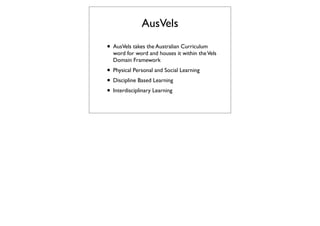
AusVels

• From 2013 AusVels is the mandated
  curriculum for Victorian Government and
  Catholic Schools and the recommended
  curriculum guideline for independent
  schools
AusVels


• AusVels for English is identical to The
  Australian Curriculum
• Why call it AusVels then?
AusVels
• AusVels takes the Australian Curriculum
  word for word and houses it within the Vels
  Domain Framework
• Physical Personal and Social Learning
• Discipline Based Learning
• Interdisciplinary Learning
What the....


• But I just worked out what VELs was all
  about - I have to start again....????
Assessment


    ?
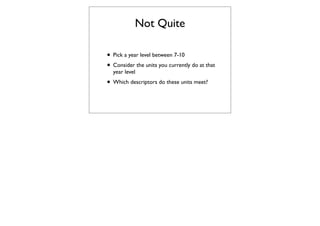
Not Quite

• Pick a year level between 7-10
• Consider the units you currently do at that
  year level
• Which descriptors do these units meet?
But I’m Not Doing
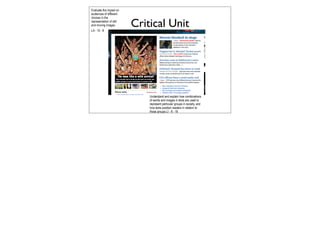
       Everything

• The American Education Researcher
  estimated it would take the typical student
  23 academic years to master state
  standards (What Works In Schools 2003)
It’s less means more


• The Australian Curriculum is an
  opportunity to do fewer things - and to do
  those things better
What to do?

• How can I do this efficiently?
• What skills in particular do students need
  to ‘master’?
• How can I meet curriculum priorities
Five Types of Units

• Context
• Creative
• Critical
• Communication
• Comprehension
Context Unit
•   Big idea: What does this idea or topic mean?

•   Explore: What are different examples and ideas on
    this topic? What do texts on the same topic or in
    the same genre do similarly or differently?

•   Do: Create a text on a topic that represents a
    personal view on that theme. Or, create a text in a
    specific type of genre that utilises the features of
    that genre.
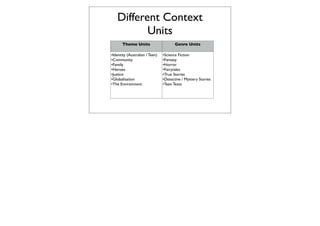
Different Context
          Units
       Theme Units                     Genre Units

•Identity (Australian / Teen)   •Science Fiction
•Community                      •Fantasy
•Family                         •Horror
•Heroes                         •Fairytales
•Justice                        •True Stories
•Globalisation                  •Detective / Mystery Stories
•The Environment                •Teen Texts
Hero Context
• What does it mean to be a hero in the
  movies?
• What does it mean to be a hero in sport?
• What does it mean to be a ‘real-life’ or
  ‘everyday’ hero?
• Who is a personal hero?
Hero Context


• Compare and contrast two different types
  of heroes
Horror Context


• At Year 9, a Horror Context Unit might
  cover...
December
Compare the ways that
                               Spectre
language and images
are used to create
character, and to
influence emotions and
opinions in different
types of texts - LI - 7 - 14
Horror Context

• Create a text that uses or satirises horror
  conventions with an accompanying
  commentary
• Compare or contrast the horror
  conventions in two or more texts
Creative
•   Big idea: How can we use different texts as models
    for creating our own texts?

•   Explore: Look at three or more texts that are
    examples of the same text type to compare
    different features and style of the that text type.

•   Do: Create our own example of the text type
    using features of the examples we looked at or
    innovating and modifying those features for our
    own purposes.
For example

• A unit on fairytales could include these
  descriptors
• Which ones would you want students to
  ‘master’? Which ones would you want to
  assess students on?
In particular

• Creative units that allow us to model use
  of language
• Creative units that link to comprehension
  units
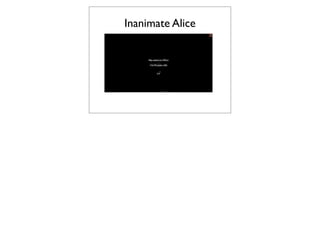
Inanimate Alice
Context + Creative


• A context unit might have both a creative
  and analytical outcome
Critical Unit

•   Big idea: What is my opinion about the worth,
    merit, accuracy or fairness of this text or
    perspective?

•   Explore: How do others express their critical
    opinion effectively?

•   Do: How can I express my critical opinion
    effectively?
Critical Unit


• How am I being asked to think or feel
  about something?
• Do I accept this?
Critical Unit

• Presentation of issues / media bias
• Embedded messages in texts - particularly
  teen films
• Critical evaluation of advertising
• Critical evaluation of webpages
Critical Unit

• At Year 10: Evaluate the social, moral and
  ethical positions represented in texts =
  What do I think about what this text has to
  say?
Critical Unit


• What is a text that you teach with a
  message that you don’t necessarily agree
  with?
Critical Unit

• At Year 9 - Use comprehension strategies
  to interpret and analyse texts, comparing
  and evaluating representations of an event,
  issue, situation or character in different
  texts = How do two different news reports
  present the same issue? Which is fairer?
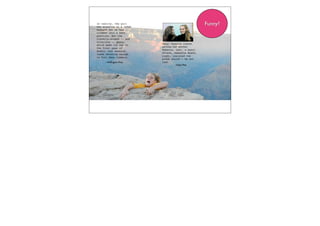
In reality, the girl
was standing on a ledge
                                                    Funny?
beneath her or had
climbed into a safe
position. But the
cleverly-staged -- and
hilarious -- photo,
                          Smug: Despite almost
which made its way to
                          giving her mother
the front page of
                          Rebecca, left, a heart
Reddit last weekend,
                          attack, Samantha Busch,
looks shocking enough
                          right, insisted the
to fool many viewers.
                          prank wouldn't be her
     - Huffington Post     last
                                  - Daily Mail
Evaluate the impact on
audiences of different
choices in the
representation of still
and moving images
LA - 10 - 8
                          Critical Unit


                              Understand and explain how combinations
                              of words and images in texts are used to
                              represent particular groups in society, and
                              how texts position readers in relation to
                              those groups LI - 8 - 16
Critical Unit

• At Year 8 - Identify and evaluate devices
  that create tone, for example humour,
  wordplay, innuendo and parody in poetry,
  humorous prose, drama or visual texts =
  which is the more effective ad? Why?
Critical Unit
Critical Unit
Communication Unit

•How do we use language to represent who we are?

•How is language used to communicate formally and
 informally?

•How is language used to communicate functional
 ideas and abstract ideas?

•How have we changed the way we communicate
 formally and informally, functionally and abstractly?
Communication Unit

• Changing English
• Power of English / English & Identity
• Formal / Informal Language Conventions
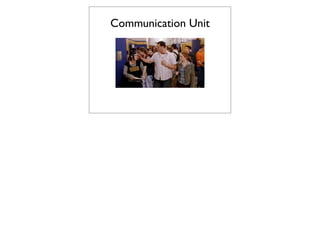
Communication Unit
Communication Unit

• What unit are you doing at the moment
  where there is an opportunity for students
  to consider the changing nature, the power
  or formality/informality of English?
Comprehension Unit
•Big idea: What is a key message of a text?

•Explore: What are a range of things an author does to
 show us what this text is about?

•Do: What are they key things I need to refer to to
 represent my understanding of what this text is
 about?
Comprehension Unit
Different Texts

 •Identify and explore ideas and viewpoints about
  events, issues and characters represented in texts
  drawn from different historical, social and cultural
  contexts - LI - 7 - 12
Techniques
 •Compare the ways that language and images are used
  to create character, and to influence emotions and
  opinions in different types of texts - LI - 7 - 14
Break Time
Types of texts
• Multimodal Texts
• Digital Texts
• Satirical Texts
• Graphic Novels
• Texts From Other Cultures
• Asian and Indigenous Texts
A basic guide
• At Years 7, 8 & 9:
• 1 traditional multimodal text (i.e a film)
• 1 non-traditional multimodal text
• 1 text from a different cultural context
• 1 novel
• 1 satirical text
Multimodal Texts

•   The Australian Curriculum’s Glossary defines a
    multimodal text as a “combination of two or more
    communication modes (for example, print, image
    and spoken text, as in film or computer
    presentations).” According to this definition texts
    that we already traditionally study, such as film, tv
    shows or advertisements, qualify as a multimodal
    text.
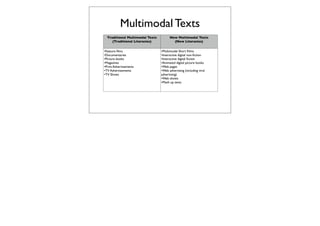
Multimodal Texts
  Traditional Multimodal Texts         New Multimodal Texts
     (Traditional Literacies)            (New Literacies)

•Feature films                    •Multimodal Short Films
•Documentaries                   •Interactive digital non-fiction
•Picture books                   •Interactive digital fiction
•Magazines                       •Animated digital picture books
•Print Advertisements            •Web pages
•TV Advertisements               •Web advertising (including viral
•TV Shows                        advertising)
                                 •Web shows
                                 •Mash up texts
Multimodal Texts
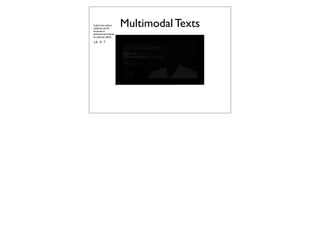
Explain how authors
creatively use the
structures of
                         Multimodal Texts
sentences and clauses
for particular effects

-LA - 9 - 7
Web Pages
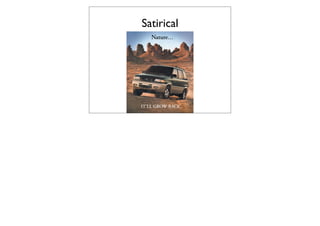
Satirical
Graphic Novels
Texts From Different
 Cultural Contexts
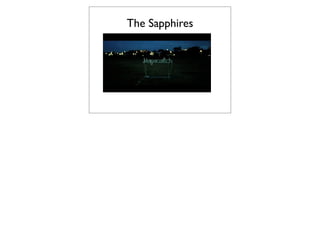
The Sapphires
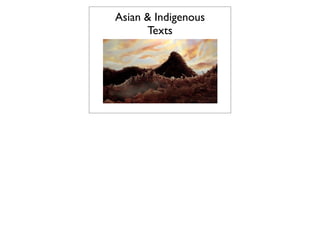
Asian & Indigenous
      Texts
Satire
Plot Device
Quick text audit
• Technique
• Ideas
• Genre
                   • Non traditional
• Satire
• Other Cultures
• Traditional
What can you take out?


• What do students need to master?
• How much time is spent on core skills?
Year Planner


• Different Types of Units
• Links between units
Unit Planner


• Measurable learning targets
Unit Planner
• There are three parts to a well written skill
  statement: measurable verb, target and
  descriptor:
• Compare in writing 3 elements, line, stanza,
  meter, using traditional / non traditional
  forms of poetry
• From: A Guide To Curriculum Mapping by
  Janet A. Hale
Focus on a unit


• What is a measurable learning objective?
• What elements of The Australian
  Curriculum can be used?
Planning for effective
       feedback
• Three stages for input:
• Planning
• Producing / Revising
• Reflecting
Planning for effective
       feedback

• Describe language features used in the
  created text taken from a modeled text
  and explain their purpose.
Planning for effective
       feedback

• 1 thing I’m doing well
• 1 thing I’m uncertain of
• 1 thing I know I need to improve
Break Time
• Think Christmas
• Write a sentence with a dash, colon or set
  of brackets in it
Core skills


• What are the core skills in English?
Maximise learning


• Write a sentence about the anaphylaxis
  training this morning
Maximise learning


• Write once = assessment
• Write twice = learning opportunity
Maximise Learning

• Add more detail - by adding parentheses
• Add more detail - by adding a relative
  clause (who, which, that)
• Add more detail - by adding an adverbial
  clause - (while, although, even though,
  despite)
Linking Grammar /
         Writing
• Adverbs - poetry
• Adverbs - instructional writing
• Prepositions - narrative writing
• Colons / dashes - text response writing
• Commas - persuasive writing
Five Elements of
        Grammar
• Vocabulary
• Spelling
• Parts of Speech
• Sentence structures
• Punctuation
Grammar Lesson
        Phases
• Students explore grammar concept (read
  material, look at examples, reciprocal
  summarisation)
• Think about grammar concepts (what do
  they have in common, compare/contrast,
  group, associate)
• Apply
• Explain back
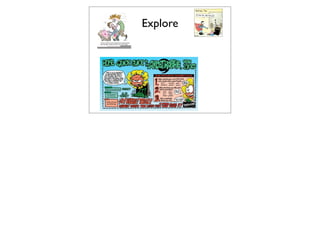
Explore
Punctuation Example
• Explore: Look at punctuation video /
  punctuation picture book / punctuation
  examples
• Think: Put these punctuation marks into
  two or more groups (. , : “ “ () ? ! - )
• Apply: Punctuation Edit 1-2-3 (delete one
  punctuation mark, add two new
  punctuation marks, change three
  punctuation marks)
• Explain back: This punctuation mark is
  like...
Handout 1
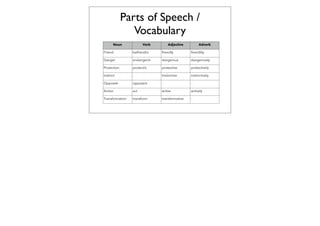
Parts of Speech /
                Vocabulary
      Noun             Verb       Adjective         Adverb

Friend           befriend/s   friendly         friendlily

Danger           endanger/s   dangerous        dangerously

Protection       protect/s    protective       protectively

Instinct         -            Instinctive      instinctively

Opposite         oppose/s     -                -

Action           act          active           actively

Transformation   transform    transformative   -
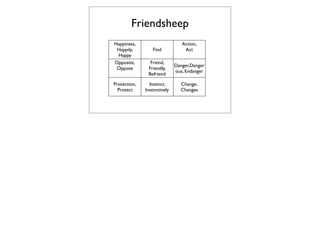
Friendsheep
Happiness,                       Action,
 Happily,         Find            Act
 Happy
Opposite,       Friend,
                              Danger,Danger
 Oppose        Friendly,
                              ous, Endanger
               Befriend

Protection,     Instinct,       Change,
  Protect     Instinctively     Changes
Grammar Focus


• What is your grammar focus for each unit?
• How will students demonstrate their
  mastery of this?
Recognising Effort

•   High: All words spelt with the correct number
    of syllables

•   Medium: Most words spelt with the correct
    number of syllables
•   Low: Some words spelt with the correct number of
    syllables
Grammar Assessment
• Used at least four different ways to start a
  sentence
• Used at least two different types of internal
  punctuation and two different types of
  terminal punctuation
• Revised the structure of at least five
  sentences during the drafting stage
In a nutshell

• What unit type?
• What text types?
• What core reading and writing skills?
Thank you

Australian Curriculum English

  • 1.
    Deciphering The Jargon WhatThe Australian Curriculum Means For The English Classroom
  • 2.
    AusVels • From 2013AusVels is the mandated curriculum for Victorian Government and Catholic Schools and the recommended curriculum guideline for independent schools
  • 3.
    AusVels • AusVels forEnglish is identical to The Australian Curriculum • Why call it AusVels then?
  • 4.
    AusVels • AusVels takesthe Australian Curriculum word for word and houses it within the Vels Domain Framework • Physical Personal and Social Learning • Discipline Based Learning • Interdisciplinary Learning
  • 5.
    What the.... • ButI just worked out what VELs was all about - I have to start again....????
  • 6.
  • 7.
    Not Quite • Picka year level between 7-10 • Consider the units you currently do at that year level • Which descriptors do these units meet?
  • 8.
    But I’m NotDoing Everything • The American Education Researcher estimated it would take the typical student 23 academic years to master state standards (What Works In Schools 2003)
  • 9.
    It’s less meansmore • The Australian Curriculum is an opportunity to do fewer things - and to do those things better
  • 10.
    What to do? •How can I do this efficiently? • What skills in particular do students need to ‘master’? • How can I meet curriculum priorities
  • 11.
    Five Types ofUnits • Context • Creative • Critical • Communication • Comprehension
  • 12.
    Context Unit • Big idea: What does this idea or topic mean? • Explore: What are different examples and ideas on this topic? What do texts on the same topic or in the same genre do similarly or differently? • Do: Create a text on a topic that represents a personal view on that theme. Or, create a text in a specific type of genre that utilises the features of that genre.
  • 13.
    Different Context Units Theme Units Genre Units •Identity (Australian / Teen) •Science Fiction •Community •Fantasy •Family •Horror •Heroes •Fairytales •Justice •True Stories •Globalisation •Detective / Mystery Stories •The Environment •Teen Texts
  • 14.
    Hero Context • Whatdoes it mean to be a hero in the movies? • What does it mean to be a hero in sport? • What does it mean to be a ‘real-life’ or ‘everyday’ hero? • Who is a personal hero?
  • 15.
    Hero Context • Compareand contrast two different types of heroes
  • 16.
    Horror Context • AtYear 9, a Horror Context Unit might cover...
  • 17.
  • 18.
    Compare the waysthat Spectre language and images are used to create character, and to influence emotions and opinions in different types of texts - LI - 7 - 14
  • 19.
    Horror Context • Createa text that uses or satirises horror conventions with an accompanying commentary • Compare or contrast the horror conventions in two or more texts
  • 20.
    Creative • Big idea: How can we use different texts as models for creating our own texts? • Explore: Look at three or more texts that are examples of the same text type to compare different features and style of the that text type. • Do: Create our own example of the text type using features of the examples we looked at or innovating and modifying those features for our own purposes.
  • 21.
    For example • Aunit on fairytales could include these descriptors • Which ones would you want students to ‘master’? Which ones would you want to assess students on?
  • 22.
    In particular • Creativeunits that allow us to model use of language • Creative units that link to comprehension units
  • 23.
  • 24.
    Context + Creative •A context unit might have both a creative and analytical outcome
  • 25.
    Critical Unit • Big idea: What is my opinion about the worth, merit, accuracy or fairness of this text or perspective? • Explore: How do others express their critical opinion effectively? • Do: How can I express my critical opinion effectively?
  • 26.
    Critical Unit • Howam I being asked to think or feel about something? • Do I accept this?
  • 27.
    Critical Unit • Presentationof issues / media bias • Embedded messages in texts - particularly teen films • Critical evaluation of advertising • Critical evaluation of webpages
  • 28.
    Critical Unit • AtYear 10: Evaluate the social, moral and ethical positions represented in texts = What do I think about what this text has to say?
  • 29.
    Critical Unit • Whatis a text that you teach with a message that you don’t necessarily agree with?
  • 30.
    Critical Unit • AtYear 9 - Use comprehension strategies to interpret and analyse texts, comparing and evaluating representations of an event, issue, situation or character in different texts = How do two different news reports present the same issue? Which is fairer?
  • 31.
    In reality, thegirl was standing on a ledge Funny? beneath her or had climbed into a safe position. But the cleverly-staged -- and hilarious -- photo, Smug: Despite almost which made its way to giving her mother the front page of Rebecca, left, a heart Reddit last weekend, attack, Samantha Busch, looks shocking enough right, insisted the to fool many viewers. prank wouldn't be her - Huffington Post last - Daily Mail
  • 32.
    Evaluate the impacton audiences of different choices in the representation of still and moving images LA - 10 - 8 Critical Unit Understand and explain how combinations of words and images in texts are used to represent particular groups in society, and how texts position readers in relation to those groups LI - 8 - 16
  • 33.
    Critical Unit • AtYear 8 - Identify and evaluate devices that create tone, for example humour, wordplay, innuendo and parody in poetry, humorous prose, drama or visual texts = which is the more effective ad? Why?
  • 34.
  • 35.
  • 36.
    Communication Unit •How dowe use language to represent who we are? •How is language used to communicate formally and informally? •How is language used to communicate functional ideas and abstract ideas? •How have we changed the way we communicate formally and informally, functionally and abstractly?
  • 37.
    Communication Unit • ChangingEnglish • Power of English / English & Identity • Formal / Informal Language Conventions
  • 38.
  • 39.
    Communication Unit • Whatunit are you doing at the moment where there is an opportunity for students to consider the changing nature, the power or formality/informality of English?
  • 40.
    Comprehension Unit •Big idea:What is a key message of a text? •Explore: What are a range of things an author does to show us what this text is about? •Do: What are they key things I need to refer to to represent my understanding of what this text is about?
  • 41.
    Comprehension Unit Different Texts •Identify and explore ideas and viewpoints about events, issues and characters represented in texts drawn from different historical, social and cultural contexts - LI - 7 - 12 Techniques •Compare the ways that language and images are used to create character, and to influence emotions and opinions in different types of texts - LI - 7 - 14
  • 42.
  • 43.
    Types of texts •Multimodal Texts • Digital Texts • Satirical Texts • Graphic Novels • Texts From Other Cultures • Asian and Indigenous Texts
  • 44.
    A basic guide •At Years 7, 8 & 9: • 1 traditional multimodal text (i.e a film) • 1 non-traditional multimodal text • 1 text from a different cultural context • 1 novel • 1 satirical text
  • 45.
    Multimodal Texts • The Australian Curriculum’s Glossary defines a multimodal text as a “combination of two or more communication modes (for example, print, image and spoken text, as in film or computer presentations).” According to this definition texts that we already traditionally study, such as film, tv shows or advertisements, qualify as a multimodal text.
  • 46.
    Multimodal Texts Traditional Multimodal Texts New Multimodal Texts (Traditional Literacies) (New Literacies) •Feature films •Multimodal Short Films •Documentaries •Interactive digital non-fiction •Picture books •Interactive digital fiction •Magazines •Animated digital picture books •Print Advertisements •Web pages •TV Advertisements •Web advertising (including viral •TV Shows advertising) •Web shows •Mash up texts
  • 47.
  • 48.
    Explain how authors creativelyuse the structures of Multimodal Texts sentences and clauses for particular effects -LA - 9 - 7
  • 49.
  • 50.
  • 51.
  • 52.
    Texts From Different Cultural Contexts
  • 53.
  • 54.
  • 55.
  • 56.
  • 57.
    Quick text audit •Technique • Ideas • Genre • Non traditional • Satire • Other Cultures • Traditional
  • 58.
    What can youtake out? • What do students need to master? • How much time is spent on core skills?
  • 59.
    Year Planner • DifferentTypes of Units • Links between units
  • 60.
  • 61.
    Unit Planner • Thereare three parts to a well written skill statement: measurable verb, target and descriptor: • Compare in writing 3 elements, line, stanza, meter, using traditional / non traditional forms of poetry • From: A Guide To Curriculum Mapping by Janet A. Hale
  • 62.
    Focus on aunit • What is a measurable learning objective? • What elements of The Australian Curriculum can be used?
  • 63.
    Planning for effective feedback • Three stages for input: • Planning • Producing / Revising • Reflecting
  • 64.
    Planning for effective feedback • Describe language features used in the created text taken from a modeled text and explain their purpose.
  • 65.
    Planning for effective feedback • 1 thing I’m doing well • 1 thing I’m uncertain of • 1 thing I know I need to improve
  • 66.
  • 67.
    • Think Christmas •Write a sentence with a dash, colon or set of brackets in it
  • 68.
    Core skills • Whatare the core skills in English?
  • 69.
    Maximise learning • Writea sentence about the anaphylaxis training this morning
  • 70.
    Maximise learning • Writeonce = assessment • Write twice = learning opportunity
  • 71.
    Maximise Learning • Addmore detail - by adding parentheses • Add more detail - by adding a relative clause (who, which, that) • Add more detail - by adding an adverbial clause - (while, although, even though, despite)
  • 72.
    Linking Grammar / Writing • Adverbs - poetry • Adverbs - instructional writing • Prepositions - narrative writing • Colons / dashes - text response writing • Commas - persuasive writing
  • 73.
    Five Elements of Grammar • Vocabulary • Spelling • Parts of Speech • Sentence structures • Punctuation
  • 74.
    Grammar Lesson Phases • Students explore grammar concept (read material, look at examples, reciprocal summarisation) • Think about grammar concepts (what do they have in common, compare/contrast, group, associate) • Apply • Explain back
  • 75.
  • 76.
    Punctuation Example • Explore:Look at punctuation video / punctuation picture book / punctuation examples • Think: Put these punctuation marks into two or more groups (. , : “ “ () ? ! - ) • Apply: Punctuation Edit 1-2-3 (delete one punctuation mark, add two new punctuation marks, change three punctuation marks) • Explain back: This punctuation mark is like...
  • 77.
  • 78.
    Parts of Speech/ Vocabulary Noun Verb Adjective Adverb Friend befriend/s friendly friendlily Danger endanger/s dangerous dangerously Protection protect/s protective protectively Instinct - Instinctive instinctively Opposite oppose/s - - Action act active actively Transformation transform transformative -
  • 79.
    Friendsheep Happiness, Action, Happily, Find Act Happy Opposite, Friend, Danger,Danger Oppose Friendly, ous, Endanger Befriend Protection, Instinct, Change, Protect Instinctively Changes
  • 80.
    Grammar Focus • Whatis your grammar focus for each unit? • How will students demonstrate their mastery of this?
  • 81.
    Recognising Effort • High: All words spelt with the correct number of syllables • Medium: Most words spelt with the correct number of syllables • Low: Some words spelt with the correct number of syllables
  • 82.
    Grammar Assessment • Usedat least four different ways to start a sentence • Used at least two different types of internal punctuation and two different types of terminal punctuation • Revised the structure of at least five sentences during the drafting stage
  • 83.
    In a nutshell •What unit type? • What text types? • What core reading and writing skills?
  • 84.