Real Numbers
By Atharav Porwal
X-A
Index
• Introduction
• Euclid’s Division Lemma
• The Fundamental Theorem of Arithmetic
• Rational and Irrational numbers
• Their Decimal expansions
Introduction
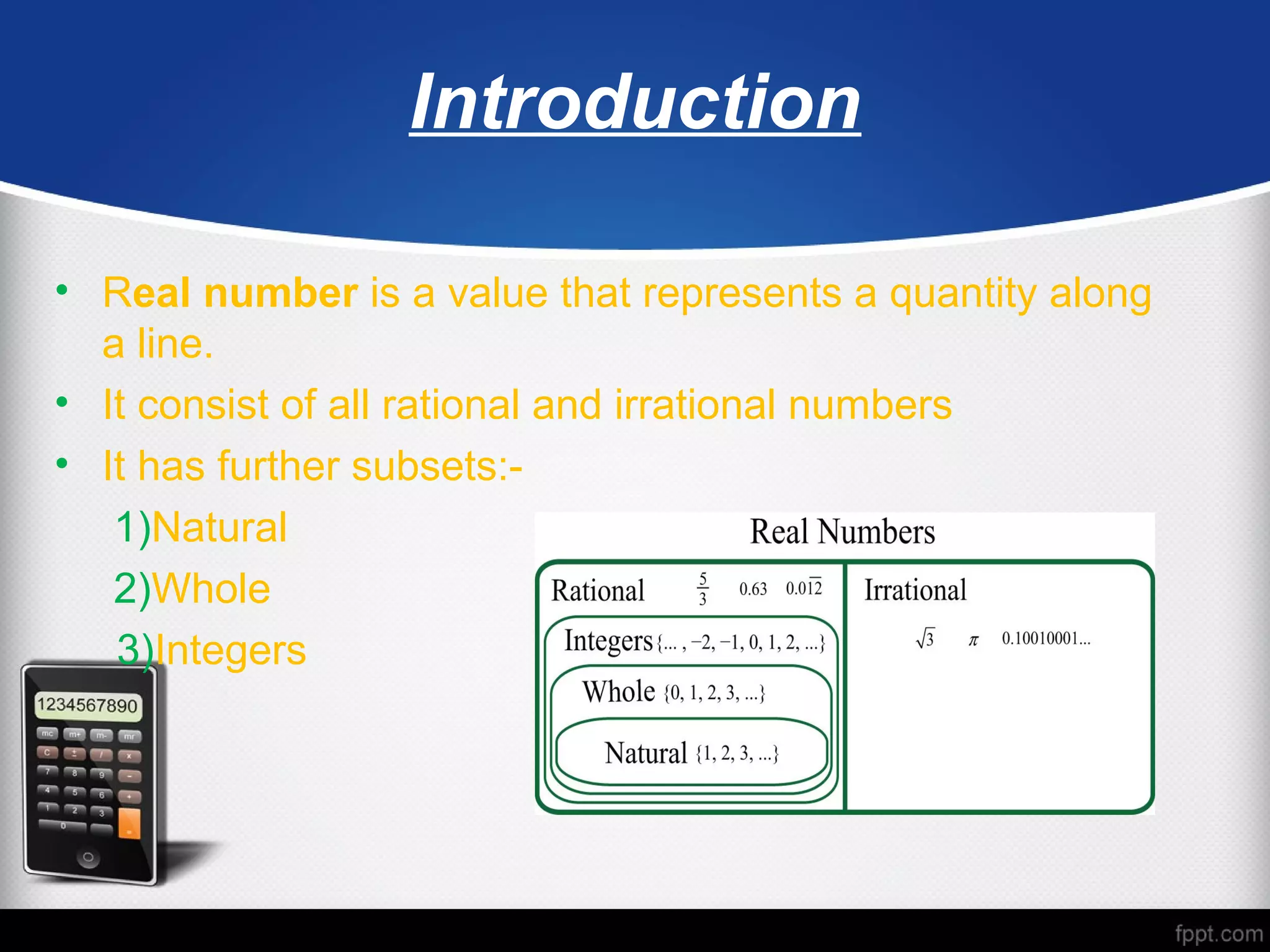
• Real number is a value that represents a quantity along
a line.
• It consist of all rational and irrational numbers
• It has further subsets:-
1)Natural
2)Whole
3)Integers
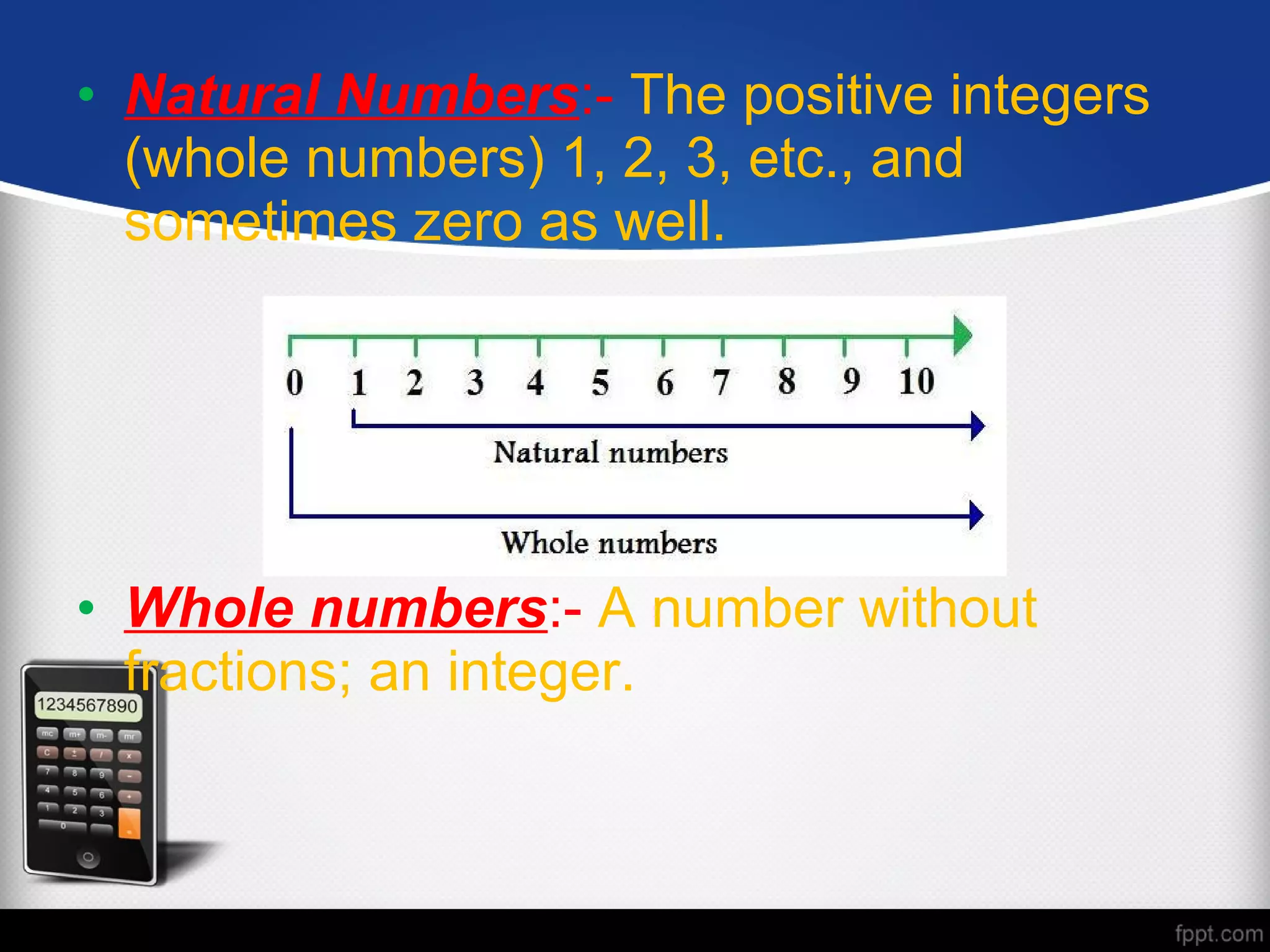
• Natural Numbers:- The positive integers
(whole numbers) 1, 2, 3, etc., and
sometimes zero as well.
• Whole numbers:- A number without
fractions; an integer.
Euclid’s Division Lemma
• If we have two positive integers a and b,
then there exists unique
integers q and r which satisfies the
condition a = bq + r where 0 ≤ r ≤ b.
• To calculate the Highest Common Factor
(HCF) of two positive integers a and b we
use Euclid’s division algorithm.
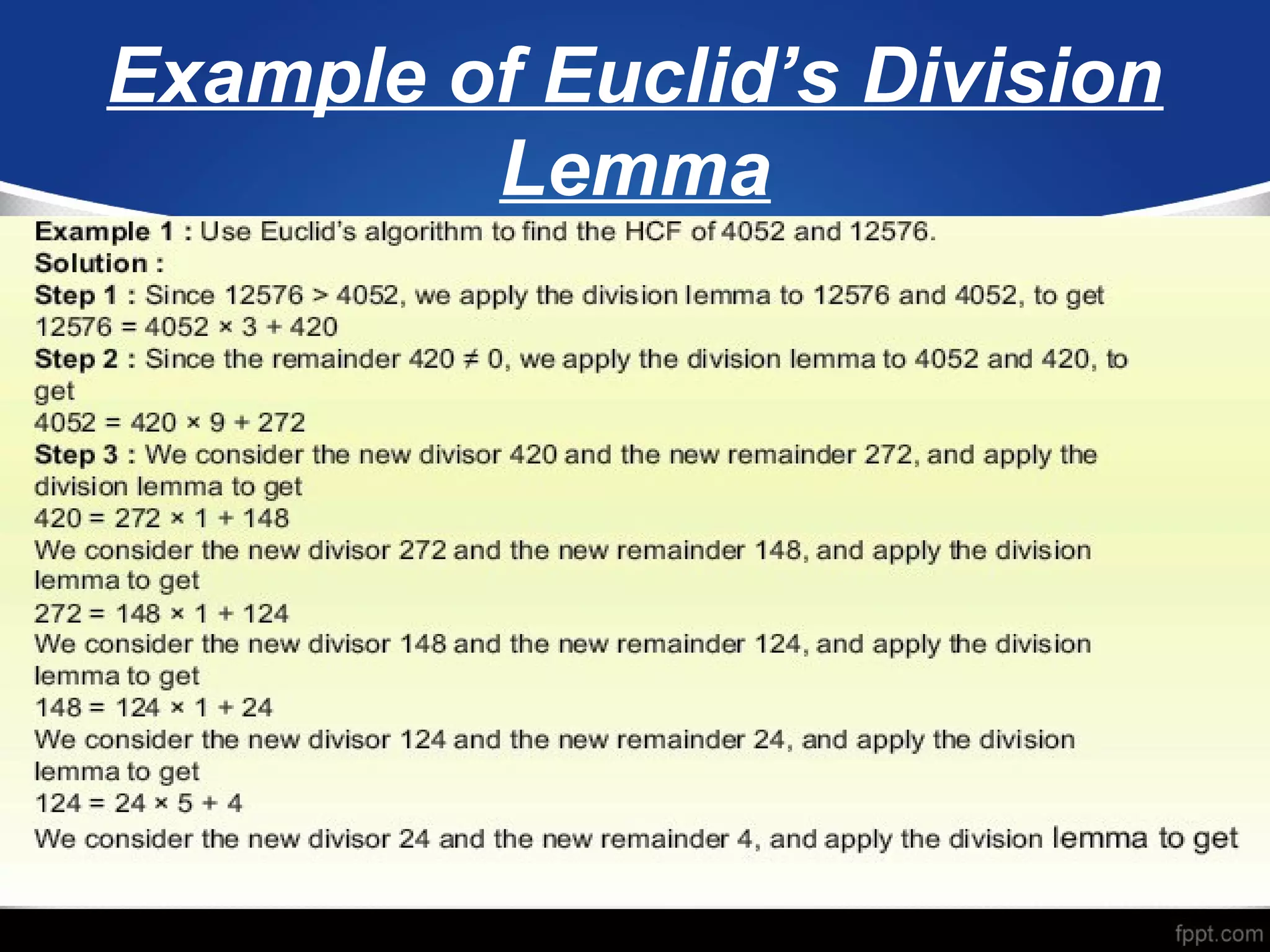
Example of Euclid’s Division
Lemma
The Fundamental Theorem Of
Arithmetic
• Also called as Unique Factorization
Theorem, sates that every integer greater
than 1, then that product is unique, and
that the order of the factors does not
matter.
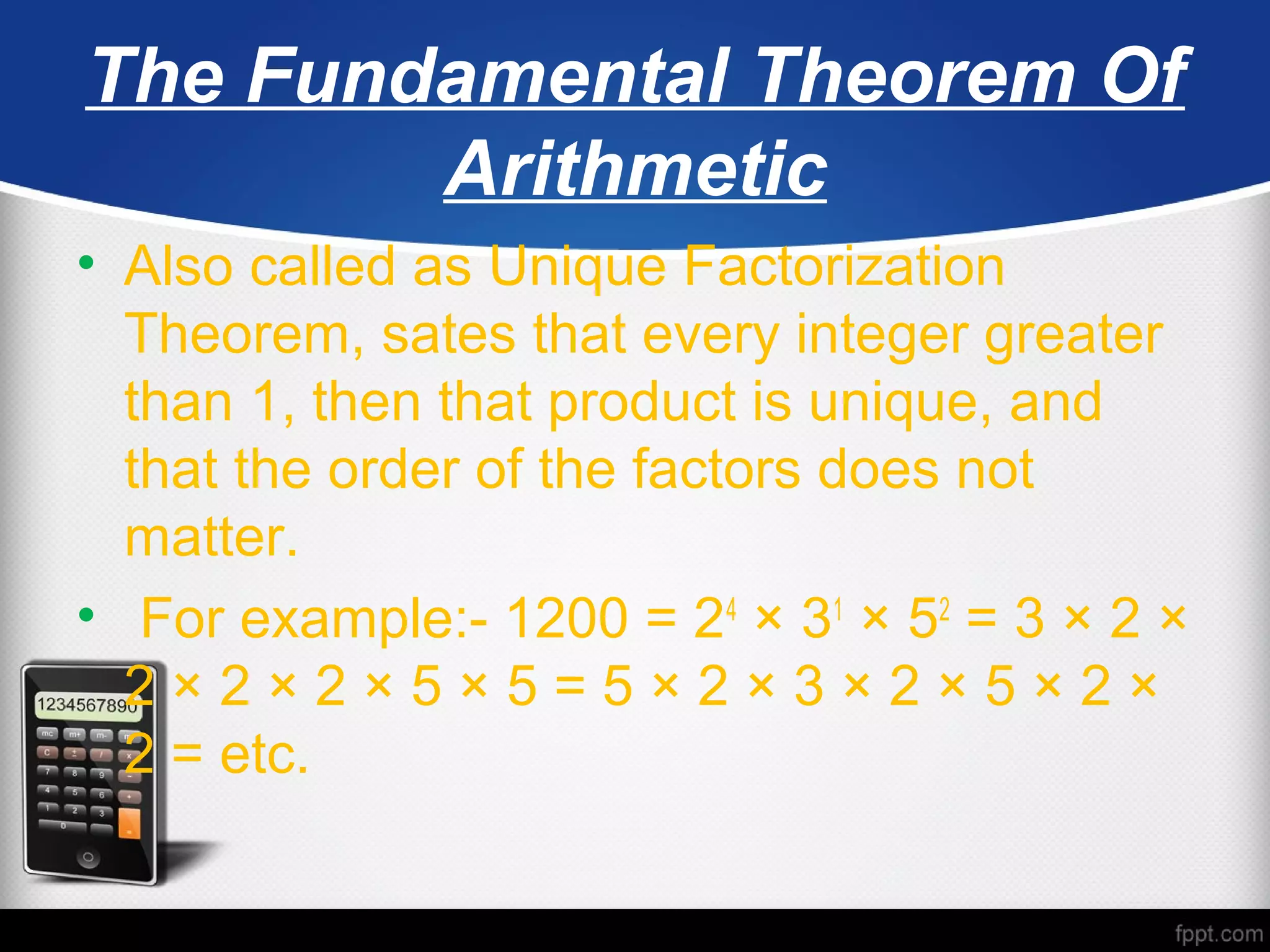
• For example:- 1200 = 24
× 31
× 52
= 3 × 2 ×
2 × 2 × 2 × 5 × 5 = 5 × 2 × 3 × 2 × 5 × 2 ×
2 = etc.
Rational Numbers
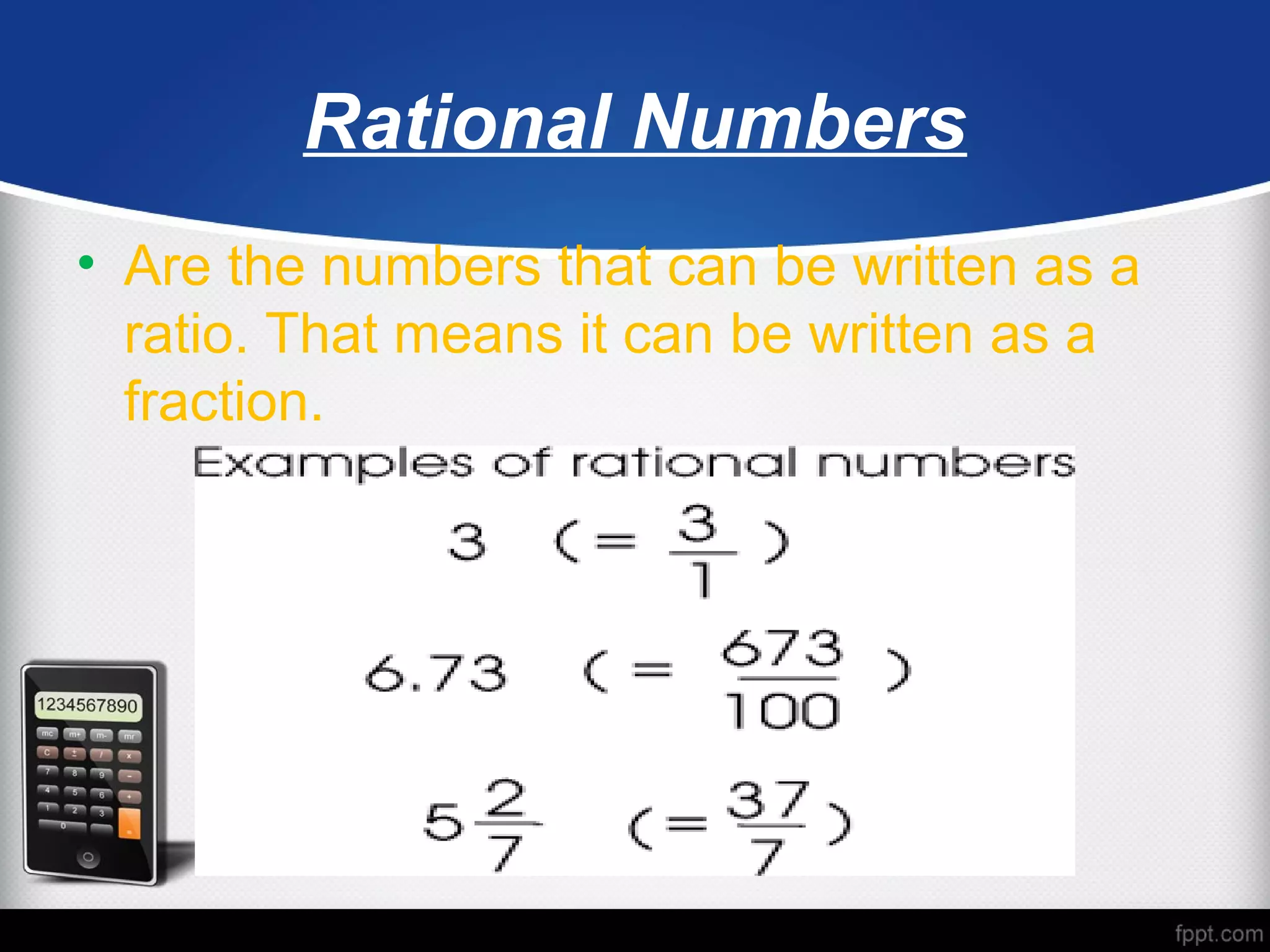
• Are the numbers that can be written as a
ratio. That means it can be written as a
fraction.
Irrational Numbers
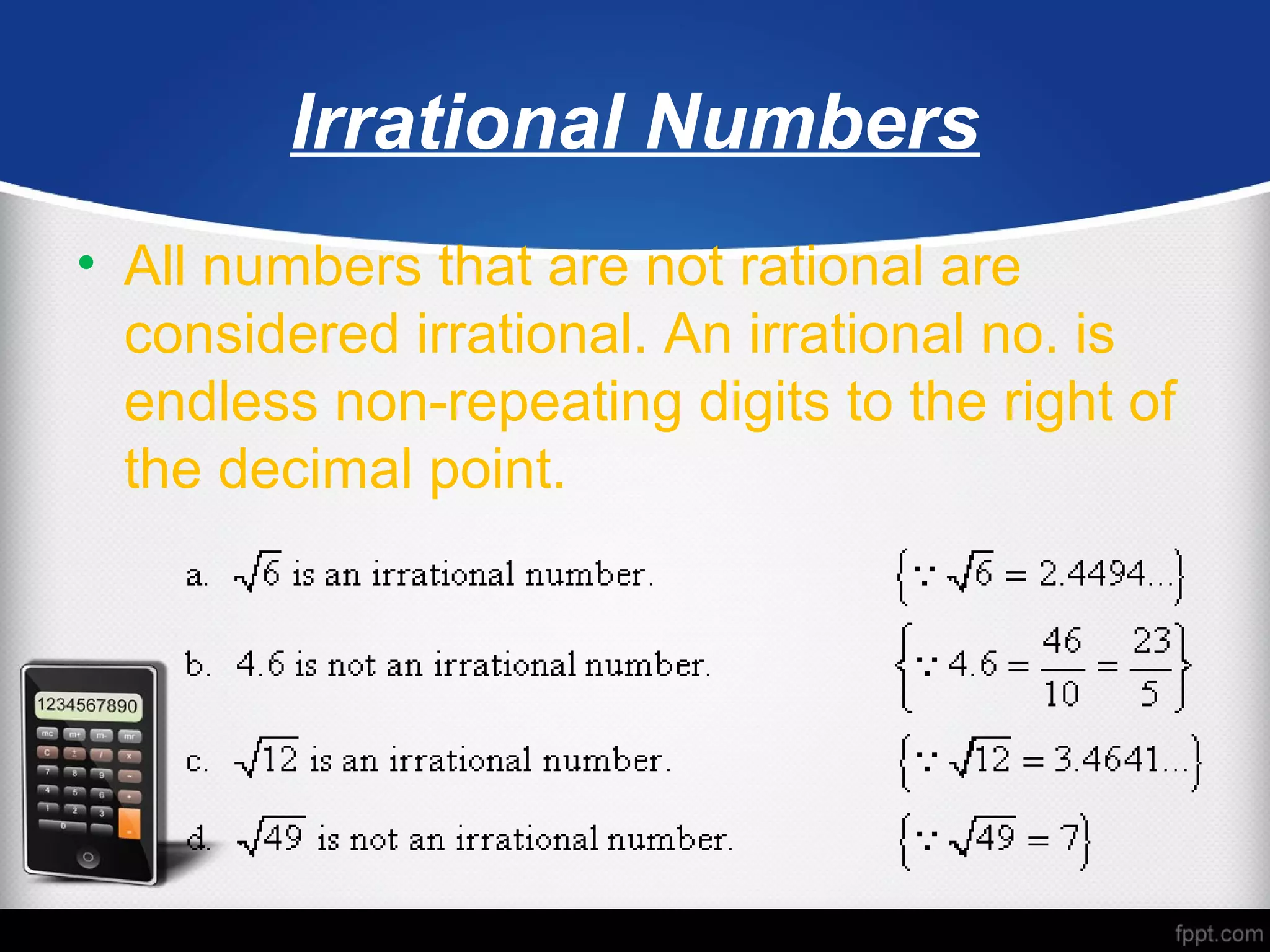
• All numbers that are not rational are
considered irrational. An irrational no. is
endless non-repeating digits to the right of
the decimal point.
Real numbers class 10

Real numbers class 10

  • 1.
  • 2.
    Index • Introduction • Euclid’sDivision Lemma • The Fundamental Theorem of Arithmetic • Rational and Irrational numbers • Their Decimal expansions
  • 3.
    Introduction • Real numberis a value that represents a quantity along a line. • It consist of all rational and irrational numbers • It has further subsets:- 1)Natural 2)Whole 3)Integers
  • 4.
    • Natural Numbers:-The positive integers (whole numbers) 1, 2, 3, etc., and sometimes zero as well. • Whole numbers:- A number without fractions; an integer.
  • 5.
    Euclid’s Division Lemma •If we have two positive integers a and b, then there exists unique integers q and r which satisfies the condition a = bq + r where 0 ≤ r ≤ b. • To calculate the Highest Common Factor (HCF) of two positive integers a and b we use Euclid’s division algorithm.
  • 6.
    Example of Euclid’sDivision Lemma
  • 7.
    The Fundamental TheoremOf Arithmetic • Also called as Unique Factorization Theorem, sates that every integer greater than 1, then that product is unique, and that the order of the factors does not matter. • For example:- 1200 = 24 × 31 × 52 = 3 × 2 × 2 × 2 × 2 × 5 × 5 = 5 × 2 × 3 × 2 × 5 × 2 × 2 = etc.
  • 8.
    Rational Numbers • Arethe numbers that can be written as a ratio. That means it can be written as a fraction.
  • 9.
    Irrational Numbers • Allnumbers that are not rational are considered irrational. An irrational no. is endless non-repeating digits to the right of the decimal point.