Reading Strategies
© 2010 Learning Development
Reading strategies | www.newcastle.edu.au
2
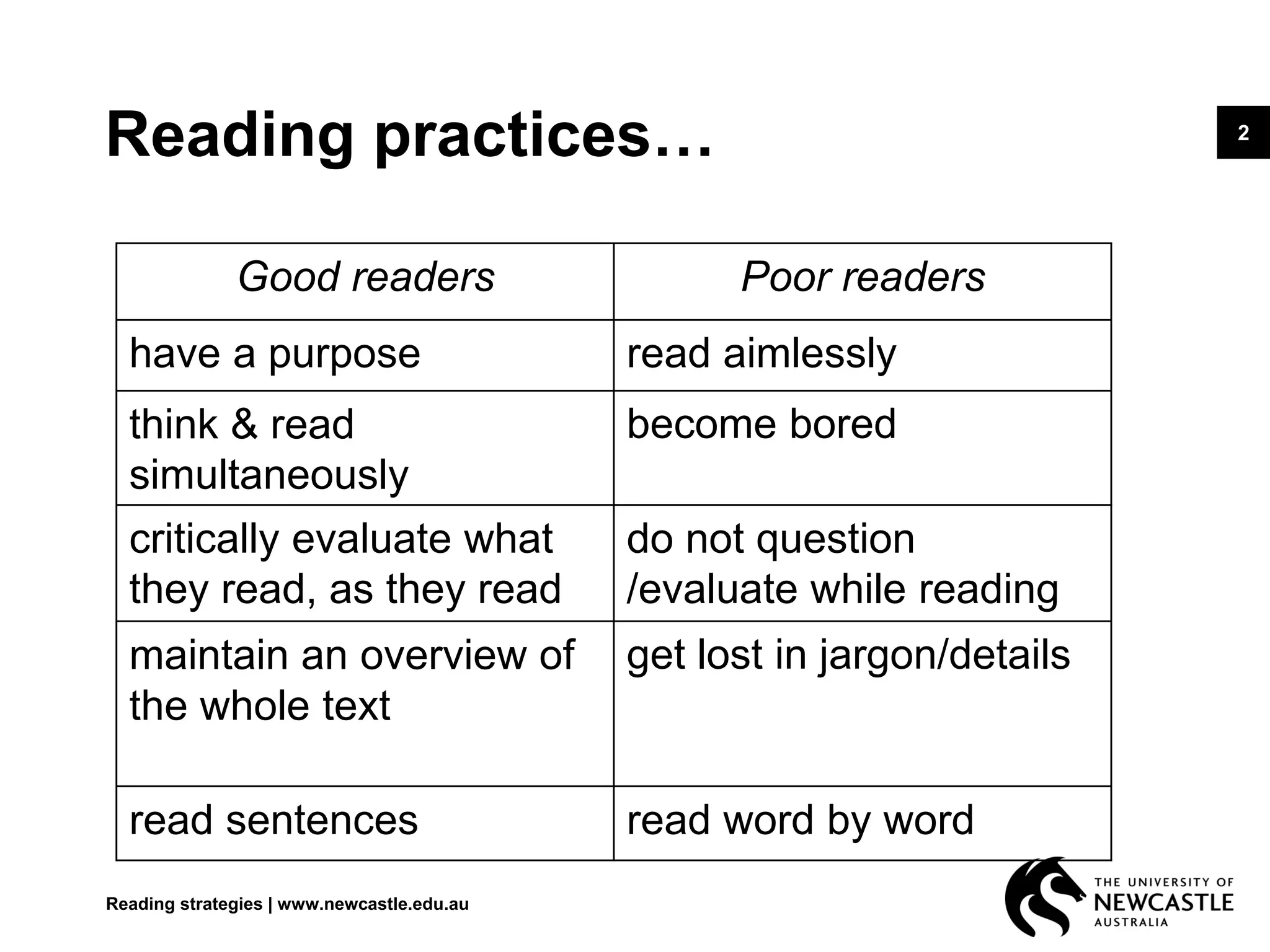
Reading practices…
Good readers Poor readers
have a purpose read aimlessly
think & read
simultaneously
become bored
critically evaluate what
they read, as they read
do not question
/evaluate while reading
maintain an overview of
the whole text
get lost in jargon/details
read sentences read word by word
3
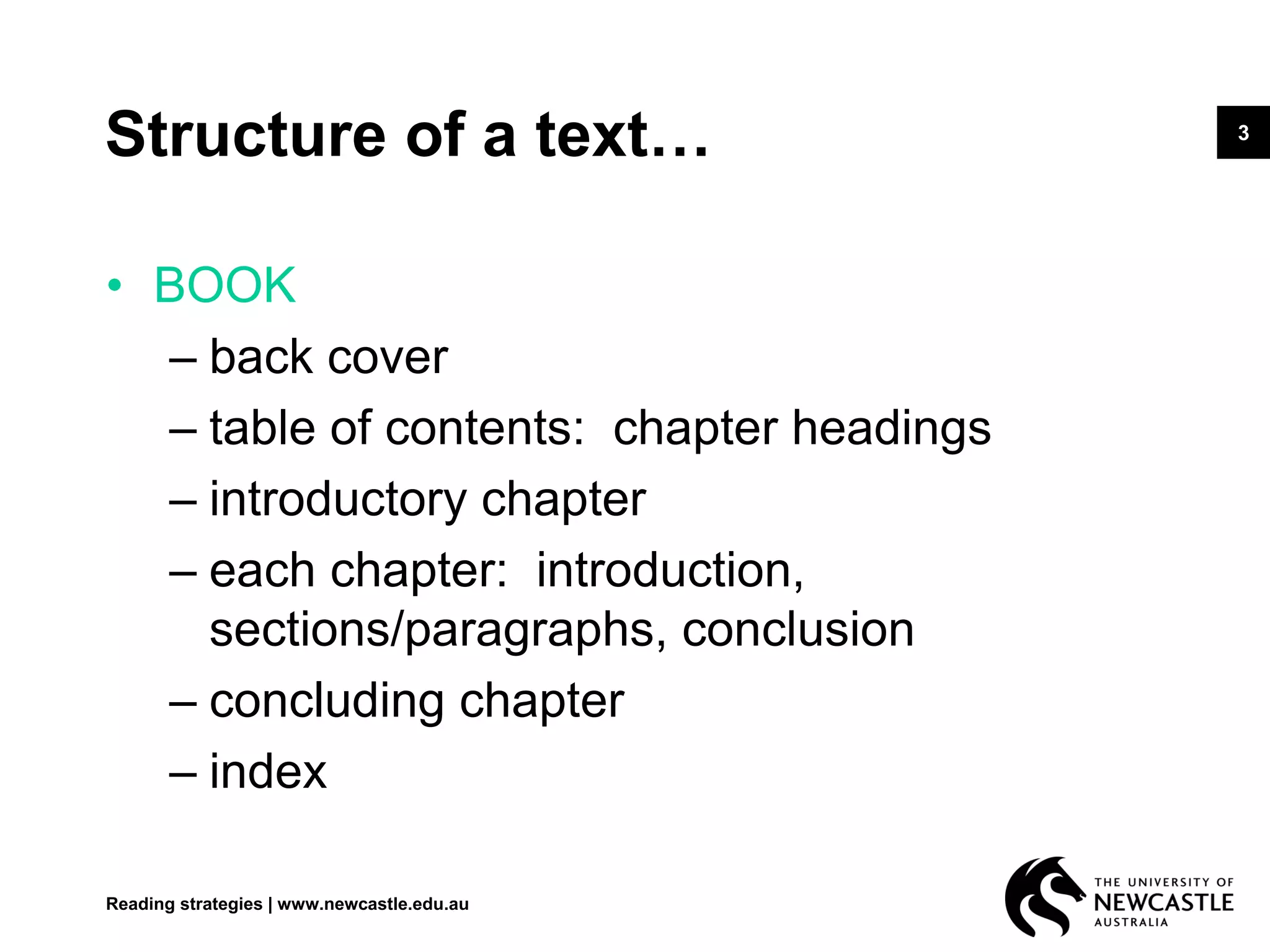
Structure of a text…
• BOOK
– back cover
– table of contents: chapter headings
– introductory chapter
– each chapter: introduction,
sections/paragraphs, conclusion
– concluding chapter
– index
Reading strategies | www.newcastle.edu.au
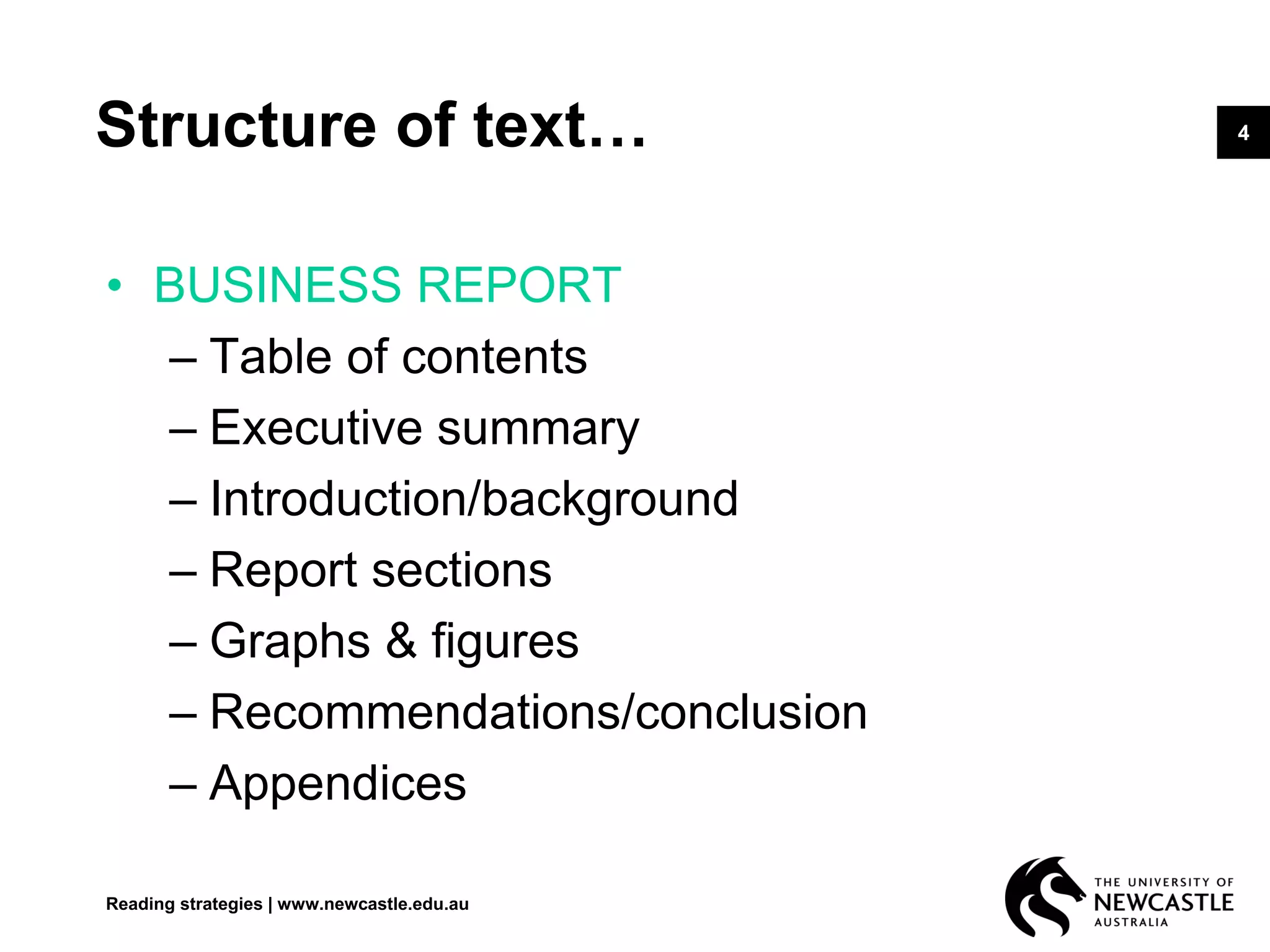
4Structure of text…
• BUSINESS REPORT
– Table of contents
– Executive summary
– Introduction/background
– Report sections
– Graphs & figures
– Recommendations/conclusion
– Appendices
Reading strategies | www.newcastle.edu.au
5
Structure of text…
• ARTICLE
– abstract
– headings
– sections
– tables / figures
– reference list
– author affiliation
Reading strategies | www.newcastle.edu.au
6
Structure of a research article…
• Introduction
– Background
– Purpose of study
• Literature review
– Research questions
• Methodology
– Methodology literature review
• Results
– Tables & data
• Discussion/conclusions
– Significance of results
– Limitations of study
Reading strategies | www.newcastle.edu.au
7
Sample essay Q
Referring to current research literature,
discuss whether private sector employees are
more or less motivated than those in the
public sector. In what ways do they differ?
Reading strategies | www.newcastle.edu.au
8
The 3 Rs…
• Relevance
– how relevant is it to the topic?
– how relevant to your task/question
• Reliability
– is it an academic source?
– does it have good references?
– is the publisher/journal respected in the field?
• Recency
– how current is the journal?
– when was the book published?
Reading strategies | www.newcastle.edu.au
9
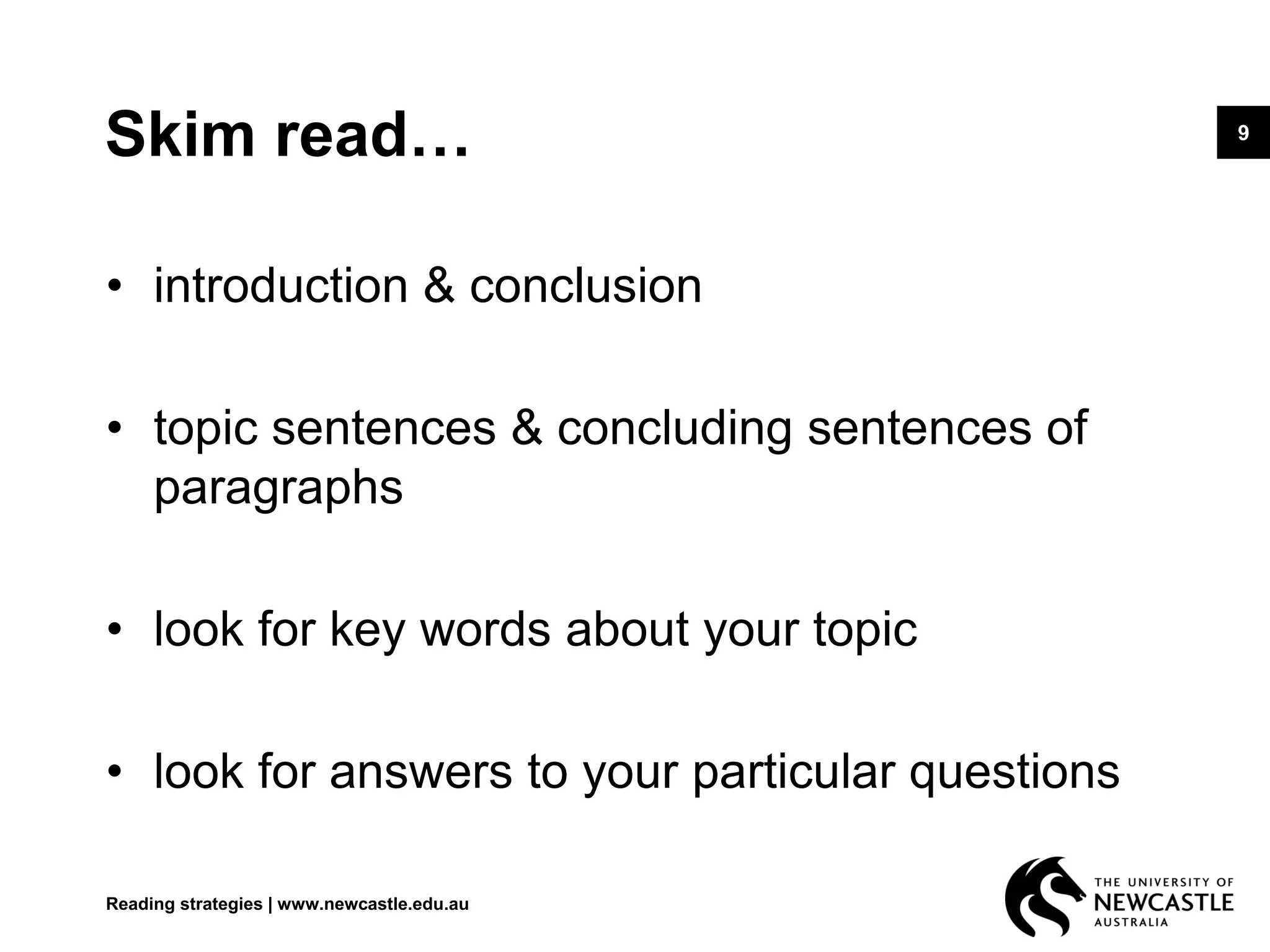
Skim read…
• introduction & conclusion
• topic sentences & concluding sentences of
paragraphs
• look for key words about your topic
• look for answers to your particular questions
Reading strategies | www.newcastle.edu.au
10
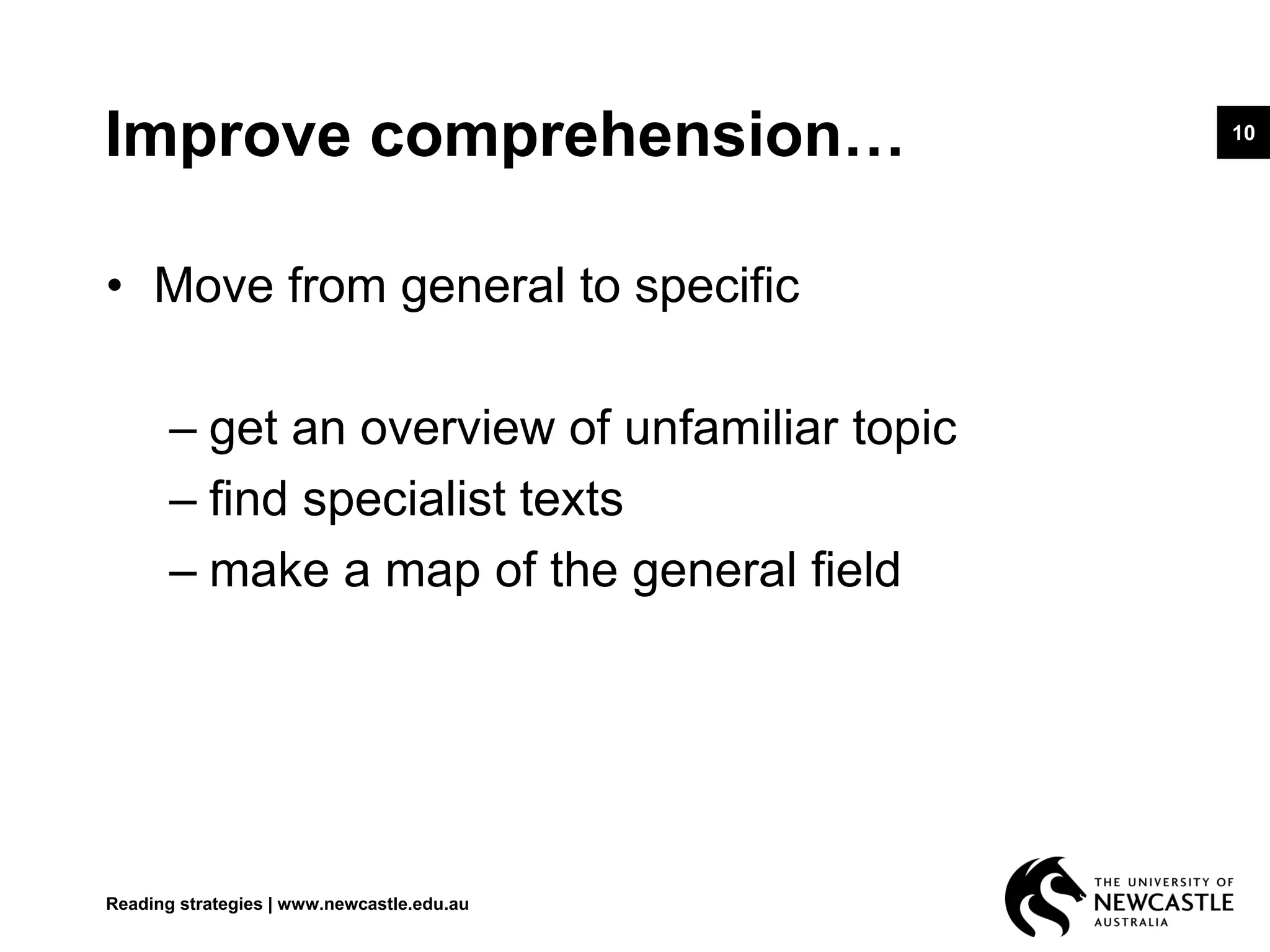
Improve comprehension…
• Move from general to specific
– get an overview of unfamiliar topic
– find specialist texts
– make a map of the general field
Reading strategies | www.newcastle.edu.au
11
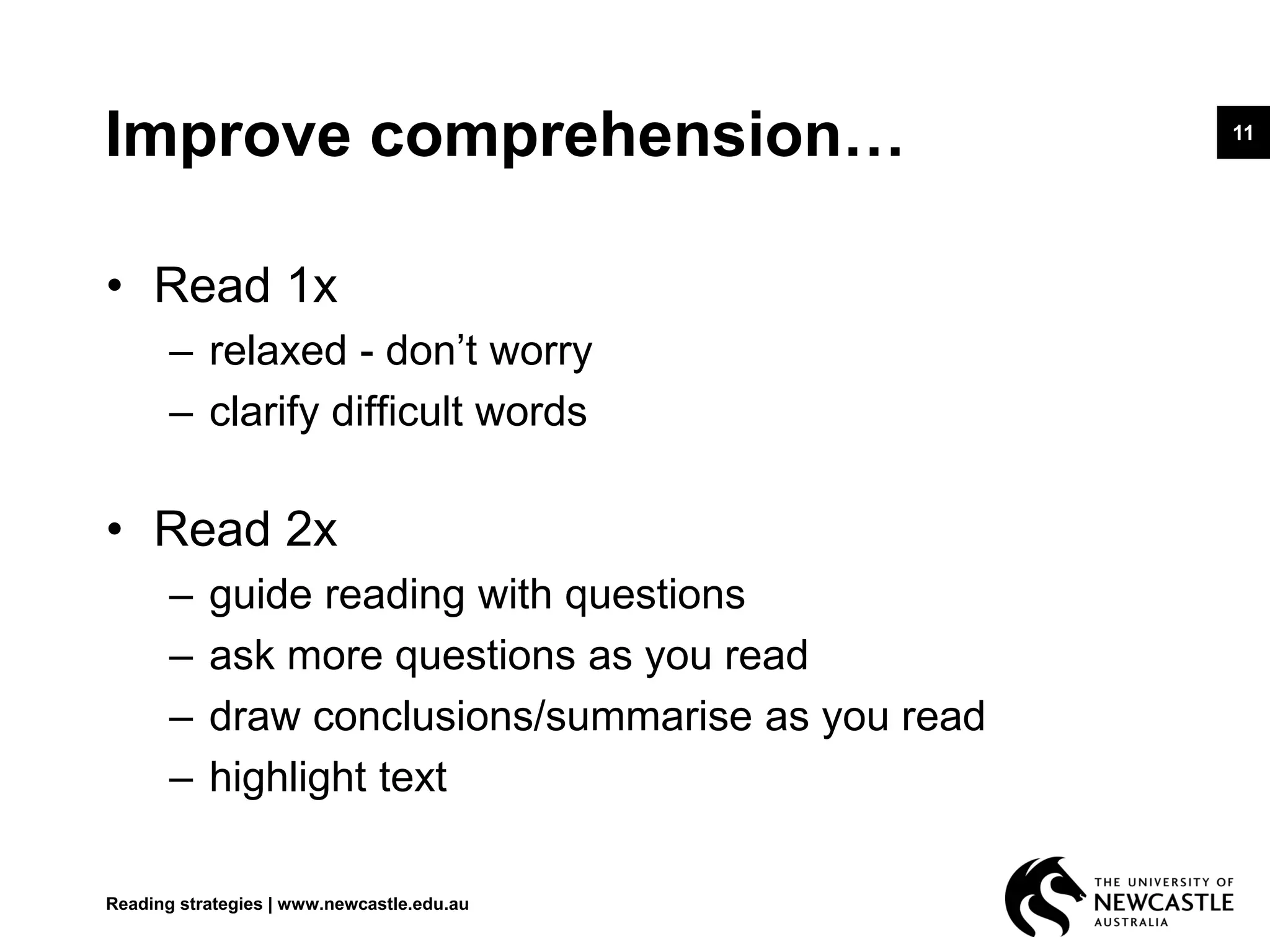
Improve comprehension…
• Read 1x
– relaxed - don’t worry
– clarify difficult words
• Read 2x
– guide reading with questions
– ask more questions as you read
– draw conclusions/summarise as you read
– highlight text
Reading strategies | www.newcastle.edu.au

Reading strategies

  • 1.
    Reading Strategies © 2010Learning Development
  • 2.
    Reading strategies |www.newcastle.edu.au 2 Reading practices… Good readers Poor readers have a purpose read aimlessly think & read simultaneously become bored critically evaluate what they read, as they read do not question /evaluate while reading maintain an overview of the whole text get lost in jargon/details read sentences read word by word
  • 3.
    3 Structure of atext… • BOOK – back cover – table of contents: chapter headings – introductory chapter – each chapter: introduction, sections/paragraphs, conclusion – concluding chapter – index Reading strategies | www.newcastle.edu.au
  • 4.
    4Structure of text… •BUSINESS REPORT – Table of contents – Executive summary – Introduction/background – Report sections – Graphs & figures – Recommendations/conclusion – Appendices Reading strategies | www.newcastle.edu.au
  • 5.
    5 Structure of text… •ARTICLE – abstract – headings – sections – tables / figures – reference list – author affiliation Reading strategies | www.newcastle.edu.au
  • 6.
    6 Structure of aresearch article… • Introduction – Background – Purpose of study • Literature review – Research questions • Methodology – Methodology literature review • Results – Tables & data • Discussion/conclusions – Significance of results – Limitations of study Reading strategies | www.newcastle.edu.au
  • 7.
    7 Sample essay Q Referringto current research literature, discuss whether private sector employees are more or less motivated than those in the public sector. In what ways do they differ? Reading strategies | www.newcastle.edu.au
  • 8.
    8 The 3 Rs… •Relevance – how relevant is it to the topic? – how relevant to your task/question • Reliability – is it an academic source? – does it have good references? – is the publisher/journal respected in the field? • Recency – how current is the journal? – when was the book published? Reading strategies | www.newcastle.edu.au
  • 9.
    9 Skim read… • introduction& conclusion • topic sentences & concluding sentences of paragraphs • look for key words about your topic • look for answers to your particular questions Reading strategies | www.newcastle.edu.au
  • 10.
    10 Improve comprehension… • Movefrom general to specific – get an overview of unfamiliar topic – find specialist texts – make a map of the general field Reading strategies | www.newcastle.edu.au
  • 11.
    11 Improve comprehension… • Read1x – relaxed - don’t worry – clarify difficult words • Read 2x – guide reading with questions – ask more questions as you read – draw conclusions/summarise as you read – highlight text Reading strategies | www.newcastle.edu.au