Taking Notes
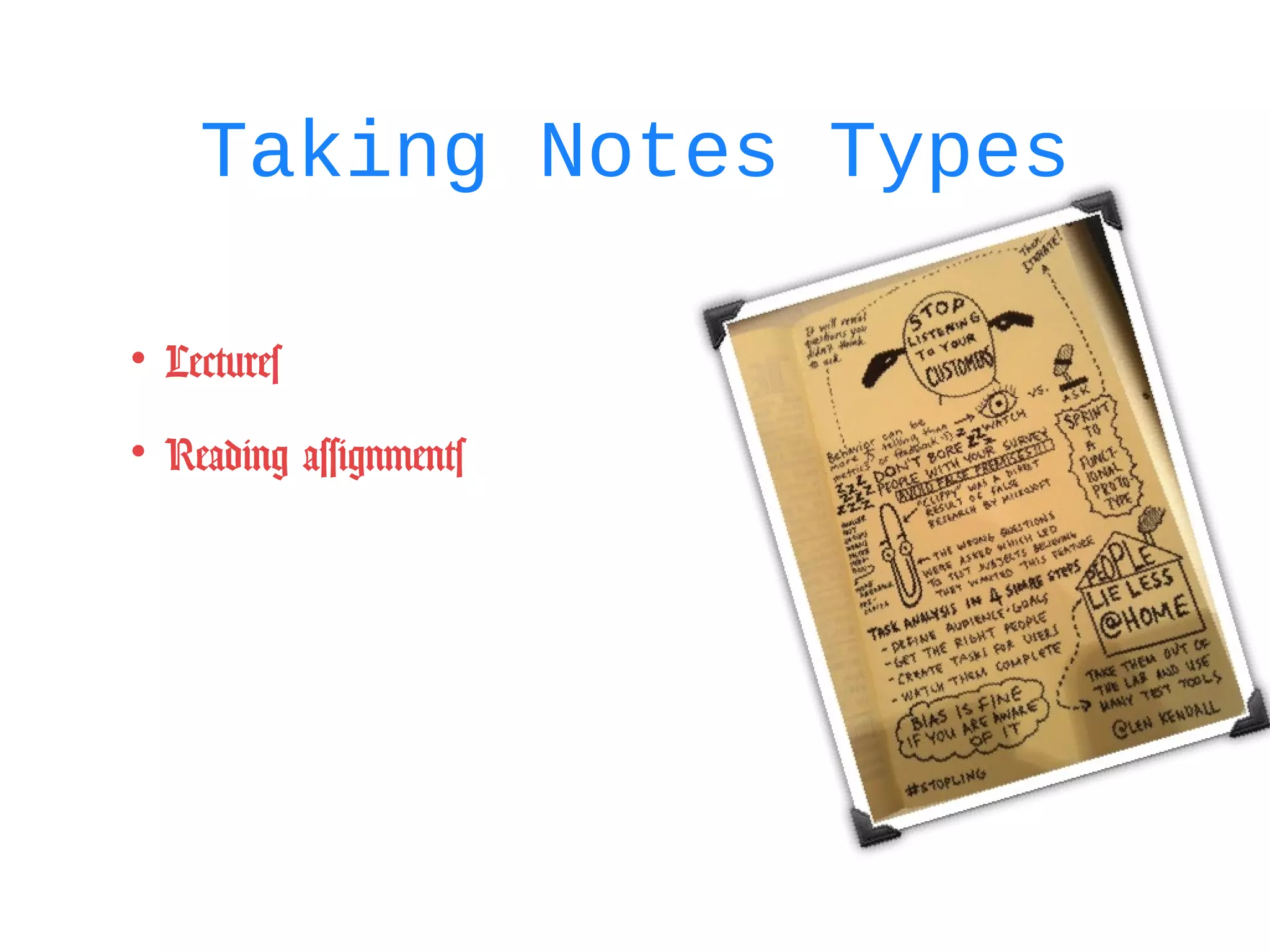
Taking Notes Types

• Lectures

• Reading assignments
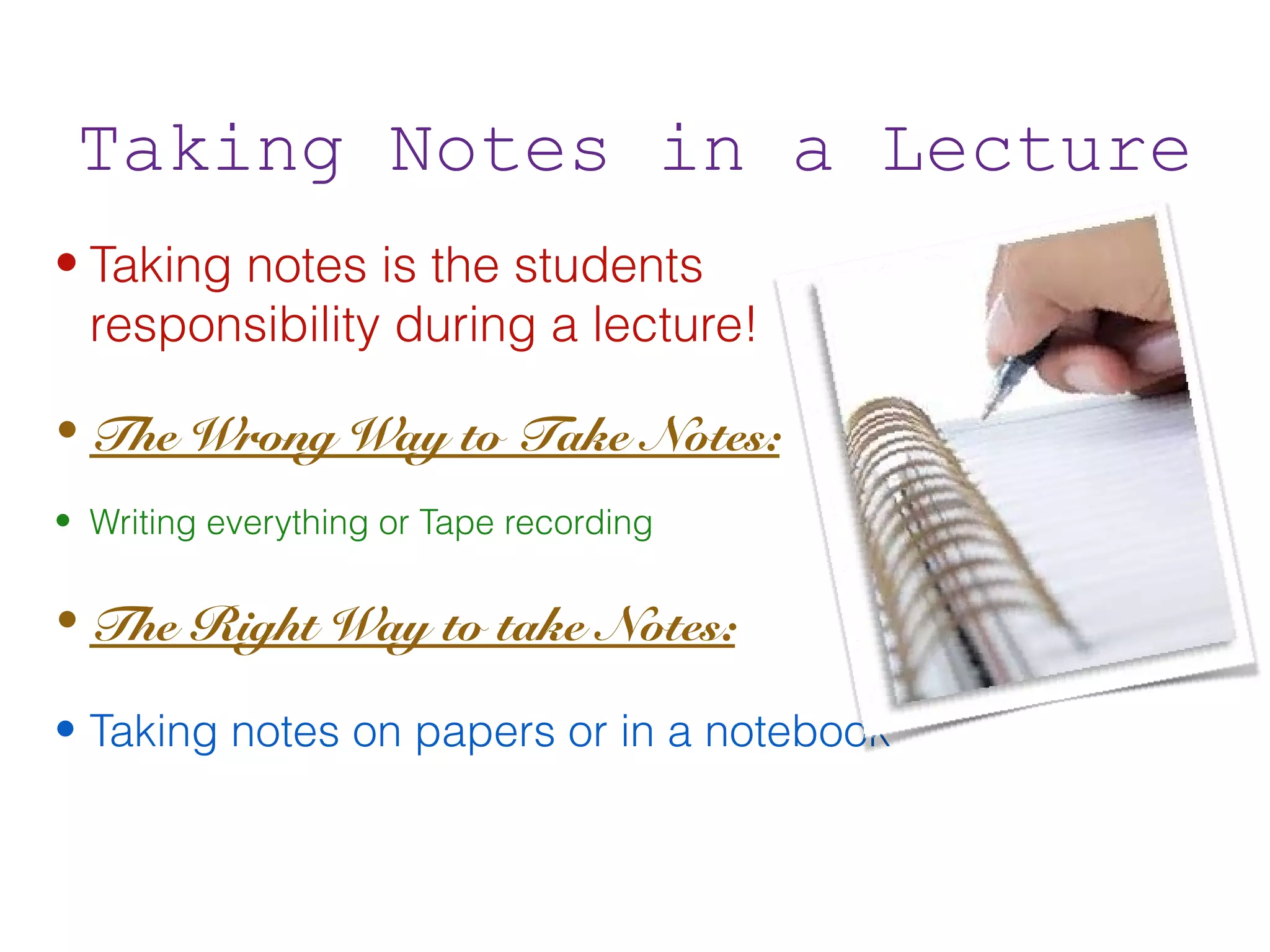
Taking Notes in a Lecture
• Taking notes is the students
  responsibility during a lecture!

• The Wrong Way to Take Notes:
• Writing everything or Tape recording

• The Right Way to take Notes:

• Taking notes on papers or in a notebook
Listening for key info.

   In a lecture: your gaol is to capture the main
  ideas,points, and facts...

  Also, listen and think about:
• Why is the info. important?

• How might that info. be used in your class or in a test?

• Is this info. a basis for other info.?

• Could this info. be used as content for an essay?
Verbal and nonverbal clues
• Repeated ideas or themes.

• Information that's written down...

• Concepts that provide a foundation for other info.

• Obvious organizational structures.

• Tangents.

• Instructions that tell you what's expected of you during the course.

• Handouts.

• Websites content.
Tips for taking notes
• Include the dates,the title and other related
  info. of the lecture.

• Go prepared to your class.

• Take notes in an outline form.

• Write what the instructor says in your own
  words.

• Always get the main ideas, and leave blanks
  to fill in the details later.
Taking Notes on Reading
           Assignment
• Guidelines for
  highlighting:

 Focus on the main point.

 Read the whole paragraph then highlight the
 important ideas.

 Don't complicate highlighting by using many
 colors.

 Look for textbooks with little or no
Making Notes on your Textbook
• If you don't want to write on your textbook. What should you
  do?

• Why should students write questions when they listen to a
  lecture or in a reading assignments?
Compiling your Notes!!
• Methods to create a review sheet:
 • Type up your notes from the various sources.( notes
   sources?)

 • Create an outline of the key points, then write the details.

 • Use a two-column grid. One for questions and another for
   answers.

 • Visual mapping to show the relation between notes.
Why taking notes is so
     important?

Taking notes

  • 1.
  • 2.
    Taking Notes Types •Lectures • Reading assignments
  • 3.
    Taking Notes ina Lecture • Taking notes is the students responsibility during a lecture! • The Wrong Way to Take Notes: • Writing everything or Tape recording • The Right Way to take Notes: • Taking notes on papers or in a notebook
  • 4.
    Listening for keyinfo. In a lecture: your gaol is to capture the main ideas,points, and facts... Also, listen and think about: • Why is the info. important? • How might that info. be used in your class or in a test? • Is this info. a basis for other info.? • Could this info. be used as content for an essay?
  • 5.
    Verbal and nonverbalclues • Repeated ideas or themes. • Information that's written down... • Concepts that provide a foundation for other info. • Obvious organizational structures. • Tangents. • Instructions that tell you what's expected of you during the course. • Handouts. • Websites content.
  • 6.
    Tips for takingnotes • Include the dates,the title and other related info. of the lecture. • Go prepared to your class. • Take notes in an outline form. • Write what the instructor says in your own words. • Always get the main ideas, and leave blanks to fill in the details later.
  • 8.
    Taking Notes onReading Assignment • Guidelines for highlighting: Focus on the main point. Read the whole paragraph then highlight the important ideas. Don't complicate highlighting by using many colors. Look for textbooks with little or no
  • 9.
    Making Notes onyour Textbook • If you don't want to write on your textbook. What should you do? • Why should students write questions when they listen to a lecture or in a reading assignments?
  • 10.
    Compiling your Notes!! •Methods to create a review sheet: • Type up your notes from the various sources.( notes sources?) • Create an outline of the key points, then write the details. • Use a two-column grid. One for questions and another for answers. • Visual mapping to show the relation between notes.
  • 11.
    Why taking notesis so important?