Interventions for  Struggling Readers Monica Wilkins Elaine McCullough
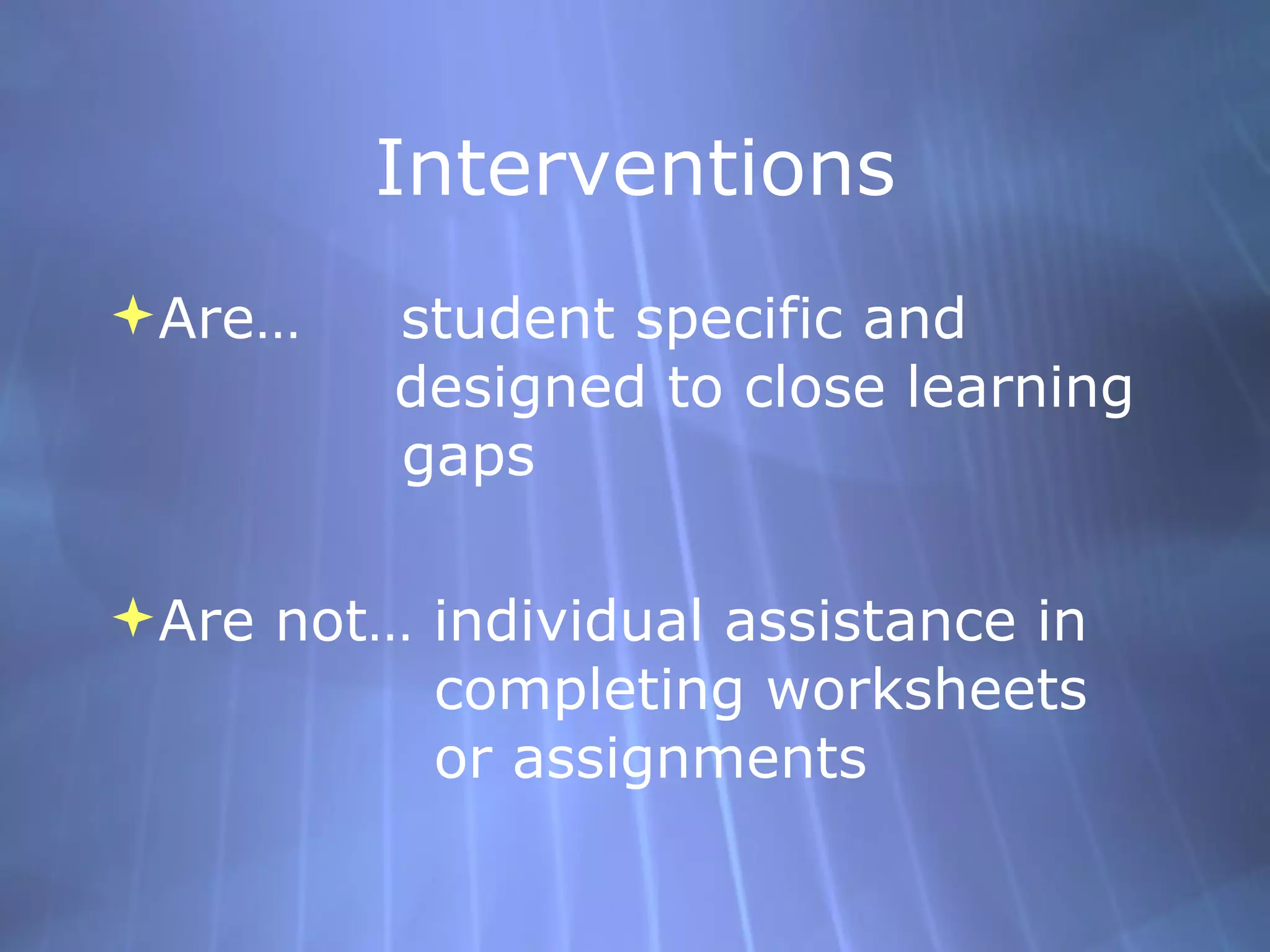
Interventions Are…  student specific and    designed to close learning    gaps Are not… individual assistance in    completing worksheets    or assignments
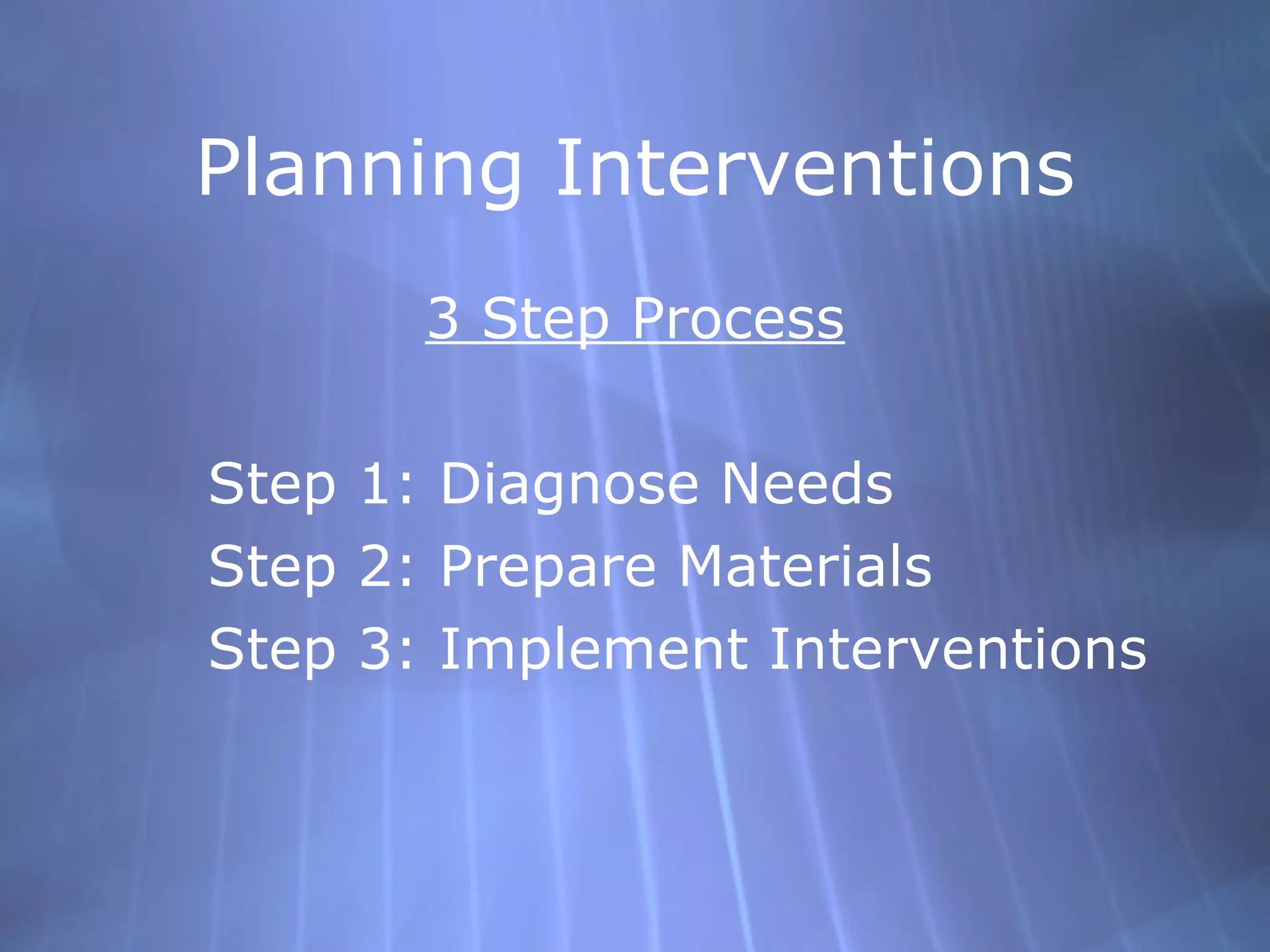
Planning Interventions 3 Step Process Step 1: Diagnose Needs Step 2: Prepare Materials Step 3: Implement Interventions
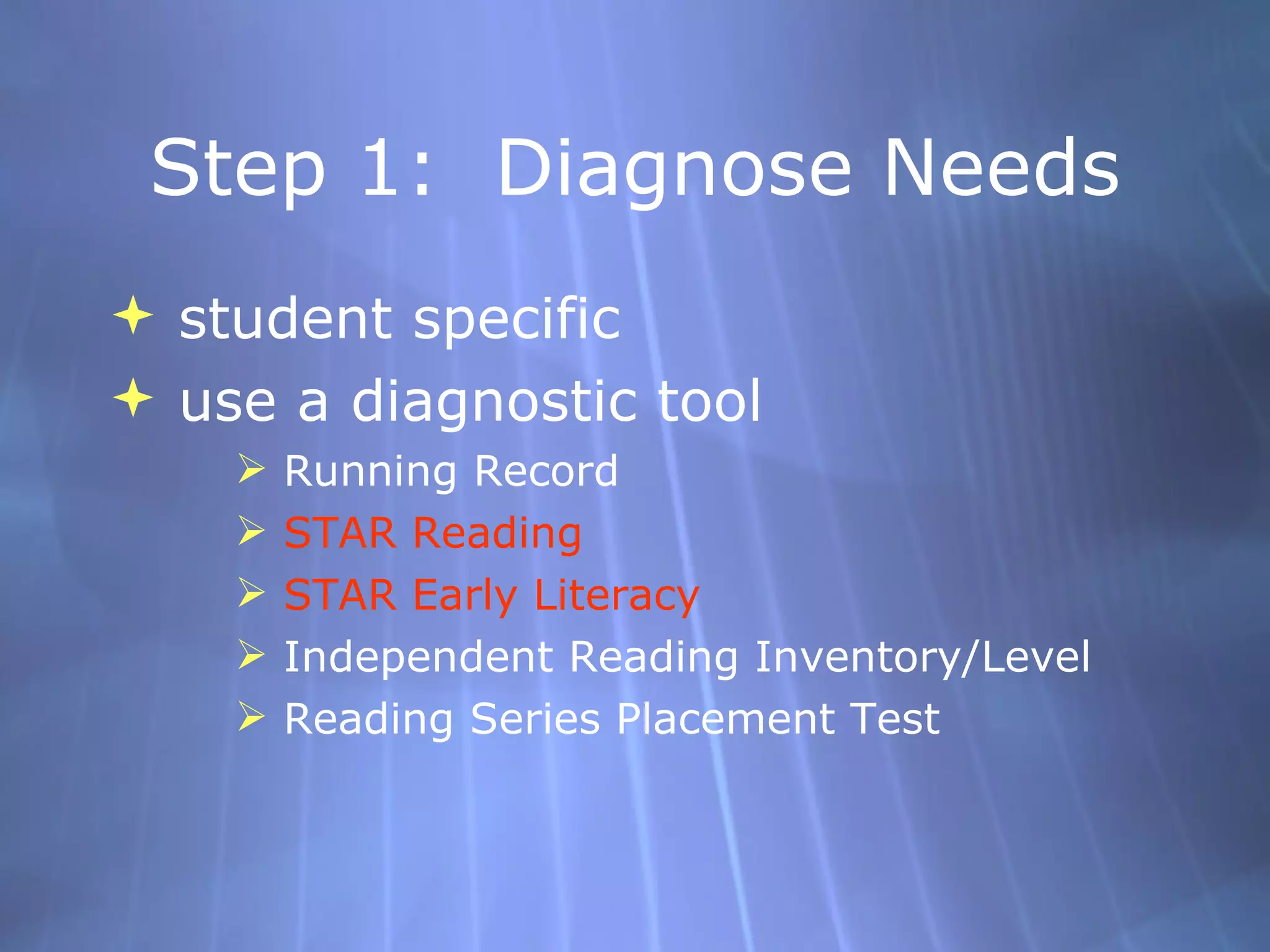
Step 1:  Diagnose Needs student specific use a diagnostic tool Running Record STAR Reading STAR Early Literacy Independent Reading Inventory/Level Reading Series Placement Test
Step 2:  Prepare Materials K-2 Phonemic  Awareness Phonics Decoding  Strategies Tracking Form 3-5 Sight Word Fluency Sets of 10 words within 12 seconds Comprehension Sentence structure and comprehension using drawings Passages using quick draws Tracking Form
Step 3: Implement Interventions Classroom, SIP, Reading Lab Classroom Interventions any student 10-15 minutes daily Intervention Form  / Ideas When???? first 5 minutes of recess 5 minutes while others are packing  extra group rotation 10 minutes extra for struggling group
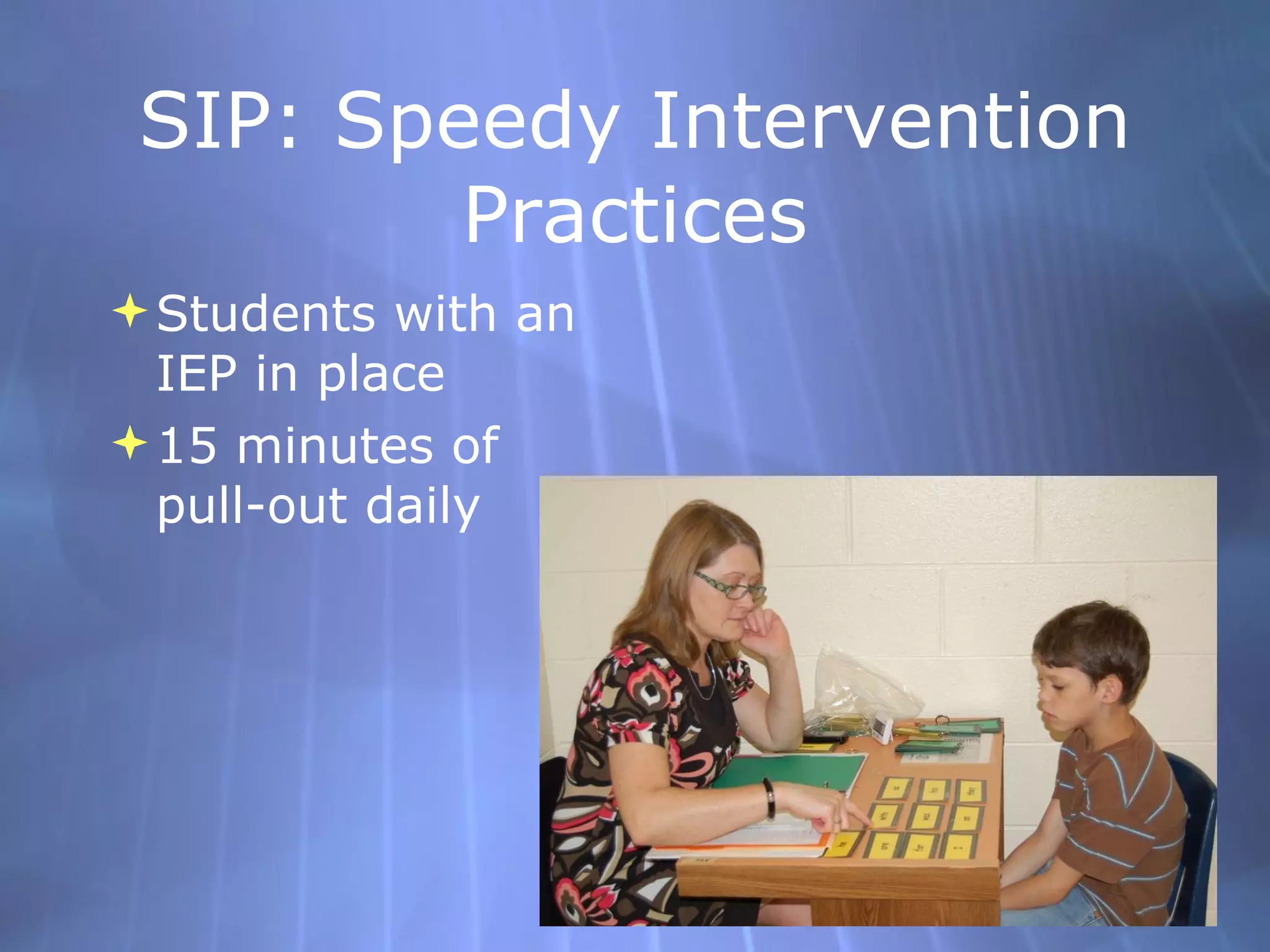
SIP: Speedy Intervention Practices Students with an IEP in place 15 minutes of pull-out daily
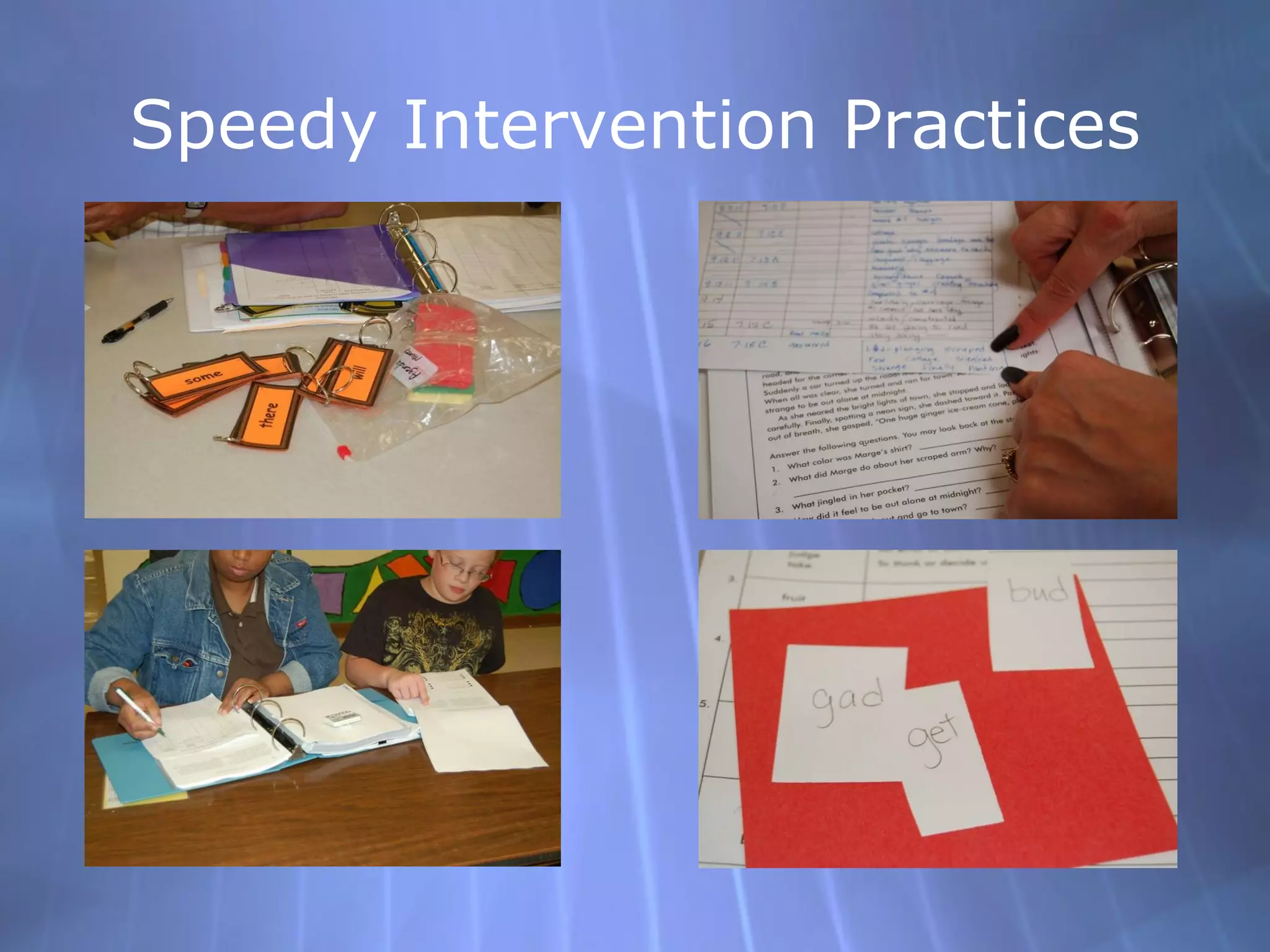
Speedy Intervention Practices
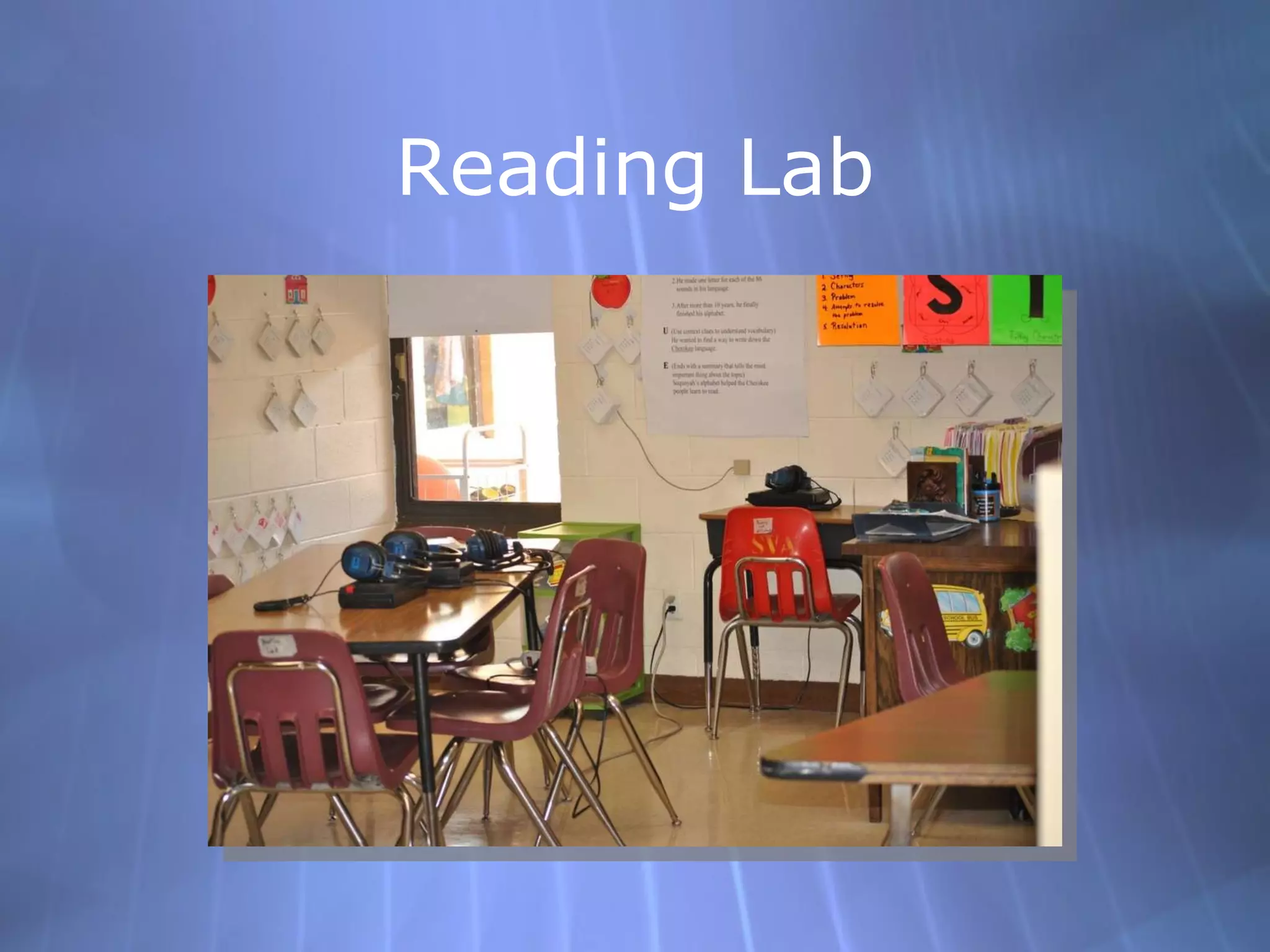
Reading Lab
Reading Lab Individualized self-paced instruction for improving skills Students in grades 2-4 attend for 45 minutes a day Instruction follows the Marie Carbo Recorded-Book Method Student progress is evaluated quarterly to determine need for services
What is the Carbo Method? Recorded readings are above the student’s independent level. Recorded: Slow pace Short phrases Good expression Small amounts
 
Effective Fluency Instruction Makes word recognition automatic and effortless Emphasizes rhythm and expression
Results of Carbo Recordings Reduce Stress Improve Fluency, comprehension, vocabulary, language, pronunciation Increase Motivation Confidence
What the Student Does Relaxes Listens to recorded story 2-3 times while looking at written material Student tracks with finger while listening Timed read-back and conference with teacher
Why the Carbo  Method Works Increases learning and comprehension Addresses multiple intelligences High-interest stories have high meaning to the brain The brain is a pattern sorter With sufficient modeling of the text, the brain automatically identifies word patterns and begins to decipher unknown words
Picture It!
 
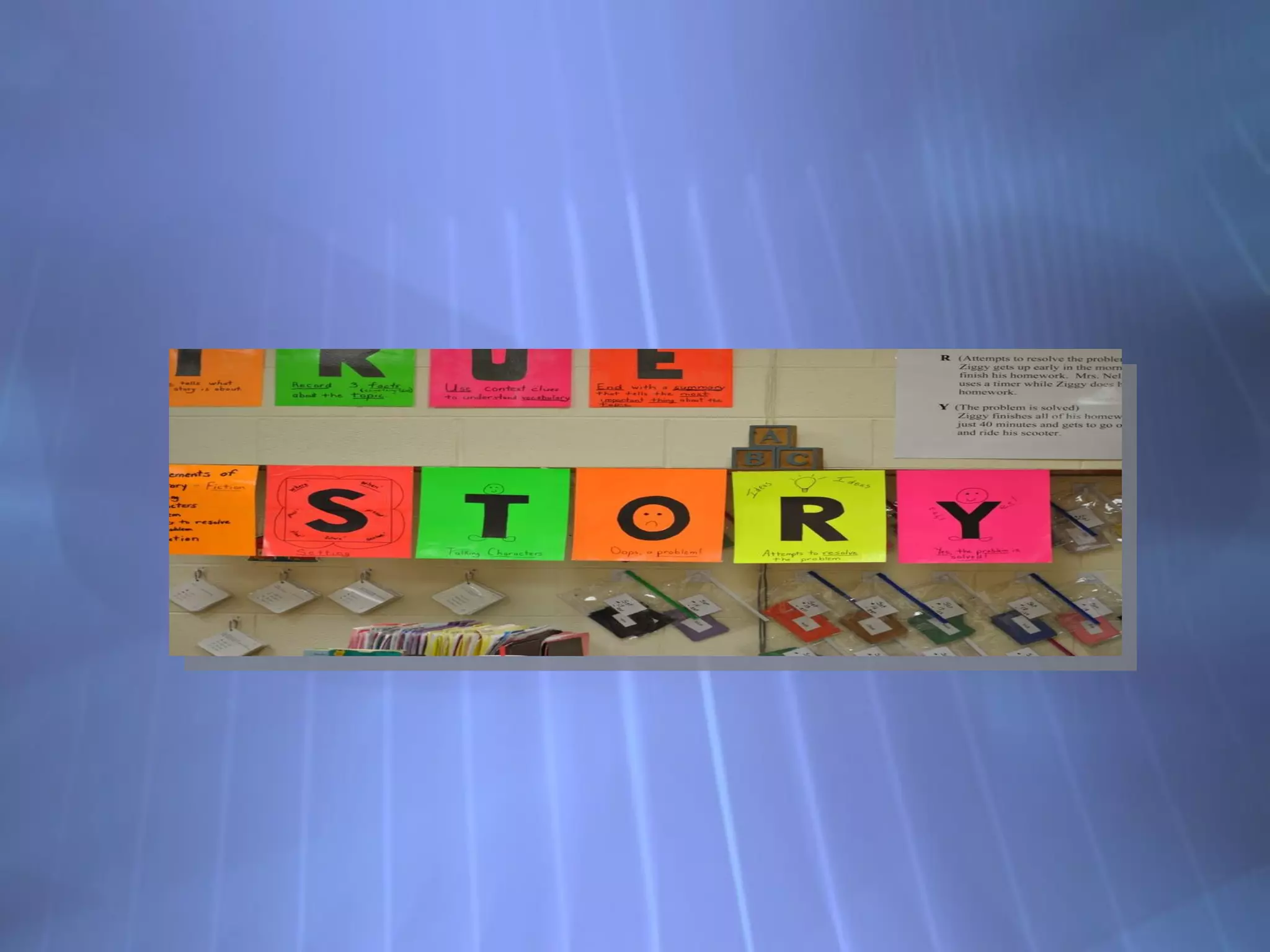
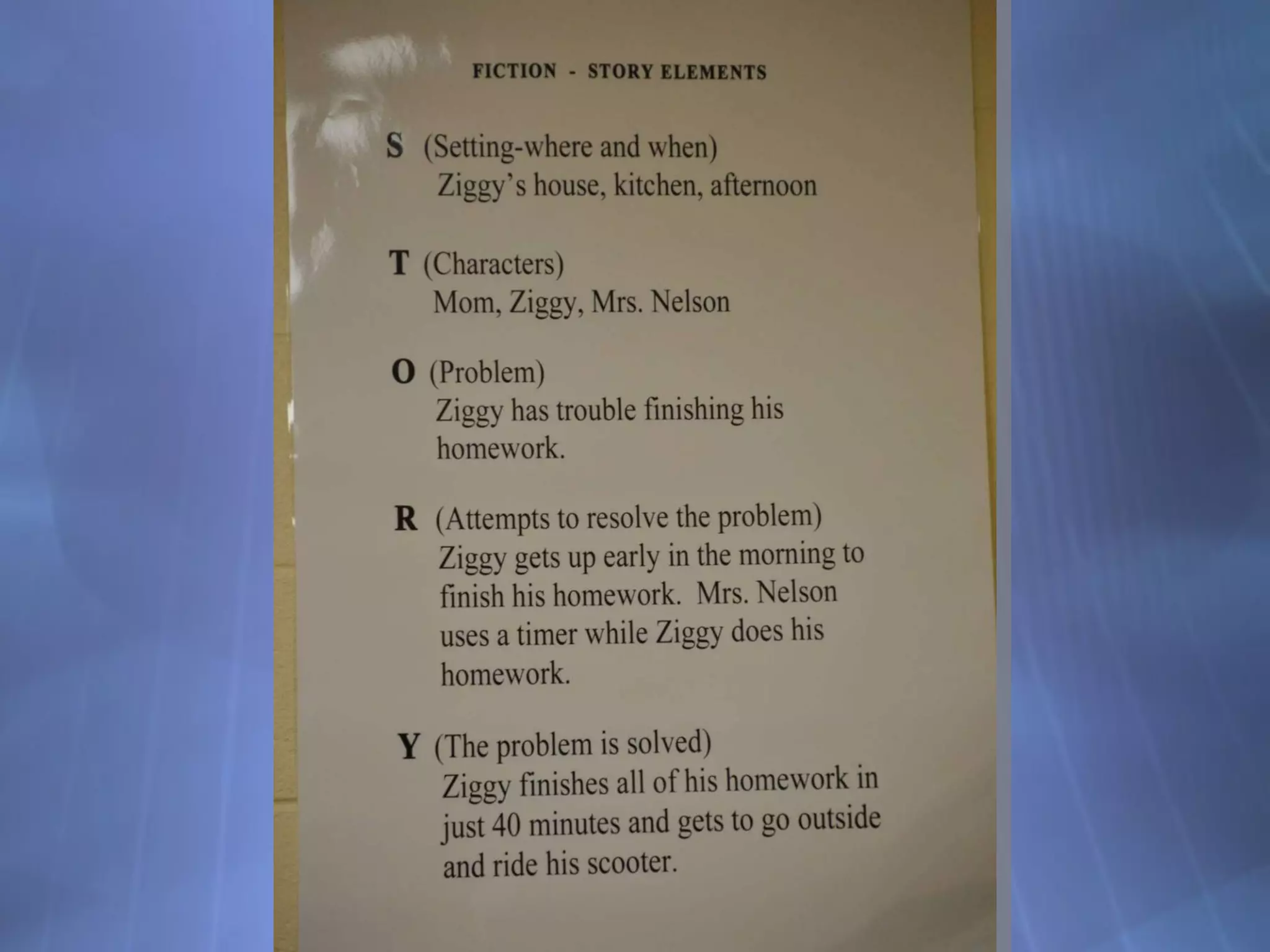
Picture It! Graphic organizer to help students recall the five story elements Uses acronym “STORY” S - Setting T - Talking characters O - Oops, a problem! R - Attempts to resolve the problem Y - Yes, the problem is solved
 
Picture It! Sets up a sequence to help readers anticipate the way in which the story unfolds Comprehension is the goal Visualization Knowledge of story elements
 
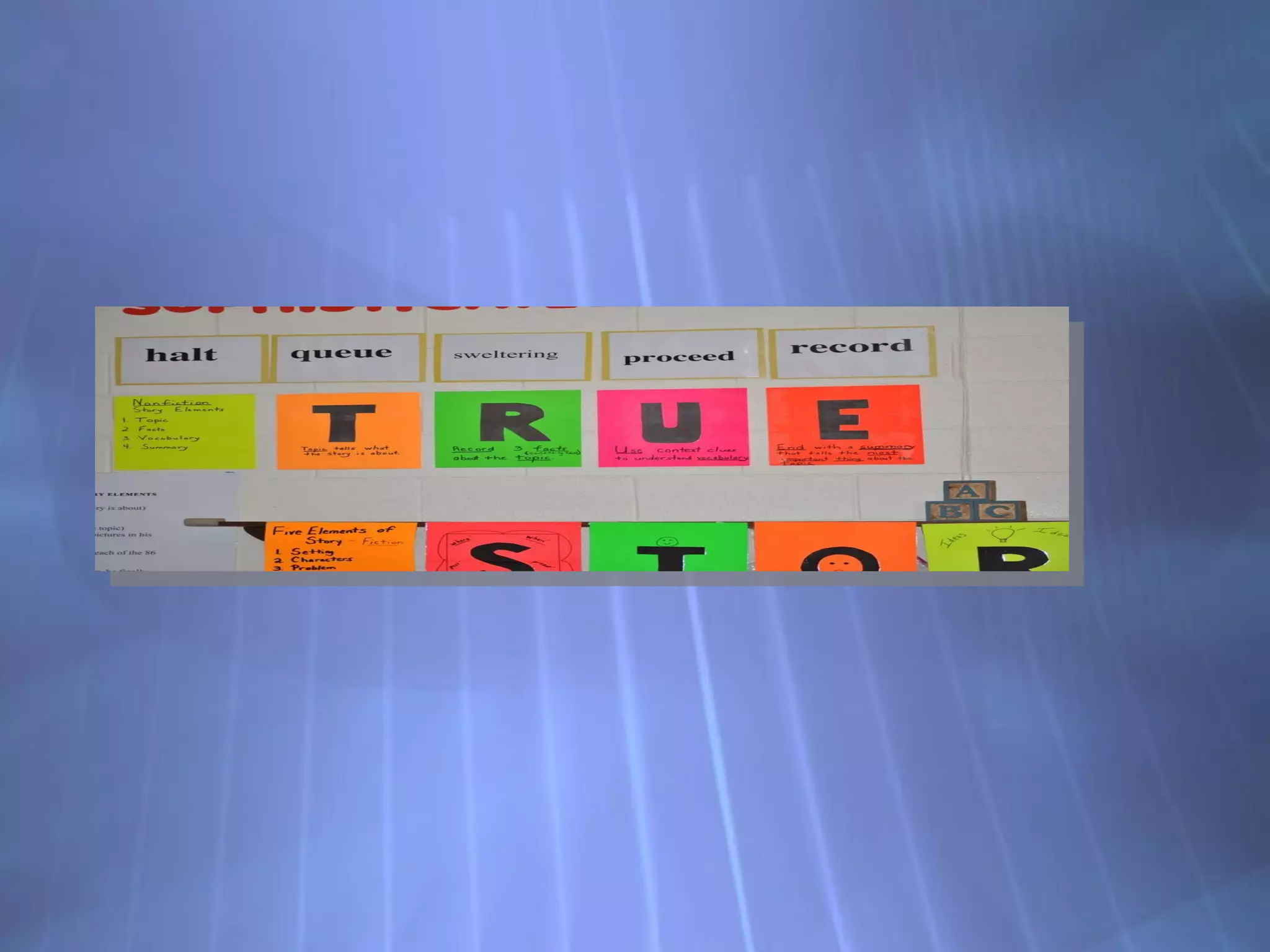
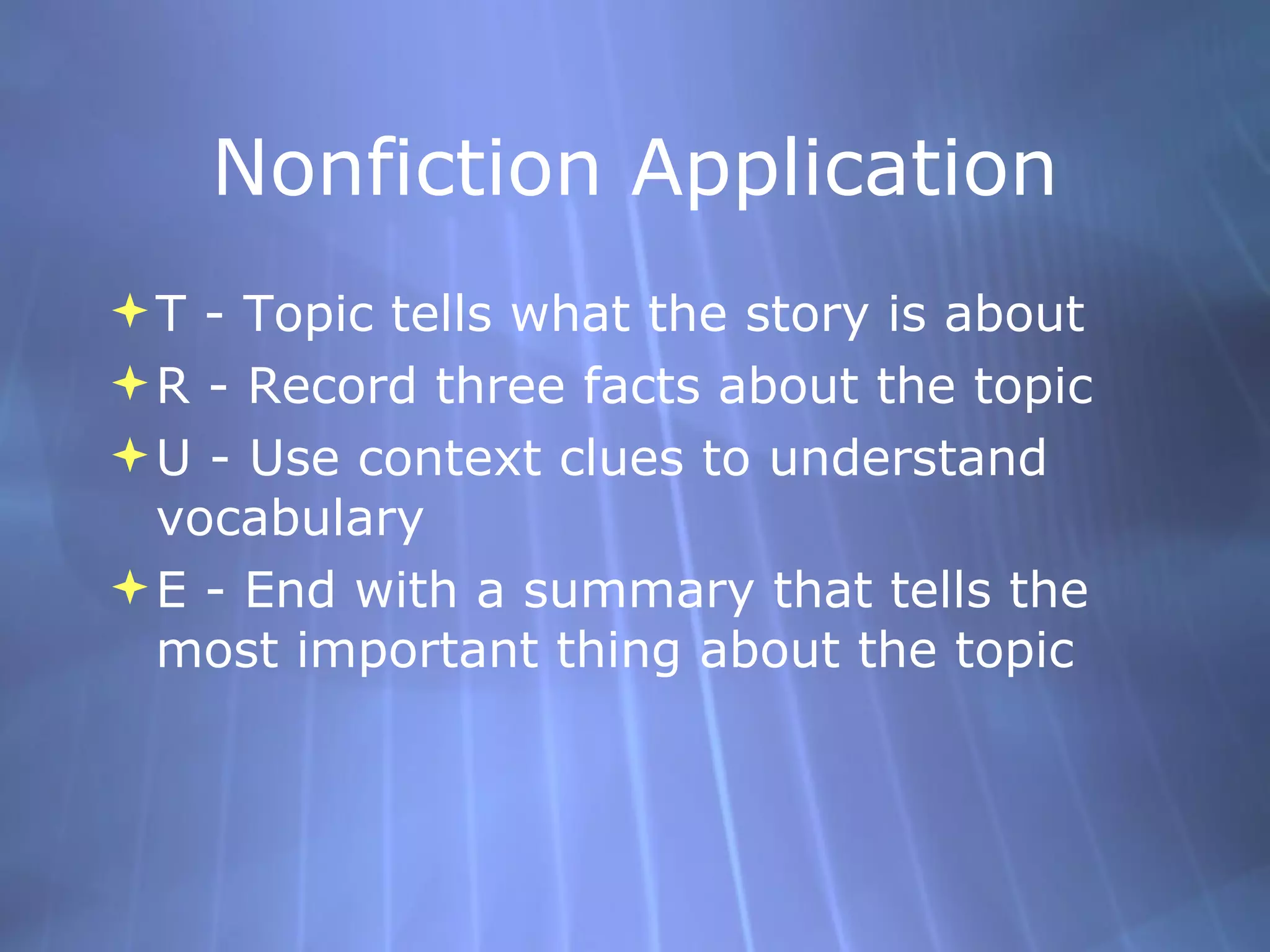
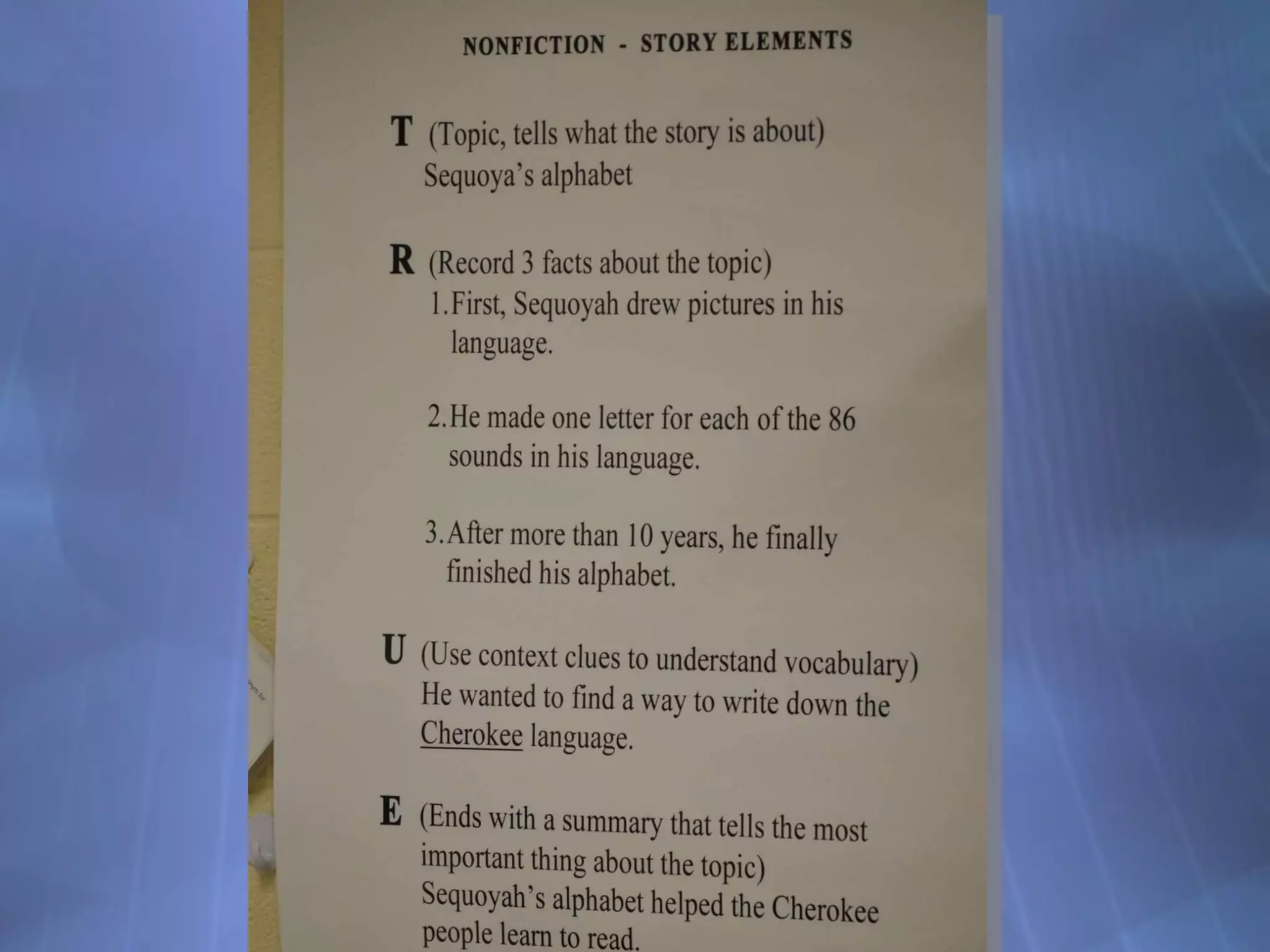
Nonfiction Application T - Topic tells what the story is about R - Record three facts about the topic U - Use context clues to understand vocabulary E - End with a summary that tells the most important thing about the topic
 
Sophisticated Words
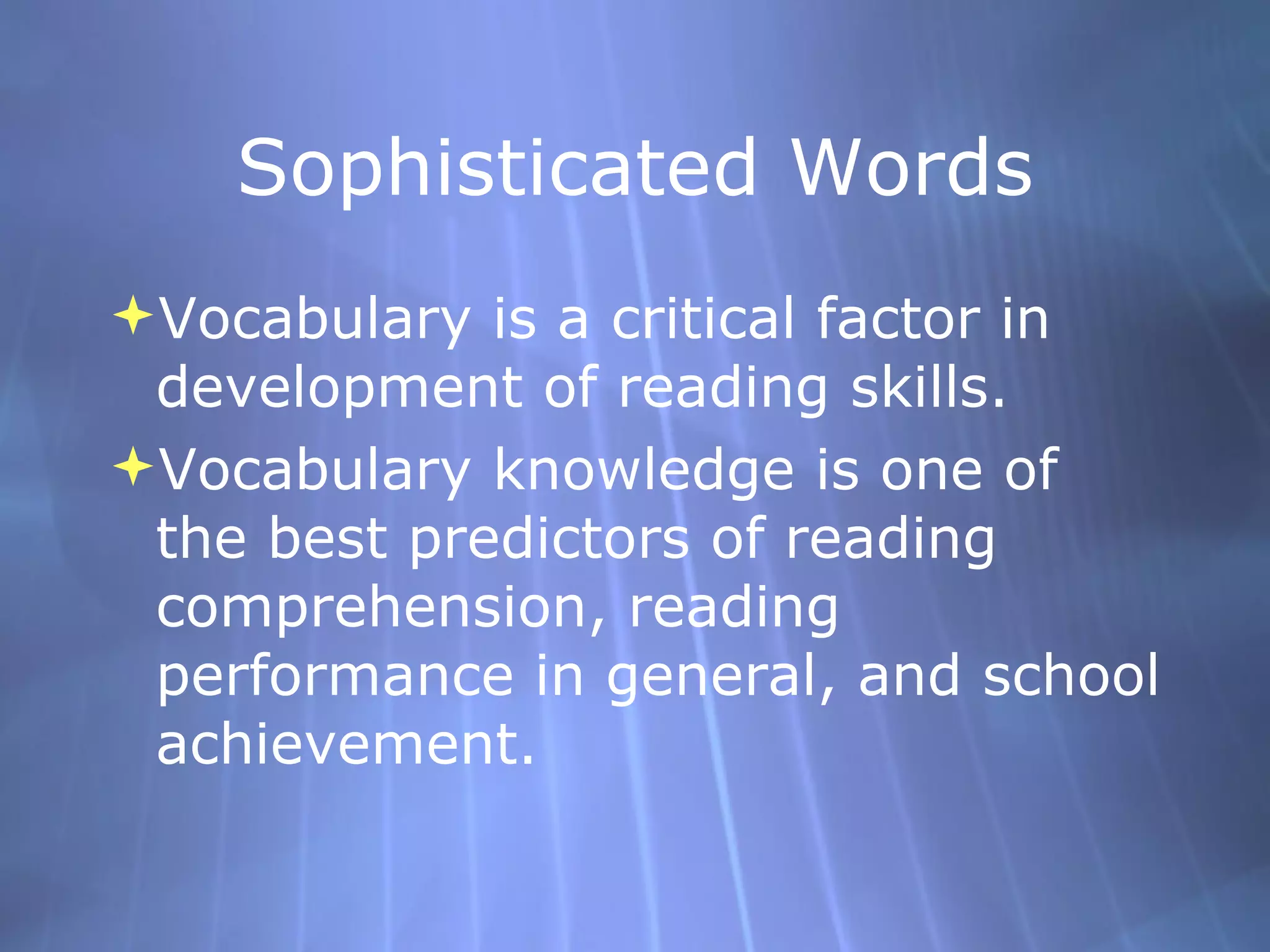
Sophisticated Words Vocabulary is a critical factor in development of reading skills. Vocabulary knowledge is one of the best predictors of reading comprehension, reading performance in general, and school achievement.
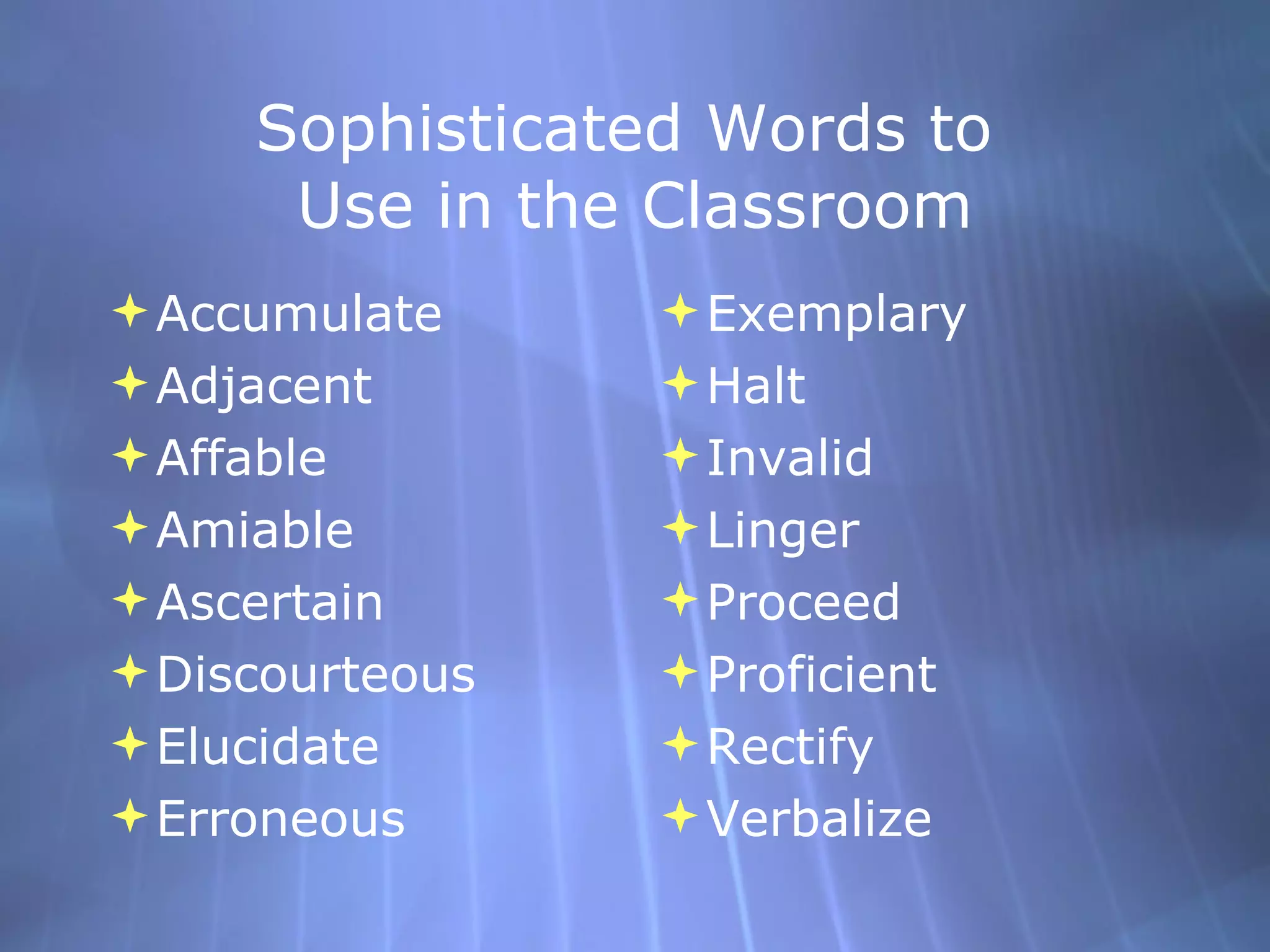
Sophisticated Words to  Use in the Classroom Accumulate  Adjacent Affable  Amiable  Ascertain  Discourteous Elucidate  Erroneous Exemplary Halt  Invalid  Linger  Proceed  Proficient  Rectify Verbalize
Sophisticated Words Particularly appropriate for instruction Words are not likely to be encountered or learned through typical interaction with academic materials or everyday conversation Expands vocabulary breadth and depth
Pic-Wizard Vocabulary
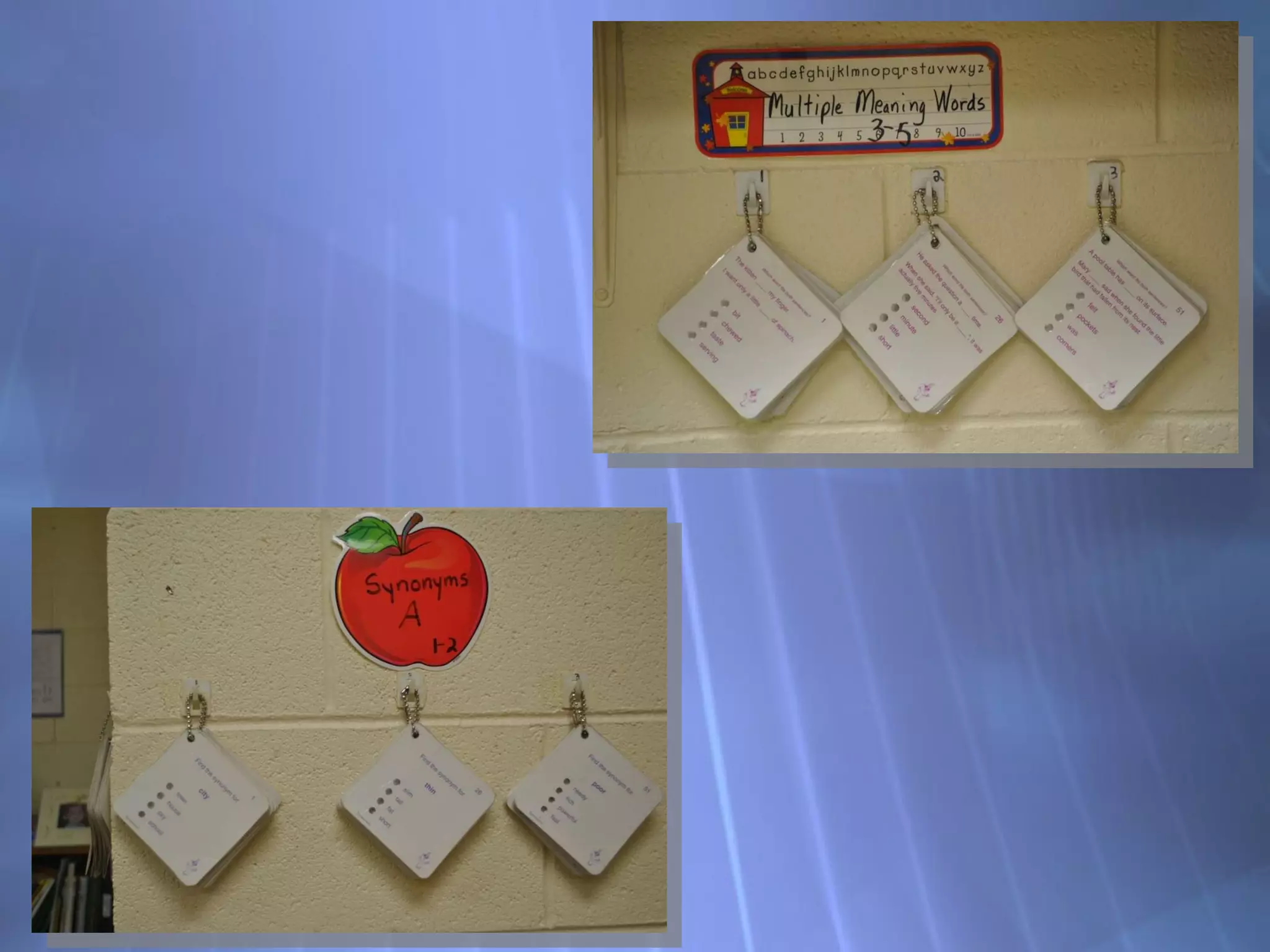
Pic-Wizard Vocabulary Self-checking vocabulary cards Focus on a variety of skills Synonyms Antonyms Multiple Meaning Words Context Clues Phonics Skills English Skills
 
Additional Resources Bringing Words to Life Isabel Beck  The Vocabulary-Rich Classroom: Modeling Sophisticated Word Use to Promote Word Consciousness and Vocabulary Growth from  The Reading Teacher,  63 (5) Holly Lane and Stephanie Allen Picture It! from  The Reading Teacher,  63 (1) Victoria Naughton
Contact Information Monica Wilkins    [email_address] Elaine McCullough   [email_address]

Reading interventions2

  • 1.
    Interventions for Struggling Readers Monica Wilkins Elaine McCullough
  • 2.
    Interventions Are… student specific and designed to close learning gaps Are not… individual assistance in completing worksheets or assignments
  • 3.
    Planning Interventions 3Step Process Step 1: Diagnose Needs Step 2: Prepare Materials Step 3: Implement Interventions
  • 4.
    Step 1: Diagnose Needs student specific use a diagnostic tool Running Record STAR Reading STAR Early Literacy Independent Reading Inventory/Level Reading Series Placement Test
  • 5.
    Step 2: Prepare Materials K-2 Phonemic Awareness Phonics Decoding Strategies Tracking Form 3-5 Sight Word Fluency Sets of 10 words within 12 seconds Comprehension Sentence structure and comprehension using drawings Passages using quick draws Tracking Form
  • 6.
    Step 3: ImplementInterventions Classroom, SIP, Reading Lab Classroom Interventions any student 10-15 minutes daily Intervention Form / Ideas When???? first 5 minutes of recess 5 minutes while others are packing extra group rotation 10 minutes extra for struggling group
  • 7.
    SIP: Speedy InterventionPractices Students with an IEP in place 15 minutes of pull-out daily
  • 8.
  • 9.
  • 10.
    Reading Lab Individualizedself-paced instruction for improving skills Students in grades 2-4 attend for 45 minutes a day Instruction follows the Marie Carbo Recorded-Book Method Student progress is evaluated quarterly to determine need for services
  • 11.
    What is theCarbo Method? Recorded readings are above the student’s independent level. Recorded: Slow pace Short phrases Good expression Small amounts
  • 12.
  • 13.
    Effective Fluency InstructionMakes word recognition automatic and effortless Emphasizes rhythm and expression
  • 14.
    Results of CarboRecordings Reduce Stress Improve Fluency, comprehension, vocabulary, language, pronunciation Increase Motivation Confidence
  • 15.
    What the StudentDoes Relaxes Listens to recorded story 2-3 times while looking at written material Student tracks with finger while listening Timed read-back and conference with teacher
  • 16.
    Why the Carbo Method Works Increases learning and comprehension Addresses multiple intelligences High-interest stories have high meaning to the brain The brain is a pattern sorter With sufficient modeling of the text, the brain automatically identifies word patterns and begins to decipher unknown words
  • 17.
  • 18.
  • 19.
    Picture It! Graphicorganizer to help students recall the five story elements Uses acronym “STORY” S - Setting T - Talking characters O - Oops, a problem! R - Attempts to resolve the problem Y - Yes, the problem is solved
  • 20.
  • 21.
    Picture It! Setsup a sequence to help readers anticipate the way in which the story unfolds Comprehension is the goal Visualization Knowledge of story elements
  • 22.
  • 23.
    Nonfiction Application T- Topic tells what the story is about R - Record three facts about the topic U - Use context clues to understand vocabulary E - End with a summary that tells the most important thing about the topic
  • 24.
  • 25.
  • 26.
    Sophisticated Words Vocabularyis a critical factor in development of reading skills. Vocabulary knowledge is one of the best predictors of reading comprehension, reading performance in general, and school achievement.
  • 27.
    Sophisticated Words to Use in the Classroom Accumulate Adjacent Affable Amiable Ascertain Discourteous Elucidate Erroneous Exemplary Halt Invalid Linger Proceed Proficient Rectify Verbalize
  • 28.
    Sophisticated Words Particularlyappropriate for instruction Words are not likely to be encountered or learned through typical interaction with academic materials or everyday conversation Expands vocabulary breadth and depth
  • 29.
  • 30.
    Pic-Wizard Vocabulary Self-checkingvocabulary cards Focus on a variety of skills Synonyms Antonyms Multiple Meaning Words Context Clues Phonics Skills English Skills
  • 31.
  • 32.
    Additional Resources BringingWords to Life Isabel Beck The Vocabulary-Rich Classroom: Modeling Sophisticated Word Use to Promote Word Consciousness and Vocabulary Growth from The Reading Teacher, 63 (5) Holly Lane and Stephanie Allen Picture It! from The Reading Teacher, 63 (1) Victoria Naughton
  • 33.
    Contact Information MonicaWilkins [email_address] Elaine McCullough [email_address]