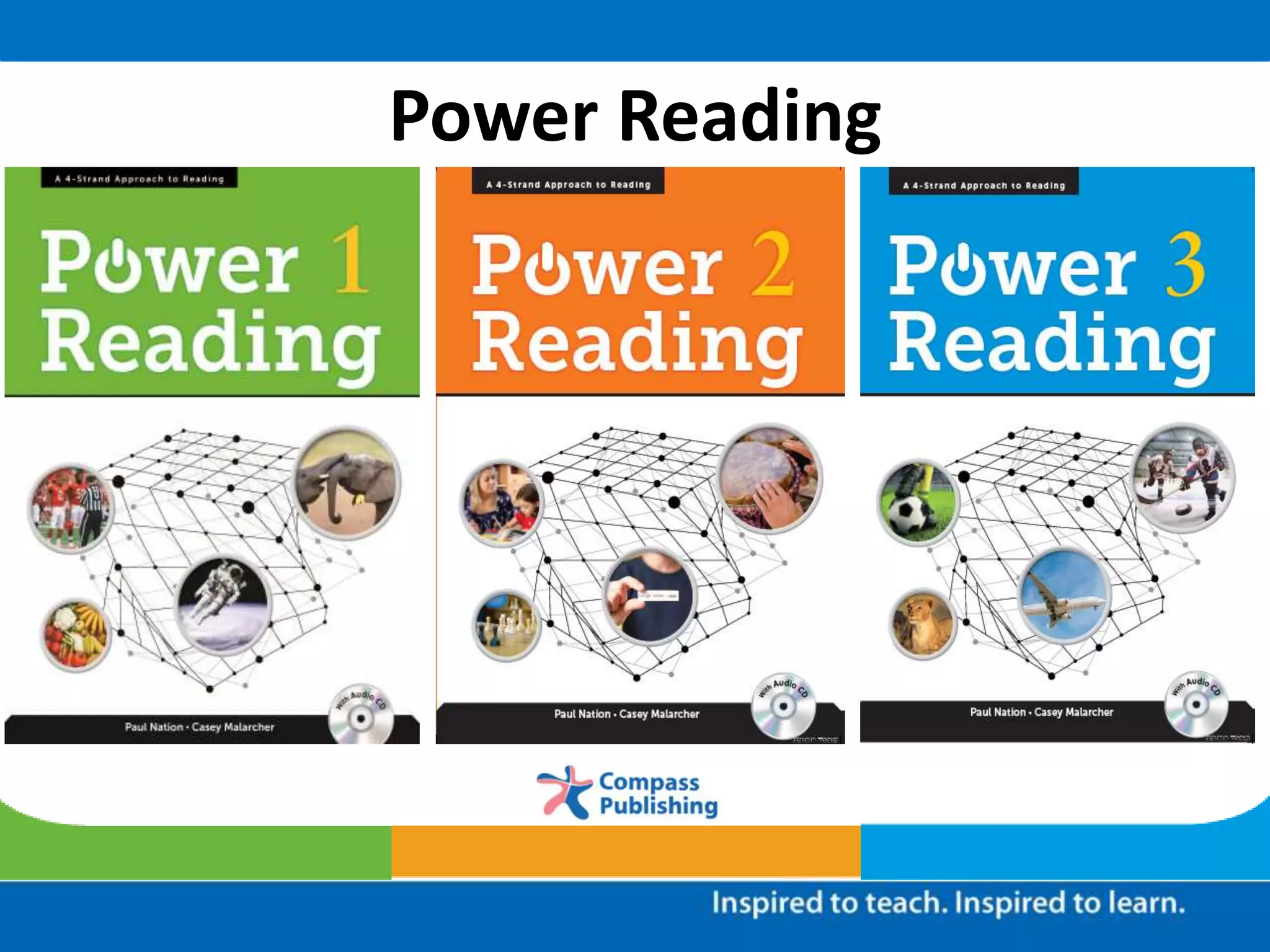
Power Reading
Contents
• About the Author
• Overview
• 4 Strand Principle
• Key Features
• Components
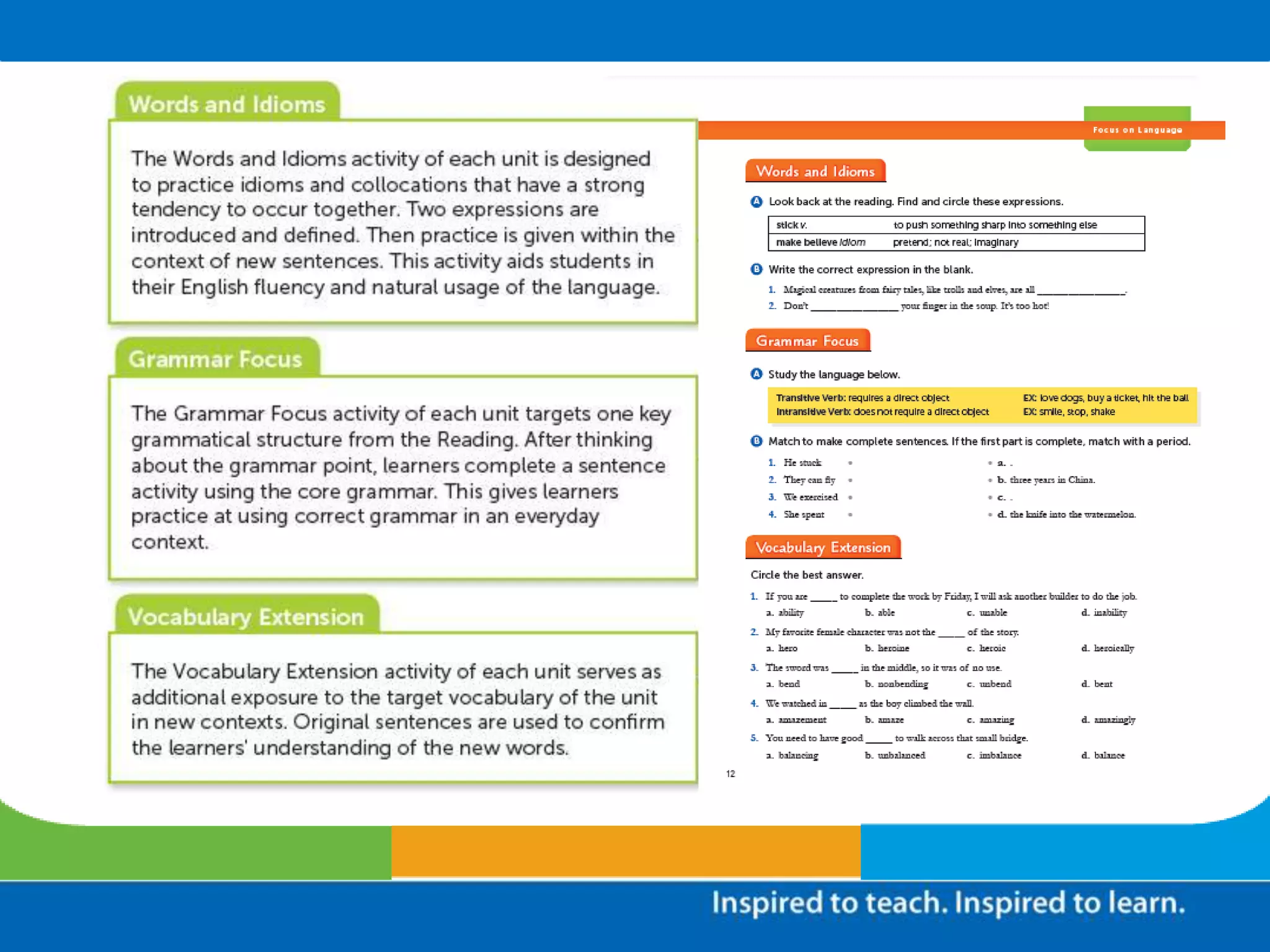
• Unit Walkthrough
• Teacher’s Materials
About the Author
The writer, Paul Nation, has been training teachers of
English for over forty years and he has taught in Indonesia,
Thailand, the Unites States, Finland and Japan. He has
written numerous books and articles about the teaching
and learning of vocabulary, language teaching methodology,
and curriculum design. He is professor emeritus at Victoria
University of Wellington, New Zealand.
Overview
• Power Reading is a three-book series specifically developed for the intermediate to advanced
English language learner (A2-B1)
• Each book is made up of 16 units with 6 pages per unit. A wordlist is also included at the end
of each book.
• The series has been developed to support a four-strand approach to language instruction
• Each unit incorporates reading and listening passages of related content to both engage and
inform learners.
• Extension activities in the Power Reading series support the development of learners’
reading, listening, writing, and discussion skills through supplemental content that builds on
each unit’s main topic.
4 Strand Principle
Meaning-focused input
Learning through listening and reading where the learner’s attention should focus on the message of the
material that they encounter
Meaning focused output
Learning through speaking and writing where the learner’s attention should be focused on communicating
messages to others. They should be speaking and writing about things that they know a lot about but which
stretches their language knowledge
Language-focused learning
The deliberate attention to language features by involving the deliberate learning of pronunciation, vocabulary,
grammar, and discourse structure. It also involves the deliberate learning of language learning strategies
Fluency development
Learning to make the best use of what is already known. This strand includes developing listening fluency,
speaking fluency, reading fluency, and writing fluency
Key Features
• Informative reading passages developed to add to the real-world knowledge of learners while
practicing language skills in English
• Comprehension questions targeting facts and details, making inferences, understanding
writers’ purposes, and understanding meaning of words and phrases from context
• Vocabulary development activities specifically targeting mid-frequency and academic words
• Skill-synthesis extension activities developed to practice multiple language skills through
content related to each unit’s topic
• Audio recordings of reading passages
• Teacher’s materials; unit tests, review tests, and vocabulary quizzes
Unit Themes
Thematically-organized readings on high-
interest topics from a variety of both
academic and modern subjects including;
Technology, Business, Psychology, Art,
Food, Education, and more!
Components
• Student Book
• Answer Key
• MP3-CD
• Teacher’s Materials
Teacher’s Materials
• You can find a list of Teaching Tips available
in each book. These tips provide an insight
on how to utilize the unit structure in each
level for a specific title
• Furthermore a unit test, review test,
vocabulary quiz, and classroom
presentations are also included.
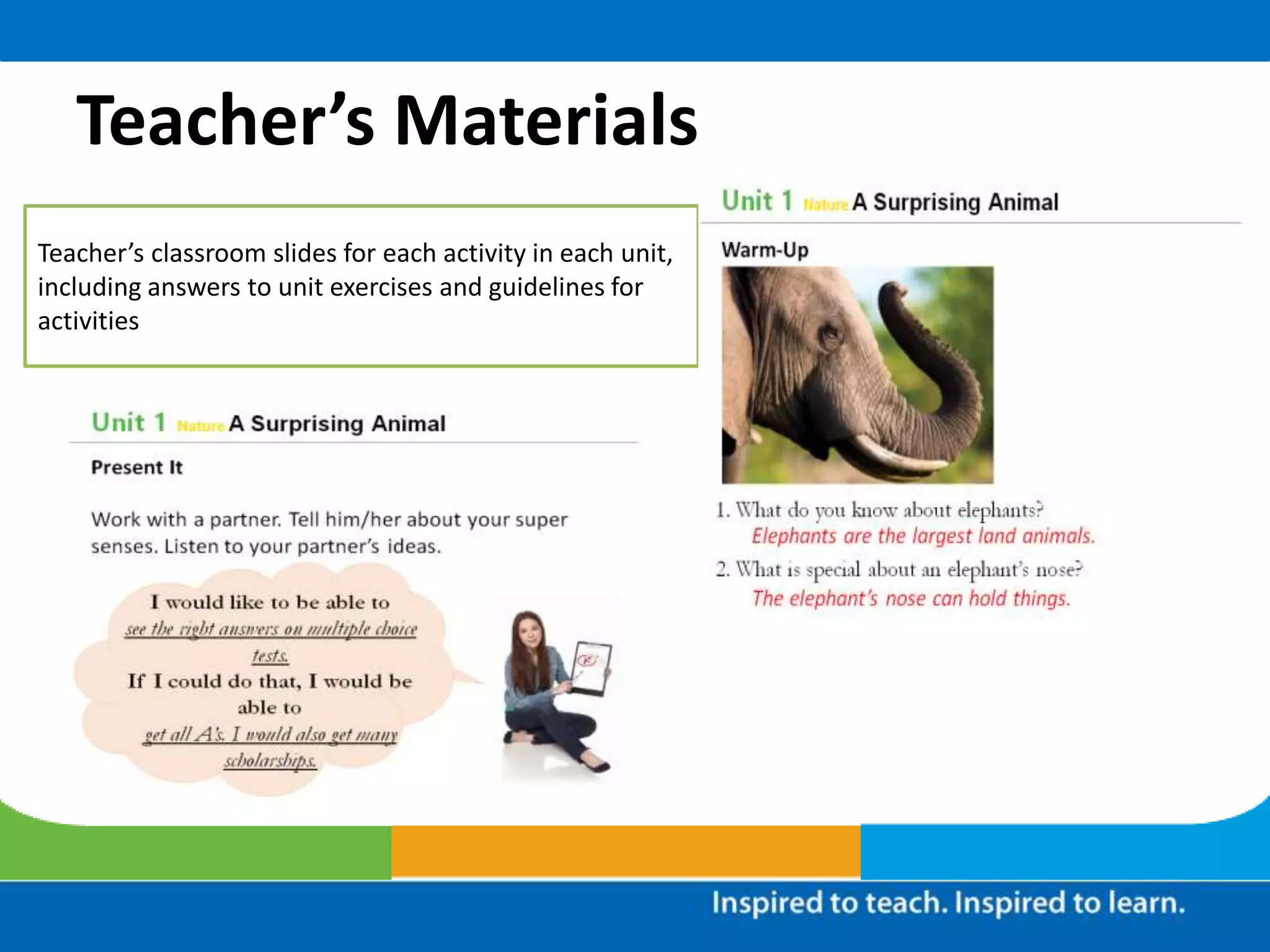
Teacher’s Materials
Teacher’s classroom slides for each activity in each unit,
including answers to unit exercises and guidelines for
activities
Thank You!
For information on this product
or other ELT materials, connect with us!
facebook.com/compasspublishing
@CompassELT
info@compasspub.com
compasspublishing
slideshare.net/CompassPublishing

Power Reading - Walkthrough

  • 1.
  • 2.
    Contents • About theAuthor • Overview • 4 Strand Principle • Key Features • Components • Unit Walkthrough • Teacher’s Materials
  • 3.
    About the Author Thewriter, Paul Nation, has been training teachers of English for over forty years and he has taught in Indonesia, Thailand, the Unites States, Finland and Japan. He has written numerous books and articles about the teaching and learning of vocabulary, language teaching methodology, and curriculum design. He is professor emeritus at Victoria University of Wellington, New Zealand.
  • 4.
    Overview • Power Readingis a three-book series specifically developed for the intermediate to advanced English language learner (A2-B1) • Each book is made up of 16 units with 6 pages per unit. A wordlist is also included at the end of each book. • The series has been developed to support a four-strand approach to language instruction • Each unit incorporates reading and listening passages of related content to both engage and inform learners. • Extension activities in the Power Reading series support the development of learners’ reading, listening, writing, and discussion skills through supplemental content that builds on each unit’s main topic.
  • 5.
    4 Strand Principle Meaning-focusedinput Learning through listening and reading where the learner’s attention should focus on the message of the material that they encounter Meaning focused output Learning through speaking and writing where the learner’s attention should be focused on communicating messages to others. They should be speaking and writing about things that they know a lot about but which stretches their language knowledge Language-focused learning The deliberate attention to language features by involving the deliberate learning of pronunciation, vocabulary, grammar, and discourse structure. It also involves the deliberate learning of language learning strategies Fluency development Learning to make the best use of what is already known. This strand includes developing listening fluency, speaking fluency, reading fluency, and writing fluency
  • 6.
    Key Features • Informativereading passages developed to add to the real-world knowledge of learners while practicing language skills in English • Comprehension questions targeting facts and details, making inferences, understanding writers’ purposes, and understanding meaning of words and phrases from context • Vocabulary development activities specifically targeting mid-frequency and academic words • Skill-synthesis extension activities developed to practice multiple language skills through content related to each unit’s topic • Audio recordings of reading passages • Teacher’s materials; unit tests, review tests, and vocabulary quizzes
  • 7.
    Unit Themes Thematically-organized readingson high- interest topics from a variety of both academic and modern subjects including; Technology, Business, Psychology, Art, Food, Education, and more!
  • 8.
    Components • Student Book •Answer Key • MP3-CD • Teacher’s Materials
  • 16.
    Teacher’s Materials • Youcan find a list of Teaching Tips available in each book. These tips provide an insight on how to utilize the unit structure in each level for a specific title • Furthermore a unit test, review test, vocabulary quiz, and classroom presentations are also included.
  • 17.
    Teacher’s Materials Teacher’s classroomslides for each activity in each unit, including answers to unit exercises and guidelines for activities
  • 18.
    Thank You! For informationon this product or other ELT materials, connect with us! facebook.com/compasspublishing @CompassELT info@compasspub.com compasspublishing slideshare.net/CompassPublishing