By sir cliff Luanda
Details of the reading test
The questions types;
Introduction;
1. Multiple choices
2. Short answers questions
3. Sentence completion questions
4. Truefalsenot given questions
5. Match sentence endings
6. Yesnonot given
7. Match endings
8. Match information
9. Match sentence endings
10.Match features
 Reading is the second part of IELTS test, and takes 60 minutes. It
consists of three or sometimes four reading passages of increasing
difficultly, and there is a total of 40 questions to answer on the
reading answer sheets, be aware that no extra time is given for
transferring your answers from the test booklet to reading answer
sheet
 The academic and general training reading tests are graded to the
same levels. However ,because the text are more challenging overall
than those in the general training tests, more questions and to be
answered correctly on General training test to receive the same
grades. So the following are sample of questions.so you will be
given 60 minutes to complete 40 questions and 3passages and 11
question types
 On the test day its not good to read the entire passage, a
passage is a number of different paragraphs, the best way to
approach this test is to go paragraph by paragraph, because
the questions align with the paragraphs themselves.
 The first question is going to be at the top of the passage and
the final one will be at the bottom of the passage. For
instance take a look this example
 To identify where in the passage the answer is mentioned and
to eliminate the incorrect answers options before arriving to
the correct answers.
 The reason is to increase probability that you will select the
collect answer
 Now you will observe that obscure and lesser known means
the same thing
 So the answer is ‘C’
 In this questions type is working out whether the statement
says the same thing as the test, in which case is going to be
true, false or not enough information to make it true or false
that will be ‘not given’
 If the statement is not mentioned in the paragraph, you may
choose not given. Let’s see the following example
 If you read very carefully the paragraph you will notice
 The first question its answer is ‘NOT GIVEN’
 The second question its answer will be ‘TRUE’
 This is the straight forward question, you have to read the
instructions very carefully
 For instance you may be instructed to choose no more than
two words from the paragraph or sometimes you can be told
‘choose two words and a number;’ that means one word and
number or just a number.
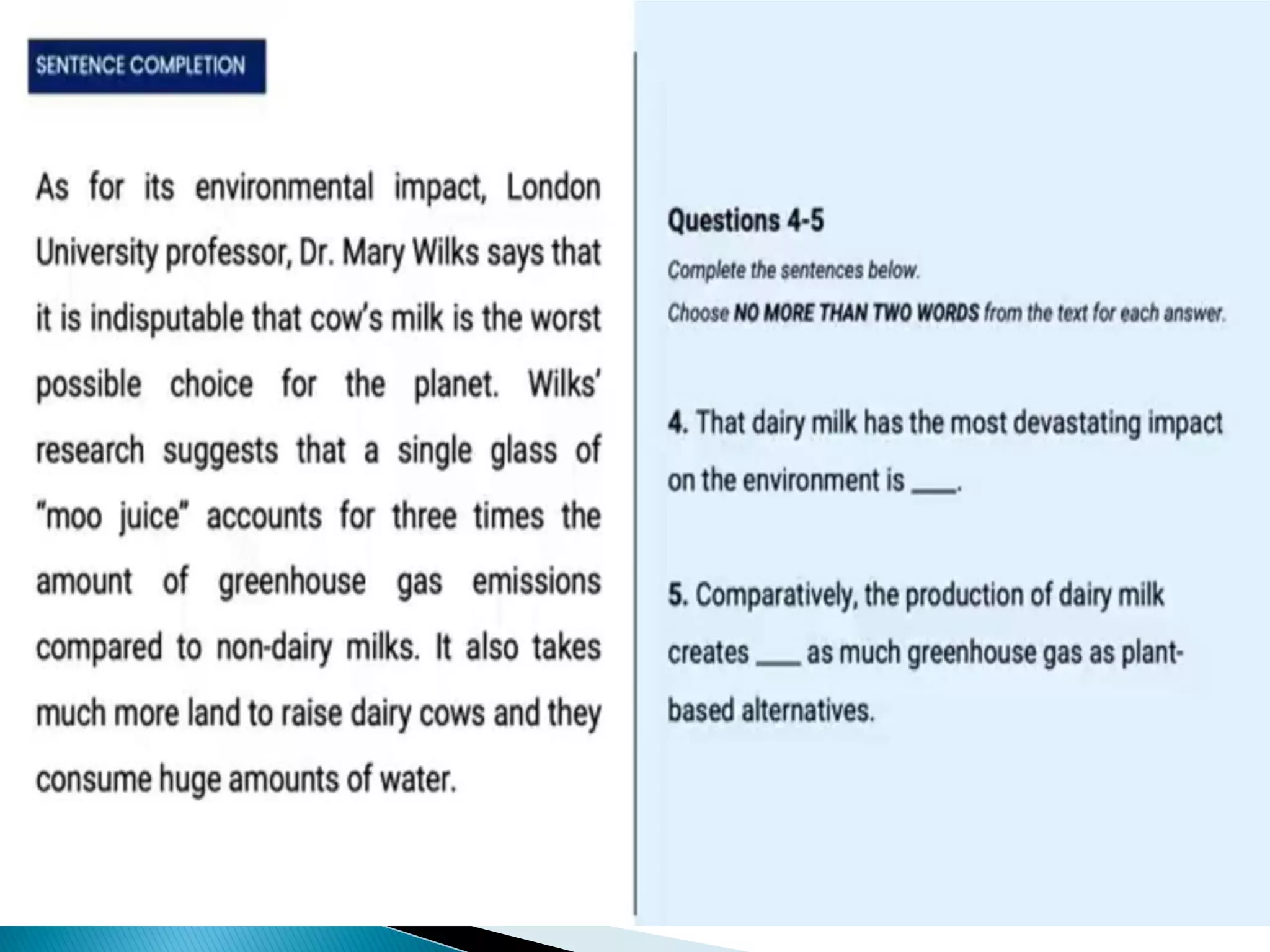
 Word might be adjective or a noun .Let’s take a look the
following example of the paragraph
 So from the given paragraph we may sort out the correct
answers.
 The suggested answers from this question are
 4.INDISPUTED
 5.THREE TIMES/3TIMES
 In this question, the same summary is taken and then it is
written again but slightly different, in this summary there are
some words missing
 So you should read that paragraph, understand it and then
look at the paragraph given, understand the paragraph and
find words that have been taken out. let’s take a look the
following example
 For instance, from the paragraph, we have been
instructed to WRITE NO MORE THAN ONE WORD
 So the answers suggested to this question are
 6.POPULAR
 7.WATER
 8.SWEETENERS
 9.FAT
 From the paragraph you may notice there is the use of
SYNONYMOUS so you have to be very carefully while
reading to match with your answers because you might
find the same thing but is said in different way such as
‘be careful and be cautious’
 In this type of question you have to match the sentence
ending to the subject
 This is vastly simplified. On the test you can get number of
subjects or predicates or the rest of the sentence so this is
little bit tricky
 Let’s take a look the following example
 From the given question if you read it very carefully you will
find that this type of question is so tricky.
 So the suggested answers are
 10.A
 11.E
 In this type of question, you should read very well the
instructions and understand what the question needs you to
answer or fill in the blanks.
 Observe the next question, read very carefully and answer
 From the example we are instructed ‘not more than two
words.’ so not more than two words are needed, either one or
two and not more than that
 From the question the suggested answers are
 12.PROTEIN
 13.FORTIFIED
 14.BREAST CANCER
 In this type of question yes/no/not given deals with people’s
opinion.
 You have to choose yes is the statement reflects the claims of
the writer
 You have to choose No if the statement contradicts with the
claim of the writer
 You have to choose NOT GIVEN if its not mentioned in the
paragraph
 So from the given paragraph the suggested answers from the
question are
 15.YES
 16.NO
 17.NOT GIVEN
 Here we are not just going to look in a single paragraph for answers.
 We are going to look across paragraphs.
 What you have to do in match headings is read the paragraphs and think
of a good heading. There will be list of headings and one of them will
correctly sort of summarise that particular paragraph.
 Here are the tips;
1.start with paragraph to headings and not headings to paragraphs
2.choose the paragraph and read
3.undestand it then,
4.quickly read the list of headings to determine which is the best
heading, and that is the best approach to this question
Let’s take a look the following question
 From the given paragraph we can sort out the answers. when
we read carefully the paragraphs to the given headings,
suggested answers are
 18.D
 19.F
 20.C
 21.B
 22.G
 23.E
 24.A
 This is so similar to match headings but match headings was
dealing with summarization the entire paragraph and
determine a good heading for it.
 This one is about specific information within the paragraph.
It’s basically asking you which paragraph can you find this
information here.
 From this question you are advised to read carefully the
instructions, let’s take a look the following paragraph
When you read well the instructions from the given paragraph
you are instructed ‘use any letter more than one’. After
matching the Information and the paragraph the suggested
answers of this question are
25.E
26.D
27.B
28.C
 So here what w ultimately need to do is match each of the
statement.
 There will be provided the paragraphs and you will be given
the letters or numbers of people who said the paragraphs or
statements in a given paragraph and you have to match the
statement and the person who said it.
 Let’s take a look the following example
 From the given paragraph the suggested answers are as
follow;
 29.B
 30.E
 31.A
 32.C
 33.D
 From the given paragraph the suggested answers are as
follow;
 29.B
 30.E
 31.A
 32.C
 33.D
Ielts reading test

Ielts reading test

  • 1.
  • 2.
    Details of thereading test The questions types; Introduction; 1. Multiple choices 2. Short answers questions 3. Sentence completion questions 4. Truefalsenot given questions 5. Match sentence endings 6. Yesnonot given 7. Match endings 8. Match information 9. Match sentence endings 10.Match features
  • 3.
     Reading isthe second part of IELTS test, and takes 60 minutes. It consists of three or sometimes four reading passages of increasing difficultly, and there is a total of 40 questions to answer on the reading answer sheets, be aware that no extra time is given for transferring your answers from the test booklet to reading answer sheet  The academic and general training reading tests are graded to the same levels. However ,because the text are more challenging overall than those in the general training tests, more questions and to be answered correctly on General training test to receive the same grades. So the following are sample of questions.so you will be given 60 minutes to complete 40 questions and 3passages and 11 question types
  • 4.
     On thetest day its not good to read the entire passage, a passage is a number of different paragraphs, the best way to approach this test is to go paragraph by paragraph, because the questions align with the paragraphs themselves.  The first question is going to be at the top of the passage and the final one will be at the bottom of the passage. For instance take a look this example
  • 6.
     To identifywhere in the passage the answer is mentioned and to eliminate the incorrect answers options before arriving to the correct answers.  The reason is to increase probability that you will select the collect answer
  • 7.
     Now youwill observe that obscure and lesser known means the same thing  So the answer is ‘C’
  • 8.
     In thisquestions type is working out whether the statement says the same thing as the test, in which case is going to be true, false or not enough information to make it true or false that will be ‘not given’  If the statement is not mentioned in the paragraph, you may choose not given. Let’s see the following example
  • 10.
     If youread very carefully the paragraph you will notice  The first question its answer is ‘NOT GIVEN’  The second question its answer will be ‘TRUE’
  • 11.
     This isthe straight forward question, you have to read the instructions very carefully  For instance you may be instructed to choose no more than two words from the paragraph or sometimes you can be told ‘choose two words and a number;’ that means one word and number or just a number.  Word might be adjective or a noun .Let’s take a look the following example of the paragraph
  • 13.
     So fromthe given paragraph we may sort out the correct answers.  The suggested answers from this question are  4.INDISPUTED  5.THREE TIMES/3TIMES
  • 14.
     In thisquestion, the same summary is taken and then it is written again but slightly different, in this summary there are some words missing  So you should read that paragraph, understand it and then look at the paragraph given, understand the paragraph and find words that have been taken out. let’s take a look the following example
  • 16.
     For instance,from the paragraph, we have been instructed to WRITE NO MORE THAN ONE WORD  So the answers suggested to this question are  6.POPULAR  7.WATER  8.SWEETENERS  9.FAT  From the paragraph you may notice there is the use of SYNONYMOUS so you have to be very carefully while reading to match with your answers because you might find the same thing but is said in different way such as ‘be careful and be cautious’
  • 17.
     In thistype of question you have to match the sentence ending to the subject  This is vastly simplified. On the test you can get number of subjects or predicates or the rest of the sentence so this is little bit tricky  Let’s take a look the following example
  • 19.
     From thegiven question if you read it very carefully you will find that this type of question is so tricky.  So the suggested answers are  10.A  11.E
  • 20.
     In thistype of question, you should read very well the instructions and understand what the question needs you to answer or fill in the blanks.  Observe the next question, read very carefully and answer
  • 22.
     From theexample we are instructed ‘not more than two words.’ so not more than two words are needed, either one or two and not more than that  From the question the suggested answers are  12.PROTEIN  13.FORTIFIED  14.BREAST CANCER
  • 23.
     In thistype of question yes/no/not given deals with people’s opinion.  You have to choose yes is the statement reflects the claims of the writer  You have to choose No if the statement contradicts with the claim of the writer  You have to choose NOT GIVEN if its not mentioned in the paragraph
  • 25.
     So fromthe given paragraph the suggested answers from the question are  15.YES  16.NO  17.NOT GIVEN
  • 26.
     Here weare not just going to look in a single paragraph for answers.  We are going to look across paragraphs.  What you have to do in match headings is read the paragraphs and think of a good heading. There will be list of headings and one of them will correctly sort of summarise that particular paragraph.  Here are the tips; 1.start with paragraph to headings and not headings to paragraphs 2.choose the paragraph and read 3.undestand it then, 4.quickly read the list of headings to determine which is the best heading, and that is the best approach to this question Let’s take a look the following question
  • 28.
     From thegiven paragraph we can sort out the answers. when we read carefully the paragraphs to the given headings, suggested answers are  18.D  19.F  20.C  21.B  22.G  23.E  24.A
  • 29.
     This isso similar to match headings but match headings was dealing with summarization the entire paragraph and determine a good heading for it.  This one is about specific information within the paragraph. It’s basically asking you which paragraph can you find this information here.  From this question you are advised to read carefully the instructions, let’s take a look the following paragraph
  • 31.
    When you readwell the instructions from the given paragraph you are instructed ‘use any letter more than one’. After matching the Information and the paragraph the suggested answers of this question are 25.E 26.D 27.B 28.C
  • 32.
     So herewhat w ultimately need to do is match each of the statement.  There will be provided the paragraphs and you will be given the letters or numbers of people who said the paragraphs or statements in a given paragraph and you have to match the statement and the person who said it.  Let’s take a look the following example
  • 34.
     From thegiven paragraph the suggested answers are as follow;  29.B  30.E  31.A  32.C  33.D
  • 35.
     From thegiven paragraph the suggested answers are as follow;  29.B  30.E  31.A  32.C  33.D