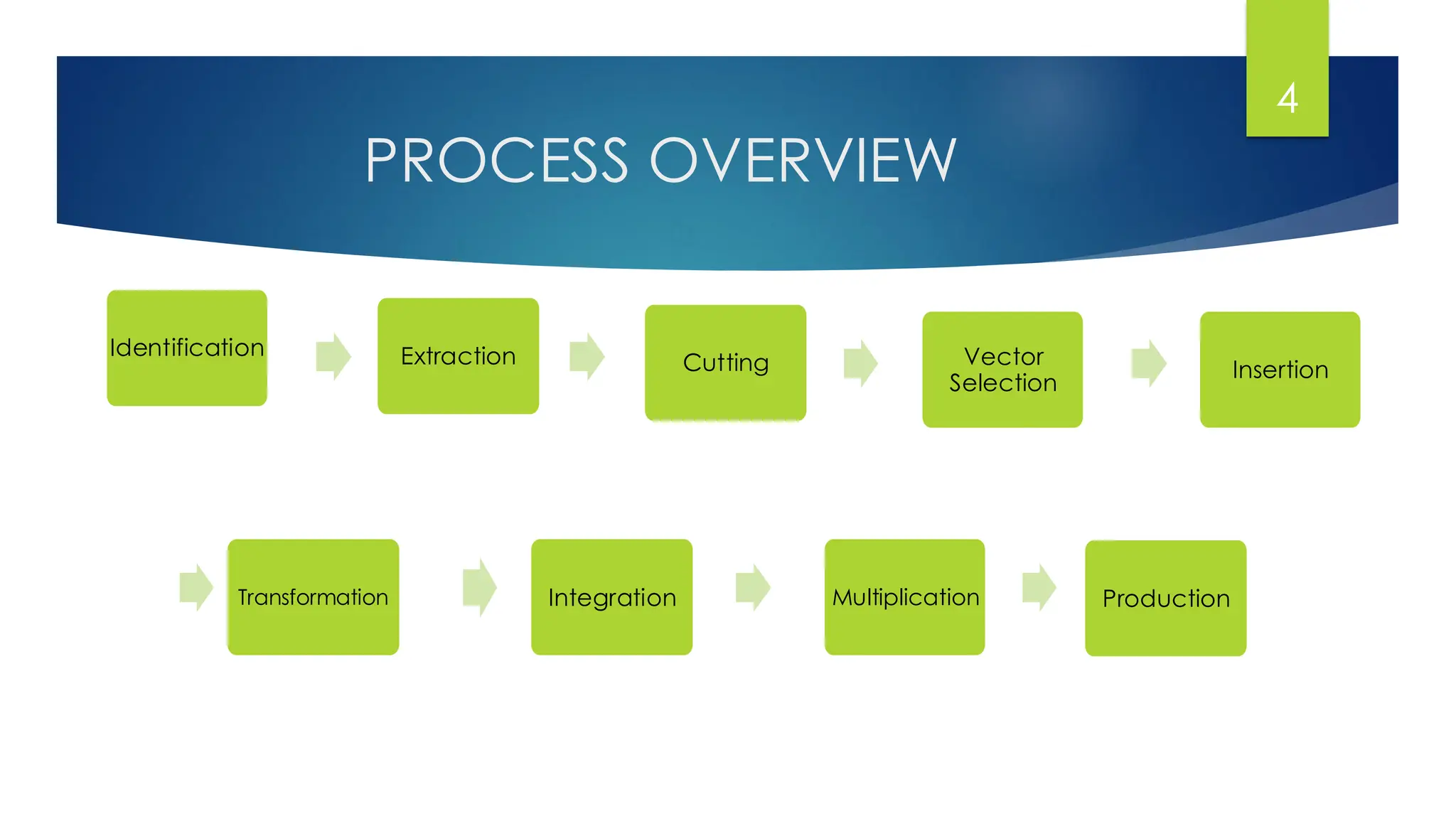
A presentation on the scope of genetic engineering in modern society. It explains key applications in medicine, biotechnology, agriculture, industry, environmental science, and research.
SCOPE OF GENETICENGINEERING
IN MODERN SOCIETY
Presented By: Farhana Parween
Roll No: CGU251103
Registration No: 2503060020
Subject: Genetic Engineering
Code: 414
Department of Biotechnology
Msc 1st Semester
Guided By: Dr Neelanjana Choudhury
1
2.
INTRODUCTION
➢ Genetic Engineering— the process by which pieces of DNA are transferred from
one organism to another
➢ Foundation of biotechnology transforming modern science
➢ Creates Genetically Modified Organisms (GMO) or Transgenic organisms
➢ Applications in health, agriculture, industry, environment
➢ Enhancing quality, productivity & sustainability
2
3.
HISTORICAL MILESTONES
➢ 1953— DNA structure discovered
➢ 1973 — Recombinant DNA technology developed
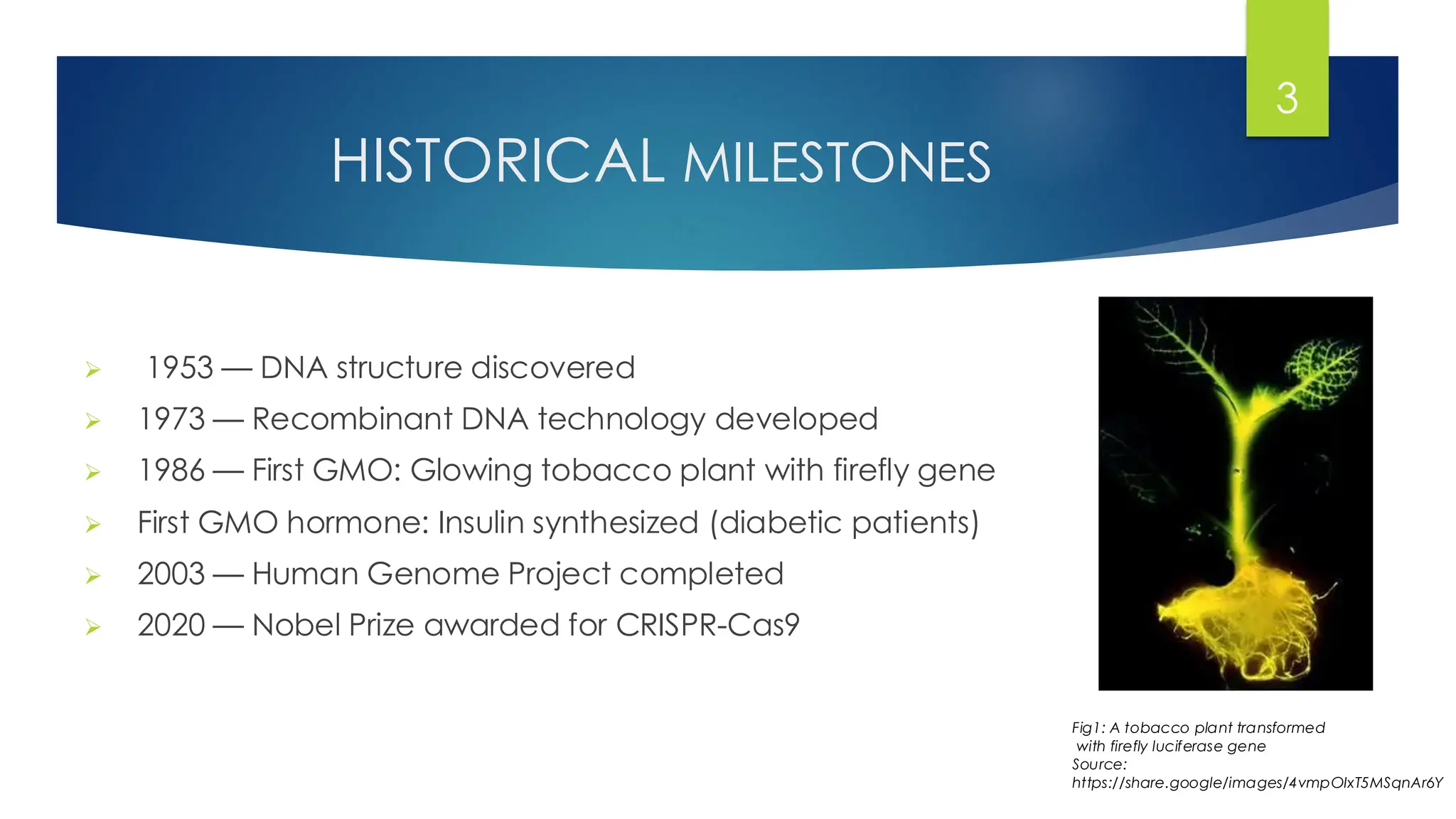
➢ 1986 — First GMO: Glowing tobacco plant with firefly gene
➢ First GMO hormone: Insulin synthesized (diabetic patients)
➢ 2003 — Human Genome Project completed
➢ 2020 — Nobel Prize awarded for CRISPR-Cas9
3
Fig1: A tobacco plant transformed
with firefly luciferase gene
Source:
https://share.google/images/4vmpOIxT5MSqnAr6Y
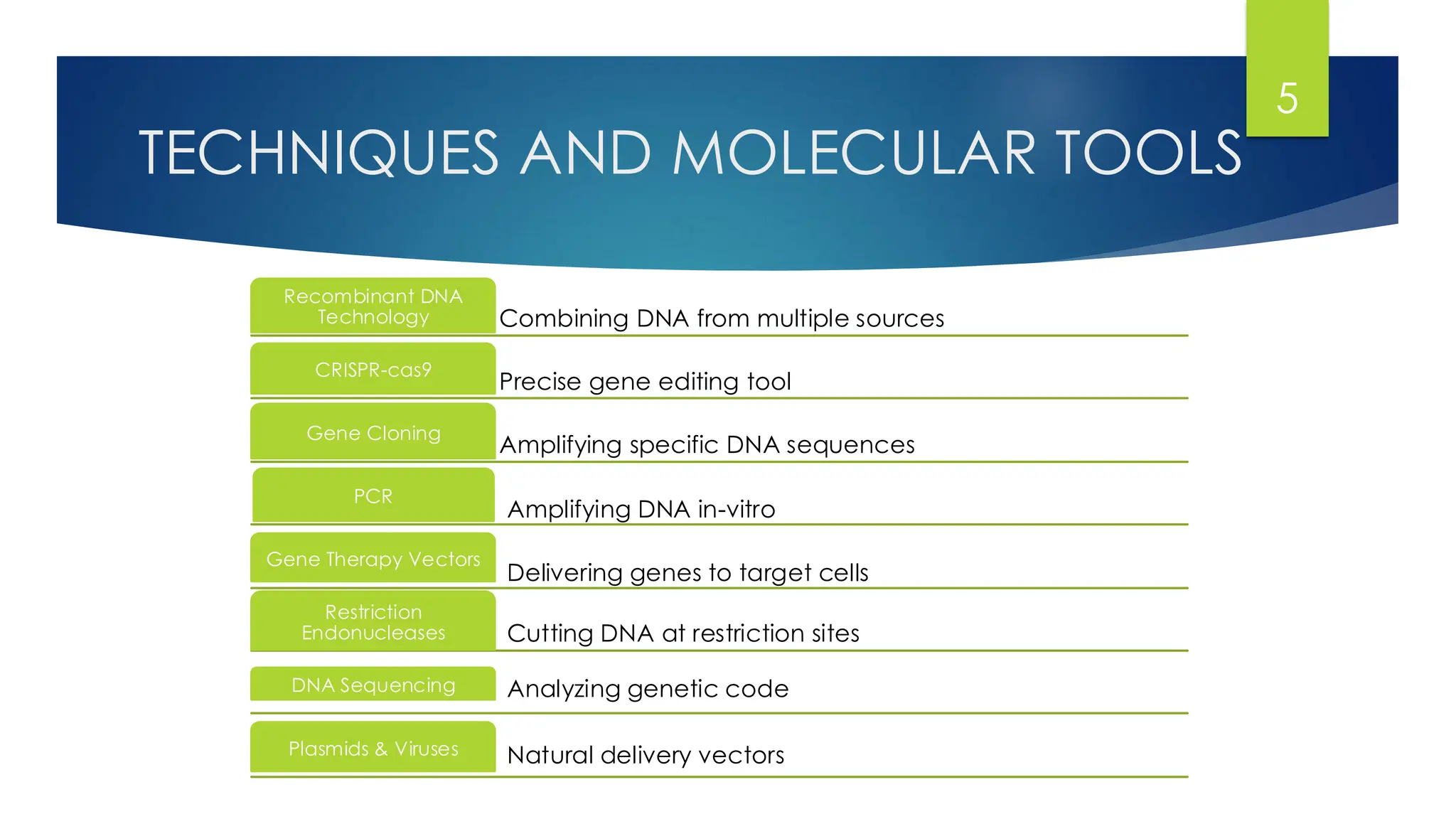
TECHNIQUES AND MOLECULARTOOLS
5
Combining DNA from multiple sources
Recombinant DNA
Technology
Precise gene editing tool
CRISPR-cas9
Amplifying specific DNA sequences
Gene Cloning
PCR
Gene Therapy Vectors
Restriction
Endonucleases
DNA Sequencing
Plasmids & Viruses
Amplifying DNA in-vitro
Delivering genes to target cells
Cutting DNA at restriction sites
Analyzing genetic code
Natural delivery vectors
6.
SCOPE IN BIOTECHNOLOGY
➢GM Trees — Australian eucalyptus (freeze-resistant), Loblolly pines
(reduced lignin for paper)
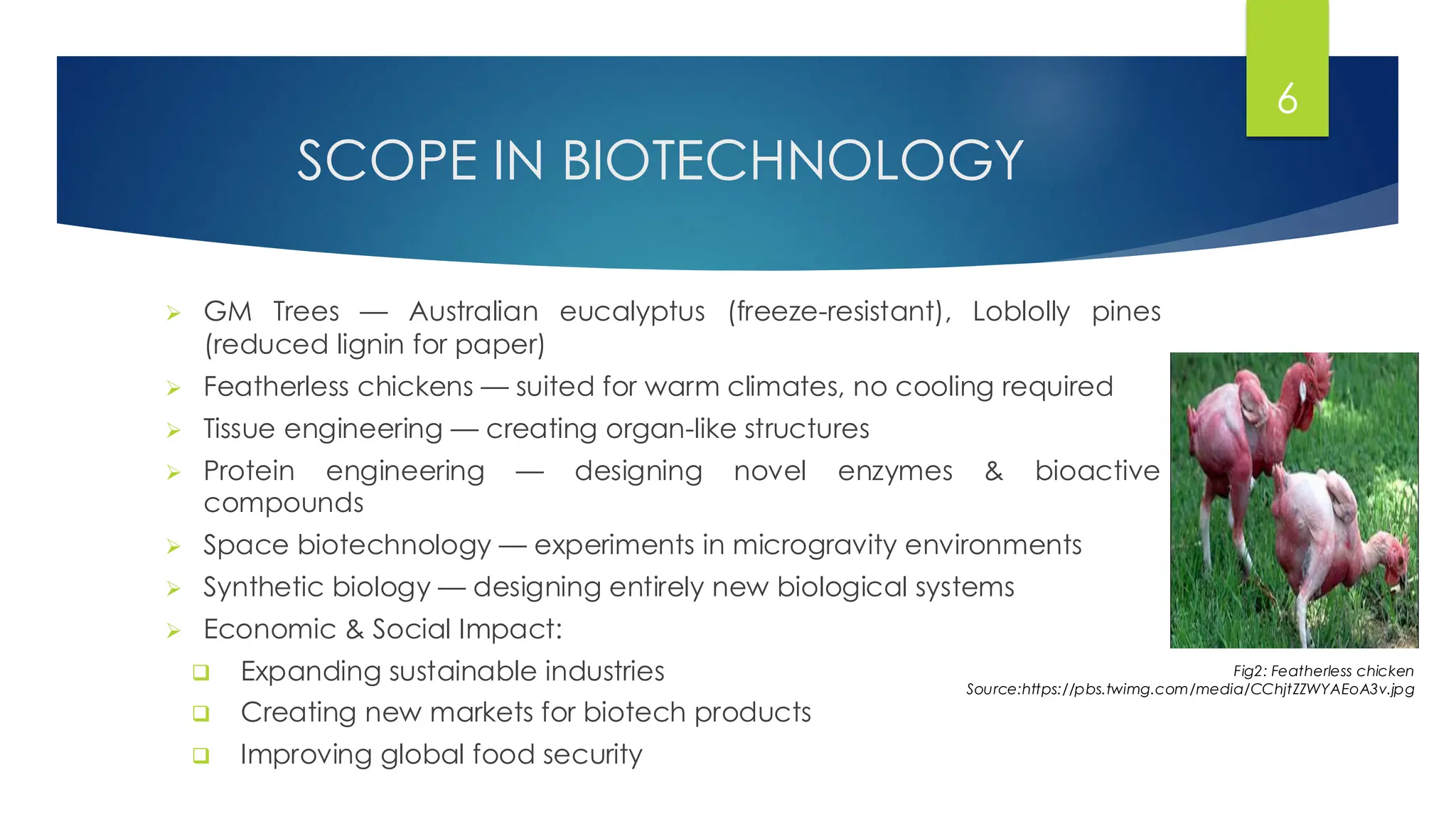
➢ Featherless chickens — suited for warm climates, no cooling required
➢ Tissue engineering — creating organ-like structures
➢ Protein engineering — designing novel enzymes & bioactive
compounds
➢ Space biotechnology — experiments in microgravity environments
➢ Synthetic biology — designing entirely new biological systems
➢ Economic & Social Impact:
❑ Expanding sustainable industries
❑ Creating new markets for biotech products
❑ Improving global food security
6
Fig2: Featherless chicken
Source:https://pbs.twimg.com/media/CChjtZZWYAEoA3v.jpg
7.
SCOPE IN AGRICULTURE
CropImprovement:
➢ Golden Rice — biofortified with Vitamin A for malnutrition prevention
➢ Disease-resistant plants — Tomato mosaic virus resistance
➢ Drought-resistant seeds — adapted for water-scarce regions
➢ Pest-resistant cabbage — scorpion tail gene kills caterpillars (safe for humans)
➢ Strawberry with antifreeze gene — prevents freezing, extends shelf life
➢ Bt Cotton — produces natural insecticide
➢ Benefits:
❑ Reduced chemical pesticide dependency
❑ Higher crop yields
❑ Food security & sustainability
7
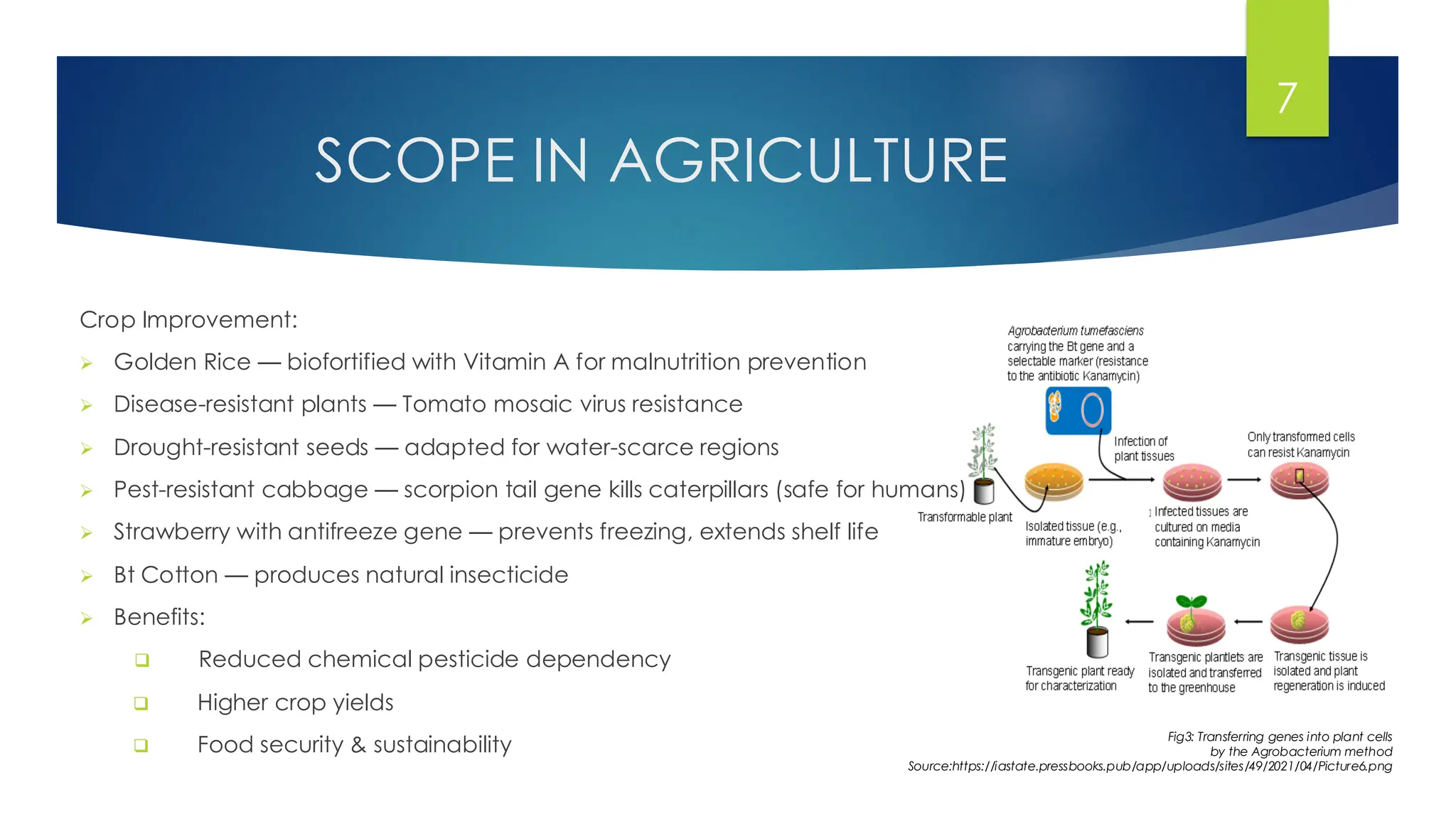
Fig3: Transferring genes into plant cells
by the Agrobacterium method
Source:https://iastate.pressbooks.pub/app/uploads/sites/49/2021/04/Picture6.png
8.
SCOPE IN MEDICINEAND GENE THERAPY
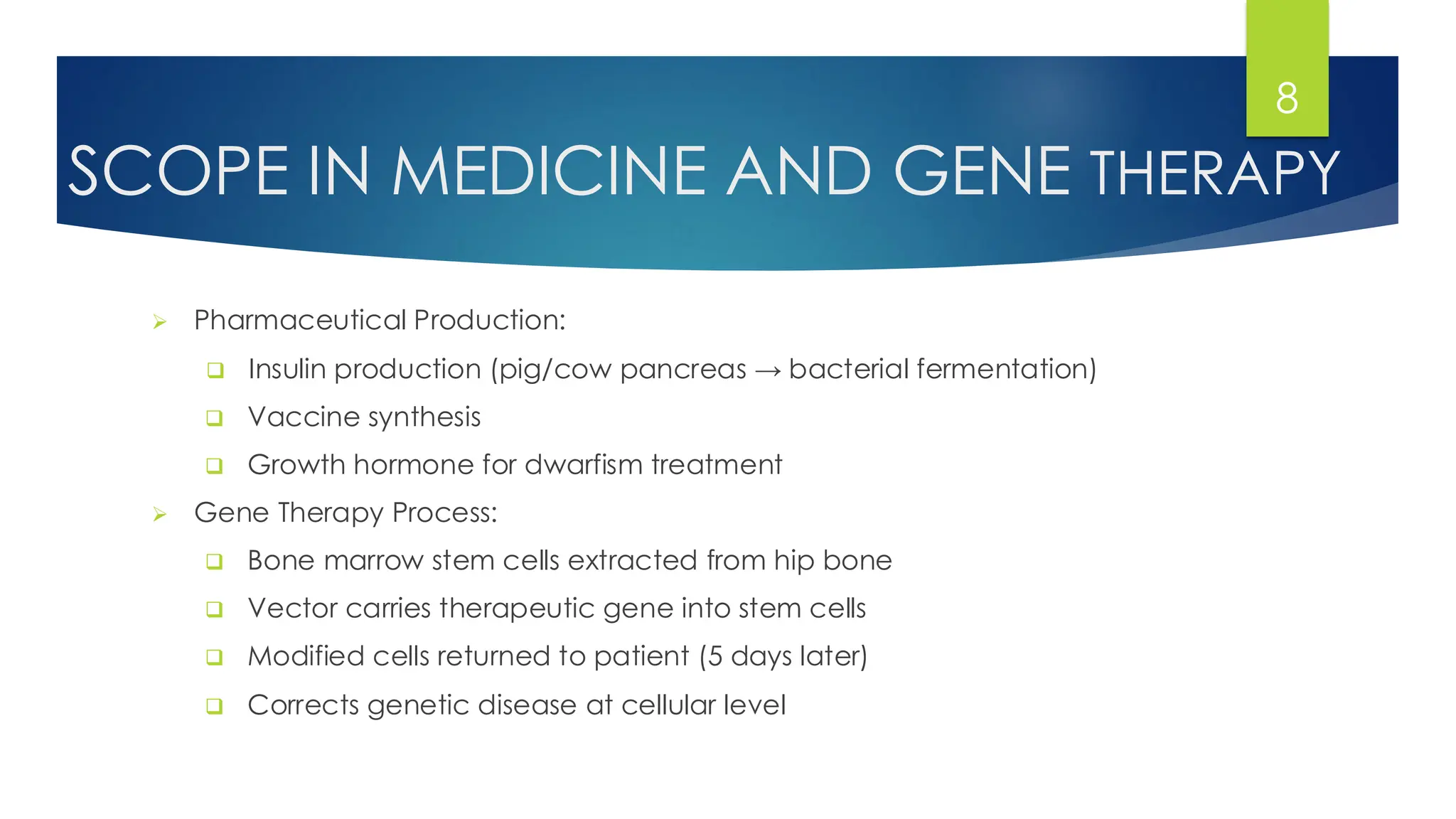
➢ Pharmaceutical Production:
❑ Insulin production (pig/cow pancreas → bacterial fermentation)
❑ Vaccine synthesis
❑ Growth hormone for dwarfism treatment
➢ Gene Therapy Process:
❑ Bone marrow stem cells extracted from hip bone
❑ Vector carries therapeutic gene into stem cells
❑ Modified cells returned to patient (5 days later)
❑ Corrects genetic disease at cellular level
8
9.
SCOPE IN ANIMALSCIENCE
➢ Livestock Engineering:
❑ High-milk breeds — Cows producing 20% more milk
❑ Leaner meat — Genetically modified pigs with reduced fat content
❑ Faster growth — Pigs, cows, fish engineered for rapid development
❑ Disease-free livestock — Improved health traits
➢ Research & Production:
❑ Transgenic animals — laboratory models for disease research
❑ Animal cloning — Dolly the Sheep (1996)
➢ Biopharming (Protein Production in Animals):
❑ Goats producing silk protein in milk → BiostEEL material (artificial ligaments, parachute cords)
➢ Xenotransplantation:
❑ Pig organs genetically modified for human transplants
9
10.
SCOPE IN INDUSTRY
➢Enzyme production — detergents, food additives (bio-catalysts)
➢ Biofuel generation — renewable energy from engineered microorganisms
➢ Biodegradable plastics — environmentally friendly polymer production
➢ Industrial fermentation — optimized microbial metabolic pathways
➢ Cost-effective manufacturing — mass production of proteins & chemicals
➢ Waste-to-resource conversion — converting industrial byproducts
10
11.
SCOPE IN ENVIRONMENTALAPPLICATIONS
➢ Pollution Cleanup:
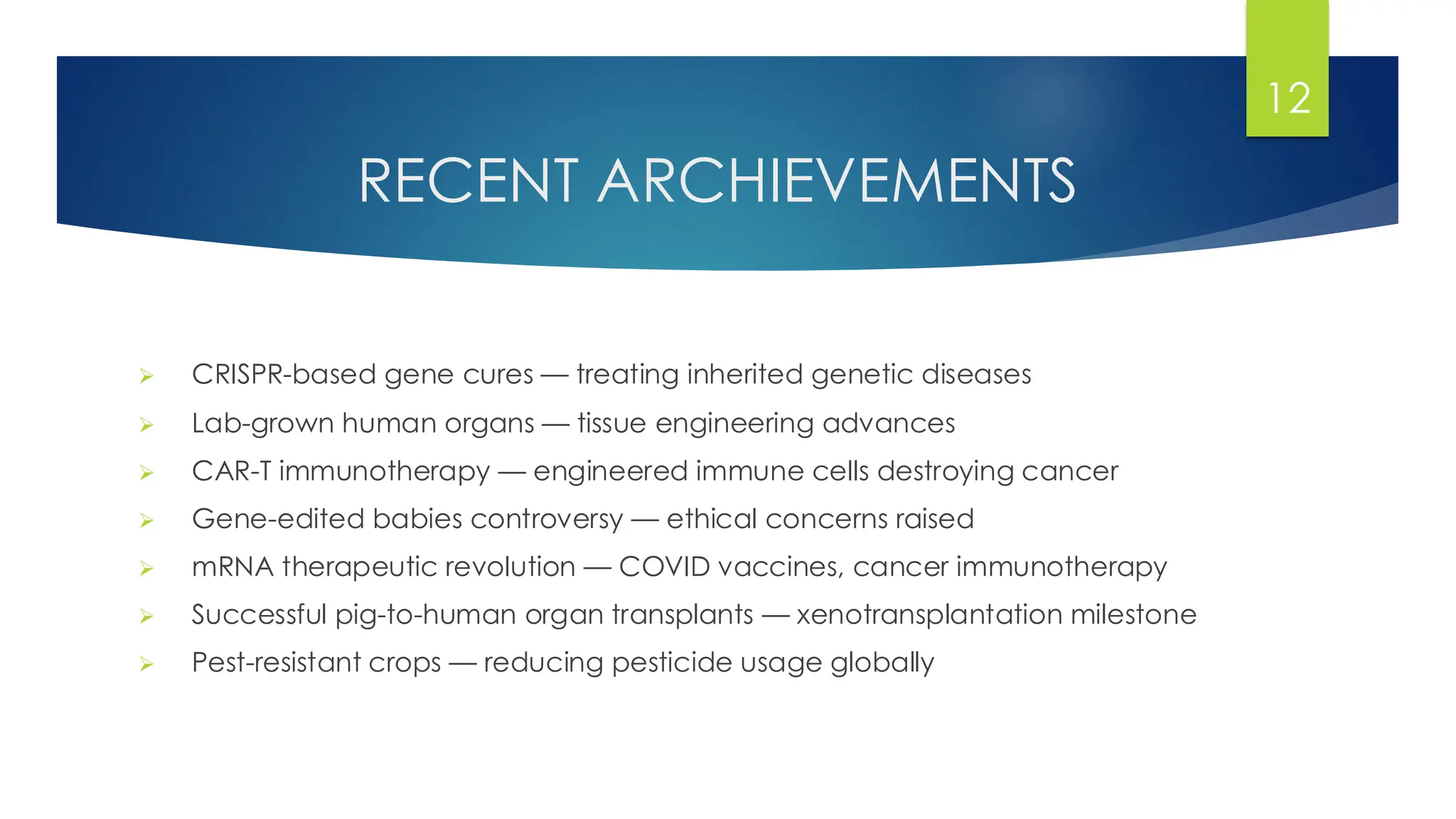
❑ Oil-eating bacteria — engineered microbes for oil spill cleanup
❑ Bioremediation — removing pollutants from contaminated sites
❑ Plastic-eating enzymes — degrading synthetic polymers
❑ Plastic-eating bacteria — PET degradation breakthrough
➢ Climate & Sustainability:
❑ Carbon-capturing algae — sequestering CO₂ for climate
mitigation
❑ Less-flatulent cows — genetically designed to produce 25% less
methane
❑ Fluorescent tadpoles — jellyfish genes for pollution detection
❑ Biodiversity protection — preserving endangered species
11
Fig 4: Process of Bioremediaton
Source:
http://www.sfu.ca/~joshuav/KinderMorgan/imgs/BioremediationInfographicW.png
POSITIVE HAZARDS ÐICAL CONCERNS
13
Health & Safety Risks:
➢ Increased cancer risk in
humans
➢ Infection susceptibility in
animals
➢ Unknown long-term
effects & side effects
➢ Antibiotic-resistant
microbes — difficult to
control
Social & Ethical Issues:
➢ Designer babies debate &
genetic discrimination fears
➢ Environmental concerns —
uncontrolled GMO spread
in ecosystems
➢ High therapy costs —
accessibility & equity issues
➢ Moral & religious limitations
➢ Informed consent &
transparency concerns
Regulatory Requirements:
➢ Strict ethical guidelines &
safety protocols essential
➢ Government oversight &
monitoring
➢ Public engagement & risk
communication
14.
CONCLUSION
➢ Genetic engineeringis a powerful technology changing medicine, agriculture, and
the environment.
➢ It provides major benefits like treating diseases and improving food security.
➢ The technology has huge potential to solve global problems such as hunger and
climate change.
➢ Its progress must be guided by responsible research and ethical practices.
➢ Strong regulations, global cooperation, and clear public communication are
needed.
➢ With balanced use, it can offer endless possibilities—from curing genetic disorders to
creating sustainable farming systems.
14
15.
REFERENCES
➢ Brown, T.A. (2016). Gene cloning and DNA analysis (7th ed.). Wiley-Blackwell.
➢ Doudna, J. A., & Charpentier, E. (2014). The new frontier of genome
engineering with CRISPR-Cas9. Science, 346(6213), 1258096.
➢ National Human Genome Research Institute. (2023). Genetic engineering: An
overview.
➢ World Health Organization. (2023). Gene therapy and genome editing.
➢ BYJU’S. (2023). Genetic engineering – Definition, process, applications.
➢ Microbe Notes. (2023). Genetic engineering: Tools, process, and
applications.
15