+


    Advising Training and
    Development Rationale
    By Natalia Stone
+
    Overview

       Motivation and Goals

       Audience and Key Components

       Module Overview

       Learning
           Goals
           Framework

       Learning Moments
+
    Module: A Beginning

       Audience

       Approach

       Motivation
+
    Key Questions

    What are key terms and concepts
    What are the Online and off line resources
    How do you create an open and friendly environment
    What are the basics of the student experience
    What are the questions to help engage the student to help an
    advisor be able to analyze student needs?
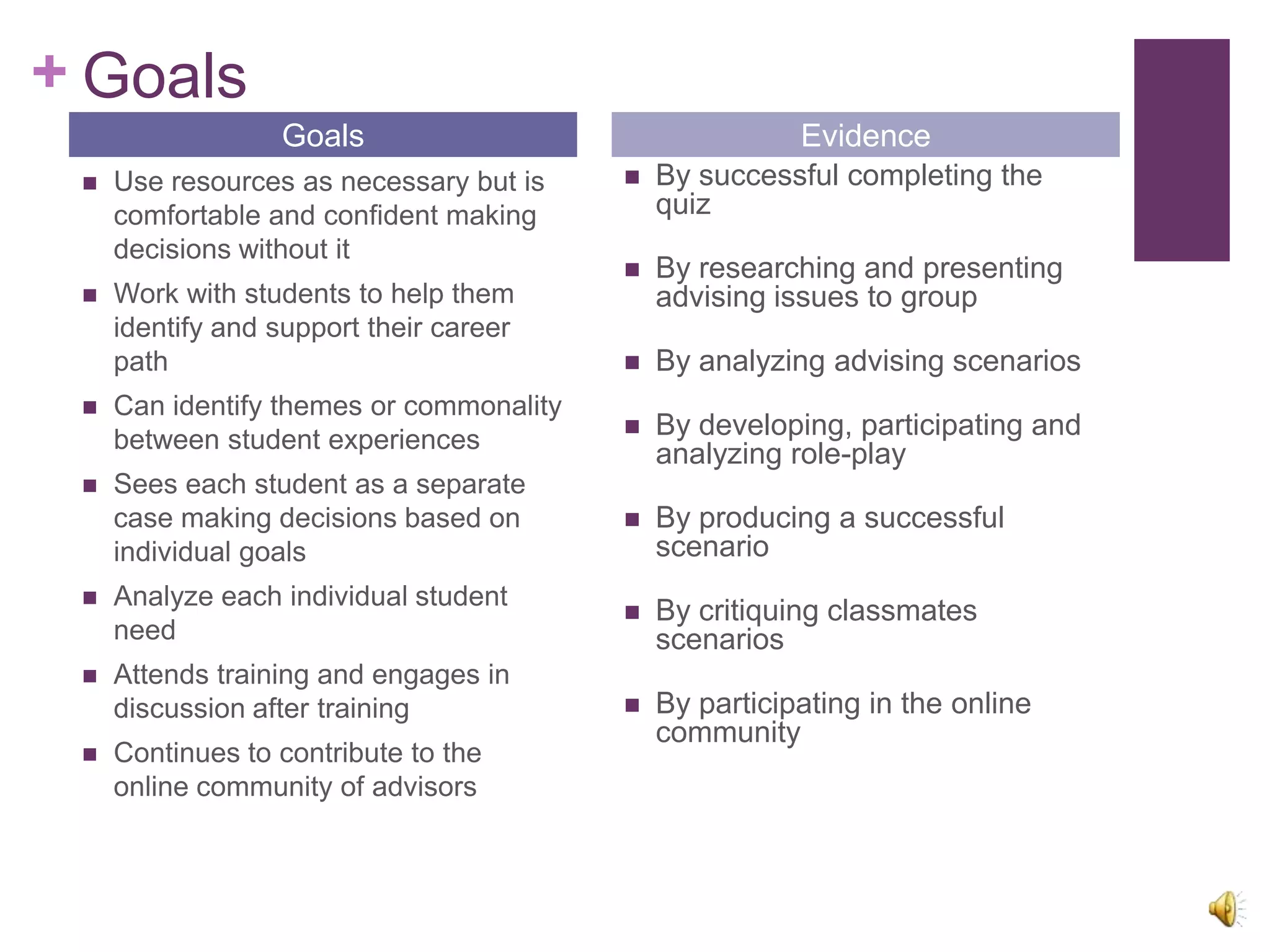
+ Goals
                  Goals                                  Evidence
    Use resources as necessary but is       By successful completing the
     comfortable and confident making         quiz
     decisions without it
                                             By researching and presenting
    Work with students to help them          advising issues to group
     identify and support their career
     path                                    By analyzing advising scenarios
    Can identify themes or commonality
     between student experiences
                                             By developing, participating and
                                              analyzing role-play
    Sees each student as a separate
     case making decisions based on          By producing a successful
     individual goals                         scenario
    Analyze each individual student
                                             By critiquing classmates
     need                                     scenarios
    Attends training and engages in
     discussion after training               By participating in the online
                                              community
    Continues to contribute to the
     online community of advisors
+
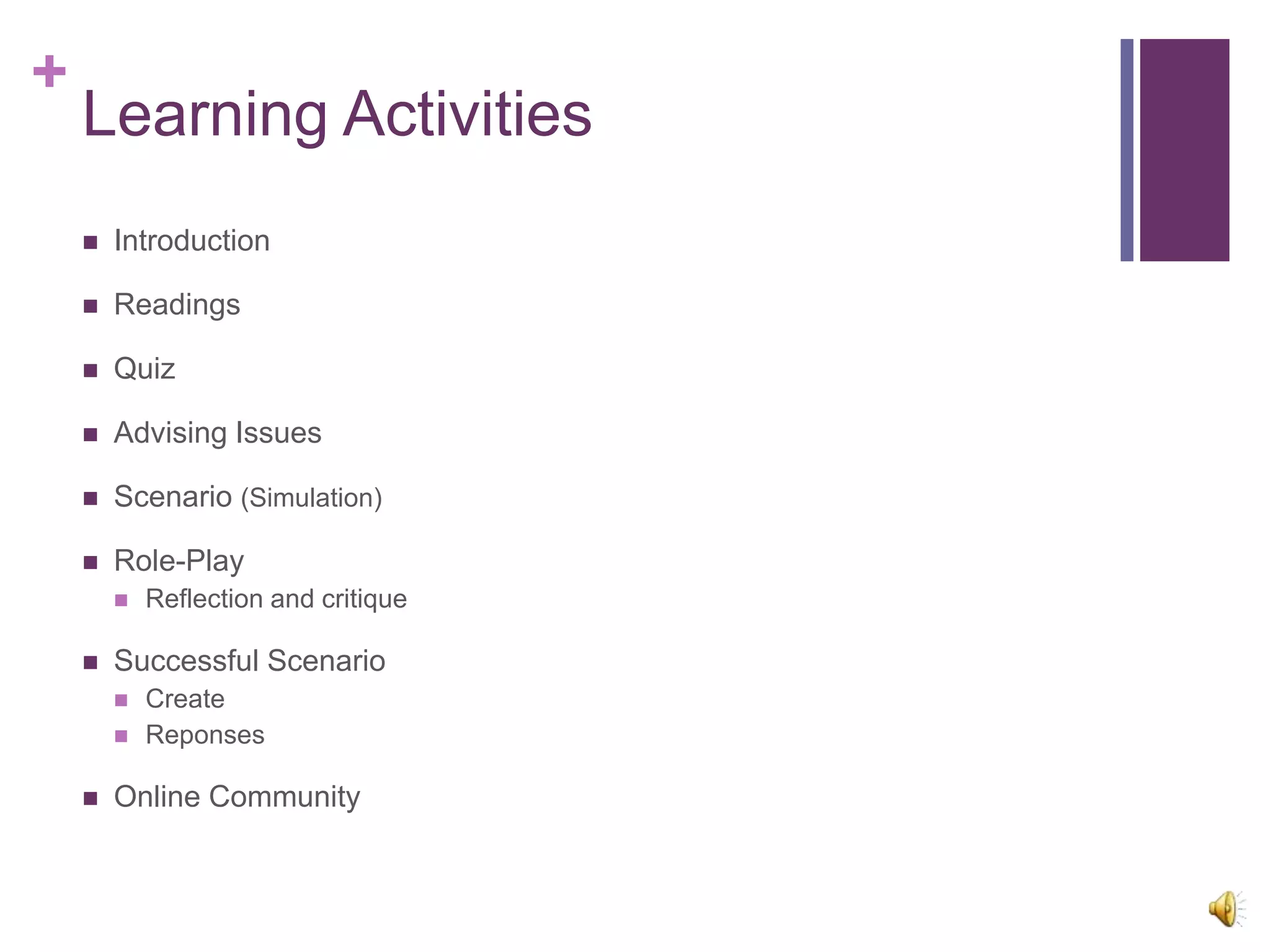
    Learning Activities
       Introduction

       Readings

       Quiz

       Advising Issues

       Scenario (Simulation)

       Role-Play
           Reflection and critique

       Successful Scenario
           Create
           Reponses

       Online Community
+
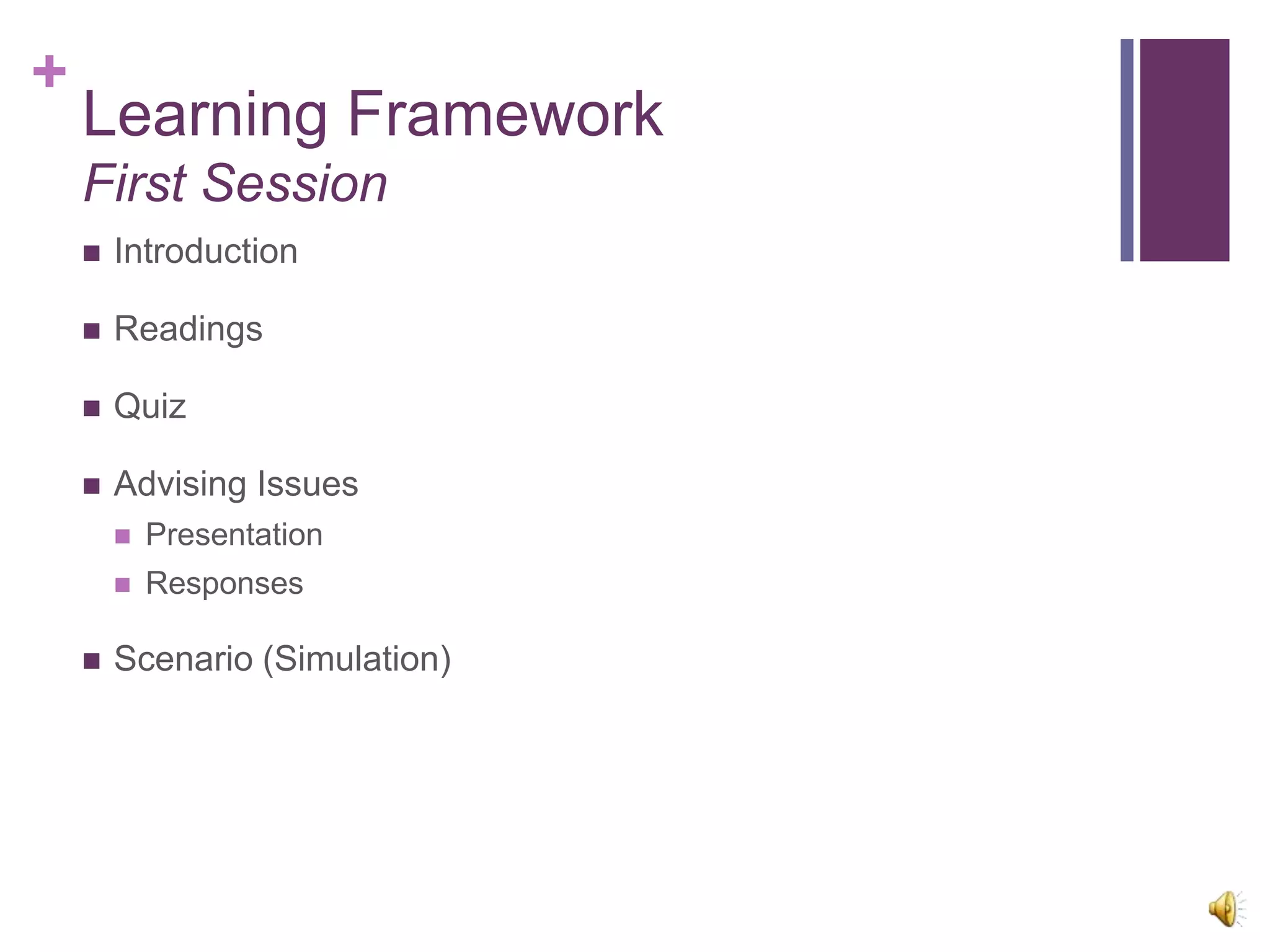
    Learning Framework
    First Session
       Introduction

       Readings

       Quiz

       Advising Issues
           Presentation
           Responses

       Scenario (Simulation)
+
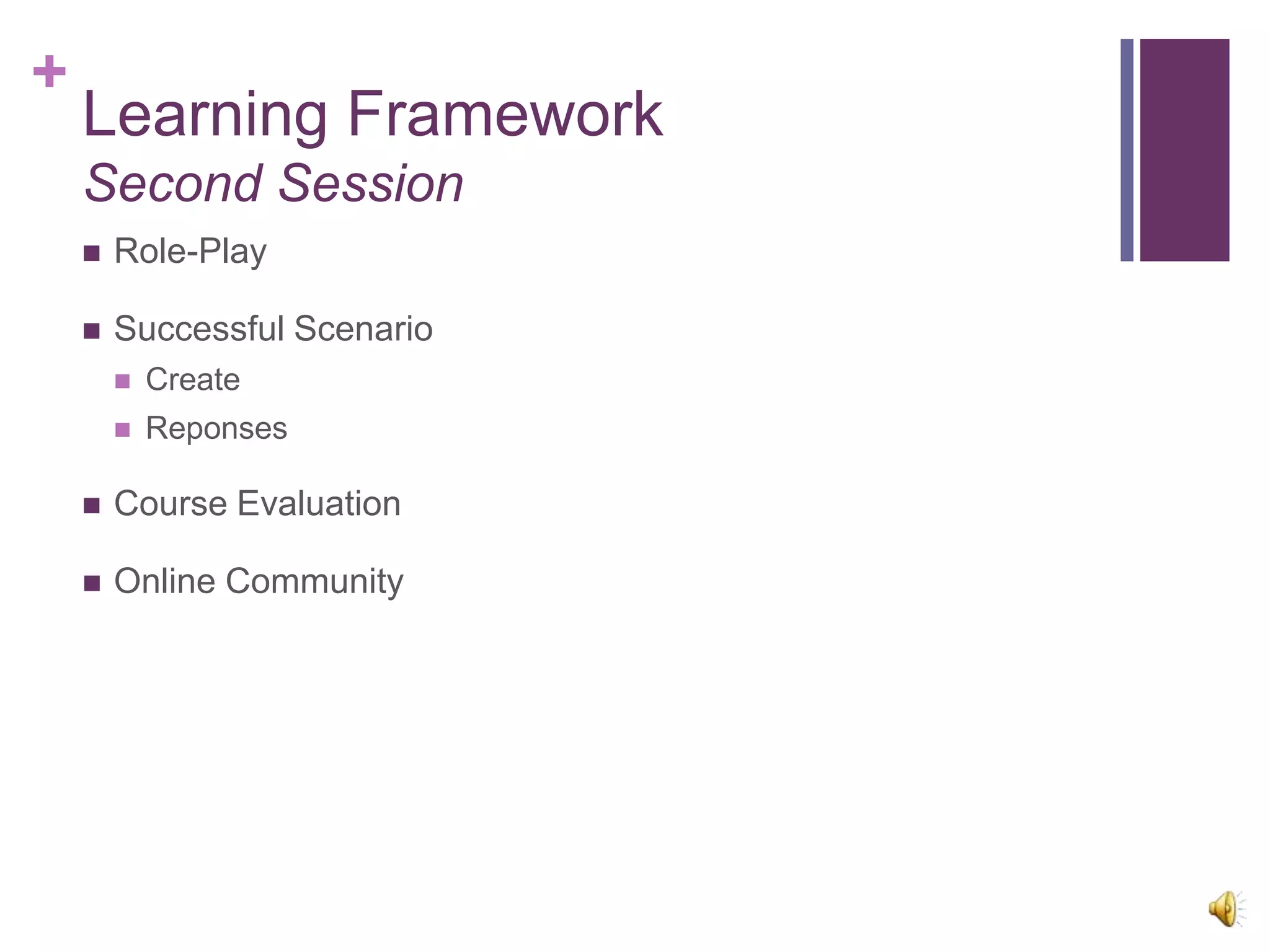
    Learning Framework
    Second Session
       Role-Play

       Successful Scenario
           Create
           Reponses

       Course Evaluation

       Online Community
+
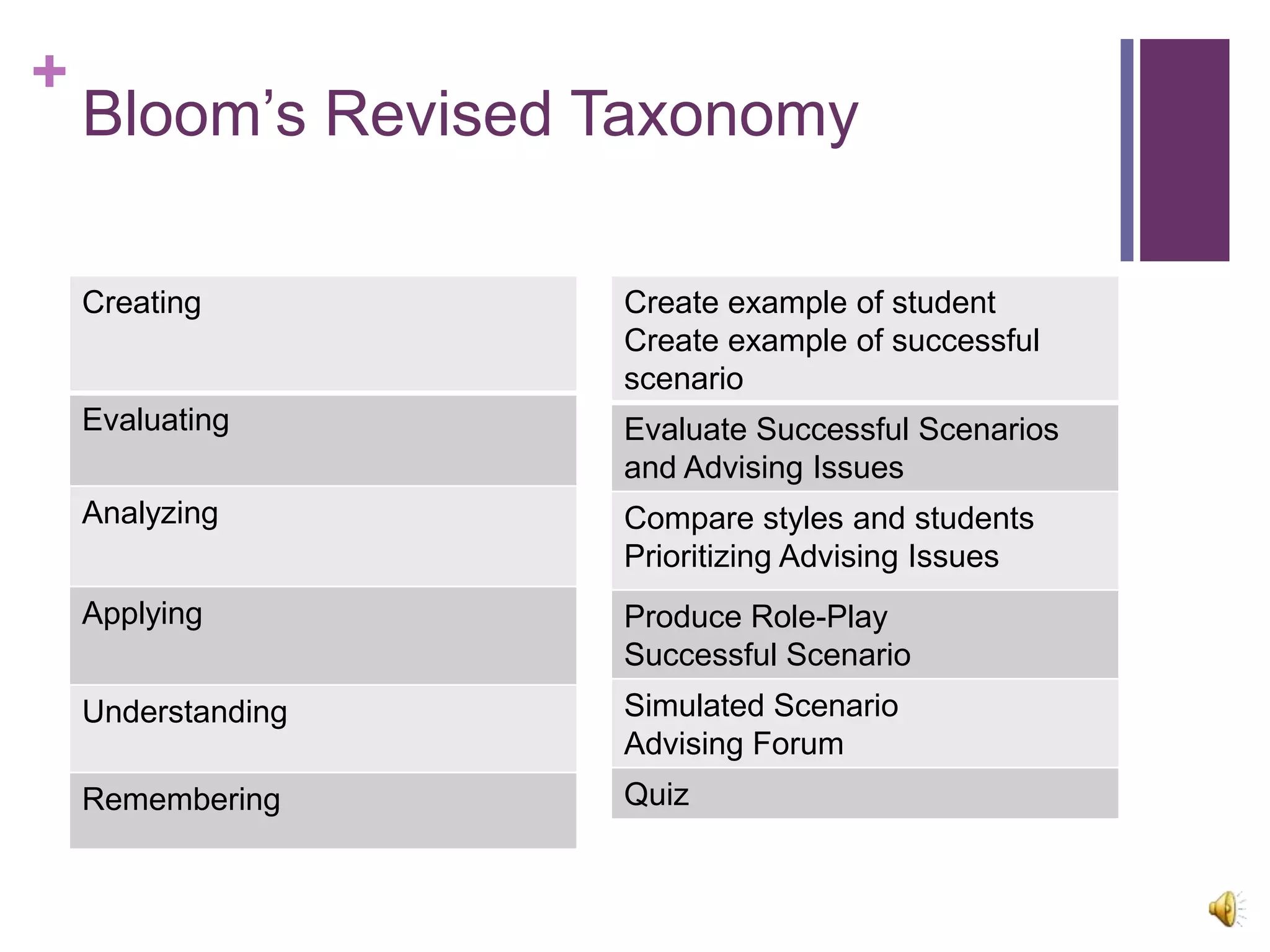
    Bloom’s Revised Taxonomy

    Creating        Create example of student
                    Create example of successful
                    scenario
    Evaluating      Evaluate Successful Scenarios
                    and Advising Issues
    Analyzing       Compare styles and students
                    Prioritizing Advising Issues
    Applying        Produce Role-Play
                    Successful Scenario
    Understanding   Simulated Scenario
                    Advising Forum
    Remembering     Quiz
+
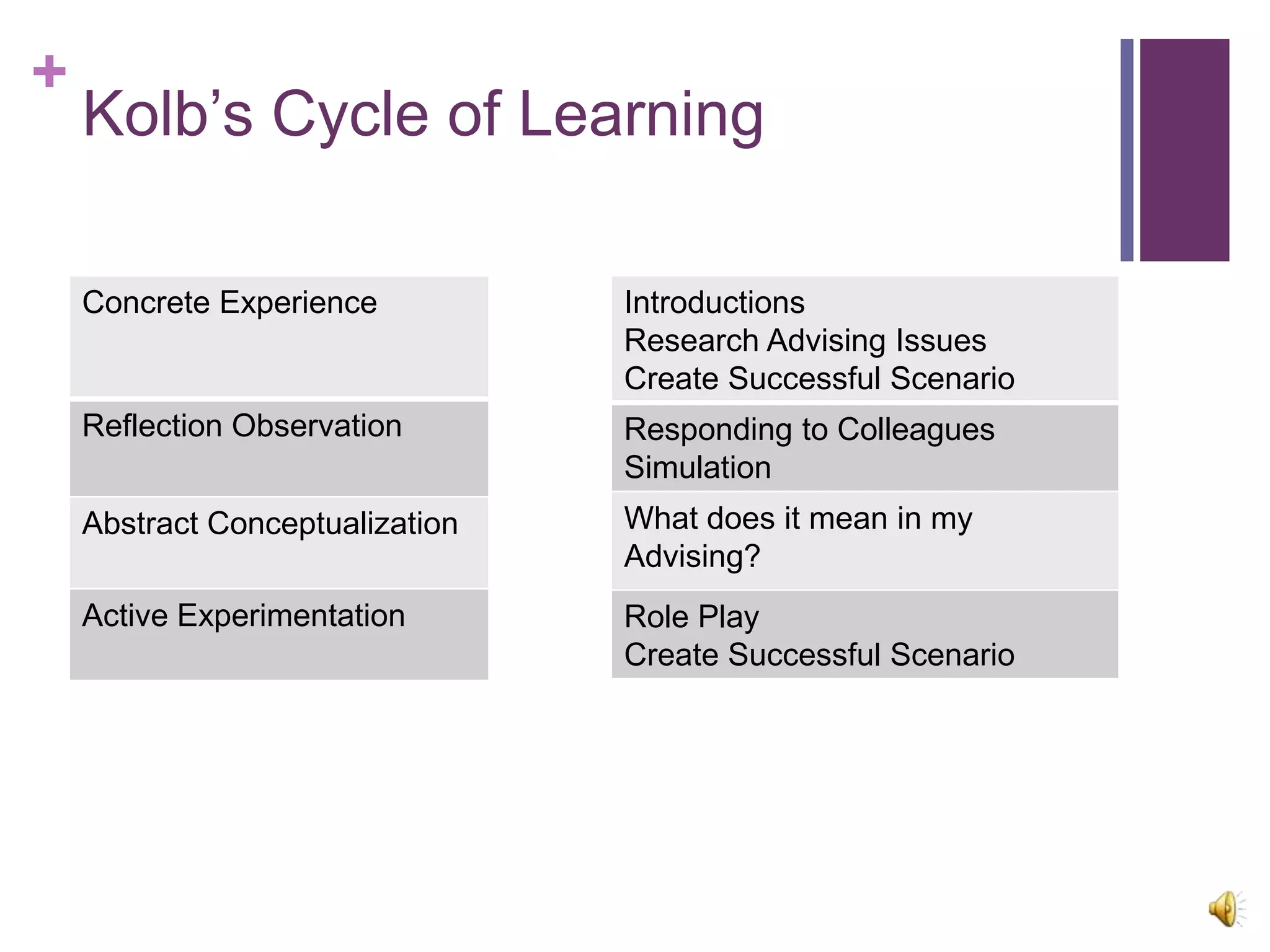
    Kolb’s Cycle of Learning

    Concrete Experience          Introductions
                                 Research Advising Issues
                                 Create Successful Scenario
    Reflection Observation       Responding to Colleagues
                                 Simulation
    Abstract Conceptualization   What does it mean in my
                                 Advising?
    Active Experimentation       Role Play
                                 Create Successful Scenario
+
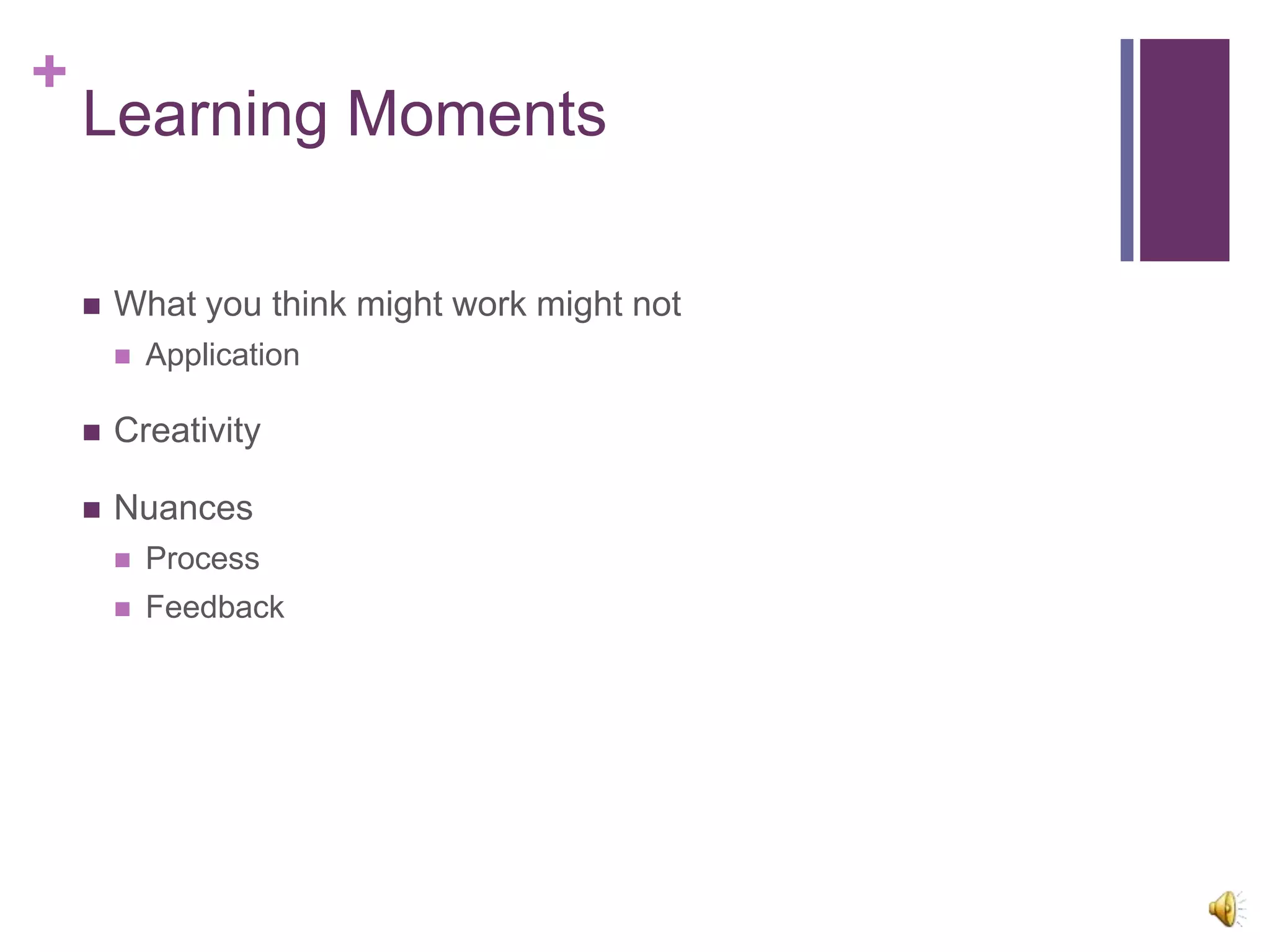
    Learning Moments

       What you think might work might not
           Application

       Creativity

       Nuances
           Process
           Feedback
+
    Thank you!

Rationale of Module

  • 1.
    + Advising Training and Development Rationale By Natalia Stone
  • 2.
    + Overview  Motivation and Goals  Audience and Key Components  Module Overview  Learning  Goals  Framework  Learning Moments
  • 3.
    + Module: A Beginning  Audience  Approach  Motivation
  • 4.
    + Key Questions What are key terms and concepts What are the Online and off line resources How do you create an open and friendly environment What are the basics of the student experience What are the questions to help engage the student to help an advisor be able to analyze student needs?
  • 5.
    + Goals Goals Evidence  Use resources as necessary but is  By successful completing the comfortable and confident making quiz decisions without it  By researching and presenting  Work with students to help them advising issues to group identify and support their career path  By analyzing advising scenarios  Can identify themes or commonality between student experiences  By developing, participating and analyzing role-play  Sees each student as a separate case making decisions based on  By producing a successful individual goals scenario  Analyze each individual student  By critiquing classmates need scenarios  Attends training and engages in discussion after training  By participating in the online community  Continues to contribute to the online community of advisors
  • 6.
    + Learning Activities  Introduction  Readings  Quiz  Advising Issues  Scenario (Simulation)  Role-Play  Reflection and critique  Successful Scenario  Create  Reponses  Online Community
  • 7.
    + Learning Framework First Session  Introduction  Readings  Quiz  Advising Issues  Presentation  Responses  Scenario (Simulation)
  • 8.
    + Learning Framework Second Session  Role-Play  Successful Scenario  Create  Reponses  Course Evaluation  Online Community
  • 9.
    + Bloom’s Revised Taxonomy Creating Create example of student Create example of successful scenario Evaluating Evaluate Successful Scenarios and Advising Issues Analyzing Compare styles and students Prioritizing Advising Issues Applying Produce Role-Play Successful Scenario Understanding Simulated Scenario Advising Forum Remembering Quiz
  • 10.
    + Kolb’s Cycle of Learning Concrete Experience Introductions Research Advising Issues Create Successful Scenario Reflection Observation Responding to Colleagues Simulation Abstract Conceptualization What does it mean in my Advising? Active Experimentation Role Play Create Successful Scenario
  • 11.
    + Learning Moments  What you think might work might not  Application  Creativity  Nuances  Process  Feedback
  • 12.
    + Thank you!

Editor's Notes

  • #2 Hello I’m Natalia Stone and I worked on creating a module that would address Advising training and development for academic advisors
  • #3 During this presentation I will go over the motivation and goals of the module, as well as who the course is geared to and key components of the course, give you a module overview. And then go into detail about my learning goals and framework, activities, that have been created in the course. And finally I will speak about the learning moments that came about while developing the module.
  • #4 I decide on this topic because I saw a need to educate and help create uniformity and peer support in advisingModule’s audience is academic advisors, the front line support for students in higher education, just beginning their positions it would be a Required comprehensive certificate and would be seen as professional development. But the motivation doesn’t stop there, to create deep learning, one needs to make sure the learner is invested. The training is developed to help create an environment where the learner is engaged so the course will be small, Course Enrollment limited to no more than 15. The course would be blended meeting both in person and online, this BLENDED LEARNING would HELP DEVELOP AN ONLINE SUPPORT COMMUNITY The motivation for participation would be to provide new Advisors the information and resources to help them become comfortable and confident in meetings with students on issues. After the training advisors would also have a better understanding of what students experience is at the institution, and in turn would be equipped to deal with a variety of student issues. Advisors would have a deeper relationship with students; students would be more inclined to meet with Advisors before there is a serious issue. Training would help create a community of shared resources and knowledge within the Advisors as well as create uniformity of advising. In the end we hope that the online community will be open to all advisors would participate in the online community.
  • #5 Key Questions addressed in the of the course includeWhat are key terms and conceptsWhat are the Online and off line resourcesHow do you create an open and friendly environment What are the basics of the student experienceWhat are the questions help engage the student to help an advisor be able to analyze student needs?
  • #6 Using resources as necessary but is comfortable and confident making decisions without itWork with students to help them identify and support their career pathCan identify themes or commonality between student experiencesSees each student as a separate case making decisions based on individual goalsAnalyze each individual student needAttends training and engages in discussion after trainingContinues to contribute to the online community of advisors
  • #7 IntroductionReadingsQuizAdvising IssuesPresentationResponsesSimulatedScenario Role-PlayReflection and critiqueSuccessful ScenarioCreateReponsesOnline Community    
  • #8 Introduction allow the students to get to know each other get the students using the wikiReadings gain an understanding of role and issuesQuizConcreteScenario A simulation of a advising session, allows student to Reflection on learning and critique scenario
  • #9 Role-PlaySmall groups of 2 or 3Act out roles of advisor and studentWill allow advisors to Reflection, critique one anotherSuccessful ScenarioAdvisors will be asked to create what they believe to be a successful advising scenarioThis is a Concrete activity that will help apply the learning, it will also be a time to Reflect on learningCourse evaluation Course Reflection and Feedback reflectionOnline Community posting continually on the online community wiki page advising forum    
  • #12 What you think might work might notApplicationNuances to teachingGetting feedback is a helpful way to see what are the positives and negatives of your thinking and in the case of building a course that will work with a variety of learning styles will help give you a better understanding of what your students needs are