Ratio Analysis SG Accounting & Finance Mr McGowan
What are Ratios? Ratios are a way of comparing different figures. Ratios should only be used when comparing like with like (ie same size of business; same industry) Ratios can compare results with previous years or rival firms Ratios, however are historic, and do not take into account of other factors such as quality of workers, inflation, economic situation
Ratios Profitability Gross Profit percentage Net Profit percentage Return on Capital Employed (ROCE) Liquidity Current Ratio Acid Test Ratio Asset Usage Rate of Stock Turnover
Gross Profit Percentage Gross Profit Sales Revenue For every £1 of sales, how much profit is made? Increase = more sales generated or cost of materials have fallen Decrease = cost of materials may have went up X 100%
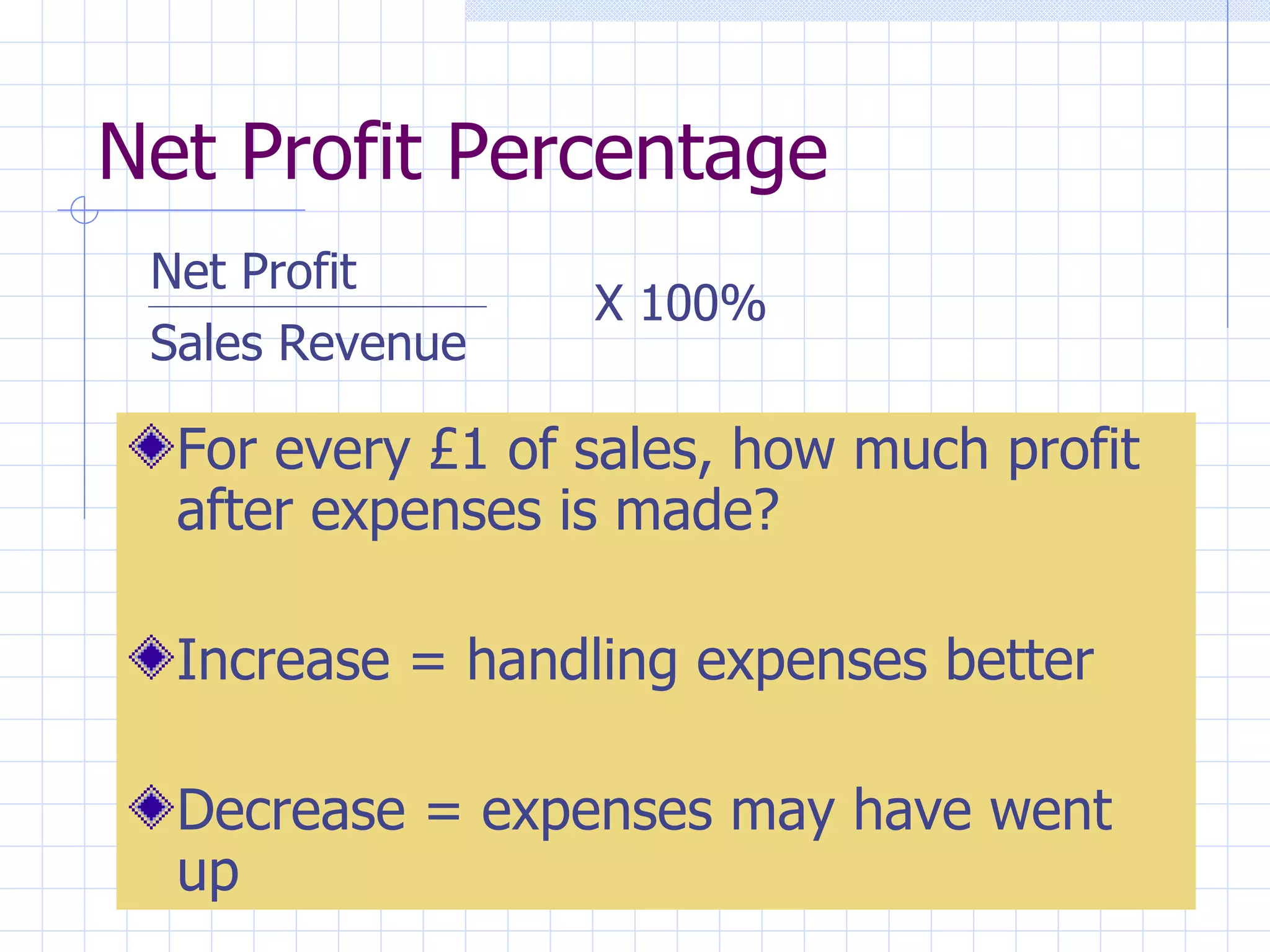
Net Profit Percentage Net Profit Sales Revenue For every £1 of sales, how much profit after expenses is made? Increase = handling expenses better Decrease = expenses may have went up X 100%
Return on Capital Employed (ROCE) Net Profit Capital Employed If you invest £100 in a firm how much will you get back? ROCE should be measured against interest rates. Since your savings can make money in a high interest bank account X 100%
Current Ratio Current Ratio = Current Assets:Current Liabilities Looks at how business can pay off its debts A ratio of 2:1 is considered prudent, but does not take into account stock being held. Higher than 2:1 means money may not being invested in the business properly Having less than 2:1 may mean the firm is in danger of not being able to pay off debts (too much money tied up in stock?)
Acid Test Ratio Acid Test =  Current assets – stock: current liabilities This is a tougher ratio than the current ratio because it excludes stock, since stock is the hardest asset to transform into cash. This ratio should be around 1:1.
Rate of Stock Turnover Stock turnover = Cost of Sales Average Stock Stock hanging around is bad for the firm. Stock’s can go off, out of fashion or out of date. This ratio works out how many times stock is used up. Note: Average Stock is calculated by adding Closing and Opening Stock and then dividing by 2

Ratio Analysis

  • 1.
    Ratio Analysis SGAccounting & Finance Mr McGowan
  • 2.
    What are Ratios?Ratios are a way of comparing different figures. Ratios should only be used when comparing like with like (ie same size of business; same industry) Ratios can compare results with previous years or rival firms Ratios, however are historic, and do not take into account of other factors such as quality of workers, inflation, economic situation
  • 3.
    Ratios Profitability GrossProfit percentage Net Profit percentage Return on Capital Employed (ROCE) Liquidity Current Ratio Acid Test Ratio Asset Usage Rate of Stock Turnover
  • 4.
    Gross Profit PercentageGross Profit Sales Revenue For every £1 of sales, how much profit is made? Increase = more sales generated or cost of materials have fallen Decrease = cost of materials may have went up X 100%
  • 5.
    Net Profit PercentageNet Profit Sales Revenue For every £1 of sales, how much profit after expenses is made? Increase = handling expenses better Decrease = expenses may have went up X 100%
  • 6.
    Return on CapitalEmployed (ROCE) Net Profit Capital Employed If you invest £100 in a firm how much will you get back? ROCE should be measured against interest rates. Since your savings can make money in a high interest bank account X 100%
  • 7.
    Current Ratio CurrentRatio = Current Assets:Current Liabilities Looks at how business can pay off its debts A ratio of 2:1 is considered prudent, but does not take into account stock being held. Higher than 2:1 means money may not being invested in the business properly Having less than 2:1 may mean the firm is in danger of not being able to pay off debts (too much money tied up in stock?)
  • 8.
    Acid Test RatioAcid Test = Current assets – stock: current liabilities This is a tougher ratio than the current ratio because it excludes stock, since stock is the hardest asset to transform into cash. This ratio should be around 1:1.
  • 9.
    Rate of StockTurnover Stock turnover = Cost of Sales Average Stock Stock hanging around is bad for the firm. Stock’s can go off, out of fashion or out of date. This ratio works out how many times stock is used up. Note: Average Stock is calculated by adding Closing and Opening Stock and then dividing by 2