Page 1 of 2

Created: 03/31/05

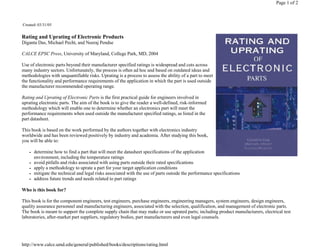
Rating and Uprating of Electronic Products
Diganta Das, Michael Pecht, and Neeraj Pendse
CALCE EPSC Press, University of Maryland, College Park, MD, 2004
Use of electronic parts beyond their manufacturer specified ratings is widespread and cuts across
many industry sectors. Unfortunately, the process is often ad hoc and based on outdated ideas and
methodologies with unquantifiable risks. Uprating is a process to assess the ability of a part to meet
the functionality and performance requirements of the application in which the part is used outside
the manufacturer recommended operating range.
Rating and Uprating of Electronic Parts is the first practical guide for engineers involved in
uprating electronic parts. The aim of the book is to give the reader a well-defined, risk-informed
methodology which will enable one to determine whether an electronics part will meet the
performance requirements when used outside the manufacturer specified ratings, as listed in the
part datasheet.
This book is based on the work performed by the authors together with electronics industry
worldwide and has been reviewed positively by industry and academia. After studying this book,
you will be able to:
•

•
•
•
•

determine how to find a part that will meet the datasheet specifications of the application
environment, including the temperature ratings
avoid pitfalls and risks associated with using parts outside their rated specifications
apply a methodology to uprate a part for your target application conditions
mitigate the technical and legal risks associated with the use of parts outside the performance specifications
address future trends and needs related to part ratings

Who is this book for?
This book is for the component engineers, test engineers, purchase engineers, engineering managers, system engineers, design engineers,
quality assurance personnel and manufacturing engineers, associated with the selection, qualification, and management of electronic parts.
The book is meant to support the complete supply chain that may make or use uprated parts; including product manufacturers, electrical test
laboratories, after-market part suppliers, regulatory bodies, part manufacturers and even legal counsels.

http://www.calce.umd.edu/general/published/books/descriptions/rating.html
Page 2 of 2

Table of contents:
Chapter 1 Introduction
Chapter 2 Using the Part Datasheet
Chapter 3 Definitions and Rationale
Chapter 4 The Uprating Methodology
Chapter 5 Parameter Conformance
Chapter 6 Parameter Re-characterization
Chapter 7 Stress Balancing
Chapter 8 Assembly Level Testing
Chapter 9 Uprating Case Studies
Chapter 10 Uprating Facilities and Costs
Chapter 11 Assessing and Mitigating the Legal Risks
Chapter 12 Technical and Business Trends that Affect Uprating
ISBN 0-9707174-2-3
CALCE EPSC Press
University of Maryland
College Park, MD 20742
To purchase this book, please contact:
books@calce.umd.edu
Tel: 301-405-5323
Fax: 301-314-9269

http://www.calce.umd.edu/general/published/books/descriptions/rating.html

Rating & uprating handbook

  • 1.
    Page 1 of2 Created: 03/31/05 Rating and Uprating of Electronic Products Diganta Das, Michael Pecht, and Neeraj Pendse CALCE EPSC Press, University of Maryland, College Park, MD, 2004 Use of electronic parts beyond their manufacturer specified ratings is widespread and cuts across many industry sectors. Unfortunately, the process is often ad hoc and based on outdated ideas and methodologies with unquantifiable risks. Uprating is a process to assess the ability of a part to meet the functionality and performance requirements of the application in which the part is used outside the manufacturer recommended operating range. Rating and Uprating of Electronic Parts is the first practical guide for engineers involved in uprating electronic parts. The aim of the book is to give the reader a well-defined, risk-informed methodology which will enable one to determine whether an electronics part will meet the performance requirements when used outside the manufacturer specified ratings, as listed in the part datasheet. This book is based on the work performed by the authors together with electronics industry worldwide and has been reviewed positively by industry and academia. After studying this book, you will be able to: • • • • • determine how to find a part that will meet the datasheet specifications of the application environment, including the temperature ratings avoid pitfalls and risks associated with using parts outside their rated specifications apply a methodology to uprate a part for your target application conditions mitigate the technical and legal risks associated with the use of parts outside the performance specifications address future trends and needs related to part ratings Who is this book for? This book is for the component engineers, test engineers, purchase engineers, engineering managers, system engineers, design engineers, quality assurance personnel and manufacturing engineers, associated with the selection, qualification, and management of electronic parts. The book is meant to support the complete supply chain that may make or use uprated parts; including product manufacturers, electrical test laboratories, after-market part suppliers, regulatory bodies, part manufacturers and even legal counsels. http://www.calce.umd.edu/general/published/books/descriptions/rating.html
  • 2.
    Page 2 of2 Table of contents: Chapter 1 Introduction Chapter 2 Using the Part Datasheet Chapter 3 Definitions and Rationale Chapter 4 The Uprating Methodology Chapter 5 Parameter Conformance Chapter 6 Parameter Re-characterization Chapter 7 Stress Balancing Chapter 8 Assembly Level Testing Chapter 9 Uprating Case Studies Chapter 10 Uprating Facilities and Costs Chapter 11 Assessing and Mitigating the Legal Risks Chapter 12 Technical and Business Trends that Affect Uprating ISBN 0-9707174-2-3 CALCE EPSC Press University of Maryland College Park, MD 20742 To purchase this book, please contact: books@calce.umd.edu Tel: 301-405-5323 Fax: 301-314-9269 http://www.calce.umd.edu/general/published/books/descriptions/rating.html