4034 36323028262422 3820
Fluorescence
Strawberry Leaf
Sample to Insight
Introduction and Experimental Workflow
Rapid DNA isolation from diverse plant material for use in
Next Generation Sequencing applications
Patrick Smith *, Nicola Scholle *, Heather Martinez *, Markus-Sprenger-Haussels * and Dominic O’Neil *
*QIAGEN GmbH, QIAGEN Strasse 1, 40724 Hilden
Improved DNA yield and inhibitor removal over competitor kits
The DNeasy Plant Pro Kit is intended for molecular biology applications. This product is not intended for the diagnosis, prevention,
or treatment of a disease.
For up-to-date licensing information and product-specific disclaimers, see the respective QIAGEN kit handbook or user manual.
QIAGEN kit handbooks and user manuals are available at www.qiagen.com or can be requested from QIAGEN Technical Services or
your local distributor.
Trademarks: QIAGEN®, Sample to Insight®, DNeasy® (QIAGEN Group), Purelink® (ThermoFisher), Quick-DNATM (Zymo),
NucleoSpin® (Macherey-Nagel). Registered names, trademarks, etc. used in this document, even when not specifically marked as
such, are not to be considered unprotected by law.
© 2017 QIAGEN, all rights reserved.
Conclusions
DNeasy Plant Pro improved DNA yield & quality over legacy kits
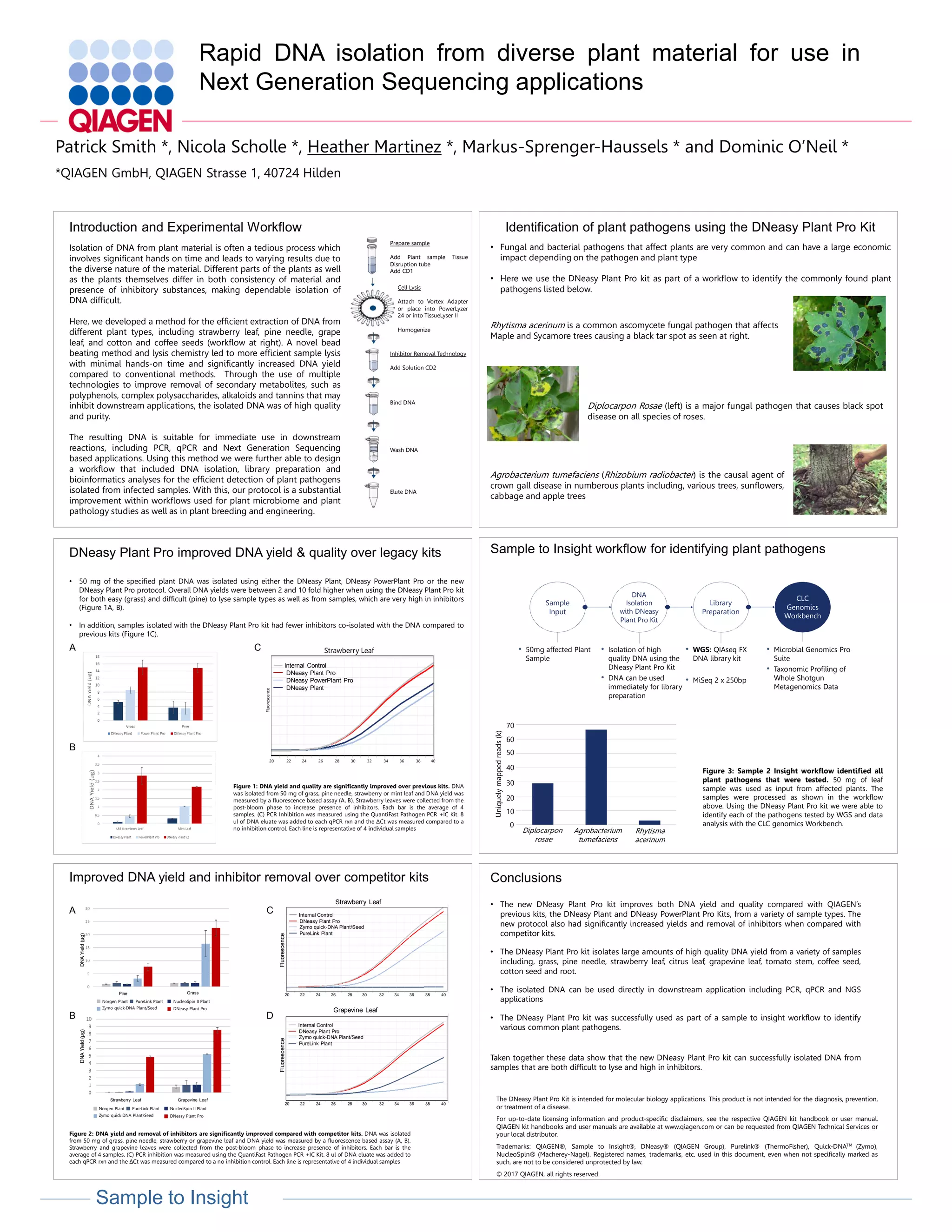
Figure 1: DNA yield and quality are significantly improved over previous kits. DNA
was isolated from 50 mg of grass, pine needle, strawberry or mint leaf and DNA yield was
measured by a fluorescence based assay (A, B). Strawberry leaves were collected from the
post-bloom phase to increase presence of inhibitors. Each bar is the average of 4
samples. (C) PCR Inhibition was measured using the QuantiFast Pathogen PCR +IC Kit. 8
ul of DNA eluate was added to each qPCR rxn and the ∆Ct was measured compared to a
no inhibition control. Each line is representative of 4 individual samples
• The new DNeasy Plant Pro kit improves both DNA yield and quality compared with QIAGEN’s
previous kits, the DNeasy Plant and DNeasy PowerPlant Pro Kits, from a variety of sample types. The
new protocol also had significantly increased yields and removal of inhibitors when compared with
competitor kits.
• The DNeasy Plant Pro kit isolates large amounts of high quality DNA yield from a variety of samples
including, grass, pine needle, strawberry leaf, citrus leaf, grapevine leaf, tomato stem, coffee seed,
cotton seed and root.
• The isolated DNA can be used directly in downstream application including PCR, qPCR and NGS
applications
• The DNeasy Plant Pro kit was successfully used as part of a sample to insight workflow to identify
various common plant pathogens.
Taken together these data show that the new DNeasy Plant Pro kit can successfully isolated DNA from
samples that are both difficult to lyse and high in inhibitors.
Isolation of DNA from plant material is often a tedious process which
involves significant hands on time and leads to varying results due to
the diverse nature of the material. Different parts of the plants as well
as the plants themselves differ in both consistency of material and
presence of inhibitory substances, making dependable isolation of
DNA difficult.
Here, we developed a method for the efficient extraction of DNA from
different plant types, including strawberry leaf, pine needle, grape
leaf, and cotton and coffee seeds (workflow at right). A novel bead
beating method and lysis chemistry led to more efficient sample lysis
with minimal hands-on time and significantly increased DNA yield
compared to conventional methods. Through the use of multiple
technologies to improve removal of secondary metabolites, such as
polyphenols, complex polysaccharides, alkaloids and tannins that may
inhibit downstream applications, the isolated DNA was of high quality
and purity.
The resulting DNA is suitable for immediate use in downstream
reactions, including PCR, qPCR and Next Generation Sequencing
based applications. Using this method we were further able to design
a workflow that included DNA isolation, library preparation and
bioinformatics analyses for the efficient detection of plant pathogens
isolated from infected samples. With this, our protocol is a substantial
improvement within workflows used for plant microbiome and plant
pathology studies as well as in plant breeding and engineering.
• 50 mg of the specified plant DNA was isolated using either the DNeasy Plant, DNeasy PowerPlant Pro or the new
DNeasy Plant Pro protocol. Overall DNA yields were between 2 and 10 fold higher when using the DNeasy Plant Pro kit
for both easy (grass) and difficult (pine) to lyse sample types as well as from samples, which are very high in inhibitors
(Figure 1A, B).
• In addition, samples isolated with the DNeasy Plant Pro kit had fewer inhibitors co-isolated with the DNA compared to
previous kits (Figure 1C).
A
B
A
B
Sample to Insight workflow for identifying plant pathogens
Identification of plant pathogens using the DNeasy Plant Pro Kit
• Fungal and bacterial pathogens that affect plants are very common and can have a large economic
impact depending on the pathogen and plant type
• Here we use the DNeasy Plant Pro kit as part of a workflow to identify the commonly found plant
pathogens listed below.
Prepare sample
Add Plant sample Tissue
Disruption tube
Add CD1
Cell Lysis
Attach to Vortex Adapter
or place into PowerLyzer
24 or into TissueLyser II
Homogenize
Inhibitor Removal Technology
Add Solution CD2
Bind DNA
Wash DNA
Elute DNA
― Internal Control
— DNeasy Plant Pro
— DNeasy PowerPlant Pro
— DNeasy Plant
C
Pine Grass
DNAYield(µg)
Norgen Plant PureLink Plant NucleoSpin II Plant
Zymo quick-DNA Plant/Seed DNeasy Plant Pro
Strawberry Leaf Grapevine Leaf
DNAYield(µg)
Norgen Plant PureLink Plant NucleoSpin II Plant
Zymo quick DNA Plant/Seed DNeasy Plant Pro
4034 36323028262422 3820
Fluorescence
Strawberry Leaf
― Internal Control
— DNeasy Plant Pro
— Zymo quick-DNA Plant/Seed
— PureLink Plant
4034 36323028262422 3820
Fluorescence
Grapevine Leaf
― Internal Control
— DNeasy Plant Pro
— Zymo quick-DNA Plant/Seed
— PureLink Plant
C
D
Figure 2: DNA yield and removal of inhibitors are significantly improved compared with competitor kits. DNA was isolated
from 50 mg of grass, pine needle, strawberry or grapevine leaf and DNA yield was measured by a fluorescence based assay (A, B).
Strawberry and grapevine leaves were collected from the post-bloom phase to increase presence of inhibitors. Each bar is the
average of 4 samples. (C) PCR inhibition was measured using the QuantiFast Pathogen PCR +IC Kit. 8 ul of DNA eluate was added to
each qPCR rxn and the ∆Ct was measured compared to a no inhibition control. Each line is representative of 4 individual samples
Rhytisma acerinum is a common ascomycete fungal pathogen that affects
Maple and Sycamore trees causing a black tar spot as seen at right.
Diplocarpon Rosae (left) is a major fungal pathogen that causes black spot
disease on all species of roses.
Agrobacterium tumefaciens (Rhizobium radiobacter) is the causal agent of
crown gall disease in numberous plants including, various trees, sunflowers,
cabbage and apple trees
10
0
20
30
40
50
60
70
Diplocarpon
rosae
Agrobacterium
tumefaciens
Rhytisma
acerinum
Uniquelymappedreads(k)
Sample
Input
DNA
Isolation
with DNeasy
Plant Pro Kit
Library
Preparation
CLC
Genomics
Workbench
• Isolation of high
quality DNA using the
DNeasy Plant Pro Kit
• DNA can be used
immediately for library
preparation
• WGS: QIAseq FX
DNA library kit
• MiSeq 2 x 250bp
• Microbial Genomics Pro
Suite
• Taxonomic Profiling of
Whole Shotgun
Metagenomics Data
• 50mg affected Plant
Sample
Figure 3: Sample 2 Insight workflow identified all
plant pathogens that were tested. 50 mg of leaf
sample was used as input from affected plants. The
samples were processed as shown in the workflow
above. Using the DNeasy Plant Pro kit we were able to
identify each of the pathogens tested by WGS and data
analysis with the CLC genomics Workbench.

Rapid DNA isolation from diverse plant material for use in Next Generation Sequencing applications - Download

  • 1.
    4034 36323028262422 3820 Fluorescence StrawberryLeaf Sample to Insight Introduction and Experimental Workflow Rapid DNA isolation from diverse plant material for use in Next Generation Sequencing applications Patrick Smith *, Nicola Scholle *, Heather Martinez *, Markus-Sprenger-Haussels * and Dominic O’Neil * *QIAGEN GmbH, QIAGEN Strasse 1, 40724 Hilden Improved DNA yield and inhibitor removal over competitor kits The DNeasy Plant Pro Kit is intended for molecular biology applications. This product is not intended for the diagnosis, prevention, or treatment of a disease. For up-to-date licensing information and product-specific disclaimers, see the respective QIAGEN kit handbook or user manual. QIAGEN kit handbooks and user manuals are available at www.qiagen.com or can be requested from QIAGEN Technical Services or your local distributor. Trademarks: QIAGEN®, Sample to Insight®, DNeasy® (QIAGEN Group), Purelink® (ThermoFisher), Quick-DNATM (Zymo), NucleoSpin® (Macherey-Nagel). Registered names, trademarks, etc. used in this document, even when not specifically marked as such, are not to be considered unprotected by law. © 2017 QIAGEN, all rights reserved. Conclusions DNeasy Plant Pro improved DNA yield & quality over legacy kits Figure 1: DNA yield and quality are significantly improved over previous kits. DNA was isolated from 50 mg of grass, pine needle, strawberry or mint leaf and DNA yield was measured by a fluorescence based assay (A, B). Strawberry leaves were collected from the post-bloom phase to increase presence of inhibitors. Each bar is the average of 4 samples. (C) PCR Inhibition was measured using the QuantiFast Pathogen PCR +IC Kit. 8 ul of DNA eluate was added to each qPCR rxn and the ∆Ct was measured compared to a no inhibition control. Each line is representative of 4 individual samples • The new DNeasy Plant Pro kit improves both DNA yield and quality compared with QIAGEN’s previous kits, the DNeasy Plant and DNeasy PowerPlant Pro Kits, from a variety of sample types. The new protocol also had significantly increased yields and removal of inhibitors when compared with competitor kits. • The DNeasy Plant Pro kit isolates large amounts of high quality DNA yield from a variety of samples including, grass, pine needle, strawberry leaf, citrus leaf, grapevine leaf, tomato stem, coffee seed, cotton seed and root. • The isolated DNA can be used directly in downstream application including PCR, qPCR and NGS applications • The DNeasy Plant Pro kit was successfully used as part of a sample to insight workflow to identify various common plant pathogens. Taken together these data show that the new DNeasy Plant Pro kit can successfully isolated DNA from samples that are both difficult to lyse and high in inhibitors. Isolation of DNA from plant material is often a tedious process which involves significant hands on time and leads to varying results due to the diverse nature of the material. Different parts of the plants as well as the plants themselves differ in both consistency of material and presence of inhibitory substances, making dependable isolation of DNA difficult. Here, we developed a method for the efficient extraction of DNA from different plant types, including strawberry leaf, pine needle, grape leaf, and cotton and coffee seeds (workflow at right). A novel bead beating method and lysis chemistry led to more efficient sample lysis with minimal hands-on time and significantly increased DNA yield compared to conventional methods. Through the use of multiple technologies to improve removal of secondary metabolites, such as polyphenols, complex polysaccharides, alkaloids and tannins that may inhibit downstream applications, the isolated DNA was of high quality and purity. The resulting DNA is suitable for immediate use in downstream reactions, including PCR, qPCR and Next Generation Sequencing based applications. Using this method we were further able to design a workflow that included DNA isolation, library preparation and bioinformatics analyses for the efficient detection of plant pathogens isolated from infected samples. With this, our protocol is a substantial improvement within workflows used for plant microbiome and plant pathology studies as well as in plant breeding and engineering. • 50 mg of the specified plant DNA was isolated using either the DNeasy Plant, DNeasy PowerPlant Pro or the new DNeasy Plant Pro protocol. Overall DNA yields were between 2 and 10 fold higher when using the DNeasy Plant Pro kit for both easy (grass) and difficult (pine) to lyse sample types as well as from samples, which are very high in inhibitors (Figure 1A, B). • In addition, samples isolated with the DNeasy Plant Pro kit had fewer inhibitors co-isolated with the DNA compared to previous kits (Figure 1C). A B A B Sample to Insight workflow for identifying plant pathogens Identification of plant pathogens using the DNeasy Plant Pro Kit • Fungal and bacterial pathogens that affect plants are very common and can have a large economic impact depending on the pathogen and plant type • Here we use the DNeasy Plant Pro kit as part of a workflow to identify the commonly found plant pathogens listed below. Prepare sample Add Plant sample Tissue Disruption tube Add CD1 Cell Lysis Attach to Vortex Adapter or place into PowerLyzer 24 or into TissueLyser II Homogenize Inhibitor Removal Technology Add Solution CD2 Bind DNA Wash DNA Elute DNA ― Internal Control — DNeasy Plant Pro — DNeasy PowerPlant Pro — DNeasy Plant C Pine Grass DNAYield(µg) Norgen Plant PureLink Plant NucleoSpin II Plant Zymo quick-DNA Plant/Seed DNeasy Plant Pro Strawberry Leaf Grapevine Leaf DNAYield(µg) Norgen Plant PureLink Plant NucleoSpin II Plant Zymo quick DNA Plant/Seed DNeasy Plant Pro 4034 36323028262422 3820 Fluorescence Strawberry Leaf ― Internal Control — DNeasy Plant Pro — Zymo quick-DNA Plant/Seed — PureLink Plant 4034 36323028262422 3820 Fluorescence Grapevine Leaf ― Internal Control — DNeasy Plant Pro — Zymo quick-DNA Plant/Seed — PureLink Plant C D Figure 2: DNA yield and removal of inhibitors are significantly improved compared with competitor kits. DNA was isolated from 50 mg of grass, pine needle, strawberry or grapevine leaf and DNA yield was measured by a fluorescence based assay (A, B). Strawberry and grapevine leaves were collected from the post-bloom phase to increase presence of inhibitors. Each bar is the average of 4 samples. (C) PCR inhibition was measured using the QuantiFast Pathogen PCR +IC Kit. 8 ul of DNA eluate was added to each qPCR rxn and the ∆Ct was measured compared to a no inhibition control. Each line is representative of 4 individual samples Rhytisma acerinum is a common ascomycete fungal pathogen that affects Maple and Sycamore trees causing a black tar spot as seen at right. Diplocarpon Rosae (left) is a major fungal pathogen that causes black spot disease on all species of roses. Agrobacterium tumefaciens (Rhizobium radiobacter) is the causal agent of crown gall disease in numberous plants including, various trees, sunflowers, cabbage and apple trees 10 0 20 30 40 50 60 70 Diplocarpon rosae Agrobacterium tumefaciens Rhytisma acerinum Uniquelymappedreads(k) Sample Input DNA Isolation with DNeasy Plant Pro Kit Library Preparation CLC Genomics Workbench • Isolation of high quality DNA using the DNeasy Plant Pro Kit • DNA can be used immediately for library preparation • WGS: QIAseq FX DNA library kit • MiSeq 2 x 250bp • Microbial Genomics Pro Suite • Taxonomic Profiling of Whole Shotgun Metagenomics Data • 50mg affected Plant Sample Figure 3: Sample 2 Insight workflow identified all plant pathogens that were tested. 50 mg of leaf sample was used as input from affected plants. The samples were processed as shown in the workflow above. Using the DNeasy Plant Pro kit we were able to identify each of the pathogens tested by WGS and data analysis with the CLC genomics Workbench.