GOOD MANUFACTURING
PRACTICE (GMP)
PRESENTED BY - Rajni Thakur
CONTENTS
 HISTORY
 INTRODUCTION
 WHY GMP IS IMPORTANT
 PRINCIPLES OF GMP
 GMP GUIDELINES
 COMPARISON BETWEEN DIFFERENT GMP
GUIDELINES
 CONCLUSION
INITIATION OF GMP
 Sulfathiazole tablets contaminated with
phenobarbital.
 1941 – 300 people died/injured.
 FDA to enforce and revise manufacturing and
quality control requirements.
 1941 – GMP is born.
 Thalidomide tragedy
 Thousands of children born with birth defects due to
adverse drug reactions of morning sickness pill
taken by mothers.
WHAT IS GMP ?
 GMP as per the WHO :
 “ GMP is that part of quality assurance, which
ensures that products are consistently produced
and controlled to the quality standards appropriate
to their intended use and as required by the market
authorization.”
 Above definition conclusion is that:
 GMP is the part of the Quality assurance.
 GMP’s main function is to be produced the quality
product consistently.
 GMP must be meet the legal requirement of the
country.
WHAT IS CGMP ?
 Usually see “cGMP” – where c = current, to
emphasize that the expectations are dynamic.
 The “c” in cGMP stands for “current” requiring
companies to use technologies and systems that
are up to date in order to comply with the
regulations.
WHY GMP IS IMPORTANT
 A poor quality medicine may contain toxic
substances that have been unintentionally added.
 A medicine that contains little or none of the
claimed ingredient will not have the intended
therapeutic effect.
 Unexpected contamination of products , causing
damage to health or even death.
 Incorrect labels on containers, which could mean
that patients receive the wrong medicine.
PRINCIPLES OF GMP
 Design and construct the facilities and equipments
properly
 Follow written procedures and Instructions
 Document work
 Validate work
 Monitor facilities and equipment
 Write step by step operating procedures and work
on instructions
 Protect against contamination
 Control components and product related processes
 Audits
GMP GUIDELINES
 GMP as per Schedule “M”
 GMP as per WHO
 GMP as per MCA now known as MHRA
 GMP as per TGA
 GMP as per US FDA
 GMP as per ICH guidelines
GMP IN INDIA
 In India by the ministry of Health, multinational or
foreign enterprise
 GMP was brought under legislation in June 1988.
 Schedule M of drugs and Cosmetics Act of 1945.
 Schedule M has 2 parts:
 Part 1 which includes – GMPs
 Part 2 which includes – plant requirement and
equipment
AREAS TO BE COVERED
 General considerations
 Personnel
 Premises
 Equipment
 Sanitation
 SOP’s
 Raw Materials
 Self Inspection and Audit
 Master Formula Records
 Batch Manufacturing Records
 Validation and process validation
GENERAL CONSIDERATIONS
 Compliance with GMP
 Consistent uniform batches
 Location and surroundings
 Water system
 Disposal of waste
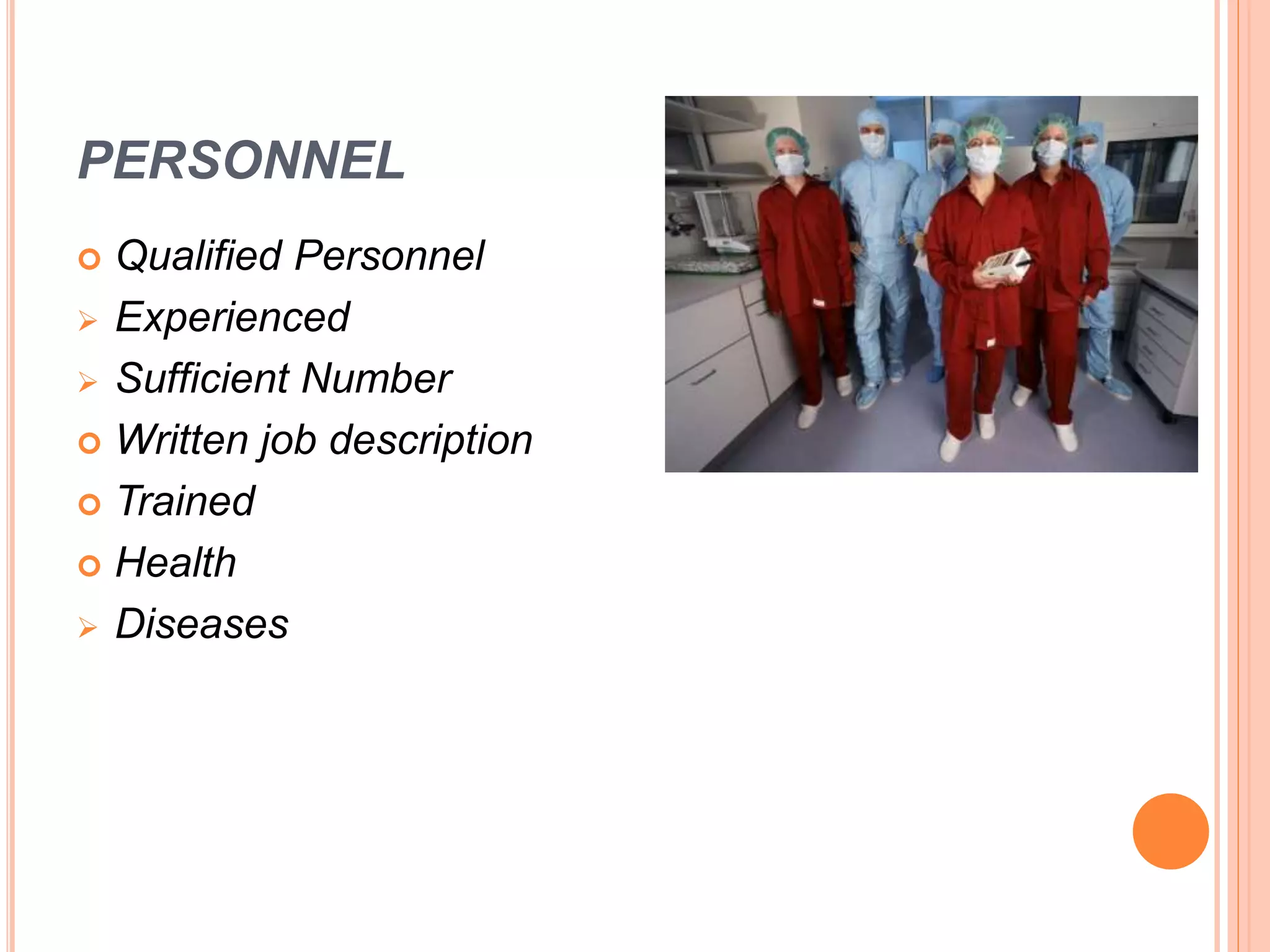
PERSONNEL
 Qualified Personnel
 Experienced
 Sufficient Number
 Written job description
 Trained
 Health
 Diseases
PREMISES
 Location
 Design
 Construction
LOCATION
 Geography, climate and economic factors.
 Premises must be located to minimize risks of cross
– contamination, e.g. not located next to a factory
with high airborne levels of yeast.
 Pollution control.
DESIGN
 Minimize risks of errors
 Effective cleaning
Effective maintenance
 Maximum protection against entry of insects, birds
and animals
 Separate facilities for other products such as some
antibiotics, hormones, cytotoxic substances
 Specific areas
 Production areas
 Quality control areas
 Weighing areas
 Storage areas
 Hygiene
 Eating,Drinking,Smoking should not be allowed in
the Production area.
CONSTRUCTION
 Measures should be taken to prevent cross-
contamination
 Dust control measures (including extraction of dust
and air)
 No areas for dust accumulation
 Easily cleanable surfaces
 Proper air supply
 Use of HEPA filter’s
 Finishing floors, walls and ceilings should be
smooth
EQUIPMENTS
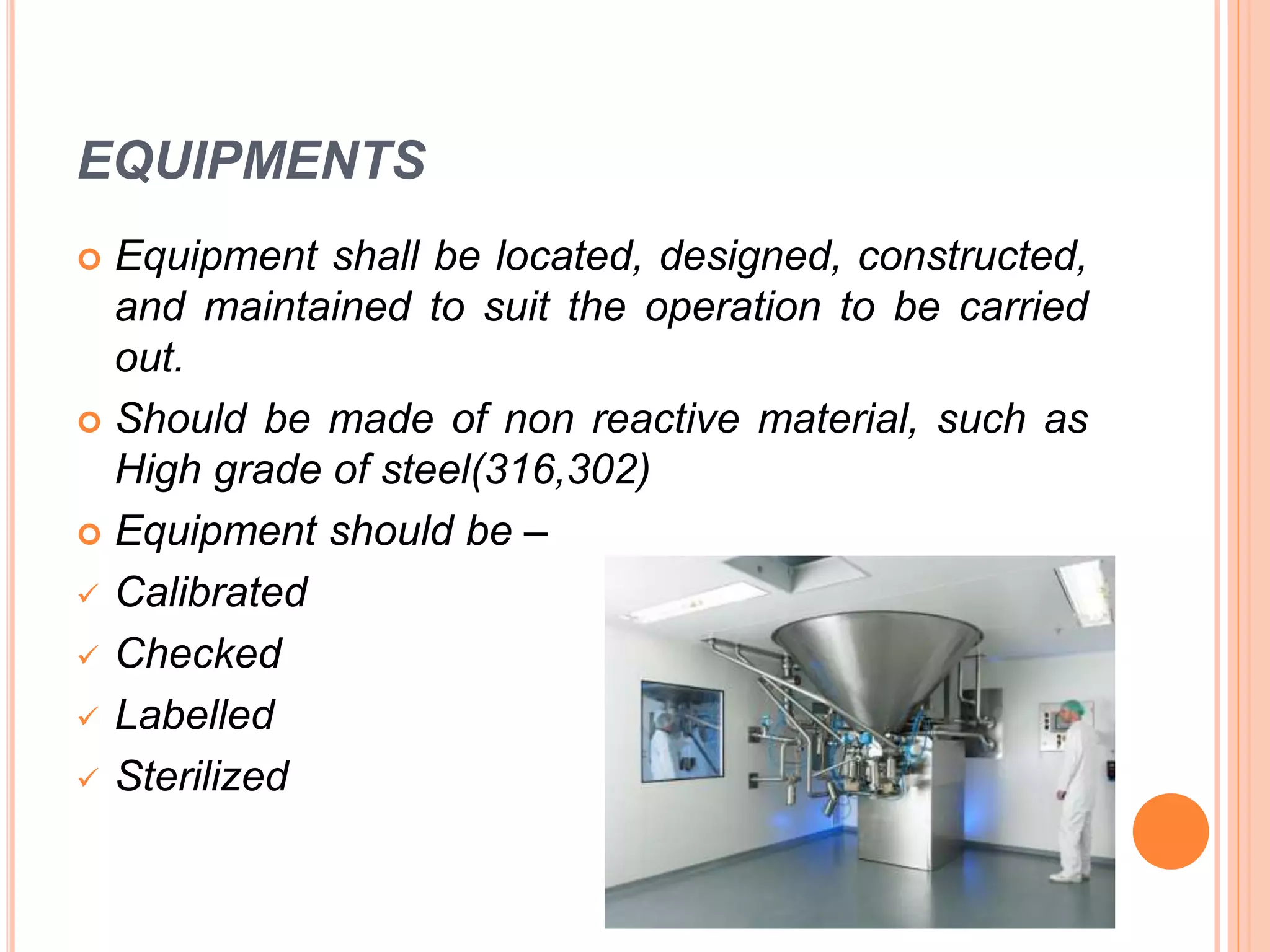
 Equipment shall be located, designed, constructed,
and maintained to suit the operation to be carried
out.
 Should be made of non reactive material, such as
High grade of steel(316,302)
 Equipment should be –
 Calibrated
 Checked
 Labelled
 Sterilized
SANITATION
 Written procedures
 Hygiene, health and clothing practices
 Waste disposal
 Implementation and training
 Practices not permitted
 Eating, smoking
 Unhygienic practices
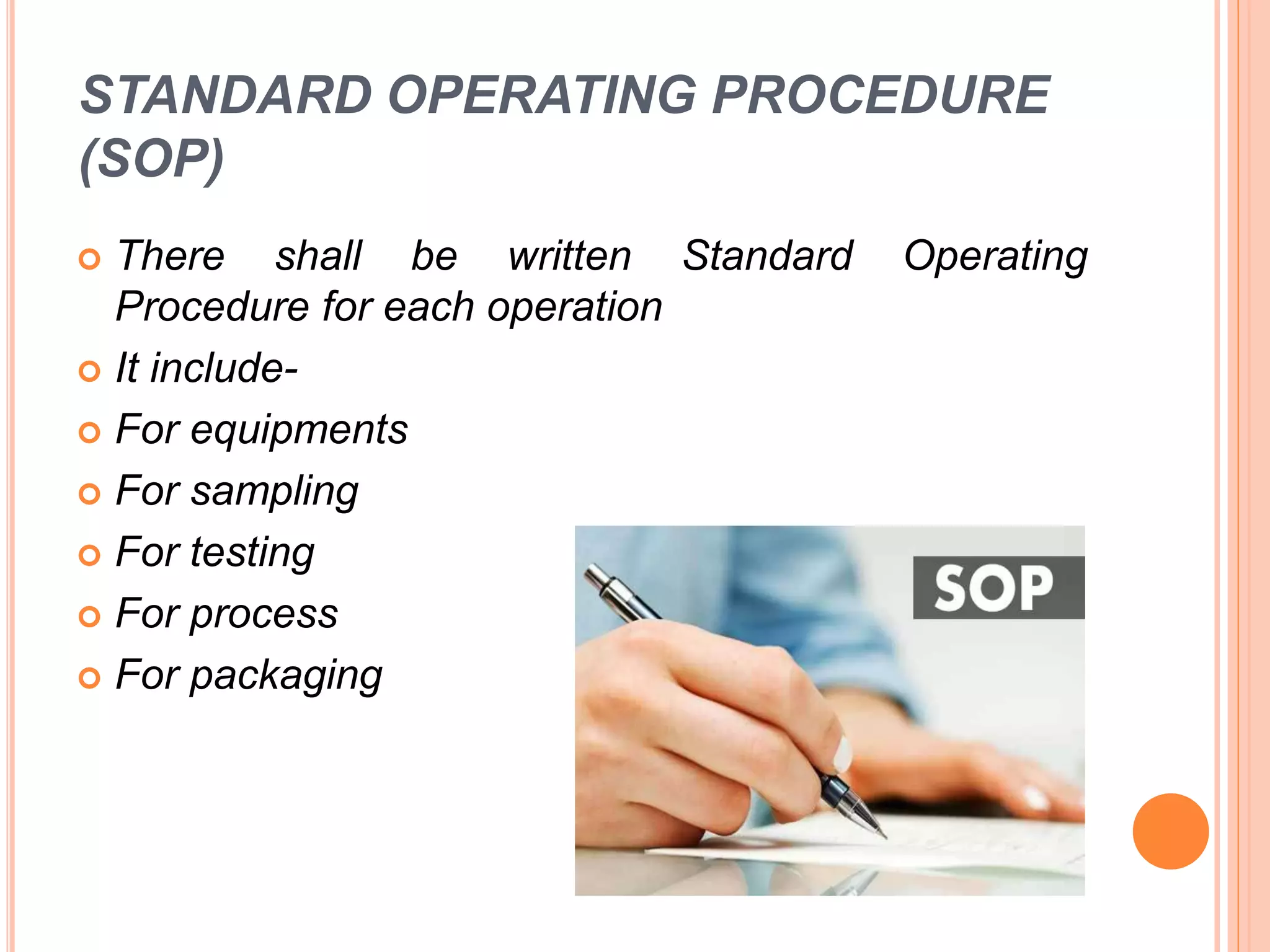
STANDARD OPERATING PROCEDURE
(SOP)
 There shall be written Standard Operating
Procedure for each operation
 It include-
 For equipments
 For sampling
 For testing
 For process
 For packaging
RAW MATERIALS
 An inventory should be maintained for raw
materials to be used at any stage of manufacture
 Records should be maintain as per Schedule U
 Should be purchased from approved sources
 Must be checked by QC department on receipt
Should be labeled
SELF INSPECTION AND AUDIT
 Regular independent inspection is necessary to
evaluate the manufacturer’s compliance with GMP
in all aspects of manufacturing
 Procedure for self inspection shall be documented
indicating
 evaluation
 conclusion
 recommendations for corrective action
MASTER FORMULA RECORDS
 There shall be MFR relating to all manufacturing
procedures for each product and batch size to be
manufacture
 IT SHOULD INCLUDE –
 The name of the product
 Quantity of all starting materials to be used
 A statement of the expected final yield with acceptable
limits
 Equipment to be used
 Detailed stepwise processing instructions and the time
taken for each step
 Any special precautions
 Packing details
BATCH MANUFACTURING RECORDS
 There shall be batch processing record for each
product.
 During manufacturing or processing the following
information shall be recorded
 It include –
 The name of the product
 The number of batch being manufactured
 Dates and time of batch completion
 Amount of product obtained
WAREHOUSING AREA
 Warehousing area should be designed to ensure
good storage conditions.
 Should be clean, dry and maintained with
acceptable temperature limits.
 Should have appropriate house- keeping and
rodents, pests and vermin control.
 Separate sampling area for active raw material and
excipients.
 Every material stored should be labeled properly.
 Fire prevention.
REFERENCE SAMPLES
 Should be taken in sufficient quantity from each lot
of active ingredient to carry out all the tests
 These samples should be retained for a period of 3
months after the date of expiry of the last batch
produced from that active ingredient
 Samples of raw material should be stored in
suitable container (plastic or glass) as mentioned in
the SOP
 Samples of finished formulations shall be stored in
the same containers in which the drug has been
actually marketed
VALIDATION AND PROCESS
VALIDATION
 Essential part of GMP
 Necessary to achieve the intended results
 A written record is prepared summarizing recorded
result and conclusions shall be prepared,
documented and maintained
 Should be necessary when –
 Any new master formula or method of preparation
is adopted
 For critical process
 Any changes in the equipment or when using a new
equipment, it is first validated to demonstrate its
consistentency of required quality.
LABELS AND PRINTED MATERIALS
 All containers and equipment should bear labels
 Different colour coded labels should be used to
indicate the status of a product (for example under
test, approved, passed rejected)
 The printing should be done in bright colours
 The label should contain all the prescribed details
about the product.
QUALITY ASSURANCE
 “Quality assurance is a wide ranging concept
covering all matters that individually and collectively
influence the quality of product.”
 COMPONENT OF QUALITY ASSURANCE:
 Quality management team
 In process quality control team
 Document development team
 Process validation team
 Drug regulatory affairs team
OBJECTIVE OF QA DEPARTMENT
 Provide the high quality drug product to the patient.
 Prevent and reduce the number of the recalls,
returned and defective product entering into the
market.
 To help in getting quality by design
 Increasing productivity
 Improving risk management.
 QUALITY ASSURANCE = QC + GMP
COMPARISON BETWEEN DIFFERENT
GMP GUIDELINES
 At a high level, GMPs of various nations are very
similar, most require things like:
 Equipment and facilities being properly designed,
maintained, and cleaned.
 Standard operating procedures be written and
approved
 Well trained personnel and management
 An independent quality unit (like quality control and
quality assurance)
USFDA GUIDELINES
 21 CFR Parts 210 and 211
 (Drug industry)
 21 CFR Part 820
 (Medical device industry)
 21 CFR Part 110
 (Food industry)
 21 CFR Part 606
 (Blood industry)
EU GUIDELINES
 Part I
Basic requirements for medicinal products
 Part II
Basic requirements for active substances used as
starting materials
 Part III
GMP related documents
 Responsibilities of all personals should specified in
writing.
 Defined area for packaging & labeling.
 The signature of the person who perform each tests
with dates.
 Manufacturers should have a system for evaluating
suppliers of critical materials.
 A statement of test results & how they compare with
established acceptance criteria.
 Product quality review.
A TIME LINE OF GMP
 1938 – Federal food, Drug and Cosmetic act.
 1941 – Initiation of GMP
 1963 – Establishment of GMPs for drugs
 1975 – cGMP for Blood and components Final rule
 1978 – cGMP for Drugs and Medical Devices
 1979 – GLPs final rule
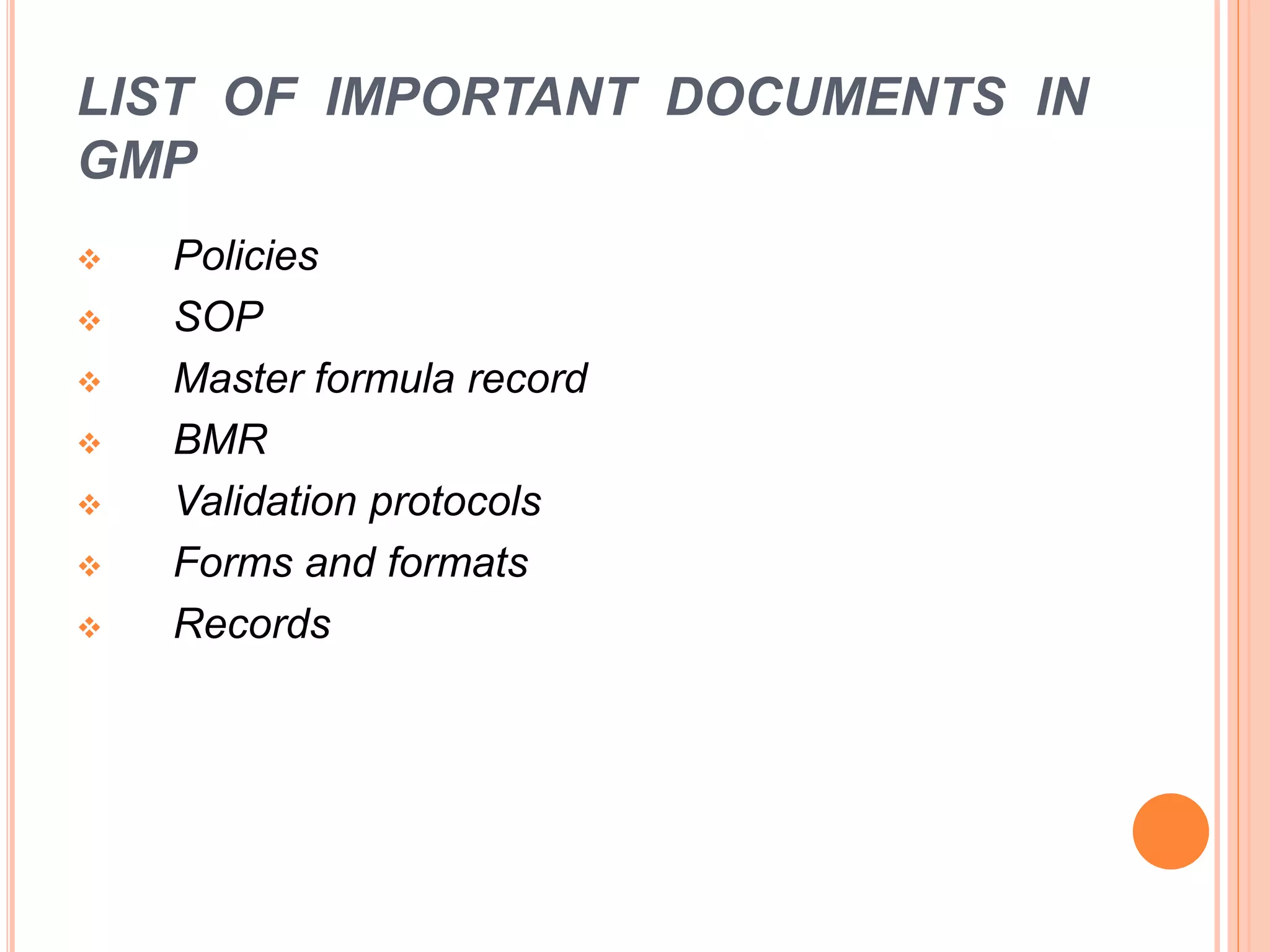
LIST OF IMPORTANT DOCUMENTS IN
GMP
 Policies
 SOP
 Master formula record
 BMR
 Validation protocols
 Forms and formats
 Records
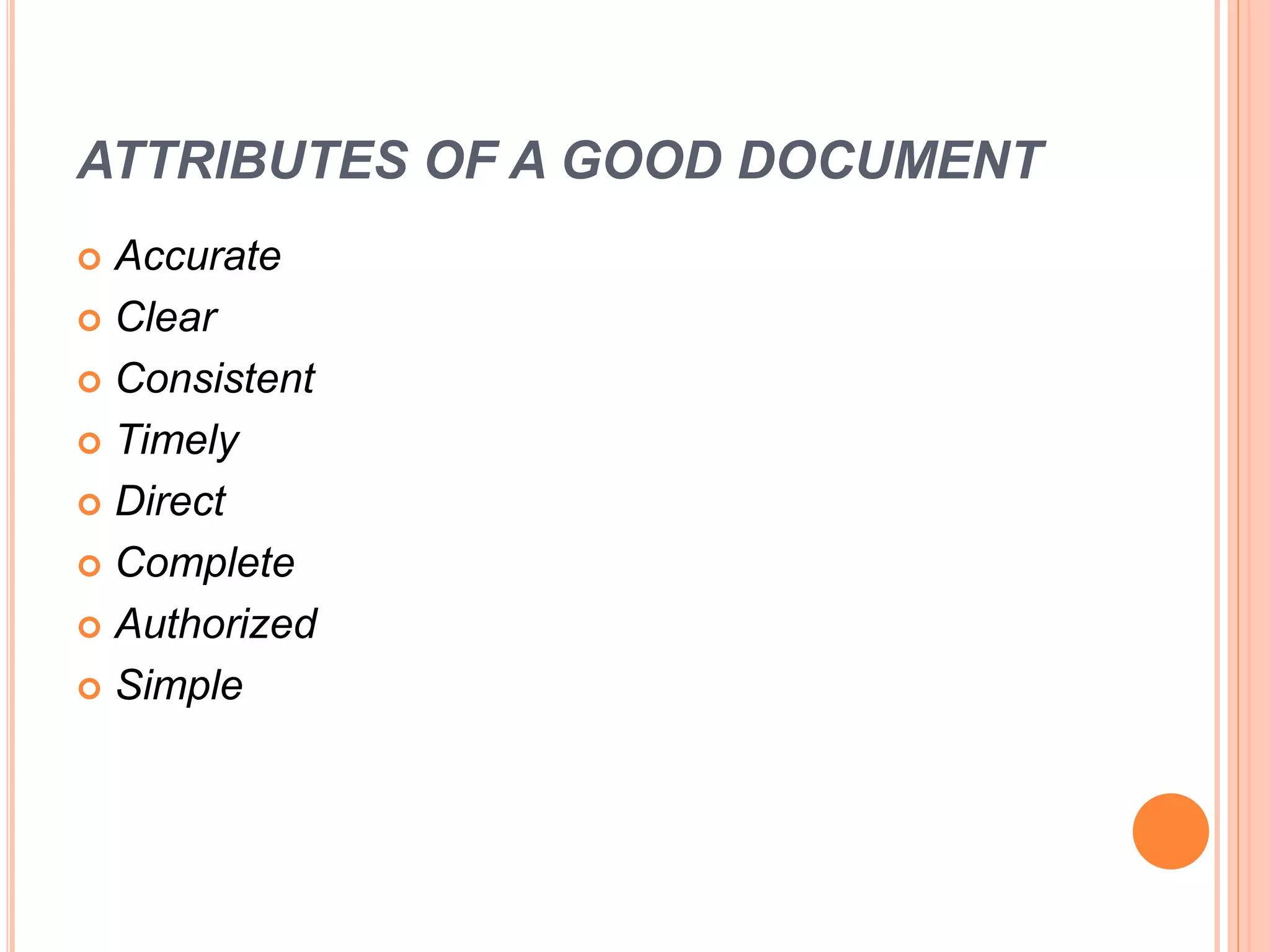
ATTRIBUTES OF A GOOD DOCUMENT
 Accurate
 Clear
 Consistent
 Timely
 Direct
 Complete
 Authorized
 Simple
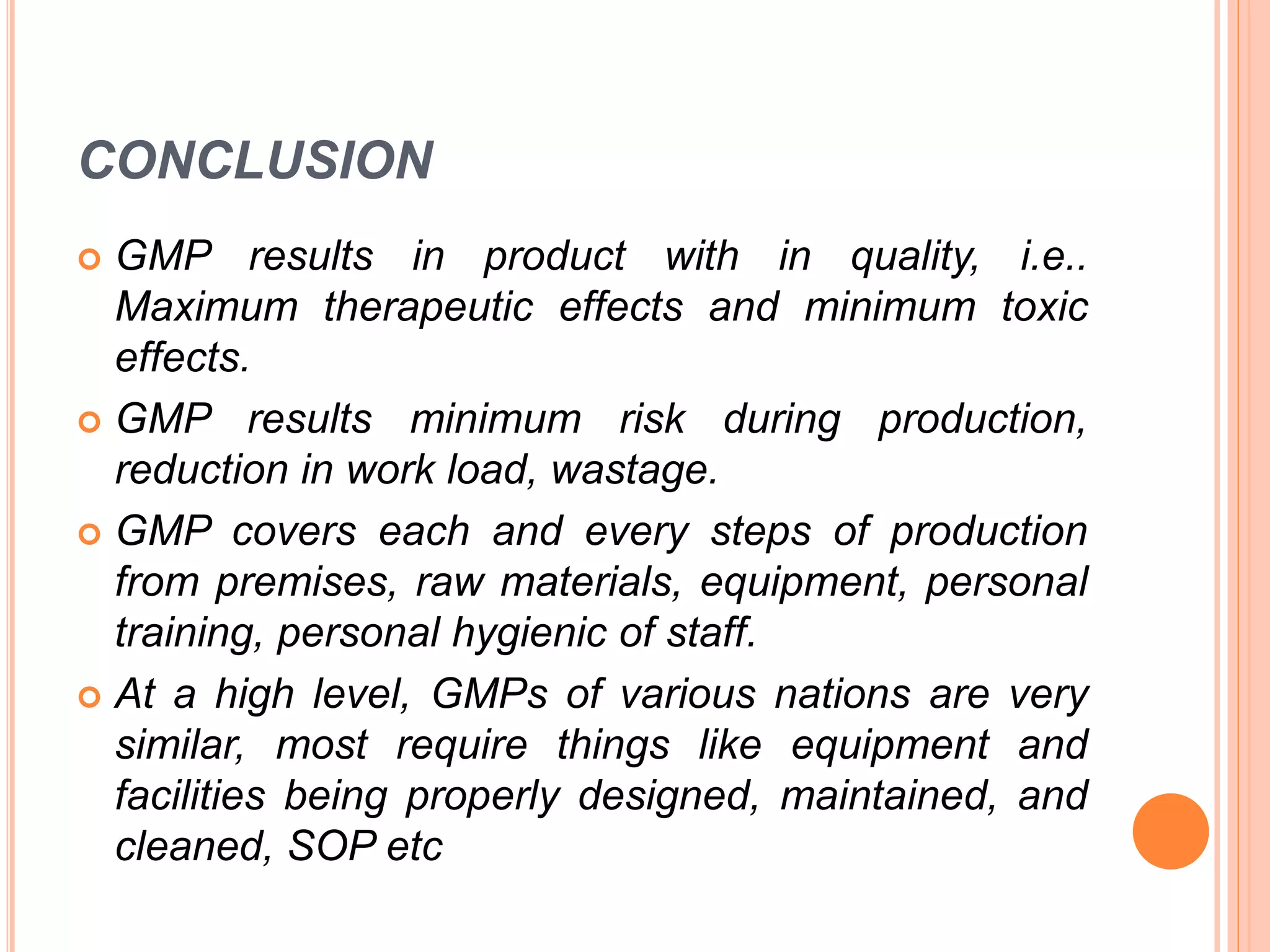
CONCLUSION
 GMP results in product with in quality, i.e..
Maximum therapeutic effects and minimum toxic
effects.
 GMP results minimum risk during production,
reduction in work load, wastage.
 GMP covers each and every steps of production
from premises, raw materials, equipment, personal
training, personal hygienic of staff.
 At a high level, GMPs of various nations are very
similar, most require things like equipment and
facilities being properly designed, maintained, and
cleaned, SOP etc
“QUALITY IS NOT TESTED IN
THE PRODUCT,
IT IS BUILT INTO THE
PRODUCT”.
THANK YOU………

Rajni ppt

  • 1.
  • 2.
    CONTENTS  HISTORY  INTRODUCTION WHY GMP IS IMPORTANT  PRINCIPLES OF GMP  GMP GUIDELINES  COMPARISON BETWEEN DIFFERENT GMP GUIDELINES  CONCLUSION
  • 3.
    INITIATION OF GMP Sulfathiazole tablets contaminated with phenobarbital.  1941 – 300 people died/injured.  FDA to enforce and revise manufacturing and quality control requirements.  1941 – GMP is born.  Thalidomide tragedy  Thousands of children born with birth defects due to adverse drug reactions of morning sickness pill taken by mothers.
  • 4.
    WHAT IS GMP?  GMP as per the WHO :  “ GMP is that part of quality assurance, which ensures that products are consistently produced and controlled to the quality standards appropriate to their intended use and as required by the market authorization.”  Above definition conclusion is that:  GMP is the part of the Quality assurance.  GMP’s main function is to be produced the quality product consistently.  GMP must be meet the legal requirement of the country.
  • 5.
    WHAT IS CGMP?  Usually see “cGMP” – where c = current, to emphasize that the expectations are dynamic.  The “c” in cGMP stands for “current” requiring companies to use technologies and systems that are up to date in order to comply with the regulations.
  • 6.
    WHY GMP ISIMPORTANT  A poor quality medicine may contain toxic substances that have been unintentionally added.  A medicine that contains little or none of the claimed ingredient will not have the intended therapeutic effect.  Unexpected contamination of products , causing damage to health or even death.  Incorrect labels on containers, which could mean that patients receive the wrong medicine.
  • 7.
    PRINCIPLES OF GMP Design and construct the facilities and equipments properly  Follow written procedures and Instructions  Document work  Validate work  Monitor facilities and equipment  Write step by step operating procedures and work on instructions  Protect against contamination  Control components and product related processes  Audits
  • 8.
    GMP GUIDELINES  GMPas per Schedule “M”  GMP as per WHO  GMP as per MCA now known as MHRA  GMP as per TGA  GMP as per US FDA  GMP as per ICH guidelines
  • 9.
    GMP IN INDIA In India by the ministry of Health, multinational or foreign enterprise  GMP was brought under legislation in June 1988.  Schedule M of drugs and Cosmetics Act of 1945.  Schedule M has 2 parts:  Part 1 which includes – GMPs  Part 2 which includes – plant requirement and equipment
  • 10.
    AREAS TO BECOVERED  General considerations  Personnel  Premises  Equipment  Sanitation  SOP’s  Raw Materials  Self Inspection and Audit  Master Formula Records  Batch Manufacturing Records  Validation and process validation
  • 11.
    GENERAL CONSIDERATIONS  Compliancewith GMP  Consistent uniform batches  Location and surroundings  Water system  Disposal of waste
  • 12.
    PERSONNEL  Qualified Personnel Experienced  Sufficient Number  Written job description  Trained  Health  Diseases
  • 13.
  • 14.
    LOCATION  Geography, climateand economic factors.  Premises must be located to minimize risks of cross – contamination, e.g. not located next to a factory with high airborne levels of yeast.  Pollution control.
  • 15.
    DESIGN  Minimize risksof errors  Effective cleaning Effective maintenance  Maximum protection against entry of insects, birds and animals  Separate facilities for other products such as some antibiotics, hormones, cytotoxic substances
  • 16.
     Specific areas Production areas  Quality control areas  Weighing areas  Storage areas  Hygiene  Eating,Drinking,Smoking should not be allowed in the Production area.
  • 17.
    CONSTRUCTION  Measures shouldbe taken to prevent cross- contamination  Dust control measures (including extraction of dust and air)  No areas for dust accumulation  Easily cleanable surfaces  Proper air supply  Use of HEPA filter’s  Finishing floors, walls and ceilings should be smooth
  • 18.
    EQUIPMENTS  Equipment shallbe located, designed, constructed, and maintained to suit the operation to be carried out.  Should be made of non reactive material, such as High grade of steel(316,302)  Equipment should be –  Calibrated  Checked  Labelled  Sterilized
  • 19.
    SANITATION  Written procedures Hygiene, health and clothing practices  Waste disposal  Implementation and training  Practices not permitted  Eating, smoking  Unhygienic practices
  • 20.
    STANDARD OPERATING PROCEDURE (SOP) There shall be written Standard Operating Procedure for each operation  It include-  For equipments  For sampling  For testing  For process  For packaging
  • 21.
    RAW MATERIALS  Aninventory should be maintained for raw materials to be used at any stage of manufacture  Records should be maintain as per Schedule U  Should be purchased from approved sources  Must be checked by QC department on receipt Should be labeled
  • 22.
    SELF INSPECTION ANDAUDIT  Regular independent inspection is necessary to evaluate the manufacturer’s compliance with GMP in all aspects of manufacturing  Procedure for self inspection shall be documented indicating  evaluation  conclusion  recommendations for corrective action
  • 23.
    MASTER FORMULA RECORDS There shall be MFR relating to all manufacturing procedures for each product and batch size to be manufacture  IT SHOULD INCLUDE –  The name of the product  Quantity of all starting materials to be used  A statement of the expected final yield with acceptable limits  Equipment to be used  Detailed stepwise processing instructions and the time taken for each step  Any special precautions  Packing details
  • 24.
    BATCH MANUFACTURING RECORDS There shall be batch processing record for each product.  During manufacturing or processing the following information shall be recorded  It include –  The name of the product  The number of batch being manufactured  Dates and time of batch completion  Amount of product obtained
  • 25.
    WAREHOUSING AREA  Warehousingarea should be designed to ensure good storage conditions.  Should be clean, dry and maintained with acceptable temperature limits.  Should have appropriate house- keeping and rodents, pests and vermin control.  Separate sampling area for active raw material and excipients.  Every material stored should be labeled properly.  Fire prevention.
  • 26.
    REFERENCE SAMPLES  Shouldbe taken in sufficient quantity from each lot of active ingredient to carry out all the tests  These samples should be retained for a period of 3 months after the date of expiry of the last batch produced from that active ingredient  Samples of raw material should be stored in suitable container (plastic or glass) as mentioned in the SOP  Samples of finished formulations shall be stored in the same containers in which the drug has been actually marketed
  • 27.
    VALIDATION AND PROCESS VALIDATION Essential part of GMP  Necessary to achieve the intended results  A written record is prepared summarizing recorded result and conclusions shall be prepared, documented and maintained  Should be necessary when –  Any new master formula or method of preparation is adopted  For critical process  Any changes in the equipment or when using a new equipment, it is first validated to demonstrate its consistentency of required quality.
  • 28.
    LABELS AND PRINTEDMATERIALS  All containers and equipment should bear labels  Different colour coded labels should be used to indicate the status of a product (for example under test, approved, passed rejected)  The printing should be done in bright colours  The label should contain all the prescribed details about the product.
  • 29.
    QUALITY ASSURANCE  “Qualityassurance is a wide ranging concept covering all matters that individually and collectively influence the quality of product.”  COMPONENT OF QUALITY ASSURANCE:  Quality management team  In process quality control team  Document development team  Process validation team  Drug regulatory affairs team
  • 30.
    OBJECTIVE OF QADEPARTMENT  Provide the high quality drug product to the patient.  Prevent and reduce the number of the recalls, returned and defective product entering into the market.  To help in getting quality by design  Increasing productivity  Improving risk management.  QUALITY ASSURANCE = QC + GMP
  • 31.
    COMPARISON BETWEEN DIFFERENT GMPGUIDELINES  At a high level, GMPs of various nations are very similar, most require things like:  Equipment and facilities being properly designed, maintained, and cleaned.  Standard operating procedures be written and approved  Well trained personnel and management  An independent quality unit (like quality control and quality assurance)
  • 32.
    USFDA GUIDELINES  21CFR Parts 210 and 211  (Drug industry)  21 CFR Part 820  (Medical device industry)  21 CFR Part 110  (Food industry)  21 CFR Part 606  (Blood industry)
  • 33.
    EU GUIDELINES  PartI Basic requirements for medicinal products  Part II Basic requirements for active substances used as starting materials  Part III GMP related documents
  • 34.
     Responsibilities ofall personals should specified in writing.  Defined area for packaging & labeling.  The signature of the person who perform each tests with dates.  Manufacturers should have a system for evaluating suppliers of critical materials.  A statement of test results & how they compare with established acceptance criteria.  Product quality review.
  • 35.
    A TIME LINEOF GMP  1938 – Federal food, Drug and Cosmetic act.  1941 – Initiation of GMP  1963 – Establishment of GMPs for drugs  1975 – cGMP for Blood and components Final rule  1978 – cGMP for Drugs and Medical Devices  1979 – GLPs final rule
  • 36.
    LIST OF IMPORTANTDOCUMENTS IN GMP  Policies  SOP  Master formula record  BMR  Validation protocols  Forms and formats  Records
  • 37.
    ATTRIBUTES OF AGOOD DOCUMENT  Accurate  Clear  Consistent  Timely  Direct  Complete  Authorized  Simple
  • 38.
    CONCLUSION  GMP resultsin product with in quality, i.e.. Maximum therapeutic effects and minimum toxic effects.  GMP results minimum risk during production, reduction in work load, wastage.  GMP covers each and every steps of production from premises, raw materials, equipment, personal training, personal hygienic of staff.  At a high level, GMPs of various nations are very similar, most require things like equipment and facilities being properly designed, maintained, and cleaned, SOP etc
  • 39.
    “QUALITY IS NOTTESTED IN THE PRODUCT, IT IS BUILT INTO THE PRODUCT”.
  • 40.