PRESENTED BY
ANJALI BHARAT
(M. PHARM )
QAT, ROLL NO-01
2013-2014
P.D.V.V.P.F’S COLLEGE OF PHARMACY. AHMEDNAGAR.
Process anaytical technology (pat)
Contents-
 Introduction
 Works
 Types of implementation
 Applications
 Advantages & Disadvantages
 PAT regulatory approach
 References
2
What is PAT????
“A system for designing, analyzing & controlling
manufacturing through timely measurements (i.e.
during processing) of critical quality & performance
attributes for raw & in-process materials & processes
with the goal of ensuring final product quality.”
3
Principal of pat….
 Quality cannot be tested
into final product; it should
be built- in, or should be by
design.
4
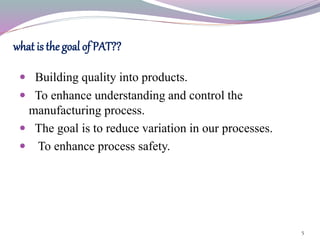
what is the goal of PAT??
 Building quality into products.
 To enhance understanding and control the
manufacturing process.
 The goal is to reduce variation in our processes.
 To enhance process safety.
5
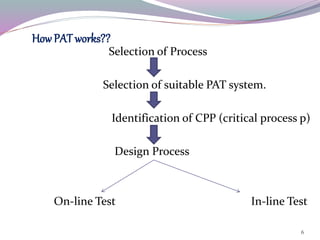
HowPAT works??
Selection of Process
Selection of suitable PAT system.
Identification of CPP (critical process p)
Design Process
On-line Test In-line Test
6
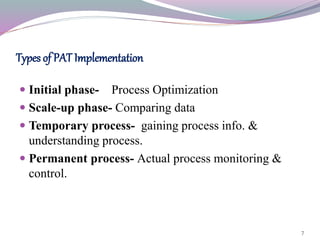
Types of PAT Implementation
 Initial phase- Process Optimization
 Scale-up phase- Comparing data
 Temporary process- gaining process info. &
understanding process.
 Permanent process- Actual process monitoring &
control.
7
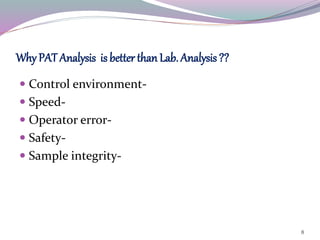
Why PAT Analysis is better than Lab. Analysis ??
 Control environment-
 Speed-
 Operator error-
 Safety-
 Sample integrity-
8
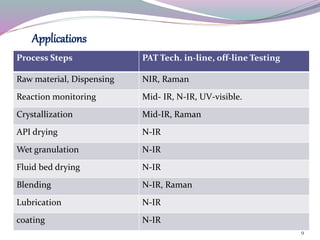
Applications
Process Steps PAT Tech. in-line, off-line Testing
Raw material, Dispensing NIR, Raman
Reaction monitoring Mid- IR, N-IR, UV-visible.
Crystallization Mid-IR, Raman
API drying N-IR
Wet granulation N-IR
Fluid bed drying N-IR
Blending N-IR, Raman
Lubrication N-IR
coating N-IR
9
10
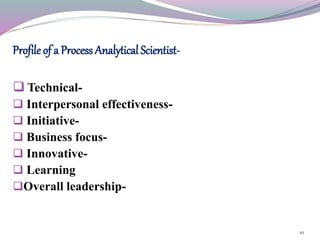
Profileof a Process Analytical Scientist-
 Technical-
 Interpersonal effectiveness-
 Initiative-
 Business focus-
 Innovative-
 Learning
Overall leadership-
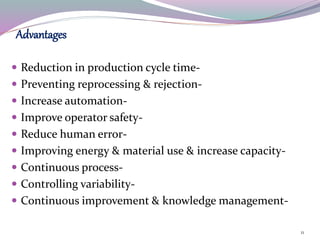
Advantages
 Reduction in production cycle time-
 Preventing reprocessing & rejection-
 Increase automation-
 Improve operator safety-
 Reduce human error-
 Improving energy & material use & increase capacity-
 Continuous process-
 Controlling variability-
 Continuous improvement & knowledge management-
11
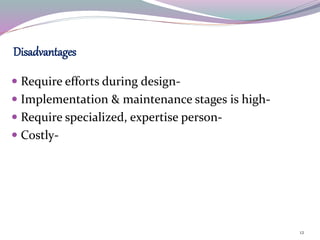
Disadvantages
 Require efforts during design-
 Implementation & maintenance stages is high-
 Require specialized, expertise person-
 Costly-
12
PAT regulatory approach
 PAT can be implemented under CGMP
inspections by PAT team or PAT certified
investigator .
 A supplement can be submitted to the agency.
 A protocol can be submitted to the agency.
 After approval of protocol by agency then
manufacturer may request to a FDA PAT team for
inspection of preoperational review of a PAT
implementation.
13
PAT regulatory guidance
 Regulatory agencies like US-FDA, ICH, ASTM etc.
who has been active in the area of PAT in the
development of standards for use of PAT in
pharmaceutical industry internationally in their
standards committee E55.
 US-FDA was published PAT final guidance in SEP
2004
14
REFERENCES
 www.google.co.in
 www.dir-technologies.com
 www.wikipedia.org
 FDA’s PAT web page
 www.fda.gov./cder/ops/PAT.htm
15
16

Process analytical technology

  • 1.
    PRESENTED BY ANJALI BHARAT (M.PHARM ) QAT, ROLL NO-01 2013-2014 P.D.V.V.P.F’S COLLEGE OF PHARMACY. AHMEDNAGAR. Process anaytical technology (pat)
  • 2.
    Contents-  Introduction  Works Types of implementation  Applications  Advantages & Disadvantages  PAT regulatory approach  References 2
  • 3.
    What is PAT???? “Asystem for designing, analyzing & controlling manufacturing through timely measurements (i.e. during processing) of critical quality & performance attributes for raw & in-process materials & processes with the goal of ensuring final product quality.” 3
  • 4.
    Principal of pat…. Quality cannot be tested into final product; it should be built- in, or should be by design. 4
  • 5.
    what is thegoal of PAT??  Building quality into products.  To enhance understanding and control the manufacturing process.  The goal is to reduce variation in our processes.  To enhance process safety. 5
  • 6.
    HowPAT works?? Selection ofProcess Selection of suitable PAT system. Identification of CPP (critical process p) Design Process On-line Test In-line Test 6
  • 7.
    Types of PATImplementation  Initial phase- Process Optimization  Scale-up phase- Comparing data  Temporary process- gaining process info. & understanding process.  Permanent process- Actual process monitoring & control. 7
  • 8.
    Why PAT Analysisis better than Lab. Analysis ??  Control environment-  Speed-  Operator error-  Safety-  Sample integrity- 8
  • 9.
    Applications Process Steps PATTech. in-line, off-line Testing Raw material, Dispensing NIR, Raman Reaction monitoring Mid- IR, N-IR, UV-visible. Crystallization Mid-IR, Raman API drying N-IR Wet granulation N-IR Fluid bed drying N-IR Blending N-IR, Raman Lubrication N-IR coating N-IR 9
  • 10.
    10 Profileof a ProcessAnalytical Scientist-  Technical-  Interpersonal effectiveness-  Initiative-  Business focus-  Innovative-  Learning Overall leadership-
  • 11.
    Advantages  Reduction inproduction cycle time-  Preventing reprocessing & rejection-  Increase automation-  Improve operator safety-  Reduce human error-  Improving energy & material use & increase capacity-  Continuous process-  Controlling variability-  Continuous improvement & knowledge management- 11
  • 12.
    Disadvantages  Require effortsduring design-  Implementation & maintenance stages is high-  Require specialized, expertise person-  Costly- 12
  • 13.
    PAT regulatory approach PAT can be implemented under CGMP inspections by PAT team or PAT certified investigator .  A supplement can be submitted to the agency.  A protocol can be submitted to the agency.  After approval of protocol by agency then manufacturer may request to a FDA PAT team for inspection of preoperational review of a PAT implementation. 13
  • 14.
    PAT regulatory guidance Regulatory agencies like US-FDA, ICH, ASTM etc. who has been active in the area of PAT in the development of standards for use of PAT in pharmaceutical industry internationally in their standards committee E55.  US-FDA was published PAT final guidance in SEP 2004 14
  • 15.
    REFERENCES  www.google.co.in  www.dir-technologies.com www.wikipedia.org  FDA’s PAT web page  www.fda.gov./cder/ops/PAT.htm 15
  • 16.