RAIN Technology
 RAIN stands for Reliable Array Of Independent
Nodes.
 It may also be called as Reliable Array Of Inexpensive
Nodes.
 Definition: It is a disk subsystem that provides
distributed data storage & protection in network
architecture by integrating inexpensive hardware &
management software.
Introduction
 Concept of RAIN is derived from redundant array of
independent disks(RAID) which is a similar system that is
implemented at the disk level.
 It is implemented to increase fault tolerance in a cluster.
 The storage cluster can be managed through a centralized
management interface.
 The RAIN management software automatically detects any
new RAIN nodes & allows them to communicate with each
other.
 In case of a node failure, the lost data is replicated among
other RAIN nodes in a cluster to avoid immediate
replacement of the failed node.
Introduction
 RAIN technology originated in a research project at
california institute of technology (CALTECH) in
collaboration with NASA’s Jet propulsion laboratory &
the defense advanced research projects
agency(DARPA)
History
The main focus of research was on
 High performance
 Fault tolerance
 Portable clustering technology
 The RAIN platform consist of heterogeneous
cluster of computing nodes connected via multiple
interfaces to networks configured in fault tolerant
topologies.
 Rain technology making the existing node more
robust & independent of each other.
 Rain technology provides the feature of replacing a
faulty node by a healthy one.
Goals
RAIN Platform
Switch SwitchBus network
Nodes
Nodes
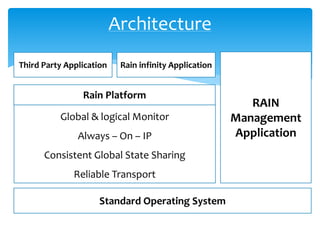
Architecture
Third Party Application Rain infinity Application
Rain Platform
Global & logical Monitor
Always – On – IP
Consistent Global State Sharing
Reliable Transport
Standard Operating System
RAIN
Management
Application
It is the most scalable software cluster technology for the
internet marketplace today.
There is no limit on the size or the performance of a cluster.
There is no master-slave relationship.
All nodes are active & can participate in load balancing
It can tolerate multiple node –failures, as long as at least
one node is healthy.
It employs highly efficient consistent state sharing and
decision making protocols, so that the entire cluster can
function as one system.
Benefits
 The problem
how to connect n computing nodes in a ring of n
switches?
Fault Tolerant
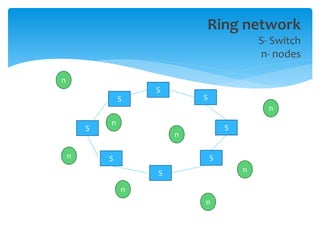
Ring network
S- Switch
n- nodes
S
S
S S
S
S S
S
n
n
n
n
n
n
n
n
 Take the nodes and connect it with the nearest
switch.
 In Ring network is 1 fault tolerant so, we can loose 1
switch without upset.
 2nd switch failure can lead to partitioning in the
network
Approach
<- Ring network
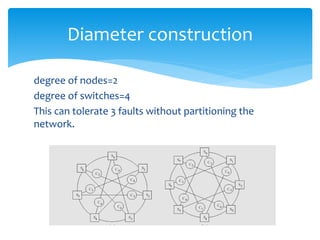
After connecting them with the nearest switches.
degree of nodes=2
degree of switches=4
This can tolerate 3 faults without partitioning the
network.
Diameter construction
Main function of group member:
 1) to tolerate the fault
 2) to ensure that all processes maintain a consistent
view of global membership
Group membership
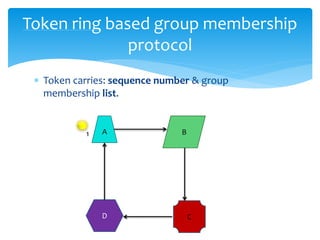
 Token carries: sequence number & group
membership list.
Token ring based group membership
protocol
A B
D C
1
2
5
4
3
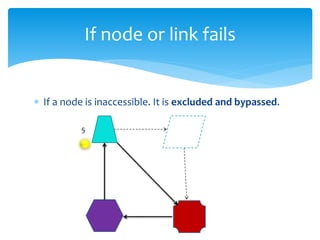
 If a node is inaccessible. It is excluded and bypassed.
If node or link fails
5
5
6 7 6
5
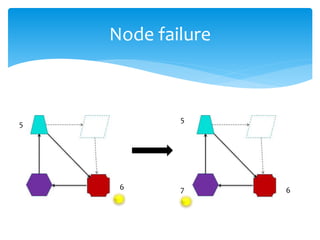
Node failure
 If token is lost then it is regenerated, highest
sequence number prevails.
If node with token fails
5
6
7
6
 High Availability Video Server
 High Availability Web Server
 Distributed Check pointing Mechanism
Applications
 Development of API’s for using the various building
blocks.
 The implementation of a real distributed file system
using the partitioning scheme developed here.
 The group communication protocols are being
extended to address more challenging scenarios.
Future scope
 The goal of the RAIN project has been to build a test-bed
for various building blocks that address fault management
 Communication and storage in a distributed environment.
 The creation of such building blocks is important for the
development of a fully functional distributed computing
system.
Conclusion
Rain Technology

Rain Technology

  • 1.
  • 2.
     RAIN standsfor Reliable Array Of Independent Nodes.  It may also be called as Reliable Array Of Inexpensive Nodes.  Definition: It is a disk subsystem that provides distributed data storage & protection in network architecture by integrating inexpensive hardware & management software. Introduction
  • 3.
     Concept ofRAIN is derived from redundant array of independent disks(RAID) which is a similar system that is implemented at the disk level.  It is implemented to increase fault tolerance in a cluster.  The storage cluster can be managed through a centralized management interface.  The RAIN management software automatically detects any new RAIN nodes & allows them to communicate with each other.  In case of a node failure, the lost data is replicated among other RAIN nodes in a cluster to avoid immediate replacement of the failed node. Introduction
  • 4.
     RAIN technologyoriginated in a research project at california institute of technology (CALTECH) in collaboration with NASA’s Jet propulsion laboratory & the defense advanced research projects agency(DARPA) History
  • 5.
    The main focusof research was on  High performance  Fault tolerance  Portable clustering technology
  • 6.
     The RAINplatform consist of heterogeneous cluster of computing nodes connected via multiple interfaces to networks configured in fault tolerant topologies.  Rain technology making the existing node more robust & independent of each other.  Rain technology provides the feature of replacing a faulty node by a healthy one. Goals
  • 7.
    RAIN Platform Switch SwitchBusnetwork Nodes Nodes
  • 8.
    Architecture Third Party ApplicationRain infinity Application Rain Platform Global & logical Monitor Always – On – IP Consistent Global State Sharing Reliable Transport Standard Operating System RAIN Management Application
  • 9.
    It is themost scalable software cluster technology for the internet marketplace today. There is no limit on the size or the performance of a cluster. There is no master-slave relationship. All nodes are active & can participate in load balancing It can tolerate multiple node –failures, as long as at least one node is healthy. It employs highly efficient consistent state sharing and decision making protocols, so that the entire cluster can function as one system. Benefits
  • 10.
     The problem howto connect n computing nodes in a ring of n switches? Fault Tolerant
  • 11.
    Ring network S- Switch n-nodes S S S S S S S S n n n n n n n n
  • 12.
     Take thenodes and connect it with the nearest switch.  In Ring network is 1 fault tolerant so, we can loose 1 switch without upset.  2nd switch failure can lead to partitioning in the network Approach
  • 13.
    <- Ring network Afterconnecting them with the nearest switches.
  • 14.
    degree of nodes=2 degreeof switches=4 This can tolerate 3 faults without partitioning the network. Diameter construction
  • 15.
    Main function ofgroup member:  1) to tolerate the fault  2) to ensure that all processes maintain a consistent view of global membership Group membership
  • 16.
     Token carries:sequence number & group membership list. Token ring based group membership protocol A B D C 1
  • 17.
  • 18.
     If anode is inaccessible. It is excluded and bypassed. If node or link fails 5
  • 19.
  • 20.
     If tokenis lost then it is regenerated, highest sequence number prevails. If node with token fails 5 6 7 6
  • 21.
     High AvailabilityVideo Server  High Availability Web Server  Distributed Check pointing Mechanism Applications
  • 22.
     Development ofAPI’s for using the various building blocks.  The implementation of a real distributed file system using the partitioning scheme developed here.  The group communication protocols are being extended to address more challenging scenarios. Future scope
  • 23.
     The goalof the RAIN project has been to build a test-bed for various building blocks that address fault management  Communication and storage in a distributed environment.  The creation of such building blocks is important for the development of a fully functional distributed computing system. Conclusion